Motorola MVME2434-21 | 68040-Based VME Board with SCSI & Ethernet

Description
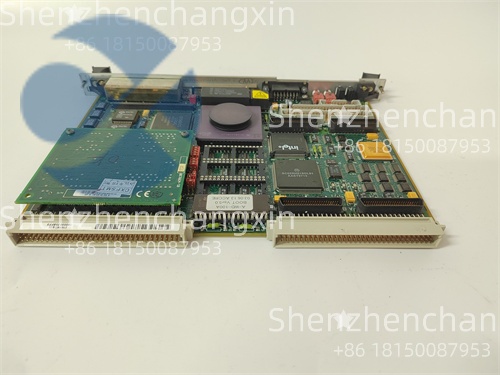
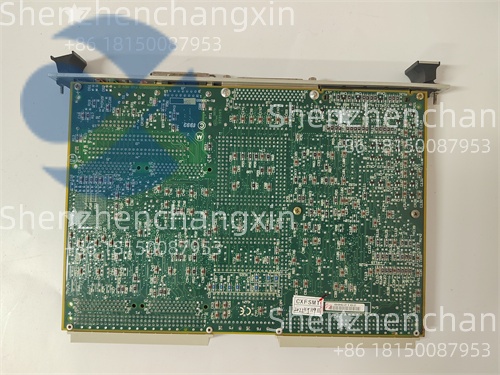
TheMOTOROLA MVME2434 is a high-performance, 68EC040-based Single Board Computer (SBC) designed for the VMEbus (VERSAbus-E) architecture. Manufactured by Motorola (now part of NXP Semiconductors), this board serves as a powerful system controller or intelligent slave module in demanding real-time and embedded computing applications. It integrates core computing functions, rich I/O, and extensive memory options on a single, ruggedized board, providing a complete computer subsystem for sophisticated industrial control and communication systems.
Application Scenarios
Envision a metropolitan rail transit system in the early 2000s, where a central signaling control rack processes vast amounts of track occupancy and switch position data in real time. The failure of a critical computing node in this rack, based on an agingMOTOROLA MVME2434, could disrupt train scheduling and compromise safety. This SBC was the computational heart of such systems, chosen for its deterministic performance and robust VMEbus reliability. In this role, theMVME2434 would run a real-time operating system (like VxWorks or pSOS+) to execute complex control algorithms, manage communications with remote PLCs via its Ethernet port, and log diagnostic data to its onboard storage. Its value lay in providing a stable, centralized computing platform that could withstand 24/7 operation in industrial environments, processing critical data with the low latency required for safe transit operations. The challenge for maintenance teams today is sourcing reliable replacements for these legacy workhorses to extend the life of otherwise functional capital systems.
Parameter
Main Parameters
Value/Description
Product Model
MVME2434 (Common variant: MVME2434-21)
Manufacturer
Motorola (Computer Group)
Product Category
VMEbus Single Board Computer (SBC)
Central Processor
Motorola 68EC040 or 68040 CPU, 25/33 MHz.The core compute engine, offering high performance for its era.
Bus Architecture
VME64 (VERSAbus-E).The industry-standard 6U form factor backplane for rugged embedded systems.
Onboard Memory
Up to 16MB of DRAM (with parity) and 4MB of Flash memory.Flash provides robust, non-volatile storage for the OS and application.
Key Interfaces
SCSI-2 (for disk/tape),10BASE-T Ethernet, 2 Serial Ports, 24-bit Parallel I/O.Provides critical connectivity for data and control.
Expansion
PMC (PCI Mezzanine Card) Slot.Allows for customization with additional I/O like additional serial, analog, or networking functions.
Real-Time Clock
Yes, with battery backup.Essential for time-stamping data and scheduling in standalone systems.
Operating Temperature
Commercial (0°C to 55°C) or Extended ranges available.Suitable for controlled industrial environments.
Technical Principles and Innovative Values
TheMOTOROLA MVME2434 was engineered as a highly integrated, system-level solution that encapsulated the prevailing “computing engine” paradigm for embedded VME systems.
Innovation Point 1: Optimized 68K Architecture for Deterministic Control. At its heart, theMVME2434 leveraged the mature and well-understood Motorola 68040-family architecture. Unlike general-purpose PCs, its design minimized non-deterministic elements like deep cache hierarchies, making it highly predictable for real-time control tasks. The integration of the Memory Management Unit (MMU) on the 68EC040 allowed for advanced, memory-protected operating systems, enabling complex, multi-tasking applications common in supervisory control and data acquisition.
Innovation Point 2: Integrated Subsystem for Reduced Slot Count. A key value proposition was its high level of integration. Prior solutions might have required separate CPU, memory, SCSI, and network cards. TheMVME2434 consolidated all these onto one board, conserving valuable VME backplane slots for specialized I/O modules. This not only reduced system cost and complexity but also improved reliability by minimizing inter-card connections, a critical factor in high-vibration industrial settings.
Innovation Point 3: The PMC Expansion for Customization and Longevity. The inclusion of aPCI Mezzanine Card (PMC) site was a forward-thinking innovation. It provided a standardized, high-speed (PCI-based) path for functional expansion. Customers could adapt theMVME2434 to specific needs by adding a PMC card for frame grabber, additional communication, or digital I/O functions. This modularity extended the board’s useful life and application scope, protecting the initial hardware investment.
Innovation Point 4: Ruggedized Design for Deployed Environments. TheMVME2434 was built to a higher standard than commercial computing gear. Its component selection, board layout, and construction were aimed at reliable operation in environments with electrical noise, temperature fluctuations, and limited cooling. This inherent ruggedness, combined with the passive backplane and locked connectors of the VMEbus, made it a preferred choice for military, transportation, and industrial applications where uptime was paramount.
Application Cases and Industry Value
Case Study: Modernization of a Steel Mill’s Process Control System
A North American steel mill utilized a VME-based control system from the 1990s to manage its continuous casting process. The system, centered onMOTOROLA MVME2434 SBCs, orchestrated water cooling zones, mold oscillation, and withdrawal speeds. While the application software remained perfectly functional, the originalMVME2434 boards began to fail due to aging capacitors. A full system replacement was cost-prohibitive. The mill’s engineering team sourced compatible, refurbishedMVME2434 boards. The hot-swap capability of the VME chassis (in some configurations) and the standardized form factor allowed for a straightforward board-level replacement. This approach avoided a multi-million dollar, plant-wide control system overhaul and extended the life of the capital asset by 10+ years. The plant manager noted the project “achieved like-for-like reliability at a fraction of the cost of a new system, with zero downtime for software re-validation.”
Case Study: Legacy Military Communication System Sustainment
A naval communication system used a ruggedized VME chassis containingMOTOROLA MVME2434 boards for signal processing and encryption management. The system was out of production, but its operational life was extended by the military. Sourcing new-old-stock or certified refurbishedMVME2434 units became critical for maintenance. The board’s compatibility with the existing chassis, power supply, and system software allowed for seamless sparing. The longevity and sustained availability of theMVME2434 platform directly supported the military’s need to maintain operational capability of legacy systems for decades beyond their original design life.
Related Product Combination Solutions
A functional VME system built around theMOTOROLA MVME2434 requires several complementary components.
MVME712M or MVME761: Transition Module (or P2 Adapter). This is a critical interface board that connects to the P2 connector of theMVME2434, breaking out its I/O signals (like SCSI, serial, Ethernet) to standard connectors for external cabling.
MVME5100 or MVME5500: Later-generation PowerPC-based SBCs. These serve as potential performance upgrade paths from the 68K architecture, though they often require software migration and may not be drop-in compatible.
Various VME I/O Cards: Cards like theMVME328 (Analog/Digital I/O) orMVME375 (Communications). TheMVME2434 acts as the system controller, managing a backplane of these specialized I/O cards that interface directly with sensors and actuators.
VME Chassis: A rugged enclosure with a VME backplane, power supply, and cooling (e.g., a Motorola or third-party 6U or 9U chassis). TheMVME2434 plugs directly into this backplane.
VxWorks 5.x or pSOS+: The real-time operating systems (RTOS) commonly deployed on theMVME2434. The application software is compiled to run on this RTOS and the 68K architecture.
Libraries and BSPs: The Board Support Package (BSP) and driver libraries specific to theMVME2434 that allow the RTOS and application to utilize its hardware features (Ethernet, SCSI, etc.).
Installation, Maintenance, and Full-Cycle Support
Installation of theMOTOROLA MVME2434 requires careful handling and system knowledge. The board must be aligned correctly with the guide rails in a VME chassis and firmly seated into the P1 (and optionally P2) backplane connectors, often secured with front panel screws. Critical pre-installation steps include verifying the correct voltage levels on the VME backplane, setting any necessary board address and interrupt jumpers, and attaching the required transition module for I/O connectivity. Configuration typically involves using a serial terminal connected to the board’s debug port to set up boot parameters, such as obtaining an IP address via BOOTP or loading an OS from the onboard Flash or SCSI device.
Routine maintenance primarily involves ensuring adequate cooling and checking for dust accumulation. The most common failure points are aging electrolytic capacitors and the battery for the real-time clock. Proactive replacement of these components during scheduled downtime can prevent unexpected failures. Troubleshooting a non-functionalMVME2434 involves a systematic process: checking power and status LEDs, verifying boot code execution via the serial console, and testing with minimal configuration (e.g., just CPU and memory). Due to the complexity of surface-mount technology, component-level repair is highly specialized.
Our support for theMOTOROLA MVME2434 addresses the unique challenges of sustaining legacy embedded systems. We provide fully tested, compatible boards, often sourced from decommissioned but operational systems or from certified refurbishment processes. We offer technical guidance on jumper settings, compatible firmware revisions, and known compatibility issues with other VME cards. For critical applications, we can often supply a tested system bundle, including a compatible transition module. We are committed to helping you maintain your mission-critical legacy systems by providing reliable hardware and the expertise to keep them running.