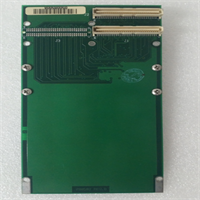
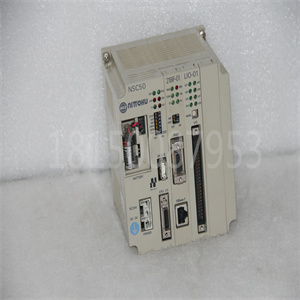
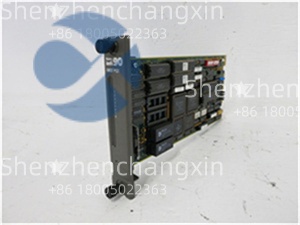
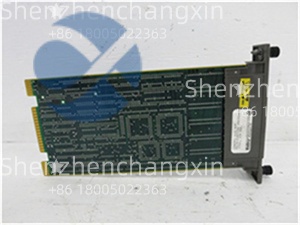
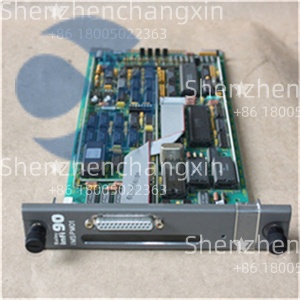
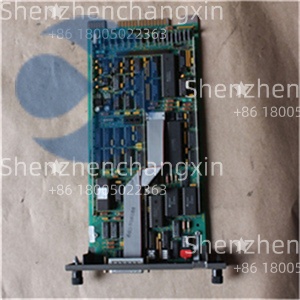
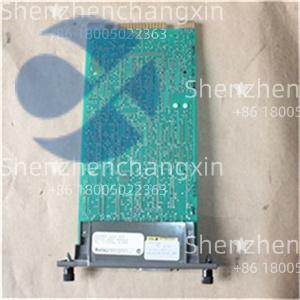
ABB PFSK102 Safety Controller | SIL/PL Rated Safety Module缩略图

ABB PFSK102 Safety Controller | SIL/PL Rated Safety Module
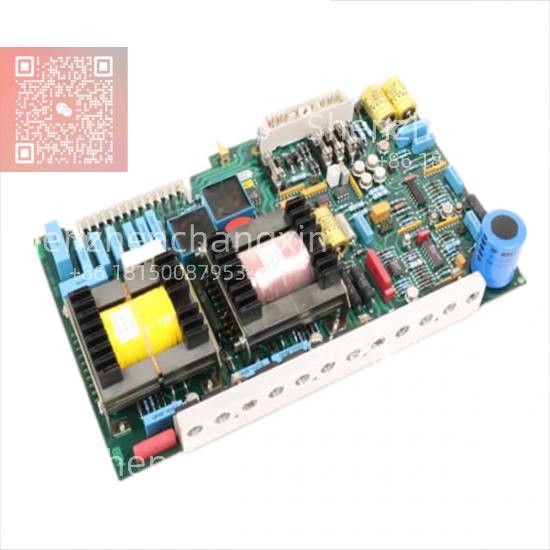
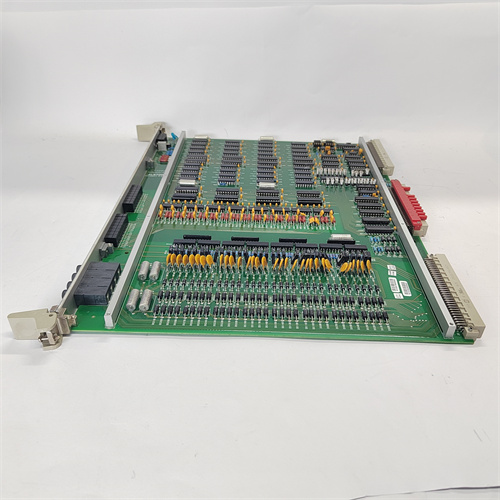
ABB PFSK102 Safety Controller | SIL/PL Rated Safety Module插图

Description

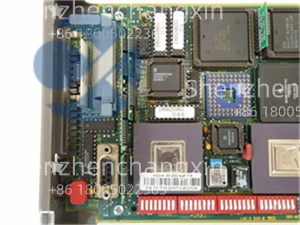
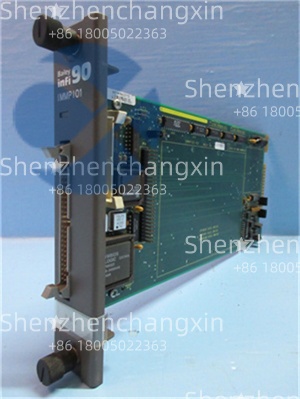
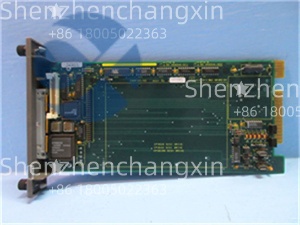
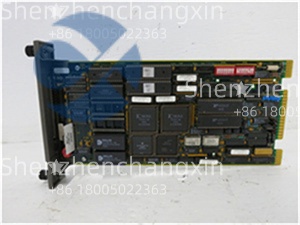
The ABB PFSK102 (YM322001)​ is a configurable safety relay module, forming a core component of a safety-related control system. It is designed to reliably monitor safety devices (like E-Stop buttons, safety gates, light curtains) and, based on their status, safely disconnect power to hazardous machine functions, thereby achieving a Safe Torque Off (STO) or similar safe state to protect personnel and equipment.

Application Scenarios

In an automated press line, operators need periodic access to clear jams. A hinged safety gate with an interlock switch protects the hazardous area. A fault in the monitoring circuit could allow the press to cycle with the gate open, leading to a catastrophic injury. The ABB PFSK102​ safety relay is installed to monitor this gate switch. Its internally redundant and monitored circuits ensure that if the gate is opened, the relay’s safety contacts immediately and reliably cut power to the press’s main drive contactor, bringing it to a stop. Furthermore, it monitors its own output contacts and wiring for faults. If a contact welds or a wire breaks, the PFSK102​ will detect the fault, lock out the system, and require a manual reset, preventing an unsafe restart. This scenario demonstrates its role in solving the critical need for functional safety—ensuring a safety function works correctly even when a fault occurs.

Parameter

Technical Principles and Innovative Values

The ABB PFSK102​ embodies the principles of fail-safe design and diagnostic coverage, moving beyond simple switching to intelligent, self-checking safety.

Innovation Point 1: Redundant, Diverse, and Monitored Internal Architecture.​ Unlike a standard relay, the PFSK102​ incorporates at least two independent internal switching channels. It uses diverse technologies (e.g., mechanical relays and semiconductor switches) and continuously cross-checks them. If a discrepancy is detected (e.g., one channel is stuck on), the module will fault and drive the outputs to a safe state. This “fault detection” is the core innovation that allows it to achieve high Safety Integrity Levels (SIL) and Performance Levels (PL).

Innovation Point 2: High Diagnostic Coverage (DC) and Safe Failure Fraction (SFF).​ The module is designed to detect a very high percentage of possible dangerous internal failures (high Diagnostic Coverage). It monitors its own power supply, processor, and output contact status. This high DC contributes to a high Safe Failure Fraction, meaning most failures will be detected and lead to a safe shutdown, rather than remaining undetected and allowing a hazardous situation.

Innovation Point 3: Configurable Logic for Complex Safety Functions.​ The PFSK102​ often includes configurable logic (via hardware wiring, DIP switches, or software). This allows a single module to implement complex safety functions like a two-hand control, mode selector, or monitoring multiple interlock switches in series/parallel. This flexibility simplifies panel design, reduces the number of components, and increases reliability compared to a system built from multiple basic safety relays.

Application Cases and Industry Value

Case Study: Safety System Upgrade for a Robotic Welding Cell

An automotive parts manufacturer needed to upgrade the safety system around a robotic welding cell to meet new corporate safety standards (PL d). The existing system used a single-channel relay to monitor the safety gate, offering no fault detection.

Solution & Outcome:​ A new safety circuit was designed around an ABB PFSK102​ module. It was configured to monitor a dual-channel safety gate switch (with N.O. and N.C. contacts) and a dual-channel E-Stop button. The PFSK102’s redundant inputs and internal monitoring created a Category 3. PL d system according to ISO 13849. After installation, during a routine test, a fault was simulated by shorting one channel of the gate switch. The PFSK102​ immediately detected the discrepancy, triggered a safety shutdown, illuminated a fault indicator, and locked out the system until a qualified technician investigated and performed a manual reset. The plant safety engineer stated: “The PFSK102​ didn’t just make us compliant; it gave us confidence. We now have diagnostics that tell us ifthe safety system is healthy, not just thatit worked the last time someone opened the gate.”

Related Product Combination Solutions

The ABB PFSK102​ is the central logic unit in a complete safety system, interfacing with various field devices and final switching elements.

Safety Input Devices:​ Dual-channel E-Stop buttons, safety gate switches (with N.O. and N.C. contacts), safety light curtains, laser scanners, and two-hand control stations. These provide the safety signals to the PFSK102.

Safety Output Devices / Actuators:​ The safety contacts or OSSDs of the PFSK102​ are typically wired to the coil circuit of a main contactor or safety relay​ (like an ABB AF series contactor with forced-guided contacts) that disconnects power to motors, or directly to drives with a Safe Torque Off (STO)​ input.

Diagnostic & Indication Devices:​ Fault reset buttons with enabling switches, beacon stack lights, and HMI displays can be connected to the auxiliary signaling contacts of the PFSK102​ to provide operator feedback.

Safety PLCs (e.g., ABB AC 500-S):​ For larger, more complex safety systems, multiple PFSK102​ modules or their signals may interface with a safety PLC that coordinates multiple safety functions.

Standard 24V DC Power Supply:​ A reliable, possibly redundant, 24V DC power supply (e.g., an ABB CP series) is required to power the PFSK102​ logic.

Installation, Maintenance, and Full-Cycle Support

Installation of the ABB PFSK102​ must be performed by qualified personnel following all applicable safety standards and the manufacturer’s instructions. It involves mounting on a DIN rail, connecting the 24V DC power, wiring the safety input devices (often in a dual-channel configuration), and connecting the safety outputs to the final switching elements (e.g., contactor coils). A critical step is the functional safety validation, which includes checking all safety functions, testing the reset circuit, and verifying that faults are correctly detected and indicated. Proper documentation (wiring diagrams, FMEA) is essential.

Routine maintenance involves periodic testing of the entire safety function, as required by law (e.g., annually). This includes actuating all safety devices (E-Stops, gates) to ensure they cause a shutdown and checking that the reset function works as intended. The PFSK102’s diagnostic LEDs (Power, Run, Fault, Channel Status) are the first point of inspection. If a fault is indicated, the system is locked in a safe state. Troubleshooting involves using the manual to interpret the LED codes, checking field device wiring for shorts/opens, and verifying the external contactor. Our full-cycle support includes assistance with safety system design to achieve the required SIL/PL, supply of certified safety components, and guidance on validation and periodic testing procedures to ensure your safety system remains effective and compliant throughout its lifecycle.

Contact us for expert support in designing, sourcing, and validating your machine safety system with the reliable ABB PFSK102 safety relay.
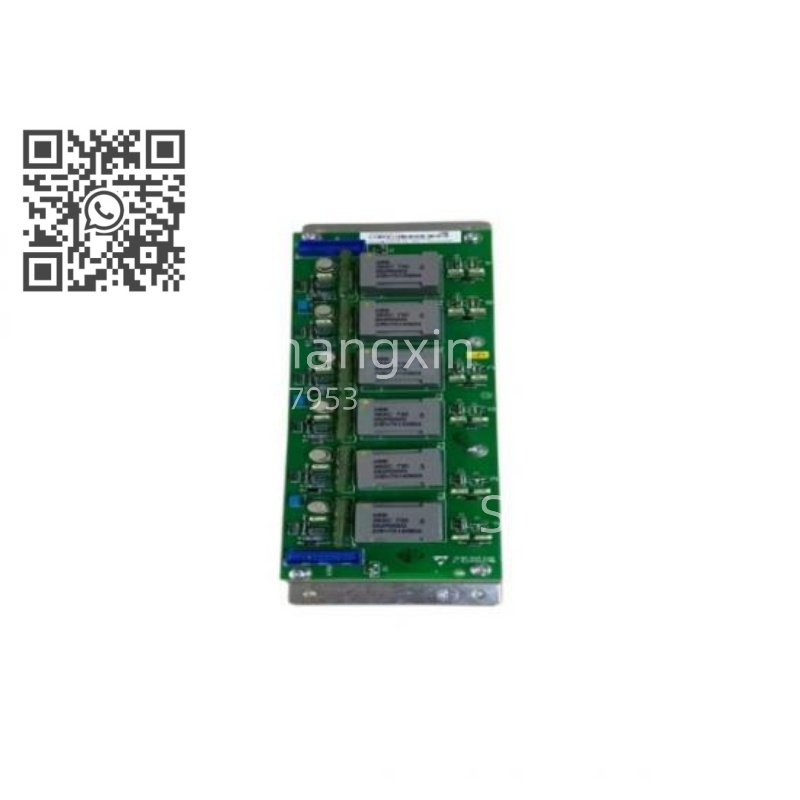
ABB XV-C768-AFC116 Communication Interface Module | AFC116 Protocol Module缩略图

ABB XV-C768-AFC116 Communication Interface Module | AFC116 Protocol Module

ABB XV-C768-AFC116 Communication Interface Module | AFC116 Protocol Module插图Description

The ABB XV-C768-AFC116​ is a communication interface module designed for ABB’s automation systems. It serves as a protocol gateway or communication processor, enabling data exchange between ABB controllers and various field devices, sub-systems, or higher-level networks using specific industrial protocols.

Application Scenarios

In a modern water treatment plant, the control system needs to gather data from various intelligent field devices—such as flow meters, quality analyzers, and pump controllers—that communicate using different industrial protocols. The central ABB DCS, however, operates on its native bus. The ABB XV-C768-AFC116​ module is installed in a controller rack to bridge this gap. Specifically configured for the AFC116 protocol (or a related standard), it acts as a translator. It polls data from a network of Modbus RTU flow meters, converts the data into a format understandable by the ABB controller, and vice-versa for control commands. This enables centralized monitoring and control without needing to replace all field instruments, solving the critical challenge of integrating multi-vendor, multi-protocol devices into a unified control architecture.

Parameter

Technical Principles and Innovative Values

The ABB XV-C768-AFC116​ embodies the principle of open integration, transforming a proprietary control system into a hub for heterogeneous device networks.

Innovation Point 1: Abstraction of Protocol Complexity.​ The module’s core innovation lies in its firmware, which contains a complete stack implementation of the AFC116​ protocol and a mapping engine. It handles all low-level communication details—bit timing, frame formatting, error handling—and presents a clean, standardized data interface (like process variables and statuses) to the main controller’s application layer. This abstraction allows control engineers to program logic using familiar data points (e.g., Flow_1) without needing to write complex serial communication code, dramatically simplifying system integration.

Innovation Point 2: Deterministic Communication Scheduling.​ Unlike a simple passive gateway, the XV-C768-AFC116​ is designed for industrial real-time requirements. It manages communication cycles deterministically, polling field devices according to a configured schedule. This ensures that critical data is updated at predictable intervals, which is essential for closed-loop control and alarm monitoring. It can also handle priority-based messaging, ensuring urgent commands (like an emergency stop) are processed before routine data polls.

Innovation Point 3: Robustness in Electrically Noisy Environments.​ The module is built to industrial standards, with galvanic isolation on its communication ports. This isolation creates a barrier that prevents ground loops, voltage spikes, and electrical noise from field wiring from damaging the sensitive electronics of the main controller. This inherent protection is a key differentiator from using a standard IT gateway and is critical for reliable operation in plant floor environments.

Application Cases and Industry Value

Case Study: Legacy System Integration in a Pulp & Paper Mill

A pulp mill upgraded its primary process control to a modern ABB system but had a critical legacy bleaching chemical preparation unit controlled by a standalone PLC using a non-ABB protocol. A hardwired I/O integration was costly and complex.

Solution & Outcome:​ An ABB XV-C768-AFC116​ module was installed in a new AC 800M controller rack. It was configured to communicate with the legacy PLC via the AFC116 protocol (emulating the PLC’s native peer-to-peer link). Within the ABB engineering station, all data points from the old PLC (tank levels, valve positions, pump statuses) appeared as native tags. This allowed operators to monitor and control the entire bleaching process from the new, unified ABB interface. The project engineer stated: “The XV-C768-AFC116​ gateway saved us over 200 hours of wiring and testing. We integrated the legacy unit in a week, not a month, and now have full visibility and control. It paid for itself in reduced downtime during the cutover.”

Related Product Combination Solutions

The XV-C768-AFC116​ functions as a vital bridge within a comprehensive control architecture.

ABB AC 800M / PM/PP Series Controllers:​ The host controller where the XV-C768-AFC116​ module is installed, providing the computational platform and system integration.

Controller Base Units / Backplanes (e.g., PU, CIU):​ The physical hardware that houses the controller CPU and communication modules like the XV-C768-AFC116. providing slot, power, and data bus.

System 800xA / Control Builder Engineering Software:​ Used to configure the XV-C768-AFC116​ module—setting up the protocol driver, defining device addresses, and mapping data points to controller tags.

Field Devices (PLCs, Drives, Meters):​ The endpoint devices (e.g., a specific make of VFD, weigh scale, or legacy PLC) that communicate using the protocol supported by the AFC116​ interface.

Communication Cables & Isolators:​ The physical layer (e.g., shielded RS-485 cable, terminators, signal isolators) required to connect the XV-C768-AFC116​ to the field network.

Other Communication Modules (e.g., CI854 for Profibus, CI871 for Ethernet):​ Modules that provide connectivity to other networks, working alongside the XV-C768-AFC116​ to create a multi-network controller.

Power Supply Unit:​ Provides stable 24V DC power to the controller base unit, which in turn powers the XV-C768-AFC116​ module.

Installation, Maintenance, and Full-Cycle Support

Installation is a systematic process: first, the controller system is powered down. The XV-C768-AFC116​ module is then securely inserted into a compatible slot on the controller’s base unit. Field-side communication cables (e.g., RS-485) are connected to its terminal block or connector, observing proper grounding and shielding practices. The crucial phase is software configuration using ABB’s engineering tools, where the engineer defines the protocol parameters, device addresses, and data mapping. Finally, the system is powered up, and communication is verified.

Routine maintenance is primarily monitoring-based. The module’s status is typically visible via LEDs (Power, Run, Comms, Error) and can be monitored through the engineering software for diagnostic counters (e.g., telegram errors, cyclic redundancy check failures). The primary causes of issues are often external: communication cable faults, loss of power to a field device, or configuration mismatches. Should the module itself fail, it is hot-swappable in many systems (when designed for redundancy), allowing for replacement without a full system shutdown. We provide comprehensive support for the XV-C768-AFC116. from initial protocol compatibility verification and configuration assistance to supplying guaranteed genuine or certified refurbished modules. Our technical team can help diagnose communication issues and ensure seamless integration of your field assets.

Contact us for expert support in integrating your field devices using the ABB XV-C768-AFC116 module or for sourcing this critical communication component

Yaskawa JEPMC-MC001 – OEM-Grade Motion Processor for Machine Builders

Yaskawa JEPMC-MC001 – OEM-Grade Motion Processor for Machine Builders插图
Description

The Yaskawa JEPMC-MC001 is the central motion control CPU module designed for Yaskawa’s MP2000 and MP3000 series programmable motion controllers. Serving as the “brain” of the system, it executes motion programs (written in MP Series Ladder or Motion Language), coordinates up to 62 axes via MECHATROLINK-II/III, handles I/O processing, and manages real-time communication with HMI, PLCs, and enterprise systems. Widely used in packaging, semiconductor, robotics, and material handling, the JEPMC-MC001 delivers deterministic, high-speed control with integrated logic and motion in a single platform.

Application Scenarios

At a high-speed bottling line in Germany, a legacy cam-driven filler was replaced with a fully servo-electric system using eight Yaskawa Σ-7 servos coordinated by an MP2300 controller equipped with a JEPMC-MC001 CPU. The JEPMC-MC001 executed synchronized electronic gearing and camming profiles at a 1 ms cycle time, enabling 40.000 bottles/hour with ±0.1 mm positioning accuracy. When a network glitch briefly disrupted one axis, the built-in error recovery logic—processed entirely on the JEPMC-MC001—prevented a full line stop. The machine builder credited the JEPMC-MC001’s integrated architecture for cutting development time by 50% compared to separate PLC + motion solutions.

Parameter

表格

Technical Principles and Innovative Values

Innovation Point 1: Integrated Logic + Motion in One CPU

Unlike traditional architectures requiring separate PLC and motion controllers, the JEPMC-MC001 unifies both functions—reducing latency, simplifying programming, and eliminating synchronization issues.

Innovation Point 2: MECHATROLINK Real-Time Determinism

With hardware-accelerated MECHATROLINK support, the JEPMC-MC001 achieves jitter <1 µs, enabling precise multi-axis coordination for applications like flying shears or delta robots.

Innovation Point 3: Onboard Diagnostics & Web Access

Built-in web server allows remote monitoring of axis status, alarms, and program execution via standard browser—no proprietary software required for basic diagnostics.

Innovation Point 4: Scalable from 2 to 62 Axes

The same JEPMC-MC001 can control a simple 2-axis pick-and-place or a complex 62-axis printing press—offering machine builders a single platform for diverse product lines.

Application Cases and Industry Value

In a Japanese electronics assembly factory, a flexible PCB test handler used a JEPMC-MC001-based MP2400 system to coordinate 12 servo axes for part loading, probing, and sorting. The ability to store multiple motion recipes in the JEPMC-MC001’s flash memory allowed instant product changeovers—boosting OEE by 22%. Over five years, the system achieved 99.98% uptime, with field engineers praising the module’s robustness in high-EMI environments near RF testers. The total cost of ownership was 30% lower than competing PC-based motion solutions due to reduced engineering and maintenance effort.

Related Product Combination Solutions

Yaskawa MP2300 / MP2400 / MP3300: Base controller racks—host the JEPMC-MC001 CPU

Yaskawa JEPMC-IO001: Digital I/O module—expands local I/O capacity alongside JEPMC-MC001

Yaskawa Σ-7 / Σ-5 Servo Drives: High-response drives—communicate via MECHATROLINK with JEPMC-MC001

Yaskawa MotionWorks IEC: Programming software—used to develop and debug logic/motion on JEPMC-MC001

Yaskawa JEPMC-ES300: Ethernet module—adds Modbus TCP, EtherNet/IP, or PROFINET (via gateway)

Yaskawa MP2000 HMI Options: Touch panels—integrate seamlessly via built-in web server or serial link

Yaskawa MECHATROLINK Cables & Terminals: Certified network components—ensure signal integrity for JEPMC-MC001 networks

Yaskawa SigmaWin+: Drive tuning suite—works in tandem with JEPMC-MC001 for system-level optimization

Installation, Maintenance, and Full-Cycle Support

The JEPMC-MC001 installs directly into the CPU slot of an MP2000/MP3000 backplane. After power-up, it auto-detects connected MECHATROLINK slaves and I/O modules. Programs are loaded via USB, Ethernet, or CF card. A lithium battery (replaceable every 3–5 years) preserves absolute position data during power loss.

For long-term reliability:

Ensure adequate cabinet ventilation (max ambient 55°C)

Use Yaskawa-certified MECHATROLINK cables with proper termination

Regularly back up programs using MotionWorks IEC or FTP

We supply JEPMC-MC001 units in multiple conditions:

New Surplus: Original sealed stock, full warranty

Reconditioned: Fully tested, cleaned, firmware-updated, 12-month warranty

Refurbished with Battery Replacement: Includes fresh backup battery and full functional validation

Each unit undergoes rigorous testing for boot integrity, MECHATROLINK communication, I/O scan, and motion task execution. We provide compatibility verification for your specific MP-series base and firmware version.

Contact us for a customized solution—including programming support, network topology review, or global logistics for multi-machine deployments. Keep your motion systems running with the intelligence they were engineered to rely on.
Yaskawa JEPMC-MC001 – OEM-Grade Motion Processor for Machine Builders插图1

Embedded PC Controller: JEPMC-PC040 for Complex Packaging & Semiconductor Machines缩略图

Embedded PC Controller: JEPMC-PC040 for Complex Packaging & Semiconductor Machines

Embedded PC Controller: JEPMC-PC040 for Complex Packaging & Semiconductor Machines插图
Description

The Yaskawa JEPMC-PC040 is a powerful embedded PC-based motion controller designed for Yaskawa’s MP2300 and MP3300 machine automation platforms. Combining a real-time operating system (Windows CE), high-speed CPU, and integrated motion control engine, it enables complex, multi-axis coordination—supporting up to 64 axes via MECHATROLINK-III or EtherCAT. The JEPMC-PC040 serves as both a motion CPU and application host, capable of running custom HMI, vision integration, data logging, and communication protocols—all within a single compact module.

Application Scenarios

At a high-speed flexible packaging line in Germany, a legacy PLC struggled to synchronize 24 servo axes during product changeovers, causing jams and downtime. Engineers replaced the controller with a Yaskawa MP3300 system featuring the JEPMC-PC040. Leveraging its built-in motion engine and Windows CE environment, they deployed a custom HMI with recipe management and real-time cam profiling. Cycle times dropped by 18%, and changeover time was reduced from 45 minutes to under 8 minutes. The JEPMC-PC040’s ability to run motion logic and operator interface on one platform eliminated external PCs—simplifying architecture and improving reliability.

Parameter

表格

Technical Principles and Innovative Values

Innovation Point 1: Unified Motion + Application Platform

The JEPMC-PC040 eliminates the need for separate HMI or IPC units by hosting both real-time motion control and user applications (e.g., recipe managers, OPC servers) on one module—reducing footprint and cost.

Innovation Point 2: Deterministic Motion on Windows CE

Despite using a commercial OS, Yaskawa’s real-time kernel extension ensures microsecond-level motion determinism—critical for flying shear, electronic gearing, and CNC interpolation.

Innovation Point 3: Native MECHATROLINK-III Integration

Direct support for Yaskawa’s high-speed servo network enables jitter-free synchronization of dozens of Σ-7 servos with minimal configuration.

Innovation Point 4: Open Development Environment

Developers can create custom .NET Compact Framework apps in C# or VB.NET that interact directly with motion variables—enabling advanced analytics, cloud connectivity, or vision-guided robotics.

Application Cases and Industry Value

In a Japanese semiconductor wafer handling system, precision alignment required sub-micron coordination between 8 linear motors and 4 rotary stages. The JEPMC-PC040 executed complex path planning while simultaneously processing camera feedback via a custom C# application. Over 18 months, the system achieved 99.98% uptime, with zero motion-related faults. The integrator noted that the JEPMC-PC040’s “single-box intelligence” cut development time by 40% compared to traditional PLC + IPC architectures.

Related Product Combination Solutions

Yaskawa MP3300: Main controller base—hosts the JEPMC-PC040 and I/O modules

Yaskawa Σ-7 Servo Drives: High-response servos—natively synchronized via MECHATROLINK-III from JEPMC-PC040

MotionWorks IEC Pro: Engineering software—used to program PLC, motion, and HMI logic for JEPMC-PC040

JEPMC-MXN01: MECHATROLINK-III master module—optional for expanded axis count or redundancy

JEANC-EP01: EtherCAT master module—enables third-party drive integration alongside Yaskawa servos

CF Cards (Yaskawa-approved): For application storage, data logging, and firmware backup

SGDV / SGD7S Servo Amplifiers: Paired with JEPMC-PC040 for high-bandwidth motion control

Yaskawa HMI (GP4000): Optional external display—though often unnecessary due to built-in HMI capability

Installation, Maintenance, and Full-Cycle Support

The JEPMC-PC040 installs directly into the MP2300/MP3300 rack and draws power from the backplane. Configuration is performed via MotionWorks IEC over Ethernet. Applications can be deployed via CF card or network download. The module supports remote desktop (VNC) for diagnostics and includes watchdog timers for automatic recovery.

For long-term reliability, avoid excessive vibration and ensure adequate ventilation. The internal flash memory is rated for >100.000 write cycles—suitable for continuous data logging.

We supply genuine, factory-tested JEPMC-PC040 units with full compatibility verification for your MP series firmware version. Each module undergoes boot-up validation, motion loop test, and communication stress testing. Backed by a 12-month warranty and access to Yaskawa-certified engineers, our JEPMC-PC040 solutions ensure your high-performance machines stay intelligent, synchronized, and productive.

Contact us for a customized solution—including application migration support, performance tuning, or global logistics for OEM production lines. When your machine demands more than just motion—demand intelligence in a single module.
Embedded PC Controller: JEPMC-PC040 for Complex Packaging & Semiconductor Machines插图1

Embedded PC Controller: JEPMC-PC040 for Complex Packaging & Semiconductor Machines插图2

Ameritec AM2-A – Field-proven T1 E1 J1 BER tester with real-time error monitoring缩略图

Ameritec AM2-A – Field-proven T1 E1 J1 BER tester with real-time error monitoring

Ameritec AM2-A – Field-proven T1 E1 J1 BER tester with real-time error monitoring插图

Description

The Ameritec AM2-A is a compact, battery-powered digital transmission test set engineered for installation, maintenance, and troubleshooting of T1 (1.544 Mbps), E1 (2.048 Mbps), and J1 (Japan variant) circuits in telecommunications and industrial control networks. As a dedicated DS1/PDH analyzer, the AM2-A delivers comprehensive bit error rate (BER) testing, alarm generation, loopback control, and performance analysis compliant with ITU-T G.821. G.826. and ANSI T1.107 standards—making it indispensable for carriers, utilities, and system integrators managing mission-critical leased lines or legacy backhaul infrastructure.

Application Scenarios

At a North American electric utility modernizing its substation telemetry network, engineers relied on aging copper T1 links to carry SCADA data between remote RTUs and the control center. After repeated unexplained outages, field crews deployed the Ameritec AM2-A to qualify each circuit. Within minutes, the device detected intermittent CRC errors correlated with nearby switching transients—a condition invisible to standard ping tests. By running a 24-hour G.826-compliant stress test with the AM2-A, they proved the line failed SLA thresholds, compelling the telecom provider to replace degraded cabling. The utility avoided weeks of guesswork and restored NERC CIP-compliant data integrity—all thanks to the precision diagnostics of the AM2-A.

Parameter

表格

Technical Principles and Innovative Values

Innovation Point 1: True Dual-Mode Protocol Awareness – Unlike generic BER testers, the AM2-A intelligently decodes framing structures (e.g., ESF vs. D4) and extracts FDL messages, enabling active participation in carrier loopback sequences without disrupting live traffic.

Innovation Point 2: Industrial-Grade Resilience – Built for substations, rail yards, and cell towers, the AM2-A withstands EMI, humidity, and temperature swings that would cripple consumer-grade tools—ensuring reliability where network uptime is non-negotiable.

Innovation Point 3: One-Touch Compliance Reporting – With a single button, the AM2-A executes pre-defined G.821/G.826 test plans and generates pass/fail summaries—accelerating service turn-up and SLA validation for field technicians.

Innovation Point 4: Legacy Network Lifeline – As carriers sunset PDH, the AM2-A remains critical for industries still dependent on T1/E1 for SCADA, protection relays, and voice trunks—providing the only cost-effective way to maintain these systems without full migration.

Application Cases and Industry Value

In a European railway signaling upgrade project, legacy E1 links carried interlocking commands between wayside cabinets. During acceptance testing, the Ameritec AM2-A identified timing slips caused by mismatched clock sources—a subtle flaw that could have led to signal misinterpretation. Correcting the sync hierarchy before go-live prevented potential safety hazards. Similarly, at an oil & gas pipeline SCADA hub in Canada, the AM2-A’s ability to simulate RAI (Remote Alarm Indication) helped validate end-to-end fault propagation across 12 repeater sites, ensuring operators received timely alerts during line cuts.

Related Product Combination Solutions

Ameritec AM2-B: Enhanced version of the AM2-A with Ethernet/IP testing capabilities for hybrid TDM/IP networks.

Viavi T-BERD/MTS-2000: Successor platform offering OTDR, Ethernet, and SONET/SDH in addition to T1/E1—ideal for multi-technology teams.

RAD FCD-100: T1/E1-to-Ethernet demarcation device often tested using the AM2-A during service handoffs.

ABB TB5xx I/O Systems: Frequently connected via T1/E1 leased lines in remote plants—validated by the AM2-A for communication integrity.

GE Multilin UR Series Relays: Use T1/E1 for peer-to-peer tripping; the AM2-A ensures link BER stays below 10⁻⁹ for protection reliability.

Cisco 1841 Router with WIC-1DSU-T1-V2: Common edge device whose T1 interface can be loop-tested using the AM2-A.

Fluke Networks OptiView XG: For layered validation—AM2-A tests Layer 1. while OptiView handles IP-layer diagnostics.

Telco Alarms Panel (e.g., DPS Telecom NetGuardian): Integrates T1 fault inputs often verified during commissioning with the AM2-A.

Installation, Maintenance, and Full-Cycle Support

The Ameritec AM2-A requires no installation—simply connect it in-service (via monitor mode) or out-of-service (as master/slave) using the appropriate cable (RJ-48 for T1. BNC for E1). Its intuitive menu-driven interface allows even novice technicians to run BER tests, insert alarms, or activate loopbacks within minutes. Firmware updates are rare but supported via serial port.

For long-term reliability, we recommend annual calibration and battery replacement every 2–3 years. All units we supply undergo full functional verification: BER accuracy (<10⁻¹²), alarm generation, FDL response, and physical connector integrity. Each AM2-A includes a protective carrying case, test leads, and a quick-reference guide.

Backed by our 12-month warranty and technical support from ex-telecom field engineers, we ensure your Ameritec AM2-A remains a trusted asset in maintaining the “last mile” of critical infrastructure.

Contact us for a customized solution—whether you’re certifying a new T1 circuit, troubleshooting intermittent SCADA dropouts, or maintaining legacy industrial networks, the Ameritec AM2-A delivers carrier-grade precision in a field-ready package.

High-Speed Laser Sensor KEYENCE ML-9100 | Online Inspection缩略图

High-Speed Laser Sensor KEYENCE ML-9100 | Online Inspection

High-Speed Laser Sensor KEYENCE ML-9100 | Online Inspection插图
Description

The KEYENCE ML-9100​ is a high-performance, non-contact laser displacement sensor system designed for ultra-precise measurement and inspection in industrial applications. Part of KEYENCE’s renowned laser micrometer series, it utilizes a scanning laser beam to perform fast, accurate measurements of dimensions such as thickness, width, height, and position. It is engineered for challenging online measurement tasks where contact methods are impossible or where high speed and precision are critical, such as in the production of rubber, film, metal, and electronic components.

Application Scenarios

In a high-speed lithium-ion battery electrode coating line, the uniformity of the active material coating is paramount. A variation of just a few microns can critically impact battery performance and lifespan. A KEYENCE ML-9100​ laser micrometer is installed directly over the moving foil. It scans a focused laser beam across the foil’s width at an extremely high rate. As the beam traverses, it precisely measures the distance to the surface, generating a real-time profile of the coating thickness. The system’s controller instantly calculates the average thickness, minimum, maximum, and standard deviation. If the thickness drifts outside the stringent tolerance band, the ML-9100 outputs an alarm signal to the PLC, which can automatically adjust the coating head. This application solves the core problem of preventing wasteby enabling 100% inspection and real-time process control, ensuring every meter of coated foil meets specification, directly saving material costs and preventing downstream assembly issues.

Parameter

Technical Principles and Innovative Values

The KEYENCE ML-9100 employs a sophisticated scanning laser triangulation method, setting it apart from simpler point-sensor lasers.

Innovation Point 1: Scanning Beam for Profile Capture.​ Unlike a single-point sensor that measures only one spot, the ML-9100 uses a rotating polygonal mirror to sweep the laser beam at high speed across the target surface. A high-speed CMOS array captures the reflected light. This allows it to capture an entire cross-sectional profilewith a single scan, enabling simultaneous measurement of multiple features like width, gap, and height difference, not just a single point’s displacement.

Innovation Point 2: Ultra-High-Speed Sampling & Advanced Algorithms.​ It captures tens of thousands of data points per second. This massive dataset is processed in real-time by proprietary KEYENCE algorithms. These algorithms can filter out noise from vibration or surface texture, accurately detect edges even on semi-transparent or low-reflectivity materials, and calculate derived values (like min/max/average thickness) with extreme stability. This speed and processing power are what enable reliable measurement on fast-moving production lines.

Innovation Point 3: Ease-of-Use & Robustness.​ Despite its internal complexity, the system is designed for quick setup. The controller features an intuitive touch screen interface for guided programming. The sensor head is built to withstand industrial environments, often with an IP67 rating for dust/water resistance. KEYENCE’s “2-point teaching” method allows users to easily calibrate the measurement by simply placing the target at two known reference points, eliminating complex manual calculations.

Application Cases and Industry Value

Case Study: Automotive Gasket Manufacturing, Germany.​ A manufacturer of precision metal/rubber composite gaskets faced high scrap rates due to inconsistencies in rubber bead height and width, leading to sealing failures. Manual sampling with calipers was slow and missed variations. They installed a KEYENCE ML-9100​ system above the conveyor post-curing. The laser scans each part, instantly measuring bead profile at multiple cross-sections. Parts are automatically sorted by the system’s judgment output. The result was a 60% reduction in scrap​ and the elimination of warranty claims related to sealing. The system paid for itself in under 4 months. The plant manager highlighted the ML-9100’s ability to measure the soft, curved rubber bead without contact as the key breakthrough.

Case Study: Ultra-Thin Polyester Film Production, Japan.​ A producer of optical films for displays struggled with nanometer-level thickness variations causing “Newton’s rings” (interference patterns) in the final product, leading to visual defects. Contact measurement was impossible without damaging the film. A KEYENCE ML-9100​ with a specialized model for transparent films was installed. Its advanced algorithm compensated for the film’s translucency and internal reflections. It provided real-time thickness trend data with sub-micron repeatability, allowing immediate feedback control to the extrusion die. This enabled a five-fold reduction in thickness variation​ and allowed the company to enter a new, high-margin market for premium optical films, generating millions in new annual revenue.

Related Product Combination Solutions

The ML-9100 is often part of a complete measurement or control solution.

Controller (e.g., ML-9500/ML-9600):​ The separate processing unit that powers the sensor head, houses the interface, and runs the software. The user programs measurements and views data here.

Sensor Head Mounting Fixtures & Stages:​ Precision mechanical mounts, slides, and alignment stages to position the sensor head accurately and stably relative to the target.

External Display Units:​ KEYENCE or third-party monitors for displaying measurement results on the shop floor away from the main controller.

I/O Link Master Modules:​ For seamless integration into factory networks, especially with PLCs from manufacturers like Siemens or Omron, simplifying wiring and data handling.

Data Logging Software (e.g., KEYENCE LogiRecorder):​ PC software for recording long-term measurement trends, performing statistical process control (SPC), and generating reports.

Rejection Mechanisms:​ Solenoid pushers, air blowers, or robotic arms that are triggered by the ML-9100’s judgment output to remove defective parts from the line.

PLC/HMI Systems:​ The broader factory control system (e.g., Siemens S7-1500. Mitsubishi FX5) that receives measurement data from the ML-9100 for higher-level process control and operator visualization.

Installation, Maintenance, and Full-Cycle Support

Installation requires careful mechanical mounting of the sensor head perpendicular to the target surface at the specified working distance. The controller is typically mounted in a control panel. They are connected via a dedicated cable. Setup involves:

Connection:​ Wiring power, I/O, and communication cables to the controller.

Teaching:​ Using the controller’s touchscreen to perform a simple 2-point calibration with master samples of known dimension.

Programming:​ Setting up the measurement parameters (which points on the profile to analyze), tolerance limits, and output logic.

Maintenance is minimal. The primary task is keeping the sensor head’s lens clean from dust or debris using approved methods. Regular calibration checks with a master sample are recommended. The controller provides comprehensive self-diagnostics.

We provide end-to-end support: from initial application evaluation​ (we can often test your sample parts), to system configuration and sales, on-site installation guidance, and ongoing technical support. We can supply genuine KEYENCE sensors, accessories, and offer calibration services to ensure your measurement system maintains its specified accuracy, maximizing your production quality and yield.

Struggling with precision measurement challenges? Contact us for a free application evaluation. Our experts can test your samples with the KEYENCE ML-9100 and demonstrate its potential to solve your quality control issues.
High-Speed Laser Sensor KEYENCE ML-9100 | Online Inspection插图1

High-Speed Laser Sensor KEYENCE ML-9100 | Online Inspection插图2

ABB INICT03A Fieldbus Interface | System Integration Module缩略图

ABB INICT03A Fieldbus Interface | System Integration Module

ABB INICT03A Fieldbus Interface | System Integration Module插图
Description

The ABB INICT03A​ is a legacy communication interface module developed for ABB’s MOD 300 and Advant distributed control system families. This board serves as a specialized network or fieldbus interface, enabling controllers and operator stations to communicate over specific industrial networks. It functions as a critical gateway, facilitating deterministic data exchange between different nodes within the control system architecture, ensuring synchronized operation and consistent data availability across the automation environment.

Application Scenarios

In a large chemical plant’s batch processing facility, reliable data exchange between the main process controllers and dedicated safety systems is paramount. The ABB INICT03A​ modules installed within the Advant Controller AC 450 racks serve as the dedicated communication channel for this purpose. One INICT03A​ might manage a high-integrity serial link to a dedicated safety PLC, continuously exchanging permissive and interlock signals. Another could interface with a proprietary motor control network. The module’s role is to provide a stable, deterministic, and isolated communication path for these critical but non-standard data flows. This isolates mission-critical traffic from the main operator network, ensuring that safety commands or drive controls are executed with minimal and predictable latency. Its failure would sever these vital links, potentially causing a process shutdown or loss of critical supervisory control, highlighting its function as a specialized communication nerve center.

Parameter

Technical Principles and Innovative Values

The ABB INICT03A​ represents a modular approach to system integration common in its era, allowing complex control systems to connect to diverse industrial networks.

Innovation Point 1: Protocol-Specific Hardware Offloading.​ The INICT03A​ was designed to handle the complete protocol stack of a specific network in dedicated hardware. This offloaded the complex, time-critical tasks of message framing, error checking, and media access control from the controller’s main CPU. This ensured that communication with specialized devices (like drives, weigh scales, or remote I/O) was both reliable and did not impact the controller’s primary scan time, maintaining deterministic control performance.

Innovation Point 2: Modular and Scalable System Architecture.​ By making network connectivity a plug-in module, the Advant system architecture gained significant flexibility. Engineers could select the specific INICT03A​ (or similar) interface required for a given application—be it a serial link, a sensor bus, or a peer-to-peer controller link—without changing the base controller hardware. This allowed for cost-effective customization and simplified system expansion.

Innovation Point 3: Deterministic and Robust Communication.​ The module was engineered for industrial environments, featuring electrical isolation, noise-immune transceivers, and robust connectors. For its target network, it provided deterministic data exchange, meaning data delivery times were bounded and predictable. This was crucial for applications like high-speed synchronization or safety interlocking, where random network delays were unacceptable.

Application Cases and Industry Value

Case Study: Steel Mill Finishing Line, Germany.​ A hot-dip galvanizing line used an ABB Advant system for process control. A critical requirement was high-speed, synchronized control of multiple sectional drives to maintain strip tension. This was achieved via a dedicated, high-speed serial network managed by INICT03A​ modules in each drive controller and the main Advant controller. The modules ensured microsecond-level synchronization of speed references. When one INICT03A​ in a legacy drive controller failed, it caused timing jitter, leading to strip flutter and product defects. Sourcing a refurbished INICT03A​ allowed for a like-for-like replacement that restored perfect synchronization without modifying any control logic, avoiding weeks of production downtime and potential system re-engineering. The module’s value was in preserving a complex, finely-tuned integration.

Case Study: Legacy Packaging Line Support, Food & Beverage.​ A high-speed bottling line from the late 1990s used an ABB Advant controller to manage conveyors and fillers, communicating with dozens of distributed servo drives via a now-obsolete sensor-actuator bus. The INICT03A​ module in the AC 450 controller was the master of this bus. When the module showed signs of intermittent failure, the plant faced a major dilemma: replace the entire control system at great cost and disruption, or find a spare. By procuring a tested INICT03A, they performed a direct swap during a scheduled maintenance weekend. The line was back in operation on Monday with zero changes to the proven application software, demonstrating the immense value of legacy component support in preserving capital investment and operational knowledge.

Related Product Combination Solutions

The ABB INICT03A​ was one of several communication options within the MOD 300/Advant ecosystem. Key related components include:

Advant Controller AC 450 / AC 410:​ The main process controller chassis into which the INICT03A​ module would be installed, providing the computational power and backplane connection.

Other Communication Modules (e.g., IMCIS02. IMMFP01):​ Different modules that handled other network types (e.g., the main OCS network, MB300). A controller could host multiple different communication modules simultaneously.

S800 I/O or other Remote I/O:​ The field devices that might be connected via the network served by the INICT03A, such as remote digital/analog I/O stations.

Specialized Field Devices:​ The third-party devices (servo drives, weigh scales, bar code readers) that used the specific protocol of the INICT03A​ for integration.

Operator Station (OCS):​ While the OCS typically used other modules (like IMMFP01) to talk to controllers, the INICT03A​ might be used in the OCS to connect to specialized sub-systems.

System Engineering Station:​ The software tool used to configure the controller, which also included configuration options for the INICT03A​ module’s network parameters and data exchange tables.

Installation, Maintenance, and Full-Cycle Support

Installation of the ABB INICT03A​ requires system power-down and ESD precautions. The module is inserted into a free slot in the Advant controller or station unit, securely fastened, and connected to its external network cable via the front or side connector. Configuration is performed using the MOD 300/Advant system engineering software, where the module type is selected, its hardware address is set (often via DIP switches on the board), and the data exchange between the controller’s memory and the network is mapped. This configuration is then downloaded to the controller.

Routine maintenance involves monitoring the module’s status LEDs for normal activity (power, network traffic) and ensuring the connected network cabling is secure. Diagnostics are primarily available through the system’s engineering or diagnostic software, which can report module health and communication errors. In the event of a suspected fault, swapping with a known-good module is a common diagnostic step. We provide comprehensive lifecycle support for such legacy components. This includes supplying fully refurbished and tested INICT03A​ modules, configuration backup/restore assistance, and technical guidance for troubleshooting and replacement procedures to minimize your system’s downtime and risk.
ABB INICT03A Fieldbus Interface | System Integration Module插图1

ABB INICT03A Fieldbus Interface | System Integration Module插图2

ABB IMMPI01+ – Passive 1:1 Pulse Splitter for Symphony Plus & AC 800M缩略图

ABB IMMPI01+ – Passive 1:1 Pulse Splitter for Symphony Plus & AC 800M

ABB IMMPI01+ – Passive 1:1 Pulse Splitter for Symphony Plus & AC 800M插图
Description

The ABB IMMPI01+ is a passive, redundant pulse input interface module engineered for ABB’s AC 800M and Symphony Plus distributed control systems. It enables high-integrity acquisition of frequency, pulse, or encoder signals—such as from turbine tachometers, flow meters, or speed probes—by splitting a single field signal to two independent pulse input (PI) modules. This redundancy ensures continuous, fail-safe monitoring of critical rotating equipment, making the IMMPI01+ indispensable in power generation, oil & gas, and heavy industry.

Application Scenarios

At a combined-cycle power plant in Southeast Asia, a single-point failure in a gas turbine speed feedback loop caused an unplanned trip during peak demand—costing over $ 1.5 million in lost revenue and grid penalties. To eliminate this risk, engineers replaced the legacy I/O with the ABB IMMPI01+, routing each magnetic pickup signal to two redundant PI810 modules via a single IMMPI01+ base. Months later, when one PI card failed due to EMI from a nearby VFD, the backup channel maintained seamless speed control. The IMMPI01+’s noise-resistant design and true hardware redundancy not only prevented another outage but also satisfied new NERC compliance requirements for critical machinery protection.

Parameter

表格

Technical Principles and Innovative Values

Innovation Point 1: Ultra-Low-Jitter Passive Splitting

The IMMPI01+ uses precision impedance-matched circuitry to split high-frequency pulse trains without signal distortion or timing skew—critical for accurate RPM calculation and surge detection in compressors.

Innovation Point 2: True Hardware Redundancy Without Active Components

With no ICs, power supplies, or firmware, the IMMPI01+ eliminates internal failure modes. Redundancy is achieved purely through robust passive electronics, ensuring decades of reliable service.

Innovation Point 3: Single Field Connection, Dual System Monitoring

Only one cable runs from the tachometer or flow meter to the IMMPI01+, reducing wiring errors and installation time while enabling full dual-channel system monitoring.

Innovation Point 4: Full Compatibility with High-Speed PI Modules

Designed specifically for ABB’s PI810/PI820. the IMMPI01+ preserves signal edge integrity up to 100 kHz—enabling precise measurement of fast-changing rotational dynamics in steam turbines or centrifugal compressors.

Application Cases and Industry Value

In a European offshore gas platform, main compressor anti-surge control relied on real-time speed and flow signals. After a near-miss event caused by a faulty pulse input card, the facility upgraded to ABB IMMPI01+ bases feeding dual PI810 modules. Over two years, three PI card failures occurred—all masked by the redundancy—resulting in zero process interruptions. During a major storm-induced vibration event, the IMMPI01+ maintained clean signal transmission despite severe EMI, allowing the anti-surge algorithm to function flawlessly. The reliability team concluded that the IMMPI01+ “delivered measurable risk reduction in our most critical rotating assets.”

Related Product Combination Solutions

ABB PI810: 8-channel pulse input module—primary partner for IMMPI01+ in speed and flow applications

ABB PI820: Enhanced PI module with diagnostics—adds signal quality monitoring when used with IMMPI01+

ABB AC 800M PM866A: High-performance redundant CPU—supports synchronized pulse processing across channels fed by IMMPI01+

ABB 800xA Asset Optimization: Enables predictive maintenance using pulse signal health data from IMMPI01+-connected loops

ABB Symphony Plus INPI01: Legacy pulse input card—compatible with IMMPI01+ in hybrid retrofits

ABB IMDSI02: Redundant digital input interface—complements IMMPI01+ for comprehensive machine status monitoring

ABB TB860: Standard non-redundant pulse terminal base—used in non-critical applications

ABB CI871: Synchronous communication module—ensures time-coherent sampling of IMMPI01+-split signals across redundant racks

Installation, Maintenance, and Full-Cycle Support

Installing the ABB IMMPI01+ is straightforward: mount it on a DIN rail, connect the field pulse signal (e.g., from a magnetic pickup) to its input terminal, and plug two identical PI modules (e.g., PI810) into its top connectors. No configuration, calibration, or external power is required—the redundancy is immediate and hardware-based. During maintenance, either PI module can be hot-swapped without interrupting signal acquisition.

For optimal performance in electrically noisy environments, use twisted-pair shielded cables with the shield grounded at the cabinet end only. Avoid running pulse wires parallel to motor or VFD cables to prevent induced spikes that could distort zero-crossings.

We supply genuine IMMPI01+ units (typically order code 3BSE042352R1) that undergo rigorous testing for signal fidelity, contact resistance, and mechanical durability. Each unit includes clear channel labeling and is verified for compatibility with current AC 800M firmware. Backed by a 12-month warranty and expert DCS support, our IMMPI01+ modules ensure your critical speed and flow signals are never lost—even when hardware fails.

Contact us for a customized solution—including signal integrity analysis, redundancy validation, or global delivery for multi-unit projects. When every pulse counts, trust the interface that never misses a beat.
ABB IMMPI01+ – Passive 1:1 Pulse Splitter for Symphony Plus & AC 800M插图1

ABB IMMFP01 – Master Fieldbus Processor Module for AC 800M Controller缩略图

ABB IMMFP01 – Master Fieldbus Processor Module for AC 800M Controller

ABB IMMFP01 – Master Fieldbus Processor Module for AC 800M Controller插图
Description

The ABB IMMFP01 is a high-performance fieldbus communication processor module designed for the ABB AC 800M and Symphony Plus distributed control systems. Acting as a master interface, it enables the controller to communicate with remote I/O stations, intelligent field devices (e.g., drives, valves, transmitters), and third-party subsystems over industrial protocols such as PROFIBUS DP, Modbus RTU, and others via RS-485. The IMMFP01 serves as the backbone for distributed automation architectures requiring real-time, deterministic data exchange.

Application Scenarios

At a large-scale pulp & paper mill in Finland, legacy motor control centers were causing bottlenecks due to hardwired DI/DO signals consuming excessive cabinet space. Engineers deployed the ABB IMMFP01 to connect over 200 ABB ACS880 drives and remote I/O racks via PROFIBUS DP. The result? A 70% reduction in wiring, faster diagnostics through integrated drive parameters, and sub-10ms cycle times across the network. When a drive fault occurred, operators pinpointed the exact unit from the IMMFP01’s diagnostic buffer—without leaving the control room. The IMMFP01 didn’t just modernize the system; it redefined operational visibility.

Parameter

表格

Technical Principles and Innovative Values

Innovation Point 1: Protocol Flexibility in a Single Module

The IMMFP01 can be configured via Control Builder M to operate as a PROFIBUS DP master for remote I/O or as a Modbus RTU master to poll legacy meters—eliminating the need for external gateways.

Innovation Point 2: Integrated Diagnostics & Error Logging

Built-in status LEDs and a 1.000-event diagnostic buffer allow rapid troubleshooting of bus faults, device timeouts, or parity errors—directly visible in 800xA or via service tools.

Innovation Point 3: Deterministic Real-Time Performance

With hardware-accelerated protocol handling, the IMMFP01 maintains consistent cycle times even under heavy network loads—critical for motion coordination and fast interlocks.

Innovation Point 4: Seamless Redundancy for Mission-Critical Loops

In redundant AC 800M systems, two IMMFP01 modules synchronize state information, enabling bumpless failover if the primary fieldbus processor fails.

Application Cases and Industry Value

In a North American combined-cycle power plant, boiler feed pump control relied on dozens of analog signals from remote skids. By replacing hardwiring with PROFIBUS DP networks managed by dual-redundant ABB IMMFP01 modules, the plant reduced commissioning time by 6 weeks and cut I/O cabinet footprint by 40%. During a grid disturbance, the IMMFP01 maintained communication with all 12 feedwater control valves—ensuring stable drum level despite voltage sags. Post-upgrade, maintenance costs dropped 35% due to predictive alerts on field device health. The project team concluded that the IMMFP01 “delivered more value in integration than any single I/O card ever could.”

Related Product Combination Solutions

ABB CI854A: PROFIBUS DP communication interface—alternative for non-master applications; IMMFP01 offers superior performance as a true master

ABB AO810 / DI810: Local I/O modules—complement IMMFP01 in hybrid architectures combining local and remote signals

ABB AC 800M PM864A: Controller CPU—provides processing power to manage IMMFP01 data flows and logic execution

ABB 800xA System 800: Unified engineering environment—enables full configuration, simulation, and diagnostics of IMMFP01 networks

ABB TB840 / TB820: Terminal bases—used for local I/O where IMMFP01 handles only remote devices

ABB Symphony Plus INFI 90 IO: Legacy I/O—can be integrated via IMMFP01 using Modbus RTU bridges

ABB Asset Optimize: Predictive maintenance suite—uses IMMFP01-collected device data for health scoring

ABB ACS880 Drives: Smart field devices—natively supported over PROFIBUS DP by IMMFP01 with full parameter access

Installation, Maintenance, and Full-Cycle Support

Installing the ABB IMMFP01 requires inserting it into an available slot on the AC 800M S800 I/O rail and connecting shielded twisted-pair cables (e.g., Profibus PA/DP cable) to its screw-terminal RS-485 ports. Termination resistors (typically 220 Ω) must be enabled at both ends of the bus. Configuration is performed entirely in Control Builder M—no DIP switches or external tools needed.

For long-term reliability, ensure proper grounding of cable shields at the controller end only, and avoid running fieldbus cables parallel to power conductors. The IMMFP01 supports online diagnostics: communication status, slave health, and error counters are accessible via 800xA or handheld service units.

We supply genuine IMMFP01 modules (order code typically 3BSE013250R1) that undergo full functional testing—including protocol handshake validation, baud rate accuracy, and redundancy switchover simulation. Each unit includes firmware verification and compatibility assurance for your specific AC 800M revision. Backed by a 12-month warranty and expert fieldbus engineering support, our IMMFP01 ensures your distributed devices stay connected—deterministically and securely.

Contact us for a customized solution—including network topology design, device GSD file management, or global deployment support for multi-plant standardization. Turn your field devices into intelligent, integrated assets with the master that speaks their language.
ABB IMMFP01 – Master Fieldbus Processor Module for AC 800M Controller插图1

ABB IMMFP01 – Master Fieldbus Processor Module for AC 800M Controller插图2

Soft starter supervision module IMSPM01 for centralized motor management in DCS缩略图

Soft starter supervision module IMSPM01 for centralized motor management in DCS

Soft starter supervision module IMSPM01 for centralized motor management in DCS插图
Description

The ABB IMSPM01 is an intelligent communication and monitoring interface module designed for the ABB AC 800M distributed control system. It provides direct, protocol-native connectivity to ABB’s PST and PSTB series soft starters, enabling real-time access to operational parameters such as motor current, torque, thermal load, start/stop status, and fault codes. By eliminating the need for discrete I/O wiring or third-party gateways, the IMSPM01 transforms soft starters from standalone devices into fully integrated assets within the 800xA automation ecosystem.

Application Scenarios

At a municipal wastewater treatment plant in Sweden, operators faced repeated mechanical stress on large sludge pumps due to high inrush currents during direct-on-line (DOL) starts. After retrofitting with ABB PSTB soft starters, they initially monitored only basic run/fault signals via hardwired contacts—missing critical insights like ramp time deviations or thermal buildup. The installation of the ABB IMSPM01 changed everything: now, every pump start is logged with full current profiles, and abnormal torque spikes trigger early warnings. When one pump showed a 22% increase in starting current over three weeks, maintenance replaced worn impeller bearings before seal failure occurred—avoiding a $ 90.000 environmental incident. The IMSPM01 turned soft starters into intelligent sentinels of mechanical health.

Parameter

表格

Technical Principles and Innovative Values

Innovation Point 1: Direct Protocol Translation – The IMSPM01 natively interprets ABB PST/PSTB Modbus registers, converting raw hex values into engineering units (e.g., amps, % load)—eliminating custom script development.

Innovation Point 2: Multi-Starter Aggregation – A single IMSPM01 can monitor up to 62 soft starters (31 per RS-485 port), drastically reducing I/O count and cabinet space versus point-to-point wiring.

Innovation Point 3: Predictive Diagnostics – By tracking thermal accumulation trends and current harmonics, the IMSPM01 enables condition-based maintenance—flagging issues like voltage imbalance or mechanical binding before failure.

Innovation Point 4: Energy & Performance Benchmarking – Start energy (kWh/start) and ramp efficiency data from the IMSPM01 feed into 800xA dashboards, supporting sustainability KPIs and motor optimization programs.

Application Cases and Industry Value

In a beverage bottling facility in Brazil, 48 filler and labeler motors were upgraded with PSTB soft starters to reduce mechanical shock. Initially, only “Running” and “Fault” signals were brought to the DCS. After deploying the ABB IMSPM01. engineers discovered that 12 motors were consistently exceeding recommended ramp times due to incorrect settings. Correcting these reduced average start energy by 18%, saving ~ $ 14.000 annually in electricity. More importantly, bearing failures dropped by 60% over 12 months—validating the link between controlled acceleration and mechanical longevity.

Similarly, at a district heating plant in Denmark, the IMSPM01’s real-time thermal load data prevented a cascade trip during a cold snap: when primary pump thermal levels approached 95%, the system auto-delayed non-critical secondary pump starts, keeping the network stable without operator intervention.

Related Product Combination Solutions

ABB PSTB370-600-70: High-power soft starter commonly monitored by the IMSPM01 in pump and fan applications.

ABB AC 800M PM864 (3BSE018161R1): Controller that hosts the IMSPM01 and executes motor sequencing logic.

ABB 800xA System 800: Visualizes soft starter data with trend charts, alarm lists, and performance reports.

ABB Motor Management Library: Pre-engineered function blocks that use IMSPM01 data for auto-start sequences and interlocks.

ABB IMCIS01: Complementary module for conventional motor starters; used alongside IMSPM01 in hybrid MCCs.

ABB CI854A: Communication module that can forward IMSPM01 data to enterprise systems via OPC UA.

ABB Ability™ Asset Performance Management: Cloud platform for cross-plant soft starter health scoring using IMSPM01 telemetry.

ABB TB820 I/O Baseplate: Standard mounting platform for the IMSPM01 in AC 800M racks.

Installation, Maintenance, and Full-Cycle Support

Installing the ABB IMSPM01 requires connecting two RS-485 cables (A/B) from the module to the PST/PSTB soft starters in a daisy-chain topology, using shielded twisted-pair cable (e.g., Belden 3105A). Each soft starter must be assigned a unique Modbus address (1–31) via its keypad. In Control Builder M, engineers select the “IMSPM01” hardware type, define the connected starters, and auto-generate I/O tags—no manual register mapping needed.

For maintenance, the IMSPM01 supports online diagnostics: LED indicators show communication activity and fault status, while 800xA provides detailed event logs. We recommend annual verification of baud rate consistency and termination resistor integrity on RS-485 lines.

All IMSPM01 units we supply are genuine ABB products, factory-tested with live PSTB devices to confirm data accuracy and communication stability. Each comes with a 12-month warranty, complete test report, and ready-to-import 800xA graphics library. Our team offers remote commissioning support and training on interpreting soft starter health metrics.

Contact us for a customized solution—whether you’re automating a new pumping station or modernizing legacy motor control, the ABB IMSPM01 delivers deep visibility, energy savings, and extended equipment life through intelligent soft starter integration.
Soft starter supervision module IMSPM01 for centralized motor management in DCS插图1

Back to Top

Search For Products

Product has been added to your cart