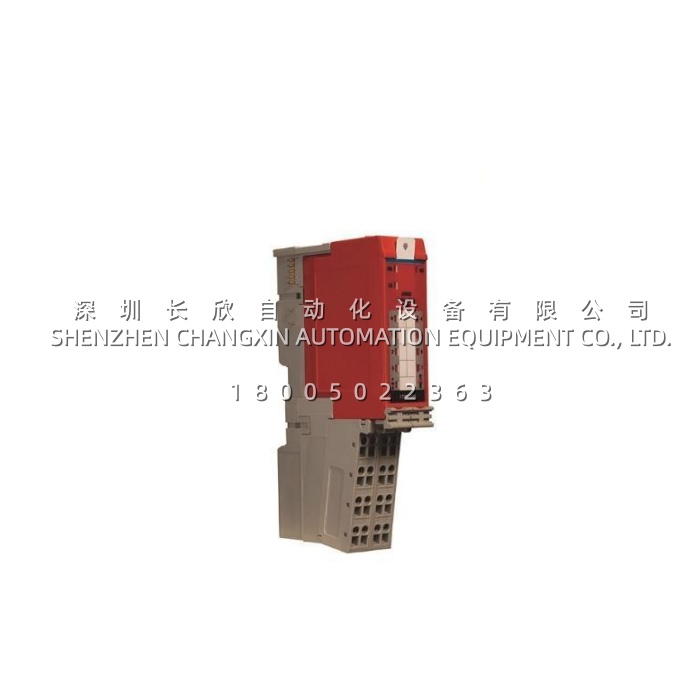
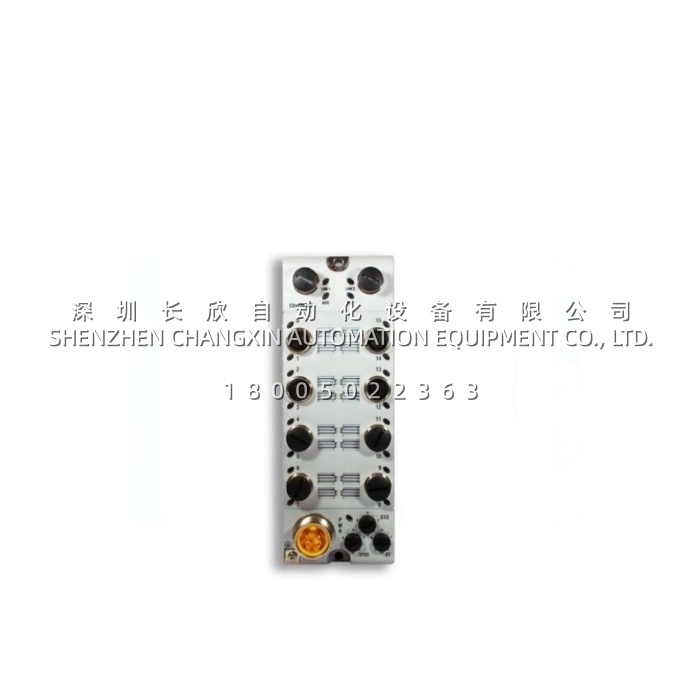
83SR04D-E GJR2390200R1210 32-bit Microprocessor Control Board for Process Automation缩略图

83SR04D-E GJR2390200R1210 32-bit Microprocessor Control Board for Process Automation

83SR04D-E GJR2390200R1210 32-bit Microprocessor Control Board for Process Automation插图


Description

The 83SR04D-E (order code GJR2390200R1210) is a stored-program binary and analog control module manufactured by ABB, belonging to the Procontrol P14 series within the Symphony Harmony architecture. This channel control card is specifically designed for drive-level, group-level, and unit-level control tasks in distributed control systems (DCS).

Unlike general-purpose I/O modules, the 83SR04D-E functions as an intelligent, autonomous controller that executes local logic sequences, binary interlocks, and three-step analog positioning—all while maintaining communication with the higher-level DCS via the station bus. It is mounted as a plug-in card in a Multi-Purpose Processing Station (MPPS) rack, providing close-to-field control independent of the central controller for critical operations .


Application Scenarios

Imagine a pulp & paper mill still running a proven ABB Procontrol-based DCS, where a section of the stock-preparation line relies on local three-step analog control for a thick-stock valve and binary interlocks for associated pumps and agitators. After decades of service, the original SR04 card began showing intermittent watchdog faults, risking an unscheduled shutdown. The maintenance team sourced a tested 83SR04D-E as a direct plug-in replacement. Once inserted into the MPPS crate and loaded with the existing EEPROM/user parameters, the 83SR04D-E resumed flawless valve positioning and pump sequencing within minutes—no re-wiring, no reprogramming of the upper-level system. This real-world scenario illustrates how the 83SR04D-E solves the critical pain point of keeping legacy but highly reliable Procontrol architectures operational, minimizing downtime in plants where “rip-and-replace” is neither economical nor desired .


Parameters

Main Parameters Value/Description
Product Model 83SR04D-E
Manufacturer ABB
Order Code GJR2390200R1210
Product Category Procontrol P14 Channel Control Card (Binary + Analog Unit Controller)
Series Procontrol P14 / Symphony Harmony SR04
Supply Voltage 24 V DC (typical range 18–32 V DC)
Current Consumption ≈145 mA @ 24 V DC (excluding load outputs)
Power Dissipation Typ. 3.5 W (max 8 W)
Function Units 4 independent configurable units (binary drive/group control or 3-step analog control)
Process Interfaces 4 × isolated FE interfaces (inputs 48 V max 5 mA; outputs 24 V DC short-circuit protected)
Output Type Relay contact outputs with short-circuit protection
Relay Contact Life ≥ 20,000,000 switching cycles
Backplane Bus Interface 48-pin DIN 41612 connector (X11) for station bus + power
Processor 32-bit microprocessor executing predefined function blocks
Program Storage EPROM (firmware/operation programs)
Parameter Storage EEPROM (user programs/parameters/limits, retained on power-down)
Runtime Data Storage RAM
Operating Temperature 0°C to +60°C (some references -20°C to +70°C depending on cabinet environment)
Dimensions (H×W×D) ≈261 mm × 20 mm × 198 mm
Weight ≈0.55 kg
Mounting Method Plug-in card for ABB Multi-Purpose Processing Station (MPPS) rack
Safety Rating SIL3 capable (safety-critical applications)
Product Status Discontinued by manufacturer (available as refurbished/used spare parts)
ABB GKWE8559000200 83SR11E Replacement Control Module for DCS Systems缩略图

ABB GKWE8559000200 83SR11E Replacement Control Module for DCS Systems

ABB GKWE8559000200 83SR11E Replacement Control Module for DCS Systems插图


Description

The ABB 83SR11E (Ordering Code: GKWE8559000200, also referred to as GKWE855900R0200) is a stored-program analog control module from ABB’s Procontrol P14/P13 distributed control system (DCS) family. Designed as a single-loop process controller, this module executes continuous PID regulation of critical process variables such as temperature, pressure, flow, and level, while simultaneously performing binary logic operations for interlocking, protection, and sequential control . Engineered for the demanding environments of power generation and chemical processing, the 83SR11E combines analog precision with digital flexibility, serving as a reliable workhorse in control cabinets worldwide.


Application Scenarios

In a coal-fired power plant operating for over two decades, the original Procontrol P13 controller that managed a critical feedwater control loop began exhibiting erratic output behavior, causing temperature fluctuations that risked turbine shutdown. The plant’s maintenance engineers sourced a ABB 83SR11E as a direct replacement, restoring stable PID regulation within hours. The module’s ability to be reconfigured online—adjusting PID parameters and setpoints without halting the process—proved invaluable for fine-tuning the loop during live operation . Whether deployed in boiler drum level control, chemical reactor temperature regulation, or gas compressor surge protection, the 83SR11E delivers the dual functionality of continuous analog control and logic-based interlocking that legacy Procontrol systems require to keep critical processes running.


Parameters

Main Parameters Value/Description
Product Model ABB 83SR11E
Ordering Code GKWE8559000200 (also GKWE855900R0200)
Manufacturer ABB (formerly BBC Brown Boveri)
Product Category Single-Loop Analog Control Module / Stored-Program Controller
Core Function Single-variable PID continuous regulation + Binary logic/sequence control
Power Supply 24V DC (nominal, ±10%), ≤20W consumption
Analog Outputs 0/4–20mA or 0–10V (continuous regulation for valve actuators)
Digital Inputs 8 channels (24V DC dry contact)
Digital Outputs 8 channels (relay, 2A/250VAC)
Control Loops 4 independent PID loops
Processing Speed ≥100K instructions/second
Communication RS-485 Modbus RTU via Procontrol station bus
Operating Temperature 0°C to +60°C
Dimensions (H×W×D) 254 mm × 203 mm × 38 mm (6U form factor)
Weight Approx. 1.0 kg
Safety Certification SIL 3 capable (for safety-critical loops)


Technical Principles and Innovative Values

Innovation Point 1: Integrated Analog PID Control and Binary Logic in One Module
Unlike standard I/O cards that merely pass signals, the ABB 83SR11E functions as an independent control processor. It executes single-variable PID algorithms to maintain precise process control while simultaneously processing discrete logic—enabling a single module to handle both continuous regulation (e.g., valve positioning) and interlocking protections (e.g., emergency shutdowns) without requiring separate controllers . This integration reduces cabinet space and simplifies system architecture.

Innovation Point 2: Hot-Swap Capability with Online Parameter Modification
The 83SR11E supports online parameter adjustment, allowing engineers to modify PID gains, setpoints, and amplitude limits without interrupting the control loop. This feature is critical in continuous processes where unscheduled shutdowns are unacceptable, enabling loop tuning during normal production . The module’s ability to be inserted or removed from the P14 chassis while the system remains operational minimizes maintenance downtime.

Innovation Point 3: Electrical Isolation for Industrial Noise Immunity
Featuring electrical isolation between channels and from the system bus, the ABB 83SR11E provides robust immunity against ground loops and electromagnetic interference common in power plants and heavy industrial environments . This isolation ensures accurate analog signal acquisition even with long cable runs near high-voltage equipment.

Innovation Point 4: Comprehensive Self-Diagnostics and Status Indication
The module incorporates built-in diagnostics including communication verification, channel fault detection, and module self-checks, with status reported via front-panel LEDs indicating run, simulation, fault, and communication states . This diagnostic capability reduces troubleshooting time and enables proactive maintenance planning.

ABB 83SR07F-E​ GJR2392700R1210 Procontrol P14 Analog Control Board, 4AI/2AO缩略图

ABB 83SR07F-E​ GJR2392700R1210 Procontrol P14 Analog Control Board, 4AI/2AO

ABB 83SR07F-E​ GJR2392700R1210 Procontrol P14 Analog Control Board, 4AI/2AO插图


Description

The 83SR07F-E​ (order code GJR2392700R1210) is an analog control module within ABB’s Procontrol P14 distributed control system, manufactured in Sweden and now discontinued (spare/refurb market only). It is purpose-built for 1–2 channel continuous analog closed-loop control — most commonly PID regulation of electro-hydraulic, electro-pneumatic, or motor-driven actuators in power plant turbine governor lines, boiler combustion control, and heavy-process valve positioning. The “F” denotes the hardware iteration and “E” the software version; the module occupies one 6U × 1-division slot in a Procontrol P14 rack and draws 24 V DC from the backplane.

Application Scenarios

At a 600 MW coal-fired unit in Eastern Europe, the HP (high-pressure) turbine electro-hydraulic governor had been running on the original 83SR07F-E​ pair since the 1998 commissioning — one active, one hot standby in the Procontrol P14 rack alongside 83SR04G-E logic modules and 81ET03N temperature inputs. During a 2022 turbine overhaul, the active 83SR07F-E​ began showing a slow drift on FE1 (valve position loop): the 4–20 mA feedback from the LVDT positioned the HP governor valve ~1.8% low at 80% load, enough to trigger a “valve mismatch” alarm against the IP (intermediate-pressure) governor. The plant’s DCS engineer suspected the AO stage — the 83SR07F-E​ drives the 4–20 mA command to the Moog servo-card, and the 12-bit AO resolution with ≤0.1% accuracy had been fine for 24 years, but the internal Vref was walking. They swapped in a refurb 83SR07F-E​ (tube-hours? no, it’s solid-state, but the precision references age) — 4AI (PV, setpoint, feedforward, bias) + 2AO (valve A / valve B) all re-mapped automatically because Procontrol P14 uses slot-based auto-addressing, no DIP. Post-swap, the HP/IP valve sync returned to <0.3% mismatch across the load range. “The P14 rack is older than the shift supervisor, but the 83SR07F-E​ still does the loop math faster than we can trend it,” the chief commented. That’s the product’s lane — it’s not a modern compact PLC; it’s a 1990s-designed, SIL3-rated analog loop specialist that power plants still refuse to rip out because nothing else fits the rack or the actuator interface this cleanly.

Parameter

Main Parameters Value/Description
Product Model 83SR07F-E​ (Order Code GJR2392700R1210)
Manufacturer ABB (Sweden)
Product Category Procontrol P14 Analog Control Module (PID closed-loop)
Analog Inputs 4 channels (VA1–VA4), 0–20 / 4–20 mA, 50 Ω, 12-bit
Analog Outputs 2 channels (AA1–AA2), 0–20 / 4–20 mA, ≤500 Ω load
Control Loops 2 independent FE1 / FE2 (PID, cascade, feedforward capable)
Accuracy ≤0.1% @ 23°C (AI & AO); temp drift ≤50 ppm/K
Supply Voltage 24 V DC (from Procontrol P14 rack backplane)
Current Draw ~140 mA @ 24 V DC
Power Dissipation 3.2–3.8 W typical
Bus Interface X11: 48-pin DIN 41612 (station bus + power); X22: 32-pin (process I/O)
Mechanical 6U × 1 Div × 160 mm deep, ~0.55 kg
Operating Temp -20 °C to +70 °C
Certification CE, cULus, SIL 3 (IEC 61508)
Lifecycle Discontinued (spare/refurb market)


Technical Principles and Innovative Values

Innovation Point 1: Dedicated 2-Loop Analog PID Hardware in a 6U Slot. The 83SR07F-E​ isn’t a general-purpose I/O card with PID firmware bolted on — it’s a purpose-silicon analog control module where each FE (Final Element) loop gets its own 4-input signal path (PV, setpoint, feedforward, bias) and a dedicated AO. This matters in turbine governor duty where the HP and IP valves need independent but synchronised loops — trying to do this on a generic AO card + PLC PID scan would introduce jitter the mechanicals would feel. The 83SR07F-E​ keeps the loop tight, <0.1% accuracy, 12-bit resolution, and the 50 ppm/K drift means a cold-start turbine ramp doesn’t wander.Innovation Point 2: Slot-Auto-Addressing via X11 Station Bus. The Procontrol P14 rack uses a 48-pin DIN 41612 X11 for station bus + 24 V distribution. The 83SR07F-E​ doesn’t carry DIP switches or node addresses — the rack position defines the logical address, and data exchange uses shared memory (send 0–63, receive 64–199 words) with parity checking. This makes hot-swap realistic: pop a faulty 83SR07F-E, latch a spare, the rack re-enumerates, and the loops resume from the last good state (provided the actuator has a fail-freeze or fail-last position). In a 600 MW unit where a governor fault = turbine trip = $200k+/hour, this matters.Innovation Point 3: 83SR04G-E’s “Enhanced” Sibling Positioning. The 83SR07F-E​ sits above the 83SR04G-E in the 83SR family — 83SR04 is the general-purpose analog I/O + basic loop, while 83SR07 adds the dedicated FE structures, higher precision references, and the actuator-drive releases (AF1/AF2, 24 V DC) and status feedback (STA1/STA2 from the actuator). If 83SR04 is “analog I/O,” 83SR07F-E​ is “analog loop + actuator interface” — the natural choice when the P14 rack must drive a Moog/Rexroth servo or a Fisher positioner directly.Innovation Point 4: SIL 3 Certification on a 1990s Design. The 83SR07F-E​ carries SIL 3 per IEC 61508 — unusual for an analog loop card of its vintage. This is why nuclear-qualified units and high-pressure turbine governors still stock it: the safety loop (e.g., turbine overspeed load-shed) can chain through the P14 rack with the 83SR07F-E​ in the actuator command path and still claim SIL 3 end-to-end, provided the rest of the chain (sensors, actuators) is graded.

Application Cases and Industry Value

A Nordic combined-cycle plant running ABB Procontrol P14 on both the GT (gas turbine) and ST (steam turbine) bays had standardised the HP governor and bypass control on 83SR07F-E​ pairs — each bay: one 83SR07F-E for HP valve (FE1) + IV (intercept valve, FE2), with 4AI each (LVDT pos, setpoint from load dispatcher, feedforward from acceleration, bias from operator), 2AO to the servo amps. During a 2023 “grid frequency excursion” test (the Nordic grid dropped 0.15 Hz, all plants ramped), the ST bay’s 83SR07F-E​ on the bypass valve held position through a 12%/min load step with <0.4% AO deviation — the plant’s performance certificate passed. The control engineer’s post-mortem noted the 83SR07F-E‘s 50 dB differential-mode rejection at 50/60 Hz was doing quiet work against the generator’s own electrical noise on the LVDT return. The plant later did a lifecycle audit: 22 83SR07F-E​ modules across GT+ST+HRSG, average age 26 years, zero random failures in 5 years — only two planned swaps during major outages for “age precaution.” They folded the 83SR07F-E​ into the “never-rip” list and budgeted refurb spares instead of a P14→Symphony migration for the turbine bay. In a sector where a DCS migration on a running 600 MW unit costs $3–5M and 6 weeks outage, the 83SR07F-E​ staying available as a spare is the cheaper win.

Related Product Combination Solutions

The 83SR07F-E​ lives in a Procontrol P13/P14 rack ecosystem; these are the siblings most often racked with it:

  • 83SR04G-E (GJR2390200R1210): General-purpose analog I/O + basic loop module, often paired with 83SR07F-E​ — the 04 handles the “utility” AI/AO (temps, pressures, flows) while the 07 runs the actuator loops. Same 6U footprint, same X11/X22 interface.
  • 83SR51E-F / 83SR51F-E (GJR2396200R1210): Higher-density or specialised actuator-control sibling in the 83SR5x branch — sometimes specified when a bay needs >2 FE loops and the 83SR07F-E‘s 2-loop budget is exhausted.
  • 81AA03B-E / 81AA03C-E (GJR2394100R1210): 8-channel analog output module (Procontrol P14) — the downstream complement when the 83SR07F-E‘s 2 AO aren’t enough (e.g., multi-valve skid with 6 AO points). Often stacked: 83SR07 runs the PID, 81AA03 scales and fans out to the extra valves.
  • 81ET03N-E (GJR2389800R1210): 16-channel temperature input (12-bit) for Procontrol P13/P14 — feeds the 83SR07F-E‘s feedforward input on a combustion loop (e.g., exhaust temp → fuel valve bias).
  • 87TS01K-E (GJR2368900R1550/R1348): Coupling/module interface for Procontrol T200 / P13 bus bridging — when the P14 rack needs to talk up to a host or a newer AC 800M gateway, the 87TS01 sits adjacent.
  • Procontrol P14 Rack Chassis (6U, 10-slot / 20-slot): The backplane that hosts the 83SR07F-E​ — 24 V distribution, X11 station bus, slot auto-address. The 83SR07F-E​ cannot run outside this rack (no standalone mode, no 85–264 VAC — that reseller spec is wrong; it’s 24 V DC backplane only).
ABB 83SR04E-E GJR2390200R1211 4-Channel Relay Output Module缩略图

ABB 83SR04E-E GJR2390200R1211 4-Channel Relay Output Module

ABB 83SR04E-E GJR2390200R1211 4-Channel Relay Output Module插图


Description

The ABB 83SR04E-E (GJR2390200R1211) is a 4-channel relay output module designed for the Procontrol P13 and System 800xA I/O platforms . This module converts 24V DC logic signals from the controller into isolated, field-ready dry contacts capable of switching loads up to 5A at 250V AC or 30V DC .

As a core component of ABB’s distributed control systems, the GJR2390200R1211 serves as a robust interface between control logic and field devices, driving solenoids, contactors, indicator lamps, and alarm systems with reliable physical isolation. Each channel features a Single Pole Double Throw (SPDT/Form C) relay, offering both normally open and normally closed contacts for flexible wiring configurations .


Application Scenarios

In a chemical processing plant’s burner management system, engineers needed a reliable way to drive 220V AC solenoid valves from the DCS’s 24V DC outputs. The ABB 83SR04E-E was deployed to provide four isolated relay channels, each switching a gas shut-off valve directly. The module’s 2kV isolation barrier protected the controller from inductive kickback generated by the solenoids, while the SPDT contacts enabled fail-safe wiring configurations. The plant reduced control panel wiring complexity by 40% and eliminated external interposing relays, addressing the key pain points of space constraints and system reliability.

The GJR2390200R1211 excels in applications requiring reliable, isolated switching—from motor control and valve actuation to alarm annunciation and safety interlock interfaces. Its wide operating temperature range of -40°C to +70°C ensures consistent performance in harsh industrial environments .


Parameters

Main Parameters Value/Description
Product Model 83SR04E-E (GJR2390200R1211)
Manufacturer ABB
Product Category Relay Output Module / Digital Output
Number of Outputs 4 independent relay channels
Relay Type SPDT (Form C) – each with NO/NC contacts
Coil Voltage 24V DC (±20%) supplied via module base
Contact Rating 5A @ 250V AC / 30V DC (resistive load)
Response Time ≤6ms pick-up / ≤4ms release
Isolation Voltage 2kV AC coil-to-contact – protects controller from field transients
Operating Temperature -40°C to +70°C – industrial wide-temperature design
Mounting Type DIN rail or S800 I/O rack (1 slot)
Dimensions (H×W×D) 261 × 20 × 198 mm
Weight Approx. 0.55 kg
Status Indication Per-channel LED indicator (coil energized)


Technical Principles and Innovative Values

Innovation Point 1: Form C Relay Architecture with Universal Load Compatibility
The 83SR04E-E employs four independent SPDT relays, providing both normally open and normally closed contacts per channel. This enables fail-safe circuit designs where the relay’s de-energized state can be configured to maintain a safe condition—a critical feature for emergency shutdown and safety interlock applications. Unlike solid-state outputs limited to DC loads, the relay contacts handle AC and DC loads interchangeably, eliminating the need for load-specific modules .

Innovation Point 2: 2kV Galvanic Isolation for System Protection
The GJR2390200R1211 incorporates 2kV AC isolation between the logic side (coil) and field side (contacts) . This robust isolation barrier protects the controller from voltage spikes, ground loops, and transient surges generated by inductive field loads, significantly reducing the risk of controller damage and system downtime.

Innovation Point 3: Hot-Swappable Design for Zero-Downtime Maintenance
The 83SR04E-E supports online replacement without powering down the I/O rack . This Removal and Insertion Under Power (RIUP) capability allows maintenance teams to replace faulty modules during production, eliminating costly system shutdowns and minimizing unplanned downtime.

Innovation Point 4: Built-In Contact Suppression for Extended Relay Life
The module features built-in MOV (Metal Oxide Varistor) suppression across the relay coil . This protection circuit absorbs inductive flyback voltage, extending relay contact life and ensuring reliable operation even when switching inductive loads such as solenoid valves and contactor coils.

Innovation Point 5: SIL 2 Certification for Functional Safety Applications
The GJR2390200R1211 carries SIL 2 certification, qualifying it for use in safety-related applications within Process Hazard Analysis (PHA) scopes . This certification provides documented reliability data essential for compliance with IEC 61511 functional safety standards.

83SR04E-E ABB Procontrol P14: Hybrid Binary + Analog Control Board, SIL 3, 6U DIN缩略图

83SR04E-E ABB Procontrol P14: Hybrid Binary + Analog Control Board, SIL 3, 6U DIN

83SR04E-E ABB Procontrol P14: Hybrid Binary + Analog Control Board, SIL 3, 6U DIN插图


Application Scenarios

On a 320 MW coal-fired unit in Eastern Europe (original Procontrol P14 install, circa 2004), the mill-primary-air damper loop lived on a 83SR04D-E in rack B3 of the turbine-deck P14 cabinet: 4DI reading damper-open/closed/auto-select/local-ESTOP, 1AI reading the Doyle-positioner 4–20 mA feedback, 1AO driving the 4–20 mA to the damper actuator, 2DO firing the open/close contactors via the onboard relays. Summer 2022, the cabinet ambient near the forced-draft fan VFD wall hit 63 °C during a heatwave—the D-rev’s –20 to +60 °C rating was breached, and the AI channel started showing ±1.2 % drift on the position loop, triggering repeated “damper-follow-error” trips and three soot-blower over-pressure events. The fix was a like-for-like swap to 83SR04E-E—same GJR2390200Rxxxx footprint, same X11 (48-pin station bus) / X21 (32-pin process I/O) DIN41612 connectors, but the E-rev’s –25 to +65 °C envelope and tighter EMI filtering handled the FD-fan VFD hash without a cabinet A/C upgrade. The “hybrid” architecture meant that one 83SR04E-E​ still carried binary + analog on a single P14 slot—previously the plant had considered splitting to a dedicated binary SOE card + analog PI card (P13-style), which would have eaten a second slot and needed re-wiring. Post-swap, position-loop drift dropped to ±0.15 %, and the unit ran through the next two summers without a damper trip. The instrument engineer’s note: “The 83SR04E-E​ is the D-rev with a summer coat. If your P14 cabinet sees >60 °C, don’t wait for the D to fail—swap to E.”

Parameter

Main Parameters Value/Description
Product Model 83SR04E-E​ (GJR2390200R1310)
Manufacturer ABB (Sweden)
Product Category Procontrol P14 DCS Hybrid (Binary + Analog) Control Board
I/O Configuration 4 × DI, 2 × DO (relay, 2 A / 250V AC), 1 × AI (4–20 mA / 0–10V), 1 × AO (4–20 mA / 0–10V)
Power Supply 85–264V AC wide-range (≈1.5 W consumption)
Communication RS-485 Modbus RTU (station bus, X11 48-pin DIN41612)
Connectors X11: 48-pin (station bus, DIN41612); X21: 32-pin (process I/O, DIN41612)
Functional Modes 3 modes: Binary-primary + analog-aux / Analog-primary + binary-aux / Signal-conditioning with interference-bit
Mechanical 6U, DIN41612, 160 × 100 × 34 mm, ~0.55 kg
Operating Temp –25 to +65 °C (E-rev, +5 °C vs. D-rev)
Certifications CE, UL, cULus, SIL 3
Predecessor 83SR04D-E (GJR2390200R1210); 83SR04A-E (GJR2390200R1010)


Technical Principles and Innovative Values

  • Innovation Point 1: Hybrid Binary + Analog on One 6U P14 Slot.​ The Procontrol P14 rack uses 6U DIN41612 modules where most competitors split binary and analog into separate cards. The 83SR04E-E​ crams 4DI + 2DO relay + 1AI + 1AO onto one board, with the firmware supporting three operational modes: (a) binary-primary with analog辅助 (think: motor starter with a 4–20 mA temp feedback), (b) analog-primary with binary辅助 (PID loop with start/stop/interlocks), and (c) signal-conditioning mode with an interference-bit output for filtered/isolated transducer duty. That flexibility means one spare SKU covers damper loops, lube-oil pump controls, and transducer-conditioning—three different P14 slot-types collapsed into one.
  • Innovation Point 2: E-Revision Thermal & EMI Headroom.​ The 83SR04E-E​ is a targeted re-spin of the D-rev: operating window pushed from –20…+60 °C to –25…+65 °C, EMI rejection tightened (important in turbine-deck cabinets next to 6 kV FD/ID fan VFDs), and temperature-coefficient drift on the analog section reduced. For plants still on Procontrol P14—mostly 2000s-era installs now in their third refit cycle—the E-rev is a drop-in that buys another 8–10 years before a Symphony Plus migration. The “1” suffix in some distributor listings (83SR04E-E1) typically denotes a sub-revision or regional packaging variant; functionally it’s the same GJR2390200R1310 footprint.
  • Innovation Point 3: SIL 3 on a Legacy 6U Architecture.​ Getting SIL 3 certification on a 2000s-vintage DCS board is non-trivial—the 83SR04E-E​ achieves it through redundant signal paths on the analog section, self-diagnostics on the relay drivers, and watchdog supervision from the Procontrol station CPU. For power-gen applications (turbine lube-oil pump auto-start, HPCI suction-loop interlocks), that SIL 3 rating lets the 83SR04E-E​ sit in safety-related loops without an external safety relay—something the older 83SR04A-E lacked.


Application Cases and Industry Value

Case 1 – Combined-Cycle GT Auxiliary Lube-Oil Skid (Power Gen).​ A 2×1 CCGT plant ran Procontrol P14 on both GT and ST auxiliary skids. The lube-oil pump “Lead/Standby/Auto-Start on Low Pressure” logic lived on a 83SR04E-E: 4DI = Pump-1-Run-FB, Pump-2-Run-FB, Low-Press-Switch (2× redundant DP cells, wired OR), ESTOP; 1AI = lube-pressure 4–20 mA (for analog-primary PID monitoring, even though the actual pump start is binary); 1AO = 4–20 mA to the local panel’s pressure gauge re-transmit; 2DO = Pump-1 Start Contactor, Pump-2 Start Contactor (via onboard 2 A relays, interposing to the 120V AC contactor coils). The SIL 3 rating mattered for the “auto-start on low pressure” — plant NERC/FP&L audit required SIL-capable logic for the lube-loop. When the plant did a P14 spare audit in 2023, they found three of their eight 83SR04E-E​ boards were still A-rev (2006 date codes, out of SIL cert renewal). Swapped all eight to E-rev in a planned outage—zero logic changes, same X11/X21 backplane seating, just firmware re-download. The I&C lead: “The 83SR04E-E​ is one of those ‘if it ain’t broke’ cards—except the E-rev fixed the drift we’d been seeing on hot days at the ST skid.”Case 2 – Pulp Mill Chip-Feeder Conveyor (Process).​ A kraft mill ran Procontrol P14 on the wood-yard chip-feeder conveyors. One 83SR04E-E​ per conveyor: 4DI = zero-speed (from a 4–20 mA speed pick-up, wired through a window-comparator to DI), local hand-off-auto, estop-string; 1AI = belt-load 4–20 mA (from the weightometer); 1AO = 4–20 mA speed command to the conveyor VFD; 2DO = conveyor start/stop contactors. The “signal-conditioning mode” on the 83SR04E-E​ was used here: the AI channel applied a rolling-average filter + interference-bit (if the weightometer 4–20 mA spiked >22 mA for >500 ms, the interference-bit went high and the AO held last-good value instead of passing the spike to the VFD). The plant’s wood-yard had a lot of RF hash from the two-way radios the operators carried—the E-rev’s EMI filter rejected that better than the D-rev they’d had previously (D-rev used to false-interference-bit on every radio key-down; E-rev stopped that).

ABB 81EU01E-E​ GJR2391500R1210 – 16-Channel Universal Input Module, S800 I/O Family, AC 800M Remote Station, 24V DC, EEPROM, MRO Stock缩略图

ABB 81EU01E-E​ GJR2391500R1210 – 16-Channel Universal Input Module, S800 I/O Family, AC 800M Remote Station, 24V DC, EEPROM, MRO Stock

ABB 81EU01E-E​ GJR2391500R1210 – 16-Channel Universal Input Module, S800 I/O Family, AC 800M Remote Station, 24V DC, EEPROM, MRO Stock插图


Product Overview

The ABB 81EU01E-E​ (order code GJR2391500R1210) is a 16-channel Universal Input Module (UIM) within ABB’s S800 I/O family, engineered to consolidate diverse field-sensor signal types — temperature, pressure, flow, level, and discrete status — into a single configurable I/O card rather than requiring dedicated AI, RTD, TC, and DI modules for each signal class. Each of the 16 channels on the 81EU01E-E​ is independently software-assignable through ABB Control Builder or Composer: 0/4–20 mA (2-wire loop-powered or 4-wire externally powered), 0–10 V, RTD (Pt100, Pt1000, Ni100 in 2/3/4-wire), Thermocouple (J, K, T, E, N, R, S, B), and digital inputs (dry contact, wet contact 24V DC, NAMUR DIN 19234 proximity). This “one-SKU-fits-all” philosophy directly attacks the spare-parts膨胀 problem in process plants: instead of stocking separate AI-16, RTD-8, TC-8, and DI-16 cards for a mixed-signal DCS rack, the maintenance store keeps 81EU01E-E​ units and configures channels per the live rack’s needs.Architecturally, the 81EU01E-E​ seats into an S800 I/O Module Termination Unit (MTU) — e.g., TU810/TU812/TU840 class — which provides the 24V DC backplane power, the field-wiring barrier terminals, and the redundant-power / hot-swap infrastructure. The module communicates to the host over the S800 internal bus (toward an AC 800M controller via CI854/CI867, or toward a Procontrol P14 DCS station over the Procontrol bus). Parameters and channel configuration reside in on-board EEPROM (non-volatile across power cycles), and each 81EU01E-E​ can execute up to five independent correction/filtering algorithms (linearization, square-root, damping, offset/gain, custom polynomial) plus assign up to four limit values with hysteresis per analog channel. Diagnostics cover open-wire (on 4–20 mA), short-circuit, overrange/underrange, and interference indication (ST/SG bits reported to the controller). Galvanic isolation separates channel-to-channel and channel-to-backplane (typical 1500V AC rating per S800 spec), protecting the DCS bus from field-side transients.While the S800 platform remains active in ABB’s current AC 800M ecosystem, the 81EU01E-E​ also has deep legacy penetration in Procontrol P13/P14 DCS racks — power-generation turbine auxiliaries, refinery FCCU skids, and chemical-batch plants commissioned in the 1990s–2010s that still run Procontrol because “it controls the turbine, don’t touch it.” For those accounts, the 81EU01E-E​ is an MRO staple: a 16-year-old Procontrol P14 rack with three 81EU01E-E​ cards reading bearing-TT (Pt100), lube-oil PT (4–20 mA), seal-gas FT (4–20 mA), and trip-valve ZS (NAMUR) — one spare 81EU01E-E​ covers all three cards’ failure modes. The 81EU01E-E​ dimensions are ~261 × 20 × 198 mm, ~0.5 kg, DIN-rail compatible via the MTU, 0–60 °C (some sources say -20 to +60 for Procontrol variant; S800 is 0–60 typical), and carries CE / cULus / optional ATEX where the MTU + module combo is ordered with Ex certification.


Technical Specifications

Parameter Value
Product Model 81EU01E-E
ABB Order Code GJR2391500R1210
Manufacturer ABB (Process Automation Division)
Product Type S800 I/O Universal Input Module (16-Channel, Configurable)
Compatible Systems ABB S800 I/O → AC 800M; ABB Procontrol P13 / P14 DCS
Input Channels 16 (per-channel software-configurable)
Supported Input Types 0/4–20 mA (2-wire/4-wire), 0–10 V, RTD (Pt100/Pt1000/Ni100, 2/3/4-wire), TC (J,K,T,E,N,R,S,B), Digital (dry/wet 24V DC, NAMUR DIN 19234)
Resolution 16 bit (typical)
Basic Accuracy ±0.1% of span (current/voltage, 23 °C); ±0.2 °C (RTD); ±0.5 °C (TC)
Input Impedance Current: ≤10 Ω (or 250 Ω inline on MTU); Voltage: ≥1 MΩ
Channel Update Rate ~20 ms/ch (full 16-ch scan ~320 ms standard; faster configurable on S800)
Isolation Galvanic, channel-to-channel & channel-to-backplane (1500V AC typ.)
Onboard Processing Up to 5 correction/filter algorithms per module; 4 limit values + hysteresis per analog channel
Config Storage EEPROM (non-volatile)
Power Supply 24V DC via S800 MTU backplane (redundant-capable on MTU)
Power Consumption ~3.4–11 W (depends on channel config & active loops)
Diagnostics Open-wire (mA), short-circuit, over/under-range, interference (ST/SG), module-health
Mounting S800 MTU (TU810/TU812/TU840 etc.), 35 mm DIN rail via MTU
Operating Temp 0 °C to +60 °C (S800); -20 to +60 °C (Procontrol P14 variant)
Dimensions (H × W × D) ~261 × 20 × 198 mm
Weight ~0.5 kg
Certifications CE, cULus, optional ATEX/IECEx (with Ex-MTU)


Main Features and Advantages

One SKU, All Signal Types — Kill the Spare-Parts MatrixThe headline advantage of the 81EU01E-E​ is that “universal” isn’t marketing fluff — it’s per-channel software config. On a typical process-DCS rack (Procontrol P14 or AC 800M + S800 remote), you’ll see channel 0 = Pt100 bearing temp, channel 1 = 4–20 mA lube-oil pressure, channel 2 = 0–10 V position-feedback from a stroke pot, channel 3 = NAMUR proximity on a valve-limit, channel 4 = K-type TC on an exhaust thermowell, channel 5 = dry-contact emergency-stop relay aux. All six on one81EU01E-E, no hardware change. For the MRO buyer, this collapses four traditional spare-P/N lines (AI card, RTD card, TC card, DI card) into one: 81EU01E-E. In a refinery with twelve Procontrol P14 racks across the crude-unit, FCCU, and sulfur-plant, the stores cage keeps six 81EU01E-E​ instead of twenty-four assorted AI/RTD/TC/DI cards. That’s the economic win.16-Bit Resolution + 5 Onboard Correction AlgorithmsThe 81EU01E-E​ isn’t just a dumb ADC — it carries local math. Each module can run up to five independent correction/filter calculations: linearization (for square-root on orifice-plate flow, or thermocouple curve-comp), offset/gain, damping (first-order lag to kill electrical noise from VFD-adjacent thermowells), and custom polynomial. For a process plant where the DCS scan is 500 ms but the field signal has 50 Hz ripple from a nearby 480V duct, the 81EU01E-E’s​ onboard damping cleans it before the controller ever sees it — reducing alarm chatter on the DCS HMI without touching the control logic. Four limit values per analog channel (with hysteresis) let the 81EU01E-E​ assert LO_LO / LO / HI / HI_HI locally, reporting only the limit-state bits to the controller if desired, offloading the DCS application code.Galvanic Isolation + Field DiagnosticsEach channel on the 81EU01E-E​ is galvanically isolated from its neighbors and from the S800 backplane — 1500V AC typical. In a turbine-aux rack where one channel reads a grounded Pt100 on the lube-oil cooler and the next reads a floating TC on the exhaust, the isolation prevents ground-loop offset errors that would plague a non-isolated multiplexed card. Diagnostics are channel-level: open-wire detection on 4–20 mA (the 81EU01E-E​ sources the loop power on 2-wire mode and detects the 3.6 mA “below 4” as wire-break), short-circuit on NAMUR (NAMUR spec is 0–1.2 mA = normal, >2.1 mA = short — the 81EU01E-E​ reads the NAMUR current natively), overrange/underrange flags, and ST/SG (status/signal-quality) bits piped to the DCS alarm summary. A control-room operator sees “81EU01E-E Ch 3 ST” and knows “Pt100 wire broken on bearing-TT-103” before the bearing trips.

ABB 70BK03BE Local Bus Coupler for Power Plant DCS Maintenance缩略图

ABB 70BK03BE Local Bus Coupler for Power Plant DCS Maintenance

ABB 70BK03BE Local Bus Coupler for Power Plant DCS Maintenance插图


Description

The ABB 70BK03BE (Order Number: HESG447271R0002) is a specialized local bus coupler module designed for the ABB Procontrol P13 distributed control system (DCS). This intelligent communication module serves as the critical interface between the high-speed remote bus network (typically MB300) and the local parallel bus within a P13 I/O rack, managing all data traffic between the main controller and the I/O modules installed in the same cabinet. The ABB 70BK03BE must be installed in the leftmost slot (Slot 1) of a standard Procontrol P13 19-inch rack, functioning as the “traffic commander” for up to 15 I/O modules occupying Slots 2 through 16.

As a key component of the Procontrol P13 system architecture, the ABB 70BK03BE operates with an onboard microprocessor that executes deterministic, master-slave communication cycles. It periodically polls all I/O modules in its rack, collecting input data and distributing output commands with fixed, predictable timing—a critical requirement for closed-loop process control applications. The module features diagnostic LEDs for power, operation, communication, and fault status, enabling rapid troubleshooting without requiring additional test equipment. While the Procontrol P13 platform has been superseded by ABB’s System 800xA, the 70BK03BE remains essential for maintaining legacy systems in power generation and heavy process industries, where many installations continue to operate reliably after decades of service.


Application Scenarios

In a coal-fired power plant’s boiler control system, the main controller communicates with multiple I/O racks distributed across the turbine hall and boiler house. When the ABB 70BK03BE in a critical I/O rack began exhibiting intermittent communication failures, the plant experienced sporadic loss of temperature readings from the superheater section, forcing operators to reduce load until the issue was resolved. The maintenance team identified the failing HESG447271R0002 through its flashing fault LED and the corresponding alarm in the operator station. After replacing the faulty ABB 70BK03BE with a verified spare, the communication link was restored within 30 minutes, and full boiler load was safely resumed. The plant now maintains a stock of 70BK03BE modules as part of their critical spares inventory to prevent similar unplanned outages.

A chemical processing facility faced a different challenge when expanding an existing Procontrol P13 system to include additional process analyzers. The new I/O modules required reliable communication with the existing control network. By installing a ABB 70BK03BE in a new expansion rack, the engineering team extended the remote bus to the additional cabinet while maintaining the deterministic communication characteristics required for the facility’s batch reactor control loops. The 70BK03BE‘s ability to drive up to 15 I/O modules per rack enabled the facility to add the required I/O capacity without overhauling the entire communication infrastructure.


Parameter

Parameter Value/Description
Product Model 70BK03BE
Order Number / Part Number HESG447271R0002
Manufacturer ABB (formerly Brown Boveri)
Product Category Local Bus Coupler / Communication Interface Module
System Compatibility ABB Procontrol P13 DCS
Installation Position Slot 1 (leftmost slot of P13 19-inch rack)
Remote Bus Interface MB300 (via backplane connector)
Local Bus Type Parallel bus (deterministic polling)
Maximum I/O Modules Managed Up to 15 modules (Slots 2-16)
Power Supply +5V DC via P13 rack backplane
Typical Power Consumption 2 – 3 W
Address Setting Rotary or DIP switches on module panel
Status Indication Multiple LEDs: Power, Run, Communication, Fault
Operating Temperature 0°C to +60°C
Storage Temperature -25°C to +70°C
Mounting Type Rack plug-in (P13 standard form factor)
Product Lifecycle Obsolete / Maintenance only
ABB 63NHG00B-690​ NH00 Fuse: 63 A, 690 V AC, 120 kA Breaking Capacity, Combination Dual Status Indicator, DIN 43620缩略图

ABB 63NHG00B-690​ NH00 Fuse: 63 A, 690 V AC, 120 kA Breaking Capacity, Combination Dual Status Indicator, DIN 43620

ABB 63NHG00B-690​ NH00 Fuse: 63 A, 690 V AC, 120 kA Breaking Capacity, Combination Dual Status Indicator, DIN 43620插图


Product Overview

The ABB 63NHG00B-690​ (order code 3ABD0001782) is a size NH00 low-voltage NH fuse link rated 63 A at 690 V AC, delivering a 120 kA breaking capacity under IEC 60269-1 / IEC 60269-2-1 and DIN 43620. It belongs to ABB’s NH system of square-body, knife-blade-contact fuses that dominate European-style industrial distribution — MCC line-ups, transformer secondary feeders, generator outlet cubicles, UPS input/output panels, and equipment-level protection on drives, welders, and process skids. The “gG/gL” utilization category marks it as a full-range general-application fuse: gG covers equipment protection (motors, transformers, rectifiers) and gL covers cable/line protection, meaning a single 63NHG00B-690​ can protect both the feeder cable and the downstream device in one element — no separate cable-only + equipment-only pair needed.What sets the 63NHG00B-690​ apart from a plain NH00 blank is the combination dual indicator​ (ABB calls it “combination fuse status indicator”). When the fuse clears, two things happen simultaneously: a top-mounted mechanical striker pin​ pops upward (the “striker” or impact pin), and a front-view color-change window​ shifts from clear/neutral to a high-visibility fault color (typically red-orange). This dual-path indication means a maintenance tech can spot the blown fuse from the front of the cubicle (window) andan auxiliary micro-switch clipped onto the striker pin (e.g., ABB 170H0235 class) can send a remote “fuse blown” alarm to the PLC or annunciator panel. The 63NHG00B-690​ body is ceramic (arc-quenching, high thermal endurance) with silver-plated copper knife-blade contacts at both ends and a live gripping lug​ on the top carrier — that lug lets the tech grab the live fuse with a standard NH fuse-handler (FEH- series) afterthe base has been opened, without touching the blades; it’s a small but decisive safety detail on 690 V systems where “it’s de-energized, right?” is never a safe assumption.At ~79 mm (L) × 58 mm (H) × 30 mm (W) and ~0.22 kg, the 63NHG00B-690​ seats into any standard NH00 base (DIN 43620 footprint) — BH00DIN or ABB’s own NH00 base family — and the knife blades engage the spring-bolt terminals without tools beyond the handler. The 45–62 Hz frequency rating covers both 50 Hz (EU/UK/Asia) and 60 Hz (NA/offshore) mains. For plants standardized on ABB NH distribution, the 63NHG00B-690​ is the 63 A / 690 V workhorse: one step up from the 50 A (50NHG00B-690) for lightly loaded MCC branches, one step below the 100 A (100NHG00B-690) for heavier feeders. It’s also the “sweet spot” for photovoltaic AC combiner/transformer secondary in C&I solar where 690 V AC is the inverter-export voltage in Europe — gG/gL holds for the cable home-run, and the 120 kA breaking capacity covers the prospective fault on a stiff utility tie-in.


Technical Specifications

Parameter Name Parameter Value
Product Model 63NHG00B-690​ (Order Code 3ABD0001782)
Manufacturer ABB (Low Voltage Products, NH System)
Product Type Low-Voltage NH Fuse Link (Square Body, Knife-Blade)
Utilization Category gG / gL (IEC 60269-1) — full-range cable + equipment protection
Rated Current 63 A
Rated Voltage (AC) 690 V AC
Breaking Capacity 120 kA (at 690 V AC)
Frequency Range 45–62 Hz
Fuse Size NH00 (Size 00, DIN 43620 footprint)
Body Material Ceramic (arc-quenching)
Contact Type Silver-plated copper knife-blade (blade end connection)
Status Indication Combination Dual Indicator (top striker pin + front color-change window)
Live Gripping Lug Fitted (top carrier, for NH fuse handler FEH-)
Applicable Standard IEC 60269-1, IEC 60269-2-1, DIN 43620
Dimensions (L × H × W) ~79 × 58 × 30 mm
Weight ~0.22 kg (216 g)
Compliance CE, RoHS


Main Features and Advantages

Ceramic body with 120 kA / 690 V breaking capacity.​ The 63NHG00B-690​ is built for stiff-fault systems — transformer secondaries, utility tie-ins, generator outlets — where the prospective short-circuit current can hit triple digits. The ceramic envelope quenches the arc internally without venting to the cubicle; the silver-plated knife blades carry 63 A continuously at 690 V with minimal I²R rise, and the 120 kA interrupt rating means the fuse clears before the busbars see permanent stress. For gG/gL duty, the 63NHG00B-690​ is calibrated to melt on overload (1.25×In upward, following the gG time-current characteristic) and clear instantaneously on heavy short-circuit — one element doing both jobs.Combination dual indicator: top striker + front window.​ The signature “Dual Indicator” on the 63NHG00B-690​ is a fused-pyrotechnic striker: when the element melts, a spring-loaded pin fires upward ~8–10 mm through the top of the carrier, and simultaneously the front lens (viewed through the NH00 base’s observation cut-out) shifts color. This gives two audiences what they need: the panel-front tech​ sees the window without opening the cubicle door (if the base has a sight glass); the remote alarm system​ gets a signal if a micro-switch (ABB 170H0235 class, clipped onto the striker lane) is mounted — the striker pop closes the switch contact, which can drive a PLC DI or an annunciator “Fuse Blown — Feeder 4” lamp. For plants running predictive maintenance on distribution, adding the micro-switch to every 63NHG00B-690​ in the MCC turns a “walk-the-row-on-Friday” ritual into a real-time alarm.Live gripping lug + NH00 DIN 43620 footprint.​ The top carrier of the 63NHG00B-690​ carries a formed metal lug — the “live gripping lug” — sized to mate with the hooked nose of an NH fuse extraction handle (ABB FEH- series). After the NH00 base’s isolating switch is opened and the blades are no-load, the tech hooks the handler onto the lug, rotates, and the 63NHG00B-690​ lifts straight out — no finger-near-blade, no “did I touch the bus?” moment. The NH00 footprint (DIN 43620) means the 63NHG00B-690​ drops into any NH00 base from ABB, Siemens, Eaton Bussmann, or generic DIN-compliant OEM — the knife-blade length and spacing are standardized, so spares interchange at the footprint level (though ABB recommends ABB-on-ABB for warranty).gG/gL dual-role saves BOM lines.​ In a traditional distribution design, you might specify a cable-protect-only fuse (gL) plusan equipment-protect-only fuse (gG) in series or as separate feeders. The 63NHG00B-690​ is gG/gL dual-classified, meaning the TCC (time-current characteristic) satisfies both cable thermal withstand (gL) and equipment short-circuit withstand (gG). For a 63 A MCC feeder to a 30 kW motor drive + 35 mm² Cu cable, one 63NHG00B-690​ covers the cable (gL: doesn’t let the cable cook on a 200 A fault) and the drive input (gG: clears before the drive’s diode bridge avalanches). One SKU, one spare on the shelf, one TCC to plot.Remote-signaling ready.​ The striker pin on the 63NHG00B-690​ is mechanically compatible with ABB’s NH micro-switch adapters (170H0235 family — SDL-2 style). Clip the adapter onto the NH00 base’s striker lane, and every time a 63NHG00B-690​ blows, the striker pops into the micro-switch lever, closing a 24 V DC / 230 V AC contact. Wire that contact to a PLC DI or a panel-mounted “Fuse Alarm” lamp, and the MCC room gets remote visibility. For unmanned pump stations or rooftop PV inverters, this is the difference between “we found out Monday the feeder blew Friday” and “SCADA ticket fired Saturday morning.”

ABB 35AE92A Rechargeable Battery for Advant Controller 31 and S800 I/O缩略图

ABB 35AE92A Rechargeable Battery for Advant Controller 31 and S800 I/O

ABB 35AE92A Rechargeable Battery for Advant Controller 31 and S800 I/O插图


Product Overview

The ABB 35AE92A (complete spare part number ER0002081060005) is a high-performance rechargeable backup battery designed specifically for critical data retention in ABB industrial automation systems. As an integral component within ABB’s Advant OCS, S800 I/O, MasterPiece 200, and Advant Controller 31 platforms, the ABB 35AE92A provides essential power to maintain controller RAM contents and real-time clock operation during main power interruptions, preventing the catastrophic loss of program logic, critical parameters, and process setpoints that could otherwise result in extended production downtime. This 12V, 7.2Ah sealed lead-acid (SLA) battery operates as a float-charge unit, remaining on standby while the system runs normally and instantly taking over the power supply when the primary source fails.

The ABB 35AE92A (ER0002081060005) is engineered with ABS plastic housing and Faston quick-connect terminals, facilitating rapid field replacement without specialized tools. Its wide operating temperature range of -20°C to +60°C ensures reliable performance in non-conditioned electrical rooms and outdoor cabinets where temperature fluctuations are common. With a cycle life of approximately 1000 cycles at 80% depth of discharge and a typical service life of 3 to 5 years under standard conditions, the ABB 35AE92A represents a critical preventive maintenance component for facilities operating legacy ABB control systems. It is important to note that the 35AE92A is a data retention battery rather than a power supply for field devices—its sole purpose is safeguarding controller memory integrity, making it indispensable for continuous process industries such as chemical processing, power generation, and oil and gas production.


Technical Specifications

Parameter Name Value
Product Model ABB 35AE92A (ER0002081060005)
Manufacturer ABB
Product Type Rechargeable Data Buffer Battery (Sealed Lead-Acid)
Nominal Voltage 12V DC
Nominal Capacity 7.2 Ah (C20) / 7 Ah
Battery Chemistry Sealed Lead-Acid (SLA), Valve-Regulated
Terminal Type Faston Quick-Connect Tabs (Spade Connectors)
Charging Method Float Charging (Trickle, by controller internal circuit)
Charge Rate 0.2 C (typical, ~10 hours to full charge)
Discharge Rate 0.1 C / Continuous 0.25C
Cycle Life Minimum 500 cycles, Typical 1000 cycles @ 80% DOD
Operating Temperature -20°C to +60°C
Dimensions (L x W x H) 120 mm x 75 mm x 40 mm (approx.)
Weight Approx. 0.45 kg
Housing Material ABS Plastic (Leak-Proof Design)
Applicable Systems ABB Advant OCS, S800 I/O, MasterPiece 200, Advant Controller 31
Country of Origin Sweden (varies by batch)


Main Features and Advantages

Critical Data Retention for ABB Control Systems

The ABB 35AE92A serves as the essential safeguard for program and parameter integrity in ABB DCS and PLC systems. When main power is interrupted, the ABB 35AE92A instantly supplies backup power to the controller’s volatile RAM and real-time clock, preserving the entire control strategy—including complex ladder logic, function block configurations, process setpoints, and historical data trends that would otherwise be permanently lost upon power restoration. This capability is particularly vital for continuous process industries where reprogramming a controller after a power loss can take hours or even days, representing significant production loss and startup risk. The ABB 35AE92A (ER0002081060005) is configured for float-charge operation, meaning it remains at full capacity while the system runs and automatically transitions to discharge mode when needed, ensuring seamless protection without operator intervention.

Wide-Temperature Resilience and Rugged Construction

Engineered for the demanding conditions of industrial electrical rooms, the ABB 35AE92A operates reliably across a temperature range of -20°C to +60°C, making it suitable for facilities without climate-controlled cabinets or for installations in outdoor enclosures. The ABS plastic housing provides leak-proof containment, protecting adjacent electronics from corrosive electrolyte in the event of seal failure, while the Faston quick-connect terminals enable rapid, tool-free replacement—a practical advantage for maintenance teams performing preventive battery swaps during scheduled outages. The ABB 35AE92A offers an exceptional cycle life of up to 1000 cycles at 80% depth of discharge, significantly reducing the frequency of replacement compared to lower-grade industrial batteries.

Preventive Maintenance Optimization and Compatibility Assurance

With a typical service life of 3 to 5 years, the ABB 35AE92A enables maintenance departments to implement predictable battery replacement schedules, minimizing the risk of unplanned controller data loss caused by battery aging. The ABB 35AE92A is specifically matched to the charging characteristics of ABB Advant OCS, S800 I/O, MasterPiece 200, and Advant Controller 31 systems, ensuring correct float voltage and charge current management by the controller’s internal charging circuit. This compatibility eliminates the guesswork involved in selecting third-party replacements and reduces the risk of overcharging, undercharging, or terminal mismatch that could damage the controller or render the battery ineffective.

2500-RIO-A​ | CTI ControlTechnology Remote Base Controller – 2.5W @5V Backplane, Redundant Base Support (2500-R11-A / 505-6511)缩略图

2500-RIO-A​ | CTI ControlTechnology Remote Base Controller – 2.5W @5V Backplane, Redundant Base Support (2500-R11-A / 505-6511)

2500-RIO-A​ | CTI ControlTechnology Remote Base Controller – 2.5W @5V Backplane, Redundant Base Support (2500-R11-A / 505-6511)插图


Product Overview

The CTI 2500-RIO-A​ is a Remote Base Controller (RBC) within Control Technology Inc.’s 2500 series PLC/I/O platform, engineered to sit in the dedicated RBC slot of a CTI 2500 or Siemens SIMATIC 505 I/O base and act as the RS485 communication bridge between that remote I/O base and a host CPU — either a CTI 2500-series CPU or a Siemens 545/555/575 (505-family) CPU. The 2500-RIO-A​ is not a standalone controller and does not execute user logic; its sole role is to scan the local I/O modules (discrete, analog, specialty) on its own base, package the I/O image into the TI-proprietary RS485 remote I/O protocol, and exchange it with the host CPU over a twisted-pair RS485 daisy chain at up to 2 Mbit/s, with a maximum CPU-to-remote distance of 1000 m. Up to 15 remote bases (each with its own 2500-RIO-A) can hang on a single RS485 channel from one CPU, letting plants distribute I/O across large footprints — material-handling conveyor zones, water-treatment pump skids, batch-mixer satellite stations — without running dozens of home-run cables back to the main CPU rack.Architecturally, the 2500-RIO-A​ occupies a double-wide slot on the CTI 2500 / Siemens 505 base (distinct from the single-wide I/O module slots), draws 2.5 W from the base’s 5V backplane, and presents two external ports: a 9-pin female D-shell RS485 (to the CPU or upstream/downstream RBC daisy chain) and a 9-pin male D-shell RS232 (for local programming/diagnostics of the CPU via laptop or CTI handheld, tunneling through the RBC). Configuration is hardware-based: a thumbwheel switch sets the RBC station address (1–15, must be unique per RBC on a given CPU channel), four DIP switches (SW1–SW4) set the RS232 baud rate (300/1200/2400/9600/19200), and a “Freeze” jumper selects output behavior on comms loss — either freeze (hold last state) or off (trip all outputs). Three front-panel LEDs display station address, error codes, and link status. The 2500-RIO-A​ is explicitly marketed as a drop-in, pin- and slot-compatible replacement for the Siemens 505-6851, 505-6851-A, and 505-6851-B RBCs — the same 505-base slot, same 9-pin RS485 pinout, same 5V backplane — so plants running Siemens 505 CPUs with aging 505-6851 stocks can swap to 2500-RIO-A​ without rewiring the base, the RS485 home-run, or the I/O field cables. CTI formally matured the 2500-RIO-A​ and replaced it with the 2500-RIO-B, which adds improved redundancy switching and backplane scanning; new designs should specify -B, but the 2500-RIO-A​ remains the correct sustainment procurement for existing 2500/505 racks already carrying -A.

Technical Specifications

Parameter Name Parameter Value
Product Model 2500-RIO-A
Manufacturer CTI (Control Technology Inc.)
Product Type Remote Base Controller (RBC) for CTI 2500 / Siemens SIMATIC 505 I/O Bases
Communication Ports 1 × RS485 (9-pin female D-shell, to CPU / RBC daisy chain); 1 × RS232C (9-pin male D-shell, local programming/diag)
Communication Protocol TI-proprietary RS485 Remote I/O (CTI 2500 / Siemens 505 channel)
Communication Rate Up to 2 Mbit/s (RS485); RS232 port configurable 300 / 1200 / 2400 / 9600 / 19200 bps via DIP SW1–SW4
Max Distance (CPU ↔ Remote Base) 1000 m (twisted-pair RS485)
Max Remote Bases per CPU Channel 15
Compatible Bases CTI 2500 series 4/8/11/16-slot; Siemens SIMATIC 505 4/8/11/16-slot; 2500-R11-A & 505-6511 redundant (dual-media) bases
Backplane Power Draw 2.5 W @ 5V DC (double-wide module slot)
Comms-Loss Output Behavior Selectable via Freeze jumper: Freeze (hold last state) or Off (all outputs de-energized)
Configuration Station address thumbwheel (1–15); RS232 baud DIP SW1–SW4; Freeze jumper
Indicators LEDs for station address, error codes, link/run status
Operating Temperature 0°C to +60°C (32°F to 140°F)
Storage Temperature –40°C to +85°C (–40°F to 185°F)
Humidity 5–95% RH, non-condensing
Agency Approvals UL, ULC, FM (Class 1 Div) — pending at publication; CE/UKCA via CTI 2500 platform family
Replacement / Successor Direct replacement for Siemens 505-6851 / 505-6851-A / 505-6851-B; CTI matured 2500-RIO-A​ → successor 2500-RIO-B


Main Features and Advantages

Drop-in Siemens 505-6851-A/B replacement with zero rewiring:​ The primary market for the 2500-RIO-A​ is sustainment of Siemens 505 plants — the 505-6851 RBC has been out of Siemens active catalog for years, and CTI (which originally co-developed the 505 architecture before Siemens exited) stepped in with the 2500-RIO-A​ as a pin-, slot-, and protocol-compatible RBC. Same 9-pin RS485 D-shell pinout, same 5V backplane power budget, same double-wide slot occupancy in a 505-6511 or 505-6xx base, same station-address thumbwheel logic. A maintenance tech swaps a faulted 505-6851-A for a 2500-RIO-A: pop the old RBC, set the 2500-RIO-A​ thumbwheel to the same station number, set SW1–SW4 to match the site’s RS232 baud (if the RS232 port is used for local programming), set the Freeze jumper to match the plant standard (usually Freeze = hold last state for conveyor apps, Off = dump outputs for safety-critical), rack it in, and the 505 CPU re-establishes the RS485 link — no I/O rewiring, no base changeout, no program modification. This “don’t touch the wires” story is why the 2500-RIO-A​ still moves volume in the secondary/spares market even though CTI matured it.RS485 reach of 1000 m at up to 2 Mbit/s:​ The TI remote I/O RS485 physical layer on the 2500-RIO-A​ supports twisted-pair runs up to 1 km between the CPU (or upstream RBC) and the remote base, at the full 2 Mbit/s protocol rate — far longer than the ~100 m practical ceiling of a lot of industrial RS485 implementations, and long enough to put a remote I/O base at a pump skid or a headworks building while the 505 CPU sits in the main MCC 800 m away. The RS485 daisy chain topology also lets multiple 2500-RIO-A​ units (up to 15) share one CPU channel — e.g., a Siemens 555 CPU with one RS485 port can chain RBC1 (base at headworks, 4-slot, DI for float switches + DO for sump pumps) → RBC2 (base at aeration basin, 8-slot, analog for DO/pH + DO for blower staging) → RBC3 (base at clarifier, 4-slot, DI for RAS/WAS valve limit switches) all on one 2 Mbit/s RS485 homerun, each 2500-RIO-A​ at a different thumbwheel address (1, 2, 3). The 2 Mbit/s rate keeps I/O scan latency low even with 15 remotes polling on one channel — important on conveyor lines where a stalled zone sensor needs to propagate to the CPU within one scan.Dual-port design: RS485 for the plant link, RS232 for the service laptop:​ The 2500-RIO-A​ carries a 9-pin male RS232C port on the front faceplate, baud-configurable via SW1–SW4 (300 bps for legacy handheld programmers up to 19200 for a laptop running CTI programming software). This RS232 port tunnels through the RBC to the CPU — a service tech can land a laptop at the remote base (instead of walking back to the main MCC where the 505 CPU lives) and go online to the 555/575 CPU via the 2500-RIO-A​ RS232, pull I/O force tables, monitor the remote base’s scan, and even download logic changes, all without disturbing the RS485 link to the CPU. For plants where the 505 CPU is in a locked MCC and the remote bases are out in the process area, this “program-at-the-base” capability saves hours per service call.Freeze jumper for comms-loss output behavior:​ The 2500-RIO-A​ has a 2-position Freeze jumper (marked NORMAL / FREEZE or OFF / FREEZE depending on hardware rev) that dictates what happens to all outputs on the local base when the RS485 link to the CPU drops — either “Off” (all outputs de-energized, safe-state for e-stop/kill circuits) or “Freeze” (all outputs hold their last commanded state, useful for conveyors where a sudden output dump would cause product pile-up, or for pump alternation schemes where holding last state avoids a simultaneous start). This is a per-RBC choice, so a plant can set the headworks 2500-RIO-A​ to Off (sump pumps dump, float logic dead = safe) and the aeration-basin 2500-RIO-A​ to Freeze (blowers hold last speed, DO loop doesn’t crash) on the same RS485 channel — flexible and application-specific, configured by a jumper flip during commissioning, no software parameter to hunt.Redundant-base compatibility:​ The 2500-RIO-A​ can be installed in a 2500-R11-A (CTI) or 505-6511 (Siemens) redundant I/O base — these are dual-media bases that accept two RBCs (primary + shadow) for media-redundant RS485 paths back to the CPU. In this configuration, two 2500-RIO-A​ modules occupy the two RBC slots in the redundant base, each on a separate RS485 twisted pair to the CPU; if one cable/port fails, the other carries the I/O scan. CTI’s October 2011 product note flagged a specific issue with 2500-RIO-A​ in redundancy mode on those bases (the “Problem with 2500-RIO-A when used in redundancy mode in 2500-R11-A or 505-6511 I/O base” note), which is part of why CTI matured -A to -B — but for plants already running -A in redundant bases, the note is a known workaround item, not a disqualifier.Matured to 2500-RIO-B:​ CTI formally moved the 2500-RIO-A​ to “MATURED” status, active replacement is 2500-RIO-B​ — same double-wide footprint, same 5V 2.5W, same RS485/RS232 ports, same 1000m/15-remotes/2 Mbit ceiling, but -B improves the redundancy-mode switching logic and backplane scan behavior that -A had issues with in 2500-R11-A/505-6511 redundant bases. For sustainment (replace a dead -A in an existing rack), 2500-RIO-A​ is fine and often preferred because mixing -A and -B on the same site keeps spares common; for a new remote base being added to an existing 505/2500 plant, CTI steers to -B. Pin/slot compatibility means -B drops into an -A-designed base with no change.

Back to Top

Search For Products

Product has been added to your cart