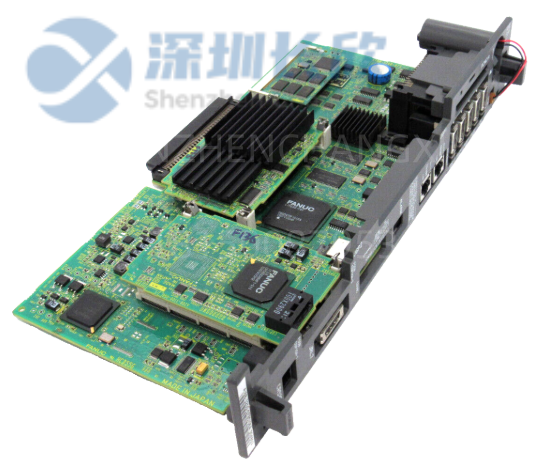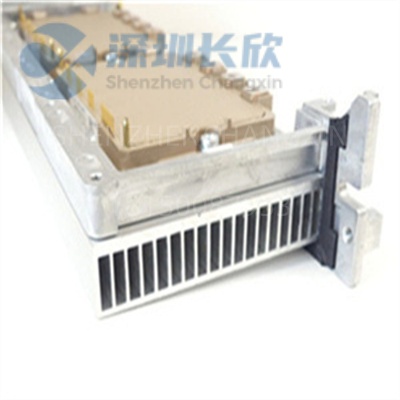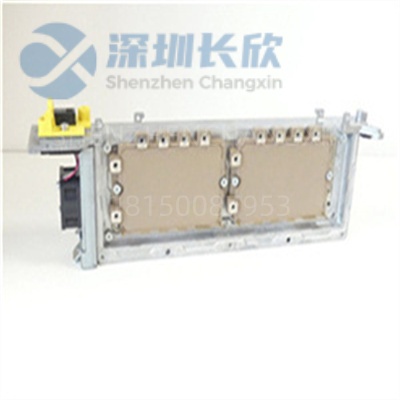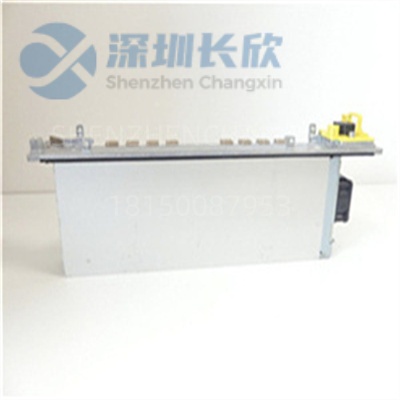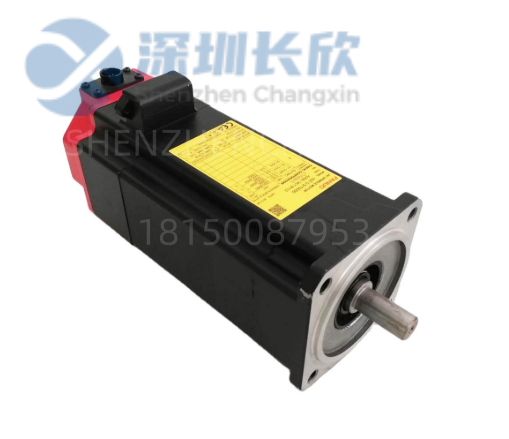
HITACHI 95MPL-D Servo Motor: High Dynamic Response for Advanced Motion Control Systems缩略图

HITACHI 95MPL-D Servo Motor: High Dynamic Response for Advanced Motion Control Systems

HITACHI 95MPL-D Servo Motor: High Dynamic Response for Advanced Motion Control Systems插图
Description:

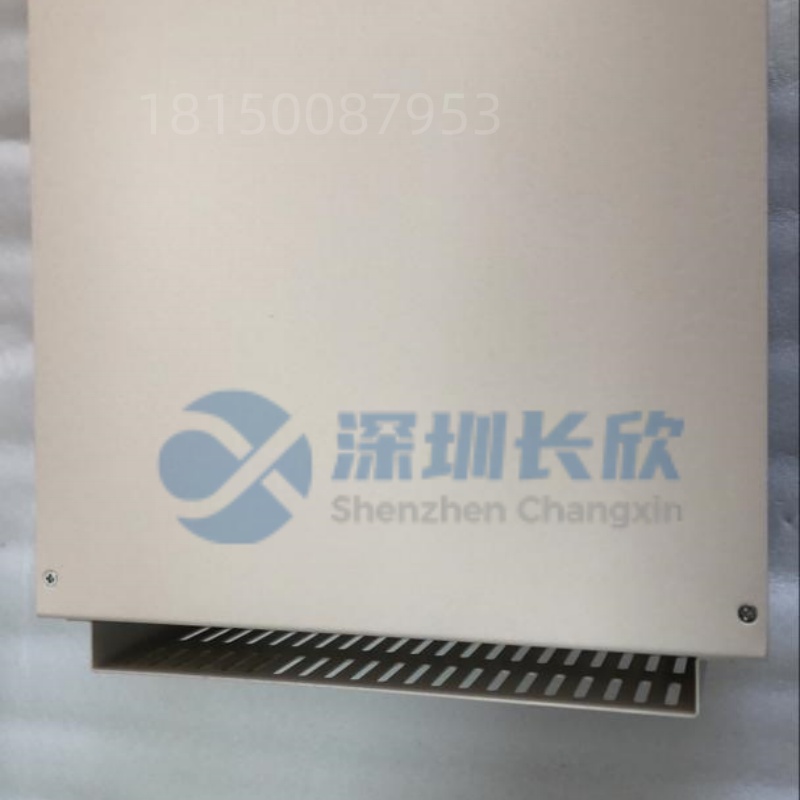
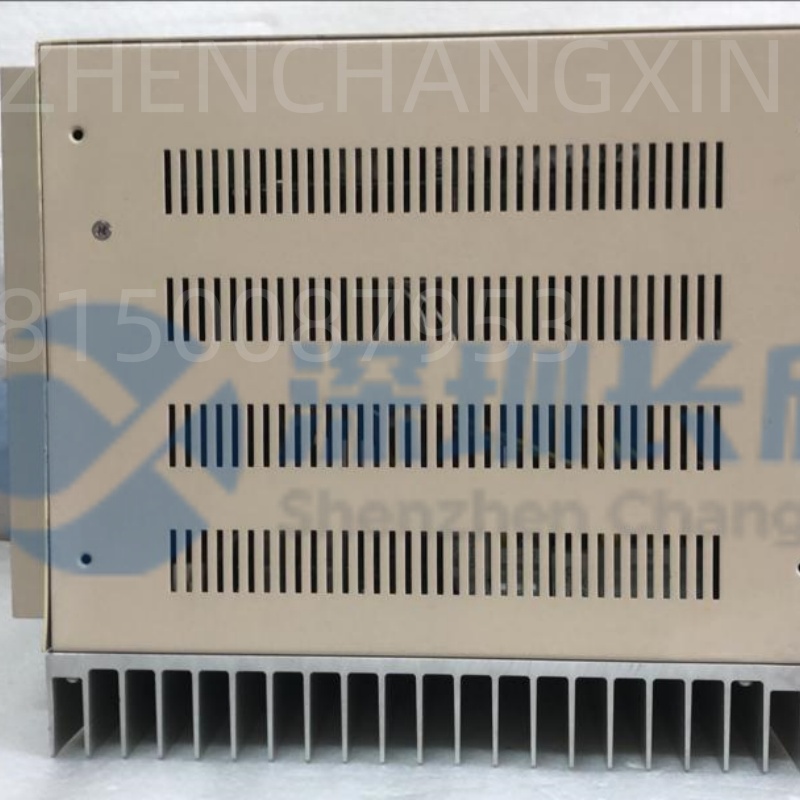
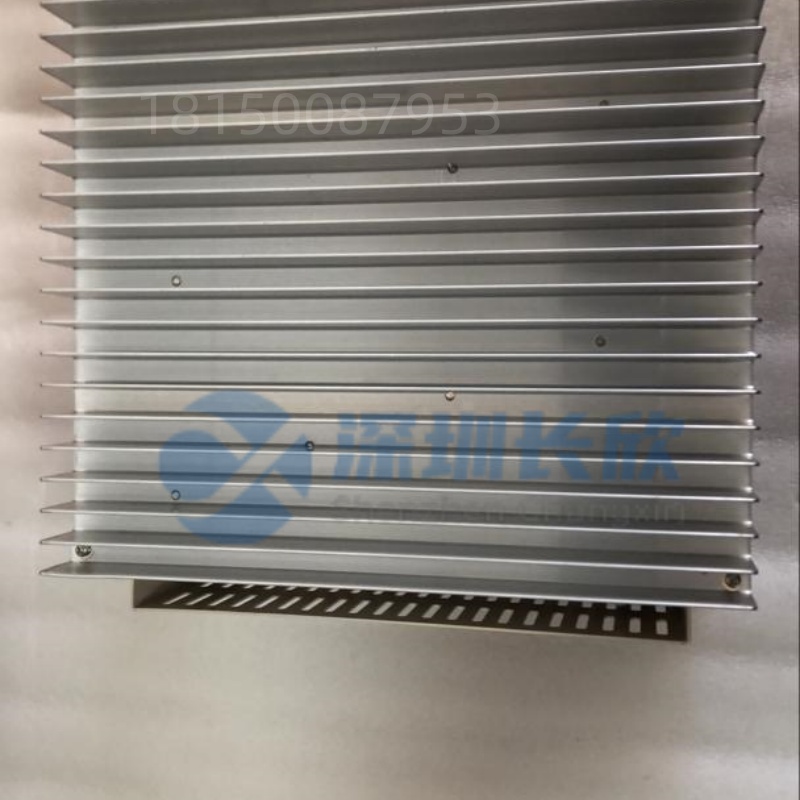
The HITACHI 95MPL-D​ is a high-performance, low-inertia AC servo motor designed and manufactured by Hitachi Industrial Equipment Systems. It serves as a critical motion component in advanced automation systems, converting electrical energy from a matched servo drive into precise mechanical rotation. This motor is engineered to deliver exceptional dynamic response, high torque density, and reliable operation, making it ideal for applications demanding rapid acceleration, precise positioning, and consistent performance in industrial settings.

Application Scenarios:

In a high-speed packaging line for pharmaceutical products, the accuracy and speed of pick-and-place operations directly impact throughput and reject rates. A delta-style parallel robot, responsible for transferring blisters from a forming machine to cartons, requires servo axes that can execute extremely fast and precise point-to-point movements with minimal settling time.

The HITACHI 95MPL-D​ servo motor is installed on one of the robot’s primary arm axes. Its low rotor inertia allows for very rapid changes in speed and direction, enabling the robot to achieve shorter cycle times. The motor is paired with a compatible Hitachi servo drive, which provides the high-bandwidth current control necessary to fully utilize the motor’s dynamic capabilities. The integrated high-resolution encoder delivers precise feedback on the arm’s position, ensuring that each blister is placed accurately within the carton, even at speeds exceeding 150 cycles per minute. This solution solves the key pain points of cycle time limitations and placement inaccuracy, directly enhancing production line efficiency and product quality.
HITACHI 95MPL-D Servo Motor: High Dynamic Response for Advanced Motion Control Systems插图1

HITACHI 95MPL-D Servo Motor: High Dynamic Response for Advanced Motion Control Systems插图2

RCM475LY-13 – High-Precision Rotary Encoder Module for Semiconductor & Flat Panel Display Manufacturing缩略图

RCM475LY-13 – High-Precision Rotary Encoder Module for Semiconductor & Flat Panel Display Manufacturing

RCM475LY-13 – High-Precision Rotary Encoder Module for Semiconductor & Flat Panel Display Manufacturing插图
Description

The RCM475LY-13 is a high-accuracy, single-turn absolute optical rotary encoder designed for demanding motion control applications in semiconductor capital equipment, flat panel display (FPD) manufacturing, and precision automation. With a 25-bit resolution (33.554.432 positions per revolution), BiSS-C serial interface, and ultra-rigid mechanical design, this encoder delivers sub-arcsecond repeatability and minimal signal jitter—critical for wafer alignment, stage positioning, and robotic pick-and-place operations. The unit with serial number 1102016084 is a production-grade module built to operate reliably in ISO Class 5 cleanrooms, featuring low-outgassing materials, ESD-safe housing, and robust shaft coupling tolerance.

Application Scenarios

At a leading-edge advanced packaging facility in Korea, a flip-chip bonder experienced intermittent “placement offset” errors during high-throughput runs. Diagnostics revealed timing jitter from an aging incremental encoder causing phase lag in the servo loop. Engineers replaced it with a new RCM475LY-13 (S/N 1102016084), leveraging its absolute BiSS-C output to eliminate homing cycles and its 25-bit resolution to enable real-time error compensation. Post-installation, placement accuracy improved from ±1.8 µm to ±0.6 µm, and machine uptime increased by 15%. The encoder’s cleanroom-compliant construction also eliminated particulate concerns during chamber maintenance—validating its role as a performance and reliability multiplier.
RCM475LY-13 – High-Precision Rotary Encoder Module for Semiconductor & Flat Panel Display Manufacturing插图1

SIEMENS ETU776 Electronic Trip Unit: Advanced protection and communication features for low-voltage power distribution systems缩略图

SIEMENS ETU776 Electronic Trip Unit: Advanced protection and communication features for low-voltage power distribution systems

SIEMENS ETU776 Electronic Trip Unit: Advanced protection and communication features for low-voltage power distribution systems插图
Description:

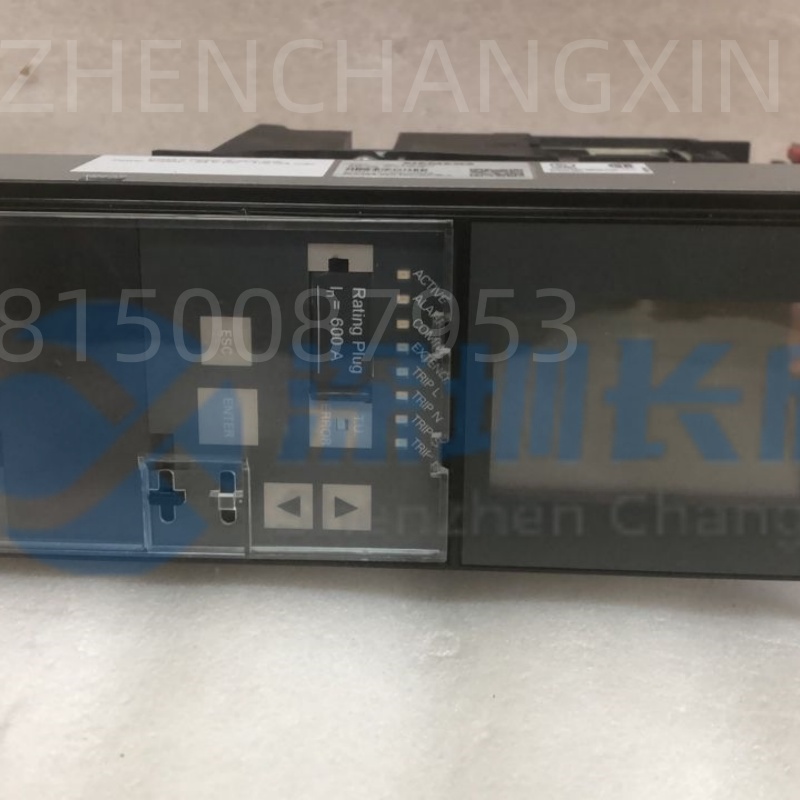
The SIEMENS ETU776​ is an Electronic Trip Unit (ETU)​ with a graphical display, designed for use with SIEMENS WL series low-voltage air circuit breakers (ACBs) . It serves as the intelligent “brain” of the circuit breaker, providing comprehensive protection, monitoring, and communication capabilities for low-voltage power distribution systems . Its core function is to continuously monitor electrical current, analyze it using pre-programmed algorithms, and initiate a trip command to open the circuit breaker in the event of faults such as overload, short-circuit, or ground fault, thereby protecting downstream equipment and ensuring system safety and reliability .

Application Scenarios:

In a large industrial plant’s main low-voltage distribution cabinet, the incoming power feeder is protected by a WL series air circuit breaker equipped with an ETU776​ electronic trip unit. The ETU776 is configured with specific protection settings (e.g., overload setting Ir, short-time delay Isd) tailored to the transformer’s capacity and downstream load characteristics.

During normal operation, the ETU776’s display shows real-time current values for each phase. If a downstream motor starts, causing a temporary inrush current, the ETU776’s short-time delay function allows this harmless transient to pass without tripping, maintaining power continuity. If a persistent overload occurs on a feeder, the ETU776’s inverse-time overload characteristic (I²tor switchable to I⁴tfor better fuse coordination ) will trip the breaker after a calculated delay, preventing cable damage. In the event of a severe short-circuit fault, its instantaneous trip (Ii) or short-time delayed trip (Isd) function activates rapidly to isolate the fault. Its Zone Selective Interlocking (ZSI)​ capability, when used with a ZSI module, ensures only the breaker closest to the fault trips, minimizing outage scope . Maintenance personnel can use its PROFIBUS-DP or MODBUS interface​ to remotely monitor load trends and receive alarm signals for predictive maintenance .

Note: Specific parameters like Icw(short-time withstand current) depend on the associated circuit breaker frame size. Always refer to the official SIEMENS ETU776 manual for precise settings and compatibility.

Technical Principles and Innovative Values:

The SIEMENS ETU776​ operates based on microprocessor-based real-time current measurement and advanced protection algorithms. It samples current waveforms from current transformers (CTs), calculates the true RMS values, and compares them against user-defined setpoints and time curves to determine if a fault condition exists .

Innovation Point 1: Advanced Protection & Selectivity.​ Beyond standard overcurrent protection (L, S, I), the ETU776 integrates Ground Fault (G) and Neutral Conductor (N) protection​ (with optional modules) . Its Zone Selective Interlocking (ZSI)​ function, when deployed across multiple breakers, enables fault localization and ensures selective tripping, significantly reducing the scope of power outages during faults . The ability to switch overload curves between I²tand I⁴tenhances coordination with downstream fuses .

Innovation Point 2: Intelligent Monitoring & Diagnostics.​ The unit features a graphical display and keypad​ for local configuration and real-time monitoring of phase currents, status, and alarms . The Thermal Memory​ function continuously models the thermal state of protected cables/motors, even when the breaker is open, providing accurate protection during frequent start-stop cycles . Load Monitoring​ allows setting “Load Shed” and “Load Restore” thresholds to manage peak demand and prevent overloads .

Innovation Point 3: Seamless Integration & Communication.​ The ETU776 supports multiple industrial communication protocols (PROFIBUS-DP, MODBUS), enabling seamless integration into higher-level SCADA (Supervisory Control and Data Acquisition)​ or DCS (Distributed Control System)​ networks . This allows for remote parameter setting, real-time data acquisition, historical trend analysis, and centralized fault management, forming a cornerstone of modern, intelligent low-voltage switchgear systems.

Application Cases and Industry Value

Case Study: Enhancing Reliability in a Data Center Power Distribution System.

A Tier-3 data center needed to upgrade its power distribution system to achieve higher fault tolerance and maintainability. The main and sub-distribution boards used SIEMENS WL air circuit breakers.

They retrofitted key feeder and incomer breakers with ETU776​ electronic trip units. Protection settings were finely tuned based on detailed short-circuit and selectivity studies. The ZSI​ function was enabled between main and feeder breakers. All ETU776 units were connected via PROFIBUS-DP​ to the building management system (BMS).

Result:​ During a minor insulation failure on a server rack PDU (Power Distribution Unit) causing a ground fault, the ETU776 on the specific feeder breaker accurately detected the fault and tripped selectively within milliseconds, isolating only the affected rack. The main breaker remained closed, ensuring uninterrupted power to the rest of the data hall. The BMS immediately received the trip alarm with precise location information, allowing engineers to respond quickly. The load monitoring​ feature helped identify a circuit approaching its capacity limit during a planned equipment addition, preventing a potential overload. The data center manager reported a significant reduction in unplanned downtime and improved operational visibility.

Related Product Combination Solutions

The SIEMENS ETU776​ is a key component within the SIEMENS low-voltage protection and control portfolio.

Circuit Breakers:​ SIEMENS WL Series Air Circuit Breakers​ (e.g., WLS2F320. WLS2D316. WLN2A308) , which house the ETU776.

Rating Plugs:​ WLRP Series Rating Plugs​ (e.g., WLRP2500) used to set the breaker’s nominal current (In) .

Communication & Accessories:​ PROFIBUS-DP communication module, MODBUS interface module, BDA (Breaker Data Adapter)​ for local configuration and testing .

Protection Modules:​ Ground Fault Protection Module (Ig), Neutral Current Transformer (N-CT)​ for neutral protection .

Auxiliary Components:​ Shunt trip coils, undervoltage releases (UVR), auxiliary contacts (AL, SDE), spring charging motors​ for remote operation .

Installation, Maintenance, and Full-Cycle Support

Installation:​ The ETU776 is designed for modular installation​ onto compatible SIEMENS WL series circuit breakers . Installation typically involves powering down the breaker, removing any existing trip unit, and plugging the ETU776 into its dedicated slot. Proper connection of current transformer (CT) inputs, communication cables​ (PROFIBUS/MODBUS), and any auxiliary power supply​ (if required for full functionality) is essential. Initial parameter setting is done via the onboard keypad or configuration software.

Maintenance:​ The solid-state design ensures high reliability with minimal maintenance. Key activities include periodic verification of protection settings​ and functional testing​ (e.g., using primary injection test sets) to ensure the trip unit and breaker operate correctly according to the coordination study. The graphical display​ provides clear status and fault indications (e.g., “Overload Trip,” “Short Circuit Trip”) for troubleshooting . Firmware updates may be available from SIEMENS to enhance functionality.

We provide comprehensive support for the SIEMENS ETU776​ and related WL system components. This includes technical consultation for protection coordination studies, supply of genuine SIEMENS parts, on-site installation and commissioning guidance, parameter configuration services, and after-sales technical support to ensure your electrical distribution system remains safe, reliable, and intelligent
SIEMENS ETU776 Electronic Trip Unit: Advanced protection and communication features for low-voltage power distribution systems插图1

Harmonic Drive FHA-32C-100-H-C1024-EC-SP – High-Precision Strain Wave Gear with Integrated Absolute Encoder for Robotics & Automation缩略图

Harmonic Drive FHA-32C-100-H-C1024-EC-SP – High-Precision Strain Wave Gear with Integrated Absolute Encoder for Robotics & Automation

Harmonic Drive FHA-32C-100-H-C1024-EC-SP – High-Precision Strain Wave Gear with Integrated Absolute Encoder for Robotics & Automation插图
Description

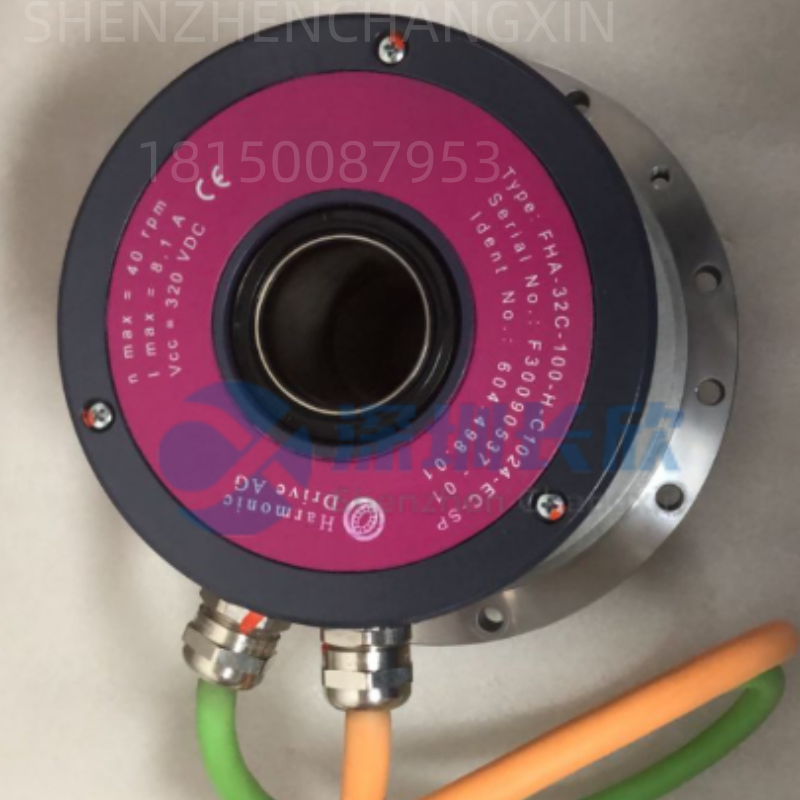
The Harmonic Drive FHA-32C-100-H-C1024-EC-SP is a premium-grade strain wave gear (harmonic drive) engineered for applications demanding extreme precision, compactness, and reliability. Featuring a 100:1 reduction ratio, hollow output shaft (H), and an integrated C1024 absolute single-turn encoder, this unit eliminates the need for external feedback devices while enabling clean cable routing through the center—critical for robotic joint design. The EC suffix denotes compatibility with standardized EC (electronically commutated) servo motor mounting flanges, allowing direct coupling without adapters. With near-zero backlash (<1 arcmin), high torsional stiffness, and lifetime lubrication, the FHA-32C-100-H-C1024-EC-SP is widely deployed in collaborative robots (cobots), surgical robots, wafer handlers, and high-speed pick-and-place systems where repeatability, space efficiency, and dynamic response are non-negotiable.

Application Scenarios

At a leading European cobot manufacturer, engineers struggled with inconsistent path accuracy in the wrist joint of their 6-axis robot. Switching from a planetary gearbox to the Harmonic Drive FHA-32C-100-H-C1024-EC-SP resolved micro-vibrations during high-speed reversals and improved end-effector repeatability from ±0.05 mm to ±0.01 mm. “The integrated encoder saved us three assembly steps and eliminated calibration drift,” said the lead mechanical designer. “Now our robots pass ISO 9283 validation on the first try.”

Note: “SP” typically denotes special packaging or minor factory customization; core performance remains per FHA-32C standard.

Technical Principles and Innovative Values

Innovation Point 1: Monolithic Encoder Integration – The C1024 encoder is mounted directly on the flexspline output, measuring true load-side position—eliminating errors from gearbox compliance that plague motor-mounted encoders.

Innovation Point 2: Hollow Shaft Architecture – The central bore enables routing of pneumatic lines, electrical cables, or optical fibers through the joint—essential for clean, reliable robot arm design.

Innovation Point 3: High Torque Density – Despite its compact size, the FHA-32C delivers 3x the torque density of comparable planetary gears, enabling lighter, faster robotic arms.

Innovation Point 4: Zero Maintenance – Pre-lubricated for life with high-performance grease, the unit operates reliably in 24/7 applications without oil changes or re-greasing.

Application Cases and Industry Value

In a semiconductor wafer transfer robot, the FHA-32C-100-H-C1024-EC-SP enables precise angular positioning of the end effector within a Class 1 cleanroom. Its low particle generation and vibration-free operation prevent wafer slippage—a critical requirement at 300 mm scale. Similarly, in a minimally invasive surgical robot, the hollow shaft routes instrument control wires while the integrated encoder ensures sub-degree accuracy during delicate maneuvers.

These use cases underscore why top-tier automation OEMs specify Harmonic Drive units: they reduce system complexity while raising performance ceilings.

Related Product Combination Solutions

EC-Frame Servo Motors (e.g., Kollmorgen AKM, Yaskawa Sigma-7): Direct-mount compatibility via EC flange.

Absolute Encoder Interfaces: Compatible with major drive platforms (Beckhoff, Siemens, Omron) supporting EnDat 2.2 or BiSS-C.

Robotic Joint Assemblies: Often paired with torque sensors or brake modules for full joint functionality.

Harmonic Drive CSF/CSG Series: Larger frame alternatives for higher torque needs (e.g., base joints).

Lubrication Monitoring Kits (optional): For extreme-duty applications requiring predictive maintenance.

Custom Hollow Shaft Adapters: For non-standard end-effector interfaces.

Simulation Models (STEP/IGES): Available from Harmonic Drive for CAD integration and dynamic simulation.

Installation, Maintenance, and Full-Cycle Support

Installation requires precise alignment between the motor and harmonic drive input shaft to avoid side loads. Torque must be applied gradually in a cross-pattern when securing the motor flange. The hollow output shaft accepts standard clamping hubs or custom couplings.

Maintenance is virtually nonexistent under normal conditions—no lubrication intervals, no backlash adjustment. However, periodic visual inspection for seal integrity is recommended in washdown or dusty environments.

We supply genuine Harmonic Drive FHA-32C-100-H-C1024-EC-SP units with full traceability and factory test reports. Each unit undergoes run-out, torque, and encoder validation before shipment. We also provide technical support for motor sizing, inertia matching, and control loop tuning to ensure optimal system performance. Whether you’re developing a new robotic platform or upgrading legacy automation, this harmonic drive offers a proven foundation for precision motion.
Harmonic Drive FHA-32C-100-H-C1024-EC-SP – High-Precision Strain Wave Gear with Integrated Absolute Encoder for Robotics & Automation插图1

Open Development Platform: UMAC 465CPU Supports C/C++, Python, MATLAB/Simulink & Delta Tau’s IDE for Custom Algorithms缩略图

Open Development Platform: UMAC 465CPU Supports C/C++, Python, MATLAB/Simulink & Delta Tau’s IDE for Custom Algorithms

Open Development Platform: UMAC 465CPU Supports C/C++, Python, MATLAB/Simulink & Delta Tau’s IDE for Custom Algorithms插图
Description

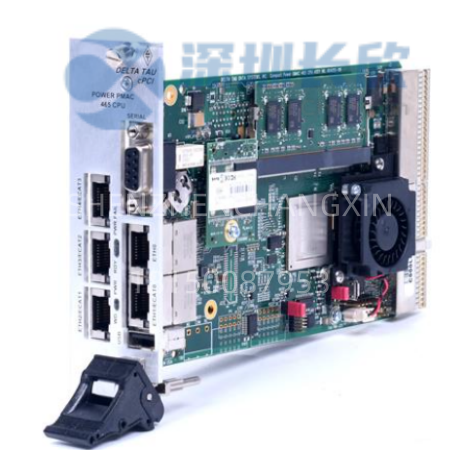
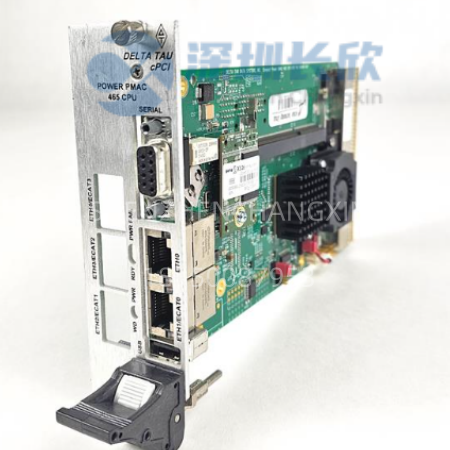
The DELTA TAU UMAC 465CPU is a high-end motion controller module from the Power PMAC (Programmable Multi-Axis Controller) family, designed for the most demanding industrial automation applications. Housed in a compact 3U rack-mount chassis as part of the UMAC (Universal Motion and Automation Controller) system, the 465CPU combines a dual-core ARM Cortex-A9 processor running a real-time Linux OS with a powerful Xilinx Kintex-7 FPGA. This hybrid architecture enables simultaneous execution of complex kinematic calculations, IEC 61131-3 PLC logic, EtherCAT master control, and custom real-time algorithms—all with deterministic sub-microsecond servo loop performance. Ideal for semiconductor equipment, precision machining, robotics, and scientific instrumentation, the UMAC 465CPU delivers unmatched flexibility, speed, and integration.

Application Scenarios

At a leading EUV lithography tool manufacturer, engineers needed to synchronize 48 axes of motion—including wafer stage, reticle stage, and mirror adjusters—with nanometer-level path accuracy and jitter below 50 ns. The legacy Turbo PMAC system could not meet the bandwidth requirements. They migrated to the DELTA TAU UMAC 465CPU, leveraging its FPGA-based servo loops running at 62.5 kHz and built-in EtherCAT master to directly control Beckhoff drives. Using custom C routines in the real-time Linux environment, they implemented feedforward compensation for thermal drift in real time. The result: overlay error reduced by 60%, and throughput increased by 22%. In this application, the UMAC 465CPU wasn’t just a controller—it was the enabler of next-generation chip manufacturing.

Technical Principles and Innovative Values

Innovation Point 1: True Hardware/Software Co-Processing

Time-critical tasks (e.g., PID, trajectory interpolation) run in the FPGA for nanosecond determinism, while non-critical tasks (HMI, data logging, network services) run on the Linux CPU—maximizing resource efficiency.

Innovation Point 2: Native EtherCAT Master in FPGA

Unlike software-based masters, the UMAC 465CPU implements the entire EtherCAT state machine and datagram processing in hardware—achieving <1 µs cycle jitter even at 1 kHz update rates.

Innovation Point 3: Open Linux Environment with Real-Time Guarantees

Developers can install standard Linux packages (e.g., SSH, NTP, Docker) while maintaining hard real-time performance—enabling edge AI, OPC UA servers, or cloud telemetry without compromising motion control.

Innovation Point 4: Seamless Migration from Turbo PMAC

Backward-compatible command syntax (e.g., Ixx, Mxx variables) allows rapid porting of legacy applications, while new Power PMAC features (C programs, structs, pointers) unlock modern software practices.

Application Cases and Industry Value

Medical Robotics: A surgical robot developer used the UMAC 465CPU to coordinate 7 DOF arms with force feedback, achieving ISO 13485-compliant motion safety via dual-channel torque monitoring in the FPGA.

Additive Manufacturing: A metal 3D printer OEM synchronized laser galvo scanners, powder recoaters, and Z-stage using Power PMAC kinematic libraries—reducing layer misalignment by 90%.

Particle Accelerator: At a national lab, the 465CPU controlled 120 magnet power supplies with 10 ppm current stability, using custom FPGA filters to reject grid harmonics.

Related Product Combination Solutions

UMAC Chassis (3U Rack Frame): Houses the 465CPU and up to 8 ACC accessory cards.

ACC-24E3: 8-axis analog servo interface card for ±10 V drive commands.

ACC-14E: Digital I/O and encoder feedback card (up to 8 encoder inputs).

ACC-84E: EtherCAT expansion interface for distributed I/O or third-party drives.

Power PMAC IDE: Official development environment for PLC, C programs, and motion tuning.

MACRO Ring (ACC-5E3. Fiber Optic): For ultra-high-speed, noise-immune communication between UMAC and remote I/O racks.

Omron Sysmac Studio: For integrated development when used in Omron ecosystem (post-acquisition synergy).

Installation, Maintenance, and Full-Cycle Support

The UMAC 465CPU installs into a UMAC 3U chassis and connects via Ethernet for configuration. Initial setup uses the Power PMAC IDE to assign IP, load firmware, and deploy user programs. All motion parameters, PLC logic, and C applications are stored persistently in eMMC.

For maintenance:

Real-time status is accessible via built-in web server (no software needed).

Remote SSH allows log inspection, file transfer, and service restarts.

FPGA bitfiles and OS images can be updated in-field via microSD or TFTP.

Every UMAC 465CPU we supply undergoes full functional validation:

FPGA configuration test

Ethernet throughput & latency

Real-time task scheduling verification

Thermal stress test at 70°C

We provide a one-year warranty, lifetime technical support, and migration assistance from legacy Delta Tau systems.

⚠️ Note: Delta Tau was acquired by Omron in 2015. The Power PMAC line remains actively supported, with ongoing firmware and IDE updates under Omron’s industrial automation portfolio.

Contact us for a complete motion control solution—whether you’re designing a new high-precision machine, upgrading from Turbo PMAC, or integrating advanced kinematics with Industry 4.0 connectivity.
Open Development Platform: UMAC 465CPU Supports C/C++, Python, MATLAB/Simulink & Delta Tau’s IDE for Custom Algorithms插图1

OEM FANUC A16B-2203-0073-02A SRAM Module with Battery Backup for CNC Parameter & Program Storage缩略图

OEM FANUC A16B-2203-0073-02A SRAM Module with Battery Backup for CNC Parameter & Program Storage

OEM FANUC A16B-2203-0073-02A SRAM Module with Battery Backup for CNC Parameter & Program Storage插图
Description

The FANUC A16B-2203-0073-02A is a critical memory board used in FANUC’s widely deployed i-Series CNC systems, including the 16i, 18i, and 21i families. This module serves as the primary non-volatile storage for essential machine data—including NC programs, tool offsets, work coordinate systems (G54–G59), custom macros, PMC (Programmable Machine Controller) ladder logic, and system parameters. Built around high-reliability SRAM with integrated lithium battery backup, the A16B-2203-0073-02A ensures that vital machining data remains intact during power interruptions, controller reboots, or scheduled maintenance—preventing catastrophic data loss that could halt production for hours or days.

Application Scenarios

At a Tier-1 automotive parts supplier in Michigan, a sudden battery failure on a FANUC 18i-TB controlled horizontal machining center triggered a “Memory Lost” alarm. Without backups, the shop faced re-entering over 200 complex NC programs and recalibrating 50+ tool offsets—a 3-day downtime risk. Fortunately, their maintenance team had a spare FANUC A16B-2203-0073-02A on hand. After swapping the module and restoring from a recent backup via RS-232. the machine was operational in under 90 minutes. The incident reinforced the value of proactive sparing for this unassuming but mission-critical board—now standard practice across all 12 CNC cells in the facility.

Technical Principles and Innovative Values

Innovation Point 1: Integrated Battery-Backed SRAM Architecture

Unlike flash-based storage, SRAM offers near-instant read/write access—critical for real-time CNC operations. The onboard battery ensures seamless retention without wear-leveling or write-cycle limits.

Innovation Point 2: Fail-Safe Data Integrity Design

The A16B-2203-0073-02A includes voltage monitoring circuitry that triggers a “low battery” alarm (e.g., ALM 414) before data corruption occurs—giving operators time to back up or replace.

Innovation Point 3: Hot-Swappable in Redundant Setups

In dual-memory configurations (used in high-availability machines), the board can be replaced without full system shutdown—minimizing production impact.

Innovation Point 4: Backward Compatibility Across i-Series Generations

Despite firmware updates over decades, FANUC maintains strict hardware compatibility—making the A16B-2203-0073-02A usable in both 1990s-era and modern i-Series retrofits.

Application Cases and Industry Value

In a Swiss precision watch component shop, the A16B-2203-0073-02A preserved micron-level tool compensation data through a week-long grid outage—avoiding recalibration of sub-micron tolerances.

A Chinese aerospace manufacturer uses this module in over 40 five-axis mills; standardized sparing has reduced mean time to repair (MTTR) for memory-related faults from 8 hours to <2 hours.

Related Product Combination Solutions

FANUC A16B-2200-0471/T: Main CPU board for 16i/18i/21i—hosts the A16B-2203-0073-02A in dedicated memory slot

FANUC A02B-0207-C102: Operator panel (MDI unit) used to manage memory operations and backups

FANUC I/O Link Modules (e.g., A16B-2200-0780): Work with PMC logic stored on the memory board

FANUC Data Server Option: External hard drive interface for automated NC program backup—complements on-board memory

RS-232 / USB-to-RS232 Adapter: Used to transfer programs to/from the A16B-2203-0073-02A when battery is low

FANUC Ladder Development Tool (LADDER III): Software to edit and upload PMC logic stored on this module

Replacement Battery Module (if applicable): Some later revisions allow external battery packs for extended retention

Installation, Maintenance, and Full-Cycle Support

Installation requires powering down the CNC control cabinet, opening the front panel, and inserting the A16B-2203-0073-02A into its labeled slot on the main PCB. Ensure ESD precautions are followed. After power-up, the CNC will recognize the memory automatically—if blank, restore data from backup using the “ALL IO” or “PUNCH/READ” functions.

⚠️ Critical Maintenance Tip: Monitor for ALM 414 (Low Battery Voltage). Replace the memory board before data loss occurs. Never remove the board while powered—this can corrupt memory.

Every FANUC A16B-2203-0073-02A we supply undergoes:

Visual inspection for capacitor leakage or trace damage

Connector pin integrity check

Functional verification on compatible test benches (where possible)

Traceable sourcing with batch documentation

We provide a 1-year warranty, technical guidance for data recovery/restoration, and compatibility confirmation for your specific CNC model and software version.

🔒 Note: This is an OEM FANUC part intended for use in legally owned FANUC-controlled machinery. Cloned or third-party copies may lack battery monitoring or cause data instability.
OEM FANUC A16B-2203-0073-02A SRAM Module with Battery Backup for CNC Parameter & Program Storage插图1

FANUC A06B-0116-B203#0100 Servo Motor: A core component for high-precision, high-speed motion control.缩略图

FANUC A06B-0116-B203#0100 Servo Motor: A core component for high-precision, high-speed motion control.

FANUC A06B-0116-B203#0100 Servo Motor: A core component for high-precision, high-speed motion control.插图
Description:

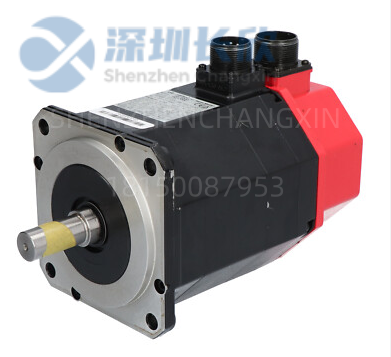
The FANUC A06B-0116-B203#0100​ is a sealed AC servo motor​ from FANUC’s extensive industrial automation product line, specifically belonging to the Beta iS series (model Beta iS 1/6000) . It serves as a high-performance motion execution component, converting electrical energy from the servo drive into precise mechanical rotation to achieve accurate control over position, speed, and torque in systems like CNC machine tools and industrial robots . Its design emphasizes high speed (up to 6000 RPM), reliability, and integration with FANUC’s control ecosystem .

Note: There is some information confusion in the market. Some sources describe the A06B-0116-B203#0100 as a control board or module . However, based on multiple authoritative sources and FANUC’s product numbering conventions (where A06B typically prefixes servo motors and drives), the description as a servo motor is more prevalent and likely accurate .

Application Scenarios:

In a small to medium-sized CNC machining center (compatible with FANUC Series 0M, 0T, 15. 16. 18. 21 controls), precise and rapid movement of the tool or workpiece is essential for efficient milling or turning operations .

The FANUC A06B-0116-B203#0100​ servo motor is installed as a feed axis motor (e.g., for the X or Y axis). It is connected to a matching FANUC servo amplifier (such as a dual-axis SVM2-40/40 drive) . The amplifier receives motion commands from the CNC unit and supplies controlled power to the motor. The motor’s built-in B64iA absolute encoder​ provides real-time, high-resolution feedback on rotor position and speed to the control system, forming a closed-loop that ensures minimal following error even during rapid acceleration and deceleration . This setup enables the machine to achieve high contouring accuracy and surface finish quality on machined parts.

Key Parameters:

Note: Some parameters, especially regarding an associated servo amplifier (e.g., rated input 283-325V, 5.3kW, output current 12.5A per axis for SVM2-40/40), refer to the drive unit that would typically power this motor, not the motor itself .

Technical Principles and Innovative Values:

The FANUC A06B-0116-B203#0100​ operates as a permanent magnet synchronous motor (PMSM). The servo drive applies a controlled three-phase AC voltage to the motor’s stator windings, creating a rotating magnetic field. This field interacts with the permanent magnets on the rotor, producing torque. The key to precise control lies in the continuous feedback from the absolute encoder, which allows the drive to precisely adjust the phase and amplitude of the current to achieve the desired position, speed, and torque .

Innovation Point 1: High-Speed Capability with Sealed Design.​ The motor is designed for high-speed operation up to 6000 RPM​ (and potentially beyond with firmware updates) . This is achieved through optimized electromagnetic design and low-inertia rotor construction. Despite its high-speed capability, it features a sealed construction, protecting internal components from contaminants like coolant, oil mist, and metal chips commonly found in machine tool environments, enhancing longevity and reliability .

Innovation Point 2: Integrated High-Resolution Absolute Encoder.​ The motor incorporates a B64iA absolute encoder​ . Unlike incremental encoders, an absolute encoder provides a unique position value immediately upon power-up, eliminating the need for a homing routine after each power cycle. This “absolute” feedback is crucial for maintaining machine coordinate references, improving setup efficiency, and preventing crashes due to lost position.

Innovation Point 3: Optimized for FANUC Ecosystem and High Reliability.​ The motor is part of the Beta iS series​ and is designed for seamless integration with FANUC’s SVM2 series servo amplifiers​ and CNC controls (like Series 0i, 15i, etc.) . This compatibility ensures optimized performance through matched parameters and communication protocols. Furthermore, as an AC servo motor, it has no brushes that wear out, leading to significantly lower maintenance requirements and higher mean time between failures (MTBF) compared to older DC servo motors .

Application Cases and Industry Value

Case Study: Retrofitting an Aging CNC Lathe for Improved Precision.

A job shop owned an older CNC lathe that used DC servo motors. The brushes required frequent replacement, causing unplanned downtime. The motors also exhibited torque ripple at low speeds, affecting the surface finish of finely turned parts.

They decided to retrofit the X and Z axes with FANUC A06B-0116-B203#0100​ AC servo motors, paired with new FANUC servo drives. The new motors’ brushless design eliminated the brush maintenance issue. The high-resolution absolute encoders provided more stable position feedback, especially at the low speeds used for finishing cuts.

Result:​ Machine downtime due to motor maintenance was virtually eliminated. The surface finish quality of turned parts improved by an estimated 20%, reducing the need for secondary polishing operations. The absolute encoder feature saved approximately 5 minutes per setup by removing the homing requirement after power cycles. The shop manager reported a return on investment within 18 months due to increased productivity and reduced scrap rates.

Related Product Combination Solutions

The FANUC A06B-0116-B203#0100​ servo motor is typically used within a complete FANUC motion control system.

Servo Amplifiers/Drives:​ FANUC SVM2-40/40 Dual Axis Servo Amplifier​ (often referenced with this motor) , FANUC αi series servo drives.

CNC Control Systems:​ FANUC Series 0i-Mate, 0i, 15i, 16i, 18i, 21i​ .

Power Supply Modules:​ FANUC Power Supply Units​ (e.g., A06B-6070-Hxxx) to provide stable DC bus voltage for the drives.

Cables:​ Motor power cables (U, V, W, GND), High-resolution encoder feedback cables​ specific to the B64iA interface.

Related Motors:​ Other FANUC Beta iS series​ motors with different power ratings (e.g., A06B-0115-Bxxx, A06B-0117-Bxxx).

Installation, Maintenance, and Full-Cycle Support

Installation:​ Installation involves mechanically coupling the motor’s keyed shaft​ to the machine’s ball screw or gearbox using a suitable coupling, ensuring proper alignment to prevent bearing wear . Electrically, the motor power terminals (U, V, W)​ must be connected to the corresponding outputs of the servo amplifier using shielded cables. The encoder connector​ must be securely plugged into the feedback interface on the drive. Proper grounding is essential for noise immunity.

Maintenance:​ As a brushless AC motor, it requires minimal routine maintenance . Primary tasks include:

Periodic inspection​ for physical damage, loose connections, and unusual noise/vibration.

Ensuring cooling air paths (if externally cooled) are not blocked.

Checking the integrity of cables and connectors, especially in high-flex applications.

The encoder is a precision device; avoid shock, contamination, and disassembly.

If a fault occurs (e.g., no rotation, excessive vibration, encoder alarm), troubleshooting steps include checking power supply, verifying drive parameters, and inspecting cables. For internal faults, professional repair or replacement is recommended.

We provide comprehensive support for the FANUC A06B-0116-B203#0100​ servo motor and related system components. This includes technical consultation, supply of genuine parts, system integration and retrofitting services, parameter tuning assistance, and after-sales maintenance to ensure your equipment achieves optimal performance and longevity.
FANUC A06B-0116-B203#0100 Servo Motor: A core component for high-precision, high-speed motion control.插图1

FANUC A06B-6290-H207: Dual-axis servo amplifier aiSV 40/40HV-B for CNC & Robotics缩略图

FANUC A06B-6290-H207: Dual-axis servo amplifier aiSV 40/40HV-B for CNC & Robotics

FANUC A06B-6290-H207: Dual-axis servo amplifier aiSV 40/40HV-B for CNC & Robotics插图
Description:

The FANUC A06B-6290-H207​ is a Double Axis Servo Amplifier​ (model aiSV 40/40HV-B) from FANUC’s αi-S series, serving as a core component in industrial automation systems such as CNC machine tools and industrial robots . It functions as a high-performance drive module that converts control signals from the CNC system or controller into precise power output to drive two servo motors simultaneously, enabling accurate control over position, speed, and torque . Its design emphasizes high precision, fast response, and high reliability, making it a critical element for achieving stable and efficient motion control in demanding applications .

Application Scenarios:

In a high-speed machining center, precise and synchronized movement of multiple axes (e.g., X, Y, Z) is crucial for machining complex parts. The spindle and feed axes require high dynamic response and torque control.

The FANUC A06B-6290-H207​ dual-axis servo amplifier is installed within the machine’s electrical cabinet. It receives digital motion commands (position/speed references) via a high-speed serial communication interface (e.g., FANUC’s proprietary bus) from the main CNC unit (like a FANUC Series 30i/31i/32i). The amplifier then drives two separate servo motors—for instance, one controlling the X-axis ball screw and another controlling the Y-axis—providing the necessary current and voltage. Its fast current loop and advanced control algorithms ensure minimal following error during rapid contouring movements, resulting in high surface finish quality and dimensional accuracy of the machined workpiece. Its built-in diagnostic functions (monitoring for overcurrent, overload, overheating) help prevent unexpected downtime .

Key Parameters:

Note: Some specific electrical parameters (e.g., input voltage range, peak current) should be verified with the official FANUC A06B-6290-H207 datasheet for the exact variant.

Technical Principles and Innovative Values:

The FANUC A06B-6290-H207​ operates based on closed-loop vector control​ principles. It receives high-resolution digital command values from the upper-level controller, compares them with real-time feedback from the servo motor’s encoder (position/speed), and uses sophisticated algorithms (like PID and feedforward) to calculate the precise voltage and current required by the motor to minimize error .

Innovation Point 1: High-Performance Dual-Axis Integration.​ The module integrates control and power circuits for two servo axes​ within a single compact unit (aiSV 40/40HV-B) . This high-density design saves valuable cabinet space, reduces inter-axis wiring complexity, and improves system reliability by minimizing connection points. It allows for coordinated control of two closely related axes, such as two gantry axes or a rotary and linear axis pair.

Innovation Point 2: Advanced Control and High-Speed Communication.​ It employs vector control technology, enabling independent and precise control of motor torque and magnetic flux, resulting in excellent low-speed torque characteristics, fast dynamic response, and high-speed stability . It communicates with the main CNC via a high-speed serial bus (like FANUC’s FSSB), ensuring low-latency, high-bandwidth data exchange for synchronized multi-axis motion, which is critical for complex contouring and high-speed machining.

Innovation Point 3: Comprehensive Diagnostics and Robust Protection.​ The amplifier features extensive self-diagnostic functions​ that can detect and report various fault conditions (e.g., overcurrent ALM1. communication error ALM3. overheating ALM5) through status LEDs or system alarms . It incorporates multiple layers of hardware and software protection (overload, overheat, short-circuit) to safeguard both the amplifier and the connected motors from damage under abnormal conditions, enhancing system uptime and safety .

Application Cases and Industry Value

Case Study: Enhancing Precision in a Robotic Welding Cell.

An automotive parts manufacturer used a robotic welding cell for chassis components. The existing servo drives on two critical robot axes (wrist rotation and tool tilt) exhibited occasional torque ripple and required frequent tuning, leading to inconsistent weld bead quality and occasional path deviation.

They replaced the drives with FANUC A06B-6290-H207​ dual-axis amplifiers, paired with matching αi-S series servo motors. The amplifiers’ precise current control and high-speed response provided smoother torque output. The integrated control of the two wrist axes allowed for better dynamic coordination during complex welding paths.

Result:​ Weld path accuracy improved by approximately 15%, significantly reducing rework rates. The system’s built-in vibration suppression function minimized mechanical resonance, leading to a smoother robot motion and extended mechanical life. The reduction in manual tuning and troubleshooting downtime increased overall equipment effectiveness (OEE) by an estimated 8%. The plant engineer noted that the robust design and reliable performance in the electrically noisy welding environment justified the investment.

Related Product Combination Solutions

The FANUC A06B-6290-H207​ is part of FANUC’s comprehensive motion control ecosystem.

CNC Systems:​ FANUC Series 30i/31i/32i, 0i-F, etc., which provide the trajectory planning and high-level commands.

Servo Motors:​ FANUC αi-S series servo motors​ (e.g., A06B-xxxx-Bxxx), which are optimally matched to the amplifier for performance.

Spindle Drives:​ FANUC αi I/O Link spindle amplifiers​ (e.g., A06B-62xx-Hxxx) for controlling the main spindle.

Power Supply Units:​ FANUC Power Supply Modules​ (e.g., A06B-62xx-Hxxx) that provide regulated DC bus voltage to the servo amplifiers.

I/O Modules:​ FANUC I/O Units​ (A02B/A03B series) for connecting sensors and actuators.

Control Software & Cables:​ FANUC servo tuning software​ and dedicated high-voltage power cables, feedback cables (encoder cables), and control signal cables.

Installation, Maintenance, and Full-Cycle Support

Installation:​ The amplifier is designed for DIN rail or panel mounting​ within a well-ventilated control cabinet . Installation involves securing the unit, connecting the three-phase AC input power, DC bus link​ (if separate), motor power cables (U, V, W)​ for each axis, motor encoder feedback cables, and the high-speed serial communication cable​ from the CNC. Proper grounding and shielding are critical to prevent electrical noise interference .

Maintenance:​ Primary maintenance involves regular cleaning​ of cooling fans and heatsinks to prevent overheating . Periodic inspection​ of electrical connections for tightness is recommended. The amplifier’s status LEDs and the CNC’s alarm screen provide immediate fault indications. Common troubleshooting steps include checking input power, verifying communication link integrity, and inspecting motor/encoder cables . For complex faults like internal IGBT failure, professional repair or module replacement is advised.

We provide comprehensive support for the FANUC A06B-6290-H207​ and related FANUC system components. This includes technical consultation, supply of genuine parts, system integration guidance, parameter setup assistance, and after-sales maintenance services to ensure your automation system achieves optimal performance and reliability.
FANUC A06B-6290-H207: Dual-axis servo amplifier aiSV 40/40HV-B for CNC & Robotics插图1

FANUC A06B-6290-H207: Dual-axis servo amplifier aiSV 40/40HV-B for CNC & Robotics插图2

SYHNC100-NIB-2X-W-24-P-D-E23-A012 – High-Performance Motion Control CPU for Industrial CNC & Robotics缩略图

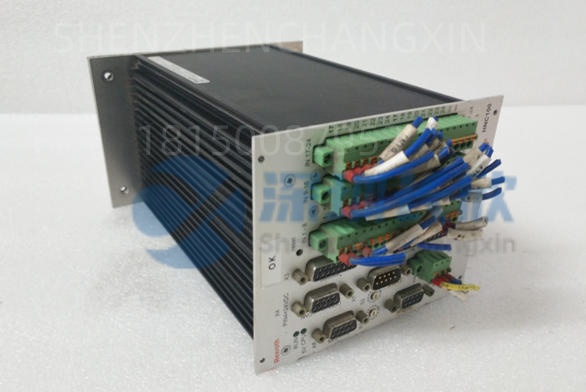
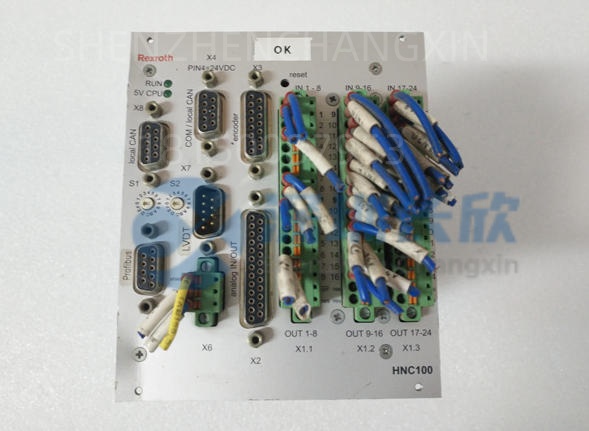
SYHNC100-NIB-2X-W-24-P-D-E23-A012 – High-Performance Motion Control CPU for Industrial CNC & Robotics

SYHNC100-NIB-2X-W-24-P-D-E23-A012 – High-Performance Motion Control CPU for Industrial CNC & Robotics插图
Description

The SYHNC100-NIB-2X-W-24-P-D-E23-A012 is a compact, high-performance motion control CPU designed for demanding industrial automation applications requiring precise multi-axis coordination. As part of the SYHNC100 series, this module integrates a real-time motion engine, programmable logic controller (PLC), and communication interfaces into a single IP20-rated unit. Specifically configured for 2-axis synchronous control, it supports advanced interpolation modes—including linear, circular, and electronic gearing—making it ideal for CNC routers, labeling machines, robotic arms, and converting equipment. With dual Ethernet ports (one dedicated to EtherCAT master functionality), built-in 24 VDC power supply input, and support for safety protocols like Safe Torque Off (STO), the SYHNC100-NIB-2X-W-24-P-D-E23-A012 delivers both performance and compliance in a space-efficient form factor.

Application Scenarios

At a European packaging plant producing medical blister packs, an aging proprietary controller caused frequent misalignment between film feed and punching stations, leading to 8% material waste. The facility replaced it with the SYHNC100-NIB-2X-W-24-P-D-E23-A012. leveraging its nanosecond-level synchronization between servo axes. Within weeks, registration accuracy improved by 95%, reducing scrap to under 1%. “The electronic cam function alone paid for the upgrade in three months,” said the production manager. “And we now monitor cycle times remotely via its web server.”

Note: Requires compatible servo drives (e.g., SYSDRIVE series) or third-party EtherCAT-compliant drives.

Technical Principles and Innovative Values

Innovation Point 1: Unified Architecture – The SYHNC100 eliminates the traditional separation between PLC and motion controller, executing both logic and trajectory planning on a single real-time kernel—reducing latency and simplifying architecture.

Innovation Point 2: Embedded Web Diagnostics – Technicians can access axis status, error logs, and oscilloscope-like plots via any browser—no software installation needed—accelerating troubleshooting during downtime.

Innovation Point 3: EtherCAT Determinism – As an EtherCAT master, the module achieves sub-millisecond cycle times with jitter below 1 µs, ensuring tight coordination even at high speeds.

Innovation Point 4: Safety Without Extra Hardware – While STO requires external contactors, the CPU provides safety status feedback and integrates safety logic into the main program, reducing wiring and cabinet space.

Application Cases and Industry Value

In a U.S. automotive parts stamping line, the SYHNC100-NIB-2X controls a dual-arm pick-and-place robot feeding a press. Its ability to synchronize with the press crank angle via encoder input reduced cycle time by 12%. Meanwhile, at a Chinese textile mill, the same controller manages tension and speed across two unwinders using load cell feedback and closed-loop torque control—eliminating fabric breaks during spool changes.

These applications highlight the module’s versatility: from discrete manufacturing to continuous process handling, the SYHNC100 adapts through software, not hardware swaps.

Related Product Combination Solutions

SYSDRIVE Servo Drives: Native compatibility with SYHNC100 via EtherCAT; support STO and regenerative braking.

SYMOTION Studio: Engineering suite for motion programming, HMI design, and simulation.

HMI Panels (e.g., SYHMI-700): Optional touchscreen interfaces that communicate seamlessly with the CPU.

Encoder Modules (e.g., SYENC-100): For high-resolution feedback from third-party motors.

Safety Relays (e.g., PILZ PNOZ): Required to implement STO circuit per ISO 13849.

OPC UA Servers/Gateways: Enable integration with MES or cloud platforms like MindSphere or Azure IoT.

Backup Battery Module (SYBAT-01): Preserves program and position data during power loss.

Installation, Maintenance, and Full-Cycle Support

Installation involves DIN-rail mounting, 24 VDC power connection, and linking EtherCAT to servo drives. Shielded cables and proper grounding are essential for noise immunity. The module supports hot-plug diagnostics—drive errors appear instantly on the web interface.

Maintenance is largely predictive: built-in counters track motor hours, thermal cycles, and fault events. Firmware updates can be deployed remotely via the web server.

We provide end-to-end support for the SYHNC100 platform—including system design, code migration from legacy controllers (e.g., Siemens SINUMERIK or Allen-Bradley Ultra), and on-site commissioning. Every SYHNC100-NIB-2X-W-24-P-D-E23-A012 is tested for full functionality and backed by a 24-month warranty. Whether you’re building a new machine or modernizing an existing line, this controller offers a future-proof foundation for intelligent, connected automation.
SYHNC100-NIB-2X-W-24-P-D-E23-A012 – High-Performance Motion Control CPU for Industrial CNC & Robotics插图1

NI PXIe-1082 – 8-Slot PCIe Gen3 PXI Express Chassis for High-Performance Test, Measurement & Control缩略图

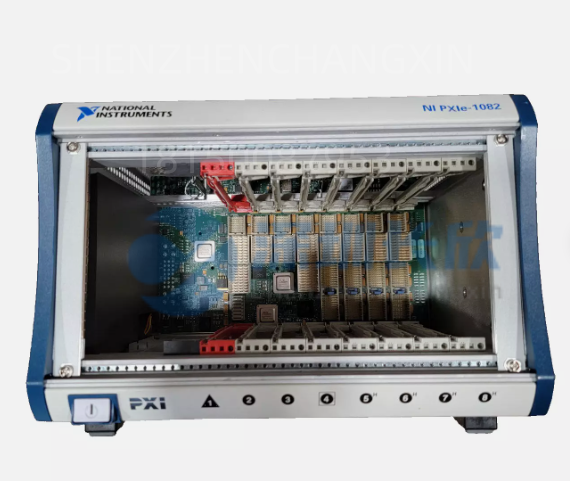
NI PXIe-1082 – 8-Slot PCIe Gen3 PXI Express Chassis for High-Performance Test, Measurement & Control

NI PXIe-1082 – 8-Slot PCIe Gen3 PXI Express Chassis for High-Performance Test, Measurement & Control插图
Description

The NI PXIe-1082 is a high-performance, 8-slot 3U PXI Express chassis from National Instruments (now Emerson Test & Measurement) designed for demanding test, measurement, and control applications. Featuring PCIe Gen3 x8 connectivity to the system controller slot, it delivers up to 24 GB/s of system bandwidth, enabling real-time data streaming for high-channel-count DAQ, RF signal analysis, hardware-in-the-loop (HIL) simulation, and power electronics validation. With integrated timing and synchronization (including PXI Express differential star, CLK10. and PXI_TRIG buses), the NI PXIe-1082 ensures precise coordination across modules—critical for multi-instrument coherence in 5G, radar, and semiconductor characterization.

Application Scenarios

At a Tier-1 automotive supplier developing next-generation EV inverters, engineers needed to capture 64 channels of high-speed voltage/current waveforms during switching transients at 10 MS/s per channel. A single NI PXIe-1082 chassis—populated with four NI PXIe-4499 dynamic signal analyzers and synchronized via the onboard PXI_CLK10—streamed over 600 MB/s of data directly to an embedded controller running LabVIEW FPGA. The system achieved sub-nanosecond inter-channel skew, enabling accurate loss calculation and thermal modeling. Previously, this required three separate rack units; with the NI PXIe-1082. footprint and cabling were reduced by 70%, accelerating test cycle time by 40%.

Technical Principles and Innovative Values

Innovation Point 1: PCIe Gen3 Backplane for Future-Proof Throughput

Unlike older Gen2 chassis, the NI PXIe-1082’s Gen3 architecture supports modern high-data-rate instruments (e.g., NI PXIe-5840 RF analyzers) without bottlenecks—enabling continuous streaming of wideband 5G NR or UWB signals.

Innovation Point 2: Hardware-Tight Synchronization Across Domains

The integrated CLK10 (10 MHz reference) and differential star trigger allow phase-coherent operation between analog, digital, and RF modules—essential for MIMO OTA testing or phased-array radar emulation.

Innovation Point 3: Intelligent Thermal Management

Dual temperature sensors and variable-speed fans maintain optimal airflow even with mixed high/low-power modules, preventing thermal throttling during extended stress tests.

Innovation Point 4: Hybrid Slot Compatibility

All 7 peripheral slots accept both PXI Express and hybrid-compatible PXI modules—protecting investment in legacy instrumentation while enabling gradual migration to Gen3 performance.

Application Cases and Industry Value

Semiconductor ATE: A memory chip manufacturer uses the NI PXIe-1082 with digital pattern generators (PXIe-6570) and parametric measurement units to validate DDR5 I/O timing at 6.4 GT/s—achieving 3x faster characterization vs. traditional box instruments.

Aerospace HIL: An avionics developer simulates flight control surfaces using FPGA-based I/O in the PXIe-1082. synchronized to a real-time target running VeriStand, with deterministic loop rates <100 µs.

5G Base Station Test: A telecom vendor validates beamforming algorithms by capturing 8×8 MIMO streams in a single PXIe-1082. leveraging phase-aligned LO distribution across vector signal analyzers.

Related Product Combination Solutions

NI PXIe-8881 / 8880: High-performance embedded controllers that maximize Gen3 bandwidth in the PXIe-1082.

NI PXIe-5840 / 5663E: Vector signal analyzers for 5G, Wi-Fi 6E, and radar signal capture.

NI PXIe-4499 / 4464: High-dynamic-range dynamic signal acquisition for audio, vibration, and power quality.

NI PXIe-7966R / 7976R: FPGA modules for custom real-time processing and protocol emulation.

NI TestStand: Test sequence management software that orchestrates multi-instrument workflows on the PXIe-1082.

NI TClk (Synchronization Technology): Enables sample-level alignment across multiple digitizers or AWGs in the chassis.

NI SCXI / SCC Accessories: For signal conditioning of thermocouples, strain gauges, or high-voltage inputs before DAQ.

Installation, Maintenance, and Full-Cycle Support

The NI PXIe-1082 requires no internal configuration—modules are auto-detected by NI MAX (Measurement & Automation Explorer) upon insertion. For optimal performance:

Use a Gen3-compatible embedded or MXIe remote controller.

Ensure adequate ventilation (minimum 10 cm clearance on all sides).

Update chassis firmware via NI MAX to support new module features.

Maintenance is minimal: periodic dust filter cleaning (if installed) and visual inspection of fan operation. The chassis includes over-current, over-voltage, and over-temperature protection.

Every NI PXIe-1082 we supply is fully tested for power integrity, backplane continuity, cooling performance, and module recognition using NI-certified diagnostics. We provide a one-year warranty, lifetime technical consultation, and compatibility verification with your existing PXI ecosystem.

💡 Note: While National Instruments has transitioned to Emerson, the PXIe-1082 remains widely supported under Emerson’s long-lifecycle commitment for test platforms.
NI PXIe-1082 – 8-Slot PCIe Gen3 PXI Express Chassis for High-Performance Test, Measurement & Control插图1

NI PXIe-1082 – 8-Slot PCIe Gen3 PXI Express Chassis for High-Performance Test, Measurement & Control插图2

Back to Top

Search For Products

Product has been added to your cart