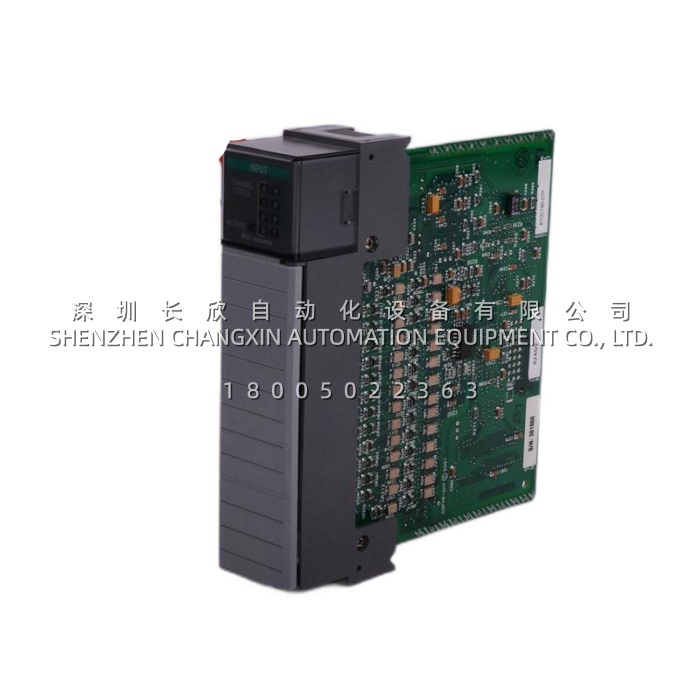
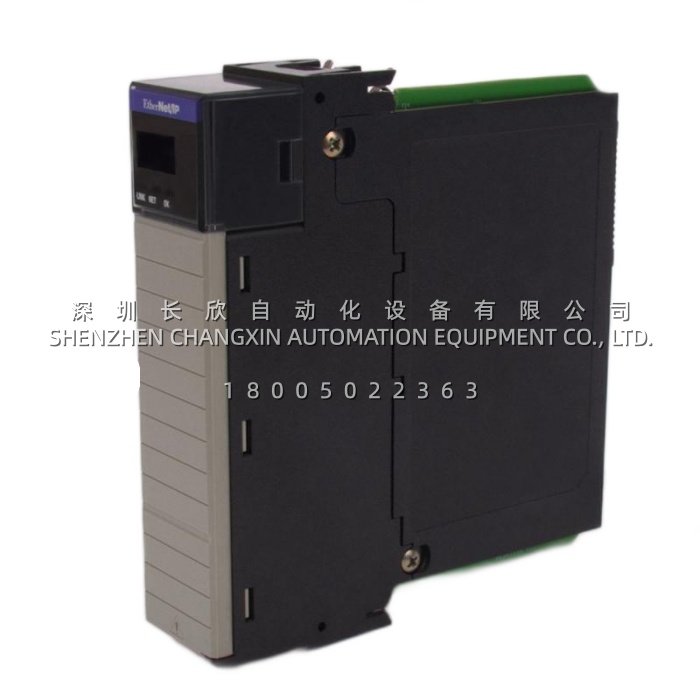
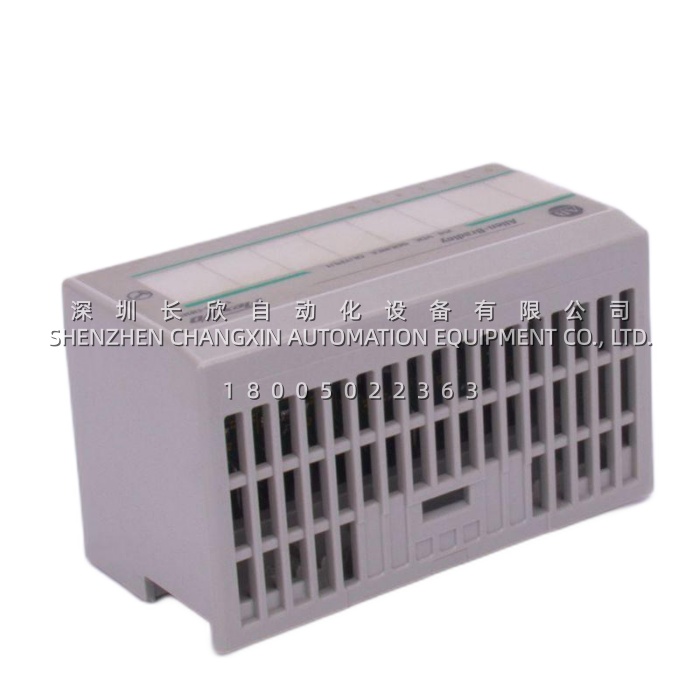
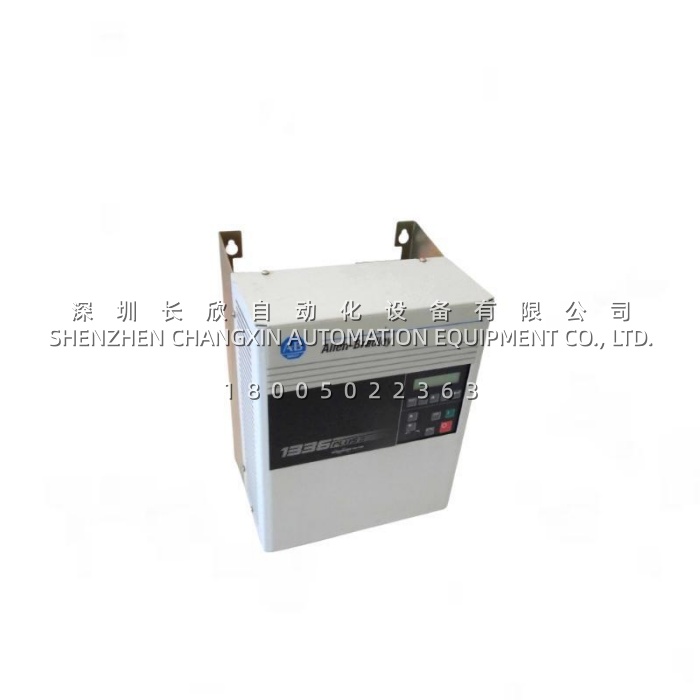
Allen‑Bradley 2093‑AM02 Kinetix 2000 Multi‑Axis Servo Drive缩略图

Allen‑Bradley 2093‑AM02 Kinetix 2000 Multi‑Axis Servo Drive

Allen‑Bradley 2093‑AM02 Kinetix 2000 Multi‑Axis Servo Drive插图


Description

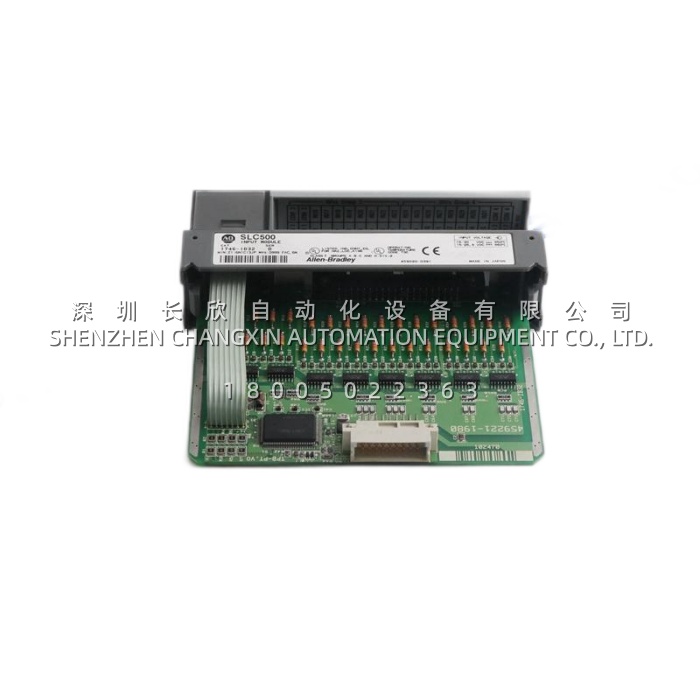
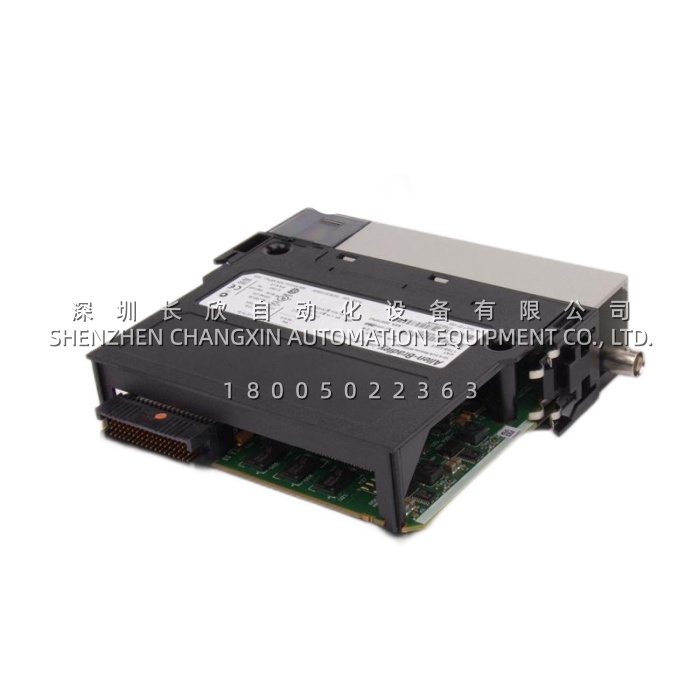
The Allen‑Bradley 2093‑AM02 is a Kinetix 2000 multi-axis servo drive axis module designed to provide a Kinetix Integrated Motion solution for applications with medium power requirements. Manufactured by Rockwell Automation, this double‑width module serves as a shared 230V DC bus power inverter, mounting on a Kinetix 2000 power rail to drive servo motors in multi‑axis configurations.

As a flexible building block of the Kinetix 2000 system, the 2093‑AM02 integrates with Allen‑Bradley Logix controllers via SERCOS fiber‑optic communication, enabling coordinated motion control across multiple axes. Its 3.0 kW continuous output power and 9A current rating make it suitable for demanding automation tasks, from robotics to packaging machinery.


Application Scenarios

In a high‑speed packaging line, engineers faced challenges coordinating multiple servo axes for film feeding, sealing, and cutting operations. By integrating the Allen‑Bradley 2093‑AM02 into their Kinetix 2000 system, they achieved precise, synchronized motion control over the various axes through a single SERCOS network. The module’s shared DC bus architecture reduced overall drive costs, while its 500 Hz speed loop bandwidth ensured rapid response to dynamic production demands.

The 2093‑AM02 excels in applications requiring high‑precision multi‑axis motion coordination—from robotic arms and CNC machine tools to automated assembly systems and material handling equipment. Its compatibility with Allen‑Bradley Y‑Series motors (such as the Y‑3023‑2 motor pairing) demonstrates its versatility in various industrial contexts.


Parameters

Main Parameters Value/Description
Product Model 2093‑AM02
Manufacturer Allen‑Bradley / Rockwell Automation
Product Category Kinetix 2000 Axis Module (Multi‑Axis Servo Drive)
Width Double‑width module (occupies 2 slots on power rail)
Rated Voltage 230V AC (converted to 325V DC bus)
Continuous Current (RMS) 9‑9.5A
Peak Current (RMS) 28.5A
Continuous Power Output 3.0 kW nominal
Peak Power Output ~5.7 kW (based on peak current)
PWM Frequency 8 kHz – reduces torque fluctuation and ensures smooth motor operation
Speed Loop Bandwidth 500 Hz – enables rapid response and high precision
Communication Interface SERCOS fiber‑optic (4 and 8 Mbps data rates)
Operating Temperature 0°C to 50°C
Dimensions (H×W×D) 225 × 80 × 192 mm (approx.)
Weight 0.91‑1.3 kg
Capacitance 540 μF (capacitive energy absorption: 20 J)
Efficiency 98%


Technical Principles and Innovative Values

Innovation Point 1: Shared DC Bus Architecture for Multi‑Axis Efficiency
The 2093‑AM02 operates as an inverter module on a shared 230V DC bus, allowing multiple axes to draw power from a common supply. This architecture improves energy efficiency by enabling regenerative energy sharing between axes—decelerating axes return energy to the bus for use by accelerating axes—reducing overall power consumption and cooling requirements.

Innovation Point 2: High‑Bandwidth Control Loops for Precision Motion
With a speed loop bandwidth of 500 Hz and current loop bandwidth of 860 Hz, the 2093‑AM02 delivers exceptional dynamic response. The 8 kHz PWM frequency reduces torque ripple, providing smooth motor operation essential for precision applications such as CNC machining and robotic articulation.

Innovation Point 3: SERCOS Fiber‑Optic Communication for Real‑Time Control
The 2093‑AM02 utilizes the SERCOS (Serial Real‑time Communication System) protocol over fiber‑optic cables, supporting data rates of 4 or 8 Mbps. This deterministic, noise‑immune communication ensures synchronized control across multiple axes—critical for applications requiring coordinated motion, such as gantry systems or robotic arms.

Innovation Point 4: Quick‑Connect Cable System for Simplified Wiring
The 2093‑AM02 features integrally molded, bayonet‑style quick‑connect connectors at the motor end and flying leads at the drive end for motor power, feedback, and brake cables. This design reduces installation time and minimizes wiring errors, a distinct advantage over terminal‑based drives in multi‑axis systems.

Allen‑Bradley 2094‑BC04‑M03‑M 13kW Motion Control Module for Industrial Automation缩略图

Allen‑Bradley 2094‑BC04‑M03‑M 13kW Motion Control Module for Industrial Automation

Allen‑Bradley 2094‑BC04‑M03‑M 13kW Motion Control Module for Industrial Automation插图


Description

The Allen‑Bradley 2094‑BC04‑M03‑M is a high‑performance Integrated Axis Module (IAM) from Rockwell Automation’s Kinetix® 6000 multi‑axis servo drive family, designed to provide precise motion control for demanding industrial automation applications . This 400V class module integrates converter and inverter sections into a single compact unit, delivering 13.5 kW of continuous power to the DC bus and 30A of continuous motor current, making it ideal for driving medium‑to‑high power servo motors in synchronized multi‑axis systems .


Application Scenarios

In a high‑speed packaging line producing 300 units per minute, an OEM manufacturer faced synchronization challenges between three servo‑driven axes—conveyor indexing, film sealing, and rotary cutting—due to communication latency and inadequate torque response from separate drive components. By integrating the 2094‑BC04‑M03‑M into their Kinetix 6000 architecture, the engineering team achieved 500 Hz velocity loop bandwidth and 1300 Hz current loop bandwidth, enabling sub‑millisecond response times and perfect axis coordination . The module’s shared DC bus design also recaptured regenerative energy from decelerating axes, reducing overall power consumption by approximately 12% . Whether deployed in robotics cells, CNC machining centers, or printing presses, the 2094‑BC04‑M03‑M provides the high‑bandwidth control and integrated safety features that make complex motion applications economically viable.


Parameters

Main Parameters Value/Description
Product Model Allen‑Bradley 2094‑BC04‑M03‑M
Manufacturer Rockwell Automation / Allen‑Bradley
Product Category Integrated Axis Module (Servo Drive)
Voltage Class 400V (460V nominal, 324‑528V AC input, 3‑phase)
Continuous Power Output (to bus) 13.5 kW
Continuous Output Current (0‑pk) 30.0 A
Peak Current (rms / 0‑pk) 53.0 A / 75.0 A
PWM Frequency 4 kHz
Speed Loop / Current Loop Bandwidth 500 Hz / 1300 Hz
Efficiency 98%
Bus Capacitance 840 µF
Shunt Continuous / Peak Power 200 W / 22.5 kW (internal)
Operating Temperature 0°C to 50°C
Short‑Circuit Rating 200,000 A (rms) symmetrical
Weight Approx. 9.98 kg (22.0 lbs)


Rockwell 2080-LCD: 2×16 Character LCD + 8-Key Pad for Micro810 / Micro820 CPUs缩略图

Rockwell 2080-LCD: 2×16 Character LCD + 8-Key Pad for Micro810 / Micro820 CPUs

Rockwell 2080-LCD: 2×16 Character LCD + 8-Key Pad for Micro810 / Micro820 CPUs插图


Description

The 2080-LCD​ is a clip-on LCD display with integrated keypad, part of the Allen-Bradley Micro800 accessory family from Rockwell Automation. Designed specifically to mount directly onto the front of a Micro810 or Micro820 controller, this 2-line × 16-character module provides a low-cost local operator interface—viewing controller status, forcing I/O, editing timer/counter presets, and navigating user-defined screens—without a laptop, without a panel cutout, and without separate 24 V wiring. It is the entry-level HMI choice for machine builders and OEMs where a full PanelView would blow the BOM but “no local interface at all” isn’t acceptable to the end customer.

Application Scenarios

A Midwest grain-handling OEM builds portable auger control skids sold to family-owned elevators—each skid runs a 2080-MICRO810-SE48T (24 I/O embedded, relay outputs) controlling forward/reverse, purge timer, and high-level float. Originally the BOM had zero local interface; any setting change (purge duration, jog time) required the elevator electrician to plug in a laptop with CCW, which 80% of them didn’t have licensed. The OEM added the 2080-LCD​ to the BOM—clips onto the Micro810, no extra cutout in the NEMA 4X enclosure door, powered off the CPU’s front port. Using CCW’s LCD Screen Editor, the OEM defined four screens: Status(float states + motor run), Setpoints(purge timer 0–60 s, jog time 0–10 s, editable via the keypad), Faults(last 5 fault codes with timestamp), and I/O Force(for commissioning). The result: elevator operators could tweak purge time for dusty conditions without a service call, and the OEM cut post-install truck rolls by ~30%. “It’s sixty bucks that makes the machine feel finished,” the lead designer noted. That’s the 2080-LCD​ niche—it doesn’t replace a PanelView 800; it replaces nothingbeing there at all.


Parameter

Main Parameters Value/Description
Product Model 2080-LCD
Manufacturer Rockwell Automation (Allen-Bradley)
Product Category Micro800 LCD Display with Keypad (Clip-On)
Display 2 lines × 16 characters, monochrome LCD, LED backlight
Keypad 8 tactile keys (Up, Down, Left, Right, Enter, Esc, F1, F2 style)
Compatible CPU 2080-MICRO810-xxx, 2080-MICRO820-xxx (clips to front expansion port)
Power Source Powered from host CPU (no separate 24 V wiring)
Communication Proprietary front-port link to Micro810/820 (no external cable)
User Screens Up to 8 user-defined screens via CCW LCD Screen Editor
Mounting Clips onto CPU front bezel; DIN rail CPU mounting unchanged
Operating Temp 0 °C to +55 °C
Agency Approvals CE, cULus
Replacement / Sibling 2080-LCD is the base; regional/rev variants share same BOM footprint


Technical Principles and Innovative Values

Innovation Point 1: Zero-Wiring Clip-On Architecture. The 2080-LCD​ doesn’t consume a communications port, doesn’t need a 24 V feed, and doesn’t require a panel cutout. It physically latches onto the Micro810/Micro820 front bezel and draws power + data over the CPU’s front expansion header. In a compact enclosure (think 10″×10″×4″ NEMA 4 pump skid), saving one cutout and one 24 V pair matters—especially when the alternative is a $400 PanelView 800 + cutout + cable.Innovation Point 2: CCW LCD Screen Editor — No HMI Software License. Screens for the 2080-LCD​ are built inside Connected Components Workbench (CCW), the same free-tier software used to program the Micro810 itself. Up to 8 screens, each with navigable fields tied to controller tags (timer presets, counter values, bit force, string display). No FactoryTalk license, no ME project—just a tab in CCW. For OEMs shipping 200 skids/year, that license avoidance compounds.Innovation Point 3: Forced I/O and Fault Viewing at the Keypad. Even without custom screens, the 2080-LCD​ defaults to a system menu that lets the operator view all embedded I/O states, force individual outputs (with password if configured), and scroll through the controller’s fault queue. On a Micro810 with only 48 I/O, this covers 90% of what a service tech needs at 6 a.m. without booting CCW.Innovation Point 4: Micro810 + Micro820 Coverage. The 2080-LCD​ is one SKU serving two CPUs. Micro810 is the relay-out relay-in entry (no expansion bus), Micro820 adds embedded Ethernet and microSD—but both share the same front profile and LCD clip. Stock one spare for both SKUs on the truck.

Application Cases and Industry Value

A municipal parks-department irrigation pump house had three 5 HP booster pumps on a Micro810 (2080-MICRO810-SE48T) with no HMI—settings lived in the CCW project, and the city electrician only visited quarterly. After a pressure-transmitter drift caused one pump to short-cycle (3-minute on/off) for two weeks before anyone noticed, the department spec’d the 2080-LCD​ on all three houses. The OEM programmed two screens: Live(suction psi, discharge psi, pump runtime hrs) and Adjust(start/stop delta-psi, min-off timer). The on-site groundskeeper—not an electrician—could now see “Pump 2 cycling fast” on the 2080-LCD, check the delta-psi setting, and nudge it up 2 psi without a laptop or a work order. The short-cycling stopped, and the department estimated ~$1,100/year saved in pump contactor wear across the three houses. The 2080-LCD​ here acted as a “translator” between a $300 CPU and a non-technical operator—exactly the gap it was built to fill.

Buy Tested 2093-AM01 Ser A: 18 A Peak, EnDat/SSI/BiSS Feedback, MRO Ready缩略图

Buy Tested 2093-AM01 Ser A: 18 A Peak, EnDat/SSI/BiSS Feedback, MRO Ready

Buy Tested 2093-AM01 Ser A: 18 A Peak, EnDat/SSI/BiSS Feedback, MRO Ready插图


Description

The 2093-AM01​ (Series A) is a 1.9 kW single-axis servo drive module within the Allen-Bradley Kinetix 2000 family (Bulletin 2093), manufactured by Rockwell Automation. It is a “double-width” axis module designed to snap onto a 2093-PR series power rail, which supplies the shared 325V DC bus from a single rectifier—eliminating per-axis AC input wiring. The 2093-AM01​ communicates over SERCOS (Serial Real-time Communication System) fiber to a ControlLogix motion controller (typically 1756-M08SE), delivering deterministic torque, velocity, and position loops for permanent-magnet servo motors. Rockwell discontinued the Kinetix 2000 family effective December 31, 2022, making the 2093-AM01​ a high-demand MRO/spares item for plants that have chosen “run it until it dies” over a full Kinetix 5500/5700 migration.

Application Scenarios

On a 6-axis continuous-motion flow wrapper in a snack-food plant (original 2010 install), the servo train consists of a 2093-PRS4 power rail hosting one 2093-PR2 rectifier, four 2093-AM01​ single-axis modules (former, chain-infeed, cross-seal rotary knives, discharge turner), and one 2093-AM02 dual-axis (lane-guide + press-belt). The SERCOS fiber loop ties all six axes back to a 1756-L63 + 1756-M08SE in the main MCC, with 250 µs motion scheduled task. The shared DC bus on the 2093-PR rail lets the regen from the decelerating knives axis feed the accelerating former axis—measurably cutting the cabinet heat load versus six standalone drives. In 2023, when Rockwell’s EOL notice hit, the plant engineer priced a full rip-and-replace to Kinetix 5700 at $68K for this one machine (new drives, new motors, new 2198 rack, rewire, Studio 5000 motion logic re-map). Instead, they bought four 2093-AM01​ Ser A spares (tested, firmware-matched to the existing v3.x on the line) and a spare 2093-PRS4 rail, and carried the machine into the 2025 model-year changeover with zero motion faults. The pain point—”Kinetix 2000 is dead, but my line isn’t”—closed with a 4,200 MRO basket instead of a 68K migration.

Parameter

Main Parameters Value/Description
Product Model 2093-AM01​ (Series A)
Manufacturer Allen-Bradley / Rockwell Automation
Product Category Kinetix 2000 Servo Axis Module (Double-Width)
Continuous Output Power 1.9 kW
Continuous Output Current 6.0 A RMS
Peak Output Current 18.0 A RMS (3 s duration)
Input / DC Bus 230V AC (1-ph/3-ph) → 325V DC via 2093-PR power rail
Control Interface SERCOS fiber optic (to 1756-M08SE / standalone)
Feedback Support EnDat, SSI, BiSS (firmware-dependent)
PWM Frequency 8 kHz (typical)
Mounting Clips onto 2093-PR series power rail (DIN), occupies 2 rail slots
Operating Temp / Rating 0–50 °C, 5–95% RH non-condensing, cULus, CE
Lifecycle Discontinued (EOL Dec 31, 2022); engineering replacement: 2198-C1015-ERS


Technical Principles and Innovative Values

  • Innovation Point 1: Shared DC Bus on a Clip-On Power Rail.​ The 2093-AM01​ doesn’t take AC input directly—it snaps onto a 2093-PR power rail that carries 325V DC from a single 2093-PR2 rectifier module. One AC feeder serves the whole rail; up to 4–6 axis modules (depending on current budget) share that bus. Beyond saving panel space and AC wiring, the shared bus lets regen energy from a decelerating axis (e.g., flying shear knife) flow to an accelerating sibling (e.g., infeed chain) through the DC link—reducing net energy draw and cabinet heat. That’s the architectural win over standalone 1326/1398-era drives.
  • Innovation Point 2: SERCOS Fiber Determinism at 250 µs.​ The 2093-AM01​ talks SERCOS — not EtherNet/IP, not ControlNet, not RS-485. Fiber ring from the 1756-M08SE motion card through each axis module and back. Cycle times as low as 250 µs, noise-immune (fiber doesn’t care about the 480V VFD 2 feet away), and the ring topology means if one fiber breaks the loop heals through the return path. For multi-axis registration (rotary knife phasing off a master encoder), SERCOS on the 2093-AM01​ still beats most Ethernet-based motion for jitter—even in 2026.
  • Innovation Point 3: Double-Width = Headroom for Heat & Current.​ The 2093-AM01​ occupies two slots on the 2093-PR rail (vs. single-width for the lower-current AMxx variants). That extra width isn’t wasted—it gives the heatsink area and bus capacitor volume to hold 18 A peak (3× continuous) for 3 seconds, which is what a rotary knife or punch press needs on every cycle. The 8 kHz PWM keeps motor audible noise down and current loop bandwidth up. A single-width module in the same 1.9 kW class wouldn’t thermally survive the peak/regen cycling of a packaging knife.


Application Cases and Industry Value

Case 1 – Rotary Die-Cutter Register Section (Corrugated Converting).​ A 4-axis register section — 2 × 2093-AM01​ on the pull rolls, 1 × 2093-AM01​ on the die cylinder, 1 × 2093-AM01​ on the outfeed nip — all on one 2093-PRS4 rail, SERCOS loop to a 1756-L63 + 1756-M08SE. The shared DC bus absorbed ~40% of the decel energy from the die cylinder (heavy inertia) into the pull-roll re-accel, cutting the regen resistor dissipation on the PR2 rectifier by roughly a third versus standalone drives. The line ran at 9,500 sheets/hour; the SERCOS 250 µs task kept register within ±0.3 mm. When one 2093-AM01​ failed in 2023 (caps aged out after 13 years), the plant swapped it in 12 minutes — unclip from PR rail, unplug SERCOS + motor + feedback, clip new one, done. They’d stocked two 2093-AM01​ Ser A units back in 2021 when the EOL announcement first surfaced; that forward-buy saved a $14K expedite plus a weekend downtime.Case 2 – Pharma Blister-Line Starwheel (Low-Part-Count OEM).​ A blister-line OEM used three 2093-AM01​ modules on a 2093-PRS2 rail for the servo starwheel, the forming-foil index, and the lidding-foil index — all 1.5–1.8 kW motors, 230V 3-ph in via the PR2. The SERCOS fiber ran to a 1756-L61 in the main panel 15 m away; the fiber eliminated the EMI that the OEM had fought with a previous RS-485-based servo attempt (prox sensors on the same tray were false-triggering the position loop). The 2093-AM01​ EnDat feedback fed absolute encoders — no homing routine needed after power cycle, which mattered for the pharma validations (every power-on movement had to be justified in the batch record). The OEM’s controls lead: “We looked at Kinetix 5500 for the 2024 BOM, but the 2198-C1015-ERS is single-width, needs 2198 rack + 5730 PSU, and the motor cables change. The 2093-AM01​ spares are $900 each. We’re riding this line to 2030.”

2085‑OW16 DIN‑Rail Mountable 16‑Point Output Expansion for Micro800 Systems缩略图

2085‑OW16 DIN‑Rail Mountable 16‑Point Output Expansion for Micro800 Systems

2085‑OW16 DIN‑Rail Mountable 16‑Point Output Expansion for Micro800 Systems插图


Description

The 2085‑OW16 is a 16‑point relay output expansion module manufactured by Allen‑Bradley (Rockwell Automation) for the Micro800™ controller family, specifically compatible with Micro850 and Micro870 programmable logic controllers. This digital output module provides 16 independent Form A (SPST‑NO) mechanical relay outputs, each rated at 2A, capable of switching both AC and DC loads over a wide voltage range.

Engineered for applications requiring flexible load control, the 2085‑OW16 allows mixing different voltage types on the same module—one point can control a 24V DC solenoid valve while another switches a 220V AC indicator lamp or small contactor. This versatility eliminates the need for separate DC and AC output modules, making the 2085‑OW16 a cost‑effective and space‑saving solution for discrete device control in small to mid‑sized automation systems.


Application Scenarios

Consider an OEM building a compact packaging machine with 12 pneumatic cylinders, 2 motor starters, and an alarm beacon—all requiring 24V DC or 120V AC control signals. The Micro850 controller’s built‑in outputs are insufficient, and panel space is tight. The 2085‑OW16 connects directly to the right side of the Micro850 via the expansion port, adding 16 relay outputs that can simultaneously drive the 24V DC solenoid valves and the 120V AC contactors. The module’s 2A per point rating handles the solenoid inrush current, while its C300/R150 pilot duty rating supports inductive loads like motor starters. This single‑module solution addresses the critical pain points of limited I/O capacity, mixed voltage requirements, and panel space constraints, cutting component count and installation time by up to 40% compared to using multiple dedicated output modules.


Parameters

Main Parameters Value/Description
Product Model 2085‑OW16
Manufacturer Allen‑Bradley (Rockwell Automation)
Product Category Digital Output Expansion Module
Number of Outputs 16 points, Form A (SPST‑NO) mechanical relays
Output Voltage Range 5‑250V AC / 5‑30V DC (per point, individually configurable)
Continuous Current per Point 2A @ 240V AC / 2A @ 30V DC (resistive load)
Surge Current 5A for 10 ms, repeatable every 1 s
Bus Current Draw 5V DC: 120‑200 mA; 24V DC: 50‑130 mA (varies by source)
Power Dissipation 2.72W‑5.14W (depending on load configuration)
Electrical Life Approx. 100,000 operations at rated load
Mechanical Life Approx. 10,000,000 operations (unloaded)
Isolation Channel‑to‑system: 1500V AC; 240V continuous isolation rating
Dimensions (H x W x D) 90 x 44.5 x 87 mm (3.54 x 1.75 x 3.43 in.)
Weight Approx. 0.26 kg (0.56 lb)
Operating Temperature -20°C to +65°C (-4°F to +149°F)
Mounting DIN rail (35 mm) or panel mount
Wiring Removable Terminal Block (RTB), 22‑14 AWG, 0.5‑0.6 Nm torque
Certifications c‑UL‑us Class I Div 2, CE, RCM, KC
Compatible Controllers Micro850, Micro870 (via expansion bus)
Status Indication 16 yellow LEDs, one per output channel


Technical Principles and Innovative Values

Innovation Point 1: Wide Voltage Range and AC/DC Mixing Capability
Unlike solid‑state output modules limited to a single voltage type, the 2085‑OW16 uses mechanical relays that can switch both AC and DC loads from 5V to 250V AC and 5V to 30V DC on a per‑point basis. This flexibility allows a single module to control diverse load types—solenoids, contactors, indicator lamps, and small motors—without requiring separate DC and AC output modules, significantly simplifying panel design and inventory management.

Innovation Point 2: Pilot Duty Rating (C300/R150) for Inductive Loads
The 2085‑OW16 carries a C300 and R150 pilot duty rating, indicating its capability to reliably switch inductive loads such as motor starters and relay coils. This certification is critical for applications where startup current surges can exceed steady‑state ratings, ensuring the module meets industry standards for industrial control performance.

Innovation Point 3: Removable Terminal Blocks (RTB) for Rapid Maintenance
The 2085‑OW16 is equipped with two removable 20‑pin terminal blocks that accept 22‑14 AWG wire. These RTBs can be removed while keeping field wiring intact, enabling rapid module replacement without rewiring—a feature that significantly reduces downtime during maintenance and troubleshooting.

Allen-Bradley 2085-IA8​ Micro800 2085 Expansion Input Module – 8-Point 120V AC, Sink/Source, CCW Config, Right-Bus, Active缩略图

Allen-Bradley 2085-IA8​ Micro800 2085 Expansion Input Module – 8-Point 120V AC, Sink/Source, CCW Config, Right-Bus, Active

Allen-Bradley 2085-IA8​ Micro800 2085 Expansion Input Module – 8-Point 120V AC, Sink/Source, CCW Config, Right-Bus, Active插图


Product Overview

The Allen-Bradley 2085-IA8​ is an 8-point 120V AC digital input module belonging to Rockwell Automation’s 2085 expansion I/O family, purpose-built to extend the input capacity of Micro800-series controllers (Micro820, Micro830, Micro850, Micro870) via the CPU’s right-side proprietary expansion bus. While the Micro800 CPUs themselves carry a baseline of embedded I/O (e.g., the Micro850 2080-LC50-24QBB offers 14 DI / 10 relay DO embedded), many OEM machines and small-process skids need additional 120V AC sensing — contactors, overload aux contacts, tower-light dry contacts, float-switch 120V AC legs, door-interlock 120V AC — without stepping up to a CompactLogix or adding a separate 1769 I/O rack. The 2085-IA8​ fills that gap: eight independently wired 120V AC input channels, grouped as two groups of four with a common terminal per group, each channel accepting 79–132V AC at 47–63 Hz, configurable per group as sink or source by how the field common is wired. The module communicates back to the Micro800 CPU over the 2085 ribbon bus (tongue-and-groove mechanical, no tools beyond the release clip), and the I/O image maps automatically into the Micro800 %I memory space inside Connected Components Workbench (CCW) — no add-on profile, no EDS, no Studio 5000 license.Physically, the 2085-IA8​ is a slim 35 mm-wide DIN module (compatible with 35 mm symmetrical rail, also panel-mount via screw tabs), 110 mm high × ~75 mm deep, IP20 (cabinet required), with one green LED per channel (on = voltage present at terminal) plus a module-status green/red LED. Power for the 2085-IA8’s​ internal logic comes from the 2085 bus (draws from the Micro800 CPU’s 24V DC supply budget — check CPU’s 2085-bus power budget before stacking), while the 120V AC field power is externally supplied per group common. The 2085-IA8​ qualifies to -20 to +65 °C (wider than many compact modules), 25 G operating shock, 2 G vibration @ 10–500 Hz, and carries UL 508, CE, C-Tick, KC, and ABS Marine certifications — aligning with the Micro800 family’s industrial positioning. Lifecycle is Active​ (Rockwell current), origin Singapore/Malaysia depending on batch. Maximum expansion depth varies by CPU: Micro810 = 0 (no 2085 port), Micro820 = up to 2× 2085 modules, Micro830 = up to 5, Micro850/Micro870 = up to 8. So a fully loaded Micro870 can mix, say, two 2085-IA8​ (16× 120V AC in) + two 2085-OA8 (AC out) + two 2085-IB8 (24V DC in) + two 2085-OB8EP (protected DC out) = 8 modules, all scanned by the Micro870 CPU in one CCW project. For OEMs building small-to-mid machines on Micro800 that need 120V AC sensing without a larger platform, the 2085-IA8​ is the right-bus native answer.


Technical Specifications

Parameter Value
Product Model 2085-IA8
Manufacturer Allen-Bradley (Rockwell Automation)
Product Type Micro800 2085-Series Digital Input Module, 120V AC
Number of Inputs 8 (two groups of 4, common per group)
Input Voltage Range 79–132V AC (nominal 120V AC), 47–63 Hz
Input Type Sink/source configurable per group
ON-State Voltage ≤ 79V AC (threshold)
OFF-State Voltage ≥ 20V AC
Input Impedance ~38 kΩ (typical)
Power Dissipation 3.2 W max (all channels ON)
Bus Power (from CPU) From 2085 expansion bus (24V DC budget of host CPU)
Field Power External 120V AC per group common
Wire Size 0.25–2.5 mm² (24–14 AWG) solid/stranded
Mounting 35 mm DIN rail or panel mount (screw tabs)
Dimensions (H × W × D) 110 × 35 × ~75 mm
Operating Temp −20 °C to +65 °C (−4 °F to +149 °F)
Enclosure Rating IP20 (control cabinet)
Diagnostics 1 LED/channel (green = ON), 1 module-status LED (green/red)
Certifications UL 508, CE, C-Tick, KC, ABS Marine
Configuration Connected Components Workbench (CCW) — auto-maps to %I memory
Lifecycle Status Active
Compatible CPUs Micro820, Micro830, Micro850, Micro870 (2085 port required)


Main Features and Advantages

120V AC Input Without Leaving the Micro800 EcosystemThe core proposition of the 2085-IA8​ is letting a Micro800-based machine sense 120V AC field devices natively. Many small machines have a mixed-voltage reality: the CPU runs 24V DC (embedded DI/DO), but the panel also has 120V AC contactor aux contacts, overload-relay NO/NC, 120V AC tower-light dry contacts, door-switch 120V AC legs, and float-switch 120V AC versions (common in North American building/pump panels). The 2085-IA8​ absorbs those without an interposing 24V DC relay layer or a separate 1769/5069 AC-input rack. Each channel is independent wiring (screw-clamp, 24–14 AWG), two groups of four with a common terminal per group — so group 1 can be sunk (common to 0V / L2) and group 2 sourced (common to 120V AC L1) if the field mix demands it, all on the same 2085-IA8.

Allen-Bradley 2085-EP24VDC T4 Temperature Rated Industrial Power Supply缩略图

Allen-Bradley 2085-EP24VDC T4 Temperature Rated Industrial Power Supply

Allen-Bradley 2085-EP24VDC T4 Temperature Rated Industrial Power Supply插图


Description

The Allen-Bradley 2085-EP24VDC is a dedicated expansion power supply module designed specifically for Rockwell Automation’s Micro870 programmable logic controller system, part of the broader Micro800 family. This compact module addresses a critical limitation of the Micro870 base controller by providing additional bus power to support up to four expansion I/O modules installed to its right . When the base Micro870 controller is insufficient to power all required I/O modules, the 2085-EP24VDC becomes an essential system component, effectively doubling the maximum expansion I/O capacity from four to eight modules .

The 2085-EP24VDC accepts a nominal 24V DC input from an external Class 2 or LVLC (Limited Voltage Limited Current) power source, and converts it into both 24V DC and 5V DC bus power for the expansion modules on the right side of the chassis . With a maximum input power consumption of 24W and output capability of up to 700mA at 24V (±10%) and 900mA at 5V (±5%), the module delivers sufficient clean power to sustain multiple digital and analog I/O modules . The 2085-EP24VDC is rated for industrial operating temperatures from -20°C to +65°C and complies with rigorous standards including c-UL-us Class I Division 2 hazardous location certification, CE, RCM, and KC approvals . Its open-style enclosure is designed for DIN rail mounting and requires installation within a protective cabinet that meets pollution degree 2 requirements .


Application Scenarios

Consider a packaging machinery OEM that needed to expand a Micro870-based control system from the base four expansion I/O modules to six modules to accommodate additional sensors and actuators for a new product line. The existing Micro870 controller’s internal power budget was insufficient to support the additional modules, and replacing the controller with a higher-capacity model would have required significant reprogramming and recertification. By inserting the Allen-Bradley 2085-EP24VDC between the existing I/O modules and the new expansion modules, the system integrator was able to power the additional four modules without modifying the control program or power supply design. The 2085-EP24VDC simply provided the necessary bus power to the right-side modules while the original controller continued to manage the left-side modules, preserving the existing programming and reducing engineering effort.

In a material handling application, a system integrator needed to deploy a distributed control architecture with a Micro870 controller in a central cabinet and analog modules for load cells and temperature sensors located further down the production line. The Allen-Bradley 2085-EP24VDC was installed in the expansion chain to provide stable, isolated power to the analog modules, ensuring signal integrity and preventing power-related measurement errors. The module’s 10ms ride-through capability at maximum load ensured that brief power disturbances did not cause controller faults or system interruptions . The plant engineer reported that the 2085-EP24VDC installation took less than 15 minutes, and the system has operated without power-related issues for over 18 months.


Parameter

Parameter Value/Description
Product Model 2085-EP24VDC
Manufacturer Allen-Bradley / Rockwell Automation
Product Category Expansion I/O Power Supply Module
Input Voltage Rating 21.4…26.4V DC (Nominal 24V DC), Class 2 or LVLC source
Maximum Power Consumption 24W
Bus Side Power Output 24V DC (±10%) @ 700mA; 5V DC (±5%) @ 900mA (max 16.8W bus power)
Inrush Current 6A for 10ms maximum
I/O Module Capacity Up to 4 expansion modules to the right (each module limited to 4.2W)
Input Protection Reverse polarity protected; no isolation between input and bus power
Status Indicator 1 green LED – 5V system power
Operating Temperature -20°C to +65°C (-4°F to +149°F)
Storage Temperature -40°C to +85°C (-40°F to +185°F)
Dimensions (H x W x D) 110.0 x 36.2 x 87.0 mm (4.3 x 1.4 x 3.4 in)
Weight Approximately 0.09 kg (0.02 lb)
Mounting DIN Rail (35mm) or Panel Mount
Wire Size 0.25…2.5 mm² (22…14 AWG), solid or stranded copper, 75°C rated
RTB Screw Torque 0.5…0.6 Nm (3.5…4.4 lb-in), hand-tightened only
Hazardous Location Rating Class I, Division 2, Groups A, B, C, D; T4 temperature code
Certifications c-UL-us, CE, RCM, KC, EAC, UKCA
Keep a Spare on the Van — 2080-USBADAPTER​ for Micro810 / Micro820 / Micro830 / Micro850 / Micro870 Commissioning缩略图

Keep a Spare on the Van — 2080-USBADAPTER​ for Micro810 / Micro820 / Micro830 / Micro850 / Micro870 Commissioning

Keep a Spare on the Van — 2080-USBADAPTER​ for Micro810 / Micro820 / Micro830 / Micro850 / Micro870 Commissioning插图


Product Overview

The Allen-Bradley 2080-USBADAPTER​ is the official Rockwell Automation USB programming and online-monitoring cable for the Micro800 family of programmable logic controllers—including the Micro810 (2080-LC10-xxx), Micro820 (2080-LC20-xxx), Micro830 (2080-LC30-xxx), Micro850 (2080-LC50-xxx), and Micro870 (2080-LC70-xxx). Where the SLC 500 world had the 1747-CP3 (DH-485 RS-232) and the MicroLogix world had the 1761-CBL-PM02 (Mini-DIN to RS-232), the Micro800 generation standardizes on USB: the 2080-USBADAPTER​ carries a Type-A plug for the engineering laptop and a USB 2.0 Mini-B plug for the Micro800 controller’s front USB port, delivering both the CDC (Communications Device Class) data path for Connected Components Workbench (CCW) and, on supported models, a virtual COM port for legacy-tool compatibility. The cable is approximately 2.5 m (8.2 ft) long, shielded, and RoHS/CE compliant, and it draws bus power from the laptop—no external PSU, no separate 24 V feed.At the system level, the 2080-USBADAPTER​ is the primary commissioning path for Micro810 and Micro800 panels: the Micro810 (2080-LC10-12QBB / 2080-LC10-24QBB) is the smallest brick in the Rockwell lineup—no HMI port, no Ethernet, just the front USB + a 3.5 mm serial-like barrel for optional 2080-SERIALLINE (RS-232/485) and the terminal-block I/O—so the 2080-USBADAPTER​ is literally the only way to get CCW onto the unit without adding the 2080-SERIALLINE and a USB-RS-232 dongle. For the larger Micro820/830/850/870, the 2080-USBADAPTER​ competes with Ethernet (on models that have it) and the 2080-SERIALLINE, but remains the go-to for first commissioning, firmware flash (via CCW’s “Update Firmware” wizard), and bench debugging where the panel isn’t cabled for Ethernet yet. The cable enumerates as a USB CDC device on Windows 10/11 and is recognized natively by CCW v4 through v22+; no separate driver install is needed on modern Windows builds that include Microsoft’s USB CDC class driver, though Rockwell bundles a signed INF in the CCW installer as fallback. For SI vans, OEM service techs, and plant maintenance shops that support Micro800-based machines—conveyor zones, packaging auxiliaries, pump skids, lighting-control panels, and Arduino-shield-expanded custom rigs (the Micro810/Micro820 support Arduino Shields via the 2080-UMICRO-1)—the 2080-USBADAPTER​ is the one cable that lives in the laptop bag alongside the 1747-CP3 and 1761-CBL-PM02 for the older Rockwell tiers.

Technical Specifications

Parameter Name Parameter Value
Product Model 2080-USBADAPTER
Manufacturer Rockwell Automation (Allen-Bradley)
Product Type USB Programming Cable for Micro800 Series PLCs
Connector A USB 2.0 Type-A (to PC/laptop)
Connector B USB 2.0 Mini-B (to Micro800 controller front port)
Cable Length 2.5 m (8.2 ft)
Protocol USB CDC (Connected Components Workbench), Virtual COM on supported SKUs
Compatible Controllers Micro810 (2080-LC10-xxx), Micro820 (2080-LC20-xxx), Micro830 (2080-LC30-xxx), Micro850 (2080-LC50-xxx), Micro870 (2080-LC70-xxx)
Compatible Software Connected Components Workbench (CCW) v4 – v22+
Bus Powered Yes (from PC USB port, no external PSU)
Shielding Yes (braided + foil, EMI-resistant)
Agency Marks CE, RoHS, cULus listed
Operating Temp (cable) 0 … 50 °C (storage -20 … +60 °C)


Main Features and Advantages

Official Rockwell-specified cable for the entire Micro800 family.​ The 2080-USBADAPTER​ is not a third-party USB-A-to-Mini-B generic—it’s Rockwell’s own SKU, called out in every Micro810/Micro820/Micro830/Micro850/Micro870 user manual as the recommended PC interface. Generic Mini-B cables (phone charger cables, printer cables) will physicallyplug into the Micro800 front port, but many won’t enumerate the CDC class correctly or will drop during firmware flash because the wire gauge and shielding don’t meet the Micro800 port’s impedance expectations. The 2080-USBADAPTER​ shields the differential pair properly and is impedance-matched to the Micro800 front-port PHY, so CCW stays connected through long online-monitor sessions and firmware updates don’t bail at 87%.2.5 m reach covers panel-to-laptop in real-world cabinets.​ A 1 m cable sounds fine on a bench; on a floor-standing NEMA 12 panel with the Micro810 mounted bottom-third and the laptop on a cart, 1 m never reaches. The 2080-USBADAPTER​ at 2.5 m clears the panel door swing, the cart lip, and the tech’s knee. The cable is braid+foil shielded, so routing it alongside 24 V DC homeruns and VFD output trays (briefly, during commissioning) doesn’t CRC-flood the CDC session—though best practice is still “don’t dress comms cable next to VFD output.”Bus-powered, no external PSU, no 24 V feed.​ The 2080-USBADAPTER​ draws from the laptop’s USB port—typically < 100 mA—so there’s no separate wall wart to lose, no 24 V rail dependency, and no “why won’t CCW see the PLC” caused by a dead programming-cable PSU (a classic failure mode on the old 1747-CP3 + 1761-NET-AIC era). For service vans that keep one bag for all Rockwell tiers, the 2080-USBADAPTER​ + 1747-CP3 + 1761-CBL-PM02 covers Micro800, SLC 500, and MicroLogix without carrying three wall warts.CCW-native with firmware-flash support.​ The 2080-USBADAPTER​ carries the CDC command set that CCW uses for upload/download, online edit, data-monitor, and firmware update. For Micro810 specifically (2080-LC10-12QBB / 2080-LC10-24QBB), the front USB is the onlynative programming path short of adding the 2080-SERIALLINE and a USB-RS-232 dongle—there’s no Ethernet on the LC10, no DH+, no RS-232 D-shell on the brick itself. So the 2080-USBADAPTER​ is not just “a cable” for the Micro810; it’s the commissioning lifeline. CCW’s “Go Online,” “Upload,” “Download,” “Verify,” and “Update Firmware” all ride the 2080-USBADAPTER​ without any driver-mapping gymnastics—plug in, CCW > Communications > Find, the 2080-LC10 appears, go.Cross-family compatibility protects the spare budget.​ One 2080-USBADAPTER​ covers the whole Micro800 line: a van that supports a Micro810 pump skid (LC10), a Micro820 OEM packaging aux (LC20), a Micro830 conveyor zone (LC30), a Micro850 palletizer cell (LC50), and a Micro870 test-stand (LC70) only needs this one USB cable SKU on the spare shelf. Compare that to the SLC/PLC-5/MicroLogix era where DH-485, DF1, DH+, and Ethernet each wanted a different physical path—Micro800 simplified that to USB + Ethernet + Serial, and the 2080-USBADAPTER​ is the USB leg.

Application Field

The 2080-USBADAPTER​ is concentrated in three contexts, all tied to the Micro800 installed base. First, OEM machine commissioning—the Micro810 (2080-LC10-12QBB with 12 I/O, 2080-LC10-24QBB with 24 I/O) is a favorite brick for conveyor-zone auxiliaries, pump skids, lighting-control panels, and small packaging-machine heads because it’s the cheapest Rockwell-logic device that still runs ladder (with CCW) and supports Arduino-Shield expansion via the 2080-UMICRO-1 carrier. The OEM tech unboxes the machine, plugs the 2080-USBADAPTER​ into the LC10’s front Mini-B, connects Type-A to the laptop, fires CCW, downloads the application, toggles the HMI-less LCD (the LC10 has a 1-line LCD + keypad), and the machine is live. No Ethernet to configure, no IP to assign, no DHCP—just USB. For machines that ship 50+ units a year, the 2080-USBADAPTER​ lives in the commissioning kit and gets used 50 times a year.Second, plant maintenance & retrofit​ on Micro800-based skids—water-treatment lift stations, HVAC plant-loops, small-material-handling zones—where the original OEM spec’d a Micro810 or Micro820 because the I/O count was < 24 and the budget couldn’t carry a MicroLogix 1400 or CompactLogix. The plant tech keeps a 2080-USBADAPTER​ in the truck because the skid panel doesn’t have an Ethernet drop labeled “maintenance,” and even if the Micro820/Micro850 on the skid has Ethernet, the maintenance VLAN might not be routable from the truck’s Wi-Fi. USB is air-gapped, always works, no IT ticket.Third, lab/test-stand and educational rigs—the Micro810/Micro820’s Arduino-Shield compatibility (via 2080-UMICRO-1) makes it popular in university mechatronics labs and OEM prototype shops where they want Rockwell ladder for the “real PLC” part but Arduino-shield sensors (IMU, GPS, LoRa, custom PCB) for the “prototype” part. The 2080-USBADAPTER​ is on the bench permanently, plugging into whichever LC10/LC20 is under test that week. For SI companies that still support SLC 500 and MicroLogix on the main lines but are quoting Micro810/Micro820 for the auxiliaries, the 2080-USBADAPTER​ is the new cable that joins the 1747-CP3 and 1761-CBL-PM02 in the field bag.

Allen‑Bradley 2080‑RTD2 2‑Channel RTD Plug‑in Module with 14‑Bit Resolution缩略图

Allen‑Bradley 2080‑RTD2 2‑Channel RTD Plug‑in Module with 14‑Bit Resolution

Allen‑Bradley 2080‑RTD2 2‑Channel RTD Plug‑in Module with 14‑Bit Resolution插图 Allen‑Bradley 2080‑RTD2 2‑Channel RTD Plug‑in Module with 14‑Bit Resolution插图1


Product Overview

The Allen‑Bradley 2080‑RTD2 is a 2‑channel, non‑isolated resistance thermometer detector (RTD) input module designed as a plug‑in expansion for the Micro800™ programmable logic controller family . As a specialty analog module within the Bulletin 2080 Micro800 system, the 2080‑RTD2 enables precise temperature measurement by directly interfacing with a wide variety of RTD sensors, making it an essential component for applications requiring accurate and reliable temperature monitoring without the need for external signal conditioning or transmitters. This module is specifically engineered for use with Micro810, Micro830, and Micro850 controllers, installing directly into any available plug‑in slot on the base unit to extend functionality without increasing the controller’s physical footprint .

The Allen‑Bradley 2080‑RTD2 supports an extensive range of RTD types, including Platinum (100, 200, 500, and 1000 Ω with both 385 and 392 alpha coefficients), Copper (10 Ω 427), Nickel (120 Ω 672), and Nickel‑Iron (604 Ω 518) sensors, providing exceptional flexibility for diverse temperature measurement applications . The module features 14‑bit resolution and delivers accuracy of ±1.0°C at 25°C, with configurable update rates ranging from 4.17 Hz to 470 Hz to balance speed and noise rejection based on application requirements . Through simple software configuration in FactoryTalk Design Workbench or Connected Components Workbench, each channel can be independently configured for RTD type and data update rate, and the 2080‑RTD2 provides comprehensive diagnostic status including open circuit detection, over‑range, under‑range, and calibration error flags to ensure measurement integrity . With its compact dimensions, removable terminal blocks, and integration with the Micro800 ecosystem, the Allen‑Bradley 2080‑RTD2 offers a cost‑effective and space‑efficient solution for temperature monitoring in small to mid‑sized industrial automation applications.


Technical Specifications

Parameter Name Value
Product Model Allen‑Bradley 2080‑RTD2
Manufacturer Rockwell Automation / Allen‑Bradley
Product Type RTD Input Module (Resistance Thermometer Detector)
Series Micro800 Plug‑in Module
Number of Channels 2 (non‑isolated)
Resolution 14‑bit
Accuracy ±1.0°C @ 25°C
Supported RTD Types 100/200/500/1000 Ω Pt 385; 100/200/500/1000 Ω Pt 392; 10 Ω Cu 427; 120 Ω Ni 672; 604 Ω NiFe 518
Input Impedance >5 MΩ
Update Rates (Configurable) 470, 242, 123, 62, 50, 39, 33.2, 19.6, 16.7, 12.5, 10, 8.33, 6.25, 4.17 Hz
Common Mode Rejection Ratio 100 dB @ 50/60 Hz
Normal Mode Rejection Ratio 70 dB @ 50/60 Hz
Open Circuit Detection Time 8…122 ms
Cable Length Recommendation <10 m (for optimal noise immunity)
Wire Size 0.14…1.5 mm² (26‑16 AWG) solid; 0.14…1.0 mm² (26‑18 AWG) stranded
Terminal Screw Torque 0.22…0.25 N·m
Mounting Torque 0.2 N·m
Power Consumption 40 mA @ 3.3V DC
Dimensions (H x W x D) 62 x 31.5 x 20 mm (approx.)
Weight 21 g (0.74 oz)
Operating Temperature ‑20°C to +65°C
Storage Temperature ‑40°C to +85°C
Enclosure Type Rating Open‑style (must be installed in enclosure)
North American Temp Code T4
Agency Approvals UL/cUL, ANSI/ISA 12.12.01 (Class I, Div 2)
Module ID 104
Product Code 36
Allen-Bradley 2080-PS120-240VAC​ Micro800 Power Supply – 120/240VAC to 24V DC @ 1.6A, 38.4W, DIN Mount缩略图

Allen-Bradley 2080-PS120-240VAC​ Micro800 Power Supply – 120/240VAC to 24V DC @ 1.6A, 38.4W, DIN Mount

Allen-Bradley 2080-PS120-240VAC​ Micro800 Power Supply – 120/240VAC to 24V DC @ 1.6A, 38.4W, DIN Mount插图


Product Overview

The Allen-Bradley 2080-PS120-240VAC​ is an external AC-to-DC power supply within Rockwell Automation’s 2080 Micro800 family, designed to convert a panel’s 120/240VAC mains feed into the 24V DC required by Micro800 controllers (Micro810, Micro820, Micro830, Micro850, Micro870) and their attached expansion I/O modules. Unlike the 1769-PA2 or 1768-PA2 which slide into a rack backplane, the 2080-PS120-240VAC​ is a standalone DIN-mount unit that sits on the same 35 mm rail as the Micro800 CPU but connects via a short dedicated cable (2080-CN1, ordered separately) to the CPU’s left-side DC-power port—Micro830 and Micro850 CPUs carry no integral power converter, so the 2080-PS120-240VAC​ (or a user-supplied 24V DC PSU) is mandatory for AC-mains-only panels. The “120-240VAC” suffix denotes the nominal input bands (100–120VAC @ 1A / 200–240VAC @ 0.5A), while the internal regulation delivers a stabilized 24V DC @ 1.6A (38.4W net output, 44–45W input draw depending on line), with overload, overvoltage, and short-circuit protection on the 24V secondary.Physically, the 2080-PS120-240VAC​ is deliberately sized to the Micro800 family footprint—45 mm wide (same as a Micro850 CPU or a 2080 expansion I/O module), 90 mm high, 80 mm deep, 0.34 kg—so a DIN rail carrying a 2080-PS120-240VAC​ + Micro850 CPU + 2–3 2080 expansion modules presents a uniform, gap-free frontage that keeps small-machine panels tidy. Input acceptance spans 85–264VAC (47–63 Hz) with no jumper or switch—one SKU covers North American 120V panels and European/Asian 230V panels, a global-OEM advantage. The 2080-PS120-240VAC​ carries primary-to-secondary reinforced insulation (250V continuous working, 2300VAC/60s type-test primary-secondary, 1480VAC/60s primary-earth), IP20 open-style enclosure, -20°C to +65°C operating (IEC extended -40°C storage to +85°C), 30g shock / 2 m/s² to 500 Hz vibration per IEC 60068, and screws down with 0.5–0.6 N·m torque onto 22–14 AWG solid or 22–16 AWG stranded copper. For panels where the only available supply is AC mains and the machine builder wants a Rockwell-matched PSU instead of a third-party switch supply (Mean Well, etc.), the 2080-PS120-240VAC​ is the catalog-correct choice—compact, single-SKU global, and cUL/CE/RCM listed.


Technical Specifications

Parameter Name Parameter Value
Product Model 2080-PS120-240VAC
Manufacturer Allen-Bradley (Rockwell Automation)
Product Type Micro800 External AC-to-DC Power Supply
Input Voltage 100–120VAC @ 1A / 200–240VAC @ 0.5A (range 85–264VAC)
Input Frequency 47–63 Hz
Output 24V DC @ 1.6A (38.4W)
Input Power (consumption) 45.1W @ 100VAC / 44.0W @ 240VAC
Output Power (consumption) 38.4W @ 100VAC / 38.4W @ 240VAC
Inrush Current 24A @ 132VAC / 40A @ 263VAC, 10 ms
Isolation (primary–secondary) 250V continuous, 2300VAC/60s type-test, reinforced insulation
Isolation (primary–earth) 1480VAC/60s type-test
Redundancy No
Connection to CPU Via 2080-CN1 cable (ordered separately), mates to Micro830/Micro850 left-side DC port
Wire Size 22–14 AWG solid / 22–16 AWG stranded copper, 90°C insulation
Screw Torque 0.5–0.6 N·m (4.4–5.3 in·lb)
Mounting 35 mm DIN rail (EN 60715) or panel mount
Dimensions (W × H × D) 45 × 90 × 80 mm
Weight 0.34 kg (0.75 lb)
Operating Temperature -20°C to +65°C (-4°F to 149°F)
Storage Temperature -40°C to +85°C
Humidity 5–95% RH, non-condensing
Vibration / Shock 2 m/s² to 500 Hz / 30g (IEC 60068-2-6 / -2-27)
Enclosure / IP IP20 (open style, indoor dry)
Certifications cULus, CE, RCM, KC (region-dependent)


Main Features and Advantages

Global 85–264VAC input with zero jumpering:​ The 2080-PS120-240VAC​ accepts the full universal single-phase range without a voltage-select switch or jumper strap—a 120V site and a 230V site get the same PSU, same part number, same wiring. For OEMs shipping Micro850-based machines to both NA and EU/APAC, this collapses spare SKU count and prevents the classic “wrong-jumper” field callout where a 120V-labeled PSU gets landed on 230V and releases its magic smoke. The 47–63 Hz input tolerance also covers regions with soft frequency (e.g., 50 Hz nominal with ±5% drift under generator supply), making the 2080-PS120-240VAC​ generator-tolerant for ag/rural or temporary-event machinery.1.6A@24V output sized for Micro830/Micro850 + modest expansion:​ The 38.4W delivered by the 2080-PS120-240VAC​ is deliberately matched to the Micro800 CPU + light expansion envelope. A Micro850 2080-LC50-24QWB (24 I/O built-in) draws ~15W; a 2080-IQ16 (16 DI) draws ~2W; a 2080-OW8I (8 relay) draws ~3W; total ~20W, leaving ~18W headroom for sensor excitation taps on the 24V rail. Push harder—say a Micro850 + 2080-IF4 (4 AI, ~3W) + 2080-OF2 (2 AO, ~2.5W) + 2080-OW16 (16 relay, ~4W) + a few PNP sensors—and you’ll approach the 38.4W ceiling. The 2080-PS120-240VAC​ includes output overload and short protection, so an over-budgeted build trips the PSU rather than cooking it, but the design takeaway is: tally the CPU + all 2080 expansion modules’ 24V draw before committing to this PSU—if the expansion count grows beyond 3–4 modules, step up to a higher-capacity third-party 24V DC supply and feed the Micro850 directly, or distribute sensor 24V to a separate rail supply. Rockwell markets the 2080-PS120-240VAC​ honestly as “controller + a few expansion I/O” class, not “full skid PSU.”

Back to Top

Search For Products

Product has been added to your cart