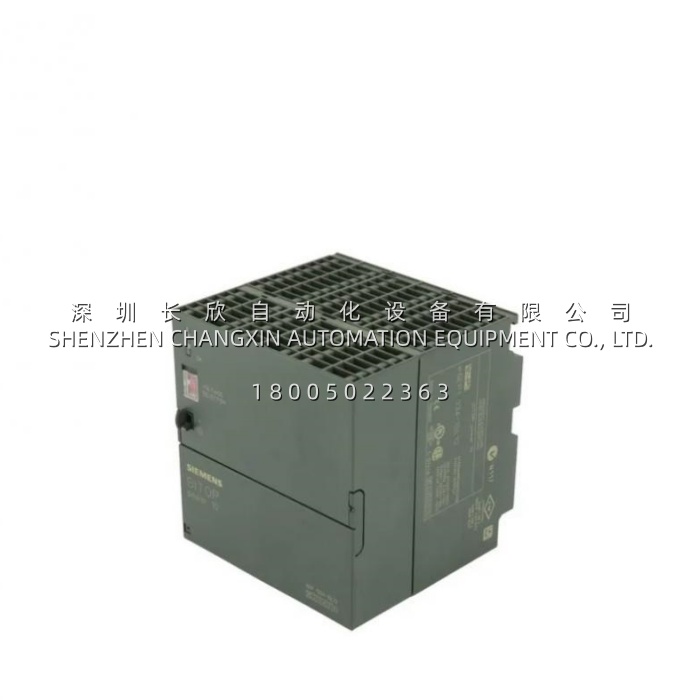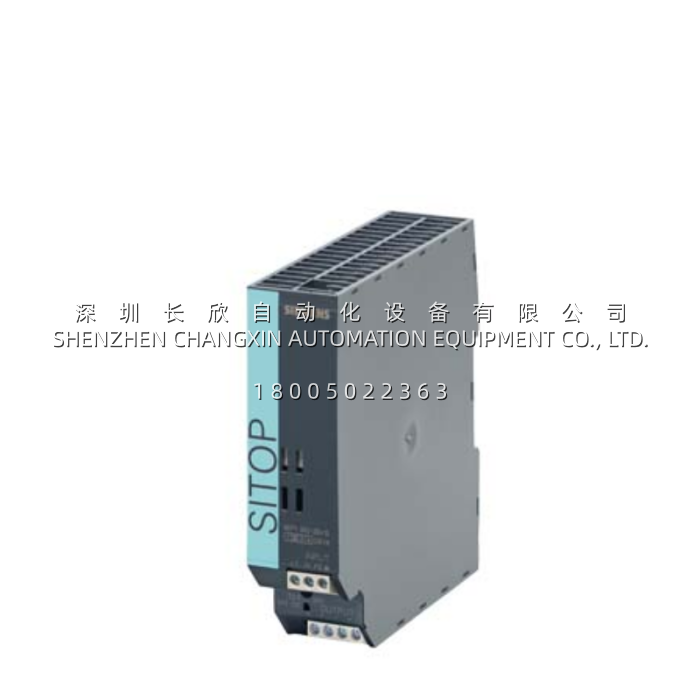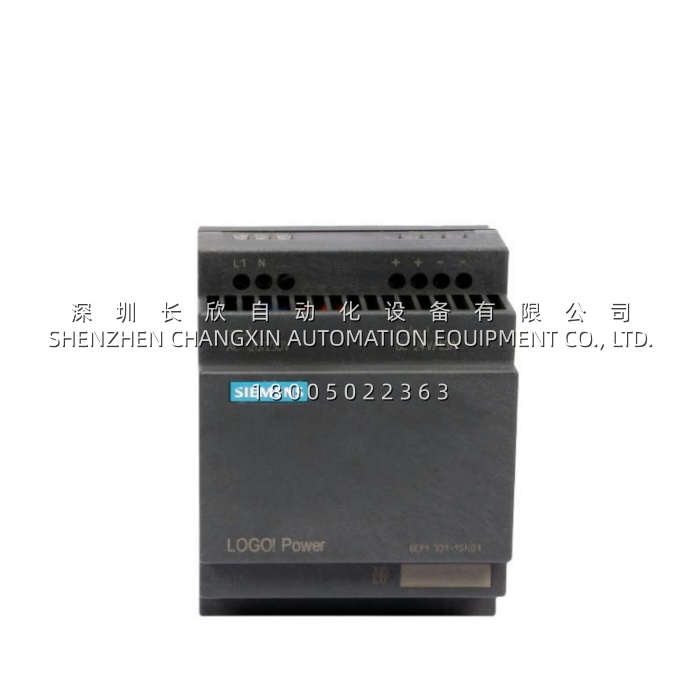
Foxboro P0928AY – 16-Channel Analog Input Module for I/A Series DCS缩略图

Foxboro P0928AY – 16-Channel Analog Input Module for I/A Series DCS

Foxboro P0928AY – 16-Channel Analog Input Module for I/A Series DCS插图
Description

The Foxboro P0928AY is a high-density, 16-channel analog input module designed for the Foxboro I/A Series® distributed control system (DCS), commonly used in power generation, refining, chemical processing, and water treatment facilities. It interfaces with standard industrial transmitters (4–20 mA or 1–5 V) and supports HART digital communication, enabling smart device integration without external multiplexers.

As part of the FBM207/208 I/O family, the P0928AY delivers high accuracy, galvanic isolation, and comprehensive diagnostics—ensuring reliable signal acquisition in mission-critical applications while supporting modernization efforts in aging I/A Series installations.

Application Scenario

At a Midwest U.S. combined-cycle power plant, operators faced recurring turbine vibration alarms caused by signal noise in legacy 8-channel analog cards. During a scheduled outage, the engineering team replaced these with Foxboro P0928AY modules across all bearing temperature and pressure monitoring loops. The new modules’ enhanced common-mode rejection and per-channel filtering eliminated false trips. More significantly, HART-enabled temperature transmitters now reported sensor health directly through the P0928AY, allowing predictive replacement of a failing RTD three weeks before it would have triggered an unplanned shutdown. The upgrade extended the I/A Series system’s life by 10+ years—without replacing the entire DCS.

Parameter

表格

Technical Principles and Innovative Values

Innovation Point 1: True 16-Channel Density Without Compromise

Unlike earlier 8-channel modules, the P0928AY doubles I/O density in the same footprint—reducing cabinet space, wiring costs, and spare inventory. Despite higher density, each channel retains full 16-bit resolution and independent signal conditioning.

Innovation Point 2: Native HART Integration Eliminates External Hardware

The P0928AY includes built-in HART demodulation circuitry, allowing the I/A Series system to communicate directly with smart transmitters for calibration, diagnostics, and configuration—streamlining asset management and reducing lifecycle costs.

Innovation Point 3: Advanced Diagnostics for Operational Resilience

Each channel continuously monitors signal integrity. Faults such as broken wires, short circuits, or transmitter drift are flagged in real time and logged in the I/A Series historian—enabling proactive maintenance and faster troubleshooting.

Innovation Point 4: Future-Proofing Legacy DCS Installations

While designed for I/A Series, the P0928AY is fully supported in modernized systems using Foxboro Evo or Schneider Electric’s EcoStruxure™ migration paths—protecting existing automation investments while enabling digital transformation.

Application Cases and Industry Value

Refinery in Texas: Deployed P0928AY modules across 12 distillation columns to monitor tray temperatures. The improved signal fidelity reduced column upsets by 30%, saving ~ $ 220K/year in yield loss.

Municipal Water Plant (Europe): Used P0928AY with HART-enabled pH and ORP sensors to automate chemical dosing. Real-time sensor diagnostics cut reagent waste by 18% and ensured regulatory compliance.

Nuclear Facility (Asia): Selected P0928AY for its high EMC immunity and TÜV-recognized reliability in safety-related monitoring (non-SIL, but high integrity).

Related Product Combination Solutions

FBM207 / FBM208 Baseplate: Required carrier for P0928AY installation in I/A Series I/O packs.

P0928BY: Analog output counterpart (16-channel, 4–20 mA).

P0916NG: Digital input module; often co-installed with P0928AY in hybrid racks.

I/A Series Workstation (e.g., AW510): Engineering and operator interface for configuration and monitoring.

HART Communicator (e.g., AMS Device Manager): Integrates with P0928AY for advanced device management.

Redundant FBM207R: For critical applications requiring I/O redundancy.

Foxboro Evo Migration Kit: Enables seamless transition from legacy I/A to modern architecture while retaining P0928AY modules.

Schneider Electric EcoStruxure Process Expert: Next-gen DCS that can integrate I/A Series I/O via gateways.

Installation, Maintenance, and Full-Cycle Support

The Foxboro P0928AY installs into an FBM207/208 baseplate with simple slide-in mounting. Field wiring connects to removable terminal blocks, and configuration is performed via I/A Series Composer or Control Display Builder. HART devices are auto-detected and appear in the asset tree.

Maintenance is simplified by LED indicators (green = normal, red = fault) and remote diagnostics accessible from any operator console. Failed modules can be hot-swapped during operation—configuration is automatically restored from the controller.

We supply only factory-new or refurbished-tested P0928AY units with full functionality verification, including HART loop testing. All modules come with compatibility assurance for I/A Series versions v6.x through v9.x, and we provide obsolescence planning support to extend your system’s operational life.

Contact us for genuine Foxboro P0928AY modules, technical validation, or migration strategy—whether you’re maintaining a legacy plant, expanding capacity, or integrating smart instrumentation. With the P0928AY, your I/A Series system stays accurate, intelligent, and ready for the future.
Foxboro P0928AY – 16-Channel Analog Input Module for I/A Series DCS插图1

Foxboro P0928AY – 16-Channel Analog Input Module for I/A Series DCS插图2

ABB GDD471A001 – Digital Input/Output (I/O) Module for AC 800M Controllers in System 800xA DCS缩略图

ABB GDD471A001 – Digital Input/Output (I/O) Module for AC 800M Controllers in System 800xA DCS

ABB GDD471A001 – Digital Input/Output (I/O) Module for AC 800M Controllers in System 800xA DCS插图
Description

The ABB GDD471A0001 (commonly referenced as GDD471A001) is a high-density, mixed-signal digital I/O module engineered for the ABB AC 800M programmable automation controller within the System 800xA distributed control system (DCS). It provides 16 digital inputs and 16 digital outputs in a single compact module, enabling efficient monitoring and control of binary field devices such as limit switches, solenoid valves, motor starters, and alarm relays.

Designed for industrial robustness and seamless integration, the GDD471A001 supports 24 V DC signals with galvanic isolation, diagnostic capabilities, and hot-swap functionality—making it ideal for continuous-process industries like oil & gas, power generation, chemicals, and mining where reliability and maintainability are critical.

Note: The correct full part number is typically GDD471A0001 (with an extra zero), though it is often abbreviated in documentation and procurement as GDD471A001. Both refer to the same functional module.

Application Scenarios

At a Scandinavian district heating plant, frequent false trips in pump interlocks were traced to aging relay cards with no input diagnostics. After upgrading to the ABB GDD471A001. engineers gained real-time visibility into digital signal health—including open-circuit detection on dry-contact inputs. During a winter peak-load event, a failing pressure switch was flagged before it caused a cascade shutdown, allowing proactive replacement during a planned window. “We used to react to failures,” said the controls lead. “Now, with the GDD471A001. we predict them.” In mission-critical infrastructure, this shift from passive wiring to intelligent I/O transforms operational resilience.


Technical Principles and Innovative Values

Innovation Point 1: True Mixed I/O in One Module

Combining 16 inputs and 16 outputs in a single slot reduces cabinet space by up to 50% compared to separate DI/DO modules—lowering hardware costs and simplifying spares management.

Innovation Point 2: Per-Channel Diagnostics Integrated into 800xA

Unlike basic I/O cards, the GDD471A001 reports individual channel faults (e.g., broken wire, shorted output) directly to the System 800xA operator workplace. Alarms include precise tag names, enabling rapid troubleshooting without panel inspection.

Innovation Point 3: Flexible Wiring for Sinking/Sourcing Topologies

The module supports both NPN (sinking) and PNP (sourcing) field devices through terminal block configuration—eliminating the need for external interface relays in mixed-vendor installations.

Innovation Point 4: Seamless Redundancy and Hot-Swap Support

In redundant AC 800M (PM865) systems, the GDD471A001 can be replaced online without process interruption. State data is mirrored across redundant channels, ensuring continuity of control logic.

Application Cases and Industry Value

Mining Conveyor System (Australia):

Replaced 4 legacy relay racks with 2 AC 800M stations using GDD471A001 modules. Reduced panel footprint by 60%, while real-time belt misalignment and jam detection cut unplanned downtime by 35%.

Combined-Cycle Power Plant (USA):

Used GDD471A001 to monitor boiler flame scanner status (inputs) and control purge valve solenoids (outputs). Its 500 V isolation prevented ground-loop noise from affecting trip logic—critical for NFPA 85 compliance.

Chemical Batch Reactor (Germany):

Leveraged output short-circuit protection to safely drive agitator motor contactors. When a coil short occurred, the module isolated only the faulty channel—keeping the rest of the batch sequence running.

Related Product Combination Solutions

表格

Installation, Maintenance, and Support

Installation:

Mount the GDD471A001 onto a TB840A/TB850A terminal base in an AC 800M I/O pack.

Use shielded, twisted-pair cable for all field connections; ground shield at cabinet only.

Configure input/output type via terminal wiring (no jumpers or software settings needed for voltage level).

Commissioning:

In Control Builder M, assign each channel a tag name, alarm priority, and fail-safe state (e.g., output = OFF on fault). Use the built-in I/O test mode to validate field device response before going live.

Maintenance:

Monitor front-panel LEDs: green = active, red = fault.

Replace failed modules in minutes using hot-swap (in redundant systems).

No calibration required—solid-state design ensures long-term stability.

Every ABB GDD471A001 we supply is tested for full I/O functionality, isolation integrity, and communication with AC 800M CPUs. Units are guaranteed genuine new or premium refurbished with a 12-month warranty. Our team includes ABB-certified engineers who support migration, configuration, and lifecycle management—from FAT to decommissioning.

Contact us for a reliable, high-density digital I/O solution that integrates seamlessly into your ABB System 800xA architecture—with the ABB GDD471A001 as your intelligent link to the field.
ABB GDD471A001 – Digital Input/Output (I/O) Module for AC 800M Controllers in System 800xA DCS插图1

GE IC697PWR724​缩略图

GE IC697PWR724​

GE IC697PWR724​插图
The GE IC697PWR724​ is a 24VDC power supply module manufactured by GE Fanuc (now part of Emerson) for the Series 90-70 PLC system. It serves as the primary power source for the PLC rack, converting input voltage to stable +5VDC, +12VDC, and -12VDC outputs to support the CPU, I/O modules, and other components in industrial automation applications .

🔧 Installation and Maintenance

Installation:​ The module must be installed in the leftmost slot (Slot 0) of the Series 90-70 rack, connecting directly to the 48-pin backplane connector . For powering a second rack, a pre-wired cable (part IC697CBL700) is required, ensuring the total load does not exceed 90W .

Maintenance:​ Regular inspection of power connections and monitoring of voltage rails is recommended. The module is designed for convection cooling, so ensuring adequate airflow around the rack is crucial, especially in high-temperature environments. If the unit runs hot, reducing the load or improving ventilation is advised .

💡 Key Features and Compatibility

The IC697PWR724​ is designed for high reliability in industrial environments. It features a wide input voltage range, protection against overcurrent and overvoltage faults, and a ride-through capability that maintains power during brief interruptions . While primarily designed for the GE Fanuc Series 90-70 system, some sources also indicate compatibility with the RX3i platform, highlighting its role as a versatile backplane power source . It is a system-specific component, ensuring direct and reliable integration without the need for external adapters .

📌 Application Notes

This module is critical in applications where stable power is essential for system uptime, such as in manufacturing assembly lines, water treatment facilities, and material handling systems . When selecting a power supply for a legacy Series 90-70 system, the IC697PWR724​ provides a guaranteed OEM solution. It is important to source genuine modules from reputable suppliers to ensure compatibility and reliability .
GE IC697PWR724​插图1

WESTINGHOUSE 1C31107G01缩略图

WESTINGHOUSE 1C31107G01

WESTINGHOUSE 1C31107G01插图
The WESTINGHOUSE 1C31107G01​ is a critical system module designed for industrial automation and distributed control systems. It serves as a high-performance I/O processor, also known as a Drop Processor (DP), within the Westinghouse Distributed Processing Family (WDPF) and early Ovation DCS platforms. This module acts as an intelligent interface between the system’s data highway and field I/O modules, managing data acquisition and control logic for specific plant sections.

⚙️ Technical Specifications

The table below summarizes the key parameters of the WESTINGHOUSE 1C31107G01​ module based on available information:

🏭 Key Features and Applications

Distributed Control Architecture: The module is fundamental to the WDPF’s distributed model. By placing processing power locally at each I/O drop, it enhances system responsiveness and reliability compared to centralized architectures. Its peer-to-peer communication allows direct data exchange between different plant sections without needing a central computer.

High Availability and Reliability: Designed for critical 24/7 operation, the module is often deployed in redundant pairs. This ensures continuous process control, as a failed primary module can be automatically replaced by its backup. It operates effectively in harsh industrial environments with wide temperature ranges.

Industrial Applications: The 1C31107G01​ is widely used in industries requiring precise and reliable control. Primary applications include fossil fuel and nuclear power generation (for systems like burner management and turbine control), chemical and process industries, and water treatment plants.

⚠️ Selection and Maintenance Notes

Legacy System Component: This module is intended for maintaining or repairing existing Westinghouse WDPF installations and is not suitable for new system designs.

Compatibility Verification: When selecting this module, stringent compatibility checks with the specific WDPF system generation, Westnet version, and I/O card types are crucial.

Installation and Support: Installation involves DIN rail mounting and connection to the power supply and data highway. For operational systems, it is highly recommended to configure the module in a redundant pair to minimize risk. The module is typically supported by a 12-month warranty and professional technical services.

💎 Conclusion

The WESTINGHOUSE 1C31107G01​ is a robust and reliable I/O processor module that plays a vital role in legacy Westinghouse WDPF and Ovation DCS platforms. Its distributed architecture and redundancy support make it a key component for ensuring operational efficiency and system availability in demanding industrial environments like power generation and process control.

WESTINGHOUSE 1C31107G01插图1

TRICONEX 3700A – Triple-Modular Redundant (TMR) Analog Output Module for Safety-Critical Process Control缩略图

TRICONEX 3700A – Triple-Modular Redundant (TMR) Analog Output Module for Safety-Critical Process Control

Description

The TRICONEX 3700A is a high-integrity analog output module engineered for the Tricon™ and Triconex® safety instrumented systems (SIS), delivering fail-safe, triple-modular redundant (TMR) control signals to final elements such as control valves, variable frequency drives (VFDs), or actuators in SIL 3-certified applications.

Designed to meet the most stringent requirements of IEC 61508 SIL 3 and IEC 61511. the 3700A ensures continuous, fault-tolerant operation by independently generating three identical analog output signals (typically 4–20 mA) from three separate channels within a single module. These signals are voted at the field device or via external voting logic, enabling the system to detect and compensate for internal failures without disrupting process safety.

Application Scenarios

At a North Sea offshore gas platform, a critical emergency depressurization (EDP) valve began exhibiting erratic positioning due to intermittent failures in a legacy single-channel analog output card. During a HAZOP review, this was flagged as a potential cause of failed shutdown. The team replaced the card with the TRICONEX 3700A, leveraging its TMR architecture: even if one channel drifted or failed, the other two would maintain correct valve position—and any discrepancy would trigger an immediate diagnostic alarm. Six months later, during a real fire scenario, the EDP valve responded flawlessly, isolating the affected module within 2.3 seconds. “The 3700A didn’t just send a signal—it guaranteed it,” said the SIS engineer. In safety-critical loops, that guarantee is non-negotiable.

TRICONEX 3700A – Triple-Modular Redundant (TMR) Analog Output Module for Safety-Critical Process Control插图 TRICONEX 3700A – Triple-Modular Redundant (TMR) Analog Output Module for Safety-Critical Process Control插图1

Technical Principles and Innovative Values

Innovation Point 1: True Triple-Modular Redundancy at the Output Stage

Unlike conventional redundant outputs that duplicate a single signal path, the 3700A uses three independent microprocessors, D/A converters, and output drivers per channel. Each generates its own 4–20 mA signal. Discrepancies >0.5% between any two channels trigger a diagnostic fault—ensuring dangerous undetected failures are virtually eliminated.

Innovation Point 2: Seamless Integration into Tricon’s Deterministic TMR Architecture

The 3700A operates within Tricon’s patented Triple-Modular Redundant (TMR) framework, where all logic and I/O are triplicated and voted in real time. This end-to-end redundancy—from sensor input through logic to final element output—delivers unmatched integrity for emergency shutdown (ESD), burner management (BMS), and high-integrity pressure protection (HIPPS).

Innovation Point 3: Advanced Diagnostics with Built-In Test (BIT)

On power-up and continuously during operation, the 3700A performs self-tests on D/A circuits, output drivers, and isolation barriers. Field wiring faults (e.g., open loop, short to ground) are detected and reported to the Tricon controller, enabling predictive maintenance.

Innovation Point 4: Hot-Swappable in Redundant Racks

In fully redundant Triconex systems (dual or triple chassis), the 3700A can be replaced online without interrupting the safety function—critical for 24/7 operations in refineries, chemical plants, and LNG facilities.

Application Cases and Industry Value

LNG Liquefaction Train (Qatar):

The 3700A controls anti-surge valves on main refrigerant compressors. Its TMR output ensures that even during partial module degradation, valve position remains accurate—preventing costly compressor trips. Over five years, zero spurious trips were attributed to output failure.

Nuclear Power Plant (USA):

Used in the reactor coolant pump speed control loop, the 3700A’s SIL 3 certification and auditable diagnostics satisfied NRC requirements for non-safety-related but vital support systems. Its ability to prove “output validity” streamlined regulatory inspections.

Chemical Reactor (Germany):

During a runaway reaction simulation, the 3700A drove quench valves to full open within 1.8 seconds—well under the 2-second safety requirement—despite one internal channel being artificially faulted. The system maintained compliance under fault conditions, validating its TMR robustness.


Installation, Maintenance, and Full-Cycle Support

Installation:

Insert the 3700A into a powered Triconex TMR rack slot until it clicks.

Connect field wiring to the removable terminal block (screw-clamp type). Use twisted-pair, shielded cable; ground shield at cabinet only.

Ensure each output loop impedance ≤750 Ω.

Commissioning:

Configure output scaling, engineering units, and alarm thresholds in TriStation 1131. Perform loop checks using the built-in test mode, which forces defined mA values without affecting logic.

Maintenance:

Monitor front-panel LEDs and TriStation diagnostics. Replace if:

Red Fault LED is lit

Output deviation exceeds tolerance

Self-test fails during startup

Annual functional testing per IEC 61511 is simplified by the module’s self-diagnostics—no external calibrators needed for basic validation.

Every TRICONEX 3700A we supply is tested for TMR channel matching, output accuracy, and fault response. Units are guaranteed genuine new or premium refurbished with a 12-month warranty and full traceability documentation (including SIL certificates). Our team includes ex-Triconex engineers who support FAT/SAT, SIL validation, and lifecycle management.

Valmet A413052 – SIL2-Capable Analog Input for Critical Process Monitoring缩略图

Valmet A413052 – SIL2-Capable Analog Input for Critical Process Monitoring

Valmet A413052 – SIL2-Capable Analog Input for Critical Process Monitoring插图
Description

The Valmet A413052 is an 8-channel, high-accuracy analog input module designed for Valmet’s DNA (Distributed Network Architecture) automation platform—widely deployed in pulp & paper, energy, and process industries. It digitizes standard industrial signals (4–20 mA, 0–10 V) with 16-bit resolution and built-in HART communication support, enabling precise process monitoring and smart device integration.

Engineered for reliability in harsh industrial environments, the A413052 features galvanic isolation, channel-level diagnostics, and hot-swap capability—ensuring continuous operation even during maintenance or signal faults.

Application Scenarios

At a Scandinavian kraft pulp mill undergoing digital modernization, operators struggled with inconsistent consistency measurements due to aging 12-bit I/O modules that couldn’t resolve subtle viscosity changes. After replacing legacy cards with the Valmet A413052. the control system gained sub-0.1% signal resolution across all stock preparation lines. More importantly, HART-enabled transmitters now reported real-time diagnostics—predicting a failing pressure sensor three weeks before it would have caused a digester upset. The A413052 didn’t just improve data quality; it transformed field instruments into proactive sentinels of process stability.

Parameter

表格

Technical Principles and Innovative Values

Innovation Point 1: True Per-Channel Configurability Without Jumpers

Unlike older I/O modules requiring DIP switches or hardware strapping, the A413052 allows each of its 8 channels to be independently configured via software for current or voltage input—enabling mixed-signal cabinets without spare inventory complexity.

Innovation Point 2: Integrated HART Multiplexer for Smart Instrument Management

The A413052 includes a built-in HART modem that enables simultaneous analog measurement and digital communication. This eliminates external HART concentrators, reduces wiring, and allows Valmet DNA to perform device calibration, trim, and health checks directly from the engineering workstation.

Innovation Point 3: Advanced Diagnostics for Reduced Mean Time to Repair (MTTR)

Each channel continuously monitors for open circuits, short circuits, and signal drift. Faults are timestamped and logged in the DNA historian—cutting troubleshooting from hours to minutes during night shifts or remote operations.

Innovation Point 4: Hot-Swap Ready for Zero-Downtime Maintenance

The A413052 supports live replacement: technicians can pull and insert modules without powering down the I/O rack. The DNA controller automatically reinitializes the new unit using stored configuration—critical for continuous processes like paper machines or biomass boilers.

Application Cases and Industry Value

A North American tissue mill integrated Valmet A413052 modules across its Yankee dryer control system to monitor steam pressure, hood temperature, and reel tension. Within six months, the enhanced signal fidelity reduced basis weight variation by 8%, improving product grade yield. During a scheduled audit, regulators noted the plant’s ability to demonstrate “continuous instrument validation” via HART logs from the A413052—accelerating compliance approval.

In a waste-to-energy plant in Germany, the A413052 replaced obsolete analog cards in the flue gas cleaning system. Its fast response and diagnostic coverage enabled tighter pH control in scrubbers, reducing lime consumption by 12% and ensuring consistent emission compliance—even during feedstock fluctuations.

Related Product Combination Solutions

A410000: Standard DNA I/O chassis; required host for A413052 installation.

A413053: Analog output counterpart (8-channel, 4–20 mA); often used with A413052 in closed loops.

A412051: Digital input module; complements A413052 in hybrid I/O cabinets.

Valmet DNA Engineering Tool: Software suite for configuring, calibrating, and diagnosing A413052 channels.

A419010: Redundant power supply module; ensures uninterrupted operation of A413052 racks.

HART-compatible transmitters (e.g., Endress+Hauser, Emerson): Fully leveraged via A413052’s native HART support.

A418010: Communication interface module; links A413052 data to higher-level systems (OPC, Modbus).

Valmet Performance Center: Cloud-based service that uses A413052 diagnostic streams for predictive analytics.
Valmet A413052 – SIL2-Capable Analog Input for Critical Process Monitoring插图1

Valmet A413052 – SIL2-Capable Analog Input for Critical Process Monitoring插图2

ABB AI810 – S800 I/O Module for AC 800M DCS in Oil, Gas & Power Applications缩略图

ABB AI810 – S800 I/O Module for AC 800M DCS in Oil, Gas & Power Applications

ABB AI810 – S800 I/O Module for AC 800M DCS in Oil, Gas & Power Applications插图
📄 Product Overview

The ABB AI810 is an 8-channel analog input (AI) module in the S800 I/O family, designed for use with the AC 800M programmable automation controller (PAC) within ABB’s System 800xA distributed control system (DCS). It interfaces field instruments—such as pressure transmitters, temperature sensors (via isolators), flow meters, and level gauges—by accepting standard 4–20 mA or 0–20 mA current signals.

Engineered for high reliability and precision, the AI810 supports HART communication, channel-level diagnostics, and optional redundant configuration, making it suitable for both basic process control and IEC 61508 SIL 2 safety-related applications.

🏭 Typical Application Scenario

At a natural gas compressor station in Norway, operators needed to monitor suction/discharge pressures and bearing temperatures across six turbines. They deployed ABB AC 800M controllers with AI810 modules to read signals from HART-enabled Rosemount pressure transmitters and RTD-to-4–20 mA converters. Using Control Builder M, engineers configured each channel independently—some for 4–20 mA with HART pass-through, others for 0–20 mA. During a routine maintenance window, a technician used a HART communicator through the AI8110 + HM810 HART multiplexer to calibrate a transmitter without interrupting the control loop. When a bearing temperature spiked due to lubrication failure, the AI810’s fast scan (<100 ms) enabled the turbine to trip safely before damage occurred. “The AI810 gives us both accuracy and intelligence,” said the lead controls engineer.

⚙️ Key Technical Specifications

表格

💡 Technical Advantages & Innovations

✅ Per-Channel Configuration

Each of the 8 channels can be independently set to 4–20 mA or 0–20 mA via Control Builder M—no hardware jumpers needed.

✅ HART Transparency

When paired with the HM810 HART Multiplexer, enables asset management systems (e.g., ABB Ability™ Asset Suite) to read device diagnostics without disrupting control.

✅ Redundant I/O Ready

Can be used in dual-redundant AC 800M systems for critical loops—ensuring continuous operation during module or controller faults.

✅ Integrated Diagnostics

Reports open circuits (e.g., broken wire), sensor drift, and signal out-of-range—reducing troubleshooting time.

✅ Seamless 800xA Integration

Auto-detected in System 800xA, with faceplate graphics, alarm management, and historical trending out of the box.

🔗 Commonly Paired Products

Controller: AC 800M (PM86x series)

Communication Interface: CI854A (PROFIBUS DP), CI864 (Modbus RTU)

HART Multiplexer: HM810 (enables HART on AI810/AO810)

Power Supply: SA811 (I/O bus power)

Terminal Base: TB820 (screw terminals), TB840 (spring clamp)

Software: Control Builder M, System 800xA Engineering

Field Devices: ABB, Emerson, Endress+Hauser 4–20 mA/HART transmitters

🔧 Installation & Best Practices

Wiring: Use twisted, shielded pair cables; ground shield at controller end only.

Loop Power: Ensure field devices have adequate loop voltage (≥12 V at transmitter).

Redundancy Setup: Requires two AI810 modules, dual CI854A, and redundant AC 800M CPUs.

HART Enablement: Install HM810 on the same I/O bus; configure HART addresses in Control Builder M.

Diagnostics: Enable “open circuit detect” in channel parameters for dry-contact simulation or fault detection.

⚠️ Obsolescence & Lifecycle Note

The AI810 remains actively supported by ABB and is widely deployed globally. While newer platforms like ABB Ability™ System 800xA with Compact I/O exist, the S800/AI810 platform is still recommended for large-scale, high-reliability projects. ABB provides long-term availability commitments and repair services.

ℹ️ Note: The AI810 is often confused with the AI815 (16-channel, non-HART) or AI845 (FOUNDATION Fieldbus). Confirm your order code: 3BSE008516R1 = AI810.

✅ Summary

The ABB AI810 delivers precision, flexibility, and intelligence for analog signal acquisition in demanding industrial environments. Its support for HART, redundancy, and deep System 800xA integration makes it a cornerstone of modern process automation—from refineries and power plants to water treatment and mining.
ABB AI810 – S800 I/O Module for AC 800M DCS in Oil, Gas & Power Applications插图1

ABB AI810 – S800 I/O Module for AC 800M DCS in Oil, Gas & Power Applications插图2

ABB AC800F Process Automation Controller | Flexible I/O Integration缩略图

ABB AC800F Process Automation Controller | Flexible I/O Integration

ABB AC800F Process Automation Controller | Flexible I/O Integration插图
Overview

ABB AC800F​ is a high-performance, high-availability controller that forms the core of ABB’s distributed control systems. It uniquely combines standard process control with safety instrumented system (SIS) functions in a single platform, certified for SIL 2 and SIL 3 applications according to IEC 61508 and IEC 61511 standards. This dual capability makes it ideal for integrated safety and process control applications.

Technical Specifications

Core Functions

1. Integrated Safety & Standard Control

Combines standard process control with safety instrumented functions

Single engineering environment for both applications

Reduced lifecycle costs through integration

2. High Availability Architecture

Redundant processor design

Hot-swappable components

Automatic bumpless switchover

Integrated diagnostics and health monitoring

3. Flexible I/O System

Supports S800 I/O (standard and safety)

Remote I/O capability via Profibus DP

Mixed standard and safety I/O in same system

Point-level redundancy options

Unique Technical Advantages

1. Single Platform Integration

The AC800F eliminates the traditional separation between DCS and SIS, allowing:

Common engineering tools (Control Builder F)

Shared operator interfaces

Unified maintenance procedures

Reduced training requirements

Single vendor responsibility

2. Advanced Diagnostics & Maintenance

Comprehensive health monitoring

Predictive maintenance capabilities

Online modification capabilities

Change management with audit trail

Automatic documentation generation

3. Scalable Architecture

From small standalone applications to plant-wide systems

Modular expansion capability

Seamless integration with higher-level systems

Future-proof technology platform

Application Scenarios

Chemical Processing Plant

Scenario:A chemical reactor requires precise temperature and pressure control with automatic emergency shutdown capability.

Implementation:

AC800F controller manages continuous temperature control (standard function)

Simultaneously monitors for hazardous conditions (safety function)

If parameters exceed safe limits, executes SIL 3 emergency shutdown

Single controller reduces wiring, engineering, and maintenance costs by 40%

Value Delivered:

Eliminated interface between separate DCS and SIS

Reduced spares inventory

Simplified operator training

Enhanced overall system reliability

Oil & Gas Compression Station

Scenario:Remote gas compressor station requiring high availability with minimal maintenance.

Implementation:

Redundant AC800F controllers configured

S800 I/O modules distributed locally

Integrated control of compressors, valves, and safety systems

Remote monitoring via satellite communication

Value Delivered:

99.99% availability achieved

Reduced maintenance visits by 60%

Quick fault detection and diagnosis

Extended equipment lifespan

Industry Applications

1. Chemical & Petrochemical

Batch and continuous process control

Reactor safety systems

Emergency shutdown systems

Fire and gas detection systems

2. Oil & Gas

Wellhead control

Pipeline management

Compressor control

Tank farm management

3. Power Generation

Boiler control and protection

Turbine control

Balance of plant

Grid interface control

4. Pharmaceutical

CIP/SIP control

Batch process management

Safety interlocks

Regulatory compliance support

System Integration Components

Core Components

AC800F Controller Unit

Main processing unit

Redundancy modules

Power supply units

Communication interfaces

S800 I/O System

Digital/Analog input modules

Digital/Analog output modules

Safety I/O modules

Communication adapters

Communication Network

Industrial Ethernet switches

Profibus DP networks

MODBUS interfaces

OPC servers

Software Environment

Control Builder F (engineering)

Operations (operator interface)

Information Management (reporting)

800xA Extended Automation (optional)

Implementation Benefits

Engineering Efficiency

Single engineering environment reduces training

Library of pre-approved function blocks

Automatic code generation

Simulation and testing tools

Version control and change management

Operational Excellence

Unified operator interface

Consistent alarm management

Integrated trend analysis

Remote access capability

Advanced diagnostics

Lifecycle Management

Reduced spares inventory

Simplified maintenance procedures

Long-term product support

Migration path for legacy systems

Scalable architecture

Maintenance & Support

Preventive Maintenance

Regular firmware updates

Health monitoring system checks

Battery replacement (if applicable)

Cooling system maintenance

Communication network testing

Diagnostic Tools

Integrated diagnostic functions

Remote monitoring capability

Predictive maintenance algorithms

Automatic fault reporting

Historical data analysis

Support Services

24/7 technical support

Spare parts management

System health checks

Performance optimization

Migration services

Comparative Advantages

vs. Traditional DCS+SIS Solutions

30-40% lower total cost of ownership

Reduced engineering time

Simplified maintenance

Enhanced system integration

Better operational visibility

vs. PLC-based Solutions

Higher availability

Better safety certification

More advanced control algorithms

Superior operator interface

Better scalability

Implementation Considerations

Planning Phase

Requirements Analysis

Safety integrity level requirements

Availability requirements

System integration needs

Future expansion plans

System Design

Controller configuration

I/O system design

Communication architecture

Redundancy strategy

Safety Considerations

Safety requirement specifications

SIL verification calculations

Independence requirements

Testing and validation plans

Installation Best Practices

Proper grounding and shielding

Environmental protection

Power supply conditioning

Cable routing and segregation

Documentation standards

Future Development

Technology Roadmap

Enhanced cybersecurity features

Cloud connectivity capabilities

Advanced analytics integration

Mobile operator interfaces

AI/ML integration for optimization

Industry Trends

Increased integration of OT/IT systems

Greater emphasis on cybersecurity

More remote operations

Predictive maintenance evolution

Sustainability and energy efficiency focus

Purchasing Information

Configuration Options

Standalone or redundant configuration

I/O module selection

Communication interface options

Software package selection

Service and support packages

Lead Time & Availability

Standard configurations: 4-6 weeks

Custom configurations: 6-8 weeks

Emergency support: 24/7 available

Global stocking locations

Technical Support

Onsite engineering support

Remote diagnostics

Training programs

Documentation library

Online knowledge base

Conclusion

The ABB AC800F represents a significant advancement in process control technology, successfully integrating standard and safety control in a single, high-availability platform. Its TÜV-certified safety architecture combined with flexible I/O options and comprehensive engineering tools makes it an ideal choice for modern process industries seeking to optimize both safety and operational efficiency.

Contact Information:​ For specific configuration requirements, pricing, or technical consultation, please contact our automation specialists for a customized solution proposal tailored to your application needs.
ABB AC800F Process Automation Controller | Flexible I/O Integration插图1

ABB AC800F Process Automation Controller | Flexible I/O Integration插图2

Tricon 9566-8 Module | Bus Controller for Remote I/O Expansion缩略图

Tricon 9566-8 Module | Bus Controller for Remote I/O Expansion

Tricon 9566-8 Module | Bus Controller for Remote I/O Expansion插图
Product Description:

The TRICONEX 9566-8​ is a critical communication module that functions as a Bus Interface or Bus Controller within the Tricon v9 and compatible safety instrumented systems. It is not an I/O module that directly connects to field devices. Instead, it serves as the vital communication gateway between the main Tricon processor chassis and remote I/O racks, or between multiple main chassis. It manages the deterministic, fault-tolerant exchange of data—sending input statuses to the processors and delivering output commands to the remote I/O modules—ensuring the entire distributed safety system operates as a cohesive, high-integrity unit.

Application Scenarios:

In a sprawling offshore oil and gas platform, safety-critical sensors and valves are distributed across multiple process areas, sometimes hundreds of meters apart. Installing all I/O in a single central location is impractical due to wiring costs and signal integrity issues. In this setup, a main Tricon controller chassis is located in the central control room, while several remote I/O racks are placed near the wellheads, separators, and compressors. A TRICONEX 9566-8​ module resides in the main chassis, managing a high-speed, triplicated communication bus (like the TriBus) that connects to these remote racks. It continuously and reliably polls the remote I/O modules (like the 3008. 3503E, 3604E) for input data and broadcasts output commands, ensuring that a pressure spike detected at a remote wellhead is communicated to the main processors in real-time, and an emergency shutdown command is reliably sent back to the remote valve, all with the fault tolerance required for a SIL 3 safety system.

Detailed Parameter Table:

Technical Principles and Core Innovations:

The TRICONEX 9566-8​ enables the scalable, distributed architecture that is a hallmark of the Tricon system, moving beyond a single chassis limitation.

Innovation Point 1: Deterministic, High-Integrity TMR Communication Protocol:​ The module manages a specialized communication bus that is not a standard network like Ethernet. This bus is designed for determinism (guaranteed scan times) and ultra-high reliability. It uses a triplicated or highly fault-tolerant protocol to send three copies of the data. The receiving end (another 9566-8​ or a remote bus receiver) performs voting on this data, ensuring that a transient error on the communication cable does not cause an incorrect input to be seen or an erroneous output to be executed. This is essential for maintaining the system’s Safety Integrity Level (SIL).

Innovation Point 2: Enabling Scalable, Geographically Distributed Architecture:​ The primary value of the 9566-8​ is that it breaks the physical constraint of the main chassis. By allowing I/O to be placed in remote racks closer to the field devices, it drastically reduces the cost, complexity, and potential failure points associated with long home-run field cables. It allows a single safety system to protect an entire facility from a central logic solver, simplifying engineering and maintenance.

Innovation Point 3: Seamless Integration and Synchronization:​ The module works in lockstep with the main TMR processors. It handles the precise timing of data acquisition from remote I/O and the delivery of output commands. This synchronization is critical to ensure that the logic solver has a consistent, time-aligned view of the entire process, allowing complex safety functions that depend on inputs from multiple remote locations to be executed correctly and predictably.

Typical Application Cases:

Case 1: Large Refinery Distributed ESD System:​ A major refinery implemented a plant-wide Emergency Shutdown (ESD) system using a single, centralized Tricon v9 controller. Over 20 remote I/O racks were installed in different units (crude, cracking, utilities). Each remote rack was connected back to the central controller chassis via a TRICONEX 9566-8​ module and fault-tolerant communication trunks. This architecture saved thousands of hours in cable pulling and conduit installation. The reliability of the 9566-8​ managed communication network was proven when a backhoe damaged one of the two redundant communication cables. The system seamlessly continued operation on the remaining cable without any loss of data or function, and an immediate alarm notified maintenance of the fault.

Case 2: Pipeline Compressor Station Protection:​ A series of compressor stations along a gas pipeline, each with its own local I/O rack for ESD valves and fire & gas detection, were all tied back to a single master Tricon controller at the main station via 9566-8​ modules and fiber-optic communication links. This allowed centralized monitoring and control of safety functions for the entire pipeline section. The deterministic nature of the 9566-8’s communication ensured that a critical shutdown command issued from the master station would reach the remote station within a guaranteed, very short timeframe, meeting the safety requirement specification (SRS) for response time.

Related Product Combination Solutions:

Main Tricon Processor (e.g., MP 3008):​ The central processing unit that the 9566-8​ module reports to and receives commands from.

Tricon Chassis/Backplane:​ The 9566-8​ is installed in a slot in the main or communication chassis.

Remote I/O Pack (e.g., with 9565-810 module):​ The remote chassis that houses field I/O modules. It contains a complementary communication module (like a 9565-810 remote bus receiver) that communicates with the 9566-8.

Communication Media:​ Specialized triaxial cables, fiber optic cables, or other media that form the physical link between the 9566-8​ and the remote nodes.

Tricon I/O Modules (e.g., 3008. 3503E, 3625):​ The actual input and output modules that are housed in the remote racks, whose data is transported by the network managed by the 9566-8.

TriStation 1131 Engineering Software:​ Used to configure the communication parameters, network topology, and scan times for the system that includes the 9566-8.

Redundant Power Supply (8312):​ Provides clean, reliable power to the chassis housing the 9566-8. as communication integrity is paramount.

Installation, Maintenance, and Full-Cycle Support:

Installation requires strict adherence to system design. The module is inserted into a designated slot in the main chassis. Critical attention must be paid to the communication cabling: correct cable type, termination, routing (away from power cables), and grounding as per Tricon installation manuals. Configuration of network addresses, scan rates, and diagnostics is performed within the TriStation 1131 project.

Maintenance is primarily proactive. The module’s status LEDs and system diagnostics should be monitored regularly. The module is typically hot-swappable. In the event of a suspected failure, the faulty 9566-8​ can be replaced online by carefully following the hot-swap procedure, which usually involves placing the specific communication bus in a “safe” or “degraded” mode before replacement. It is critical​ to replace it with a module of the exact same part number and firmware revision. We supply the genuine TRICONEX 9566-8​ module. Our technical support can assist with compatibility verification and provide guidance on the replacement procedure to ensure the integrity of your safety network is maintained.

Contact us for the genuine TRICONEX 9566-8 communication module to ensure the robust and reliable data backbone of your distributed safety instrumented system.
Tricon 9566-8 Module | Bus Controller for Remote I/O Expansion插图1

Tricon 9566-8 Module | Bus Controller for Remote I/O Expansion插图2

Triconex 4351B – Rugged DIN-Rail Mountable Safety Platform for Oil, Gas & Chemical Plants缩略图

Triconex 4351B – Rugged DIN-Rail Mountable Safety Platform for Oil, Gas & Chemical Plants

Triconex 4351B – Rugged DIN-Rail Mountable Safety Platform for Oil, Gas & Chemical Plants插图
📄 Product Overview

The Triconex 4351B is an 8-slot main chassis (also called a rack or backplane) for the Tricon® Triple-Modular Redundant (TMR) Safety Instrumented System (SIS) platform by Schneider Electric (formerly Invensys Triconex). It serves as the physical and electrical backbone of the Tricon safety controller—housing redundant power supplies, three main processor modules (CPUs), communication cards, and I/O modules (digital/analog input/output).

Designed for mission-critical applications, the 4351B enables continuous, fault-tolerant operation in industries such as oil & gas, refining, chemicals, power generation, and pharmaceuticals.

🏭 Typical Application Scenario

At a hydrogen production plant in Germany, a legacy relay-based emergency shutdown (ESD) system was replaced with a Triconex system built around the 4351B chassis. The rack was populated with:

Three 3211E main processors (TMR)

Dual 4329A power supplies (redundant 24 V DC)

3664 digital input modules (for pressure/temperature switches)

3805E digital output modules (for solenoid valves)

A 3701E communication module (for EDM monitoring)

During commissioning, engineers performed a live CPU swap—removing one 3211E while the system remained online. The 4351B’s backplane seamlessly rerouted signals through the remaining two processors, maintaining full safety functionality. Over five years, the system achieved zero spurious trips and passed all SIL 3 audits. “The 4351B isn’t just a rack—it’s the foundation of our process safety,” said the plant’s automation lead.

⚙️ Key Technical Specifications

表格

💡 Technical Advantages & Innovations

✅ True Triple-Modular Redundancy (TMR) Backplane

The 4351B routes three independent signal paths between CPUs and I/O—ensuring no single point of failure. Even if one backplane trace fails, voting logic maintains integrity.

✅ Hot-Swap Ready

All modules—including power supplies, CPUs, and I/O—can be replaced without powering down the system, maximizing uptime.

✅ Deterministic Performance

Fixed scan cycle (typically 25–100 ms) ensures predictable response for time-critical safety actions.

✅ Robust Mechanical Design

Heavy-duty metal enclosure, conformal-coated backplane, and secure module latching for harsh industrial environments.

✅ Scalable within Limits

While only 8 slots, multiple 4351B chassis can be networked via TriBus or Ethernet for larger applications.

🔗 Commonly Paired Components

表格

🔧 Installation & Maintenance Best Practices

Grounding: Bond chassis to plant ground grid using ≥6 AWG wire—critical for noise immunity and safety.

Power Wiring: Use separate, fused 24 V DC feeds for each power supply in redundant setups.

Module Seating: Ensure all modules are fully latched—partial insertion causes intermittent faults.

Ventilation: Allow ≥100 mm clearance on all sides for convection cooling.

Diagnostics: Monitor chassis health via EDM—alerts include power loss, module removal, or backplane errors.

⚠️ Obsolescence & Lifecycle Status

The 4351B is part of the mature Tricon v10/v11 platform. While no longer sold as new in some regions, it remains:

Supported by Schneider Electric for repairs and firmware

Available via refurbished/exchange programs

Eligible for long-term support agreements (up to 2030+ in many cases)

🔁 Migration Path: For new projects, consider Triconex eXP or EcoStruxure™ Foxboro DCS with Safety—but the 4351B is still viable for brownfield expansions.

✅ Summary

The Triconex 4351B is far more than a metal box—it’s the fault-tolerant heart of one of the world’s most trusted safety platforms. By integrating redundant power, processing, and I/O into a single deterministic architecture, it delivers unmatched reliability for protecting people, assets, and the environment.

🔒 In functional safety, the chassis is the castle. The 4351B keeps the gates locked—and the kingdom safe.

Need help sourcing, configuring, or migrating from a 4351B system? Contact a Schneider Electric Triconex-certified partner or functional safety specialist for engineering support.
Triconex 4351B – Rugged DIN-Rail Mountable Safety Platform for Oil, Gas & Chemical Plants插图1

Triconex 4351B – Rugged DIN-Rail Mountable Safety Platform for Oil, Gas & Chemical Plants插图2

Back to Top

Search For Products

Product has been added to your cart