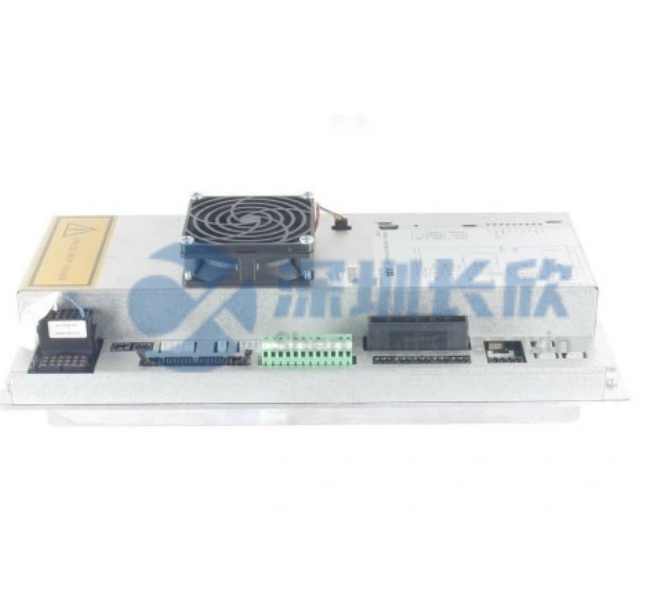
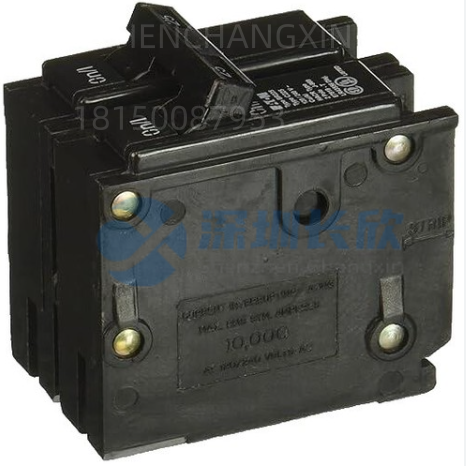
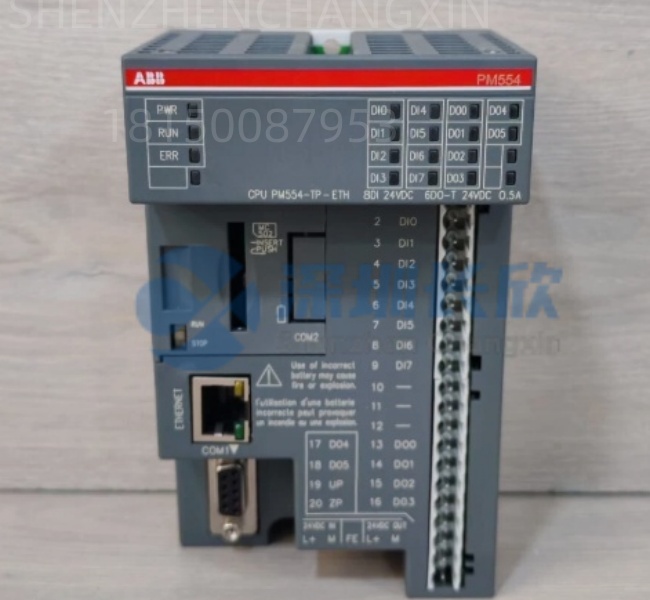
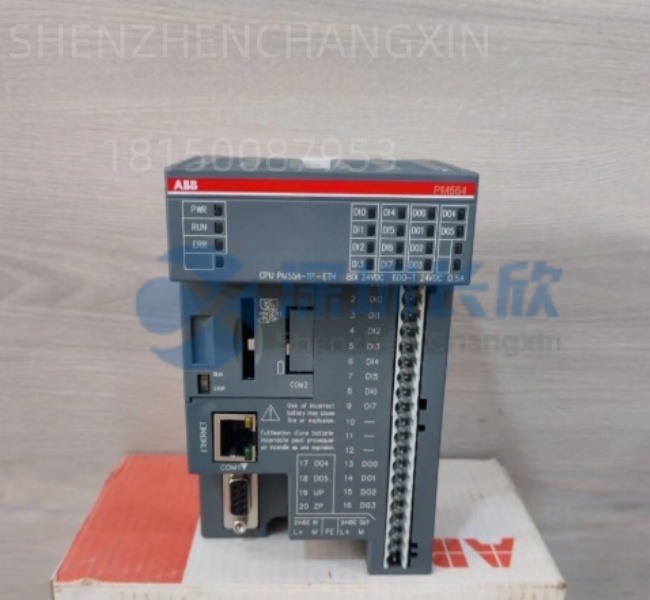
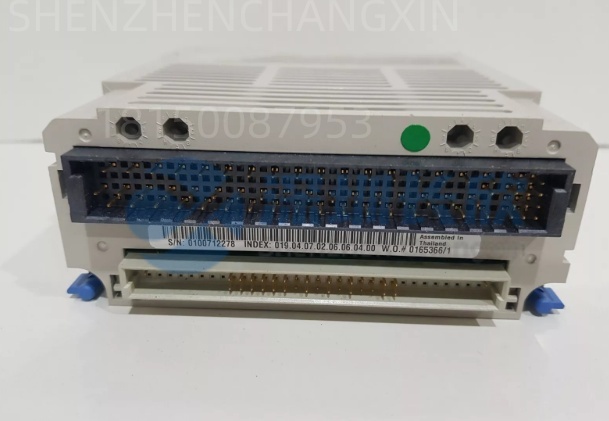
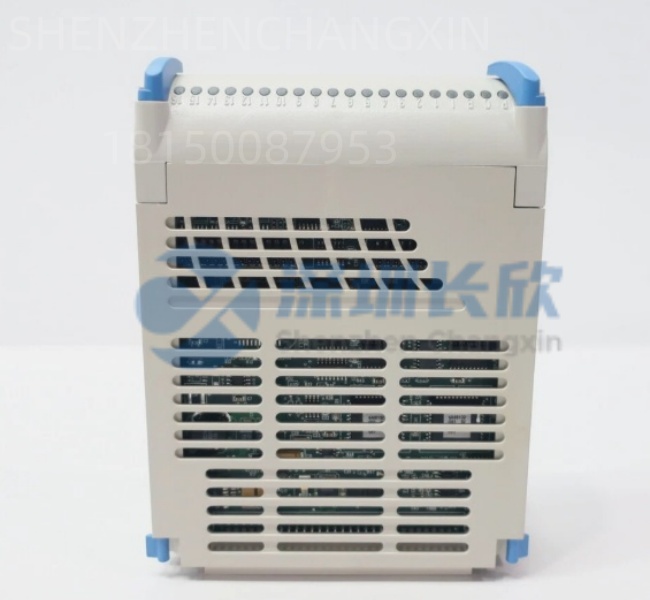
ABB PPC907BE | Industrial Power Supply with Integrated Diagnostics (Order Code: 3BSE013244R1)缩略图

ABB PPC907BE | Industrial Power Supply with Integrated Diagnostics (Order Code: 3BSE013244R1)

ABB PPC907BE | Industrial Power Supply with Integrated Diagnostics (Order Code: 3BSE013244R1)插图
Description

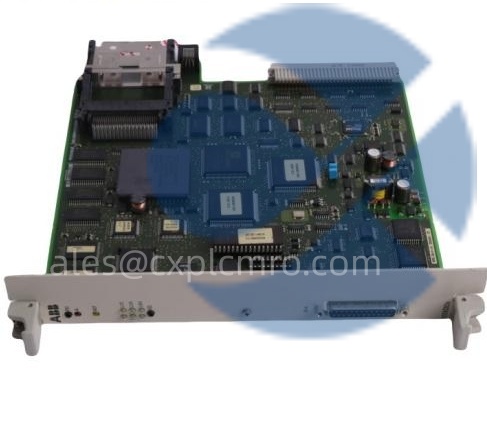
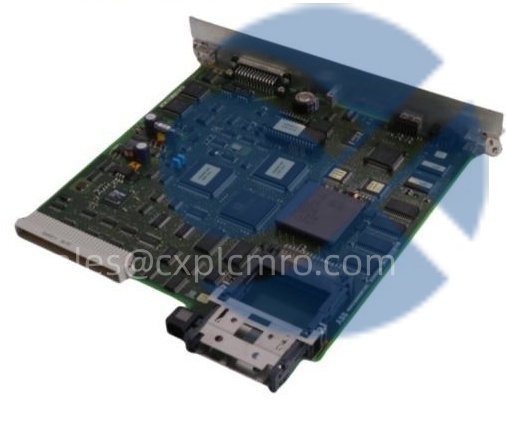
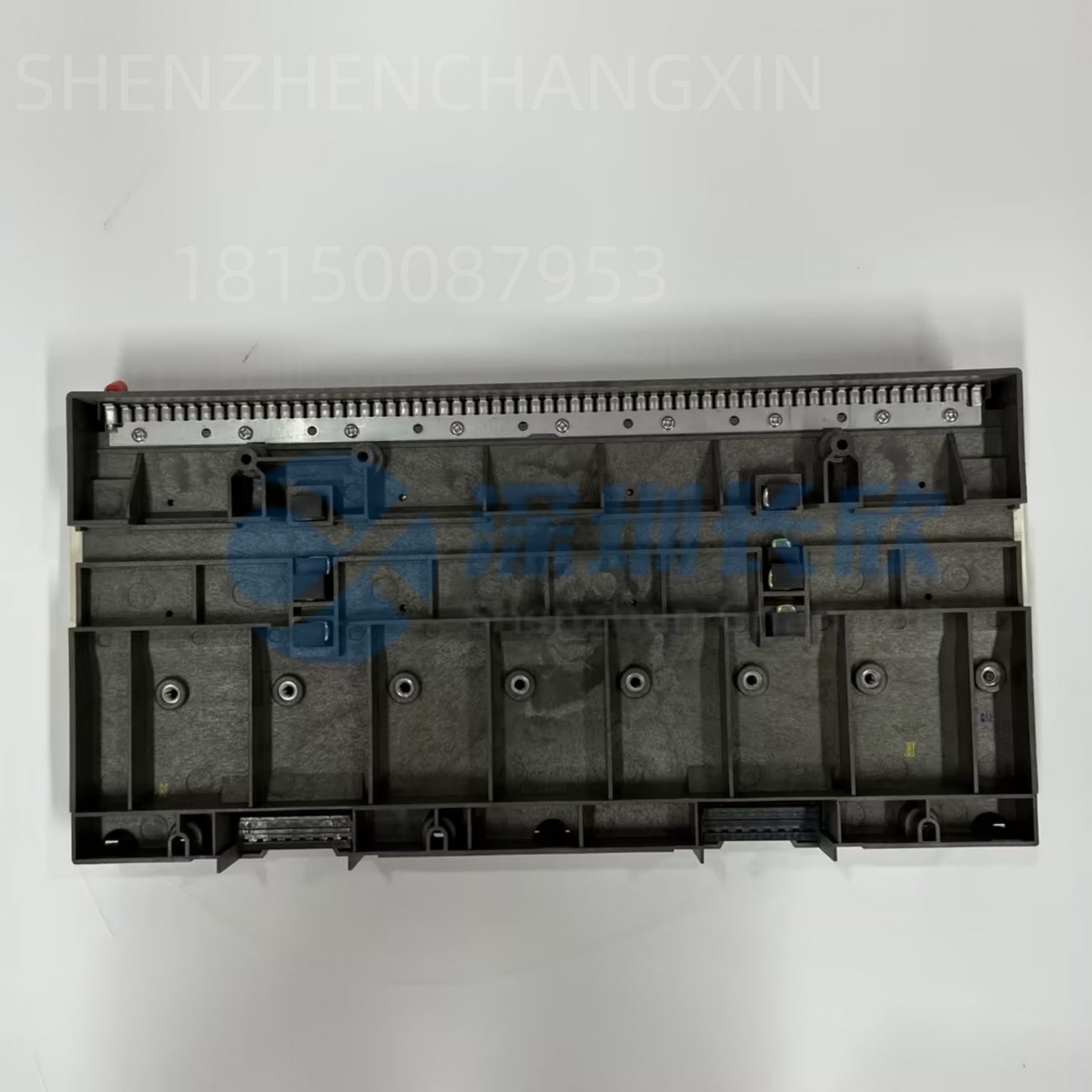
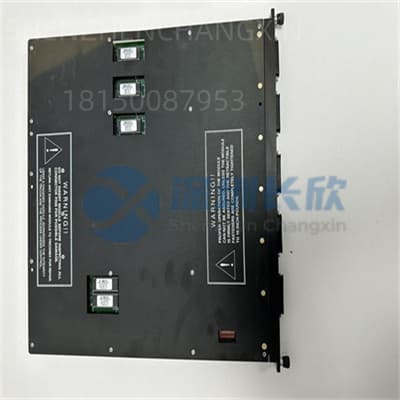
The PPC907BE is a high-reliability, 24V DC industrial power supply module developed by ABB for use in the AC 800M and System 800xA automation platforms. Delivering a stable 10A output with wide-range AC input, integrated protection features, and support for redundant configurations, the PPC907BE ensures uninterrupted power to PLCs, I/O modules, and field devices—even in electrically noisy or thermally challenging environments.

Engineered for continuous operation, this fanless, DIN-rail-mountable unit combines robustness, efficiency, and intelligent diagnostics to minimize downtime and simplify maintenance in critical control applications.

Application Scenarios

At a nuclear power plant in Finland, regulatory requirements demanded zero single-point failures in safety-related control cabinets. Engineers selected dual ABB PPC907BE power supplies in parallel-redundant mode to feed all S800 I/O modules managing reactor coolant monitoring. During a routine grid disturbance that caused a momentary brownout, one PPC907BE automatically compensated for the other’s brief voltage dip—keeping all sensors online without triggering a scram. “The redundancy worked flawlessly,” noted the instrumentation lead. “No alarms, no logs, just silent resilience.” This real-world performance underscores how the PPC907BE delivers not just power—but peace of mind in life-safety systems.

Parameter

表格

Technical Principles and Innovative Values

Innovation Point 1: True Universal Input – The PPC907BE operates seamlessly from 85V AC (brownout conditions) to 264V AC (high-line regions), eliminating the need for region-specific variants or external transformers in global deployments.

Innovation Point 2: Intelligent Fault Signaling – Dual LEDs provide immediate visual feedback: green confirms stable 24V output; red illuminates during overvoltage, overtemperature, or short-circuit events—accelerating troubleshooting without tools.

Innovation Point 3: Silent, Maintenance-Free Operation – The fanless design removes a common failure point, making the PPC907BE ideal for dust-prone or sterile environments (e.g., pharma cleanrooms or coal handling plants).

Innovation Point 4: Seamless Redundancy Integration – When paired with ABB’s PDP910 diode redundancy module, two PPC907BE units can share load and auto-failover within milliseconds—ensuring 99.999% power availability.

Application Cases and Industry Value

In a Chilean copper mine operating at 4.000 meters altitude, conventional power supplies overheated due to thin air and ambient temperatures exceeding 45°C. After switching to the PPC907BE, the site reported zero power-related outages over two years. Its convection cooling and wide temperature tolerance proved decisive. Similarly, in a German automotive stamping plant, the PPC907BE powers safety PLCs and light curtains on robotic presses. During a hydraulic leak that flooded a control cabinet, the unit’s short-circuit protection prevented cascading damage—allowing production to resume within hours instead of days. Users consistently highlight its “install-and-forget” reliability.

Related Product Combination Solutions

PDP910: Diode redundancy module – enables hot-standby or load-sharing between two PPC907BE units.

PM866K02: AC 800M CPU – relies on stable 24V from PPC907BE for deterministic control execution.

S800 I/O Modules (e.g., AI810. DO810) – powered via backplane by PPC907BE through system power distribution.

TU845: Terminal base – often installed in same cabinet as PPC907BE for complete I/O power architecture.

TB850 / TB851: CPU baseplates – require clean 24V supply from PPC907BE for reliable controller operation.

CI854: PROFIBUS module – benefits from low-noise output of PPC907BE for stable field communication.

SNAT 7780: Security gateway – can be powered from same PPC907BE rail in compact security cabinets.

XO08R1: Relay output module – draws coil power from PPC907BE’s robust 24V bus.

Installation, Maintenance, and Full-Cycle Support

Installing the PPC907BE requires mounting it on a standard 35 mm DIN rail, connecting AC input wires to the spring-clamp terminals, and linking the 24V DC output to the system power bus (typically via terminal blocks or power distributors). For redundant setups, connect two PPC907BE units to a PDP910 diode module before feeding the load. Ensure adequate clearance (≥20 mm on both sides) for natural convection cooling.

Maintenance is minimal: periodically verify LED status and clean surface dust in high-particulate areas. No calibration or firmware updates are needed. As an ABB-authorized partner, we supply only genuine PPC907BE units (3BSE013244R1), each tested for output stability, overload response, and thermal performance. All units include a 12-month warranty, full traceability, and access to engineering support for redundancy design or lifecycle management.

Contact us for a customized solution—whether you’re building a new 800xA system, hardening legacy panels, or securing spares for critical infrastructure, the PPC907BE delivers clean, resilient, and intelligent power for the backbone of industrial automation.
ABB PPC907BE | Industrial Power Supply with Integrated Diagnostics (Order Code: 3BSE013244R1)插图1

ABB PP15012HS-5A – Industrial Relay Replacement for Solenoid & Valve Control缩略图

ABB PP15012HS-5A – Industrial Relay Replacement for Solenoid & Valve Control

ABB PP15012HS-5A – Industrial Relay Replacement for Solenoid & Valve Control插图
Description

The PP15012HS-5A is a high-speed, 12-channel digital output (DO) module from ABB’s AC 500 I/O portfolio, engineered for fast and reliable control of 24 VDC loads such as solenoids, relays, indicator lights, and small actuators. Designed for seamless integration with AC 500. AC 500-S, and AC 500-Eco programmable logic controllers, the PP15012HS-5A combines high channel density, robust protection features, and microsecond-level response times—making it ideal for dynamic applications in packaging, assembly automation, and material handling.

Application Scenarios

At an automotive parts stamping plant in Mexico, a high-speed transfer line suffered from inconsistent part ejection due to slow relay-based outputs causing timing drift at 30 cycles/minute. Engineers replaced legacy relays with the PP15012HS-5A, leveraging its 10 µs switching speed and solid-state design. The module triggered pneumatic ejectors with sub-millisecond precision, synchronized perfectly with press position feedback. Over six months, misaligned parts dropped by 92%, and maintenance costs fell by $ 85.000 annually—thanks to zero contact wear. “The PP15012HS-5A didn’t just fix our timing—it eliminated a chronic quality leak,” said the lead automation engineer.

Parameter

表格

Technical Principles and Innovative Values

Innovation Point 1: Microsecond-Level Solid-State Switching – Unlike electromechanical relays or slower transistor modules, the PP15012HS-5A uses high-speed MOSFET drivers that enable precise pulse-width modulation (PWM) and rapid sequencing—critical for servo enable signals or high-cycle valve control.

Innovation Point 2: Intelligent Overload Management – Each output group on the PP15012HS-5A features electronic current limiting that clamps during short circuits and automatically resets when the fault clears—eliminating fuse replacements and unplanned downtime.

Innovation Point 3: True Plug-and-Play with AC 500 Ecosystem – The module draws power and communicates via the AC 500 local bus, requiring no external power supply or configuration jumpers. It is auto-detected in Automation Builder, reducing engineering time.

Innovation Point 4: Visual + Software Diagnostics Synergy – Front-panel LEDs provide instant field verification, while real-time status (e.g., “overload on Ch 5”) is reported to the PLC program—enabling predictive maintenance and smarter alarm logic.

Application Cases and Industry Value

A snack food packaging line in Poland upgraded from mechanical timers to an AC 500-based control system using PP15012HS-5A modules to drive 24 VDC bag-sealing solenoids. At 120 bags/minute, timing jitter from older DO cards caused seal leaks. The PP15012HS-5A’s consistent 8 µs turn-on delay ensured every seal was activated at the exact conveyor position. Reject rates fell from 3.1% to 0.2%, saving over €200.000 in wasted product annually. Additionally, the module’s compact size allowed the OEM to reduce panel footprint by 30%, lowering shipping and enclosure costs.

Related Product Combination Solutions

AC500-S CPU (e.g., PM573-ETH): High-performance controller – pairs seamlessly with PP15012HS-5A for fast scan applications.

PP15012H-5A: Standard-speed variant – use when ultra-fast switching isn’t required; PP15012HS-5A is optimized for high-frequency loads.

PP15008HS-5A: 8-channel version – offers same performance in smaller I/O count scenarios.

TB521: Terminal base with spring-cage wiring – provides secure, tool-free connections for PP15012HS-5A field outputs.

Automation Builder: ABB’s engineering platform – enables drag-and-drop configuration, diagnostics, and firmware management for PP15012HS-5A.

CPX500 HMI: Touchscreen operator interface – displays real-time DO status from PP15012HS-5A for troubleshooting.

PM5650-2ETH: Dual-Ethernet communication module – transports PP15012HS-5A status data to SCADA or cloud platforms.

ABB Ability™ Edge Analytics: Uses output cycle counts and fault logs from PP15012HS-5A to predict solenoid or valve end-of-life.

Installation, Maintenance, and Full-Cycle Support

Installing the PP15012HS-5A requires mounting it on the same DIN rail as an AC 500 CPU or local I/O station, ensuring full engagement with the backplane connector. Field wiring connects via compatible terminal bases (TB521 recommended) using stranded wires with ferrules. No external power is needed—the module is powered through the AC 500 bus. Configure output tags in Automation Builder; the system auto-assigns addresses.

Maintenance is proactive and efficient: inspect front-panel LEDs during routine rounds to confirm output activity, and monitor diagnostic bits in the PLC logic for early signs of overload or wiring degradation. In case of failure, the PP15012HS-5A can be hot-swapped without powering down the entire rack—minimizing production impact. We provide factory-tested units with full functional validation, 24-month warranty, and long-term availability commitment for brownfield and greenfield projects alike.

Contact us for a customized solution—whether you’re designing a new high-speed machine, replacing aging relay panels, or demanding industrial-grade reliability in compact form, the ABB PP15012HS-5A delivers precision, resilience, and intelligence where every microsecond—and every milliamp—counts.
ABB PP15012HS-5A – Industrial Relay Replacement for Solenoid & Valve Control插图1

ABB PP865 3BSE042236R1 Industrial Controller缩略图

ABB PP865 3BSE042236R1 Industrial Controller

ABB PP865 3BSE042236R1 Industrial Controller插图
Product Description

ABB PP865 3BSE042236R1​ is a robust industrial controller that provides centralized control capabilities for complex automation systems. It features powerful processing capabilities, multiple communication interfaces, and high reliability for continuous operation in industrial environments. The controller is designed to handle real-time control tasks, data processing, and communication with various field devices and systems.

Application Scenarios

Process Automation:​ Control of continuous processes in chemical, pharmaceutical, and oil & gas industries

Manufacturing Control:​ Production line control, batch processing, and quality monitoring

Power Generation:​ Turbine control, boiler management, and power distribution

Building Automation:​ HVAC control, energy management, and facility automation

Water Treatment:​ Pump control, filtration systems, and distribution management

Technical Parameters

Technical Features

High Reliability:​ Designed for 24/7 continuous operation with industrial-grade components

Multiple Protocol Support:​ Compatible with various industrial communication standards

Real-time Performance:​ Deterministic control for time-critical applications

Scalable Architecture:​ Expandable with additional I/O and communication modules

Robust Design:​ Built to withstand industrial environments with vibration and temperature tolerance

Innovation and Value

Advanced Processing:​ Enhanced computational capabilities for complex control algorithms

System Integration:​ Seamless integration with ABB and third-party systems

Future-Proof Design:​ Support for modern industrial protocols and standards

Maintenance Friendly:​ Diagnostic capabilities and modular design for easy maintenance

Energy Efficient:​ Optimized power consumption for sustainable operation

System Integration

Compatible Systems:

ABB 800xA distributed control system

ABB AC 800M controller family

Various I/O modules and communication interfaces

HMI and SCADA systems

Network infrastructure components

Related Products:

Power supply units

Communication modules

I/O expansion modules

Programming and configuration tools

Mounting accessories and enclosures

Installation and Maintenance

Installation Requirements:

Qualified personnel with industrial automation experience

Proper grounding and electrical safety measures

Adequate ventilation and cooling

Compliance with local electrical codes

Proper cable management and segregation

Maintenance Guidelines:

Regular firmware updates

Periodic system diagnostics

Environmental condition monitoring

Backup of configuration data

Scheduled performance verification

Troubleshooting:

Diagnostic LED indicators

System error logging

Communication diagnostics

Performance monitoring tools

Factory reset and recovery procedures

Why Choose Our Services

Comprehensive Support:

Genuine ABB products with full warranty

Technical consultation and system design

Installation and commissioning support

24/7 technical assistance

Training and documentation

Quality Assurance:

Factory-sealed units

Complete testing and verification

Traceable manufacturing

Compliance with original specifications

Long-term supply commitment

Value Added Services:

System integration support

Custom configuration

Legacy system upgrades

Spare parts management

Lifecycle management

Industry Applications

Manufacturing:

Production line control

Quality monitoring systems

Equipment automation

Process optimization

Energy management

Process Industries:

Batch process control

Continuous process automation

Safety instrumented systems

Environmental monitoring

Regulatory compliance

Infrastructure:

Building management systems

Utility control systems

Water treatment plants

Power distribution

Transportation systems

Ordering Information

Package Includes:

PP865 3BSE042236R1 controller module

Mounting accessories

Documentation and manuals

Certification documents

Warranty information

Shipping:

Worldwide shipping available

Express delivery options

Professional packaging

Tracking and insurance

Customs documentation support

Payment Terms:

Flexible payment options

Bulk order discounts

Corporate accounts

Secure payment methods

Invoice and PO acceptance
ABB PP865 3BSE042236R1 Industrial Controller插图1

Digital Generator Protection Relay ABB PMC916缩略图

Digital Generator Protection Relay ABB PMC916

Digital Generator Protection Relay ABB PMC916插图
Description

The ABB PMC916​ is a sophisticated, fully digital protection relay designed specifically for the comprehensive protection of synchronous generators. It integrates multiple protection functions, control features, and monitoring capabilities into a single, advanced device, safeguarding generators of all sizes and types in hydro, thermal, and industrial power plants.

Application Scenarios

In a 50MW hydroelectric power plant, the generator is the most critical and expensive asset. A fault such as a stator winding short, loss of excitation, or unbalanced loading can cause catastrophic damage within seconds, leading to months of downtime and massive repair costs. The ABB PMC916​ is installed in the generator control panel. It continuously monitors electrical parameters like current, voltage, frequency, and power. If a developing internal fault is detected—for instance, a differential current indicating a turn-to-turn short—the relay’s advanced algorithms process the data in milliseconds. It can issue an alarm for a warning condition or, in the case of a severe fault, instantly send a trip command to the generator circuit breaker and field breaker, isolating the machine from the grid and removing excitation to prevent further damage. This solves the critical need for ultra-fast, reliable, and selective protection​ to prevent mechanical and thermal damage to the generator.

Parameter

Technical Principles and Innovative Values

The ABB PMC916​ represents a shift from discrete electromechanical relays to an integrated, intelligent protection system, offering unparalleled reliability, flexibility, and diagnostic depth.

Innovation Point 1: Integrated Multi-Function Protection with Adaptive Algorithms.​ The core innovation is consolidating over 20 protection functions into one device. More than simple consolidation, it uses adaptive algorithms. For example, its percentage-restrained differential protection (87G)​ can compensate for CT saturation and transformer phase shift, providing stability during external faults with through-current and high sensitivity for internal faults. This eliminates the need for and coordination between dozens of standalone relays, reducing wiring, panel space, and potential points of failure.

Innovation Point 2: Advanced Digital Signal Processing and High-Resolution Sampling.​ The relay uses high-speed analog-to-digital converters to sample current and voltage waveforms thousands of times per cycle. This rich data is processed by digital filters and algorithms to extract fundamental components, harmonics, and transients with extreme accuracy. This enables functions like high-resolution fault recording​ and power-quality analysis, turning the relay from a simple protector into a diagnostic tool for understanding event sequences and system conditions.

Innovation Point 3: Comprehensive Diagnostics and Communication-Centric Design.​ The PMC916​ features extensive self-supervision, continuously monitoring its own hardware and software. It also provides health data for connected equipment, like CT/VT circuit supervision. Its native support for modern protocols like IEC 61850​ allows it to communicate detailed fault reports, oscillography, and real-time metering data directly to a SCADA or plant DCS. This enables predictive maintenance, remote diagnostics, and seamless integration into modern digital substations, providing unparalleled visibility into generator health.

Application Cases and Industry Value

Case Study: Protection and Control Upgrade for an Industrial Co-Generation Plant

A chemical plant with a 20MW gas turbine co-generation system relied on an aging panel of discrete protective relays. The system suffered from a non-selective trip that shut down the entire plant during a grid disturbance, causing massive production losses. Diagnosing the cause was nearly impossible due to a lack of event data.

Solution & Outcome:​ The plant replaced the entire relay panel with a single ABB PMC916​ unit. It was configured to provide all necessary protection (differential, overcurrent, reverse power, loss of excitation) and integrated automatic synchronizing (25) for smooth grid reconnection. Six months later, another grid disturbance occurred. The PMC916​ correctly identified it as an external fault and remained stable, preventing a plant trip. The built-in fault recorder captured the complete waveform data, allowing engineers to analyze the event. The plant manager reported: “The PMC916​ paid for itself by preventing a single major trip. The event records alone are invaluable. We now have confidence in our protection and can prove our generator’s response to the grid operator.”

Related Product Combination Solutions

The ABB PMC916​ is the central intelligence in a complete generator protection and control scheme.

Current Transformers (CTs) & Voltage Transformers (VTs):​ High-accuracy, class-matched instrument transformers that provide scaled-down signals to the relay’s analog inputs.

Generator Circuit Breaker (GCB) & Field Breaker:​ The primary switching devices that the PMC916’s trip outputs command to open in a fault condition.

Synchronizing Equipment:​ While the PMC916​ can include the sync-check function (25), it may interface with an automatic synchronizer for closing the breaker at the precise moment.

RTU/SCADA/Control System:​ The supervisory system that communicates with the PMC916​ via IEC 61850 or Modbus to collect data, alarms, and control the relay remotely.

Test Switches & Blocks:​ Isolating test switches allow for safe secondary injection testing of the PMC916​ without disconnecting CT circuits.

Station Battery & DC Supply:​ Provides a secure, uninterruptible power source for the relay and trip circuits.

Communication Gateway/Network Switch:​ Facilitates the integration of the PMC916​ into the plant’s communication network for data integration.

Installation, Maintenance, and Full-Cycle Support

Installation requires expertise in protection engineering. It involves mounting the relay in the panel, carefully wiring the CT/VT circuits (ensuring proper polarity and shorting facilities), connecting binary inputs/outputs for trip/alarm/status, and establishing communication links. The crucial phase is configuration and testing​ using dedicated software (e.g., ABB PCM600). This involves setting all protection function parameters, defining logic, and performing primary injection tests to verify the complete protection chain from CT to trip coil.

Routine maintenance involves periodic visual inspections, verifying relay health via the front-panel display or software, and checking the status of the DC supply. The most important activity is functional testing​ at regular intervals (e.g., annually) using a secondary injection test set. This test validates the accuracy and operation of each protection function without requiring a generator outage. The relay’s event log and disturbance recorder are invaluable for post-event analysis. Our support covers the full lifecycle: from initial system design and coordination studies, supply of the relay and test equipment, on-site commissioning assistance, to ongoing technical support, firmware updates, and training for your protection engineers.

Contact us for a comprehensive solution for your generator protection needs, from engineering consultation and supply of the ABB PMC916 relay to full testing and commissioning services.
Digital Generator Protection Relay ABB PMC916插图1

ABB PM5650-2ETH – Dual 10/100 Mbps Ports for Redundant Network Architectures缩略图

ABB PM5650-2ETH – Dual 10/100 Mbps Ports for Redundant Network Architectures

ABB PM5650-2ETH – Dual 10/100 Mbps Ports for Redundant Network Architectures插图
Description

The PM5650-2ETH (ABB order code 1SAP141000R0278) is a high-performance dual-Ethernet communication module designed for ABB’s AC 500 series of programmable logic controllers (PLCs). Serving as a real-time data gateway between the PLC and industrial networks, it enables seamless integration with HMIs, SCADA systems, drives, and enterprise IT infrastructure via standard protocols like Modbus TCP, EtherNet/IP, and PROFINET—making it ideal for machine builders and process automation in food & beverage, water treatment, and energy applications.

Application Scenarios

At a smart bottling facility in Italy, production lines suffered from intermittent communication losses between AC 500 PLCs and centralized MES due to single-point network failures. Engineers installed the PM5650-2ETH to create a redundant ring topology using its dual independent Ethernet ports. When a forklift accidentally severed a main network cable during shift change, the PM5650-2ETH rerouted traffic in under 300 ms—keeping all 12 fillers online. Operators monitored the event remotely via the module’s built-in web server, which displayed port status and traffic statistics without requiring engineering software. Downtime dropped by 90%, and the plant achieved ISO 50001 certification thanks to uninterrupted energy data flow from the PM5650-2ETH.

Parameter

表格

Technical Principles and Innovative Values

Innovation Point 1: True Dual-Homed Networking in a Single Module – The PM5650-2ETH features two fully independent Ethernet controllers with separate MAC addresses and isolation barriers, enabling true network redundancy without external switches—critical for compact OEM panels.

Innovation Point 2: Multi-Protocol Simultaneous Operation – Unlike single-protocol gateways, the PM5650-2ETH can run Modbus TCP for SCADA, PROFINET for drives, and ABB peer-to-peer messaging—all at once on separate ports or VLANs—eliminating protocol converters.

Innovation Point 3: Zero-Configuration Diagnostics via Embedded Web UI – Technicians access real-time port statistics, error counters, and IP settings through any browser—no PC software needed—accelerating field commissioning and troubleshooting.

Innovation Point 4: Optimized for AC 500 Ecosystem with Direct Backplane Integration – The PM5650-2ETH draws power and exchanges data directly via the AC 500 local bus, reducing wiring, latency, and failure points compared to external communication gateways.

Application Cases and Industry Value

A municipal wastewater pump station in Sweden upgraded from analog telemetry to a modern SCADA system but needed to retain existing AC 500 Eco PLCs. The PM5650-2ETH bridged the gap: one port connected to legacy RTUs via Modbus TCP, while the other linked to a new cloud-based monitoring platform using secure MQTT-over-TCP tunneling. During winter blackouts, the module’s wide temperature tolerance (-25°C) ensured continuous operation in unheated shelters. Over two years, remote fault detection reduced site visits by 75%, and predictive maintenance alerts cut pump failures by 40%. The utility’s automation lead noted: “The PM5650-2ETH turned our old PLCs into smart edge devices overnight.”

Related Product Combination Solutions

AC500-S CPU (e.g., PM572): Main controller – pairs natively with PM5650-2ETH for high-speed I/O and networking.

PM554-ETH: Single-port predecessor – PM5650-2ETH offers higher performance and dual-port redundancy.

TB511-ETH: Terminal base with integrated Ethernet – alternative for compact I/O, but PM5650-2ETH provides greater protocol flexibility.

Automation Builder: ABB’s engineering suite – fully supports configuration, diagnostics, and firmware updates for PM5650-2ETH.

CPX500 HMI: ABB touchscreen – communicates directly with PM5650-2ETH via Modbus TCP or native ABB protocol.

ABB Ability™ Edge Analytics: Leverages real-time data from PM5650-2ETH for OEE, energy tracking, and anomaly detection.

CI541: PROFINET coupler for AC 500 – use alongside PM5650-2ETH when connecting to Siemens ecosystems.

PM5630-RS: Serial communication module – complements PM5650-2ETH for hybrid networks with legacy RS485 devices.

Installation, Maintenance, and Full-Cycle Support

Installing the PM5650-2ETH is straightforward: mount it adjacent to an AC 500 CPU or I/O module on the same DIN rail, ensuring the backplane connectors engage fully. Connect field networks to the RJ45 ports using shielded Cat5e cables, grounded at one end. Configure IP addresses via the web interface or Automation Builder—no DIP switches required. For redundancy, enable MRP in the network manager and daisy-chain units into a ring.

Routine maintenance involves periodic checks of the web UI for link errors or excessive collisions. The module supports remote firmware updates, ensuring long-term cybersecurity compliance. Failed units are replaced in under 2 minutes—no tools needed—and the system automatically relearns I/O mapping. We provide full lifecycle support, including compatibility validation with third-party devices, long-term spare parts availability, and technical guidance for IT/OT convergence projects.

Contact us for a customized solution—whether you’re building a new machine, modernizing a legacy line, or deploying edge intelligence in distributed infrastructure, the ABB PM5650-2ETH(1SAP141000R0278) delivers open, resilient, and future-ready connectivity where data must flow—without compromise.
ABB PM5650-2ETH – Dual 10/100 Mbps Ports for Redundant Network Architectures插图1

ABB XU04-H-B – Rugged 4-Point Digital Input with Surge Protection for Power Plants缩略图

ABB XU04-H-B – Rugged 4-Point Digital Input with Surge Protection for Power Plants

ABB XU04-H-B – Rugged 4-Point Digital Input with Surge Protection for Power Plants插图
Description

The XU04-H-B is a 4-channel digital input module from ABB’s legacy CONTRONIC I/O family, originally developed for high-integrity process control in power generation, oil & gas, and heavy industry. Designed for compatibility with early ABB (formerly Bailey) DCS platforms such as INFI 90 and Network 90. the XU04-H-B delivers robust signal acquisition from high-voltage discrete field devices—including relay contacts, limit switches, and auxiliary contacts—under electrically harsh conditions.

Application Scenarios

At a 40-year-old combined-cycle power plant in Germany, operators faced recurring false turbine trip signals due to aging input cards that couldn’t reject electromagnetic noise from generator breakers. The original Bailey XU04-H-B modules—still operational after three decades—were identified as the last reliable link in the protection chain. Rather than risk full system replacement, engineers sourced refurbished XU04-H-B units as direct drop-in spares. Their built-in opto-isolation and wide 24–125 VDC input window absorbed transient spikes without logic errors. Over two outage cycles, zero nuisance trips occurred—proving that sometimes, the most advanced solution is the one already proven in the field. The XU04-H-B didn’t just keep the plant running; it preserved decades of operational trust.

Parameter

表格

Technical Principles and Innovative Values

Innovation Point 1: Universal High-Voltage Input Without Configuration – Unlike modern 24 VDC-only DI modules, the XU04-H-B natively accepts voltages from 24 V up to 125 V, eliminating the need for external relays or signal conditioners when interfacing with medium-voltage switchgear or legacy motor control centers.

Innovation Point 2: Field-Proven Opto-Isolation Architecture – Each input on the XU04-H-B uses dual-stage optocouplers with reinforced insulation, providing decades of immunity against ground loops and common-mode noise—critical in plants with mixed grounding systems.

Innovation Point 3: Direct Compatibility with INFI 90 Backbone – The XU04-H-B plugs into standard CONTRONIC carrier modules (MFP01. MFC01) and communicates via the proprietary ModuleBus, enabling seamless integration into existing Bailey DCS cabinets without rewiring or logic re-engineering.

Innovation Point 4: Maintenance-First Design with Front-Facing LEDs – Every channel features a bright, easily visible LED that confirms field signal presence—allowing technicians to verify switch states during live troubleshooting without opening enclosures or using multimeters.

Application Cases and Industry Value

A refinery in Texas operating a 1998-era Bailey INFI 90 system needed to extend the life of its crude distillation unit control system by 10+ years. Original XU04-H-B modules were failing due to capacitor aging, but replacing the entire DCS was cost-prohibitive. After sourcing reconditioned XU04-H-B units with updated electrolytics and conformal coating, the team achieved 100% functional compatibility. The modules reliably monitored 115 VAC pump run signals and emergency shutdown contacts—even during lightning storms that previously caused erratic behavior. Over 18 months, unplanned downtime dropped by 40%, and the site avoided a $ 2.3M control system overhaul. One veteran controls engineer remarked: “The XU04-H-B isn’t obsolete—it’s timeless.”

Related Product Combination Solutions

MFP01: CONTRONIC I/O carrier module – provides backplane power and communication for XU04-H-B.

XU08-H-B: 8-channel variant – used where higher density is needed in the same chassis.

YO04-H-B: 4-channel digital output counterpart – often paired with XU04-H-B for interlock circuits.

MFC01: Redundant I/O baseplate – enables hot-standby operation of XU04-H-B in critical safety loops.

ABB AC 800M with CI854: For hybrid modernization—legacy XU04-H-B signals can be bridged via gateway to new DCS.

TB04 Terminal Block: Dedicated screw-terminal adapter for XU04-H-B field wiring—ensures secure high-voltage connections.

PPC907BE: INFI 90 controller module – processes logic from XU04-H-B inputs in legacy applications.

ABB Ability™ System 800xA with Legacy Gateway: Enables monitoring of XU04-H-B status in modern asset management platforms.

Installation, Maintenance, and Full-Cycle Support

Installing the XU04-H-B requires insertion into a compatible CONTRONIC I/O chassis such as the MFP01 or MFC01. followed by connection of field wires to the associated terminal block (TB04). No configuration jumpers are needed—the module auto-adapts to AC or DC input signals within its range. Ensure proper grounding of the chassis and use shielded cables for long runs near high-power equipment.

Maintenance is simplified by the module’s visual diagnostics: each channel’s LED instantly confirms signal presence, reducing troubleshooting time during outages. Failed XU04-H-B units can be replaced in minutes without powering down the entire rack—thanks to the modular CONTRONIC architecture. We provide fully tested, reconditioned units with updated components (capacitors, LEDs, connectors) and full functional validation against original Bailey specifications. All units include a 12-month warranty and are backed by ABB-certified legacy support engineers who understand the nuances of INFI 90 and CONTRONIC ecosystems.

Contact us for a customized solution—whether you’re maintaining a decades-old power plant, extending the life of a critical refinery DCS, or ensuring continuity in a brownfield automation environment, the ABB XU04-H-B delivers unmatched reliability, direct compatibility, and peace of mind where legacy meets longevity.
ABB XU04-H-B – Rugged 4-Point Digital Input with Surge Protection for Power Plants插图1

ABB XU04-H-B – Rugged 4-Point Digital Input with Surge Protection for Power Plants插图2

ABB PM866K02 | Industrial PLC Controller – 512 MB RAM, 4 GB Flash, IEC 61131-3 Compliant缩略图

ABB PM866K02 | Industrial PLC Controller – 512 MB RAM, 4 GB Flash, IEC 61131-3 Compliant

ABB PM866K02 | Industrial PLC Controller – 512 MB RAM, 4 GB Flash, IEC 61131-3 Compliant插图
Description

The PM866K02 is a high-performance, redundant-capable central processing unit (CPU) module from ABB’s AC 800M controller family, engineered for demanding applications within the System 800xA distributed control architecture. Featuring dual-core processing, enhanced memory capacity, and native support for real-time communication protocols, the PM866K02 delivers deterministic control, seamless redundancy, and robust cybersecurity—making it ideal for safety-critical and continuous-operation industries.

As the “brain” of modern ABB automation systems, the PM866K02 combines industrial-grade reliability with advanced computing power to manage thousands of I/O points, complex sequences, and enterprise-level data integration—all in a compact, DIN-rail-mountable form factor.

Application Scenarios

At a major LNG export terminal in Qatar, unplanned shutdowns could cost over $ 1 million per hour. To ensure uninterrupted liquefaction, engineers deployed dual ABB PM866K02 controllers in hot-standby redundancy across all critical process units. During a scheduled firmware update on the primary CPU, the system automatically transferred control to the backup unit in under 20 milliseconds—completely transparent to operators and field devices. “Zero process disturbance,” confirmed the site automation lead. “The PM866K02 didn’t just meet our availability target—it redefined it.” This case exemplifies how the PM866K02 transforms operational resilience in high-stakes environments where failure is not an option.

Parameter

表格

Technical Principles and Innovative Values

Innovation Point 1: True Synchronous Redundancy – The PM866K02 uses a dedicated fiber-optic link to mirror program execution, I/O states, and internal variables in real time between primary and backup units—ensuring zero data loss during failover, even mid-scan cycle.

Innovation Point 2: Enterprise-Grade Cybersecurity – Integrated firewall, secure boot, role-based access, and OPC UA encryption make the PM866K02 compliant with IEC 62443. protecting against evolving OT threats without external appliances.

Innovation Point 3: Unified Engineering & Runtime – Developed in ABB’s Control Builder M, the PM866K02 supports structured text, function blocks, and sequential function charts—enabling reuse of code across projects and seamless integration with 800xA HMI, asset optimization, and historian layers.

Innovation Point 4: Long-Term Investment Protection – With a projected lifecycle beyond 2035 and backward compatibility with earlier AC 800M modules, the PM866K02 safeguards capital expenditure in brownfield expansions and greenfield builds alike.

Application Cases and Industry Value

In a Scandinavian district heating network serving 500.000 residents, winter outages are unacceptable. The utility replaced aging controllers with redundant PM866K02 pairs at 12 pumping stations. During a cyber incident that disrupted communications at one site, the PM866K02’s built-in security features contained the breach while maintaining local control—keeping heat flowing. Operators also leveraged its OPC UA server to stream real-time efficiency data to a cloud analytics platform, reducing energy consumption by 7%. Similarly, in a U.S. biopharma facility, the PM866K02 manages sterile filling lines with full electronic batch records and 21 CFR Part 11 compliance—its deterministic scan times ensure precise timing for valve sequencing and temperature ramps, directly impacting product quality.

Related Product Combination Solutions

TB850 / TB851: Redundant CPU baseplates – required for hot-standby PM866K02 configurations with optical sync.

CI854: PROFIBUS DP communication module – extends PM866K02 connectivity to legacy field devices.

S800 I/O Modules (e.g., AI810. DO810): Distributed I/O stations – managed by PM866K02 over optical or copper links.

TPC-1570H: Operator workstation – visualizes and interacts with processes controlled by the PM866K02.

SNAT 7780: Secure remote access gateway – enables encrypted engineering access to PM866K02 without compromising network integrity.

AC 800M Connect: Integration software – links PM866K02 data to MES and ERP systems via OPC UA.

TU845: Terminal base – supports field wiring for local I/O connected to PM866K02-based cabinets.

PM864A: Entry-level CPU – can coexist in the same 800xA system for non-critical subsystems, reducing total cost of ownership.

Installation, Maintenance, and Full-Cycle Support

The PM866K02 installs onto a TB850 (primary) and TB851 (backup) base pair mounted on DIN rail, with the optical synchronization cable connecting the two units. Power and I/O backplane connections are handled through the base—no field wiring to the CPU itself. Commissioning is streamlined via Control Builder M, which auto-detects redundancy status and validates sync health. Routine maintenance involves periodic firmware updates (performed online on the standby unit first) and backup of application projects.

We supply only genuine, factory-sealed PM866K02 units (3BSE050190R5002), each verified for hardware authenticity and performance. Every controller undergoes functional testing—including redundancy switchover validation and communication stress tests—before dispatch. Backed by a 12-month warranty and supported by ABB-certified engineers, our PM866K02 solutions include startup assistance, lifecycle planning, and global logistics.

Contact us for a customized solution—whether you’re designing a new DCS, upgrading legacy Bailey INFI 90 systems, or securing spares for critical infrastructure, the PM866K02 delivers unmatched performance, availability, and future readiness for the world’s most demanding automation challenges.
ABB PM866K02 | Industrial PLC Controller – 512 MB RAM, 4 GB Flash, IEC 61131-3 Compliant插图1

ABB PM864AK01 AC 800M Processor – Hot-Swappable, Extended Temp, Long Lifecycle缩略图

ABB PM864AK01 AC 800M Processor – Hot-Swappable, Extended Temp, Long Lifecycle

ABB PM864AK01 AC 800M Processor – Hot-Swappable, Extended Temp, Long Lifecycle插图
Description

The PM864AK01 (ABB order code 3BSE018161R1) is a high-reliability central processing unit (CPU) from ABB’s AC 800M controller family, engineered as the computational backbone of the System 800xA distributed control system (DCS). Designed for continuous, mission-critical process automation in industries like oil & gas, power generation, and chemicals, the PM864AK01 delivers deterministic logic execution, built-in communication redundancy, and seamless integration with S800 I/O—ensuring plant availability, safety, and operational efficiency.

Application Scenarios

At a North Sea offshore platform, unplanned shutdowns due to controller failures cost over $ 2 million per incident. The aging DCS used non-redundant CPUs with limited diagnostics. Engineers upgraded to dual PM864AK01 units in hot-standby redundancy. During a lightning-induced surge that fried the primary unit’s Ethernet port, the standby PM864AK01 took over in <200 ms—with zero process interruption. Operators monitored the switchover remotely via the built-in web server, while maintenance replaced the failed module during routine rounds. Over three years, the platform achieved 99.998% controller uptime, turning reliability into measurable ROI.

Parameter

表格

Technical Principles and Innovative Values

Innovation Point 1: True Hot-Standby Redundancy with State Synchronization – The PM864AK01 continuously mirrors application state, I/O data, and communication buffers to its redundant partner via a dedicated sync link, ensuring bumpless transfer during failure—critical for continuous processes like distillation or power generation.

Innovation Point 2: Embedded Web Server for Remote Diagnostics – Technicians can access real-time CPU load, memory usage, I/O status, and error logs via any standard web browser—eliminating the need for engineering software during troubleshooting.

Innovation Point 3: Unified Engineering in Control Builder Plus – The same environment configures logic (IEC 61131-3), HMI, alarms, and redundancy—reducing integration risk and lifecycle costs in large-scale DCS deployments.

Innovation Point 4: Long-Term Availability & Migration Path – ABB guarantees long product lifecycles and provides migration tools to newer AC 800M variants (e.g., PM866), protecting customer investment for decades.

Application Cases and Industry Value

A municipal wastewater treatment plant in Germany modernized its 20-year-old control system using PM864AK01 controllers paired with S800 I/O. The plant required 24/7 operation with minimal staff. Using the PM864AK01’s web interface, operators diagnosed a failing blower motor from home by reviewing trended analog input data and digital status—all without visiting the site. Over five years, maintenance visits dropped by 60%, and energy optimization logic running on the PM864AK01 reduced aeration power consumption by 18%. Regulators commended the system’s audit-ready event logging during environmental inspections.

Related Product Combination Solutions

CI854: Profibus DP communication module – enables connection to drives, valves, and remote I/O.

TU840 / TU854: S800 I/O baseplates – directly connected via optical or electrical ModuleBus.

PM865AK01: Higher-performance successor with faster scan and more memory—ideal for complex batch processes.

Control Builder Plus: Engineering suite – fully supports PM864AK01 configuration, redundancy setup, and firmware management.

System 800xA: Unified DCS platform – integrates PM864AK01 data into alarm management, historians, and asset performance tools.

TB820: Terminal blocks – provide secure field wiring for S800 I/O linked to PM864AK01.

ABB Ability™ Asset Performance Management: Leverages PM864AK01 diagnostics for predictive maintenance and OEE tracking.

Installation, Maintenance, and Full-Cycle Support

Installing the PM864AK01 involves mounting on DIN rail, connecting dual power feeds (for redundancy), linking to I/O baseplates via ModuleBus cables, and configuring IP addresses. Redundant pairs require a dedicated sync cable and mirrored network topology. Commissioning is performed in Control Builder Plus, which validates firmware, downloads application logic, and tests redundancy switchover.

Maintenance is simplified by comprehensive diagnostics: front-panel LEDs indicate RUN, STOP, I/O, and REDUNDANCY status. The web interface provides detailed fault logs, including last scan time and memory usage. In redundant mode, failed units are hot-swapped without process impact. We provide full lifecycle support—including firmware updates aligned with cybersecurity standards, long-term spare parts commitment, and migration planning to next-gen platforms.

Contact us for a customized solution—whether you’re building a new DCS, modernizing legacy infrastructure, or ensuring regulatory compliance in safety-critical operations, the ABB PM864AK01(3BSE018161R1) delivers industrial-grade reliability, seamless integration, and decades of proven performance where continuity is non-negotiable.
ABB PM864AK01 AC 800M Processor – Hot-Swappable, Extended Temp, Long Lifecycle插图1

ABB PM864AK01 AC 800M Processor – Hot-Swappable, Extended Temp, Long Lifecycle插图2

ABB PFSK102 Safety Controller | SIL/PL Rated Safety Module缩略图

ABB PFSK102 Safety Controller | SIL/PL Rated Safety Module

ABB PFSK102 Safety Controller | SIL/PL Rated Safety Module插图

Description

The ABB PFSK102 (YM322001)​ is a configurable safety relay module, forming a core component of a safety-related control system. It is designed to reliably monitor safety devices (like E-Stop buttons, safety gates, light curtains) and, based on their status, safely disconnect power to hazardous machine functions, thereby achieving a Safe Torque Off (STO) or similar safe state to protect personnel and equipment.

Application Scenarios

In an automated press line, operators need periodic access to clear jams. A hinged safety gate with an interlock switch protects the hazardous area. A fault in the monitoring circuit could allow the press to cycle with the gate open, leading to a catastrophic injury. The ABB PFSK102​ safety relay is installed to monitor this gate switch. Its internally redundant and monitored circuits ensure that if the gate is opened, the relay’s safety contacts immediately and reliably cut power to the press’s main drive contactor, bringing it to a stop. Furthermore, it monitors its own output contacts and wiring for faults. If a contact welds or a wire breaks, the PFSK102​ will detect the fault, lock out the system, and require a manual reset, preventing an unsafe restart. This scenario demonstrates its role in solving the critical need for functional safety—ensuring a safety function works correctly even when a fault occurs.

Parameter

Technical Principles and Innovative Values

The ABB PFSK102​ embodies the principles of fail-safe design and diagnostic coverage, moving beyond simple switching to intelligent, self-checking safety.

Innovation Point 1: Redundant, Diverse, and Monitored Internal Architecture.​ Unlike a standard relay, the PFSK102​ incorporates at least two independent internal switching channels. It uses diverse technologies (e.g., mechanical relays and semiconductor switches) and continuously cross-checks them. If a discrepancy is detected (e.g., one channel is stuck on), the module will fault and drive the outputs to a safe state. This “fault detection” is the core innovation that allows it to achieve high Safety Integrity Levels (SIL) and Performance Levels (PL).

Innovation Point 2: High Diagnostic Coverage (DC) and Safe Failure Fraction (SFF).​ The module is designed to detect a very high percentage of possible dangerous internal failures (high Diagnostic Coverage). It monitors its own power supply, processor, and output contact status. This high DC contributes to a high Safe Failure Fraction, meaning most failures will be detected and lead to a safe shutdown, rather than remaining undetected and allowing a hazardous situation.

Innovation Point 3: Configurable Logic for Complex Safety Functions.​ The PFSK102​ often includes configurable logic (via hardware wiring, DIP switches, or software). This allows a single module to implement complex safety functions like a two-hand control, mode selector, or monitoring multiple interlock switches in series/parallel. This flexibility simplifies panel design, reduces the number of components, and increases reliability compared to a system built from multiple basic safety relays.

Application Cases and Industry Value

Case Study: Safety System Upgrade for a Robotic Welding Cell

An automotive parts manufacturer needed to upgrade the safety system around a robotic welding cell to meet new corporate safety standards (PL d). The existing system used a single-channel relay to monitor the safety gate, offering no fault detection.

Solution & Outcome:​ A new safety circuit was designed around an ABB PFSK102​ module. It was configured to monitor a dual-channel safety gate switch (with N.O. and N.C. contacts) and a dual-channel E-Stop button. The PFSK102’s redundant inputs and internal monitoring created a Category 3. PL d system according to ISO 13849. After installation, during a routine test, a fault was simulated by shorting one channel of the gate switch. The PFSK102​ immediately detected the discrepancy, triggered a safety shutdown, illuminated a fault indicator, and locked out the system until a qualified technician investigated and performed a manual reset. The plant safety engineer stated: “The PFSK102​ didn’t just make us compliant; it gave us confidence. We now have diagnostics that tell us ifthe safety system is healthy, not just thatit worked the last time someone opened the gate.”

Related Product Combination Solutions

The ABB PFSK102​ is the central logic unit in a complete safety system, interfacing with various field devices and final switching elements.

Safety Input Devices:​ Dual-channel E-Stop buttons, safety gate switches (with N.O. and N.C. contacts), safety light curtains, laser scanners, and two-hand control stations. These provide the safety signals to the PFSK102.

Safety Output Devices / Actuators:​ The safety contacts or OSSDs of the PFSK102​ are typically wired to the coil circuit of a main contactor or safety relay​ (like an ABB AF series contactor with forced-guided contacts) that disconnects power to motors, or directly to drives with a Safe Torque Off (STO)​ input.

Diagnostic & Indication Devices:​ Fault reset buttons with enabling switches, beacon stack lights, and HMI displays can be connected to the auxiliary signaling contacts of the PFSK102​ to provide operator feedback.

Safety PLCs (e.g., ABB AC 500-S):​ For larger, more complex safety systems, multiple PFSK102​ modules or their signals may interface with a safety PLC that coordinates multiple safety functions.

Standard 24V DC Power Supply:​ A reliable, possibly redundant, 24V DC power supply (e.g., an ABB CP series) is required to power the PFSK102​ logic.

Installation, Maintenance, and Full-Cycle Support

Installation of the ABB PFSK102​ must be performed by qualified personnel following all applicable safety standards and the manufacturer’s instructions. It involves mounting on a DIN rail, connecting the 24V DC power, wiring the safety input devices (often in a dual-channel configuration), and connecting the safety outputs to the final switching elements (e.g., contactor coils). A critical step is the functional safety validation, which includes checking all safety functions, testing the reset circuit, and verifying that faults are correctly detected and indicated. Proper documentation (wiring diagrams, FMEA) is essential.

Routine maintenance involves periodic testing of the entire safety function, as required by law (e.g., annually). This includes actuating all safety devices (E-Stops, gates) to ensure they cause a shutdown and checking that the reset function works as intended. The PFSK102’s diagnostic LEDs (Power, Run, Fault, Channel Status) are the first point of inspection. If a fault is indicated, the system is locked in a safe state. Troubleshooting involves using the manual to interpret the LED codes, checking field device wiring for shorts/opens, and verifying the external contactor. Our full-cycle support includes assistance with safety system design to achieve the required SIL/PL, supply of certified safety components, and guidance on validation and periodic testing procedures to ensure your safety system remains effective and compliant throughout its lifecycle.

Contact us for expert support in designing, sourcing, and validating your machine safety system with the reliable ABB PFSK102 safety relay.

ABB XV-C768-AFC116 Communication Interface Module | AFC116 Protocol Module缩略图

ABB XV-C768-AFC116 Communication Interface Module | AFC116 Protocol Module

ABB XV-C768-AFC116 Communication Interface Module | AFC116 Protocol Module插图Description

The ABB XV-C768-AFC116​ is a communication interface module designed for ABB’s automation systems. It serves as a protocol gateway or communication processor, enabling data exchange between ABB controllers and various field devices, sub-systems, or higher-level networks using specific industrial protocols.

Application Scenarios

In a modern water treatment plant, the control system needs to gather data from various intelligent field devices—such as flow meters, quality analyzers, and pump controllers—that communicate using different industrial protocols. The central ABB DCS, however, operates on its native bus. The ABB XV-C768-AFC116​ module is installed in a controller rack to bridge this gap. Specifically configured for the AFC116 protocol (or a related standard), it acts as a translator. It polls data from a network of Modbus RTU flow meters, converts the data into a format understandable by the ABB controller, and vice-versa for control commands. This enables centralized monitoring and control without needing to replace all field instruments, solving the critical challenge of integrating multi-vendor, multi-protocol devices into a unified control architecture.

Parameter

Technical Principles and Innovative Values

The ABB XV-C768-AFC116​ embodies the principle of open integration, transforming a proprietary control system into a hub for heterogeneous device networks.

Innovation Point 1: Abstraction of Protocol Complexity.​ The module’s core innovation lies in its firmware, which contains a complete stack implementation of the AFC116​ protocol and a mapping engine. It handles all low-level communication details—bit timing, frame formatting, error handling—and presents a clean, standardized data interface (like process variables and statuses) to the main controller’s application layer. This abstraction allows control engineers to program logic using familiar data points (e.g., Flow_1) without needing to write complex serial communication code, dramatically simplifying system integration.

Innovation Point 2: Deterministic Communication Scheduling.​ Unlike a simple passive gateway, the XV-C768-AFC116​ is designed for industrial real-time requirements. It manages communication cycles deterministically, polling field devices according to a configured schedule. This ensures that critical data is updated at predictable intervals, which is essential for closed-loop control and alarm monitoring. It can also handle priority-based messaging, ensuring urgent commands (like an emergency stop) are processed before routine data polls.

Innovation Point 3: Robustness in Electrically Noisy Environments.​ The module is built to industrial standards, with galvanic isolation on its communication ports. This isolation creates a barrier that prevents ground loops, voltage spikes, and electrical noise from field wiring from damaging the sensitive electronics of the main controller. This inherent protection is a key differentiator from using a standard IT gateway and is critical for reliable operation in plant floor environments.

Application Cases and Industry Value

Case Study: Legacy System Integration in a Pulp & Paper Mill

A pulp mill upgraded its primary process control to a modern ABB system but had a critical legacy bleaching chemical preparation unit controlled by a standalone PLC using a non-ABB protocol. A hardwired I/O integration was costly and complex.

Solution & Outcome:​ An ABB XV-C768-AFC116​ module was installed in a new AC 800M controller rack. It was configured to communicate with the legacy PLC via the AFC116 protocol (emulating the PLC’s native peer-to-peer link). Within the ABB engineering station, all data points from the old PLC (tank levels, valve positions, pump statuses) appeared as native tags. This allowed operators to monitor and control the entire bleaching process from the new, unified ABB interface. The project engineer stated: “The XV-C768-AFC116​ gateway saved us over 200 hours of wiring and testing. We integrated the legacy unit in a week, not a month, and now have full visibility and control. It paid for itself in reduced downtime during the cutover.”

Related Product Combination Solutions

The XV-C768-AFC116​ functions as a vital bridge within a comprehensive control architecture.

ABB AC 800M / PM/PP Series Controllers:​ The host controller where the XV-C768-AFC116​ module is installed, providing the computational platform and system integration.

Controller Base Units / Backplanes (e.g., PU, CIU):​ The physical hardware that houses the controller CPU and communication modules like the XV-C768-AFC116. providing slot, power, and data bus.

System 800xA / Control Builder Engineering Software:​ Used to configure the XV-C768-AFC116​ module—setting up the protocol driver, defining device addresses, and mapping data points to controller tags.

Field Devices (PLCs, Drives, Meters):​ The endpoint devices (e.g., a specific make of VFD, weigh scale, or legacy PLC) that communicate using the protocol supported by the AFC116​ interface.

Communication Cables & Isolators:​ The physical layer (e.g., shielded RS-485 cable, terminators, signal isolators) required to connect the XV-C768-AFC116​ to the field network.

Other Communication Modules (e.g., CI854 for Profibus, CI871 for Ethernet):​ Modules that provide connectivity to other networks, working alongside the XV-C768-AFC116​ to create a multi-network controller.

Power Supply Unit:​ Provides stable 24V DC power to the controller base unit, which in turn powers the XV-C768-AFC116​ module.

Installation, Maintenance, and Full-Cycle Support

Installation is a systematic process: first, the controller system is powered down. The XV-C768-AFC116​ module is then securely inserted into a compatible slot on the controller’s base unit. Field-side communication cables (e.g., RS-485) are connected to its terminal block or connector, observing proper grounding and shielding practices. The crucial phase is software configuration using ABB’s engineering tools, where the engineer defines the protocol parameters, device addresses, and data mapping. Finally, the system is powered up, and communication is verified.

Routine maintenance is primarily monitoring-based. The module’s status is typically visible via LEDs (Power, Run, Comms, Error) and can be monitored through the engineering software for diagnostic counters (e.g., telegram errors, cyclic redundancy check failures). The primary causes of issues are often external: communication cable faults, loss of power to a field device, or configuration mismatches. Should the module itself fail, it is hot-swappable in many systems (when designed for redundancy), allowing for replacement without a full system shutdown. We provide comprehensive support for the XV-C768-AFC116. from initial protocol compatibility verification and configuration assistance to supplying guaranteed genuine or certified refurbished modules. Our technical team can help diagnose communication issues and ensure seamless integration of your field assets.

Contact us for expert support in integrating your field devices using the ABB XV-C768-AFC116 module or for sourcing this critical communication component

Back to Top

Search For Products

Product has been added to your cart