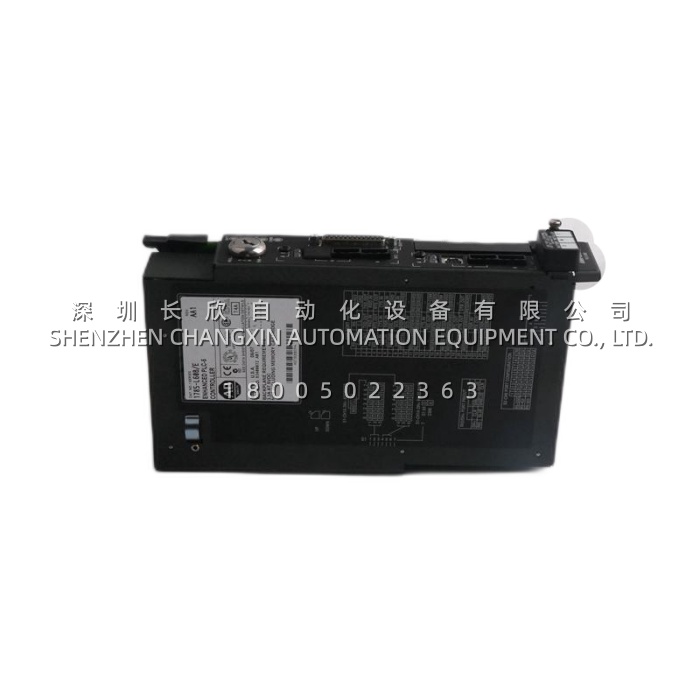
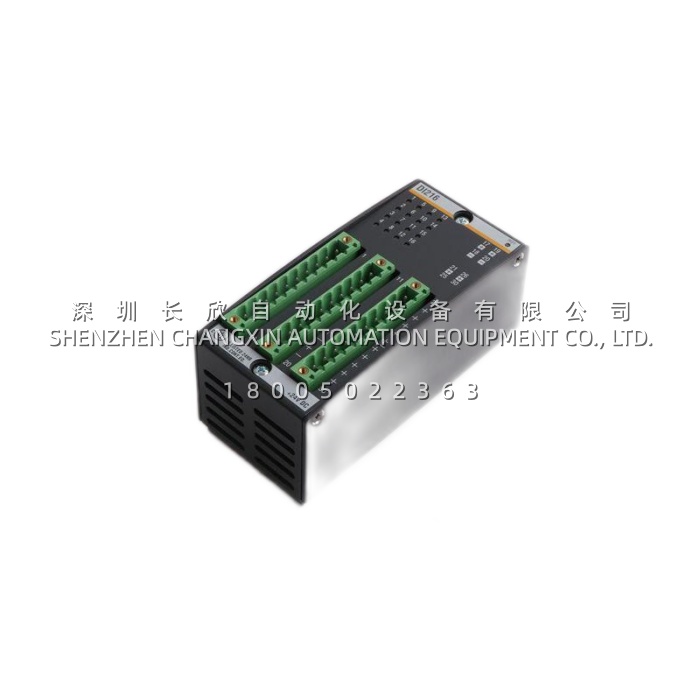
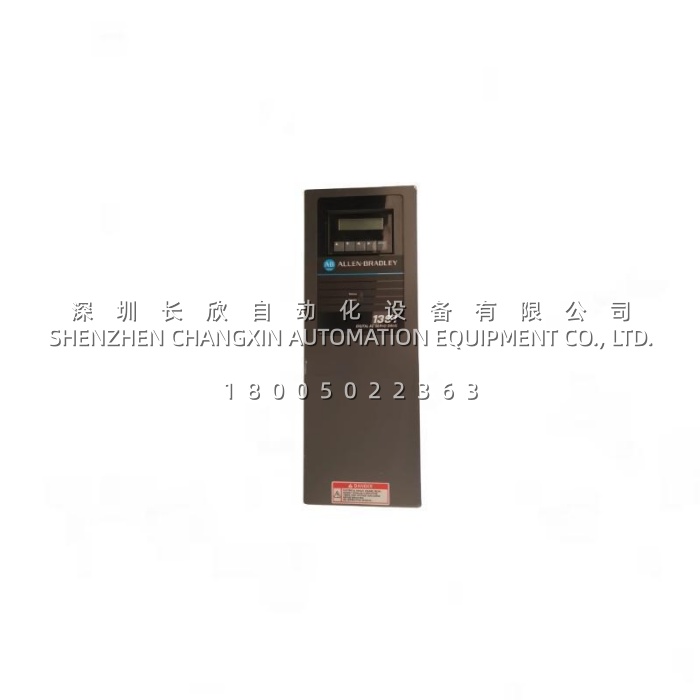
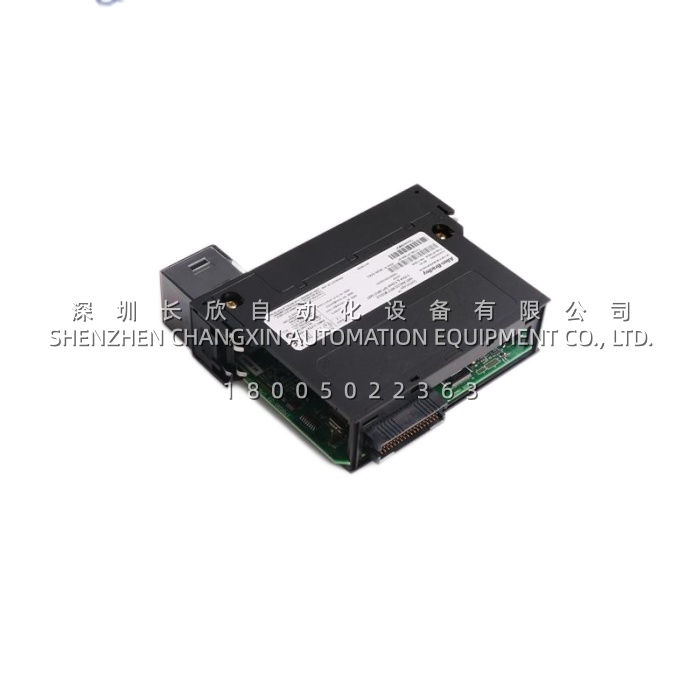
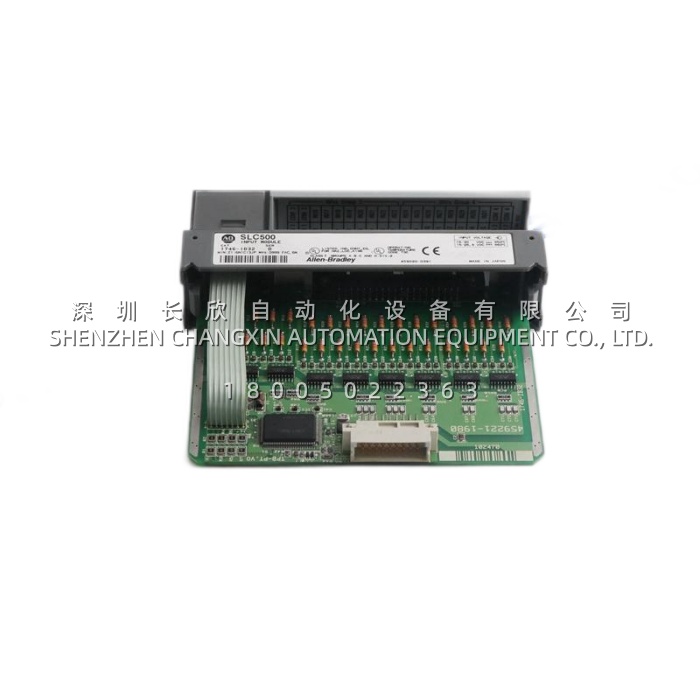
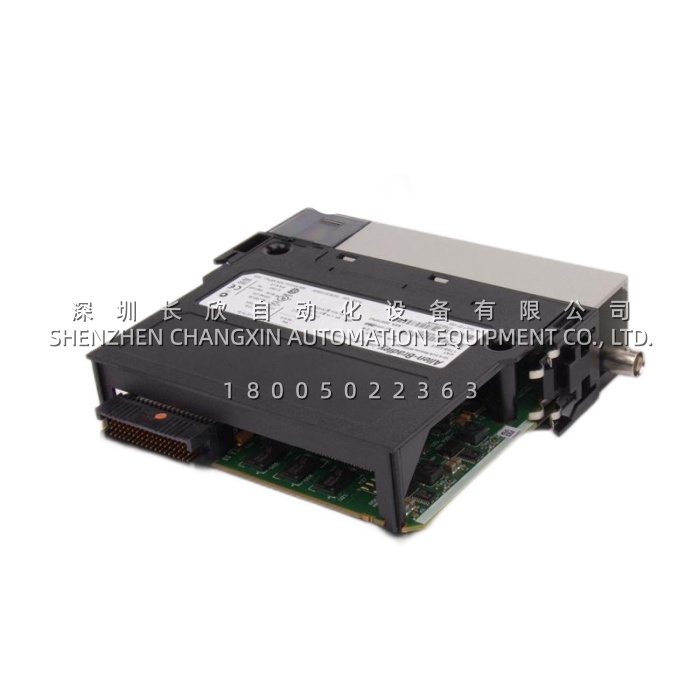
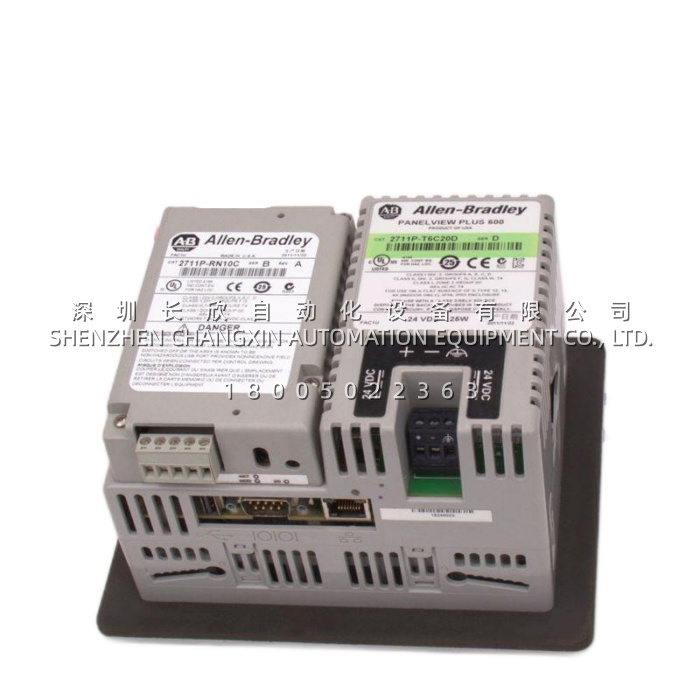
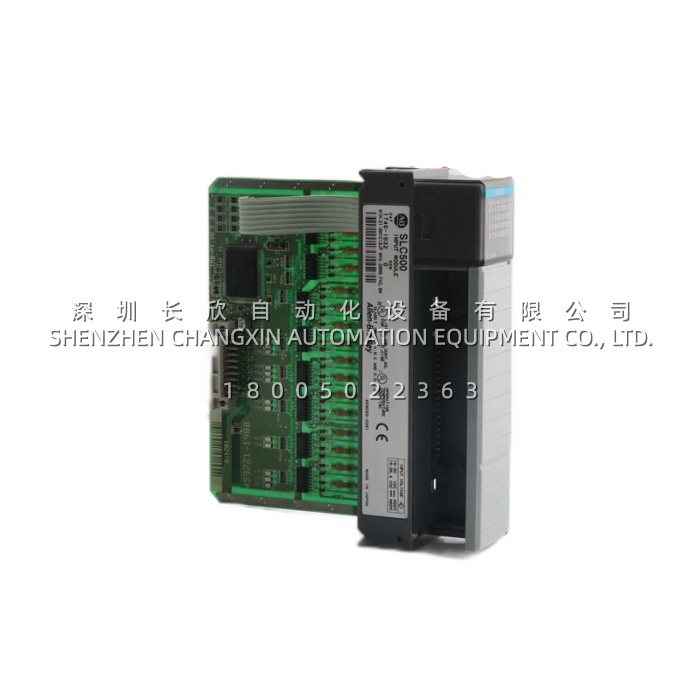
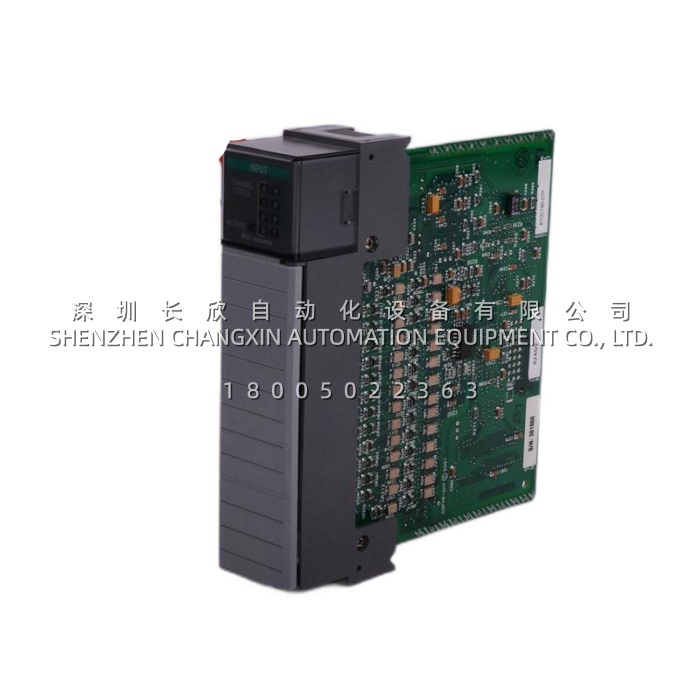
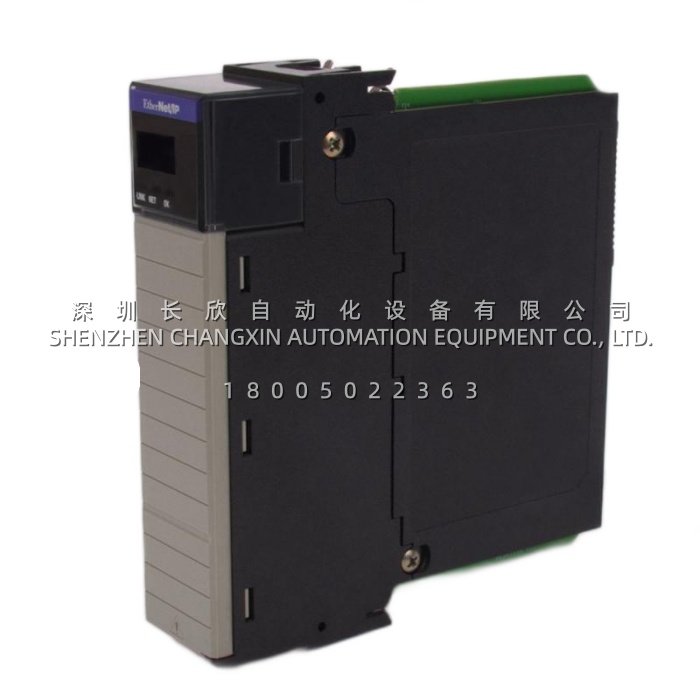
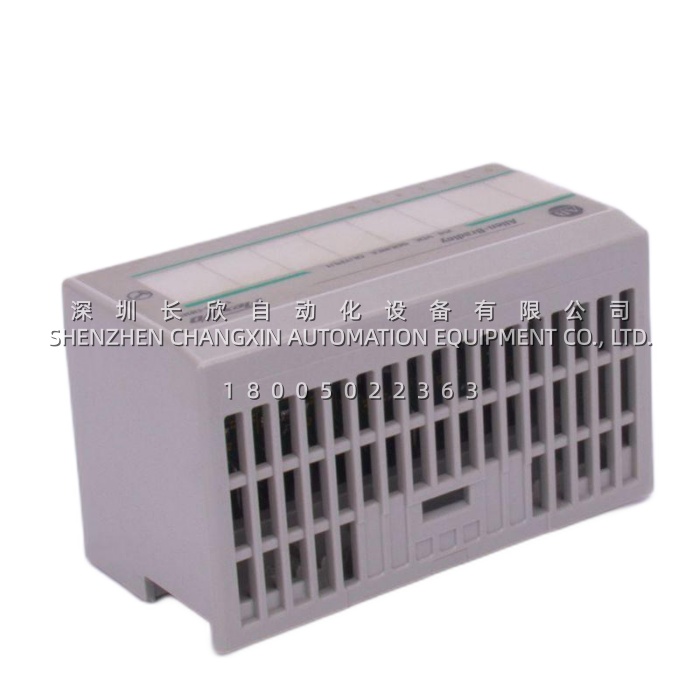
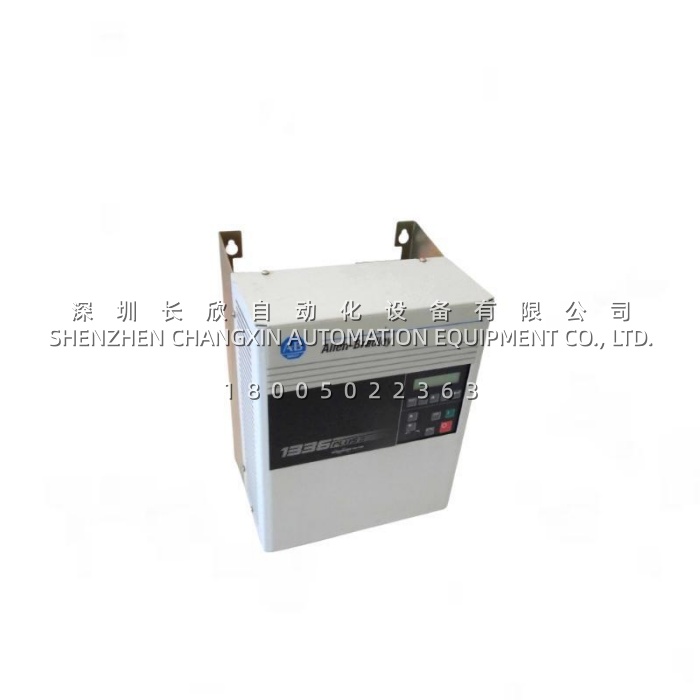
Allen-Bradley 1756-BA2: 3V Coin Cell for Controller Memory Backup缩略图

Allen-Bradley 1756-BA2: 3V Coin Cell for Controller Memory Backup

Allen-Bradley 1756-BA2: 3V Coin Cell for Controller Memory Backup插图


Product Overview

The Allen-Bradley 1756-BA2​ is a critical, genuine 3-volt lithium memory backup battery designed specifically for the ControlLogix programmable automation controller (PAC) platform and other compatible modules within the Allen-Bradley 1756 system. This battery serves a single, vital function: to provide auxiliary power to the controller’s volatile memory (RAM) in the event of a primary power loss. When the main power supply to the ControlLogix chassis is disconnected or fails, the 1756-BA2​ seamlessly takes over, preserving the controller’s user program, all data table values (including accumulated values of timers and counters, integer files, and other critical process data), and the system’s real-time clock. Without this battery, a power cycle would result in a complete memory wipe, forcing a time-consuming program download from a backup and the potential loss of valuable production or process data, leading to extended downtime and re-initialization efforts.The 1756-BA2​ is a drop-in replacement battery, engineered to the exact physical and electrical specifications required by the battery holder on the ControlLogix CPU module (such as the 1756-L6x series) and certain communication or specialty modules. It is not a standard consumer-grade coin cell; it is an industrial component selected for its stable discharge characteristics, extended shelf life, and reliability in the temperature ranges encountered in control panels. The value of the genuine Allen-Bradley 1756-BA2​ lies in its role as an inexpensive but crucial insurance policy. Its proactive, scheduled replacement is a fundamental part of preventative maintenance for any ControlLogix-based system, safeguarding the intellectual property embedded in the control logic and ensuring a rapid, predictable recovery from unexpected power outages, thereby protecting production continuity and operational efficiency.

Technical Specifications

Parameter Name Parameter Value
Product Model 1756-BA2
Manufacturer Allen-Bradley (ROCKWELL Automation)
Product Type Memory Backup Battery
Battery Chemistry Lithium Manganese Dioxide (Li-MnO2)
Nominal Voltage 3.0 Volts DC
Capacity Approximately 1200 mAh (Milliamp-hours)
Form Factor Coin Cell / Button Cell
Dimensions 24.5 mm diameter x 5.0 mm height (Typical BR type: BR-2/3A)
Operating Temperature Range -40°C to 85°C (-40°F to 185°F) for storage & operation
Shelf Life Typically 10 years at 20°C (68°F)
Primary Application Memory backup for ControlLogix 1756-L6x processors, 1756 communication modules, etc.
Compatible Modules 1756-L55, 1756-L6x controllers; 1756-ENBT, 1756-CNBR, 1756-DHRIO and other series modules with battery holders
Warnings Contains lithium; dispose of according to local regulations.


Main Features and Advantages

Guaranteed Compatibility and Fit: The primary advantage of the genuine Allen-Bradley 1756-BA2​ is its assured perfect fit and electrical performance within the designated battery compartment on ControlLogix hardware. Using a non-specified battery risks physical incompatibility (wrong size or connector), incorrect voltage, or insufficient capacity, which could lead to poor contact, memory loss, or in extreme cases, damage to the module’s battery circuitry. The 1756-BA2​ is designed to snap securely into place, ensuring reliable electrical contact for the life of the battery.Extended Life and Industrial Reliability: This lithium battery is engineered for the long-term, low-current-draw application of memory backup. It offers a very low self-discharge rate and a long operational life, typically rated for several years of service in a powered chassis (where it is only used during power loss) and an even longer shelf life. Its wide operating temperature range ensures reliable performance in both cold and hot control panel environments, where consumer-grade batteries might fail prematurely. This industrial-grade reliability is essential for a component that may sit idle for years but must function flawlessly the one critical moment it is needed.Critical for System Integrity and Uptime: The 1756-BA2​ is a small component with an outsized impact on system availability. By preserving the control program and data during a power outage, it allows the ControlLogix system to resume operation immediately upon power restoration without requiring intervention from a programmer. This capability is crucial for continuous process industries and automated manufacturing lines where restarting from a blank state would involve a lengthy and error-prone manual initialization. Proactively replacing the Allen-Bradley 1756-BA2​ on a scheduled basis (e.g., every 2-3 years) is one of the most cost-effective maintenance actions to prevent unexpected, costly downtime and data loss.

Allen-Bradley 1756-BA2 ControlLogix Battery | 2-Pack Memory Backup缩略图

Allen-Bradley 1756-BA2 ControlLogix Battery | 2-Pack Memory Backup

Allen-Bradley 1756-BA2 ControlLogix Battery | 2-Pack Memory Backup插图


Product Overview

The Allen-Bradley 1756-BA2​ is a factory-sealed, two-pack of lithium memory backup batteries specifically engineered for the Allen-Bradley ControlLogix 5560 and 5561 series of programmable automation controllers (PACs) and processors. This product is not a single battery but a convenient bundle containing two identical, high-performance 1756-BA1A lithium battery modules. Its primary function is to provide continuous, redundant backup power to the controller’s volatile memory, ensuring the preservation of the user program, tag data values, and system configuration during a main power loss or when the controller is powered down for maintenance or transport. The Allen-Bradley 1756-BA2​ bundle addresses the critical need for memory integrity in sophisticated automation systems, where the loss of a control program could result in extensive production downtime, costly recovery efforts, and potential safety concerns.Each battery within the 1756-BA2​ pack is designed to plug directly into the dedicated battery holder on the front of a compatible ControlLogix processor. The dual-pack configuration is a strategic offering that supports a proactive maintenance philosophy. It allows a technician to replace both batteries simultaneously—one serving as the primary backup and the other as an immediately available spare stored on-site—or to implement a redundant, hot-swap battery configuration directly in the controller. Some ControlLogix processor models support the installation of two batteries; when the primary battery voltage drops below a threshold, the controller can automatically and seamlessly switch to the secondary battery, providing an extended backup window and a clear warning for scheduled replacement without risk of data loss. The value of the Allen-Bradley 1756-BA2​ lies in its role as a consumable yet vital component for safeguarding the intellectual property and operational state of high-value control systems. By ensuring an uninterrupted power supply to the controller’s memory, it guarantees that complex processes can resume normal operation immediately after a power restoration, maintaining sequence integrity and production efficiency.

Technical Specifications

Parameter Name Parameter Value
Product Model 1756-BA2
Manufacturer Allen-Bradley (Rockwell Automation)
Product Type Dual-Pack Memory Backup Battery
Contents 2 x 1756-BA1A Lithium Battery Modules
Battery Type Lithium Thionyl Chloride (Li-SOCl₂), Non-rechargeable
Nominal Voltage per Battery 3.6 Volts DC
Capacity per Battery 1.2 Amp-hours (Ah) minimum
Expected Service Life per Battery 2-3 years at 25°C (77°F) with controller powered
Operating Temperature Range -40°C to 85°C (-40°F to 185°F)
Storage Temperature Range -40°C to 60°C (-40°F to 140°F)
Compatible Controllers ControlLogix 5560 Series (L6), 5561 Series (L7, L8)
Connector Integrated plug for ControlLogix processor socket
Memory Retention Time Varies by controller model and ambient temperature; typically months
Packaging Factory-sealed retail package containing two individual batteries


Main Features and Advantages

Redundancy and Extended Protection: The core advantage of the Allen-Bradley 1756-BA2​ twin-pack is the ability to implement redundancy. For processors that support dual-battery installation, it enables a true hot-backup configuration. The controller monitors both batteries, and if the primary depletes, it automatically switches to the secondary without interruption. This provides an extended grace period for replacement and completely eliminates the risk of data loss due to a single battery failure. Even for single-battery controllers, having a second battery from the 1756-BA2​ pack on the shelf as an immediate spare ensures a rapid response to a low-battery alarm, preventing the scramble to source a part during a critical period.

ControlLogix Platform Chassis 1756-A7K | Allen-Bradley Core System Infrastructure缩略图

ControlLogix Platform Chassis 1756-A7K | Allen-Bradley Core System Infrastructure

ControlLogix Platform Chassis 1756-A7K | Allen-Bradley Core System Infrastructure插图


Product Overview

The Allen-Bradley 1756-A7K​ is a fundamental hardware platform component, serving as a 7-slot chassis for the Allen-Bradley ControlLogix system, one of the industry’s leading programmable automation controller (PAC) families. This chassis is not merely a passive enclosure; it is an active, intelligent backplane that provides the physical mounting, electrical power distribution, and high-speed communication infrastructure for all installed ControlLogix modules. These modules include processors (CPUs), communication interfaces, and a vast array of digital, analog, and specialty I/O modules. The Allen-Bradley 1756-A7K​ forms the central nervous system of a control rack, facilitating deterministic data exchange at speeds up to 2 gigabits per second between modules via its ControlBus and DataBus architecture. Its primary role is to create a scalable, modular, and robust foundation upon which complex, high-performance automation systems are built, supporting applications from discrete machine control to large-scale process and motion control.As a core element of the ControlLogix architecture, the 1756-A7K​ chassis is engineered for maximum flexibility and reliability. It can be mounted on a standard DIN rail for compact integration or directly to a panel for secure, vibration-resistant installation. The “K” suffix in the model number typically denotes a specific series or revision, often associated with enhanced grounding or mechanical features. Each of the seven slots can accept any ControlLogix module, allowing system designers to mix and match processors, network adapters (EtherNet/IP, ControlNet, DeviceNet), and I/O in any order to create a perfectly tailored control solution. The value of the Allen-Bradley 1756-A7K​ lies in its ability to support a high-performance, deterministic control environment that is scalable, easy to maintain, and designed for 24/7 operation in demanding industrial settings. It is the critical infrastructure that enables the ControlLogix system’s renowned performance, diagnostics, and connectivity.

Technical Specifications

Parameter Name Parameter Value
Product Model 1756-A7K
Manufacturer Allen-Bradley (Rockwell Automation)
Product Type 7-Slot ControlLogix Chassis / Backplane
Compatible Platform ControlLogix 1756 Series
Number of Slots 7
Backplane Communication ControlBus & DataBus
Backplane Speed Up to 2 Gb/s (with 1756-A17/A18 backplane)
Power Supply Compatibility Requires 1756-PA75, -PA75R, -PB75, -PB75R, or similar
Module Compatibility All 1756-series I/O, Communication, and Controller modules
Mounting Options DIN Rail (35mm) or Panel Mount
Chassis Power Powered by a separate 1756 power supply module
Status Indicators Power OK LED, Slot Active LEDs
Operating Temperature 0°C to 60°C (32°F to 140°F)
Storage Temperature -40°C to 85°C (-40°F to 185°F)
Relative Humidity 5% to 95% non-condensing
Agency Approvals cULus Listed, CE, ATEX/IECEx (for appropriate configurations)
Vibration/Shock Resistance Designed to meet industrial standards


Main Features and Advantages

The Allen-Bradley 1756-A7K​ chassis delivers superior system performance through its high-speed, deterministic backplane. The dual-bus architecture (ControlBus for time-critical I/O data and processor synchronization, DataBus for messaging and programming) ensures that critical data moves with low latency and high predictability, which is essential for fast control loops, motion control, and safety system performance. This performance is scalable; the 7-sot size offers an ideal balance between I/O density and cost for a wide range of medium-complexity applications. The chassis supports universal module placement, meaning a controller, communication module, and I/O module can be placed in any slot without performance penalty, providing unparalleled design flexibility. Hot-swap capability (with proper system design) allows for the replacement of I/O and communication modules without powering down the entire chassis, a critical feature for maximizing system uptime in continuous processes.Robust construction and advanced diagnostics are hallmarks of the Allen-Bradley 1756-A7K. It is built with a sturdy metal frame and features secure card guides and locking ejector levers to ensure modules remain firmly connected even in high-vibration environments. The chassis provides clear diagnostic feedback through its LED indicators: a global “Power OK” LED and per-slot “Active” LEDs that show communication status with each module, enabling rapid fault isolation. Its compatibility with redundant power supplies (when used with -R suffix power modules) allows for the creation of high-availability systems where power continuity is paramount. The Allen-Bradley 1756-A7K​ is designed for easy integration, with keying features to prevent incorrect module insertion and a design that facilitates efficient cable management. As the foundational hardware of a ControlLogix system, it guarantees the mechanical integrity, electrical performance, and thermal management necessary for the reliable, long-term operation of critical control assets.

AB ControlLogix 1756-L71 CPU: 2MB Memory, Ethernet, and Serial Port for Integrated Control缩略图

AB ControlLogix 1756-L71 CPU: 2MB Memory, Ethernet, and Serial Port for Integrated Control

AB ControlLogix 1756-L71 CPU: 2MB Memory, Ethernet, and Serial Port for Integrated Control插图


Product Overview

The Allen-Bradley 1756-L71 is a high-performance ControlLogix controller, a central processing unit (CPU) within Rockwell Automation’s premier ControlLogix 5560 series programmable automation controller (PAC) family. It is engineered to serve as the computational brain for the most demanding and complex automation systems, seamlessly blending capabilities traditionally associated with separate programmable logic controllers (PLCs), distributed control systems (DCS), motion controllers, and safety systems. The Allen-Bradley 1756-L71​ executes the control strategy stored in its user memory, managing logic execution, data handling, communication coordination, and specialized functions like motion control and integrated safety. Its core value proposition is providing a unified, multi-discipline control platform that simplifies architecture, reduces lifecycle costs, and enhances system performance and information flow across an entire plant or production facility.As part of the ControlLogix platform, the 1756-L71​ is a modular controller installed in a 1756 chassis. The “L71” model specifically denotes a controller with 2 MB of user memory and an integrated dual-port 10/100 Mbps Ethernet interface, along with a serial port. This controller is designed for scalability and integration; it can handle tens of thousands of I/O points, coordinate multiple servo axes, execute process PID loops, and manage safety interlocks—all within a single, synchronized control environment using Rockwell’s Studio 5000 Logix Designer software. In a modern distributed control system (DCS) architecture, the Allen-Bradley 1756-L71​ often acts as a unit controller or area supervisor, orchestrating lower-level controllers and intelligent devices while providing a unified data model for superior visualization, analytics, and enterprise connectivity. Its robustness, extensive communication options (via network modules), and powerful processing make it a cornerstone for mission-critical applications where reliability, deterministic performance, and seamless information integration are paramount. The 1756-L71​ is not merely a controller; it is a strategic platform for achieving integrated control and information objectives.

Technical Specifications

Parameter Name Parameter Value
Product Model 1756-L71
Manufacturer Allen-Bradley / Rockwell Automation
Product Type ControlLogix Series 5561 Programmable Automation Controller (CPU)
Series ControlLogix 5560
User Memory 2.0 MB
I/O Capacity Up to 250 connections (mix of local, remote, produced/consumed tags)
Backplane Speed Supports ControlLogix XT (high-speed) and standard backplanes
Integrated Ports Dual 10/100 Mbps Ethernet (Dual IP), 1 RS-232 Serial (DF1, DH-485)
Motion Capability Supports up to 16 axes of coordinated motion (Kinetix integrated motion)
Integrated Safety Supports up to 8 GuardLogix safety partner axes (with appropriate firmware)
Tasks/Programs Supports multiple continuous, periodic, and event-driven tasks
Communication Native support for EtherNet/IP, ControlNet, DeviceNet via communication modules
Real-Time Clock Battery-backed
Programming Software Studio 5000 Logix Designer
Operating Temperature 0 to 60°C (32 to 140°F)
Power Supply Powered by the 1756 chassis backplane (requires 1756 power supply)


Main Features and Advantages

The Allen-Bradley 1756-L71​ ControlLogix controller distinguishes itself through its unparalleled integration capabilities and robust performance. Its most significant feature is the unified programming and tag-based database within Studio 5000 Logix Designer. This allows developers to create logic for discrete control, process control (PID, sequence), motion, and safety in a single project with a common set of tags, eliminating the need for complex mappings between separate controllers and dramatically reducing programming, commissioning, and troubleshooting time. The controller’s 2 MB of user memory supports large, complex applications, and its powerful processor ensures fast, deterministic scan times for time-critical control loops and high-speed motion.Advanced Networking and Scalable Architecture: The integrated dual-port Ethernet interface is a major advantage. It provides device-level ring (DLR) capability for network resiliency and allows for direct connection to plant networks for HMI, SCADA, and MES/ERP system integration without additional hardware. The 1756-L71​ seamlessly communicates with a vast ecosystem of Allen-Bradley I/O (Point, ArmorBlock, FLEX), drives (PowerFlex, Kinetix), and other devices over EtherNet/IP, creating a truly integrated architecture. Its support for produced/consumed tags enables high-performance, deterministic data sharing between multiple controllers without complex messaging logic. Furthermore, the controller supports integrated motion, allowing it to directly command Kinetix servo drives over EtherNet/IP for precise coordination, and integrated safety (GuardLogix), enabling safety and standard control to co-reside, sharing data natively for simpler and more intelligent safety functions. This combination of raw power, deep integration, and network-centric design makes the Allen-Bradley 1756-L71​ a future-proof platform capable of evolving with changing production needs.

Allen-Bradley 1756-A7/B: Durable Enclosure for Critical Control Modules缩略图

Allen-Bradley 1756-A7/B: Durable Enclosure for Critical Control Modules

Allen-Bradley 1756-A7/B: Durable Enclosure for Critical Control Modules插图


Product Overview

The Allen-Bradley 1756-A7/B​ is a 7-slot, standard-configuration chassis that serves as the foundational hardware platform for Rockwell Automation’s ControlLogix control system. This chassis is not merely a passive mounting enclosure; it is an intelligent, actively powered backplane that provides the physical structure, electrical power distribution, and high-speed data communication pathways for all installed ControlLogix modules. The chassis accommodates a combination of controllers, communication modules, and a vast array of digital, analog, and specialty I/O modules, allowing system designers to build a centralized, high-performance automation controller tailored to the exact needs of an application. The Allen-Bradley 1756-A7/B​ facilitates the seamless integration of these components, managing the flow of data, control signals, and power between them via its internal data highway and power bus. Its 7-slot capacity offers a balanced size for many mid-sized to large control applications, providing ample room for a controller, multiple network interfaces, and a significant number of I/O modules within a single, consolidated rack.As a core component of the ControlLogix architecture, the 1756-A7/B​ enables the system’s renowned flexibility and deterministic performance. The “/B” suffix typically indicates a specific revision or product version. The chassis’s backplane incorporates the proprietary ControlBus, which provides high-bandwidth, deterministic communication between the controller and all other modules, ensuring predictable scan times and data transfer. It also supplies isolated logic power to each module slot from the integrated power supply. The Allen-Bradley 1756-A7/B​ is designed for rugged industrial reliability, built to withstand vibration, electrical noise, and temperature variations. It supports both local and, when used with communication adapters, distributed I/O, making it the central nervous system for complex automation projects. Whether used as a main controller rack in a factory cell, a supervisory controller in a process plant, or a gateway in a distributed system, the 1756-A7/B​ chassis provides the robust, scalable, and integrated hardware foundation upon which reliable ControlLogix control strategies are executed.

Technical Specifications

Parameter Name Parameter Value
Product Model 1756-A7/B
Manufacturer Allen-Bradley (Rockwell Automation)
Product Type 7-Slot ControlLogix System Chassis / Backplane
Series ControlLogix
Number of Slots 7
Backplane Communication ControlBus (proprietary high-speed parallel bus)
Power Supply Requires external 1756 power supply module (e.g., 1756-PA72, 1756-PB72) installed in left-most slots
Power Bus Voltage 1.2V, 3.3V, 5V, 24V DC (provided by power supply via backplane)
Module Compatibility All standard 1756 ControlLogix I/O, communication, and controller modules
Controller Slot Any slot (Controller is not slot-dependent in ControlLogix)
Chassis Grounding Dedicated chassis ground connection point
Status Indicators Power OK LED, Active LED
Cooling Designed for convection cooling; requires vertical mounting with specified clearances
Operating Temperature 0°C to 60°C (32°F to 140°F)
Storage Temperature -40°C to 85°C (-40°F to 185°F)
Relative Humidity 5% to 95% non-condensing
Mounting Horizontal or vertical (preferred) on DIN rail or panel
Agency Certifications UL, C-UL, CE, ATEX, IECEx
High-Performance Feedback: Allen-Bradley 1756-HSC Counter for ControlLogix缩略图

High-Performance Feedback: Allen-Bradley 1756-HSC Counter for ControlLogix

High-Performance Feedback: Allen-Bradley 1756-HSC Counter for ControlLogix插图


Product Overview

The Allen-Bradley 1756-HSC​ is a dedicated high-speed counter (HSC) module for the ControlLogix platform, designed to handle demanding applications requiring precise, high-frequency counting and measurement of digital pulse trains. This module serves as a critical interface between high-speed sensors—such as rotary encoders, linear scales, proximity sensors, and laser sensors—and the ControlLogix controller. Its primary function is to accurately count, totalize, and measure the frequency of fast digital signals that exceed the capability of standard digital input modules, offloading this computationally intensive task from the main processor. The Allen-Bradley 1756-HSC​ typically provides multiple independent counter channels (e.g., 4 channels), each capable of handling differential or single-ended inputs with sophisticated features like quadrature decoding for direction sensing, preset/rollover control, and integrated ladder logic comparison for generating precise outputs.As a specialized function module within the ControlLogix I/O system, the 1756-HSC​ provides deterministic performance essential for applications like cut-to-length, registration control, web tension monitoring, rotary knife positioning, and high-speed batching. It operates autonomously, processing input signals in hardware with minimal latency and updating its count values in the controller’s data table at a configurable rate. This ensures that high-speed events are captured with precision and without the jitter that could occur if processed in the main control program scan. The module’s value lies in its ability to enable precise positional control and measurement in high-speed machinery, directly contributing to product quality, material yield, and overall equipment effectiveness (OEE). By providing accurate, real-time feedback on speed, position, and length, the Allen-Bradley 1756-HSC​ empowers ControlLogix systems to execute complex motion coordination and high-speed sequencing that would otherwise be impossible with standard I/O.

Technical Specifications

Parameter Name Parameter Value
Product Model 1756-HSC
Manufacturer Allen-Bradley (Rockwell Automation)
Product Type High-Speed Counter Module
Platform ControlLogix
Number of Channels 4 independent counter channels
Input Types Supported Differential (RS-422/485 compatible) and Single-Ended
Signal Types Quadrature (A, B, Z), Pulse/Direction, Up/Down, Clock/Direction
Maximum Count Frequency Typically 1 MHz (1,000,000 counts per second) per channel
Count Resolution 32-bit (up to ±2,147,483,647 counts)
Input Voltage Levels 5V DC, 12-24V DC (depending on configuration and wiring)
Isolation Channel-to-channel and channel-to-bus isolation
Input Filtering Programmable digital filtering for noise immunity
Counter Modes Modulo, Gated, Rate (Frequency) Measurement, Length Measurement
Integrated Comparison Onboard comparators for generating direct output actions based on count values
Outputs Dedicated, fast-response outputs per channel (typically for gate control or latching)
Configuration Via RSLogix 5000/Studio 5000 Logix Designer software
Operating Temperature 0°C to 60°C (32°F to 140°F)
Backplane Current Draw Specific draw on the 1.5V, 3.3V, and 5V ControlLogix backplane rails
Simplify Machine Operation with the Cutler-Hammer 1755T-PMMP-1700 Touch Panel缩略图

Simplify Machine Operation with the Cutler-Hammer 1755T-PMMP-1700 Touch Panel

Simplify Machine Operation with the Cutler-Hammer 1755T-PMMP-1700 Touch Panel插图


Product Overview

The CUTLER-HAMMER 1755T-PMMP-1700, now under the Eaton brand, is a robust and versatile Operator Interface Panel, specifically belonging to the PanelMate 1700 series. This unit is engineered to serve as the primary human-machine interface (HMI) for industrial automation systems, providing operators with a clear, intuitive window into machine or process status and a reliable means for control input. Featuring a durable 7-inch color touch screen, the CUTLER-HAMMER 1755T-PMMP-1700​ is designed to replace arrays of traditional pushbuttons, selector switches, and indicator lights with dynamic, configurable graphical screens. Its core function is to display real-time data from connected controllers (such as PLCs, drives, or sensors), present alarms, log historical information, and accept operator commands through touch input, thereby bridging the communication gap between the complex logic of the control system and the personnel responsible for operation and troubleshooting.As a member of the PanelMate family, the CUTLER-HAMMER 1755T-PMMP-1700​ is built for the demanding conditions of the factory floor. Its panel-mount, sealed front bezel (typically rated NEMA 4X or IP65) protects the display from water, dust, oils, and cleaning chemicals, allowing it to be installed directly on machine enclosures or in washdown areas. The unit is powered by 24V DC, making it compatible with standard industrial control power supplies. It connects to automation networks via onboard communication ports, which commonly include Ethernet/IP for connectivity to modern Rockwell Automation controllers and serial ports (RS-232/485) for legacy devices or other protocols. The deployment of the CUTLER-HAMMER 1755T-PMMP-1700​ transforms machine operation by centralizing control onto a single, intelligent display. It enables the creation of custom screens with animated graphics, trend charts, and recipe management, significantly enhancing operational efficiency, reducing diagnostic time, and improving overall situational awareness. It represents a critical tool for implementing modern, user-friendly, and information-rich control interfaces in a compact and rugged form factor.

Technical Specifications

Parameter Name Parameter Value
Product Model 1755T-PMMP-1700
Manufacturer Cutler-Hammer (Eaton)
Product Type Operator Interface Panel (HMI)
Series PanelMate 1700
Display Type TFT Color LCD with Analog Resistive Touch Screen
Display Size 7-inch diagonal
Resolution 800 x 480 pixels (WVGA)
Front Bezel Rating NEMA 4X / 12, IP65 (when properly installed)
Input Power 24V DC (18-32V DC range)
Processor High-performance RISC-based
Memory Flash for application storage, RAM for runtime
Communication Ports 1 x 10/100 Mbps Ethernet (RJ45), 2 x Serial (RS-232/485)
Supported Protocols EtherNet/IP, Modbus RTU/ASCII, DF1, DH-485
Real-Time Clock Battery-backed
Operating Temperature 0 to 50°C (32 to 122°F)
Storage Temperature -20 to 70°C (-4 to 158°F)
Relative Humidity 10% to 95% (non-condensing)
Mounting Panel cutout mount
Dimensions (H x W x D) Approx. 211 x 159 x 57 mm (8.31″ x 6.26″ x 2.24″)
Panel Cutout 192 x 140 mm (7.56″ x 5.51″)
Rockwell 1747-SCNR: ControlNet Communication Interface for SLC 500 Chassis缩略图

Rockwell 1747-SCNR: ControlNet Communication Interface for SLC 500 Chassis

Rockwell 1747-SCNR: ControlNet Communication Interface for SLC 500 Chassis插图


Product Overview

The Allen-Bradley 1747-SCNR​ is a high-performance ControlNet scanner and communication module specifically engineered for the Allen-Bradley SLC 500 series of programmable logic controllers. This advanced module serves as a critical network gateway, enabling an SLC 500 processor to act as a scanner (master) on a ControlNet network—a deterministic, high-speed industrial fieldbus. The primary function of the Allen-Bradley 1747-SCNR​ is to manage the exchange of I/O data and explicit messaging between the SLC 500 controller and other devices on the ControlNet network, such as remote I/O racks (e.g., 1747-ASB adapter in remote chassis), drives, operator interfaces, and other controllers. It effectively extends the local SLC 500 backplane across a robust, media-redundant network, allowing for the creation of distributed control systems where I/O and intelligent devices can be located far from the central processor, overcoming the limitations of a single, centralized chassis.Installed in any available I/O slot of an SLC 500 chassis (except slot 0, which is reserved for the processor), the 1747-SCNR​ module operates as a co-processor, offloading the complex network communication tasks from the main SLC CPU. It handles all ControlNet protocol responsibilities, including scheduled (deterministic) I/O data transfers and unscheduled (message-based) communications. The module provides two standard Bayonet Neill–Concelman (BNC) connectors for connecting to redundant coaxial trunklines, supporting the intrinsic media redundancy of ControlNet for high-availability applications. The Allen-Bradley 1747-SCNR​ is configured using Rockwell Automation’s RSNetWorx for ControlNet software, where the network scheduler is created, defining the update times and connections for all devices. This module was a key component for building medium to large-scale automation systems with the SLC 500 platform, providing deterministic performance suitable for interlocking, sequential control, and distributed process applications where precise timing and data consistency across multiple nodes are essential. It represents the bridge between the proven SLC 500 logic execution and the powerful peer-to-peer capabilities of the ControlNet network.

Technical Specifications

Parameter Name Parameter Value
Product Model 1747-SCNR
Manufacturer Allen-Bradley (Rockwell Automation)
Product Type ControlNet Communication Scanner Module
Compatible Controller SLC 5/03, SLC 5/04, SLC 5/05 Processors
Chassis Slot Any slot except slot 0 (CPU slot)
Network Protocol ControlNet (CIP)
Data Transfer Rates 5 Mbps
Communication Modes Scheduled (I/O) and Unscheduled (Messaging)
Network Connections 2 x BNC connectors (for redundant coaxial media)
Max Scheduled Connections 64 connections
Max Nodes per Network 99 addressable nodes
Max Cable Distance 1000m (with repeater, up to 30,000m)
Backplane Current Load 650 mA @ 5 VDC (from chassis power supply)
Memory 64K words for ladder logic (mapped)
Status Indicators Module Status (OK, Flashing, Fault), Network Status (OK, Fault), Active (A/B) Channel LEDs
Network Power Does not supply network power; requires external 1747-PIC or equivalent
Operating Temperature 0°C to 60°C (32°F to 140°F)
Configuration Software RSNetWorx for ControlNet


Main Features and Advantages

Deterministic Performance and High-Speed I/O Control: The core advantage of the Allen-Bradley 1747-SCNR​ is its ability to provide deterministic, repeatable I/O control over a distributed network. ControlNet uses a Concurrent Time Domain Multiple Access (CTDMA) method, which guarantees bandwidth and latency for scheduled I/O data exchanges. This means I/O updates between the SLC 500 scanner and its remote adapters occur at precisely defined intervals, ensuring predictable system performance critical for high-speed machine control and precise process interlocks. The module supports high-speed data transfer (5 Mbps), allowing for the efficient control of numerous remote I/O points spread across a large area, all synchronized to the same network update time (NUT).Robustness and System Integration: The 1747-SCNR​ supports media redundancy via its dual BNC ports, allowing the creation of a redundant coaxial trunkline. If a cable break or interference occurs on one leg, communication automatically switches to the other, maximizing network availability. The module acts as a powerful bridge, allowing the SLC 500 to seamlessly communicate not only with remote I/O but also with other ControlNet-compatible devices like PowerFlex drives, PanelView HMIs, and even other controllers (e.g., CompactLogix, ControlLogix) for peer-to-peer messaging. This transforms the SLC 500 from a standalone controller into a node within a larger, integrated control architecture. Configuration and monitoring are centralized through the industry-standard RSNetWorx software, providing powerful tools for network design, optimization, and diagnostics. The Allen-Bradley 1747-SCNR​ effectively future-proofed SLC 500 systems by enabling integration with one of the industry’s most robust deterministic networks, extending the capabilities and physical reach of the controller far beyond its local chassis.

Allen-Bradley 1747-PIC/A: Enables PLC Programming via DH-485 Network缩略图

Allen-Bradley 1747-PIC/A: Enables PLC Programming via DH-485 Network

Allen-Bradley 1747-PIC/A: Enables PLC Programming via DH-485 Network插图


Product Overview

The Allen-Bradley 1747-PIC/A​ is a specialized protocol interface converter, a critical communication gateway designed to enable connectivity between a personal computer (PC) and Allen-Bradley’s legacy DH-485 industrial network. This module serves as an indispensable tool for programming, configuring, and monitoring SLC 500 series programmable logic controllers, primarily the SLC 5/03 processor, which uses DH-485 as its primary communication port. The core function of the Allen-Bradley 1747-PIC/A​ is to perform real-time protocol conversion between the asynchronous serial RS-232 data from a computer’s serial (COM) port and the synchronous, token-passing DH-485 network protocol. It acts as an active node on the DH-485 network, managing network access and facilitating the exchange of configuration data, ladder logic programs, and real-time data tables between the programming software (such as RSLogix 500) running on the PC and the controllers on the network.Physically, the 1747-PIC/A​ is a compact device featuring a 9-pin D-sub female connector for the PC serial cable and an industry-standard 8-pin modular (RJ-45) connector for the DH-485 network cable. It requires an external 24V DC power supply for operation. In a typical setup, the module is connected directly to a PC’s serial port, and then via a shielded, twisted-pair cable to the programming port of an SLC 5/03 or to a DH-485 network trunk connecting multiple devices. The Allen-Bradley 1747-PIC/A​ is more than a simple cable; it contains the necessary electronics to handle the timing, arbitration, and electrical signaling differences between the two protocols. For maintenance personnel, system integrators, and engineers supporting facilities with a large installed base of SLC 500 controllers, the 1747-PIC/A​ is an essential piece of test equipment. It is the primary means of uploading, downloading, and troubleshooting control logic on these legacy systems. Its value is historical and practical, as it provides continued access to and support for thousands of SLC 500 systems that remain in reliable service worldwide, ensuring their maintainability and extending their operational lifecycle.

Technical Specifications

Parameter Name Parameter Value
Product Model 1747-PIC/A
Manufacturer Allen-Bradley (Rockwell Automation)
Product Type Protocol Interface Converter (DH-485 to RS-232)
PC Interface RS-232 Serial (DB-9 Female Connector)
Network Interface DH-485 (8-pin RJ-45 Modular Connector)
Network Protocol Converts RS-232 to Allen-Bradley DH-485 protocol
Baud Rate DH-485 network speeds up to 19.2 kbps
Power Requirement 24V DC, 50 mA (typically from an external 24V DC power supply)
Status Indicators Two LEDs: Power (green), Communication (green/yellow)
Isolation 500V AC between RS-232, DH-485, and power supply
Network Topology Point-to-point or multi-drop (up to 32 nodes max on DH-485)
Cable Requirements Shielded, twisted-pair cable for DH-485 network
Compatible Processors SLC 5/03 (Channel 0), other DH-485 devices (PanelView, etc.)
Operating Temperature 0 to 60°C (32 to 140°F)


Main Features and Advantages

The Allen-Bradley 1747-PIC/A​ provides a reliable and dedicated solution for a very specific communication challenge. Its key feature is the robust protocol conversion that allows a standard PC serial port, a ubiquitous feature on older industrial laptops, to communicate natively with the proprietary DH-485 network. The module handles all the low-level protocol details, such as token passing and message framing, transparently to the user. This allows programming software like RSLogix 500 to communicate with the PLC as if it were connected via a simple serial cable, greatly simplifying the software setup and user experience. The module includes status LEDs that provide immediate visual feedback: a steady green POWER LED indicates proper 24V DC supply, and a flashing green/yellow COMMUNICATIONS LED indicates network traffic, which is invaluable for confirming that the physical connection is active and data is being exchanged.A significant advantage of the 1747-PIC/A​ is its role in enabling network connectivity. While it can be used for a point-to-point connection to a single SLC 5/03, it also allows the PC to become a node on a multi-drop DH-485 network. This enables an engineer to connect to any device on that network from a single connection point, which is essential for troubleshooting systems with multiple SLC racks, PanelView Standard terminals, or other DH-485 devices. The module provides electrical isolation (500V AC) between the PC, the network, and the power supply, which helps protect the sensitive computer hardware from electrical noise, ground loops, or surges that might be present on the industrial network. Although its data rate (19.2 kbps) is slow by modern standards, it was sufficient for programming and data monitoring tasks for the SLC 500 platform. The Allen-Bradley 1747-PIC/A​ is a focused, single-purpose tool that performs its job reliably, and its existence is a primary reason why SLC 500 systems remain serviceable decades after their introduction. For support teams, having a working 1747-PIC/A​ and a laptop with a serial port is often the first step in diagnosing any issue with a legacy SLC system.

Allen-Bradley 1747-L532 E for Mid-Range Control Applications缩略图

Allen-Bradley 1747-L532 E for Mid-Range Control Applications

Product Overview

The Allen-Bradley 1747-L532 E​ is a pivotal 16K memory SLC 5/03 processor module, representing a highly capable and versatile controller within the renowned SLC 500 programmable logic controller (PLC) family from Rockwell Automation. This processor serves as the central intelligence for small to mid-sized automation systems, executing user-defined ladder logic programs to control machinery, processes, and discrete manufacturing operations. The “E” suffix in the 1747-L532 E​ model denotes a specific hardware revision that includes enhanced features and reliability improvements over earlier versions. With 16K words of user memory, it provides ample space for complex control logic, data handling, and instruction sets. A key advancement of the SLC 5/03 series, embodied by this module, is the integration of multiple built-in communication ports, moving beyond the single channel of its SLC 5/02 predecessor and enabling more sophisticated network architectures.The Allen-Bradley 1747-L532 E​ is engineered for reliability in industrial environments and is designed to be installed in the leftmost slot of a 1746 modular I/O chassis. Its value lies in balancing processing power, communication flexibility, and cost-effectiveness for a wide range of applications. The processor controls all I/O modules within its chassis, processes ladder logic scans, manages data table operations, and facilitates communication with programming devices, operator interfaces, and other controllers. For countless facilities worldwide, the 1747-L532 E​ has been the workhorse controller for decades, managing everything from simple sequential machine control to more advanced applications involving analog control, data logging, and peer-to-peer messaging. It remains a critical component for maintaining, repairing, and extending the life of a massive installed base of SLC 500-based automation systems.

Technical Specifications

Parameter Name Parameter Value
Product Model 1747-L532 E
Manufacturer Allen-Bradley (ROCKWELL Automation)
Product Type Programmable Logic Controller (Processor/CPU)
Controller Series SLC 500, SLC 5/03 Family
User Memory 16K words
I/O Capacity Up to 512 digital I/O points (max. chassis and module configuration dependent)
Data Memory 2K words (typically for timer, counter, integer files)
Built-in Ports Channel 0: RS-232 (DH-485/DF1 protocol, for programming/HMI); Channel 1: RS-232 (DH-485 protocol only)
Communication Protocols DH-485, DF1 Full-Duplex, DF1 Half-Duplex Slave
Optional Communication Requires 1747-KE module for DH-485 network connectivity; Supports 1747-SN Scanner for Remote I/O
Backplane Current Draw 800 mA @ 5V DC (typical)
Battery Lithium battery, 1747-BA or equivalent, for memory backup
Keyswitch 3-position (RUN, REM, PROG) for mode control
Status Indicators Multiple LEDs for CPU status, force status, battery, and communication activity
Real-Time Clock Not included; requires 1746-RTC moduleAllen-Bradley 1747-L532 E for Mid-Range Control Applications插图
Back to Top

Search For Products

Product has been added to your cart