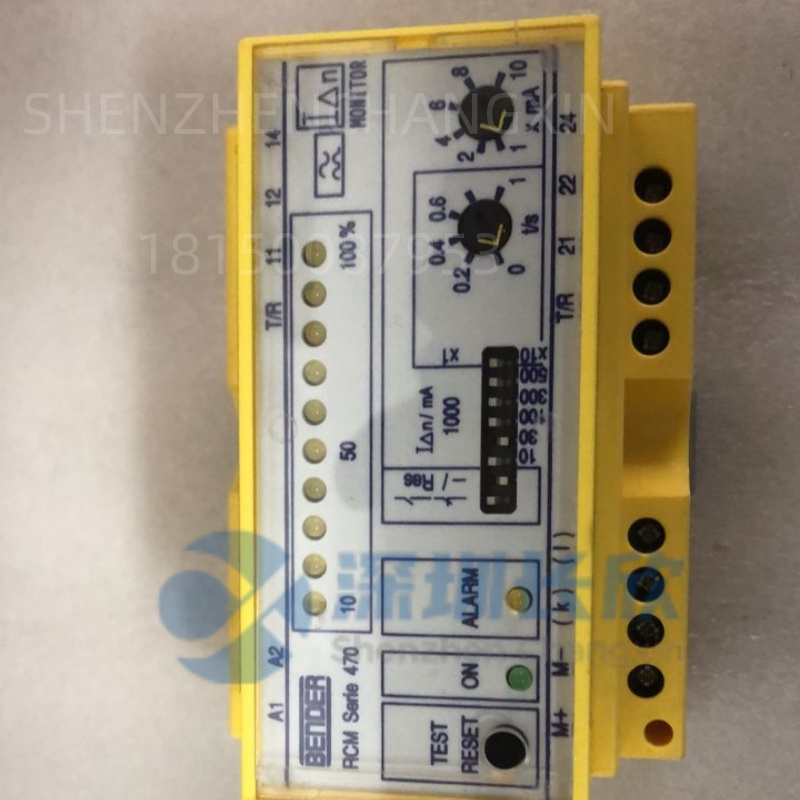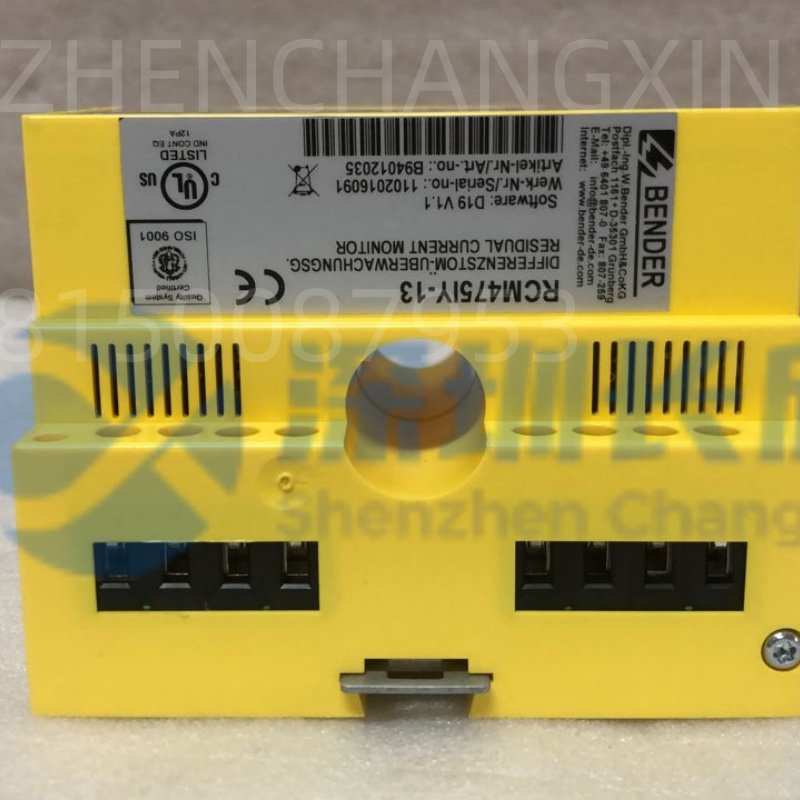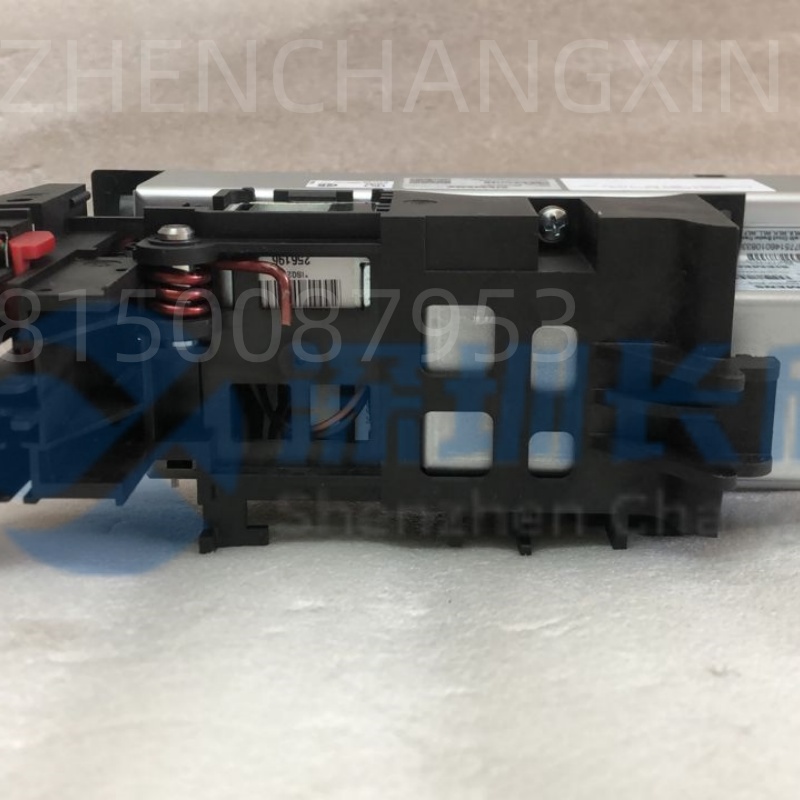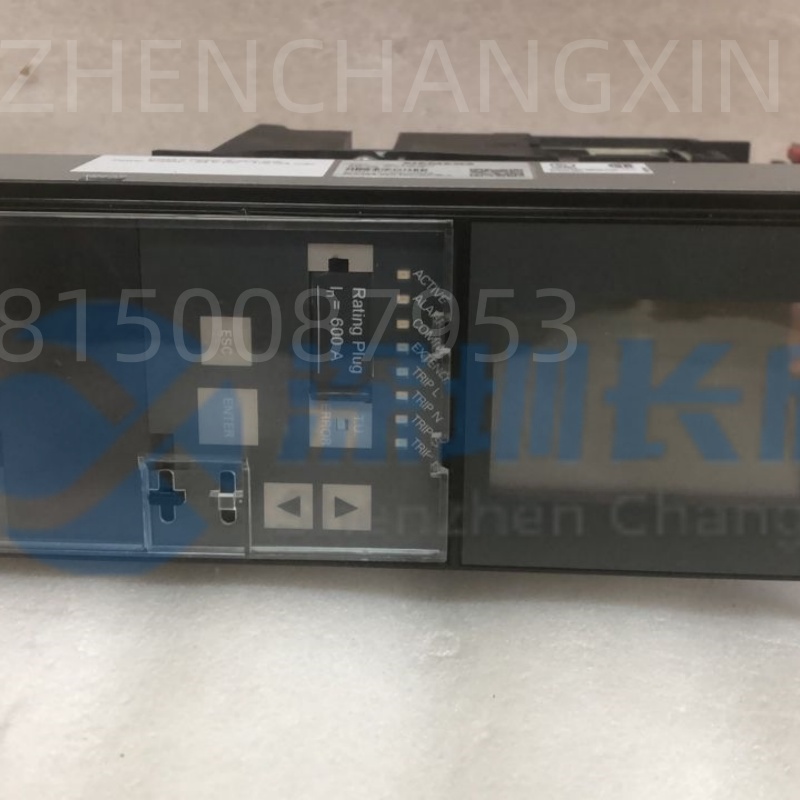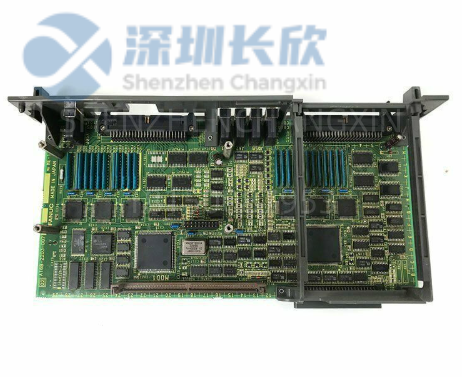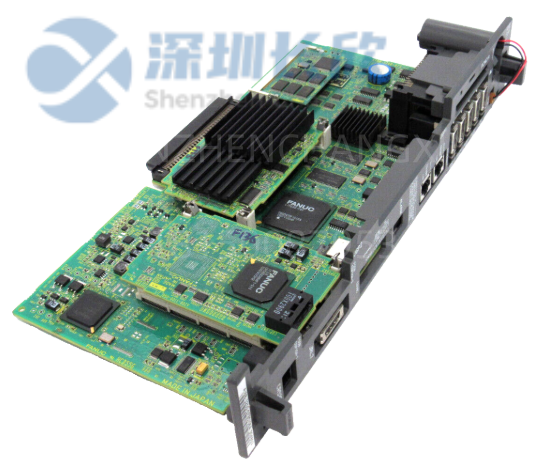
ABB AI810 – S800 I/O Module for AC 800M DCS in Oil, Gas & Power Applications缩略图

ABB AI810 – S800 I/O Module for AC 800M DCS in Oil, Gas & Power Applications

ABB AI810 – S800 I/O Module for AC 800M DCS in Oil, Gas & Power Applications插图
📄 Product Overview

The ABB AI810 is an 8-channel analog input (AI) module in the S800 I/O family, designed for use with the AC 800M programmable automation controller (PAC) within ABB’s System 800xA distributed control system (DCS). It interfaces field instruments—such as pressure transmitters, temperature sensors (via isolators), flow meters, and level gauges—by accepting standard 4–20 mA or 0–20 mA current signals.

Engineered for high reliability and precision, the AI810 supports HART communication, channel-level diagnostics, and optional redundant configuration, making it suitable for both basic process control and IEC 61508 SIL 2 safety-related applications.

🏭 Typical Application Scenario

At a natural gas compressor station in Norway, operators needed to monitor suction/discharge pressures and bearing temperatures across six turbines. They deployed ABB AC 800M controllers with AI810 modules to read signals from HART-enabled Rosemount pressure transmitters and RTD-to-4–20 mA converters. Using Control Builder M, engineers configured each channel independently—some for 4–20 mA with HART pass-through, others for 0–20 mA. During a routine maintenance window, a technician used a HART communicator through the AI8110 + HM810 HART multiplexer to calibrate a transmitter without interrupting the control loop. When a bearing temperature spiked due to lubrication failure, the AI810’s fast scan (<100 ms) enabled the turbine to trip safely before damage occurred. “The AI810 gives us both accuracy and intelligence,” said the lead controls engineer.

⚙️ Key Technical Specifications

表格

💡 Technical Advantages & Innovations

✅ Per-Channel Configuration

Each of the 8 channels can be independently set to 4–20 mA or 0–20 mA via Control Builder M—no hardware jumpers needed.

✅ HART Transparency

When paired with the HM810 HART Multiplexer, enables asset management systems (e.g., ABB Ability™ Asset Suite) to read device diagnostics without disrupting control.

✅ Redundant I/O Ready

Can be used in dual-redundant AC 800M systems for critical loops—ensuring continuous operation during module or controller faults.

✅ Integrated Diagnostics

Reports open circuits (e.g., broken wire), sensor drift, and signal out-of-range—reducing troubleshooting time.

✅ Seamless 800xA Integration

Auto-detected in System 800xA, with faceplate graphics, alarm management, and historical trending out of the box.

🔗 Commonly Paired Products

Controller: AC 800M (PM86x series)

Communication Interface: CI854A (PROFIBUS DP), CI864 (Modbus RTU)

HART Multiplexer: HM810 (enables HART on AI810/AO810)

Power Supply: SA811 (I/O bus power)

Terminal Base: TB820 (screw terminals), TB840 (spring clamp)

Software: Control Builder M, System 800xA Engineering

Field Devices: ABB, Emerson, Endress+Hauser 4–20 mA/HART transmitters

🔧 Installation & Best Practices

Wiring: Use twisted, shielded pair cables; ground shield at controller end only.

Loop Power: Ensure field devices have adequate loop voltage (≥12 V at transmitter).

Redundancy Setup: Requires two AI810 modules, dual CI854A, and redundant AC 800M CPUs.

HART Enablement: Install HM810 on the same I/O bus; configure HART addresses in Control Builder M.

Diagnostics: Enable “open circuit detect” in channel parameters for dry-contact simulation or fault detection.

⚠️ Obsolescence & Lifecycle Note

The AI810 remains actively supported by ABB and is widely deployed globally. While newer platforms like ABB Ability™ System 800xA with Compact I/O exist, the S800/AI810 platform is still recommended for large-scale, high-reliability projects. ABB provides long-term availability commitments and repair services.

ℹ️ Note: The AI810 is often confused with the AI815 (16-channel, non-HART) or AI845 (FOUNDATION Fieldbus). Confirm your order code: 3BSE008516R1 = AI810.

✅ Summary

The ABB AI810 delivers precision, flexibility, and intelligence for analog signal acquisition in demanding industrial environments. Its support for HART, redundancy, and deep System 800xA integration makes it a cornerstone of modern process automation—from refineries and power plants to water treatment and mining.
ABB AI810 – S800 I/O Module for AC 800M DCS in Oil, Gas & Power Applications插图1

ABB AI810 – S800 I/O Module for AC 800M DCS in Oil, Gas & Power Applications插图2

ABB AC800F Process Automation Controller | Flexible I/O Integration缩略图

ABB AC800F Process Automation Controller | Flexible I/O Integration

ABB AC800F Process Automation Controller | Flexible I/O Integration插图
Overview

ABB AC800F​ is a high-performance, high-availability controller that forms the core of ABB’s distributed control systems. It uniquely combines standard process control with safety instrumented system (SIS) functions in a single platform, certified for SIL 2 and SIL 3 applications according to IEC 61508 and IEC 61511 standards. This dual capability makes it ideal for integrated safety and process control applications.

Technical Specifications

Core Functions

1. Integrated Safety & Standard Control

Combines standard process control with safety instrumented functions

Single engineering environment for both applications

Reduced lifecycle costs through integration

2. High Availability Architecture

Redundant processor design

Hot-swappable components

Automatic bumpless switchover

Integrated diagnostics and health monitoring

3. Flexible I/O System

Supports S800 I/O (standard and safety)

Remote I/O capability via Profibus DP

Mixed standard and safety I/O in same system

Point-level redundancy options

Unique Technical Advantages

1. Single Platform Integration

The AC800F eliminates the traditional separation between DCS and SIS, allowing:

Common engineering tools (Control Builder F)

Shared operator interfaces

Unified maintenance procedures

Reduced training requirements

Single vendor responsibility

2. Advanced Diagnostics & Maintenance

Comprehensive health monitoring

Predictive maintenance capabilities

Online modification capabilities

Change management with audit trail

Automatic documentation generation

3. Scalable Architecture

From small standalone applications to plant-wide systems

Modular expansion capability

Seamless integration with higher-level systems

Future-proof technology platform

Application Scenarios

Chemical Processing Plant

Scenario:A chemical reactor requires precise temperature and pressure control with automatic emergency shutdown capability.

Implementation:

AC800F controller manages continuous temperature control (standard function)

Simultaneously monitors for hazardous conditions (safety function)

If parameters exceed safe limits, executes SIL 3 emergency shutdown

Single controller reduces wiring, engineering, and maintenance costs by 40%

Value Delivered:

Eliminated interface between separate DCS and SIS

Reduced spares inventory

Simplified operator training

Enhanced overall system reliability

Oil & Gas Compression Station

Scenario:Remote gas compressor station requiring high availability with minimal maintenance.

Implementation:

Redundant AC800F controllers configured

S800 I/O modules distributed locally

Integrated control of compressors, valves, and safety systems

Remote monitoring via satellite communication

Value Delivered:

99.99% availability achieved

Reduced maintenance visits by 60%

Quick fault detection and diagnosis

Extended equipment lifespan

Industry Applications

1. Chemical & Petrochemical

Batch and continuous process control

Reactor safety systems

Emergency shutdown systems

Fire and gas detection systems

2. Oil & Gas

Wellhead control

Pipeline management

Compressor control

Tank farm management

3. Power Generation

Boiler control and protection

Turbine control

Balance of plant

Grid interface control

4. Pharmaceutical

CIP/SIP control

Batch process management

Safety interlocks

Regulatory compliance support

System Integration Components

Core Components

AC800F Controller Unit

Main processing unit

Redundancy modules

Power supply units

Communication interfaces

S800 I/O System

Digital/Analog input modules

Digital/Analog output modules

Safety I/O modules

Communication adapters

Communication Network

Industrial Ethernet switches

Profibus DP networks

MODBUS interfaces

OPC servers

Software Environment

Control Builder F (engineering)

Operations (operator interface)

Information Management (reporting)

800xA Extended Automation (optional)

Implementation Benefits

Engineering Efficiency

Single engineering environment reduces training

Library of pre-approved function blocks

Automatic code generation

Simulation and testing tools

Version control and change management

Operational Excellence

Unified operator interface

Consistent alarm management

Integrated trend analysis

Remote access capability

Advanced diagnostics

Lifecycle Management

Reduced spares inventory

Simplified maintenance procedures

Long-term product support

Migration path for legacy systems

Scalable architecture

Maintenance & Support

Preventive Maintenance

Regular firmware updates

Health monitoring system checks

Battery replacement (if applicable)

Cooling system maintenance

Communication network testing

Diagnostic Tools

Integrated diagnostic functions

Remote monitoring capability

Predictive maintenance algorithms

Automatic fault reporting

Historical data analysis

Support Services

24/7 technical support

Spare parts management

System health checks

Performance optimization

Migration services

Comparative Advantages

vs. Traditional DCS+SIS Solutions

30-40% lower total cost of ownership

Reduced engineering time

Simplified maintenance

Enhanced system integration

Better operational visibility

vs. PLC-based Solutions

Higher availability

Better safety certification

More advanced control algorithms

Superior operator interface

Better scalability

Implementation Considerations

Planning Phase

Requirements Analysis

Safety integrity level requirements

Availability requirements

System integration needs

Future expansion plans

System Design

Controller configuration

I/O system design

Communication architecture

Redundancy strategy

Safety Considerations

Safety requirement specifications

SIL verification calculations

Independence requirements

Testing and validation plans

Installation Best Practices

Proper grounding and shielding

Environmental protection

Power supply conditioning

Cable routing and segregation

Documentation standards

Future Development

Technology Roadmap

Enhanced cybersecurity features

Cloud connectivity capabilities

Advanced analytics integration

Mobile operator interfaces

AI/ML integration for optimization

Industry Trends

Increased integration of OT/IT systems

Greater emphasis on cybersecurity

More remote operations

Predictive maintenance evolution

Sustainability and energy efficiency focus

Purchasing Information

Configuration Options

Standalone or redundant configuration

I/O module selection

Communication interface options

Software package selection

Service and support packages

Lead Time & Availability

Standard configurations: 4-6 weeks

Custom configurations: 6-8 weeks

Emergency support: 24/7 available

Global stocking locations

Technical Support

Onsite engineering support

Remote diagnostics

Training programs

Documentation library

Online knowledge base

Conclusion

The ABB AC800F represents a significant advancement in process control technology, successfully integrating standard and safety control in a single, high-availability platform. Its TÜV-certified safety architecture combined with flexible I/O options and comprehensive engineering tools makes it an ideal choice for modern process industries seeking to optimize both safety and operational efficiency.

Contact Information:​ For specific configuration requirements, pricing, or technical consultation, please contact our automation specialists for a customized solution proposal tailored to your application needs.
ABB AC800F Process Automation Controller | Flexible I/O Integration插图1

ABB AC800F Process Automation Controller | Flexible I/O Integration插图2

Tricon 9566-8 Module | Bus Controller for Remote I/O Expansion缩略图

Tricon 9566-8 Module | Bus Controller for Remote I/O Expansion

Tricon 9566-8 Module | Bus Controller for Remote I/O Expansion插图
Product Description:

The TRICONEX 9566-8​ is a critical communication module that functions as a Bus Interface or Bus Controller within the Tricon v9 and compatible safety instrumented systems. It is not an I/O module that directly connects to field devices. Instead, it serves as the vital communication gateway between the main Tricon processor chassis and remote I/O racks, or between multiple main chassis. It manages the deterministic, fault-tolerant exchange of data—sending input statuses to the processors and delivering output commands to the remote I/O modules—ensuring the entire distributed safety system operates as a cohesive, high-integrity unit.

Application Scenarios:

In a sprawling offshore oil and gas platform, safety-critical sensors and valves are distributed across multiple process areas, sometimes hundreds of meters apart. Installing all I/O in a single central location is impractical due to wiring costs and signal integrity issues. In this setup, a main Tricon controller chassis is located in the central control room, while several remote I/O racks are placed near the wellheads, separators, and compressors. A TRICONEX 9566-8​ module resides in the main chassis, managing a high-speed, triplicated communication bus (like the TriBus) that connects to these remote racks. It continuously and reliably polls the remote I/O modules (like the 3008. 3503E, 3604E) for input data and broadcasts output commands, ensuring that a pressure spike detected at a remote wellhead is communicated to the main processors in real-time, and an emergency shutdown command is reliably sent back to the remote valve, all with the fault tolerance required for a SIL 3 safety system.

Detailed Parameter Table:

Technical Principles and Core Innovations:

The TRICONEX 9566-8​ enables the scalable, distributed architecture that is a hallmark of the Tricon system, moving beyond a single chassis limitation.

Innovation Point 1: Deterministic, High-Integrity TMR Communication Protocol:​ The module manages a specialized communication bus that is not a standard network like Ethernet. This bus is designed for determinism (guaranteed scan times) and ultra-high reliability. It uses a triplicated or highly fault-tolerant protocol to send three copies of the data. The receiving end (another 9566-8​ or a remote bus receiver) performs voting on this data, ensuring that a transient error on the communication cable does not cause an incorrect input to be seen or an erroneous output to be executed. This is essential for maintaining the system’s Safety Integrity Level (SIL).

Innovation Point 2: Enabling Scalable, Geographically Distributed Architecture:​ The primary value of the 9566-8​ is that it breaks the physical constraint of the main chassis. By allowing I/O to be placed in remote racks closer to the field devices, it drastically reduces the cost, complexity, and potential failure points associated with long home-run field cables. It allows a single safety system to protect an entire facility from a central logic solver, simplifying engineering and maintenance.

Innovation Point 3: Seamless Integration and Synchronization:​ The module works in lockstep with the main TMR processors. It handles the precise timing of data acquisition from remote I/O and the delivery of output commands. This synchronization is critical to ensure that the logic solver has a consistent, time-aligned view of the entire process, allowing complex safety functions that depend on inputs from multiple remote locations to be executed correctly and predictably.

Typical Application Cases:

Case 1: Large Refinery Distributed ESD System:​ A major refinery implemented a plant-wide Emergency Shutdown (ESD) system using a single, centralized Tricon v9 controller. Over 20 remote I/O racks were installed in different units (crude, cracking, utilities). Each remote rack was connected back to the central controller chassis via a TRICONEX 9566-8​ module and fault-tolerant communication trunks. This architecture saved thousands of hours in cable pulling and conduit installation. The reliability of the 9566-8​ managed communication network was proven when a backhoe damaged one of the two redundant communication cables. The system seamlessly continued operation on the remaining cable without any loss of data or function, and an immediate alarm notified maintenance of the fault.

Case 2: Pipeline Compressor Station Protection:​ A series of compressor stations along a gas pipeline, each with its own local I/O rack for ESD valves and fire & gas detection, were all tied back to a single master Tricon controller at the main station via 9566-8​ modules and fiber-optic communication links. This allowed centralized monitoring and control of safety functions for the entire pipeline section. The deterministic nature of the 9566-8’s communication ensured that a critical shutdown command issued from the master station would reach the remote station within a guaranteed, very short timeframe, meeting the safety requirement specification (SRS) for response time.

Related Product Combination Solutions:

Main Tricon Processor (e.g., MP 3008):​ The central processing unit that the 9566-8​ module reports to and receives commands from.

Tricon Chassis/Backplane:​ The 9566-8​ is installed in a slot in the main or communication chassis.

Remote I/O Pack (e.g., with 9565-810 module):​ The remote chassis that houses field I/O modules. It contains a complementary communication module (like a 9565-810 remote bus receiver) that communicates with the 9566-8.

Communication Media:​ Specialized triaxial cables, fiber optic cables, or other media that form the physical link between the 9566-8​ and the remote nodes.

Tricon I/O Modules (e.g., 3008. 3503E, 3625):​ The actual input and output modules that are housed in the remote racks, whose data is transported by the network managed by the 9566-8.

TriStation 1131 Engineering Software:​ Used to configure the communication parameters, network topology, and scan times for the system that includes the 9566-8.

Redundant Power Supply (8312):​ Provides clean, reliable power to the chassis housing the 9566-8. as communication integrity is paramount.

Installation, Maintenance, and Full-Cycle Support:

Installation requires strict adherence to system design. The module is inserted into a designated slot in the main chassis. Critical attention must be paid to the communication cabling: correct cable type, termination, routing (away from power cables), and grounding as per Tricon installation manuals. Configuration of network addresses, scan rates, and diagnostics is performed within the TriStation 1131 project.

Maintenance is primarily proactive. The module’s status LEDs and system diagnostics should be monitored regularly. The module is typically hot-swappable. In the event of a suspected failure, the faulty 9566-8​ can be replaced online by carefully following the hot-swap procedure, which usually involves placing the specific communication bus in a “safe” or “degraded” mode before replacement. It is critical​ to replace it with a module of the exact same part number and firmware revision. We supply the genuine TRICONEX 9566-8​ module. Our technical support can assist with compatibility verification and provide guidance on the replacement procedure to ensure the integrity of your safety network is maintained.

Contact us for the genuine TRICONEX 9566-8 communication module to ensure the robust and reliable data backbone of your distributed safety instrumented system.
Tricon 9566-8 Module | Bus Controller for Remote I/O Expansion插图1

Tricon 9566-8 Module | Bus Controller for Remote I/O Expansion插图2

Triconex 4351B – Rugged DIN-Rail Mountable Safety Platform for Oil, Gas & Chemical Plants缩略图

Triconex 4351B – Rugged DIN-Rail Mountable Safety Platform for Oil, Gas & Chemical Plants

Triconex 4351B – Rugged DIN-Rail Mountable Safety Platform for Oil, Gas & Chemical Plants插图
📄 Product Overview

The Triconex 4351B is an 8-slot main chassis (also called a rack or backplane) for the Tricon® Triple-Modular Redundant (TMR) Safety Instrumented System (SIS) platform by Schneider Electric (formerly Invensys Triconex). It serves as the physical and electrical backbone of the Tricon safety controller—housing redundant power supplies, three main processor modules (CPUs), communication cards, and I/O modules (digital/analog input/output).

Designed for mission-critical applications, the 4351B enables continuous, fault-tolerant operation in industries such as oil & gas, refining, chemicals, power generation, and pharmaceuticals.

🏭 Typical Application Scenario

At a hydrogen production plant in Germany, a legacy relay-based emergency shutdown (ESD) system was replaced with a Triconex system built around the 4351B chassis. The rack was populated with:

Three 3211E main processors (TMR)

Dual 4329A power supplies (redundant 24 V DC)

3664 digital input modules (for pressure/temperature switches)

3805E digital output modules (for solenoid valves)

A 3701E communication module (for EDM monitoring)

During commissioning, engineers performed a live CPU swap—removing one 3211E while the system remained online. The 4351B’s backplane seamlessly rerouted signals through the remaining two processors, maintaining full safety functionality. Over five years, the system achieved zero spurious trips and passed all SIL 3 audits. “The 4351B isn’t just a rack—it’s the foundation of our process safety,” said the plant’s automation lead.

⚙️ Key Technical Specifications

表格

💡 Technical Advantages & Innovations

✅ True Triple-Modular Redundancy (TMR) Backplane

The 4351B routes three independent signal paths between CPUs and I/O—ensuring no single point of failure. Even if one backplane trace fails, voting logic maintains integrity.

✅ Hot-Swap Ready

All modules—including power supplies, CPUs, and I/O—can be replaced without powering down the system, maximizing uptime.

✅ Deterministic Performance

Fixed scan cycle (typically 25–100 ms) ensures predictable response for time-critical safety actions.

✅ Robust Mechanical Design

Heavy-duty metal enclosure, conformal-coated backplane, and secure module latching for harsh industrial environments.

✅ Scalable within Limits

While only 8 slots, multiple 4351B chassis can be networked via TriBus or Ethernet for larger applications.

🔗 Commonly Paired Components

表格

🔧 Installation & Maintenance Best Practices

Grounding: Bond chassis to plant ground grid using ≥6 AWG wire—critical for noise immunity and safety.

Power Wiring: Use separate, fused 24 V DC feeds for each power supply in redundant setups.

Module Seating: Ensure all modules are fully latched—partial insertion causes intermittent faults.

Ventilation: Allow ≥100 mm clearance on all sides for convection cooling.

Diagnostics: Monitor chassis health via EDM—alerts include power loss, module removal, or backplane errors.

⚠️ Obsolescence & Lifecycle Status

The 4351B is part of the mature Tricon v10/v11 platform. While no longer sold as new in some regions, it remains:

Supported by Schneider Electric for repairs and firmware

Available via refurbished/exchange programs

Eligible for long-term support agreements (up to 2030+ in many cases)

🔁 Migration Path: For new projects, consider Triconex eXP or EcoStruxure™ Foxboro DCS with Safety—but the 4351B is still viable for brownfield expansions.

✅ Summary

The Triconex 4351B is far more than a metal box—it’s the fault-tolerant heart of one of the world’s most trusted safety platforms. By integrating redundant power, processing, and I/O into a single deterministic architecture, it delivers unmatched reliability for protecting people, assets, and the environment.

🔒 In functional safety, the chassis is the castle. The 4351B keeps the gates locked—and the kingdom safe.

Need help sourcing, configuring, or migrating from a 4351B system? Contact a Schneider Electric Triconex-certified partner or functional safety specialist for engineering support.
Triconex 4351B – Rugged DIN-Rail Mountable Safety Platform for Oil, Gas & Chemical Plants插图1

Triconex 4351B – Rugged DIN-Rail Mountable Safety Platform for Oil, Gas & Chemical Plants插图2

Triconex AI2351 – High-Performance Analog Input Module for Safety-Critical TMR Systems缩略图

Triconex AI2351 – High-Performance Analog Input Module for Safety-Critical TMR Systems

Triconex AI2351 – High-Performance Analog Input Module for Safety-Critical TMR Systems插图
Description

The Triconex AI2351 is a triple-modular redundant (TMR) analog input module engineered for the Tricon® and Triconex® Safety Instrumented Systems (SIS). Designed to acquire critical process signals—such as pressure, temperature, flow, or level—from 4–20 mA transmitters in high-integrity applications, the AI2351 delivers fault-tolerant signal acquisition with continuous self-diagnostics and SIL 3 certification per IEC 61508/61511. Built for industries where safety and reliability are non-negotiable—including oil & gas, petrochemicals, LNG, and power generation—the AI2351 ensures that every analog measurement contributes to a verifiable, fail-safe control decision.

Application Scenarios

At a North American LNG liquefaction train, reactor overpressure protection relied on legacy analog inputs prone to undetected drift. During a routine proof test, one transmitter reading was found to be 8% low—enough to delay a trip during a credible overpressure scenario. The facility upgraded to Triconex AI2351 modules, leveraging their TMR architecture and real-time deviation monitoring. Within weeks, the system flagged a failing transmitter due to inconsistent voting between the three internal channels—preventing a potential safety gap. This case illustrates how the AI2351 transforms analog sensing from a passive data source into an active layer of functional safety.

Parameter

表格

Technical Principles and Innovative Values

Innovation Point 1: The AI2351 implements true hardware-level TMR—each of its 8 channels is sampled by three independent analog-to-digital converters, with real-time voting to detect and isolate faults without interrupting the safety function.

Innovation Point 2: It supports HART digital communication superimposed on the 4–20 mA loop, enabling asset management systems (e.g., AMS) to read transmitter diagnostics during normal operation—without compromising SIS integrity.

Innovation Point 3: Advanced channel deviation diagnostics compare the three internal readings; if any exceeds a user-defined tolerance (e.g., 0.5%), the module logs a diagnostic alarm while maintaining safe operation—enabling predictive maintenance.

Innovation Point 4: Unlike standard DCS analog inputs, the AI2351 provides fail-safe signal validation: on detected open-wire or short-circuit, it forces the input to a pre-configured safe state (e.g., high/low trip value) within one scan cycle.

Application Cases and Industry Value

In a Middle Eastern ammonia plant, the Triconex AI2351 was deployed to monitor catalyst bed temperatures in a high-pressure converter—a critical parameter for preventing runaway reactions. Previously, thermocouple drift went unnoticed until manual calibration. With the AI2351. each 4–20 mA signal from RTD transmitters underwent TMR validation. Over one year:

Zero missed trips due to sensor failure

Proof-test intervals extended by 30% due to >95% diagnostic coverage

Integration with the plant’s SIS dashboard provided real-time health status of all 64 analog inputs

Safety engineers noted that the AI2351’s ability to distinguish between process transients and actual hardware faults significantly reduced nuisance alarms during startups.

Related Product Combination Solutions

Triconex AO2351 / 3504E: Analog output modules—used with AI2351 for closed-loop safety control (e.g., pressure-in → valve-out).

Triconex DI2351 / DO2351: Digital I/O modules—complement AI2351 in hybrid safety logic (e.g., high temp + pump running = trip).

TriStation 1131: Engineering workstation—enables full configuration, simulation, trending, and online diagnostics of AI2351 channels.

Rosemount 3051S: SIL 2/3 certified pressure transmitter—fully compatible with AI2351 and HART-enabled for advanced diagnostics.

Triconex Chassis (e.g., 4400A): High-density mainframe supporting up to 18 I/O modules, including multiple AI2351 units.

AMS Device Manager: Asset management platform—reads HART data from transmitters connected to AI2351 without bypassing SIS logic.

Schneider Foxboro DCS: Can share process data with Triconex SIS via secure OPC or Modbus gateways for coordinated BPCS/SIS response.

Triconex Remote I/O (e.g., 9560): Extends AI2351 functionality to remote skids or hazardous zones using fiber-optic communication.

Installation, Maintenance, and Full-Cycle Support

Installing the Triconex AI2351 requires insertion into a de-energized Triconex chassis, followed by secure backplane seating. Field wiring must use individually shielded twisted pairs, with shields grounded only at the controller end to avoid ground loops. Loop calibration is performed through TriStation 1131 using built-in test functions that verify accuracy at 4. 12. and 20 mA points.

For maintenance, the AI2351 features per-channel LED indicators (green = OK, red = fault) and logs all diagnostic events—including wire-off, deviation, and common-mode errors—in non-volatile memory. While not hot-swappable during live SIS operation, modules can be replaced during planned outages with automatic configuration restore. We rigorously validate every AI2351 for TMR synchronization, EMI immunity (IEC 61000-4 Level 4), and long-term thermal stability. Our support includes SIL verification packages, HART integration services, and lifecycle migration paths from older Triconex models like the AI3501 or AI3511.

Contact us for a tailored functional safety solution—whether you’re designing a new SIL 3 system, modernizing legacy analog inputs, or enhancing diagnostic coverage in your SIS. With deep expertise in Triconex architectures and global project experience, we ensure your AI2351 delivers uncompromising measurement integrity, safety compliance, and operational resilience.
Triconex AI2351 – High-Performance Analog Input Module for Safety-Critical TMR Systems插图1

Triconex 3664 – High-Density Digital Input Interface for Emergency Shutdown (ESD)缩略图

Triconex 3664 – High-Density Digital Input Interface for Emergency Shutdown (ESD)

Triconex 3664 – High-Density Digital Input Interface for Emergency Shutdown (ESD)插图
📄 Product Overview

The Triconex 3664 is a 16-channel digital input (DI) module designed for the Tricon® Triple-Modular Redundant (TMR) Safety Instrumented System (SIS) platform by Schneider Electric (formerly Invensys Triconex). It interfaces field devices—such as pushbuttons, limit switches, pressure switches, level switches, and relay contacts—to the safety logic solver, enabling reliable detection of process conditions that require automatic protective actions.

Certified to IEC 61508 SIL 3 and IEC 61511. the 3664 ensures that safety-critical input signals are captured accurately—even in the presence of electrical noise or internal hardware faults.

🏭 Typical Application Scenario

At a refinery in Texas, high-high level switches in a crude oil storage tank were connected to a Triconex 3664 module as part of the tank overfill protection system (TOPS). During a thunderstorm, nearby lightning induced transient voltages on field wiring. Thanks to the 3664’s robust filtering and 500 V channel-to-channel isolation, no false trips occurred. Later, during a proof test, maintenance used the Enhanced Diagnostic Monitor (EDM) to verify that all 16 channels correctly detected simulated switch closures. When an actual overfill condition occurred due to a pump control failure, the 3664 reliably signaled the Tricon CPU, triggering the ESD sequence within 100 ms—preventing a potential environmental incident. “This module is the eyes of our safety system,” said the site’s SIS engineer.

⚙️ Key Technical Specifications

表格

💡 Technical Advantages & Innovations

✅ Triple-Modular Redundancy (TMR)

Each input signal is read by three independent circuits (one per main processor). A hardware voter ensures only consistent, valid data enters the safety logic—masking faults in real time.

✅ Flexible Input Configuration

Supports both dry contacts (e.g., mechanical switches) and powered contacts (e.g., PLC relay outputs)—making it adaptable to diverse field architectures.

✅ Built-In Diagnostics

Detects open wiring in dry-contact circuits—a common failure mode—and reports it to EDM, supporting compliance with IEC 61511 proof test requirements.

✅ Noise Immunity

Meets stringent EMC standards (IEC 61000-4-2/3/4/5), ensuring reliability in electrically harsh environments like substations or motor control centers.

✅ Cyber-Secure by Design

No onboard network interface—input integrity is maintained through hardware redundancy, not software-dependent protocols.

🔗 Commonly Paired Products

Tricon Main Chassis: 4328A (8-slot), 4329A (16-slot)

Main Processors: 3201E, 3211E (TMR CPUs)

Digital Output Module: 3805E (32-channel DO)

Analog Input Module: 3501E (16-channel AI)

Communication Module: 3701E (Ethernet for EDM)

Software: TriStation 1131 (configuration & programming), Enhanced Diagnostic Monitor (EDM)

Field Devices: Pressure switches (e.g., Rosemount 3051), float switches, emergency pushbuttons

🔧 Installation & Best Practices

Wiring: Use twisted-pair, shielded cable; ground shield at Tricon end only.

Dry Contacts: Ensure loop resistance <10 Ω for reliable detection.

Powered Inputs: Provide a clean, fused 24 V DC supply; avoid sharing with noisy loads.

Filtering: Adjust input filter time in TriStation 1131 to reject chatter from mechanical switches.

Diagnostics: Enable open-circuit detection in software for dry-contact applications.

⚠️ Obsolescence & Support Status

The 3664 remains actively supported by Schneider Electric and is widely used in global safety systems. While newer platforms like Triconex eXP offer higher density and Ethernet-based I/O, the 3664 continues to be available for spares, expansions, and brownfield projects under long-term lifecycle commitments.

✅ Summary

The Triconex 3664 is a high-integrity digital input module that forms the sensory foundation of Tricon-based Safety Instrumented Systems. Its combination of TMR architecture, flexible input options, and built-in diagnostics ensures that critical process states are detected—accurately and reliably—every time.

🔒 In functional safety, trust but verify. The 3664 does both—continuously.

Need help identifying, replacing, or validating your 3664 module? Provide your Tricon system version and application context for expert support.
Triconex 3664 – High-Density Digital Input Interface for Emergency Shutdown (ESD)插图1

Tricon 3704E Module | 8-Channel Isolated 4-20mA Output Card缩略图

Tricon 3704E Module | 8-Channel Isolated 4-20mA Output Card

Tricon 3704E Module | 8-Channel Isolated 4-20mA Output Card插图
Description:

The TRICONEX 3704E​ is a critical safety-rated analog output module designed for the Tricon Triple Modular Redundant (TMR) safety system. It provides eight channels of isolated 4-20 mA output signals to control final elements such as control valves, variable speed drives, or analog actuators within a Safety Instrumented System (SIS) or Emergency Shutdown (ESD) system. It accepts commands from the TMR main processors and delivers a precise, voted, and validated analog current to the field, ensuring that safety actions are executed with the highest level of integrity and reliability.

Application Scenarios:

In a gas processing plant’s Emergency Shutdown (ESD) system, a critical safety function requires modulating a vent valve to a specific open position to safely depressurize a vessel. The Tricon controller, after processing logic from various sensors, determines the required valve position. This command is sent to a TRICONEX 3704E​ analog output module. The module’s three internal channels each generate a 4-20mA signal based on the command. These three signals are fed to a triple-redundant input on a smart valve positioner. The positioner performs a 2oo3 vote on the incoming signals. Only if at least two signals from the 3704E​ agree will the valve move. This architecture ensures that even if a fault occurs in one output circuit of the module or the wiring, the correct safety action is still executed, preventing a dangerous failure on demand.

Parameter:

Technical Principles and Innovative Values:

The TRICONEX 3704E​ is engineered to be the reliable and fault-tolerant “arm” of the safety controller, translating digital safety decisions into precise analog actions in the physical world.

Innovation Point 1: True TMR Output with Midline Value Selection:​ Each of the eight output channels internally comprises three completely independent Digital-to-Analog Converters (DACs) and output circuits. The module receives three separate command values from the three main processors (A, B, C). It does not simply pass one through; it performs a “midline value select” function. It compares the three commanded current values and selects the median value to drive all three output circuits. This ensures that even if one processor provides a faulty command, the output is based on the two correct ones, maintaining both safety and accuracy.

Innovation Point 2: Advanced Field Load Diagnostics:​ The module goes beyond simple output generation. It actively and continuously diagnoses the health of the field loop. It can detect an open circuit (wire break) by monitoring for insufficient current flow and a short circuit by detecting excessive current. It can also verify that the actual output current matches the commanded value within a tight tolerance. Any such discrepancy is immediately reported as a diagnostic alarm to the main processors, enabling predictive maintenance and ensuring the safety function’s integrity is maintained. This is critical for proving the health of the final element.

Innovation Point 3: High-Resolution, Isolated Outputs for Precise Control:​ Unlike simple on/off safety outputs, the 3704E​ provides high-resolution (e.g., 16-bit) analog control. This allows Safety Instrumented Functions (SIFs) to perform modulated responses, such as positioning a valve to 35% open rather than just fully closed or open. Each channel is individually isolated, preventing ground loops and ensuring that a fault in one control loop cannot affect the others, maintaining independent protection layers.

Application Cases and Industry Value:

Case 1: Compressor Anti-Surge Control in a LNG Plant:​ In a liquefied natural gas facility, a large centrifugal compressor is protected by an anti-surge system. If conditions approach the surge line, the SIS must rapidly open a recycle valve to prevent damaging surge. A TRICONEX 3704E​ module controls the analog input to the recycle valve’s positioner. The speed and precision of the 3704E’s output allow for proportional, fast-responding control, smoothly modulating the valve to stabilize the compressor. The module’s diagnostics ensured the valve was always ready to respond. During a system test, a fault was simulated in one output circuit. The module’s diagnostics immediately alerted operators, and the TMR design ensured the valve continued to respond correctly based on the two healthy circuits, allowing the compressor to remain online while maintenance was scheduled, avoiding a multi-million dollar shutdown.

Case 2: Boiler Combustion Control Safety Override:​ In a power plant boiler, the main Distributed Control System (DCS) manages fuel and air ratios. A separate Burner Management System (BMS) using a Tricon controller provides safety overrides. A TRICONEX 3704E​ module is used to take control of the main fuel valve if the BMS logic demands a safety cutback. The module outputs a 4-20mA signal to a high-integrity positioner, overriding the DCS signal. The plant’s engineers valued the 3704E​ because its SIL 3 certification contributed to the required safety rating of the override function, and its reliability meant the override was guaranteed to work when needed, without causing nuisance trips.

Related Product Combination Solutions:

Tricon Main Processor (e.g., 3009. 4319):​ Executes the safety logic and sends the analog output commands to the 3704E.

Tricon Analog Input Module (e.g., 3503E):​ Provides the process measurements (e.g., pressure, flow) that the safety logic uses to determine the required output from the 3704E.

Tricon Digital Output Module (e.g., 3625):​ Often used in conjunction for on/off safety functions (e.g., full shutoff valves) while the 3704E​ handles modulated control.

Smart Valve Positioner (e.g., with TMR input):​ The field device that accepts the 4-20mA signal from the 3704E​ and translates it into precise valve stem movement. A positioner with triple input channels pairs perfectly with the TMR output.

Isolated Safety Barrier:​ Sometimes used between the 3704E​ and the field device in hazardous areas to provide intrinsic safety (IS) protection.

TriStation 1131 Software:​ Used to configure the 3704E​ module, including scaling (engineering units to mA), fault states, and diagnostic alarm limits.

Redundant Power Supply (e.g., 8312):​ Provides fault-tolerant power to the chassis containing the 3704E, ensuring its continuous operation.

Installation, Maintenance, and Full-Cycle Support:

Installation of the TRICONEX 3704E​ requires adherence to safety system procedures. The module is inserted into a compatible slot in the Tricon chassis. Field wiring to control valves or I/P transducers is connected to its terminal block. Proper grounding and isolation are critical to avoid noise. Configuration is done within the TriStation 1131 project, where each channel is assigned to a control variable, with scaling configured (e.g., 0-100% corresponds to 4-20mA) and fail-safe state defined (e.g., hold last value or go to a predefined mA value on fault).

Maintenance is driven by periodic proof testing and module diagnostics. The system’s health monitoring will alert personnel to any channel faults. The 3704E​ is hot-swappable. To replace a faulty module, the specific I/O bus can be placed in a secure state, the old module removed, and a new one inserted. The system will automatically recognize it and download the configuration. It is imperative to use a genuine, correctly firmware-versioned TRICONEX 3704E​ module. We supply the authentic module. Our support includes verifying the exact hardware/firmware revision for your system and can guide you through the replacement and post-replacement validation process to ensure your safety loop’s integrity is fully restored.

Contact us for the genuine TRICONEX 3704E analog output module to ensure the faithful and fault-tolerant execution of critical safety actions in your process.
Tricon 3704E Module | 8-Channel Isolated 4-20mA Output Card插图1

Tricon Digital Output Card 3604E | 16 Points, High-Availability Design缩略图

Tricon Digital Output Card 3604E | 16 Points, High-Availability Design

Tricon Digital Output Card 3604E | 16 Points, High-Availability Design插图
Description:

The TRICONEX 3604E​ is a 16-channel, high-density, Triplicated Digital Output Module for the Tricon Safety Instrumented System (SIS). It is engineered to execute the final commands from the safety logic solver with extreme reliability. The module receives voted commands from the Triple Modular Redundant (TMR) main processors and activates its outputs to control critical field devices—such as solenoid valves, motor starters, and alarm annunciators—to bring a process to a safe state during an emergency.

Application Scenarios:

In a hydrocarbon processing plant, a high-level switch in a separator vessel triggers a Safety Instrumented Function (SIF) to prevent overfilling. The Tricon controller’s logic determines a trip is required. This command is sent to a TRICONEX 3604E​ digital output module. The module’s internal TMR circuits process the command, and it energizes a specific output channel. This action sends 24VDC power to the solenoid valve (SOV) on the vessel’s inlet line, causing it to close and stop the flow. The 3604E’s design ensures that even if a fault occurs in one of its three internal output paths, the command is still correctly executed via the remaining two, guaranteeing the safety function is performed and the process is secured.

Parameter:

Technical Principles and Innovative Values:

The TRICONEX 3604E​ is designed for fault-tolerant action, transforming logical safety decisions into physical outcomes with maximum availability.

Innovation Point 1: Triple Redundancy in Output Execution:​ Each of the 16 output channels contains three independent, isolated output circuits. The module receives three separate command signals from the three main processors (A, B, C). Its internal logic performs a 2-out-of-3 vote on these commands. Only if at least two processors agree is the output energized. This ensures a single faulty processor cannot cause an unintended output action (a “false trip”) or fail to initiate a required action.

Innovation Point 2: Advanced Load Diagnostics and On-State Verification:​ The module provides sophisticated diagnostics beyond simple output switching. It can detect critical field-side faults, such as a broken wire (open circuit) to the solenoid or a short circuit at the load. Crucially, it provides on-state verification—confirming that the output device (e.g., a solenoid) actually energized when commanded. This feedback loop is vital for proving the health of the entire Safety Instrumented Function (SIF) loop, from logic to final element.

Innovation Point 3: High-Density, Fault-Tolerant Design:​ Packing 16 fully triplicated and diagnosed output channels into a single module represents a significant advancement in safety system packaging. This high density reduces the chassis footprint and cost per point for large systems while maintaining the highest safety integrity. The module’s design ensures that a fault in one channel is electrically isolated and cannot affect the operation of adjacent channels, preventing fault propagation.

Application Cases and Industry Value:

Case 1: Gas Compressor Station Emergency Shutdown (ESD):​ A Tricon system protects a large gas compressor station. Multiple TRICONEX 3604E​ modules are used to command the shutdown of fuel gas valves, vent valves, and initiate unit isolation. During a routine partial stroke test of an Emergency Shutdown Valve (ESDV), the diagnostics on a 3604E​ channel detected a developing issue with the solenoid’s coil (a rising resistance). The system generated a maintenance alarm beforethe coil failed completely. This allowed for planned replacement during the next outage, avoiding a potential situation where the valve would have failed to operate during a real emergency. This predictive capability, enabled by the module’s diagnostics, prevented a potential safety system impairment and costly unplanned shutdown.

Case 2: Turbomachinery Control (TMC) and Protection:​ In a gas turbine-driven power plant, a Tricon system acts as the primary protection system. A TRICONEX 3604E​ module is responsible for critical shutdown commands: tripping the fuel control valves, activating the CO2 fire suppression system, and engaging the turning gear. The module’s ultra-reliable, fault-tolerant design ensures that no single point of failure can prevent these commands from being issued. Its fast response time is critical during a turbine overspeed event, where milliseconds count. The plant’s reliability engineering team values the 3604E​ for its proven track record in preventing catastrophic turbine failures, protecting multi-million dollar assets.

Related Product Combination Solutions:

Tricon Main Processor (e.g., 3008. 3009):​ The TMR controller that computes the logic and sends commands to the 3604E.

Tricon Digital Input Module (e.g., 3664):​ Monitors the state of field devices (e.g., valve limit switches) that may be activated by devices controlled by the 3604E, closing the loop.

Tricon Communication Module (e.g., 4351B):​ Integrates the safety system with the plant DCS, allowing status of 3604E​ outputs to be displayed and alarms to be acknowledged.

Solenoid Valves (SOVs) and Relay Interfaces:​ The final elements directly controlled by the 3604E’s outputs. Often connected through intrinsic safety (IS) barriers in hazardous areas.

Tricon System Power Supply (e.g., 8312):​ Provides clean, redundant power essential for the reliable operation of all output modules.

TriStation 1131 Software:​ Used to configure the 3604E, including assigning outputs, setting pulse durations, and configuring diagnostic alarms.

External Load Power Supply:​ Provides the 24VDC/48VUC power that the 3604E​ switches to the field devices. This supply must be highly reliable, often redundant.

Installation, Maintenance, and Full-Cycle Support:

Installation requires strict adherence to safety lifecycle procedures. The module is inserted into a powered-down or appropriately isolated slot in the Tricon chassis. Field wiring to solenoid valves or relay coils is terminated at the module’s front connector block, with careful attention to proper fusing and wire sizing for the load. Configuration in TriStation 1131 is mandatory, defining each output’s associated logic variable, pulse width (if used), and diagnostic behavior.

Maintenance is driven by the module’s extensive diagnostics, visible through TriStation and the system HMI. Scheduled testing, such as partial stroke testing of valves, will exercise the 3604E​ outputs. The module is hot-swappable. If a fault is diagnosed, the module can be replaced online by following a specific procedure: placing the I/O bus in a secure state, replacing the module, and letting the system auto-reintegrate it. Crucially, the field wiring must be de-energized before disconnection.​ We supply the genuine TRICONEX 3604E​ module. Our support includes verifying hardware/firmware revision compatibility with your system and can provide procedural guidance for replacement to ensure your safety system’s integrity is maintained.

Contact us for the genuine TRICONEX 3604E digital output module to ensure your safety system’s final actions are executed with absolute reliability.
Tricon Digital Output Card 3604E | 16 Points, High-Availability Design插图1

Tricon Digital Output Card 3604E | 16 Points, High-Availability Design插图2

Triconex 3805E – Hot-Swappable DO Board for Emergency Shutdown & Fire & Gas Systems缩略图

Triconex 3805E – Hot-Swappable DO Board for Emergency Shutdown & Fire & Gas Systems

Triconex 3805E – Hot-Swappable DO Board for Emergency Shutdown & Fire & Gas Systems插图
📄 Product Overview

The Triconex 3805E is a 32-channel digital output (DO) module designed for the Tricon® Triple-Modular Redundant (TMR) Safety Instrumented System (SIS) platform by Schneider Electric (formerly Invensys Triconex). It provides high-integrity, fault-tolerant discrete signals to final elements such as solenoid valves, motor starters, alarm horns, and relay coils in safety-critical applications.

Certified to IEC 61508 SIL 3 and IEC 61511. the 3805E ensures that safety commands—like emergency shutdowns or fire suppression activation—are executed reliably, even in the presence of internal hardware faults.

🏭 Typical Application Scenario

At a North Sea offshore platform, a critical deluge system required fail-safe activation during gas leaks. The platform used Triconex 3805E modules to drive 24 V DC solenoid valves on water cannons. During a routine partial-stroke test, the 3805E’s built-in diagnostic circuitry detected an open-circuit fault in one valve coil—before an actual emergency occurred. Maintenance replaced the faulty coil during scheduled downtime. Later, during a real H₂S release, all 12 valves fired instantly via the 3805E, dousing the area within 3 seconds. “The diagnostics didn’t just prevent a failure—they proved our safety system was ready,” said the platform’s process safety manager.

⚙️ Key Technical Specifications

表格

💡 Technical Advantages & Innovations

✅ True TMR Architecture

Each output is driven by three independent circuits (one from each main processor). A voter ensures only consistent, valid signals activate the field device—masking single or even dual faults.

✅ Built-In Load Diagnostics

Continuously monitors for open circuits (e.g., broken wire, failed solenoid) and reports faults to the Enhanced Diagnostic Monitor (EDM)—supporting IEC 61511 proof testing requirements.

✅ Fail-Safe Behavior

On loss of power, communication, or internal fault, outputs de-energize safely (fail-low)—ideal for de-energize-to-trip safety logic.

✅ No External Relays Needed

Unlike conventional systems, the 3805E can directly drive many 24 V DC solenoids and relays—reducing panel space, wiring, and failure points.

✅ Cyber-Resilient Design

No Ethernet or wireless interfaces on the I/O module itself—minimizing attack surface. Configuration locked via TriStation 1131 with audit trails.

🔗 Commonly Paired Products

Tricon Main Chassis: 4328A (8-slot), 4329A (16-slot)

Main Processors: 3201E, 3211E (TMR CPUs)

Digital Input Module: 3501E or 3701E

Analog Output Module: 3503E

Communication Module: 3701E (for EDM connectivity)

Software: TriStation 1131 (programming), Enhanced Diagnostic Monitor (EDM) (runtime monitoring)

Field Devices: 24 V DC solenoids (e.g., ASCO, Bürkert), alarm beacons, small contactors

🔧 Installation & Best Practices

Wiring: Use shielded cable; connect field device between +24 V supply and 3805E output terminal (sinking configuration).

Power Supply: Provide a dedicated, fused 24 V DC source for field devices—do not share with logic power.

Load Limits: Do not exceed 100 mA/channel or 2 A/module total to avoid thermal shutdown.

Diagnostics Enablement: Ensure “diagnostic mode” is enabled in TriStation 1131 to activate open-circuit detection.

Grounding: Follow Triconex grounding guidelines to prevent noise-induced faults.

⚠️ Obsolescence & Support Status

The 3805E remains actively supported by Schneider Electric and is widely deployed in oil & gas, chemical, power, and pharmaceutical facilities worldwide. While newer platforms like Triconex eXP offer enhanced features, the 3805E is still available for spares, expansions, and brownfield projects under long-term support agreements.

✅ Summary

The Triconex 3805E delivers ultra-reliable, SIL 3-certified digital output with integrated diagnostics—making it a cornerstone of modern functional safety systems. By combining TMR fault tolerance with direct field-device driving capability, it eliminates layers of complexity while increasing safety integrity.

🔒 In safety systems, how you turn something OFF can be as critical as how you turn it ON. The 3805E ensures both are done right—every time.

Need help with configuration, replacement, or SIL validation? Contact a Schneider Electric Triconex-certified partner or functional safety engineer for expert guidance.
Triconex 3805E – Hot-Swappable DO Board for Emergency Shutdown & Fire & Gas Systems插图1

Triconex 3805E – Hot-Swappable DO Board for Emergency Shutdown & Fire & Gas Systems插图2

Triconex 3504E – High-Density Analog Output Module for Safety-Critical Process Control缩略图

Triconex 3504E – High-Density Analog Output Module for Safety-Critical Process Control

Triconex 3504E – High-Density Analog Output Module for Safety-Critical Process Control插图
Description

The Triconex 3504E is a fault-tolerant, triple-modular redundant (TMR) analog output module engineered for the Tricon® and Triconex® safety instrumented systems (SIS). Designed to drive final control elements—such as electro-pneumatic valve positioners, variable frequency drives (VFDs), or chart recorders—in high-integrity applications, the 3504E delivers precise, certified 4–20 mA signals with continuous self-diagnostics. Built for industries where failure is not an option—including oil & gas, chemical processing, and power generation—the 3504E ensures deterministic response and SIL 3 compliance per IEC 61508 and IEC 61511.

Application Scenarios

At a Gulf Coast ethylene cracker, emergency shutdown valves (ESVs) controlling reactor feed lines exhibited inconsistent closure speeds due to analog signal drift from non-redundant output cards. During a near-miss incident, one valve failed to seat fully within the required 2 seconds, risking thermal runaway. The plant replaced legacy outputs with Triconex 3504E modules, leveraging their TMR architecture and per-channel diagnostics. Post-upgrade, all ESVs achieved consistent 1.4-second closure, and the system logged early warnings on a failing I/P converter before it caused a spurious trip. This case demonstrates how the 3504E transforms analog output from a potential single point of failure into a resilient, intelligent safety layer.

Parameter

表格

Technical Principles and Innovative Values

Innovation Point 1: The 3504E employs true TMR at the analog output stage—each channel is driven by three independent current sources that are voted in real time, eliminating common-mode failures that plague dual-redundant designs.

Innovation Point 2: It supports HART communication overlay on the 4–20 mA loop without compromising safety integrity, enabling asset management tools (e.g., AMS Device Manager) to read valve diagnostics during normal operation.

Innovation Point 3: Built-in output deviation detection compares commanded vs. actual current (via internal sensing) and flags discrepancies >1%—a critical feature for detecting failing I/P transducers before they compromise safety function.

Innovation Point 4: Unlike standard DCS analog outputs, the 3504E executes fail-safe actions on demand: on SIS trip, it can force 0 mA, 4 mA, or a user-defined safe value within 100 ms, ensuring predictable final element behavior.

Application Cases and Industry Value

In a Norwegian offshore platform’s fire & gas system, the Triconex 3504E was deployed to control deluge valve positioners across 12 zones. Previously, false alarms occurred due to undetected analog card drift. With the 3504E, each output channel’s health status became visible in the TriStation diagnostics window, and HART-enabled positioners reported stem friction trends. Results included:

Zero spurious trips over 18 months of operation

50% reduction in proof-test duration due to automated diagnostic coverage

Full compliance with NORSOK S-001 safety documentation requirements

Safety engineers credited the 3504E’s deterministic fail-safe response and diagnostic transparency as key to achieving a PFDavg < 10⁻⁴ for the deluge system.

Related Product Combination Solutions

Triconex 3501E: Analog input module—pairs with the 3504E for closed-loop safety control (e.g., pressure-to-valve response).

Triconex 3604E: Digital output module—used alongside 3504E for hybrid shutdown commands (e.g., close valve + stop pump).

TriStation 1131: Engineering workstation—enables full configuration, simulation, and online monitoring of 3504E channels.

Fisher FIELDVUE DVC6000: HART-enabled positioner—fully compatible with 3504E for smart valve diagnostics in SIS loops.

Triconex Chassis (e.g., 4329A): Ruggedized mainframe housing the 3504E with redundant power and communication modules.

AMS Device Manager: Asset management software—reads HART data from devices driven by the 3504E without bypassing safety logic.

Schneider Foxboro I/A Series: Can interface with Triconex SIS via OPC or Modbus for coordinated BPCS/SIS operations.

Triconex 9560: Remote I/O chassis—extends 3504E functionality to hazardous areas via fiber-optic links.

Installation, Maintenance, and Full-Cycle Support

Installing the Triconex 3504E requires insertion into a powered-down Triconex chassis, followed by secure backplane engagement. Wiring must use shielded twisted-pair cables with shields grounded at the controller end only. Loop testing is performed through TriStation’s built-in calibration utility, which verifies output accuracy across 4. 12. and 20 mA points.

For maintenance, the 3504E provides LED indicators per channel (green = OK, red = fault) and logs all diagnostic events in non-volatile memory. While not hot-swappable under live SIS conditions, replacement is supported during planned outages with automatic parameter restoration. We validate every 3504E through rigorous TMR synchronization tests, EMI stress (IEC 61000-4 Level 4), and thermal cycling. Our support includes SIL verification documentation, HART integration guidance, and lifecycle migration services for plants upgrading from legacy Triconex 3503 or 3504 modules.

Contact us for a customized safety solution—whether you’re designing a new SIS, modernizing legacy shutdown systems, or seeking SIL 3-certified analog output reliability. With decades of functional safety expertise and global Triconex deployment experience, we ensure your 3504E delivers uncompromising integrity, intelligence, and operational confidence.
Triconex 3504E – High-Density Analog Output Module for Safety-Critical Process Control插图1

Triconex 3504E – High-Density Analog Output Module for Safety-Critical Process Control插图2

Back to Top

Search For Products

Product has been added to your cart