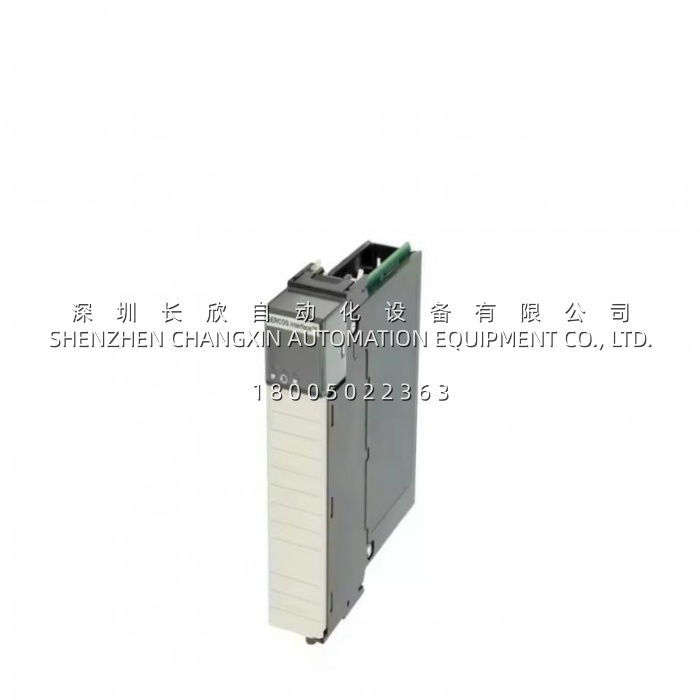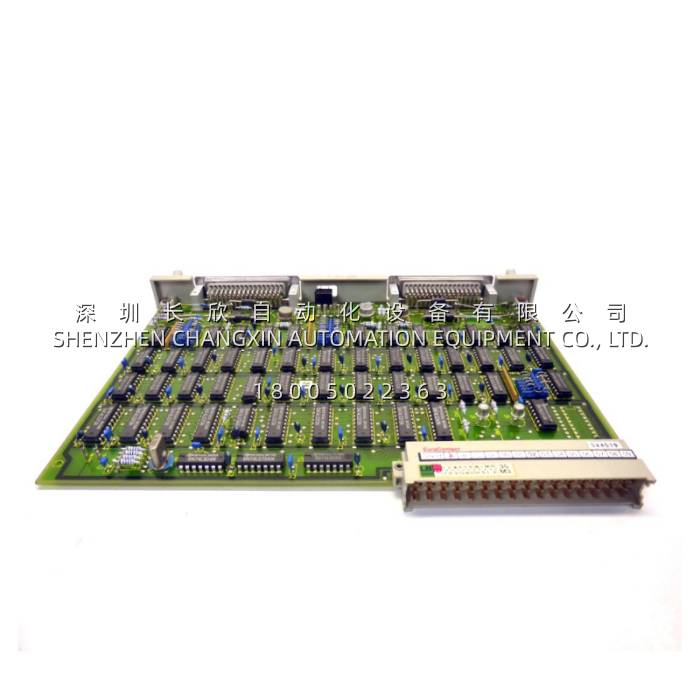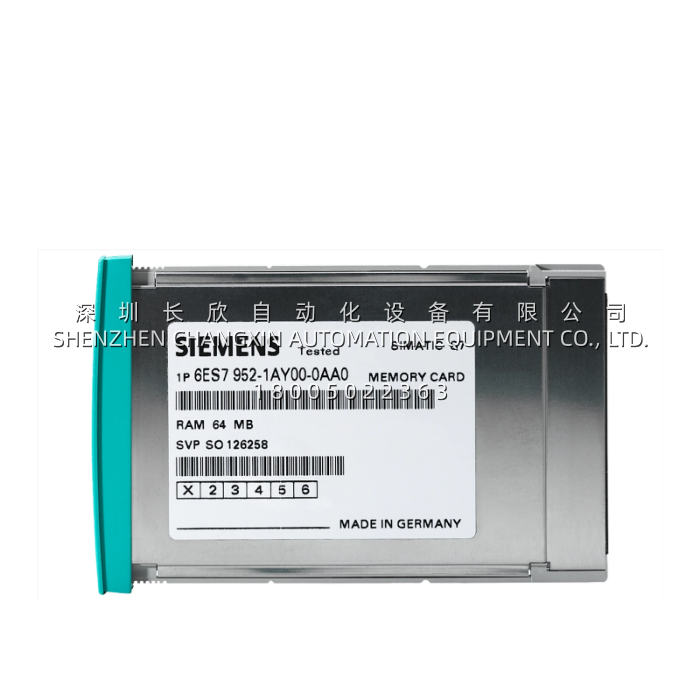
HONEYWELL XNX-UTAV-RNIF1 Universal Transmitter with Remote Network Interface缩略图

HONEYWELL XNX-UTAV-RNIF1 Universal Transmitter with Remote Network Interface

HONEYWELL XNX-UTAV-RNIF1 Universal Transmitter with Remote Network Interface插图
Description

The Honeywell XNX-UTAV-RNIF1 is a configurable, multi-sensor universal gas detection transmitter designed for industrial safety applications. It serves as the central processing unit for a wide range of toxic, combustible, and oxygen gas sensors (including catalytic bead, infrared (IR), electrochemical, and PID types). The “RNIF1” suffix denotes integration with a Remote Network Interface Module, enabling direct communication over digital field networks—most commonly Modbus RTU over RS-485—for seamless integration into DCS, PLC, or safety systems.

Engineered for hazardous environments and certified to global standards, the XNX-UTAV-RNIF1 delivers real-time gas concentration data, diagnostic status, and alarm events while supporting remote configuration and calibration—reducing maintenance time and improving personnel safety.

Application Scenarios

At a Gulf Coast chemical terminal, legacy fixed gas detectors required technicians to enter confined spaces monthly for bump testing—posing significant safety and compliance risks. After deploying the XNX-UTAV-RNIF1 with infrared methane and electrochemical H₂S sensors, all units were networked via Modbus RTU to a central Honeywell Experion® PKS system. Operators now perform remote validation, receive predictive sensor health alerts, and view live gas maps from the control room. In its first year, the site eliminated 200+ high-risk entries and cut calibration labor by 60%. For this team, the XNX-UTAV-RNIF1 transformed gas detection from a compliance burden into an intelligent safety layer.

Parameter

表格

Technical Principles and Innovative Values

Innovation Point 1: True Universal Platform – One Transmitter, Any Gas

The XNX-UTAV-RNIF1 auto-detects and configures for over 30 sensor types via plug-and-play cartridges—eliminating the need for multiple transmitter models in inventory.

Innovation Point 2: Digital Integration Without Gateways

The integrated RNIF1 module outputs native Modbus RTU, allowing direct connection to PLCs (e.g., Allen-Bradley, Siemens) or DCS (e.g., Honeywell Experion, Emerson DeltaV)—no third-party protocol converters needed.

Innovation Point 3: Remote Lifecycle Management

Using Modbus registers, operators can read gas values, acknowledge alarms, initiate self-tests, and even trigger remote calibrations—minimizing exposure in toxic or explosive zones.

Innovation Point 4: Safety-Certified Intelligence

With built-in diagnostics and SIL 2 compliance, the XNX-UTAV-RNIF1 supports functional safety loops (e.g., triggering ventilation or shutdown) while providing asset health data for predictive maintenance.
HONEYWELL XNX-UTAV-RNIF1 Universal Transmitter with Remote Network Interface插图1

Compact 1C31129G03 from Emerson – DIN-Rail Mountable with LED Diagnostics for Predictive Maintenance缩略图

Compact 1C31129G03 from Emerson – DIN-Rail Mountable with LED Diagnostics for Predictive Maintenance

Compact 1C31129G03 from Emerson – DIN-Rail Mountable with LED Diagnostics for Predictive Maintenance插图
Description

The EMERSON 1C31129G03 is a 32-channel digital input (DI) module engineered for the Ovation™ distributed control system (DCS), widely deployed in power generation, oil & gas, and heavy industrial applications. Designed for high-reliability environments such as turbine halls, boiler controls, and switchyards, this module interfaces with field devices like limit switches, relay contacts, breaker auxiliary switches, and safety interlocks—converting real-world on/off states into secure, time-stamped logic signals for the Ovation controller.

A key feature of the 1C31129G03 is its “wetted” 48 V DC input design, where the module supplies its own interrogation voltage to dry contacts—eliminating dependency on external power sources and ensuring consistent signal detection even in degraded wiring conditions.

Application Scenarios

At a 1.300 MW nuclear power plant in the southeastern U.S., intermittent loss of condensate pump status signals caused unnecessary automatic transfers to standby units—increasing mechanical wear and operator workload. Root cause analysis revealed that aging dry-contact wiring had developed high resistance, preventing reliable detection by legacy 24 V DI cards. The plant upgraded to EMERSON 1C31129G03 modules, which use an internal 48 V DC wetting voltage to overcome contact film resistance and cable degradation. Within weeks, all phantom “pump off” events ceased. During a subsequent surveillance test, the 1C31129G03 correctly identified a failing auxiliary contact on Pump B—allowing replacement during a refueling outage. “It didn’t just read the contact—it energized it into telling the truth,” said the I&C supervisor. This proactive reliability is why the 1C31129G03 is specified in Emerson’s nuclear-grade Ovation reference architectures.

Parameter

表格

Technical Principles and Innovative Values

Innovation Point 1: Wetted 48 V DC Input Architecture

By sourcing its own higher-voltage interrogation signal, the 1C31129G03 penetrates oxide layers on aged contacts and compensates for long cable runs—ensuring fail-safe detection where standard 24 V modules falter.

Innovation Point 2: Nuclear-Grade Signal Integrity

Designed to meet stringent requirements for safety-related systems in nuclear plants, including single-failure criterion compliance and environmental qualification.

Innovation Point 3: Time-Synchronized Event Logging

Each DI transition is timestamped with microsecond accuracy using Ovation’s synchronized clock—critical for post-event sequence-of-events (SOE) analysis.

Innovation Point 4: Seamless Ovation Asset Hierarchy

Modules and channels appear in the plant structure tree, enabling operators to view “Channel 24: Open Circuit” directly in the Ovation HMI—accelerating troubleshooting.

Application Cases and Industry Value

In a combined heat and power (CHP) facility in Germany, false trips on steam turbine emergency stop circuits were traced to moisture-induced leakage in outdoor junction boxes. The existing DI system used passive 24 V sensing, which misinterpreted the leakage current as a “closed” contact. After installing EMERSON 1C31129G03 modules with 48 V wetting and 10 ms filtering, the system correctly interpreted the degraded signal as “open”—preventing nuisance trips. Over two heating seasons, unplanned outages dropped by 70%. The plant manager stated: “The 1C31129G03 turned unreliable wiring into a non-issue.”

Related Product Combination Solutions

EMERSON Ovation Controller: Primary DCS platform—native host for 1C31129G03

EMERSON 1C31132G01: 16-channel digital output (DO) module—complements DI for full interlock loops

EMERSON 1C31227G01: Analog input module—for temperature/pressure integration alongside DI

EMERSON Ovation Workbench: Engineering suite—configures, tests, and diagnoses 1C31129G03 modules

ABB REF615: Protection relay—auxiliary contacts feed directly into 1C31129G03 for breaker status

GE Mark VIe: Can interface via Modbus TCP—though native Ovation integration is preferred

Phoenix Contact PLC-RSC: Relay interface—but lacks wetted input and SOE capability

EMERSON 1C31199G01: Terminal base assembly—required for field wiring to 1C31129G03

Installation, Maintenance, and Full-Cycle Support

Installing the EMERSON 1C31129G03 requires mounting in a certified Ovation I/O chassis with proper grounding. Field wiring must use shielded, twisted-pair cable (e.g., Belden 8761), with shields bonded to the chassis ground bar at one end only. For dry-contact devices (e.g., limit switches), no external power is needed—the module provides the 48 V interrogation voltage automatically.

Best practices:

Use the Ovation Workbench “Channel Test” function to verify each input without physical actuation.

Enable open-circuit diagnostics to detect broken wires before they cause logic errors.

Label fiber and cable paths clearly—Ovation supports full asset tagging from field to HMI.

Maintenance includes quarterly visual inspection of channel LEDs and annual verification of contact resistance (<100 Ω recommended). If a module fails, it can be replaced hot—configuration is stored in the controller.

Our technical team provides full lifecycle support—from front-end engineering and FAT validation to on-site commissioning and cybersecurity hardening per NERC CIP. Every 1C31129G03 undergoes functional testing with live dry contacts and simulated faults before shipment. We offer a 24-month warranty and access to Emerson-certified Ovation engineers.
Compact 1C31129G03 from Emerson – DIN-Rail Mountable with LED Diagnostics for Predictive Maintenance插图1

Compact 1C31129G03 from Emerson – DIN-Rail Mountable with LED Diagnostics for Predictive Maintenance插图2

ABB CI522A 3BSE018283R1​ In Stock: Original AF100 Interface Module for Seamless Integration缩略图

ABB CI522A 3BSE018283R1​ In Stock: Original AF100 Interface Module for Seamless Integration

ABB CI522A 3BSE018283R1​ In Stock: Original AF100 Interface Module for Seamless Integration插图
Description

The ABB CI522A 3BSE018283R1​ is a high-performance communication interface module manufactured by ABB for its industrial automation systems. This module serves as a critical gateway, implementing the AF100 fieldbus protocol to provide deterministic, real-time data exchange between AC 800M series controllers and distributed S800 I/O stations. Its robust design ensures reliable operation in demanding industrial environments, forming the communication backbone of a distributed control system (DCS) .

Application Scenarios

In a large oil refinery, continuous operation of the distillation unit is paramount. The control system relies on real-time data from hundreds of sensors and actuators connected via remote I/O racks. A communication failure between the central AC 800M controller and these I/O stations could lead to uncontrolled process conditions and significant production loss. Here, the ABB CI522A 3BSE018283R1​ demonstrates its value. Configured in a redundant pair, these modules create a fault-tolerant communication link. In a documented case, when a primary CI522A​ module faulted due to a power anomaly, the backup module performed a seamless switchover in milliseconds. This redundant architecture, central to the CI522A, prevented any disruption to the control loop monitoring critical column temperatures and pressures, thereby avoiding a costly plant shutdown and highlighting its role in ensuring production continuity and safety .


Technical Principles and Innovative Values

Innovation Point 1: Deterministic AF100 Protocol for Real-Time Control.​ The ABB CI522A 3BSE018283R1​ is specialized for the AF100 bus, a high-speed, deterministic protocol designed for industrial control. This provides sub-millisecond response times, which is critical for closed-loop control applications in process automation. Unlike standard Ethernet, the AF100 protocol ensures that critical I/O data is exchanged with precise timing, guaranteeing the stability and responsiveness of the entire control system .

Innovation Point 2: Robust Hardware Design for Mission-Critical Reliability.​ The module is built for harsh industrial environments. It features 1500V AC isolation, which protects the controller and other system components from voltage surges and ground loops on the field side. Its wide operating temperature range and resistance to vibration and electromagnetic interference (EMI) ensure continuous operation in challenging conditions, from freezing outdoor substations to hot industrial plants .

Innovation Point 3: Advanced Diagnostics and Hot-Swap Capability.​ The CI522A​ includes comprehensive diagnostic functions and status LEDs that provide immediate visual feedback on module health and network activity. This allows for rapid fault identification and troubleshooting. Furthermore, its hot-swappable design enables maintenance or replacement of the module without requiring a full system shutdown, significantly reducing downtime and supporting high system availability in continuous process industries .

Application Cases and Industry Value

Case Study: Automotive Assembly Plant Modernization.​ A European automotive manufacturer upgraded its production line to integrate new ABB robots with existing AC 800M controllers. The legacy communication modules caused data delays, leading to synchronization errors in robotic arms. By deploying the ABB CI522A 3BSE018283R1. the plant established a stable, high-speed AF100 network. This resulted in real-time data exchange, which eliminated synchronization issues. The upgrade led to a 20% increase in production throughput due to reduced downtime and a 15% drop in defect rates, showcasing the module’s direct impact on manufacturing efficiency and product quality .

Case Study: Water Treatment Facility Control System.​ A North American water treatment plant used ABB S800 I/O modules to monitor chemical levels and pump operations. Inconsistent communication led to inaccuracies in chemical dosing. The implementation of the ABB CI522A 3BSE018283R1​ provided a stable and reliable communication link via the AF100 protocol. This precise data exchange enabled accurate chemical dosing, resulting in a 12% reduction in chemical costs and improved compliance with water quality standards. The module’s built-in diagnostics also minimized maintenance time by alerting technicians to potential issues proactively .

Related Product Combination Solutions

The ABB CI522A 3BSE018283R1​ is a key component within a larger ABB ecosystem. For a complete solution, consider these related products :

ABB AC 800M Controller (e.g., PM861):​ The central processing unit that the CI522A​ module connects to, executing the control logic.

ABB S800 I/O Modules (e.g., AI810. DI810. DO810):​ The distributed I/O units that interface with field sensors and actuators, communicating with the controller via the CI522A.

ABB CI854A:​ An Ethernet communication module that can complement the CI522A​ by providing connectivity to higher-level supervisory networks (e.g., Ethernet IP).

ABB Power Supply Module (e.g., PS865):​ Provides stable 24V DC power to the rack containing the CI522A​ and other modules.

ABB TB840 Terminal Base:​ Provides the physical mounting and electrical connection points for S800 I/O modules.

Installation, Maintenance, and Full-Cycle Support

Installation and Commissioning:​ The ABB CI522A 3BSE018283R1​ is designed for straightforward installation on a DIN rail within a control cabinet. It is crucial to ensure proper grounding and to route communication cables away from power lines to minimize electrical noise. Before installation, the module’s DIP switches must be set according to the network topology to ensure proper termination. Commissioning is typically quick, as the module is designed for plug-and-play operation with AC 800M controllers and S800 I/O, often taking less than 20 minutes per unit .

Maintenance and Support:​ Routine maintenance is minimal. Periodic visual inspections every six months to check connections and status LEDs are recommended. The module’s hot-swap capability allows for replacement without system shutdown. Sourcing genuine ABB components is essential for guaranteed compatibility and performance. Comprehensive support is available, including technical consultation, configuration assistance, and a standard warranty, ensuring long-term reliability and access to expert help for integration and troubleshooting .
ABB CI522A 3BSE018283R1​ In Stock: Original AF100 Interface Module for Seamless Integration插图1

GE IC660ELB912缩略图

GE IC660ELB912

GE IC660ELB912插图
The GE IC660ELB912​ is a μGENI (Micro Genius) Network Interface Board​ manufactured by GE Fanuc, now part of Emerson Automation. It is designed to function as a daughterboard within a host microprocessor system, enabling communication and control over a Genius I/O bus network for industrial automation applications .

🏭 Application Scenarios

In an industrial setting such as an automotive manufacturing plant, the GE IC660ELB912​ acts as a critical communication bridge. It is installed on a single-slot or dual-slot PCIM (IBM PC Interface Module) within a control cabinet . This setup allows a central host controller (e.g., an industrial computer) to manage up to 30 remote I/O devices on the Genius network—such as sensors on a assembly line and actuator valves on a paint shop conveyor—freeing the host from direct data transfer tasks and enabling efficient distributed control with high noise immunity .

⚙️ Technical Specifications

The table below summarizes the key parameters of the GE IC660ELB912​ module.

💡 Technical Principles and Core Functions

The GE IC660ELB912​ operates on sophisticated technical principles that differentiate it from standard I/O modules:

Dual-Processor Architecture: The module utilizes two microprocessors—a 6303 for serial communication and a 64180 manager—which work in tandem. They communicate via a 16 KB dual-port RAM, managed by a GAL (Generic Array Logic) to ensure seamless data exchange and prevent conflicts . This architecture effectively offloads communication processing from the host CPU.

Genius I/O Bus Interface: The module handles all data transfers between the host and the Genius I/O bus. It leverages the high reliability and noise immunity of the Genius protocol, making it suitable for harsh industrial environments. It also enables the host to communicate with other controllers on the network using Global Data, datagrams, and Directed Control Data messages .

Hardware Integration: The board must be physically mounted to a host motherboard using spacers or screws in its four corner holes, ensuring at least 1/8 inch of clearance from other components for proper airflow .

⚠️ Important Note on Information Accuracy

It is crucial to note that some search results contain significantly inaccurate descriptions of the GE IC660ELB912. incorrectly identifying it as a digital or analog I/O module with 16 channels and voltages of 24V or 220V . These descriptions are inconsistent with the more technically detailed and consistent information from supplier and manufacturer-oriented sources, which uniformly describe it as a 5V network interface daughterboard . Always refer to official GE/Emerson technical documentation for definitive specifications.

🛠️ Installation, Maintenance, and Support

Installation of the GE IC660ELB912​ requires careful physical mounting to the host motherboard to ensure adequate cooling and avoid obstruction of airflow . Configuration is done through the host system, and the module is compatible with a Hand Held Monitor for diagnostics . If the module fails, specialized repair services are available, often backed by a warranty .

💎 Summary

The GE IC660ELB912​ is a specialized network interface board that serves as a communications gateway within the GE Genius I/O system. Its core value lies in enabling robust, distributed control for industrial automation by efficiently managing data flow between a host controller and remote I/O devices.
GE IC660ELB912插图1

Reliable 140CRA21210 from Schneider Electric – -25°C to +60°C Operation with CE, UL & ATEX Compliance缩略图

Reliable 140CRA21210 from Schneider Electric – -25°C to +60°C Operation with CE, UL & ATEX Compliance

Reliable 140CRA21210 from Schneider Electric – -25°C to +60°C Operation with CE, UL & ATEX Compliance插图Description

The Schneider Electric 140CRA21210 is a Remote I/O (RIO) adapter module designed for the Modicon Quantum programmable logic controller (PLC) platform. It serves as the RIO head (or master) on a RIO network, enabling communication between the Quantum CPU and up to 8 remote I/O drops (e.g., 140CRP811xx or 140CRP93x00 adapters) over coaxial cable or fiber optic (FTTB – Fiber Through The Backplane).

This module is essential for distributed control architectures in water/wastewater treatment, power generation, oil & gas, and industrial automation—where I/O points are spread across large facilities and centralized wiring is impractical or costly.

Application Scenarios

At a major municipal water treatment plant in California, analog and digital I/O for clarifiers, filters, and chemical dosing skids were scattered over 1.5 km. Running individual cables back to the main PLC room was prohibitively expensive and prone to ground loops. Engineers deployed a Schneider 140CRA21210 RIO head in the central control panel, connected via dual coaxial trunk lines to six remote I/O racks located near process units. Each drop housed local DI/DO/AI/AO modules (e.g., 140DDI35300. 140ACI03000), reducing field wiring by over 70%. During a lightning storm, one coax line failed—but thanks to dual-trunk redundancy, control continued uninterrupted. “The 140CRA21210 didn’t just save copper—it gave us resilience,” said the project engineer. This architecture cut installation costs by $ 350K and improved maintainability through localized troubleshooting.


Technical Principles and Innovative Values

Innovation Point 1: Deterministic RIO Architecture

Unlike Ethernet-based I/O, the 140CRA21210 uses a time-sliced, token-passing protocol—guaranteeing fixed scan times (<10 ms typical) critical for fast interlocks. Innovation Point 2: Dual-Trunk Redundancy Without External Switches Built-in support for two independent coax trunks allows automatic failover if one path is damaged—no external network infrastructure required. Innovation Point 3: Seamless Migration Path While newer systems use Ethernet (e.g., NOE, NOS), the 140CRA21210 enables cost-effective expansion of legacy Quantum RIO installations without full replacement. Innovation Point 4: Unified Engineering in Unity Pro The entire RIO network—including remote drop configurations—is managed in a single project file, simplifying documentation and change management. Application Cases and Industry Value In a European steel mill, furnace cooling pump status signals traveled over 800 meters through an EMI-heavy environment. Copper-based discrete wiring suffered frequent false trips due to VFD noise. The plant replaced the point-to-point cabling with a Schneider 140CRA21210 RIO system using shielded coax and grounded remote racks. Signal integrity improved immediately, and maintenance staff could now diagnose I/O faults locally at each drop—reducing MTTR by 60%. Over five years, the system achieved 99.99% availability. “It turned a fragile wiring mess into a robust data highway,” noted the automation manager. Related Product Combination Solutions Schneider 140CPU65160: Quantum CPU—primary controller for 140CRA21210 Schneider 140CRP81100: RIO drop adapter—connects local I/O modules at remote locations Schneider 140DDI35300 / 140DDO35300: 32-channel DI/DO modules—for use in RIO drops Schneider 140ACI03000: 8-channel analog input—ideal for pressure/flow sensors in remote skids Schneider 140NRP31200: Fiber optic repeater—extends RIO distance beyond 15.000 ft Schneider Unity Pro XL: Programming software—configures RIO mapping and diagnostics Schneider 140CPS11420: Power supply—for remote I/O racks Rockwell 1756-DHRIO: Alternative RIO head—but requires ControlLogix, not Quantum Installation, Maintenance, and Full-Cycle Support Installing the Schneider 140CRA21210 requires: Mounting in a Quantum I/O chassis with proper grounding. Using RG-6/U or Belden 9913 coaxial cable with 75 Ω impedance. Installing 75 Ω terminators at both ends of each trunk. For redundancy, wiring Trunk A and Trunk B independently with separate taps. Best practices: Keep trunk cables away from power conductors (>30 cm separation).

Use surge protectors (e.g., 140NRP95400) in outdoor or lightning-prone areas.

Label all drop addresses clearly (set via DIP switches on remote adapters).

Maintenance involves periodic inspection of coax connectors for corrosion and verifying terminator integrity. The module’s LEDs provide immediate status: solid green = normal; flashing red = trunk fault.

Our technical team offers full lifecycle support—from RIO network design and cable routing plans to FAT validation and migration strategies for legacy systems. Every 140CRA21210 is tested with live RIO traffic before shipment. We provide a 24-month warranty and access to Schneider-certified engineers.

YOKOGAWA CP451-10 Communication Module缩略图

YOKOGAWA CP451-10 Communication Module

YOKOGAWA CP451-10 Communication Module插图
Description

The YOKOGAWA CP451-10 is a high-performance, dual-port communication interface module designed for the CENTUM VP and CENTUM CS 3000 distributed control systems (DCS). It serves as the backbone for system-wide data exchange—enabling seamless integration between field control stations (FCS), human interface stations (HIS), engineering workstations, and third-party systems via redundant Ethernet networks.

Engineered for deterministic performance and cybersecurity resilience, the CP451-10 ensures real-time process data, alarms, trends, and operator commands flow reliably across the plant network—even under heavy load or partial network failure.

Application Scenarios

At a major LNG export terminal in Southeast Asia, operators faced intermittent loss of visibility into cryogenic pump status during peak loading operations. Network congestion from historian traffic was overwhelming legacy communication cards. After upgrading to the CP451-10. engineers leveraged its dual 100 Mbps ports with hardware-level traffic prioritization to isolate control traffic from IT data streams. The result: zero communication timeouts over 18 months of continuous operation, even during simultaneous DCS backups and cybersecurity scans. For this facility, the CP451-10 became the silent enforcer of operational continuity in a mission-critical environment.

Parameter

表格

Technical Principles and Innovative Values

Innovation Point 1: Vnet/IP® – Deterministic Networking Built for Control

Unlike standard TCP/IP, Yokogawa’s Vnet/IP® protocol—handled natively by the CP451-10—guarantees bounded latency and jitter through time-sliced communication cycles, ensuring control commands and alarm acknowledgments never get delayed by file transfers or web traffic.

Innovation Point 2: Cyber-Resilient by Design

The CP451-10 supports VLAN segmentation, MAC address filtering, and secure boot—aligning with IEC 62443. It acts as a “control plane firewall,” preventing unauthorized access while allowing safe integration with enterprise networks via OPC servers.

Innovation Point 3: Zero-Configuration Redundancy

When paired with a second CP451-10. the modules synchronize state continuously. Failover occurs without operator intervention or process disruption—critical for SIL-rated applications.

Innovation Point 4: Unified Architecture Across Generations

The CP451-10 enables mixed-vintage systems (e.g., CS 3000 + VP) to coexist on the same network, protecting legacy investments while enabling phased modernization.

Application Cases and Industry Value

A European pharmaceutical plant running a hybrid CENTUM CS 3000/VP system needed to comply with FDA 21 CFR Part 11 while integrating batch records into SAP. The CP451-10 provided the secure, auditable data pipeline: all operator actions and process values were timestamped and streamed to the MES via an OPC UA gateway connected to the Vnet/IP ring. Audit readiness improved from weeks to hours. The validation team now calls the CP451-10 their “compliance conduit”—proving that robust communication is foundational to quality.

Related Product Combination Solutions

CENTUM VP Field Control Station (e.g., FCU111): Hosts the CP451-10 to connect I/O and logic to the network.

Human Interface Station (HIS): Operator workstation that communicates with FCS via CP451-10 over Vnet/IP.

Vnet/IP Ring Switches: Managed Ethernet switches optimized for Yokogawa’s deterministic protocol.

Exaopc OPC Server: Bridges CP451-10 data to third-party SCADA, historians, or cloud platforms.

CP451-20: Higher-performance variant with gigabit Ethernet support for large-scale VP systems.

Yokogawa FAST/TOOLS: Web-based remote monitoring platform that can securely access CP451-10-connected data.

Security Management Station (SMS): Central tool for managing firewall rules and device authentication on Vnet/IP networks.

STARDOM Controller: Can interoperate with CENTUM via CP451-10 in hybrid architectures.

Installation, Maintenance, and Full-Cycle Support

The CP451-10 is installed in a designated slot within a CENTUM FCS or HIS rack and powered via the system backplane. Network cabling follows Yokogawa’s Vnet/IP ring guidelines: dual fiber or copper paths forming a closed loop for redundancy. IP addressing and node roles are configured automatically via the Integrated Production and Process Management (PRM) or Engineering Studio tools—no manual subnetting required.

During operation, front-panel LEDs indicate link status, redundancy sync, and fault conditions. Routine maintenance includes verifying ring integrity in the System View utility and checking for firmware updates through Yokogawa’s patch management portal. In redundant setups, modules can be replaced hot with no impact on control execution.

Every CP451-10 we supply is 100% authentic Yokogawa hardware—fully tested for Vnet/IP ring synchronization, failover timing, and data integrity. Units include matching firmware revisions and come with a 12-month warranty. Our engineers provide commissioning support, network diagnostics, and lifecycle planning to ensure your CENTUM system remains connected, secure, and future-ready
YOKOGAWA CP451-10 Communication Module插图1

YOKOGAWA CP451-10 Communication Module插图2

Phoenix IBS 24BK-I/O-T Compact Fieldbus Module – Real-Time I/O for INTERBUS Automation Systems缩略图

Phoenix IBS 24BK-I/O-T Compact Fieldbus Module – Real-Time I/O for INTERBUS Automation Systems

Phoenix IBS 24BK-I/O-T Compact Fieldbus Module – Real-Time I/O for INTERBUS Automation Systems插图
📄 Description

The Phoenix Contact IBS 24BK-I/O-T is a compact INTERBUS bus coupler with integrated digital I/O, designed to connect field devices directly to an INTERBUS fieldbus network without requiring a separate I/O module. As part of Phoenix Contact’s Inline (IBS) series, this device combines bus communication, power distribution, and local signal processing in a single DIN-rail unit—ideal for decentralized automation in machinery, process control, and legacy system upgrades.

Featuring 8 digital inputs and 8 digital outputs (24 V DC), the IBS 24BK-I/O-T enables direct connection of sensors, switches, valves, and indicator lights while communicating real-time data to the INTERBUS master (e.g., Siemens SIMATIC, Phoenix ILC controllers). Its robust design, visual diagnostics, and plug-and-play installation make it a reliable choice for industrial environments—even as INTERBUS transitions toward modern protocols like PROFINET or EtherNet/IP.

⚠️ Note: INTERBUS is a legacy fieldbus (now largely superseded), but remains active in thousands of installed systems worldwide—especially in automotive, packaging, and printing industries.

🏭 Application Scenario

At a German automotive stamping plant, a legacy press line used hardwired sensor bundles running 50+ meters back to a central cabinet—causing frequent signal faults and troubleshooting delays. Engineers replaced the wiring with Phoenix Contact IBS 24BK-I/O-T modules mounted near each press station. Each unit connected local proximity switches and solenoid valves, then linked via a single INTERBUS trunk cable to the central PLC. Fault diagnosis time dropped from hours to minutes thanks to per-channel LEDs, and panel space was reduced by 60%. Though INTERBUS is “legacy,” the IBS 24BK-I/O-T extended the line’s life by 10+ years—proving that smart I/O can modernize even older architectures.

⚙️ Key Technical Parameters

表格

💡 Technical Advantages & Innovations

All-in-One Design: Eliminates need for separate bus coupler + I/O block—reducing cost, footprint, and wiring.

Real-Time Performance: INTERBUS offers deterministic cycle times down to 2 ms for up to 512 I/O points.

Hot-Swap Ready: Modules can be replaced during operation (with proper system configuration).

Robust Diagnostics: Clear visual feedback simplifies maintenance in complex machines.

Backward Compatibility: Works with all INTERBUS masters (Phoenix, Siemens, Bosch, etc.).

🌐 Typical Applications

Automotive assembly lines (legacy robot cells)

Packaging machines with distributed sensors/actuators

Printing presses requiring synchronized I/O

Material handling conveyors

Retrofit projects converting hardwired panels to fieldbus

🔁 Migration Tip: While INTERBUS is no longer developed, Phoenix Contact offers gateway solutions (e.g., IL PB BK DN-P) to bridge INTERBUS I/O to PROFINET or EtherNet/IP for future-proofing.

🔗 Related Products & Ecosystem

Phoenix IBS 24BK: Base bus coupler (without I/O)

Phoenix IBS IL 24 DI 16/…: Standalone 16-channel digital input module

Phoenix IBS IL 24 DO 16/…: Standalone 16-channel digital output module

Phoenix ILC 330 ETH: Modern PLC with INTERBUS master capability

Phoenix Contact FL SWITCH: For INTERBUS network monitoring

Phoenix IB IL RS 232/…: Serial interface modules for legacy devices

🔧 Installation & Maintenance

Wiring: Connect INTERBUS trunk to D-SUB IN; daisy-chain OUT to next node.

Power: Supply 24 V DC to both bus power (if required) and I/O power terminals.

Addressing: Automatic via INTERBUS topology—no DIP switches or software addressing needed.

Diagnostics: Use LEDs for quick status checks; detailed error codes available via master PLC.

We supply new, original Phoenix Contact IBS 24BK-I/O-T units with:

Factory-sealed packaging

Full functional test (I/O response, bus communication)

12-month warranty

Compatibility verification with your INTERBUS master

✅ Conclusion

Though INTERBUS is a mature technology, the Phoenix Contact IBS 24BK-I/O-T remains a cost-effective, reliable solution for maintaining and optimizing existing installations. Its integrated I/O, rugged construction, and simple diagnostics ensure continued performance in demanding industrial settings.
Phoenix IBS 24BK-I/O-T Compact Fieldbus Module – Real-Time I/O for INTERBUS Automation Systems插图1

MVME61006E-0163R​ in Military Systems: Rugged Computing for Radar and Signal Processing缩略图

MVME61006E-0163R​ in Military Systems: Rugged Computing for Radar and Signal Processing

MVME61006E-0163R​ in Military Systems: Rugged Computing for Radar and Signal Processing插图
Description

The EMERSON MVME61006E-0163R​ is a high-performance, ruggedized 6U VMEbus Single Board Computer (SBC) manufactured by Emerson (formerly Motorola/Artesyn) . It is engineered to serve as the central processing unit in demanding embedded computing applications, integrating a powerful PowerPC processor, substantial memory, and comprehensive I/O interfaces into a robust form factor . This SBC is designed for extreme reliability in harsh environments, making it suitable for mission-critical systems in industrial automation, defense, telecommunications, and aerospace .

Application Scenarios

In a military radar signal processing system, the ability to perform complex computations in real-time under conditions of extreme temperature, shock, and vibration is paramount. The EMERSON MVME61006E-0163R​ is deployed in such scenarios, housed within a ruggedized VME chassis. Its powerful processor handles intensive data algorithms, while the dual Gigabit Ethernet ports ensure high-speed data transfer to other system components. The module’s extended temperature range and robust construction guarantee continuous operation where commercial computing hardware would fail, directly contributing to the system’s reliability and mission success .

Parameter

Technical Principles and Innovative Values

Innovation Point 1: Ruggedized Design for Harsh Environments.​ The MVME61006E-0163R​ is built with industrial-grade components and is designed to operate reliably across a wide temperature range of -40°C to +85°C . This ensures deterministic performance in environments susceptible to extreme temperatures, shock, and vibration, which is critical for military, aerospace, and industrial applications .

Innovation Point 2: High-Performance Processing with AltiVec Technology.​ At the core of the SBC is a PowerPC MPC7457 processor featuring a 128-bit AltiVec vector processing unit . This technology accelerates data-intensive computations, such as signal processing algorithms used in radar and medical imaging systems, providing a significant performance boost over standard processors .

Innovation Point 3: Comprehensive Integration and Expansion.​ The board serves as a complete system hub, integrating a wealth of I/O interfaces, including dual Gigabit Ethernet and configurable serial ports . A key feature is the inclusion of two PMC/XMC expansion sites, allowing system designers to add specialized functionality like additional communication interfaces or data acquisition cards without custom hardware design, offering great flexibility .

Innovation Point 4: Long-Term Product Lifecycle and Ecosystem Support.​ As part of the proven MVME6100 series, this SBC is designed for long-term availability, which is crucial for systems with multi-decade lifecycles . It is supported by a mature ecosystem of software, including real-time operating systems like VxWorks and Linux, ensuring stability and ease of development for long-term projects .

Application Cases and Industry Value

Case Study: Industrial Automation Controller.​ A high-speed packaging line system utilizes the EMERSON MVME61006E-0163R​ as its main controller. Running a real-time operating system, the SBC directly interfaces with servo drives and vision systems via the VME backplane and PMC I/O cards. Its computational power enables complex motion control algorithms, while its rugged design ensures uninterrupted operation in a factory environment with significant electrical noise and mechanical vibration. The system integrator reported that the reliability and deterministic performance of the MVME61006E-0163R​ minimized unplanned downtime, directly enhancing production efficiency and throughput .

Related Product Combination Solutions

The EMERSON MVME61006E-0163R​ functions as the core of a larger system. Its effectiveness is maximized when integrated with other compatible components :

VMEbus Chassis and Backplanes:​ Rugged enclosures from manufacturers like Elma are required to house the SBC and provide power and interconnection with other VME cards .

PMC/XMC Expansion Cards:​ Specialized mezzanine cards for additional serial ports, analog/digital I/O, or specific networking protocols can be added to the SBC’s expansion sites to tailor functionality .

Other VME I/O Modules:​ The system can be expanded with dedicated VME modules for specific tasks, working alongside the MVME61006E-0163R​ under its control .

Emerson MVME5500:​ The preceding generation of PowerPC-based VME SBCs, highlighting the technological evolution and upgrade path .

Installation, Maintenance, and Full-Cycle Support

Installation and Maintenance:​ The EMERSON MVME61006E-0163R​ is designed for installation into a compatible VME system chassis. It is crucial to ensure the chassis provides adequate cooling (often forced air) and a power supply with sufficient capacity for the SBC and all other installed cards . The module is hot-swappable in redundant systems, allowing for replacement without shutting down the entire system, which is a significant advantage for minimizing maintenance downtime .

Full-Cycle Support:​ When procuring the MVME61006E-0163R, it is essential to verify the exact configuration against your requirements, as the suffix defines specific CPU, memory, and feature sets . Comprehensive support includes assistance with operating system selection (e.g., VxWorks, Linux) and driver availability. Given the long lifecycle of industrial systems, partners should offer lifecycle management planning to address potential future obsolescence and migration strategies .
MVME61006E-0163R​ in Military Systems: Rugged Computing for Radar and Signal Processing插图1

MVME61006E-0163R​ in Military Systems: Rugged Computing for Radar and Signal Processing插图2

TOSHIBA DI335H缩略图

TOSHIBA DI335H

TOSHIBA DI335H插图
⚠️ Product Identification Alert

It is essential to note that the model number DI335H​ is associated with at least three different types of components from Toshiba. The search results describe the following:

Industrial Digital Input Module:​ This is the most frequently described product, detailed as a high-density module for PLC/DCS systems .

High-Power Diode Module:​ Described as a component for power conversion systems like rectifiers and inverters .

IGBT Module:​ Listed as a power semiconductor device for various power conversion tasks .

For the remainder of this response, we will focus on the Industrial Digital Input Module, as it has the most detailed and consistent information.

📊 Technical Specifications of the Digital Input Module

The following table consolidates the key parameters for the digital input module from the various sources.

💡 Product Overview and Applications

The TOSHIBA DI335H​ digital input module acts as a critical interface in an automation system, connecting discrete field devices (like push buttons, limit switches, and proximity sensors) to the central PLC controller. It is engineered for high reliability in demanding industrial environments, featuring optical isolation to protect the PLC from electrical noise and voltage fluctuations on the field side .

Its primary value lies in its high point density, which allows for monitoring a large number of sensors with a single module, optimizing control cabinet space and reducing the total number of modules required for extensive applications . This makes it suitable for:

Automotive Assembly Lines:​ Monitoring hundreds of sensor points for clamp positions, robot tooling confirmation, and safety gate interlocks .

Packaging and Material Handling:​ Reading the status of photoelectric sensors and product detectors on high-speed lines .

Energy Management:​ Used in systems like photovoltaic power plant monitoring for data acquisition .

🔍 Selection and Purchasing Guide

Given the significant discrepancies in the search results, extreme caution is advised during the selection and procurement process.

Verify Exact Product Function:​ Before purchasing, it is crucial to confirm that you are acquiring the digital input module​ and not a power electronic component. This should be done by consulting official Toshiba documentation or authorized distributors.

Confirm System Compatibility:​ If you are integrating this into a Toshiba PLC system, verify compatibility with your specific CPU model and I/O rack .

Clarify Technical Parameters:​ Due to the conflicting specifications (e.g., channel count, voltage range), you must obtain the definitive datasheet for the exact version of the module you intend to use.
TOSHIBA DI335H插图1

ABB PP825A 24V/10A Redundant PSU – Integrated Diagnostics, LED Status, Short-Circuit Protected缩略图

ABB PP825A 24V/10A Redundant PSU – Integrated Diagnostics, LED Status, Short-Circuit Protected

ABB PP825A 24V/10A Redundant PSU – Integrated Diagnostics, LED Status, Short-Circuit Protected插图
📄 Description

The ABB PP825A (order number 3BSE042240R3) is a high-reliability, redundant-capable power supply module designed for the AC 800M programmable automation controller (PAC)—a core component of ABB’s System 800xA distributed control system (DCS). Delivering a stable 24 V DC output at up to 10 A, the PP825A supports N+1 redundancy, hot-swap capability, and intelligent diagnostics, ensuring uninterrupted operation in mission-critical process industries such as oil & gas, power generation, water treatment, and chemical manufacturing.

Unlike standard industrial PSUs, the PP825A is engineered for seamless integration into ABB’s modular I/O and controller racks, featuring backplane communication for real-time health monitoring and automatic load balancing when used in parallel.

⚠️ Application Scenario

At a Scandinavian combined-cycle power plant, a single-point power failure in a legacy DCS caused a partial turbine trip during peak demand—costing €350.000 in penalties and repair. During the upgrade to ABB System 800xA, engineers deployed dual PP825A modules in N+1 redundant mode across all AC 800M controllers. Months later, one PSU failed silently due to capacitor aging—but the system continued operating without interruption, and a “PSU Degraded” alarm alerted maintenance during the next shift. The faulty unit was replaced in minutes with zero process impact. In this case, the PP825A wasn’t just a power source—it was the backbone of operational resilience.

⚙️ Key Technical Parameters

表格

✅ Note: The PP825A must be mounted on an ABB-approved terminal base (e.g., TB820) to enable backplane communication and redundancy. It does not work standalone like a conventional DIN-rail PSU.

💡 Technical Innovations & Value

Innovation 1: True N+1 Redundancy with Load Sharing

Multiple PP825A units share load equally; if one fails, others instantly compensate—ensuring no voltage dip or reboot.

Innovation 2: Integrated System Diagnostics

Fault status is reported directly to the AC 800M CPU and visible in System 800xA engineering station—enabling predictive maintenance.

Innovation 3: Universal Input & High Efficiency

Operates on global AC or DC mains, reducing inventory complexity. High efficiency minimizes heat in control cabinets.

Innovation 4: Safety-Certified for Critical Control

When used in safety-configured AC 800M systems (e.g., with PM866K), it supports IEC 61508 SIL 3 applications.

🌐 Industry Applications

Oil & Gas: Offshore platform control systems requiring 24/7 uptime

Power Generation: Boiler, turbine, and emissions control in thermal plants

Water/Wastewater: SCADA and pump station automation

Chemical/Petrochemical: Reactor temperature and pressure control loops

Mining & Metals: Smelter and conveyor control with harsh environmental demands

In a Middle Eastern desalination plant, PP825A redundancy prevented seawater pump shutdowns during frequent grid sags—protecting reverse osmosis membranes from dry-run damage.

🔗 Related ABB Products

AC 800M Controllers: PM864. PM865. PM866 (standard); PM866K (safety)

Terminal Bases: TB820 (standard), TB840 (extended diagnostics)

I/O Modules: AI810. AO810. DI810. DO810 – powered via same PSU group

Communication Modules: CI854 (PROFIBUS), CI867 (Modbus TCP)

System 800xA: Engineering & operations software platform

Redundant CPU Setup: Requires PM865/866 pair with synchronization link

🔧 Installation & Maintenance

Installation: Mount on TB820 base, connect AC/DC input, link output busbars for redundancy.

Commissioning: No configuration needed—automatically recognized by AC 800M.

Maintenance: Monitor LEDs or System 800xA alarms; replace when “Degraded” status appears.

Replacement: Hot-swap enabled—simply pull out and insert new unit (ensure matching firmware revision).

We supply genuine ABB PP825A (3BSE042240R3) units with:

Full factory testing (load, ripple, redundancy handshake)

Original ABB packaging and labeling

24-month warranty

Compatibility verification with your AC 800M system version
ABB PP825A 24V/10A Redundant PSU – Integrated Diagnostics, LED Status, Short-Circuit Protected插图1

Back to Top

Search For Products

Product has been added to your cart