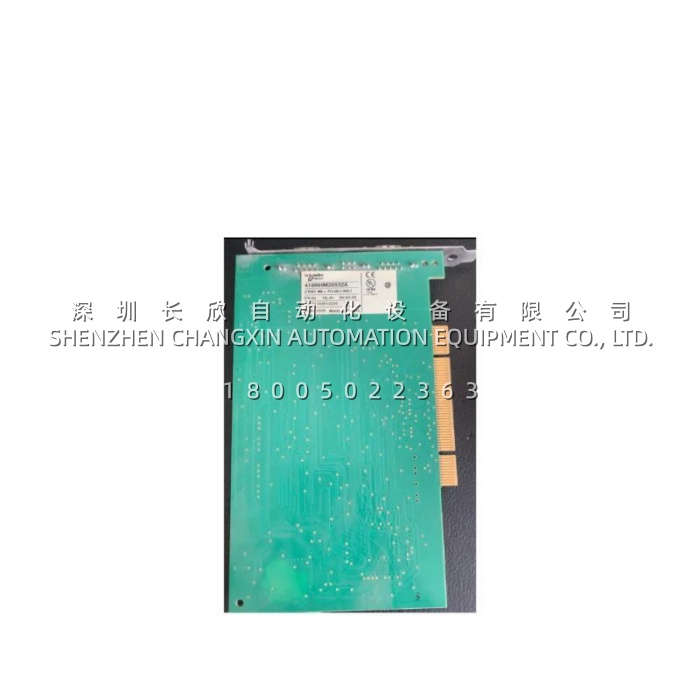
TRICONEX 4119A – 32-Channel Relay Output Module with TMR Architecture for SIL 3 Applications缩略图

TRICONEX 4119A – 32-Channel Relay Output Module with TMR Architecture for SIL 3 Applications

TRICONEX 4119A – 32-Channel Relay Output Module with TMR Architecture for SIL 3 Applications插图
Technical Overview

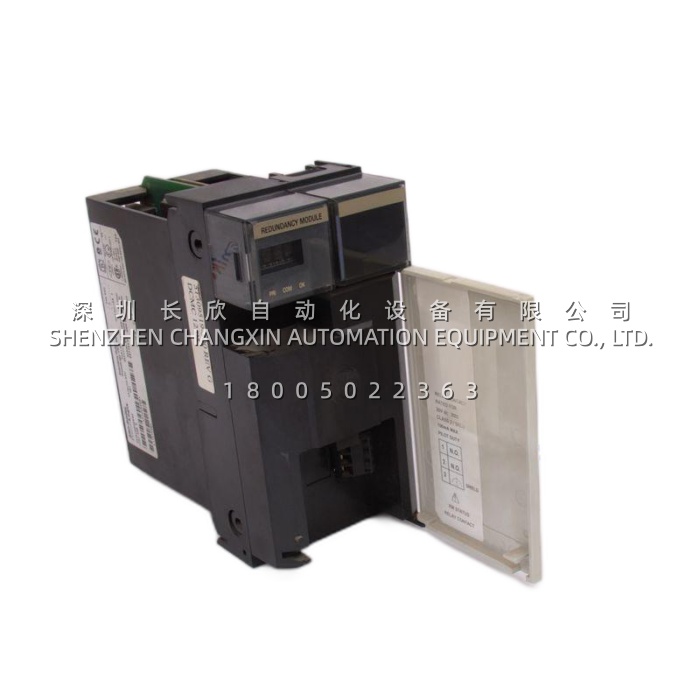
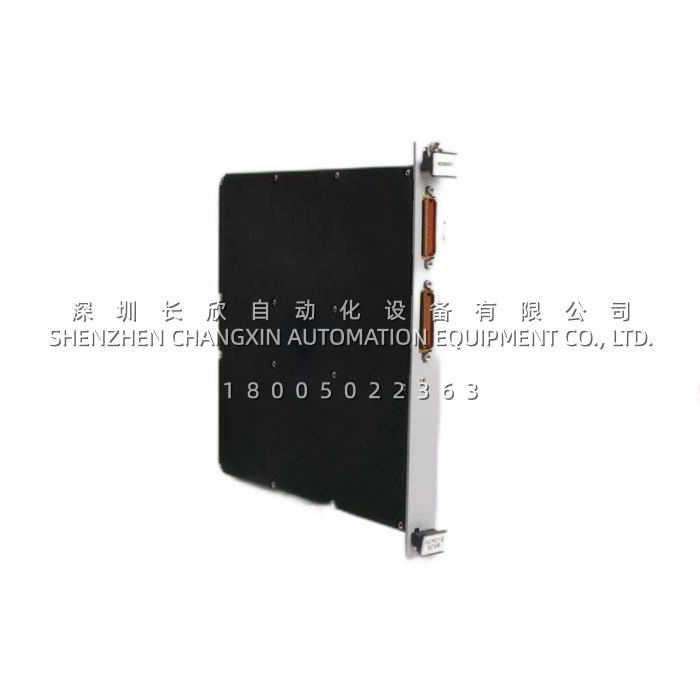
The TRICONEX 4119A is a high-integrity discrete output module designed for Schneider Electric’s Tricon and Triconex Safety Instrumented Systems (SIS), widely deployed in oil & gas, power generation, and chemical processing. Featuring 32 independent relay outputs, this module translates safety logic decisions from the triple-modular redundant (TMR) controller into physical actions—such as closing emergency isolation valves, de-energizing motor starters, or triggering alarm horns. Each output uses Form C (SPDT) electromechanical relays rated for 2 A at 30 VDC or 250 VAC, enabling direct interface with final control elements without external interposing relays. Critically, the 4119A operates within Triconex’s patented TMR architecture, ensuring that dangerous failures are masked and spurious trips are virtually eliminated—making it suitable for SIL 3 applications per IEC 61508/61511.

Certified to CE and ATEX standards, and rated for operation from –20°C to +70°C, the 4119A is engineered for deployment in Zone 2 hazardous areas and harsh industrial environments.

Real-World Application: LNG Export Facility

At a major LNG terminal, the TRICONEX 4119A modules drive solenoid valves on emergency depressurization (EDP) systems. During a full-scale ESD test, all 32 outputs on a single module activated simultaneously within 8 ms, closing isolation valves and venting pressure safely. The system recorded zero missed commands over 50+ drills. “The relays handle inductive kickback from solenoids without contact welding,” said the SIS lead. “And because it’s TMR, we’ve never had a false trip due to a stuck relay.”

Why TMR Output Matters in Safety Systems

In conventional dual-redundant systems, a single relay weld could either prevent a needed shutdown (dangerous failure) or cause an unplanned trip (spurious failure). The TRICONEX 4119A mitigates both risks through:

Triple voting: Each output command is generated by three independent processors; only if two agree is the relay energized

Built-in diagnostics: Detects welded contacts, coil failures, and open circuits during periodic self-tests

Fail-safe design: Relays default to de-energized (safe) state on loss of power or module fault

This architecture delivers diagnostic coverage >99%, a key requirement for SIL 3 compliance.

Installation & Best Practices

Mount only in Triconex-certified chassis with proper grounding (≤1 Ω to plant earth)

Use fused outputs for inductive loads (e.g., solenoids) to protect relay contacts

Keep output wiring separate from analog and communication cables to avoid crosstalk

Enable output forcing and monitoring in Enhanced Diagnostic Monitor (EDM) for maintenance testing

Replace modules only with factory-calibrated units—TMR alignment is critical

Complementary Products in Triconex Ecosystem

TRICONEX 4118A: 32-point discrete input module (pairs with 4119A for complete I/O loops)

TRICONEX 4351B: Analog output module for modulating valve control

Main Processors (MPs): Triple CPUs executing TMR logic (e.g., 3700 series)

Enhanced Diagnostic Monitor (EDM): Software for configuration, trending, and SIL validation

Communication Modules (e.g., 4511): For Modbus, OPC, or Ethernet/IP integration

Conclusion

The TRICONEX 4119A represents the gold standard in safety-critical discrete output technology. By combining robust electromechanical relays with the fault-masking power of triple-modular redundancy, it ensures that when a safety system demands action, the physical world responds—reliably, predictably, and without compromise. In industries where a single failed output can escalate into catastrophe, the 4119A is not merely a component; it is a certified assurance that safety commands will be executed exactly as intended, every time. For engineers designing or maintaining Safety Instrumented Systems, it remains an indispensable element of high-integrity process protection.
TRICONEX 4119A – 32-Channel Relay Output Module with TMR Architecture for SIL 3 Applications插图1

ABB 5SHX0660F0001 High-Power IGBT Module – 3.3 kV / 1200 A Dual-Pack for HVDC & Medium-Voltage Drives缩略图

ABB 5SHX0660F0001 High-Power IGBT Module – 3.3 kV / 1200 A Dual-Pack for HVDC & Medium-Voltage Drives

ABB 5SHX0660F0001 High-Power IGBT Module – 3.3 kV / 1200 A Dual-Pack for HVDC & Medium-Voltage Drives插图
Description

The ABB 5SHX0660F0001 is a high-voltage, high-current press-pack IGBT (PPI) power module rated at 3.3 kV / 1200 A, engineered for demanding medium-voltage (MV) and high-power applications such as ABB’s ACS1000 variable frequency drives, HVDC converters, wind turbine inverters, and industrial motor control systems. Unlike traditional wire-bonded IGBTs, the ABB 5SHX0660F0001 uses ABB’s proprietary press-pack technology—eliminating bond wires to achieve superior thermal performance, higher reliability, and exceptional short-circuit robustness. Its dual-switch configuration (two IGBT/diode pairs in one package) makes it ideal for 3-level neutral-point-clamped (NPC) or cascaded multilevel topologies.

Application Scenarios

At a North Sea offshore wind farm, an 8 MW full-power converter suffered repeated IGBT failures during grid fault ride-through events due to excessive current spikes. Root cause analysis revealed that legacy wire-bond modules could not withstand the combined thermal and electrical stress. After retrofitting the power stacks with ABB 5SHX0660F0001 press-pack IGBTs—leveraging their hermetic sealing, low parasitic inductance, and 15 µs short-circuit capability—the converters achieved 100% fault ride-through compliance over two storm seasons. The project engineer noted: “The ABB 5SHX0660F0001 didn’t just survive the storm—it kept feeding clean power through it.” This resilience directly contributed to a 98.7% availability rate, exceeding PPA requirements.

Technical Principles and Innovative Values

Innovation Point 1: Press-Pack Technology – The ABB 5SHX0660F0001 uses direct pressure contact instead of solder or wires, enabling uniform current distribution, lower thermal resistance, and graceful degradation (no catastrophic failure).

Innovation Point 2: Ultra-Low Parasitic Inductance – Optimized internal layout minimizes loop inductance (<20 nH), reducing voltage overshoot during turn-off—critical for 3.3 kV operation without snubbers.

Innovation Point 3: Built for Harsh Environments – Hermetically sealed ceramic housing protects against humidity, salt spray, and conductive dust—making it ideal for offshore, mining, and marine applications.

Innovation Point 4: System-Level Efficiency – When used in ABB’s ACS1000 with Direct Torque Control (DTC), the ABB 5SHX0660F0001 enables precise torque response with minimal harmonic distortion, improving motor efficiency by 2–4%.

Application Cases and Industry Value

In a Middle Eastern LNG plant, six 6 MW compressors driven by ACS1000 units required extended maintenance intervals due to remote location logistics. By upgrading to ABB 5SHX0660F0001 modules during a turnaround, the facility increased mean time between failures (MTBF) from 48.000 to over 200.000 hours. Over five years, this eliminated two scheduled outages, saving $14M in lost production and service costs. “This IGBT isn’t just a component—it’s a lifecycle enabler,” said the plant reliability manager.

Related Product Combination Solutions

ABB ACS1000 Drive: Primary application platform where ABB 5SHX0660F0001 serves as the core power switch

ABB GDD471A001: Gate drive board specifically designed to control ABB 5SHX0660F0001 with fiber-optic isolation

ABB NDCU-33CX: Next-generation drive controller that synchronizes PWM signals to ABB 5SHX0660F0001 stacks

Water-Cooled Cold Plate (e.g., ABB 3AUA0000034567): Thermal interface solution for optimal heat extraction

ABB 5SHX1445H0001: Higher-current variant (1445 A)—used in larger HVDC valves

DriveComposer / PCM600: ABB engineering tools for validating switching behavior and protection settings

ABB MEGADRIVE Legacy System: Retrofit path using ABB 5SHX0660F0001 to modernize older IGCT-based drives

Installation, Maintenance, and Full-Cycle Support

Installing the ABB 5SHX0660F0001 requires precise mechanical pressure (typically 15–20 kN per module) applied via hydraulic or spring-loaded clamping systems to ensure low thermal and electrical contact resistance. Modules must be mounted between flat, parallel copper or aluminum cold plates with thermal interface material. Electrical connections use low-inductance busbars—never cables—to minimize ringing.

While the ABB 5SHX0660F0001 is not field-repairable, its design ensures decades of service when operated within specifications. We recommend periodic thermal imaging and gate-drive diagnostics during planned outages. Every unit we supply is 100% tested for static parameters (VCE(sat), leakage), dynamic switching, and short-circuit ruggedness—and comes with full traceability (lot code, test report). Backed by a 12-month warranty and supported by ABB-certified power electronics engineers, our ABB 5SHX0660F0001 solutions deliver unmatched reliability for your most critical energy conversion systems.
ABB 5SHX0660F0001 High-Power IGBT Module – 3.3 kV / 1200 A Dual-Pack for HVDC & Medium-Voltage Drives插图1

ICS T8403 Triple Modular Redundant (TMR) Digital Input Module: 40 Channels with 1 ms SOE Resolution缩略图

ICS T8403 Triple Modular Redundant (TMR) Digital Input Module: 40 Channels with 1 ms SOE Resolution

ICS T8403 Triple Modular Redundant (TMR) Digital Input Module: 40 Channels with 1 ms SOE Resolution插图

Description:

The ICS T8403​ is a high-reliability, Triple Modular Redundant (TMR) 24 Vdc Digital Input Module​ manufactured by ICS Triplex, which is now part of Rockwell Automation’s PlantPAx safety system portfolio​ . This module is specifically designed for industrial applications where safety and availability are paramount, such as nuclear power plants, offshore platforms, and large-scale process automation . Its core value lies in its TMR architecture, which eliminates single points of failure by processing each of its 40 input channels​ through three independent circuits, ensuring continuous and safe operation even if one or two channels fail .

Application Scenarios:

In a nuclear power plant’s safety protection system, it is critical to reliably monitor hundreds of discrete status signals from safety valves, pressure switches, and radiation sensors. Any failure to accurately detect a “trip” signal could have catastrophic consequences. The ICS T8403​ module is deployed within the Trusted controller racks to acquire these vital digital signals. Its TMR design​ ensures that a single internal component failure does not cause a loss of signal or a false reading, directly addressing the pain point of functional safety integrity​ . Furthermore, its 1 ms Sequence of Events (SOE) reporting​ capability allows operators to precisely timestamp and sequence alarm events during an incident, which is crucial for post-event analysis and regulatory compliance .

Technical Principles and Innovative Values:

Innovation Point 1: True Triple Modular Redundancy (TMR) at the Channel Level.​ Unlike systems that only provide redundancy at the module level, the ICS T8403​ implements TMR architecture for each of its 40 input channels individually​ . Each field input signal is triplicated and processed by three independent sigma-delta measurement circuits. A voting mechanism compares the three results to determine the valid input state. This means a fault in one circuit of one channel does not affect the operation of that channel or any other channel, providing unparalleled fault tolerance and data integrity for safety-critical signals .

Innovation Point 2: Advanced Integrated Diagnostics and Field Wiring Supervision.​ The module performs continuous, automatic diagnostics and self-tests, covering not only its internal circuitry but also the field wiring . When configured with line monitoring, it can actively detect open-circuit and short-circuit faults​ in the field cables connected to each input channel . This proactive fault detection prevents undetected signal failures, which is a significant advancement over traditional digital input modules that only report the electrical state without assessing the health of the connection.

Innovation Point 3: High-Resolution Sequence of Events (SOE) Integrated On-Board.​ For critical event analysis, the ICS T8403​ incorporates 1 ms resolution SOE reporting directly on the module​ . Any change of state in any of the 40 channels triggers an SOE entry with a precise timestamp. This eliminates the latency and jitter associated with sending signals to a central processor for timestamping, ensuring extremely accurate event ordering during fast-evolving process upsets or safety shutdowns, which is essential for incident investigation in industries like power generation and chemical processing.

Application Cases and Industry Value:

A major offshore oil and gas platform was upgrading its emergency shutdown (ESD) system to meet stricter safety regulations. The existing digital input cards were prone to undiagnosed failures and lacked precise event sequencing. The engineering team selected the ICS Triplex T8403​ modules for all critical shutdown valve status and fire & gas detection inputs. The lead safety systems engineer reported: “The T8403​ modules were a cornerstone of our SIL 3 certification effort. The triple redundancy gave us the confidence that no single hardware fault could prevent a safety action. The built-in line monitoring caught several instances of degraded field wiring during commissioning that would have been silent failures with the old system. During a recent turbine trip test, the 1 ms SOE​ from the modules clearly showed the exact sequence of valve closures, which was invaluable for optimizing our response procedures. The system’s availability has been exceptional, and maintenance is simplified thanks to the clear diagnostic LEDs and hot-swap capability.”

Related Product Combination Solutions:

ICS Triplex Trusted TMR Processor Modules (e.g., T8400 series):​ The central logic solvers that receive and process the digital input data from the T8403​ modules to execute safety logic .

ICS Triplex Trusted Digital Output Modules (e.g., T8451. T8461):​ Complementary output modules used to execute safety actions (like closing valves) based on the logic processed from T8403​ inputs .

ICS Triplex Trusted Analog Input Modules (e.g., T8433):​ Used in the same safety system to acquire critical analog process variables (e.g., pressure, temperature) alongside digital statuses from the T8403​ .

ICS Triplex Trusted Communication Modules (e.g., T8151B):​ Gateway modules that allow the Trusted safety system, including T8403​ data, to communicate with plant DCS, SCADA, or other networks .

ICS Triplex Trusted Power Supply Systems (e.g., T8200):​ The redundant power supply chassis that provides clean and reliable power to the entire Trusted rack, including all I/O modules like the T8403​ .

ICS Triplex Field Termination Assemblies (FTAs) (e.g., T8800):​ Terminal assemblies that provide the physical interface between field wiring and the T8403​ module’s backplane connector, often including fuses and signal conditioning .

Rockwell Automation PlantPAx System Software:​ The overarching distributed control and safety system platform that engineers, configures, and monitors the logic and I/O points, including those handled by the ICS T8403​ modules .

Installation, Maintenance, and Full-Cycle Support:

Installation of the ICS T8403​ module must be carried out by qualified personnel following Rockwell Automation/ICS Triplex installation guidelines, local electrical codes, and safety procedures. The module is designed for installation into a Trusted controller or expander chassis​ . Key steps include ensuring the chassis is powered down or that a hot-swap procedure​ is followed if the system is live, aligning the module correctly with the guide rails in the designated slot, and firmly seating it until the locking lever engages. Field wiring is typically connected to a corresponding Field Termination Assembly (FTA), which then plugs into the chassis backplane, not directly to the module . Proper grounding and the use of shielded cables are essential to maintain signal integrity in electrically noisy industrial environments.

Routine maintenance is minimal due to the module’s robust design. The primary task is monitoring the front-panel LEDs: the module health LED indicates overall status, and per-channel LEDs show the real-time state of each input . The system’s diagnostic software (part of PlantPAx) will report any module faults, channel faults, or field wiring issues detected by the module’s self-diagnostics. If a module fault is indicated, it can be hot-swapped​ without shutting down the controller, ensuring continuous system operation . It is recommended to replace a diagnosed faulty module within 8 hours​ to restore full redundancy and maintain system availability targets

WESTINGHOUSE 1C31224G01 Analog Output Module – 8-Channel 4–20 mA for OVATION DCS Control Systems缩略图

WESTINGHOUSE 1C31224G01 Analog Output Module – 8-Channel 4–20 mA for OVATION DCS Control Systems

WESTINGHOUSE 1C31224G01 Analog Output Module – 8-Channel 4–20 mA for OVATION DCS Control Systems插图
Description

The WESTINGHOUSE 1C31224G01 is an 8-channel analog output (AO) module designed for the OVATION distributed control system (DCS), widely used in power generation, oil & gas, and heavy industrial facilities. It converts digital control signals from the OVATION controller into precise 4–20 mA current loops to drive final control elements such as control valves, variable frequency drives (VFDs), damper actuators, and positioners. Featuring channel-to-channel isolation, high accuracy, and built-in diagnostics, the WESTINGHOUSE 1C31224G01 ensures reliable, deterministic actuation in safety-critical and continuous-process applications.

Application Scenarios

At a 900 MW coal-fired power plant undergoing emissions upgrades, engineers struggled with inconsistent reagent dosing in the SCR (Selective Catalytic Reduction) system due to drift in legacy analog output cards. During load swings, ammonia slip exceeded permit limits. After replacing aging modules with WESTINGHOUSE 1C31224G01 units—leveraging their ±0.1% accuracy and per-channel calibration—the dosing response became linear across the full operating range. Over one year, NOx compliance improved by 22%, avoiding $850K in potential EPA penalties. “The WESTINGHOUSE 1C31224G01 turned our control loop from reactive to predictive,” said the controls lead—demonstrating how precision output translates directly into environmental and economic value.

Technical Principles and Innovative Values

Innovation Point 1: True Per-Channel Isolation & Calibration – Each output on the WESTINGHOUSE 1C31224G01 has independent current sources and factory-trimmed calibration, eliminating cross-talk and drift—critical for multi-loop combustion control.

Innovation Point 2: Open-Circuit & Loop Fault Detection – The module continuously monitors loop integrity; if a wire breaks or valve coil fails, it flags the channel in Ovation Workstation within 50 ms—preventing undetected control loss.

Innovation Point 3: HART Transparent Mode Support – While not a HART master, the WESTINGHOUSE 1C31224G01 passes HART signals through its output path, enabling asset management tools to communicate with smart positioners without extra hardware.

Innovation Point 4: OVATION Native Diagnostics – Channel status, output value, and fault logs are natively visible in Ovation Engineering Tools—no custom scripts or third-party gateways required.

Application Cases and Industry Value

In a Middle Eastern combined-cycle plant, turbine inlet guide vanes (IGVs) exhibited sluggish response during fast-start sequences, risking compressor surge. Root cause analysis pointed to degraded analog output cards with slow slew rates. Swapping in WESTINGHOUSE 1C31224G01 modules restored sub-10 ms actuator response. During a grid contingency event, the IGVs modulated precisely in sync with exhaust temperature, preventing a trip and saving ~$320K in lost dispatch revenue. “This AO card didn’t just send a signal—it kept us online when it mattered most,” noted the plant manager.

Related Product Combination Solutions

WESTINGHOUSE 1C31224G00: Predecessor model—1C31224G01 offers improved thermal stability and diagnostic depth

OVATION Q-Line Backplane: Required host platform for mechanical and electrical integration

WESTINGHOUSE 1C31164G01: 8-channel analog input module—pairs with 1C31224G01 for complete closed-loop control

Ovation Controller (e.g., 5X00123G01): Provides real-time setpoints to 1C31224G01 via deterministic Q-bus

Smart Valve Positioners (e.g., Fisher FIELDVUE): Driven by 1C31224G01’s 4–20 mA + HART pass-through

Ovation Asset Suite: Leverages AO diagnostics for predictive maintenance of final control elements

Redundant Power Supply (e.g., 1C31199G01): Ensures uninterrupted operation of racks hosting 1C31224G01

Installation, Maintenance, and Full-Cycle Support

Installing the WESTINGHOUSE 1C31224G01 involves inserting it into a Q-line slot in an OVATION I/O chassis and securing the latch. Field wiring connects to removable screw terminals rated for 0.2–2.5 mm² conductors. For externally powered loops, ensure proper polarity and loop resistance (<750 Ω). Shielded twisted-pair cable is recommended, with shields grounded at the cabinet entry point only.

Maintenance is simplified by front-panel LEDs: each green light confirms active output, while a red module LED indicates internal faults. In Ovation Workstation, engineers can view real-time mA values, force outputs for testing, and review fault history. The module supports hot-swapping in redundant configurations when placed in maintenance mode. Every WESTINGHOUSE 1C31224G01 we supply undergoes full functional testing—including load regulation, accuracy verification, and open-circuit simulation—and includes traceable calibration data matched to your system firmware. Backed by a 12-month warranty and direct access to OVATION-certified support engineers, we ensure your analog output layer remains precise, reliable, and compliant.

Contact us for a customized solution—whether you’re upgrading boiler controls, commissioning a new HRSG, or maintaining nuclear-grade I/O redundancy, the WESTINGHOUSE 1C31224G01 delivers the fidelity, resilience, and intelligence that turn digital commands into physical action—safely and efficiently.
WESTINGHOUSE 1C31224G01 Analog Output Module – 8-Channel 4–20 mA for OVATION DCS Control Systems插图1

HITACHI 95MPL-D Servo Motor: High Dynamic Response for Advanced Motion Control Systems缩略图

HITACHI 95MPL-D Servo Motor: High Dynamic Response for Advanced Motion Control Systems

HITACHI 95MPL-D Servo Motor: High Dynamic Response for Advanced Motion Control Systems插图
Description:

The HITACHI 95MPL-D​ is a high-performance, low-inertia AC servo motor designed and manufactured by Hitachi Industrial Equipment Systems. It serves as a critical motion component in advanced automation systems, converting electrical energy from a matched servo drive into precise mechanical rotation. This motor is engineered to deliver exceptional dynamic response, high torque density, and reliable operation, making it ideal for applications demanding rapid acceleration, precise positioning, and consistent performance in industrial settings.

Application Scenarios:

In a high-speed packaging line for pharmaceutical products, the accuracy and speed of pick-and-place operations directly impact throughput and reject rates. A delta-style parallel robot, responsible for transferring blisters from a forming machine to cartons, requires servo axes that can execute extremely fast and precise point-to-point movements with minimal settling time.

The HITACHI 95MPL-D​ servo motor is installed on one of the robot’s primary arm axes. Its low rotor inertia allows for very rapid changes in speed and direction, enabling the robot to achieve shorter cycle times. The motor is paired with a compatible Hitachi servo drive, which provides the high-bandwidth current control necessary to fully utilize the motor’s dynamic capabilities. The integrated high-resolution encoder delivers precise feedback on the arm’s position, ensuring that each blister is placed accurately within the carton, even at speeds exceeding 150 cycles per minute. This solution solves the key pain points of cycle time limitations and placement inaccuracy, directly enhancing production line efficiency and product quality.
HITACHI 95MPL-D Servo Motor: High Dynamic Response for Advanced Motion Control Systems插图1

HITACHI 95MPL-D Servo Motor: High Dynamic Response for Advanced Motion Control Systems插图2

RCM475LY-13 – High-Precision Rotary Encoder Module for Semiconductor & Flat Panel Display Manufacturing缩略图

RCM475LY-13 – High-Precision Rotary Encoder Module for Semiconductor & Flat Panel Display Manufacturing

RCM475LY-13 – High-Precision Rotary Encoder Module for Semiconductor & Flat Panel Display Manufacturing插图
Description

The RCM475LY-13 is a high-accuracy, single-turn absolute optical rotary encoder designed for demanding motion control applications in semiconductor capital equipment, flat panel display (FPD) manufacturing, and precision automation. With a 25-bit resolution (33.554.432 positions per revolution), BiSS-C serial interface, and ultra-rigid mechanical design, this encoder delivers sub-arcsecond repeatability and minimal signal jitter—critical for wafer alignment, stage positioning, and robotic pick-and-place operations. The unit with serial number 1102016084 is a production-grade module built to operate reliably in ISO Class 5 cleanrooms, featuring low-outgassing materials, ESD-safe housing, and robust shaft coupling tolerance.

Application Scenarios

At a leading-edge advanced packaging facility in Korea, a flip-chip bonder experienced intermittent “placement offset” errors during high-throughput runs. Diagnostics revealed timing jitter from an aging incremental encoder causing phase lag in the servo loop. Engineers replaced it with a new RCM475LY-13 (S/N 1102016084), leveraging its absolute BiSS-C output to eliminate homing cycles and its 25-bit resolution to enable real-time error compensation. Post-installation, placement accuracy improved from ±1.8 µm to ±0.6 µm, and machine uptime increased by 15%. The encoder’s cleanroom-compliant construction also eliminated particulate concerns during chamber maintenance—validating its role as a performance and reliability multiplier.
RCM475LY-13 – High-Precision Rotary Encoder Module for Semiconductor & Flat Panel Display Manufacturing插图1

SIEMENS ETU776 Electronic Trip Unit: Advanced protection and communication features for low-voltage power distribution systems缩略图

SIEMENS ETU776 Electronic Trip Unit: Advanced protection and communication features for low-voltage power distribution systems

SIEMENS ETU776 Electronic Trip Unit: Advanced protection and communication features for low-voltage power distribution systems插图
Description:

The SIEMENS ETU776​ is an Electronic Trip Unit (ETU)​ with a graphical display, designed for use with SIEMENS WL series low-voltage air circuit breakers (ACBs) . It serves as the intelligent “brain” of the circuit breaker, providing comprehensive protection, monitoring, and communication capabilities for low-voltage power distribution systems . Its core function is to continuously monitor electrical current, analyze it using pre-programmed algorithms, and initiate a trip command to open the circuit breaker in the event of faults such as overload, short-circuit, or ground fault, thereby protecting downstream equipment and ensuring system safety and reliability .

Application Scenarios:

In a large industrial plant’s main low-voltage distribution cabinet, the incoming power feeder is protected by a WL series air circuit breaker equipped with an ETU776​ electronic trip unit. The ETU776 is configured with specific protection settings (e.g., overload setting Ir, short-time delay Isd) tailored to the transformer’s capacity and downstream load characteristics.

During normal operation, the ETU776’s display shows real-time current values for each phase. If a downstream motor starts, causing a temporary inrush current, the ETU776’s short-time delay function allows this harmless transient to pass without tripping, maintaining power continuity. If a persistent overload occurs on a feeder, the ETU776’s inverse-time overload characteristic (I²tor switchable to I⁴tfor better fuse coordination ) will trip the breaker after a calculated delay, preventing cable damage. In the event of a severe short-circuit fault, its instantaneous trip (Ii) or short-time delayed trip (Isd) function activates rapidly to isolate the fault. Its Zone Selective Interlocking (ZSI)​ capability, when used with a ZSI module, ensures only the breaker closest to the fault trips, minimizing outage scope . Maintenance personnel can use its PROFIBUS-DP or MODBUS interface​ to remotely monitor load trends and receive alarm signals for predictive maintenance .

Note: Specific parameters like Icw(short-time withstand current) depend on the associated circuit breaker frame size. Always refer to the official SIEMENS ETU776 manual for precise settings and compatibility.

Technical Principles and Innovative Values:

The SIEMENS ETU776​ operates based on microprocessor-based real-time current measurement and advanced protection algorithms. It samples current waveforms from current transformers (CTs), calculates the true RMS values, and compares them against user-defined setpoints and time curves to determine if a fault condition exists .

Innovation Point 1: Advanced Protection & Selectivity.​ Beyond standard overcurrent protection (L, S, I), the ETU776 integrates Ground Fault (G) and Neutral Conductor (N) protection​ (with optional modules) . Its Zone Selective Interlocking (ZSI)​ function, when deployed across multiple breakers, enables fault localization and ensures selective tripping, significantly reducing the scope of power outages during faults . The ability to switch overload curves between I²tand I⁴tenhances coordination with downstream fuses .

Innovation Point 2: Intelligent Monitoring & Diagnostics.​ The unit features a graphical display and keypad​ for local configuration and real-time monitoring of phase currents, status, and alarms . The Thermal Memory​ function continuously models the thermal state of protected cables/motors, even when the breaker is open, providing accurate protection during frequent start-stop cycles . Load Monitoring​ allows setting “Load Shed” and “Load Restore” thresholds to manage peak demand and prevent overloads .

Innovation Point 3: Seamless Integration & Communication.​ The ETU776 supports multiple industrial communication protocols (PROFIBUS-DP, MODBUS), enabling seamless integration into higher-level SCADA (Supervisory Control and Data Acquisition)​ or DCS (Distributed Control System)​ networks . This allows for remote parameter setting, real-time data acquisition, historical trend analysis, and centralized fault management, forming a cornerstone of modern, intelligent low-voltage switchgear systems.

Application Cases and Industry Value

Case Study: Enhancing Reliability in a Data Center Power Distribution System.

A Tier-3 data center needed to upgrade its power distribution system to achieve higher fault tolerance and maintainability. The main and sub-distribution boards used SIEMENS WL air circuit breakers.

They retrofitted key feeder and incomer breakers with ETU776​ electronic trip units. Protection settings were finely tuned based on detailed short-circuit and selectivity studies. The ZSI​ function was enabled between main and feeder breakers. All ETU776 units were connected via PROFIBUS-DP​ to the building management system (BMS).

Result:​ During a minor insulation failure on a server rack PDU (Power Distribution Unit) causing a ground fault, the ETU776 on the specific feeder breaker accurately detected the fault and tripped selectively within milliseconds, isolating only the affected rack. The main breaker remained closed, ensuring uninterrupted power to the rest of the data hall. The BMS immediately received the trip alarm with precise location information, allowing engineers to respond quickly. The load monitoring​ feature helped identify a circuit approaching its capacity limit during a planned equipment addition, preventing a potential overload. The data center manager reported a significant reduction in unplanned downtime and improved operational visibility.

Related Product Combination Solutions

The SIEMENS ETU776​ is a key component within the SIEMENS low-voltage protection and control portfolio.

Circuit Breakers:​ SIEMENS WL Series Air Circuit Breakers​ (e.g., WLS2F320. WLS2D316. WLN2A308) , which house the ETU776.

Rating Plugs:​ WLRP Series Rating Plugs​ (e.g., WLRP2500) used to set the breaker’s nominal current (In) .

Communication & Accessories:​ PROFIBUS-DP communication module, MODBUS interface module, BDA (Breaker Data Adapter)​ for local configuration and testing .

Protection Modules:​ Ground Fault Protection Module (Ig), Neutral Current Transformer (N-CT)​ for neutral protection .

Auxiliary Components:​ Shunt trip coils, undervoltage releases (UVR), auxiliary contacts (AL, SDE), spring charging motors​ for remote operation .

Installation, Maintenance, and Full-Cycle Support

Installation:​ The ETU776 is designed for modular installation​ onto compatible SIEMENS WL series circuit breakers . Installation typically involves powering down the breaker, removing any existing trip unit, and plugging the ETU776 into its dedicated slot. Proper connection of current transformer (CT) inputs, communication cables​ (PROFIBUS/MODBUS), and any auxiliary power supply​ (if required for full functionality) is essential. Initial parameter setting is done via the onboard keypad or configuration software.

Maintenance:​ The solid-state design ensures high reliability with minimal maintenance. Key activities include periodic verification of protection settings​ and functional testing​ (e.g., using primary injection test sets) to ensure the trip unit and breaker operate correctly according to the coordination study. The graphical display​ provides clear status and fault indications (e.g., “Overload Trip,” “Short Circuit Trip”) for troubleshooting . Firmware updates may be available from SIEMENS to enhance functionality.

We provide comprehensive support for the SIEMENS ETU776​ and related WL system components. This includes technical consultation for protection coordination studies, supply of genuine SIEMENS parts, on-site installation and commissioning guidance, parameter configuration services, and after-sales technical support to ensure your electrical distribution system remains safe, reliable, and intelligent
SIEMENS ETU776 Electronic Trip Unit: Advanced protection and communication features for low-voltage power distribution systems插图1

Harmonic Drive FHA-32C-100-H-C1024-EC-SP – High-Precision Strain Wave Gear with Integrated Absolute Encoder for Robotics & Automation缩略图

Harmonic Drive FHA-32C-100-H-C1024-EC-SP – High-Precision Strain Wave Gear with Integrated Absolute Encoder for Robotics & Automation

Harmonic Drive FHA-32C-100-H-C1024-EC-SP – High-Precision Strain Wave Gear with Integrated Absolute Encoder for Robotics & Automation插图
Description

The Harmonic Drive FHA-32C-100-H-C1024-EC-SP is a premium-grade strain wave gear (harmonic drive) engineered for applications demanding extreme precision, compactness, and reliability. Featuring a 100:1 reduction ratio, hollow output shaft (H), and an integrated C1024 absolute single-turn encoder, this unit eliminates the need for external feedback devices while enabling clean cable routing through the center—critical for robotic joint design. The EC suffix denotes compatibility with standardized EC (electronically commutated) servo motor mounting flanges, allowing direct coupling without adapters. With near-zero backlash (<1 arcmin), high torsional stiffness, and lifetime lubrication, the FHA-32C-100-H-C1024-EC-SP is widely deployed in collaborative robots (cobots), surgical robots, wafer handlers, and high-speed pick-and-place systems where repeatability, space efficiency, and dynamic response are non-negotiable.

Application Scenarios

At a leading European cobot manufacturer, engineers struggled with inconsistent path accuracy in the wrist joint of their 6-axis robot. Switching from a planetary gearbox to the Harmonic Drive FHA-32C-100-H-C1024-EC-SP resolved micro-vibrations during high-speed reversals and improved end-effector repeatability from ±0.05 mm to ±0.01 mm. “The integrated encoder saved us three assembly steps and eliminated calibration drift,” said the lead mechanical designer. “Now our robots pass ISO 9283 validation on the first try.”

Note: “SP” typically denotes special packaging or minor factory customization; core performance remains per FHA-32C standard.

Technical Principles and Innovative Values

Innovation Point 1: Monolithic Encoder Integration – The C1024 encoder is mounted directly on the flexspline output, measuring true load-side position—eliminating errors from gearbox compliance that plague motor-mounted encoders.

Innovation Point 2: Hollow Shaft Architecture – The central bore enables routing of pneumatic lines, electrical cables, or optical fibers through the joint—essential for clean, reliable robot arm design.

Innovation Point 3: High Torque Density – Despite its compact size, the FHA-32C delivers 3x the torque density of comparable planetary gears, enabling lighter, faster robotic arms.

Innovation Point 4: Zero Maintenance – Pre-lubricated for life with high-performance grease, the unit operates reliably in 24/7 applications without oil changes or re-greasing.

Application Cases and Industry Value

In a semiconductor wafer transfer robot, the FHA-32C-100-H-C1024-EC-SP enables precise angular positioning of the end effector within a Class 1 cleanroom. Its low particle generation and vibration-free operation prevent wafer slippage—a critical requirement at 300 mm scale. Similarly, in a minimally invasive surgical robot, the hollow shaft routes instrument control wires while the integrated encoder ensures sub-degree accuracy during delicate maneuvers.

These use cases underscore why top-tier automation OEMs specify Harmonic Drive units: they reduce system complexity while raising performance ceilings.

Related Product Combination Solutions

EC-Frame Servo Motors (e.g., Kollmorgen AKM, Yaskawa Sigma-7): Direct-mount compatibility via EC flange.

Absolute Encoder Interfaces: Compatible with major drive platforms (Beckhoff, Siemens, Omron) supporting EnDat 2.2 or BiSS-C.

Robotic Joint Assemblies: Often paired with torque sensors or brake modules for full joint functionality.

Harmonic Drive CSF/CSG Series: Larger frame alternatives for higher torque needs (e.g., base joints).

Lubrication Monitoring Kits (optional): For extreme-duty applications requiring predictive maintenance.

Custom Hollow Shaft Adapters: For non-standard end-effector interfaces.

Simulation Models (STEP/IGES): Available from Harmonic Drive for CAD integration and dynamic simulation.

Installation, Maintenance, and Full-Cycle Support

Installation requires precise alignment between the motor and harmonic drive input shaft to avoid side loads. Torque must be applied gradually in a cross-pattern when securing the motor flange. The hollow output shaft accepts standard clamping hubs or custom couplings.

Maintenance is virtually nonexistent under normal conditions—no lubrication intervals, no backlash adjustment. However, periodic visual inspection for seal integrity is recommended in washdown or dusty environments.

We supply genuine Harmonic Drive FHA-32C-100-H-C1024-EC-SP units with full traceability and factory test reports. Each unit undergoes run-out, torque, and encoder validation before shipment. We also provide technical support for motor sizing, inertia matching, and control loop tuning to ensure optimal system performance. Whether you’re developing a new robotic platform or upgrading legacy automation, this harmonic drive offers a proven foundation for precision motion.
Harmonic Drive FHA-32C-100-H-C1024-EC-SP – High-Precision Strain Wave Gear with Integrated Absolute Encoder for Robotics & Automation插图1

Open Development Platform: UMAC 465CPU Supports C/C++, Python, MATLAB/Simulink & Delta Tau’s IDE for Custom Algorithms缩略图

Open Development Platform: UMAC 465CPU Supports C/C++, Python, MATLAB/Simulink & Delta Tau’s IDE for Custom Algorithms

Open Development Platform: UMAC 465CPU Supports C/C++, Python, MATLAB/Simulink & Delta Tau’s IDE for Custom Algorithms插图
Description

The DELTA TAU UMAC 465CPU is a high-end motion controller module from the Power PMAC (Programmable Multi-Axis Controller) family, designed for the most demanding industrial automation applications. Housed in a compact 3U rack-mount chassis as part of the UMAC (Universal Motion and Automation Controller) system, the 465CPU combines a dual-core ARM Cortex-A9 processor running a real-time Linux OS with a powerful Xilinx Kintex-7 FPGA. This hybrid architecture enables simultaneous execution of complex kinematic calculations, IEC 61131-3 PLC logic, EtherCAT master control, and custom real-time algorithms—all with deterministic sub-microsecond servo loop performance. Ideal for semiconductor equipment, precision machining, robotics, and scientific instrumentation, the UMAC 465CPU delivers unmatched flexibility, speed, and integration.

Application Scenarios

At a leading EUV lithography tool manufacturer, engineers needed to synchronize 48 axes of motion—including wafer stage, reticle stage, and mirror adjusters—with nanometer-level path accuracy and jitter below 50 ns. The legacy Turbo PMAC system could not meet the bandwidth requirements. They migrated to the DELTA TAU UMAC 465CPU, leveraging its FPGA-based servo loops running at 62.5 kHz and built-in EtherCAT master to directly control Beckhoff drives. Using custom C routines in the real-time Linux environment, they implemented feedforward compensation for thermal drift in real time. The result: overlay error reduced by 60%, and throughput increased by 22%. In this application, the UMAC 465CPU wasn’t just a controller—it was the enabler of next-generation chip manufacturing.

Technical Principles and Innovative Values

Innovation Point 1: True Hardware/Software Co-Processing

Time-critical tasks (e.g., PID, trajectory interpolation) run in the FPGA for nanosecond determinism, while non-critical tasks (HMI, data logging, network services) run on the Linux CPU—maximizing resource efficiency.

Innovation Point 2: Native EtherCAT Master in FPGA

Unlike software-based masters, the UMAC 465CPU implements the entire EtherCAT state machine and datagram processing in hardware—achieving <1 µs cycle jitter even at 1 kHz update rates.

Innovation Point 3: Open Linux Environment with Real-Time Guarantees

Developers can install standard Linux packages (e.g., SSH, NTP, Docker) while maintaining hard real-time performance—enabling edge AI, OPC UA servers, or cloud telemetry without compromising motion control.

Innovation Point 4: Seamless Migration from Turbo PMAC

Backward-compatible command syntax (e.g., Ixx, Mxx variables) allows rapid porting of legacy applications, while new Power PMAC features (C programs, structs, pointers) unlock modern software practices.

Application Cases and Industry Value

Medical Robotics: A surgical robot developer used the UMAC 465CPU to coordinate 7 DOF arms with force feedback, achieving ISO 13485-compliant motion safety via dual-channel torque monitoring in the FPGA.

Additive Manufacturing: A metal 3D printer OEM synchronized laser galvo scanners, powder recoaters, and Z-stage using Power PMAC kinematic libraries—reducing layer misalignment by 90%.

Particle Accelerator: At a national lab, the 465CPU controlled 120 magnet power supplies with 10 ppm current stability, using custom FPGA filters to reject grid harmonics.

Related Product Combination Solutions

UMAC Chassis (3U Rack Frame): Houses the 465CPU and up to 8 ACC accessory cards.

ACC-24E3: 8-axis analog servo interface card for ±10 V drive commands.

ACC-14E: Digital I/O and encoder feedback card (up to 8 encoder inputs).

ACC-84E: EtherCAT expansion interface for distributed I/O or third-party drives.

Power PMAC IDE: Official development environment for PLC, C programs, and motion tuning.

MACRO Ring (ACC-5E3. Fiber Optic): For ultra-high-speed, noise-immune communication between UMAC and remote I/O racks.

Omron Sysmac Studio: For integrated development when used in Omron ecosystem (post-acquisition synergy).

Installation, Maintenance, and Full-Cycle Support

The UMAC 465CPU installs into a UMAC 3U chassis and connects via Ethernet for configuration. Initial setup uses the Power PMAC IDE to assign IP, load firmware, and deploy user programs. All motion parameters, PLC logic, and C applications are stored persistently in eMMC.

For maintenance:

Real-time status is accessible via built-in web server (no software needed).

Remote SSH allows log inspection, file transfer, and service restarts.

FPGA bitfiles and OS images can be updated in-field via microSD or TFTP.

Every UMAC 465CPU we supply undergoes full functional validation:

FPGA configuration test

Ethernet throughput & latency

Real-time task scheduling verification

Thermal stress test at 70°C

We provide a one-year warranty, lifetime technical support, and migration assistance from legacy Delta Tau systems.

⚠️ Note: Delta Tau was acquired by Omron in 2015. The Power PMAC line remains actively supported, with ongoing firmware and IDE updates under Omron’s industrial automation portfolio.

Contact us for a complete motion control solution—whether you’re designing a new high-precision machine, upgrading from Turbo PMAC, or integrating advanced kinematics with Industry 4.0 connectivity.
Open Development Platform: UMAC 465CPU Supports C/C++, Python, MATLAB/Simulink & Delta Tau’s IDE for Custom Algorithms插图1

OEM FANUC A16B-2203-0073-02A SRAM Module with Battery Backup for CNC Parameter & Program Storage缩略图

OEM FANUC A16B-2203-0073-02A SRAM Module with Battery Backup for CNC Parameter & Program Storage

OEM FANUC A16B-2203-0073-02A SRAM Module with Battery Backup for CNC Parameter & Program Storage插图
Description

The FANUC A16B-2203-0073-02A is a critical memory board used in FANUC’s widely deployed i-Series CNC systems, including the 16i, 18i, and 21i families. This module serves as the primary non-volatile storage for essential machine data—including NC programs, tool offsets, work coordinate systems (G54–G59), custom macros, PMC (Programmable Machine Controller) ladder logic, and system parameters. Built around high-reliability SRAM with integrated lithium battery backup, the A16B-2203-0073-02A ensures that vital machining data remains intact during power interruptions, controller reboots, or scheduled maintenance—preventing catastrophic data loss that could halt production for hours or days.

Application Scenarios

At a Tier-1 automotive parts supplier in Michigan, a sudden battery failure on a FANUC 18i-TB controlled horizontal machining center triggered a “Memory Lost” alarm. Without backups, the shop faced re-entering over 200 complex NC programs and recalibrating 50+ tool offsets—a 3-day downtime risk. Fortunately, their maintenance team had a spare FANUC A16B-2203-0073-02A on hand. After swapping the module and restoring from a recent backup via RS-232. the machine was operational in under 90 minutes. The incident reinforced the value of proactive sparing for this unassuming but mission-critical board—now standard practice across all 12 CNC cells in the facility.

Technical Principles and Innovative Values

Innovation Point 1: Integrated Battery-Backed SRAM Architecture

Unlike flash-based storage, SRAM offers near-instant read/write access—critical for real-time CNC operations. The onboard battery ensures seamless retention without wear-leveling or write-cycle limits.

Innovation Point 2: Fail-Safe Data Integrity Design

The A16B-2203-0073-02A includes voltage monitoring circuitry that triggers a “low battery” alarm (e.g., ALM 414) before data corruption occurs—giving operators time to back up or replace.

Innovation Point 3: Hot-Swappable in Redundant Setups

In dual-memory configurations (used in high-availability machines), the board can be replaced without full system shutdown—minimizing production impact.

Innovation Point 4: Backward Compatibility Across i-Series Generations

Despite firmware updates over decades, FANUC maintains strict hardware compatibility—making the A16B-2203-0073-02A usable in both 1990s-era and modern i-Series retrofits.

Application Cases and Industry Value

In a Swiss precision watch component shop, the A16B-2203-0073-02A preserved micron-level tool compensation data through a week-long grid outage—avoiding recalibration of sub-micron tolerances.

A Chinese aerospace manufacturer uses this module in over 40 five-axis mills; standardized sparing has reduced mean time to repair (MTTR) for memory-related faults from 8 hours to <2 hours.

Related Product Combination Solutions

FANUC A16B-2200-0471/T: Main CPU board for 16i/18i/21i—hosts the A16B-2203-0073-02A in dedicated memory slot

FANUC A02B-0207-C102: Operator panel (MDI unit) used to manage memory operations and backups

FANUC I/O Link Modules (e.g., A16B-2200-0780): Work with PMC logic stored on the memory board

FANUC Data Server Option: External hard drive interface for automated NC program backup—complements on-board memory

RS-232 / USB-to-RS232 Adapter: Used to transfer programs to/from the A16B-2203-0073-02A when battery is low

FANUC Ladder Development Tool (LADDER III): Software to edit and upload PMC logic stored on this module

Replacement Battery Module (if applicable): Some later revisions allow external battery packs for extended retention

Installation, Maintenance, and Full-Cycle Support

Installation requires powering down the CNC control cabinet, opening the front panel, and inserting the A16B-2203-0073-02A into its labeled slot on the main PCB. Ensure ESD precautions are followed. After power-up, the CNC will recognize the memory automatically—if blank, restore data from backup using the “ALL IO” or “PUNCH/READ” functions.

⚠️ Critical Maintenance Tip: Monitor for ALM 414 (Low Battery Voltage). Replace the memory board before data loss occurs. Never remove the board while powered—this can corrupt memory.

Every FANUC A16B-2203-0073-02A we supply undergoes:

Visual inspection for capacitor leakage or trace damage

Connector pin integrity check

Functional verification on compatible test benches (where possible)

Traceable sourcing with batch documentation

We provide a 1-year warranty, technical guidance for data recovery/restoration, and compatibility confirmation for your specific CNC model and software version.

🔒 Note: This is an OEM FANUC part intended for use in legally owned FANUC-controlled machinery. Cloned or third-party copies may lack battery monitoring or cause data instability.
OEM FANUC A16B-2203-0073-02A SRAM Module with Battery Backup for CNC Parameter & Program Storage插图1

Back to Top

Search For Products

Product has been added to your cart