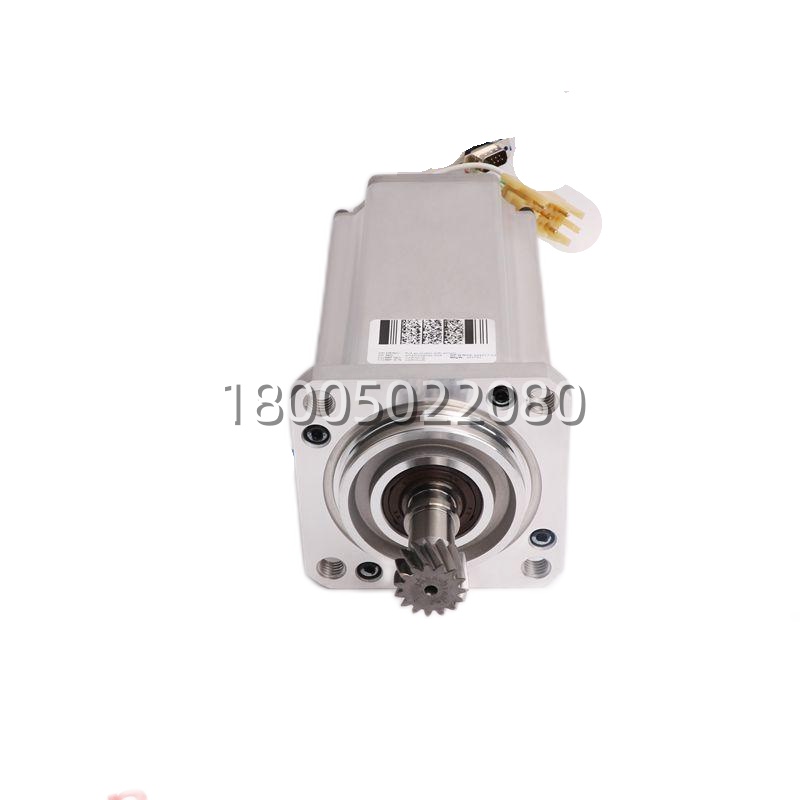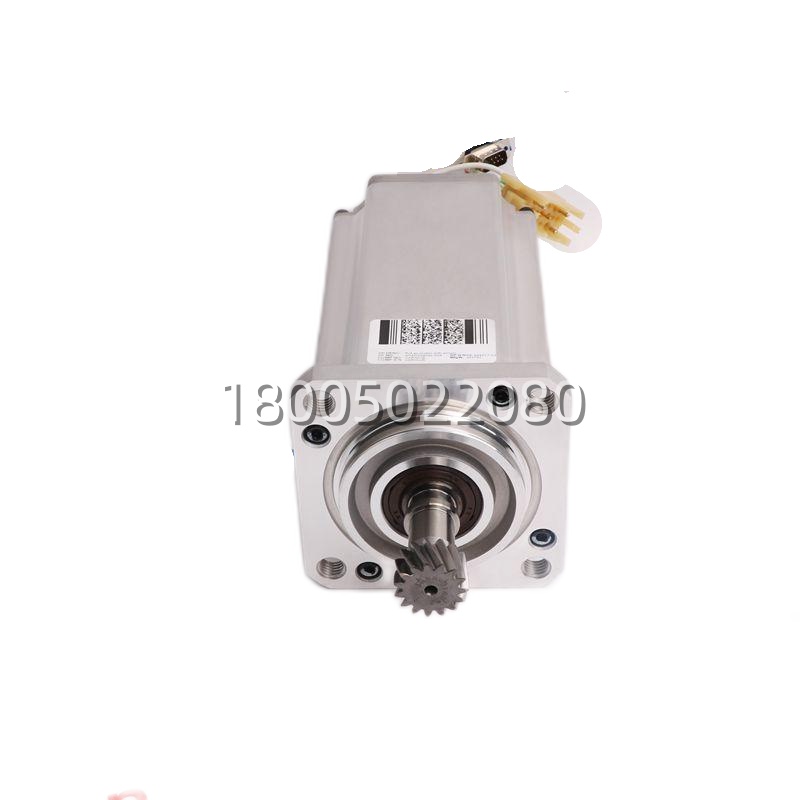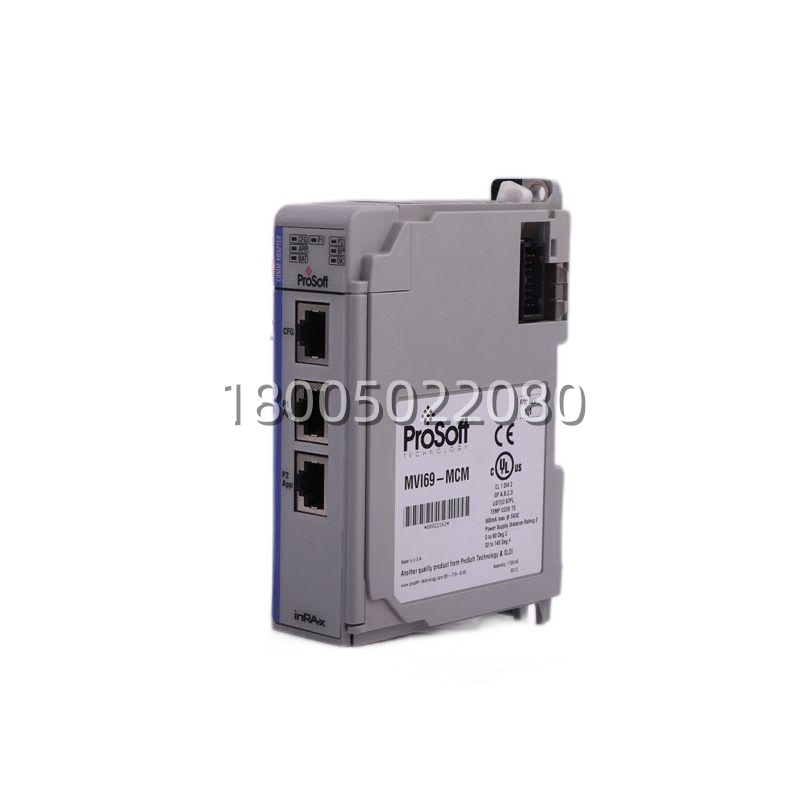
Key S900 I/O Component: ABB SPFEC12 Module for Discrete Control缩略图

Key S900 I/O Component: ABB SPFEC12 Module for Discrete Control

Key S900 I/O Component: ABB SPFEC12 Module for Discrete Control插图

Description:

The ABB SPFEC12​ is a high-performance digital output (DO) module designed for the ABB S900 I/O system, a foundational component of ABB’s distributed control architectures like the Advant Controller series and System 800xA. This module provides multiple, isolated output channels to directly control field actuators—such as solenoid valves, motor starters, and indicator lamps—by switching 24V DC power based on commands from the controller’s logic.

Application Scenarios:

In a bottling plant’s automated filling line, dozens of pneumatic valves control the movement of bottles between stations: indexing, filling, capping, and labeling. Each valve is operated by a 24V DC solenoid. The ABB SPFEC12​ Digital Output Module, installed in an S900 I/O station near the line, acts as the muscle of the control system. The line’s programmable logic controller (or an ABB AC450 controller) calculates the precise sequence and timing. It sends digital commands over the network. The SPFEC12​ module receives these commands and energizes the specific output channels, sending power to the correct solenoids. This direct, reliable switching orchestrates the entire mechanical sequence. If a SPFEC12​ channel fails, the corresponding valve will not actuate, causing a jam that halts the line. Thus, the module’s reliability translates directly to production uptime, ensuring the controller’s complex sequencing logic is faithfully executed in the physical world.
ABB SNAT 608CMT: Intelligent PCB for Multi-Tap Voltage Regulation缩略图

ABB SNAT 608CMT: Intelligent PCB for Multi-Tap Voltage Regulation

ABB SNAT 608CMT: Intelligent PCB for Multi-Tap Voltage Regulation插图

Description:
The ABB SNAT 608CMT​ is a specialized Printed Circuit Board manufactured by ABB, designed to function as the intelligent interface and tapping selector for a multi-tap control power transformer. It is a key component within motor starter and control circuit assemblies. This board provides a safe, organized, and configurable method to derive the correct low-voltage control power (typically 24VAC, 110VAC, or 120VAC) from a transformer with multiple input voltage taps, powering contactor coils, relays, and other control devices.
Application Scenarios:
In a global manufacturing facility, a new production machine from Europe (400VAC) needs to be integrated into a North American plant (480VAC). The machine’s control panel contains contactors, PLCs, and sensors all designed to run on 110VAC control power, sourced from an internal multi-tap transformer. The ABB SNAT 608CMT​ board is mounted adjacent to this transformer. During commissioning, the technician uses the board’s clearly marked terminal blocks and jumper configuration options to select the correct input tap (e.g., connecting to the 480V tap instead of 400V). The board safely routes the primary voltage, and the transformer secondary then outputs the stable 110VAC required by the control circuit. Without this board, the task would require custom wiring, splicing, and potential safety hazards. The SNAT 608CMT​ provides a standardized, code-compliant, and error-proof method to adapt control circuit power to the local supply voltage, ensuring all motor starters and logic function correctly regardless of the main power input.
Versatile Input Module: ABB SPDSM04 for Multi-Function Pulse Applications缩略图

Versatile Input Module: ABB SPDSM04 for Multi-Function Pulse Applications

Versatile Input Module: ABB SPDSM04 for Multi-Function Pulse Applications插图

Description:

The ABB SPDSM04​ is a sophisticated pulse input module manufactured by ABB, designed to provide high-precision frequency measurement and pulse counting capabilities for industrial automation and process control systems. This intelligent module serves as a critical interface between pulse-generating field devices and control systems, enabling accurate monitoring of flow rates, rotational speeds, batch quantities, and other process variables in demanding industrial environments.

Application Scenarios:

In a large-scale water treatment facility, accurate measurement of chemical dosing is critical for both process efficiency and regulatory compliance. The facility uses multiple diaphragm metering pumps with pulse outputs proportional to flow rate. The ABB SPDSM04​ pulse input modules are installed in the control panels, receiving pulse streams from each pump’s flow transmitter. During a critical polymer dosing process, one module detects a 15% deviation in pulse frequency from Pump #3, indicating potential diaphragm wear or valve blockage. The ABB SPDSM04​ immediately signals the main controller, which automatically increases the pump stroke to compensate while alerting maintenance. This proactive detection prevents under-dosing that could have compromised the clarification process, directly addressing pain points of chemical waste, process variability, and non-compliance risks.
ABB SPDSI14 S800 Module: High-Density Digital Input for Process Control缩略图

ABB SPDSI14 S800 Module: High-Density Digital Input for Process Control

ABB SPDSI14 S800 Module: High-Density Digital Input for Process Control插图

Description:

The ABB SPDSI14​ is a high-density Digital Input (DI)​ module designed for the ABB S800 I/O system, a foundational component of the Symphony Harmony and 800xA DCS platforms. It provides 14 electrically isolated channels for reading discrete (on/off) signals from field devices such as limit switches, push buttons, level switches, and motor contactor auxiliary contacts. This module converts 24V DC field signals into logic-level data for the control system, serving as the critical eyes for monitoring the state of plant equipment.

Application Scenarios:

In a high-speed packaging line, the precise coordination of conveyors, fillers, and sealers depends on knowing the exact position of hundreds of products and components. Each pneumatic cylinder has a magnetic position sensor, each safety gate has a limit switch, and each diverter has a confirmation sensor. Wiring all these discrete signals directly to a central cabinet would be a nightmare of complexity and cost. This is where the distributed intelligence of the ABB S800 I/O system shines, with the ABB SPDSI14​ module as a workhorse. Multiple SPDSI14​ modules are installed in local I/O stations along the line. Each module’s 14 channels monitor groups of nearby sensors. When a carton triggers a photoelectric sensor, the 24V DC signal is read by a channel on the SPDSI14, converted to a digital “1”, and passed to the local controller. This allows for ultra-fast, localized response for sorting and rejection. The ABB SPDSI14‘s role is foundational: it reliably translates the simple, physical “clicks” and “beams” of the plant floor into the deterministic data that drives the entire automation sequence, ensuring that a single jammed carton is instantly detected and handled without stopping the entire line.
ABB SPD SI13: Versatile Interface Module for Industrial Drive Systems缩略图

ABB SPD SI13: Versatile Interface Module for Industrial Drive Systems

ABB SPD SI13: Versatile Interface Module for Industrial Drive Systems插图

Description:

The ABB SPD SI13 Interface Module​ is a specialized digital input/output (I/O) expansion and signal conditioning unit designed for integration with ABB industrial drive systems. Functioning as a communication bridge and signal processor, it extends the drive’s native I/O capabilities, enabling reliable connection to external control devices, sensors, and safety circuits. This module enhances system flexibility and simplifies the integration of drives into complex automation architectures.

Application Scenarios:

In a fully automated bottling line, a motor drive controlling a filler valve must receive precise “start fill” and “stop fill” signals from a vision system inspecting bottle position, while simultaneously sending “valve open” status and fault signals to the main line PLC. The drive’s built-in I/O may be insufficient for all these signals, especially when isolation and fast response are required. The ABB SPD SI13 Interface Module​ mounted adjacent to the drive solves this challenge. It provides additional, optically isolated digital input channels to receive the 24V signals from the vision system, protecting the drive’s internal electronics from electrical noise. Its relay outputs deliver robust, dry-contact status signals to the PLC. The module acts as a dedicated signal marshaling and conditioning hub, ensuring clean, reliable communication between the sensitive drive controller and the electrically noisy factory floor, directly addressing integration complexity and signal integrity issues.
ABB SPCJ4D29: Critical Protection Module for Electrical Network Security缩略图

ABB SPCJ4D29: Critical Protection Module for Electrical Network Security

Description:

The ABB SPCJ4D29​ is a sophisticated current earth-fault (ground fault) protection module manufactured by ABB, designed as a critical component in its comprehensive line of protection relays and systems. This module provides sensitive and selective detection of earth faults in electrical power systems, offering essential protection for equipment, infrastructure, and personnel. It represents a specialized protective relay function that monitors electrical systems for insulation failures and ground current anomalies, triggering appropriate protective actions to prevent damage and ensure operational safety.

Application Scenarios:

In a large chemical processing plant’s 6.6kV medium-voltage distribution system, an insulation breakdown occurs in the motor winding of a critical recirculation pump. A low-magnitude ground fault current begins to flow, which standard overcurrent protection might not detect immediately. This arcing ground fault can cause progressive damage, potentially leading to catastrophic motor failure or even an arc flash incident. The ABB SPCJ4D29 Current Earth-Fault Module, integrated within the feeder protection relay, continuously monitors the residual current. Using sensitive core-balance current transformer (CBCT) inputs, it detects the subtle imbalance indicating ground current. Within milliseconds, the SPCJ4D29​ calculates the fault magnitude and direction, discriminating it from normal system imbalances or faults on adjacent feeders. It then issues a precise trip command to the circuit breaker, isolating the faulted pump motor while maintaining power to the rest of the system. This selective operation solves the critical pain point of detecting incipient faults before they escalate, preventing extensive equipment damage, minimizing production downtime, and enhancing overall electrical safety in the hazardous plant environment.ABB SPCJ4D29: Critical Protection Module for Electrical Network Security插图
ABB SPCJ4D34-AA CPU: Foundational Component for DCS & Safety Systems缩略图

ABB SPCJ4D34-AA CPU: Foundational Component for DCS & Safety Systems

Description:

The ABB SPCJ4D34-AA​ is a central processing unit (CPU) or processor module designed for ABB’s Advant Open Control System (OCS), specifically for controllers like the AC 410 and AC 800C series. It functions as the primary computational engine, executing application control logic, managing communication tasks, and coordinating all I/O operations for its assigned control loop or subsystem within a larger distributed control system (DCS).

Application Scenarios:

In a chemical plant’s batch reactor control system, a critical AC 800C controller managing a complex sequence of ingredient charging, heating, and pressure control suddenly faults, triggering a plant-wide alarm. Diagnostics indicate a failure of the main processor. The maintenance team, with a well-managed spares inventory, retrieves a pre-configured ABB SPCJ4D34-AA​ processor module. During a controlled shutdown, they power down the controller rack, replace the faulty CPU with the spare SPCJ4D34-AA, and restore power. Because the module contains the backed-up application logic and parameters, the controller resumes operation almost immediately, executing the precise sequence logic that ensures safe and repeatable batch production. The SPCJ4D34-AA‘s role is foundational: it is the deterministic real-time computer that transforms engineering instructions into physical actions, controlling valves, pumps, and heaters. Its reliability directly dictates the availability of the production unit, and having a ready spare is a key strategy for minimizing costly downtime in continuous process industries.ABB SPCJ4D34-AA CPU: Foundational Component for DCS & Safety Systems插图
Numerical Differential Protection Relay for Critical Assets: SPCD 3D53-AB缩略图

Numerical Differential Protection Relay for Critical Assets: SPCD 3D53-AB

Numerical Differential Protection Relay for Critical Assets: SPCD 3D53-AB插图

Description:

The ABB SPCD 3D53-AB​ is a sophisticated numerical differential protection relay belonging to ABB’s comprehensive protection and control portfolio. It is designed to provide ultra-fast and selective protection for critical power system equipment by comparing electrical currents entering and leaving a protected zone, such as a power transformer, generator, busbar, or large motor. Its core function is to detect internal faults—like winding shorts or phase-to-ground faults—with extreme sensitivity and speed, initiating an immediate trip command to isolate the faulty equipment and prevent catastrophic damage.

Application Scenarios:

In a primary substation feeding a large industrial complex, a 50 MVA, 110/10 kV power transformer is a critical and expensive asset. An internal fault, such as a turn-to-turn short circuit within the transformer windings, can cause severe damage in milliseconds. The ABB SPCD 3D53-AB​ differential relay is installed as the transformer’s primary protection. Current transformers (CTs) on both the 110 kV high-voltage side and the 10 kV low-voltage side feed their secondary currents into the relay. The SPCD 3D53-AB​ continuously calculates the vector sum (differential current) of these currents. Under normal load or external fault conditions, the sum is near zero. If an internal fault occurs, this balance is destroyed, creating a significant differential current. The relay’s advanced algorithm instantly recognizes this, distinguishing it from inrush current or CT saturation, and sends a trip signal to the high-voltage and low-voltage circuit breakers within one cycle, isolating the transformer. The SPCD 3D53-AB​ directly addresses the critical pain point of preventing the total destruction of high-value assets and maintaining overall power system stability.
ABB SPBRC400 Controller: Central Unit for System 800xA High Integrity Safety缩略图

ABB SPBRC400 Controller: Central Unit for System 800xA High Integrity Safety

ABB SPBRC400 Controller: Central Unit for System 800xA High Integrity Safety插图

Description:

The ABB SPBRC400 (also designated SPBRC4000000) is a high-performance, redundant safety controller designed as the central processing unit for ABB’s System 800xA High Integrity safety systems. This controller forms the computational core of a Safety Instrumented System (SIS), executing safety logic with the highest levels of reliability and availability. It is engineered to meet stringent international safety standards, providing deterministic and fault-tolerant control for critical process safety applications where failure is not an option.

Application Scenarios:

In a large oil refinery’s hydrotreating unit, a runaway exothermic reaction must be prevented at all costs. Multiple safety instrumented functions (SIFs)—such as high-pressure trips, high-temperature trips, and flow deviations—must be processed with absolute certainty and speed. The ABB SPBRC400​ controller is deployed in a redundant (1oo2D or 2oo3) configuration within the 800xA High Integrity system. It continuously scans inputs from safety-certified transmitters and switches. When a dangerous condition is confirmed, the controller executes its pre-programmed safety logic within a guaranteed scan time. It then commands the final elements (like emergency shutdown valves) to bring the process to a safe state. The dual processors in the SPBRC400​ modules cross-check each other’s results; any discrepancy triggers a safe, predefined response. This application underscores the controller’s role in mitigating the ultimate pain points of catastrophic process safety events, protecting human life, the environment, and multi-million dollar assets.
ABB SPBRC400: Advanced Bridge Controller for Process Automation Networks缩略图

ABB SPBRC400: Advanced Bridge Controller for Process Automation Networks

ABB SPBRC400: Advanced Bridge Controller for Process Automation Networks插图

Description:

The ABB SPBRC400​ is a robust industrial bridge controller developed by ABB, originally part of the Bailey Networks product line. This specialized communication device functions as a network bridge, router, or protocol gateway, designed to seamlessly interconnect different industrial networks, fieldbuses, or legacy control systems within a plant automation architecture. It facilitates reliable data exchange between disparate systems, such as connecting older Bailey INFI 90 systems to modern Ethernet-based networks or integrating third-party PLCs into an ABB distributed control system (DCS).

Application Scenarios:

In a large refinery undergoing a phased modernization, the core distillation process is controlled by a legacy ABB Bailey INFI 90 DCS, while a new solvent recovery unit is managed by a modern ABB System 800xA. Operators need a unified view, and the new unit’s data must be available for optimization calculations in the old system. The ABB SPBRC400​ Bailey Bridge Controller is deployed as the strategic integration point. Installed in a control cabinet, it is connected to the INFI 90’s Network Interface Module (NIM) on one side and the plant’s high-speed Ethernet on the other. It continuously polls data points from the new 800xA system (via OPC) and maps them into the INFI 90’s database as if they were native I/O points, and vice-versa. This allows operators at the original Bailey workstations to see critical temperatures and flows from the new unit, and enables advanced control in the 800xA to utilize feed composition data from the old system. The SPBRC400​ acts as a linguistic and diplomatic bridge, preventing data silos and enabling a cohesive operational picture without a risky, big-bang system replacement.
Back to Top

Search For Products

Product has been added to your cart