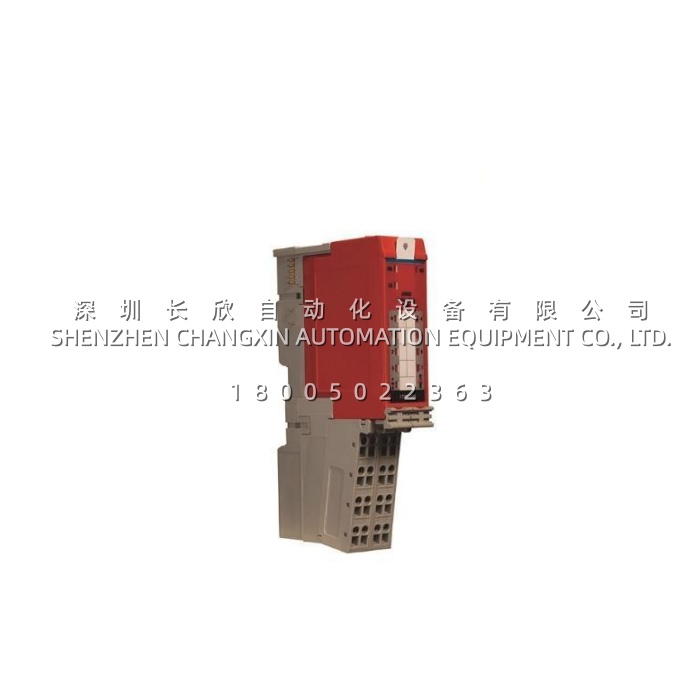
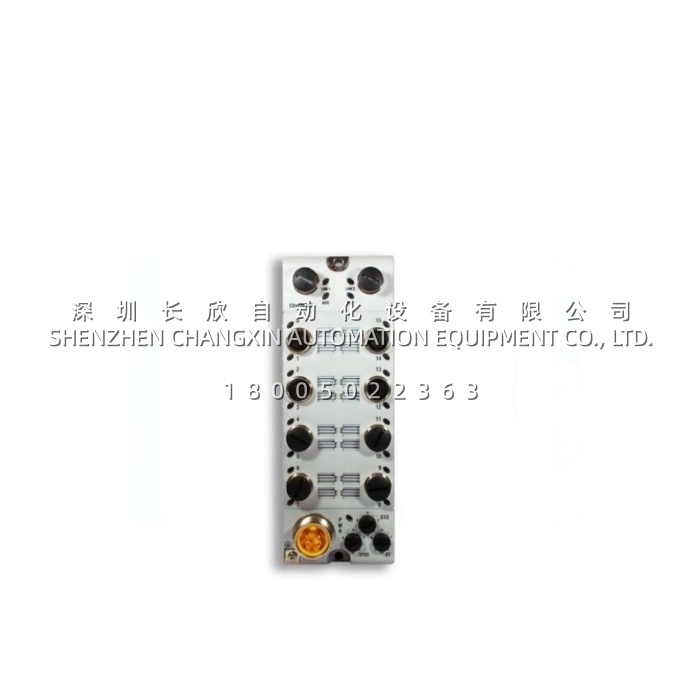
Allen-Bradley 440G-T27181​ TLS-3 GD2 Power-to-Release Safety Interlock Switch, 2 NC + 1 NO缩略图

Allen-Bradley 440G-T27181​ TLS-3 GD2 Power-to-Release Safety Interlock Switch, 2 NC + 1 NO

Allen-Bradley 440G-T27181​ TLS-3 GD2 Power-to-Release Safety Interlock Switch, 2 NC + 1 NO插图


roduct Overview

The Allen-Bradley 440G-T27181​ is a solenoid-operated guard locking switch from the Rockwell Automation Guardmaster TLS-GD2 family, and it exists to answer one specific question on any hazardous machine: how do I prove that the guard cannot be opened until the danger is gone? Unlike a simple interlock switch, which only tells the control system that a door has been moved, the 440G-T27181​ physically restrains the guard in the closed position with a locking bolt and only allows it to retract when the safety circuit removes power from the solenoid. This is the power-to-release, or quiescent current, principle, and it means that a wire break, a blown supply or a coil failure all produce the same outcome: the lock releases and the safety outputs report the guard as unsafe.Mechanically, the 440G-T27181​ is a positive-mode, tongue-operated device. A stainless-steel actuator tongue mounted on the moving guard enters the switch head, and the internal bolt engages it with a holding force of 2000 N, roughly 450 lbf, so a determined operator cannot force the door open while the machine is still running. The head is rotatable and offers four possible key entry positions, which lets the same catalog number be fitted to left-hinged, right-hinged, sliding or lift-off guards without ordering a different switch.Electrically, the Allen-Bradley 440G-T27181​ provides a redundant contact set: two positively guided normally closed safety contacts for the guard monitoring channel, one normally open auxiliary contact for status feedback to the PLC or HMI, and two normally closed solenoid monitoring contacts that verify the actual position of the lock bolt rather than merely the presence of a command. Housed in glass-filled plastic with an M20 conduit entry and a 1/2 in NPT adapter, rated IP66, IP67 and IP69K, and listed to ISO 14119 and IEC 60947-5-1, the 440G-T27181​ is built for machine guarding duties in everything from dry assembly cells to high-pressure washdown food and pharmaceutical plants.


Technical Specifications

Parameter Name Parameter Value
Product Model 440G-T27181​ (Guardmaster TLS-GD2, TLS-3 GD2)
Manufacturer Allen-Bradley (Rockwell Automation)
Product Type Solenoid guard locking interlock switch, positive-mode tongue operated
Locking Principle Power to release (quiescent current principle); lock bolt retracts when solenoid is de-energized
Solenoid Voltage 24 V AC/DC, 50/60 Hz; solenoid power approx. 7 W
Holding Force (Fzh) 2000 N (450 lbf) per EN/ISO 14119
Safety Contacts 2 normally closed, positively guided, break-before-make action
Auxiliary Contacts 1 normally open for guard/lock status feedback
Solenoid Monitoring Contacts 2 normally closed for lock bolt position verification
Contact Ratings AC-15: 6 A at 125 V, 3 A at 230 V; DC-13: 2 A at 24 V; A600; thermal current 10 A
Actuator Standard GD2 stainless-steel tongue; rotatable head with 4 key entry positions
Connection M20 conduit entry with 1/2 in NPT adapter; screw terminals
Housing Material Glass-filled plastic housing (PBT), red
Enclosure Rating IP66, IP67, IP69K
Operating Temperature -20 °C to +60 °C (-4 °F to +140 °F)
Mechanical Life 1,000,000 operations minimum; B10d > 2 x 10⁶ operations at minimum load
Safety Classification Type 2 interlocking device with guard locking and low coding per ISO 14119; suitable for PLd/PLe per ISO 13849-1 and SIL 2/SIL 3 per IEC 62061 depending on architecture
Certifications CE for all applicable directives, cULus listed, TÜV certified, CCC, KC, EAC; conforms to EN 1088, EN ISO 14119, IEC 60947-5-1
Physical Dimensions Approx. 91 mm W x 126 mm H x 33 mm D; weight approx. 0.5 kg; mounting M5 at 1.4 N·m, lid screws 1.2 N·m, terminal screws 1.0 N·m


Main Features and Advantages

Fail-safe power-to-release locking: The core design decision behind the Allen-Bradley 440G-T27181​ is that the solenoid must be energized to unlock, so every credible single fault drives the system toward a safe state. Loss of the 24 V supply, a broken conductor, a failed coil or a tripped safety relay all allow the spring-loaded bolt to retract, and because the lock monitoring contacts report bolt position independently of the command, the control system sees the difference between “asked to lock” and “actually locked.”Locking force that resists real-world forcing: With 2000 N of holding force, the 440G-T27181​ holds a guard closed against the kind of leverage an adult can apply to a door handle. This is what separates a guard locking switch from a plain interlock: the guard is not merely monitored, it is restrained, which matters on machines with long run-down times where opening the door three seconds after the stop command would still expose rotating parts.Redundant contacts for diagnoseable safety circuits: The 440G-T27181​ gives the designer two positively guided NC safety contacts for the dual-channel guard monitoring circuit, an NO auxiliary for PLC feedback and status indication, and two NC solenoid contacts for verifying the bolt. That combination lets a safety PLC distinguish a door left open, a bolt that failed to engage and a genuine emergency stop request, which shortens fault finding considerably.Rotatable head and flexible mounting: Four possible key entry positions on a rotatable head mean the same Allen-Bradley 440G-T27181​ can be fitted to a left-hand or right-hinged door, a sliding panel or a lift-off cover, reducing the number of variants a plant needs to stock and simplifying the mechanical design of new guards.Built for washdown and harsh duty: The IP69K rating and glass-filled plastic housing let the 440G-T27181​ survive high-pressure, high-temperature cleaning with caustic agents, which is why it is routinely specified on food, beverage and pharmaceutical equipment. The rotatable head also tolerates the door misalignment and sag that develop over years of service.

Allen-Bradley 440G-T27181​ TLS-3 GD2 Power-to-Release Safety Interlock Switch, 2 NC + 1 NO插图1

ABB 424K1105 Synchronism Check Relay with Adjustable Time Delay 0-10s缩略图

ABB 424K1105 Synchronism Check Relay with Adjustable Time Delay 0-10s

ABB 424K1105 Synchronism Check Relay with Adjustable Time Delay 0-10s插图


Product Overview

The ABB 424K1105 is a precision synchronism check relay from the ABB Circuit Shield series, specifically the 25S type, designed to ensure safe and reliable paralleling of electrical power systems . This relay serves as a critical safety interlock in generator grid-connection, busbar coupling, and automatic transfer applications, preventing damaging out-of-phase breaker closures that can result in severe mechanical stress to generators, transformers, and other power system equipment. The ABB 424K1105 continuously monitors voltage magnitude, frequency, and phase angle on both sides of a circuit breaker, only permitting a close command when all parameters fall within a pre-defined acceptable window .

The ABB 424K1105 operates with a 110 V AC coil and provides 2 Form C contact sets (2NO + 2NC) rated at 10 A, making it suitable for direct integration into circuit breaker control circuits or for driving intermediate relays . For applications requiring dead-bus or dead-line closing capability, the Type 25V variant of the ABB 424K1105 includes an internal selector switch that allows the user to configure the relay for synchronism check only, high bus-dead line, or high line-dead bus logic . The ABB 424K1105 features precise solid-state measuring circuitry with calibrated, adjustable controls, housed in a compact DIN rail mount enclosure that is well-suited for switchgear and control panels .


Technical Specifications

Parameter Name Value
Product Model ABB 424K1105
Manufacturer ABB
Product Series Circuit Shield 25S
Product Type Synchronism Check Relay
Coil/Control Voltage 110 V AC (50/60 Hz)
PT Input Voltage 100/110/120 V AC
Frequency Range 45 – 65 Hz
Contact Configuration 2 Form C (2NO + 2NC)
Contact Rating 10 A @ 250 V AC / 30 V DC (resistive)
Dead Bus/Dead Line Setting 0 – 120 V adjustable (factory default 30 V for 25V type)
Time Delay 0 – 10 seconds adjustable
Pickup Time Delay 0.1 – 1.5 seconds adjustable
Power Consumption ≤ 4 VA
Mounting Type 35 mm DIN Rail
Operating Temperature -20 °C to +60 °C
Storage Temperature -40 °C to +85 °C
Protection Class IP20
Insulation Class Class F
Dimensions Approx. 167 x 35 x 254 mm
Weight Approx. 0.35 kg
Certifications CE, UL, CSA, IEC 60255
Lifecycle Status Discontinued (limited stock available)


Main Features and Advantages

Precise Synchronism Verification

The ABB 424K1105 utilizes precise solid-state measuring circuitry to continuously analyze voltage magnitude, frequency deviation, and phase angle between two independent voltage sources. Unlike standard voltage or phase-sequence relays, the ABB 424K1105 performs a comprehensive check of all three synchronizing criteria before issuing a close command . This ensures that breaker closures occur only when the vector difference between the two systems is within acceptable limits, preventing the violent mechanical and electrical transients associated with out-of-phase paralleling.

Flexible Dead Bus/Dead Line Logic

The Type 25V version of the ABB 424K1105 includes a front panel selector switch that provides configurable logic options . This allows the relay to be set for synchronism check only, high bus-dead line, high line-dead bus, or simultaneous high bus-dead line / high line-dead bus operation. This flexibility makes the ABB 424K1105 highly adaptable to various substation configurations and operational scenarios, eliminating the need for additional undervoltage relays.

Adjustable Control Parameters

The ABB 424K1105 offers calibrated, user-adjustable controls for key operating parameters. The acceptable phase angle window, time delay, and dead-bus/line voltage thresholds can be fine-tuned to match specific site requirements . This adjustability allows engineers to optimize the relay for different system conditions, providing the right balance between security and availability in critical power applications.

Robust Construction for Industrial Environments

Designed for demanding power system environments, the ABB 424K1105 features transient immunity exceeding 2500 V and seismic capability greater than 6g ZPA, meeting ANSI/IEEE C37.90.1 standards . The relay offers 2000 V AC dielectric strength to all circuits, ensuring reliable operation even under fault conditions. Its compact DIN rail mount design enables efficient installation in space-constrained switchgear and control cabinets.

ABB 421-1-10479-390 Complete Output Shaft Configuration for IRB 6600 / IRB 6650 Wrist缩略图

ABB 421-1-10479-390 Complete Output Shaft Configuration for IRB 6600 / IRB 6650 Wrist

ABB 421-1-10479-390 Complete Output Shaft Configuration for IRB 6600 / IRB 6650 Wrist插图


Product Overview

The ABB 421-1-10479-390​ is a Complete Output Shaft Configuration supplied within the ABB Robotics spare parts programme for large-frame industrial robots, most commonly catalogued against the IRB 6600 and IRB 6650 families. It is worth stating plainly what it is not: the ABB 421-1-10479-390​ is not a bare machined shaft. It is a pre-assembled, pre-adjusted and pre-lubricated mechanical sub-assembly that constitutes the final transmission interface inside a robot joint, delivering torque from the reduction gearbox through to the tool flange that carries the end effector.In a robot wrist, the drive chain runs servo motor, reduction gear, then output shaft. That last stage carries the full payload moment and the reaction forces generated during high-speed reorientation, which is why it is the component that first shows pitting, bearing clearance growth and seal failure after years of heavy duty. The ABB 421-1-10479-390​ typically groups a case-hardened and ground output flange shaft, a matched pair of precision angular contact ball bearings, radial shaft seals, the planetary-stage sun gear, spacer shims and the associated fasteners into one kit.The engineering argument for a complete configuration rather than individual parts is tolerance stacking. Bearing preload, gear mesh clearance and seal compression are set on the ABB production line under clean conditions; assembling the same components on a plant floor rarely reproduces them, and the usual result is wrist noise, grease leakage or early bearing failure. Choosing the ABB 421-1-10479-390​ restores designed stiffness and repeatability in a single intervention, at the cost of one disciplined requirement: the part number must be matched to the robot’s full model designation, serial number and axis position before ordering.

Technical Specifications

Parameter Name Parameter Value
Product Model 421-1-10479-390
Manufacturer ABB Robotics (ABB AB, Robotics & Discrete Automation)
Product Type Complete Output Shaft Configuration / Mechanical Sub-Assembly Kit
Compatible Robot Series IRB 6600, IRB 6650 (select IRB 7600 variants also listed; verify by S/N)
Typical Installation Position Robot wrist joint (Axis 4 / Axis 5 per most listings; confirm before order)
Kit Contents Output flange shaft, preloaded angular contact bearings, radial lip seals, planetary sun gear, adjusting shims, circlips, fasteners
Shaft Material Case-hardened alloy steel, carburised or induction hardened, precision ground
Bearing Type Precision angular contact ball bearings, matched duplex pair, ABEC-3 / P6 grade or better
Sealing Radial shaft seals with secondary sealing, grease retention and contaminant exclusion
Lubrication Factory pre-filled with ABB-specified robot grease
Repeatability Restored ±0.05 mm to ±0.1 mm on IRB 6600 series, subject to model and calibration
Assembly Weight Approx. 8-18 kg depending on revision and axis position
Installation Requirement Wrist disassembly, ABB service manual tooling, calibrated torque wrenches, clean environment
Post-Installation Action Mandatory zero-point calibration and load test
Matching Rule Must be verified against full robot model, serial number (S/N) and axis position


Main Features and Advantages

Factory-matched tolerance and preload: The central value of the ABB 421-1-10479-390​ is that the difficult adjustments are already done. Bearing preload, gear mesh clearance and seal compression are set during assembly at ABB under controlled conditions, so the kit arrives as a calibrated unit rather than a collection of parts whose final accuracy depends on the fitter. This removes the tolerance stack-up that is the usual cause of post-overhaul wrist noise, grease weeping and premature bearing failure.Pre-lubricated and sealed for service life: The assembly ships pre-filled with the grease ABB specifies for that joint, in the correct quantity. Correct lubrication fill is one of the easiest things to get wrong in the field, since both under- and over-greasing shorten bearing life. Combined with the radial shaft seals, the ABB 421-1-10479-390​ is protected against both grease loss and the ingress of dust, swarf and coolant mist that contaminate gearboxes in foundry, machining and welding cells.Case-hardened shaft for high moment loads: The output flange shaft is manufactured from case-hardened alloy steel, hardened and then ground to finished size. This gives a hard, wear-resistant surface over a tough core, which is exactly what a component carrying combined axial, radial and bending loads at the end of the kinematic chain needs. It resists the brinelling and fretting that develop where a joint repeatedly reverses under payload.Restores accuracy, not just motion: Because the output stage sits directly upstream of the tool flange, its condition governs repeatability and stiffness. Replacing it with the ABB 421-1-10479-390​ returns the robot to its designed positioning performance rather than simply making it move again, which matters wherever the wrist carries a welding gun, a machining spindle or a vision-guided gripper.Reduced downtime through single-kit overhaul: Sourcing components individually means multiple part numbers, multiple lead times and a longer strip-down. One kit covering shaft, bearings, seals, gear, shims and fasteners lets the whole output stage be renewed in a single planned intervention, which is the practical difference between a shift of lost production and several days.

Application Field

In automotive body shops, the ABB 421-1-10479-390​ belongs on the large-frame handling and spot-welding robots that cycle continuously at high duty. Wrist output stages there absorb constant reversal under load, and the classic failure signature is growing backlash and deteriorating repeatability long before anything visibly breaks. Renewing the output stage restores the path accuracy that weld quality and panel fit depend on.Foundries, forges and die-casting cells apply the ABB 421-1-10479-390​ in environments where abrasive dust and thermal load attack the wrist seals first. Once sealing is lost, grease escapes and contamination enters, accelerating wear across the whole joint. Replacing the complete assembly restores both the sealing envelope and the bearing surfaces in one operation, which is far more durable than renewing seals alone.Machining and material-removal installations using large robots for trimming, grinding or milling impose sustained cutting forces directly on the output flange. Stiffness lost to bearing clearance shows up immediately as chatter and dimensional drift on the workpiece, which is why the ABB 421-1-10479-390​ is a standard consideration in accuracy-restoration work on these cells.Heavy material handling, palletising and press-tending lines with IRB 6600-class robots running near rated payload see progressive output-stage wear that eventually produces positional drift and occasional axis overload alarms. Fitting the ABB 421-1-10479-390​ during a planned overhaul addresses the root cause rather than resetting the alarm. The same applies to powertrain, aerospace and general engineering plants where long-serving large-frame robots are being life-extended rather than replaced, since a complete output shaft overhaul costs a small fraction of a new manipulator.

Schneider Electric 416NHM30032A Modbus Plus PCI Communication Adapter缩略图

Schneider Electric 416NHM30032A Modbus Plus PCI Communication Adapter

Schneider Electric 416NHM30032A Modbus Plus PCI Communication Adapter插图


Product Overview

The Schneider Electric 416NHM30032A is a dual-port Modbus Plus (MB+) PCI communication adapter card designed to seamlessly integrate industrial computers into Schneider Electric’s Modicon automation ecosystems. As part of the ConneXium series, this adapter serves as a specialized “network interface card” for Modbus Plus networks, enabling high-performance data exchange between PC-based engineering workstations and Modicon Quantum, Premium, and M340 series PLCs . The Schneider Electric 416NHM30032A bridges the IT and OT worlds by allowing supervisory control and data acquisition (SCADA) software, programming platforms like Concept and Unity Pro, and HMI applications to directly access real-time process data from Modbus Plus devices .

At its core, the Schneider Electric 416NHM30032A features a dedicated ASIC chip specifically engineered to handle the Modbus Plus token-passing protocol at a fixed transmission rate of 1 Mbps . The card’s dual RJ-45 ports provide remarkable network flexibility, enabling a single workstation to connect two physically isolated MB+ segments or to participate in complex network topologies with configurable terminal resistors . Supporting both 5V and 3.3V PCI bus voltages, the Schneider Electric 416NHM30032A offers broad compatibility with legacy industrial computers . Its robust industrial-grade construction ensures reliable operation in demanding environments, with electrical isolation of 500V RMS between the ports and the PCI bus protecting the host system from field-side electrical disturbances .


Technical Specifications

Parameter Name Value
Product Model 416NHM30032A
Manufacturer Schneider Electric (formerly Modicon)
Product Type Modbus Plus (MB+) PCI Communication Adapter Card
Host Bus Interface 32-bit PCI, compatible with 5V and 3.3V signaling
Ports 2 independent Modbus Plus ports
Physical Connectors RJ-45 type (for shielded twisted pair cable)
Network Protocol Modbus Plus (MB+), token-passing peer-to-peer network
Transmission Rate 1 Mbps (fixed)
Maximum Nodes per Segment 64 nodes
Maximum Segment Distance Approx. 457 meters (1500 feet) using Belden 9842/9182 cable; extendable with repeaters
Cable Type Belden 9842/9182 or equivalent shielded twisted pair
Node Address Setting DIP switches on the card (address range 1-64)
Terminal Resistor 120Ω, software configurable per port
Electrical Isolation 500V RMS between ports and PCI bus
Power Supply Powered by PCI slot, no external power needed
Power Consumption <5W typical
Operating Temperature 0°C to +60°C
Storage Temperature -40°C to +85°C
Dimensions Approx. 178 x 256 x 54 mm
Weight Approx. 267 g
Certifications CE, UL, CSA
Supported OS (Historical) Windows NT 4.0, Windows 2000, Windows XP, 32-bit Windows 7
Driver SA85 series driver suite
Lifecycle Status Discontinued (replacement stock available)


Kollmorgen ServoStar 403M-P (S403M-PB) Digital Servo Amplifier – 3A Master Module, 230V Class缩略图

Kollmorgen ServoStar 403M-P (S403M-PB) Digital Servo Amplifier – 3A Master Module, 230V Class

Kollmorgen ServoStar 403M-P (S403M-PB) Digital Servo Amplifier – 3A Master Module, 230V Class插图


Product Overview

The Kollmorgen ServoStar 403M-P​ is a fully digital, single-axis servo amplifier from the SERVOSTAR 400 platform, a multi-axis drive family that Kollmorgen designed to deliver maximum performance in minimum cabinet space at minimum system cost. Identified in the trade by its full ordering code Kollmorgen S403M-PB, this unit is a 3 A RMS continuous, 9 A peak master module rated for the 230 V mains class, and it is intended to drive brushless synchronous servo motors such as the Kollmorgen AKM and Goldline series in precision motion applications.The designation carries precise meaning. “M” marks the unit as a master module, which means the rectifier, input mains filter, inrush circuitry and regenerative braking circuit are all built into the housing, so the Kollmorgen ServoStar 403M-P​ connects directly to the mains and can operate stand-alone with no separate DC bus power supply. The “P” suffix identifies the PROFIBUS interface variant within the SERVOSTAR 400 range, alongside the CANopen, SERCOS and EtherCAT variants.Inside the drive, a digital signal processor closes the current, velocity and position loops, with a current controller bandwidth above 1.2 kHz and an 8 kHz output stage clock frequency. Resolver, sine-cosine and incremental encoder feedback are all accepted, and functions such as electronic gearing, electronic camming, position capture and adaptive vibration suppression are executed in the drive itself. In a machine architecture, the Kollmorgen S403M-PB​ acts as both power hub and communication gateway: one master can feed up to seven additional axis modules, so an eight-axis machine needs only a single mains connection, a single enable circuit and a single PC programming link.


Technical Specifications

Parameter Name Parameter Value
Product Model ServoStar 403M-P (order code S403M-PB)
Manufacturer Kollmorgen (Regal Rexnord group)
Product Type Digital servo amplifier / single-axis master module
Series SERVOSTAR 400 (S400)
Rated Supply Voltage 1 × 115 V AC to 3 × 230 V AC (+10 % / −15 %), 50/60 Hz
Rated DC Link Voltage 160 – 320 V DC
Rated Output Current 3 A RMS (±3 %, at 8 kHz)
Peak Output Current 9 A RMS (up to approx. 5 s)
Installed Power (S1) 7 kVA
Regenerative Circuit 40 W internal continuous; up to 250 W with external resistor
Switching Frequency 8 kHz (switchable to 16 kHz with power derating)
Current Controller Bandwidth > 1.2 kHz
Control Modes Torque, velocity, position (step/direction, electronic gearing, camming)
Feedback Interfaces Resolver (SubD 9), incremental encoder (SubD 15), Sin/Cos 1 Vpp, EnDat, Hiperface, BiSS
Command Interface Analog ±10 V differential (14-bit), digital I/O, PROFIBUS DP
Communication RS-232 (PC/setup), PROFIBUS DP, internal CANopen for axis linking
Digital I/O Multiple programmable inputs and outputs; BTB/RTO relay contact
Connections Combicon spring terminals for control and power, SubD for feedback and PC
Dimensions (H × W × D) Approx. 230 × 100 × 240 mm (without connectors)
Weight Approx. 3 kg
Protection Rating IP20, cabinet installation, pollution degree 2
Operating Temperature 0 °C to +45 °C, derated operation up to +55 °C
Cooling Convection with add-on ventilation option
Configuration Software Kollmorgen WorkBench / SERVOSTAR setup software


Main Features and Advantages

True master module with integrated power section: The Kollmorgen ServoStar 403M-P​ accepts anything from single-phase 115 V AC to three-phase 230 V AC on the same terminals and contains the rectifier, mains filter and regen chopper in one housing. Machine builders therefore eliminate a separate power supply module, a DC bus bar and a bundle of interconnecting cables, which is why the platform fits comfortably into 300 mm deep switchgear cabinets. The internal 40 W regen resistor handles routine deceleration energy, and an external resistor of up to 250 W continuous can be added for high-inertia loads.Multi-axis scalability from a single point of supply: Because power and regen are centralised in the master, the Kollmorgen S403M-PB​ can act as the supply and communication head for a group of up to seven axis modules. In an eight-axis machine this collapses the installation to one mains connection, one enable circuit, one BTB contact chain and one PC connection, cutting both hardware cost and commissioning time.Feedback flexibility and encoder emulation: The Kollmorgen ServoStar 403M-P​ supports resolver, high-resolution sine-cosine encoders with EnDat, Hiperface or BiSS protocols, and standard 5 V incremental encoders. An ROD/SSI-compatible encoder emulation output lets the drive feed position back to a PLC or motion controller that expects a conventional encoder signal, which simplifies retrofits into machines that were never designed around a digital drive.Advanced tuning and vibration handling: Built-in inertia identification, notch filtering, model-following control and adaptive vibration suppression allow the Kollmorgen S403M-PB​ to compensate for mechanical resonances in belts, long ball screws and lightweight gantries. Setup is performed through the Windows-based Kollmorgen software, which offers online optimisation, integrated oscilloscope traces and Bode plots so that loop gains can be verified while the axis is running.Diagnostics and protection for industrial duty: A front-panel LED display and keypad on the master give immediate status without a PC, while comprehensive monitoring covers overcurrent, overvoltage, undervoltage, overtemperature, short circuit and feedback loss. Overload protection acts at 130 % of full load current, and the fault history is retrievable over the serial interface, which shortens troubleshooting during a production stoppage.

Back to Top

Search For Products

Product has been added to your cart