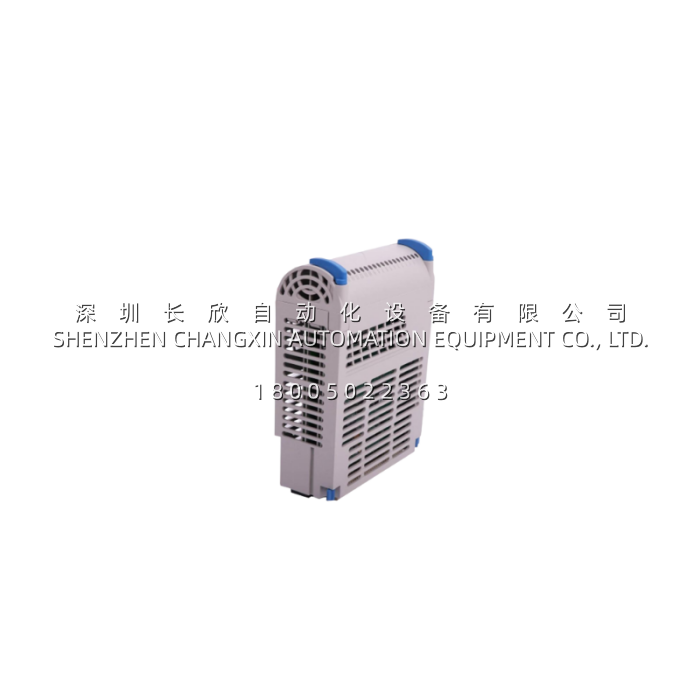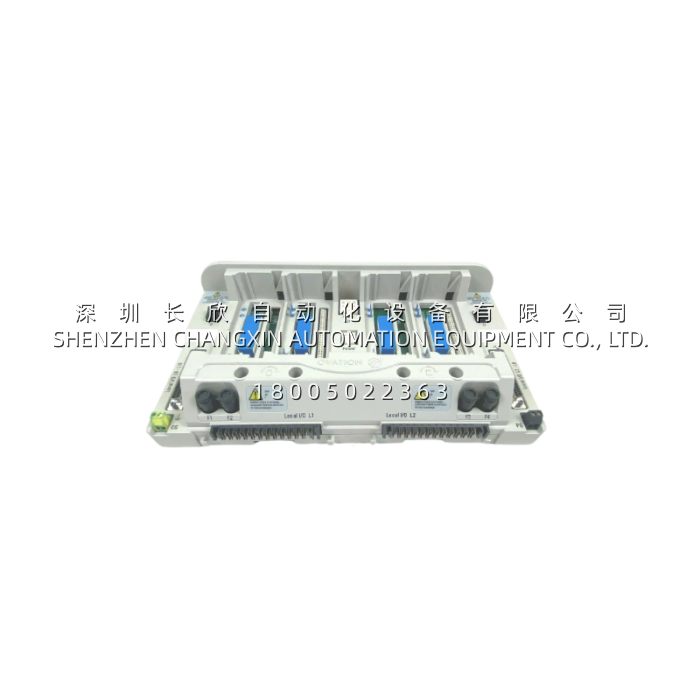
Allen‑Bradley 1761-NET-AIC​ Advanced Interface Converter – RS-232 to RS-485 for DH-485 & DF1 Networks缩略图

Allen‑Bradley 1761-NET-AIC​ Advanced Interface Converter – RS-232 to RS-485 for DH-485 & DF1 Networks

Allen‑Bradley 1761-NET-AIC​ Advanced Interface Converter – RS-232 to RS-485 for DH-485 & DF1 Networks插图


Product Overview

The Allen-Bradley 1761-NET-AIC, also marketed as the AIC+ (Advanced Interface Converter), is a compact serial communication interface device developed by Rockwell Automation to bridge RS-232 (DF1 full-duplex or half-duplex) equipment with DH-485 multi-drop RS-485 networks used by MicroLogix™ 1000/1100/1200/1500 controllers, SLC 500™ processors with DH-485 ports, and legacy PanelView™ terminals. The Allen-Bradley 1761-NET-AIC​ performs both physical layer translation (RS-232 ↔ RS-485) and electrical isolation, allowing a personal computer with a standard RS-232 COM port or USB-to-RS-232 adapter to participate in a DH-485 network for programming, monitoring, or peer-to-peer messaging—functions formerly requiring the discontinued 1747-PIC ISA card or 1747-AIC converter.The Allen-Bradley 1761-NET-AIC​ is housed in a DIN-rail-mountable enclosure and features one DB-9 female RS-232 port, one 8-pin mini-DIN RS-232 port (for direct connection to MicroLogix Channel 0), and a two-position removable screw-terminal block for the RS-485 (DH-485) network pair (Data A / Data B) plus shield. It provides 500 V AC optical isolation between the RS-232 side and the RS-485 side, breaking ground loops and improving noise immunity in electrically noisy industrial environments. Power can be drawn parasitically from certain MicroLogix processors via the mini-DIN cable (1761-CBL-AM00 or similar) or supplied externally via 24 V DC to the RS-485 terminal block—selectable by an onboard slide switch. Baud rate is set via a DIP switch (supports up to 115.2 kbps) and the unit includes per-port transmit/receive LEDs plus a power LED for immediate visual diagnostics.By enabling modern laptops and programming stations to interface with legacy DH-485 networks, the Allen-Bradley 1761-NET-AIC​ extends the service life and maintainability of installed MicroLogix and SLC 500 systems that remain prevalent in packaging machinery, material handling, and building automation applications worldwide.

Technical Specifications

Product Model | 1761-NET-AICManufacturer | Rockwell Automation / Allen-BradleyProduct Type | Advanced Interface Converter (AIC+) – RS-232 to RS-485 (DH-485 / DF1)Series | Allen-Bradley 1761 (MicroLogix Accessories)RS-232 Ports | 1 × DB-9 Female (DTE), 1 × 8-pin Mini-DIN (MicroLogix CH0 compatible)RS-485 Port | 2-position + Shield screw terminal (Data A, Data B, Shield/Drain); DH-485 half-duplexIsolation Voltage | 500 V AC RMS continuous between RS-232 side and RS-485 side (optical)Supported Protocols | DH-485, DF1 (Full-Duplex & Half-Duplex), ASCII (pass-through)Baud Rate Selection | DIP switch selectable: 300, 600, 1200, 2400, 4800, 9600, 19.2k, 38.4k, 57.6k, 115.2k bpsPower Supply Options | Parasitic from MicroLogix processor via mini-DIN cable OR external 20–28 V DC @ ≈ 50 mA (24 V DC nom.)RS-485 Termination | Onboard 120 Ω termination resistor selectable via DIP switchIndicators | PWR (green), CH1 Tx/Rx (yellow), CH2 Tx/Rx (yellow)Mounting | 35 mm DIN rail (EN 60715) snap-mountOperating Temperature | 0 °C to +60 °C (32 °F to 140 °F)Storage Temperature | -40 °C to +85 °CHumidity (non-condensing) | 5 % to 95 % RHAgency Approvals | UL Listed, cULus, CE, C-Tick, KCDimensions (H × W × D) | approx. 90 mm × 35 mm × 75 mm (3.54″ × 1.38″ × 2.95″)

Main Features and Advantages

The primary value of the Allen-Bradley 1761-NET-AIC​ is its ability to modernize access to legacy DH-485 networks without altering existing panel wiring or node addressing. Unlike a simple RS-232-to-RS-485 adaptor, the Allen-Bradley 1761-NET-AIC​ is protocol-aware in the sense that it correctly handles DH-485 token-pass behavior and DF1 framing, and its 500 V AC isolation prevents damaging ground potential differences between a laptop (earth-grounded via its power supply) and a floating or differently-referenced DH-485 network in the control panel. This isolation is critical when connecting test equipment to running machinery—a direct un-isolated connection can introduce ground loops that disrupt communications or, worse, damage port electronics on the PLC.Flexible powering is another strong point. The Allen-Bradley 1761-NET-AIC​ can be “parasite-powered” from a MicroLogix 1200/1500 Channel 0 mini-DIN port (which supplies +5 V DC), eliminating the need for a separate 24 V DC supply in simple programming-cart applications. For permanent panel installation on a DH-485 multi-drop, the unit is typically wired to the panel’s 24 V DC supply via the RS-485 terminal block, with the power-source slide switch set accordingly. This dual-power design means one spare Allen-Bradley 1761-NET-AIC​ serves both as a field technician’s portable DH-485 interface and as a fixed network node converter in OEM machinery.Built-in diagnostics simplify troubleshooting: independent yellow LEDs for each channel show when data is actively being transmitted or received, allowing technicians to confirm cable integrity and baud-rate matching at a glance. The DIP-switch-selectable 120 Ω termination resistor removes the need for an external terminating resistor at the physical ends of the DH-485 trunk. For system integrators maintaining mixed-era Rockwell networks, the Allen-Bradley 1761-NET-AIC​ effectively replaces both the 1747-PIC (obsolete PIC card) and the 1747-AIC (bulky SLC rack card) in a fraction of the panel space, while remaining fully compatible with RSLinx™ Classic’s DH-485 driver for node browsing, uploading, and downloading.

Application Field

The Allen-Bradley 1761-NET-AIC​ is most commonly deployed wherever a DH-485 network of MicroLogix or SLC 500 nodes must be accessed from a PC, HMI, or another serial device. In stand-alone packaging machines originally designed around a MicroLogix 1100 or 1200 with DH-485 networking to PanelView 300/600 terminals, the Allen-Bradley 1761-NET-AIC​ lets maintenance engineers connect a laptop via RS-232 (or via a USB-RS232 dongle) to go online for troubleshooting, recipe changes, or firmware updates—without disturbing the existing DH-485 multi-drop wiring.In legacy material handling systems—conveyor zones, sortation loops—where multiple MicroLogix 1000 processors communicate over a single DH-485 trunk, the Allen-Bradley 1761-NET-AIC​ provides the programming port interface for the site’s laptop cart. It is also used in building automation retrofits and small-process skids (water treatment, batch blending) that retain DH-485 as the field bus. OEMs often incorporate the Allen-Bradley 1761-NET-AIC​ inside their control enclosures to give end-users a standardized, isolated DH-485 access point for handheld programmers or SCADA serial interfaces.When migrating older SLC 500 systems that still use DH-485 for panel-mounted operator interfaces, the Allen-Bradley 1761-NET-AIC​ can interface those legacy HMI nodes to a newer programming PC during the transition period. For any application requiring reliable, isolated conversion between point-to-point RS-232 and multi-drop DH-485 / RS-485 half-duplex networks within the Rockwell Automation ecosystem, the Allen-Bradley 1761-NET-AIC​ remains the recommended and widely stocked solution.

Related Products

  • 1761-CBL-AM00​ — Programming cable, 8-pin mini-DIN to DB-9 null-modem; connects MicroLogix CH0 to the 1761-NET-AIC​ mini-DIN port or directly to PC.
  • 1761-CBL-PM02​ — 8-pin mini-DIN to 8-pin mini-DIN cable for connecting two MicroLogix ports or MicroLogix to 1761-NET-AIC​ (depending on application).
  • 1747-AIC​ — Older SLC 500 rack-mounted DH-485 / DF1 interface converter; functionally similar but requires a 1746 chassis slot; the 1761-NET-AIC​ is the standalone DIN-rail replacement.
  • 1747-PIC​ — Obsolete ISA-bus DH-485 interface card for PCs; the 1761-NET-AIC​ + RS-232 port is the modern substitute.
  • 1764-LRP​ / 1764-LSP​ — MicroLogix 1100 series processors that natively support DH-485 and Ethernet; often used in systems where the 1761-NET-AIC​ provides the DH-485 access port.
  • 1762-L24BWA​ / 1762-L24BXB​ — MicroLogix 1200 processors commonly networked via DH-485 through a 1761-NET-AIC.
  • 2711-K3A​ / 2711-K6C​ — PanelView Standardterminals with DH-485 communication; typical DH-485 nodes on a network accessed via the 1761-NET-AIC.
  • 1784-CP10​ — RS-232 cable (null-modem DB-9 to DB-9) sometimes used between PC COM port and the DB-9 side of the 1761-NET-AIC.
  • 9355-WAB-OEM​ — RSLinx Classic OEM software license used to browse DH-485 nodes through the 1761-NET-AIC.
Allen‑Bradley 1756-PA72K​ ControlLogix 75W AC Power Supply – 85–265V AC Input, Conformal Coated (K-Version)缩略图

Allen‑Bradley 1756-PA72K​ ControlLogix 75W AC Power Supply – 85–265V AC Input, Conformal Coated (K-Version)

Allen‑Bradley 1756-PA72K​ ControlLogix 75W AC Power Supply – 85–265V AC Input, Conformal Coated (K-Version)插图 Allen‑Bradley 1756-PA72K​ ControlLogix 75W AC Power Supply – 85–265V AC Input, Conformal Coated (K-Version)插图1


Product Overview

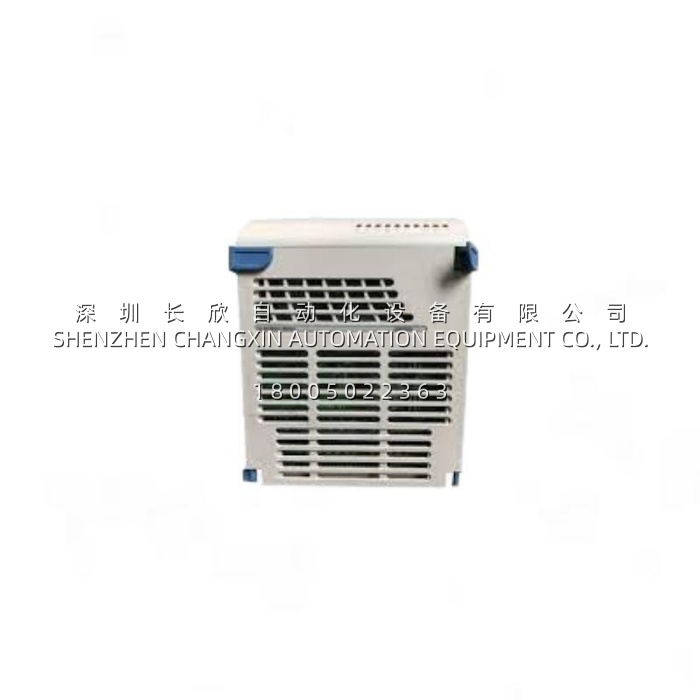
The Allen-Bradley 1756-PA72K​ is a 75-watt AC-input power supply module engineered for Rockwell Automation’s ControlLogix® 1756 series programmable automation controller chassis. It is designed to occupy Slot 0 (the leftmost position) of any standard 1756 chassis—including the 1756-A4, A7, A10, A13, and A17—where it converts facility AC mains (or DC in the specified range) into the multiple regulated DC voltages required by the ControlLogix backplane: 5.1 V DC for logic circuits, 3.3 V DC, 1.2 V DC, and 24 V DC for auxiliary/field power. The “K” suffix on the Allen-Bradley 1756-PA72K​ denotes that the printed circuit board assemblies have been processed with a conformal coating—a thin polymeric film that protects against moisture, salt spray, condensation, and airborne contaminants classified under ISA-S71.04G1 through G3 severity levels. This makes the Allen-Bradley 1756-PA72K​ the preferred choice for pulp & paper mills, wastewater treatment plants, coastal marine installations, and chemical processing areas where uncoated electronics would be vulnerable to premature corrosion or dendrite formation.The Allen-Bradley 1756-PA72K​ accepts a universal input range of 85–265 V AC (47–63 Hz) or 85–300 V DC, eliminating the need for voltage-select jumpers and simplifying global deployment. It delivers up to 10 A on the 5.1 V backplane rail (total 75 W maximum across all outputs) and supports Remove and Insert Under Power (RIUP) for hot-swap replacement in a running system. When higher availability is required, two 1756-PA72K units can be deployed in an N+1 redundant configuration using a 1756-RA or 1756-RM2 redundancy adapter module and the appropriate 1756-CPR2 cable set. LED status indicators on the front of the Allen-Bradley 1756-PA72K​ provide at-a-glance confirmation of AC presence (AC OK), DC output health (DC OK), and fault conditions, assisting maintenance personnel in rapid diagnostics without test equipment. Fully compatible with all Logix5000™ controllers and 1756 I/O/communication modules, the Allen-Bradley 1756-PA72K​ is the foundational power element that ensures stable, noise-immune operation of the entire ControlLogix control system.

Technical Specifications

Product Model | 1756-PA72KManufacturer | Rockwell Automation / Allen-BradleyProduct Type | ControlLogix 75W AC-Input Chassis Power Supply Module (Conformal Coated)Series | Allen-Bradley 1756 ControlLogixInput Voltage (AC) | 85–265 V AC, 47–63 Hz, single phaseInput Voltage (DC) | 85–300 V DC (acceptable on AC terminals L1/L2/N)Rated Output Power | 75 W totalBackplane Output – 5.1 V DC | 10 A max (primary logic rail)Backplane Output – 3.3 V DC | 4 A maxBackplane Output – 1.2 V DC | 1.5 A maxBackplane Output – 24 V DC | 2.8 A max (auxiliary/user-sourced)Inrush Current (max) | 20 A peak, limited by internal NTCProtection Features | Overvoltage, undervoltage, overcurrent, overtemperature; hiccup-mode recoveryHold-Up Time | > 20 ms @ full load (typical, after AC loss)Efficiency | Typically 80–84 % @ 120/240 V AC full loadOperating Temperature | 0 °C to +60 °C (32 °F to 140 °F)Storage Temperature | -40 °C to +85 °CRelative Humidity | 5 % to 95 % non-condensing (ISA-S71.04 G3 capable with conformal coat)Conformal Coating | Yes – urethane-based, per IPC-CC-830 / MIL-I-46058Agency Approvals | UL Listed, cULus, CE, C-Tick, KC, FM Class I Div 2 (with appropriate system enclosure)Chassis Slot Requirement | Slot 0 only (leftmost slot of 1756 chassis)Redundancy Support | Yes – with 1756-RA / 1756-RM2 + 1756-CPR2

Main Features and Advantages

The most distinguishing feature of the Allen-Bradley 1756-PA72K​ versus the standard 1756-PA72 is its full conformal coating. In pulp & paper bleach plants, coastal offshore platforms, or metal pickling lines where chlorine, hydrogen sulfide, or salt-laden air is present, uncoated PCBs can develop conductive filaments (dendrites) that lead to intermittent shorts and eventual module failure. The Allen-Bradley 1756-PA72K​ mitigates this failure mode by sealing solder joints, traces, and component bodies beneath a certified insulating coating—extending Mean Time Between Failure (MTBF) and reducing unplanned downtime in harsh-environment installations. The coating is applied after functional test and is fully compatible with the module’s thermal dissipation requirements.Universal input capability is another practical advantage. The Allen-Bradley 1756-PA72K​ auto-adapts to any global single-phase AC mains from 85 V to 265 V without manual reconfiguration, and will even operate from a 24 V DC nominal source in the 85–300 V DC range (though not intended as a primary DC-rated supply). This flexibility simplifies spare-parts inventory for multinational OEMs and system integrators who build machinery for export markets.For high-availability processes, the Allen-Bradley 1756-PA72K​ supports N+1 redundancy: two units feed a redundancy adapter which presents a single clean 5 V / 24 V rail to the chassis backplane. If one supply fails or is removed for service, the second continues powering the rack without interruption—a critical capability in continuous-process industries. The module’s RIUP design means the Allen-Bradley 1756-PA72K​ can be replaced live; the chassis remains powered either by a redundant partner or (in non-redundant setups) by briefly bridging power during a controlled maintenance window. Front-panel LEDs—AC OK (green), DC OK (green), and Fault (red)—together with the module-health bit readable in the controller, give both local and remote visibility into power system status, enabling proactive maintenance before a total loss of control power occurs.

Application Field

The Allen-Bradley 1756-PA72K​ is specified wherever a ControlLogix system must be deployed in environmentally challenging conditions that exceed the corrosion resistance of standard (uncoated) power supplies. In municipal water and wastewater treatment plants—particularly in pump stations with high humidity and occasional hydrogen sulfide exposure—the Allen-Bradley 1756-PA72K​ safeguards the control system’s power backbone. Similarly, in food & beverage canneries and breweries where periodic high-pressure washdown and caustic cleaning agents create corrosive atmospheres, the conformal-coated version is routinely selected to match coated processors and I/O modules elsewhere in the panel.Offshore and marine applications also favor the Allen-Bradley 1756-PA72K: salt-spray-laden air in engine rooms or topside enclosures accelerates degradation of bare electronics, and the “K”-suffix coating provides the necessary defense. In chemical processing, especially chlor-alkali, fertilizer, or smelting operations, the coated power supply is often mandated by site engineering standards as part of a G3-corrosivity-rated control panel specification. Even in less aggressive environments, some asset owners standardize on the Allen-Bradley 1756-PA72K​ across all ControlLogix racks to achieve uniformity and eliminate the risk of accidentally installing an uncoated unit in a sensitive area. For any ControlLogix-based system where long-term power integrity and environmental resilience are priorities, the Allen-Bradley 1756-PA72K​ delivers dependable, globally-compatible chassis power with the added assurance of conformal coating protection.

Allen‑Bradley 1756-DNB​ ControlLogix DeviceNet Scanner Module – Single Port Master for up to 63 Nodes缩略图

Allen‑Bradley 1756-DNB​ ControlLogix DeviceNet Scanner Module – Single Port Master for up to 63 Nodes

Allen‑Bradley 1756-DNB​ ControlLogix DeviceNet Scanner Module – Single Port Master for up to 63 Nodes插图 Allen‑Bradley 1756-DNB​ ControlLogix DeviceNet Scanner Module – Single Port Master for up to 63 Nodes插图1


Product Overview

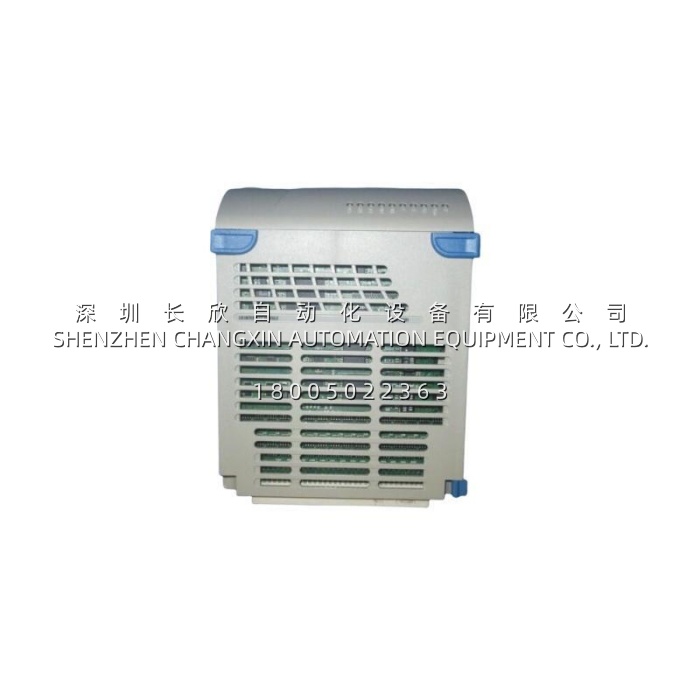
The Allen-Bradley 1756-DNB​ is a DeviceNet™ scanner (master) communications module designed for installation in any I/O slot of a Rockwell Automation ControlLogix® 1756 series chassis. Acting as the bridge between a Logix5000™ controller—such as a 1756-L61, L63, L71, or L8x—and a DeviceNet network segment, the Allen-Bradley 1756-DNB​ autonomously scans up to 63 slave nodes (MAC IDs 0–63), exchanging I/O data using polled, strobed, change-of-state (COS), or cyclic messaging modes. It enables the control processor to read/write data from intelligent devices such as variable frequency drives (VFDs), smart motor starters, pneumatic valve banks, vision systems, barcode readers, and distributed 1792/1794 FLEX I/O—all over a single shielded twisted-pair trunk cable carrying both signal and 24 V DC bus power.The Allen-Bradley 1756-DNB​ connects to the DeviceNet network via a 5-position screw-terminal (Phoenix-style) open-style port supporting 125 kbps, 250 kbps, or 500 kbps baud rates, with automatic baud detection configurable through RSNetWorx™ for DeviceNet software. The module draws its logic power from the ControlLogix backplane (nominally 400 mA @ 5.1 V DC) and does not require separate module power for the network side—DeviceNet trunk power is supplied independently by a dedicated 24 V DC DeviceNet power supply. All I/O mapping, node configuration, and EDS-based device parameter access are handled within the Rockwell development environment, allowing the Allen-Bradley 1756-DNB​ to appear as a transparent extension of the control system rather than a standalone gateway requiring custom protocol coding.Widely deployed since the inception of the ControlLogix platform, the Allen-Bradley 1756-DNB​ remains the standard means of integrating legacy and current DeviceNet devices into modern Logix-based automation architectures, offering proven reliability, straightforward commissioning, and full CIP (Common Industrial Protocol) compliance for both standard and DeviceNet Safety devices when used with an appropriate safety network configuration.

Technical Specifications

Product Model | 1756-DNBManufacturer | Rockwell Automation / Allen-BradleyProduct Type | ControlLogix DeviceNet Scanner (Master) Communications ModuleSeries | Allen-Bradley 1756 ControlLogixDeviceNet Port | 1 × 5-pin screw terminal (CAN_H, CAN_L, Drain/Shield, +24 V DC, 0 V DC); open-style connectorBaud Rates | 125 kbps / 250 kbps / 500 kbps (software-selectable per DeviceNet spec)Maximum Nodes per Scanner | Up to 63 slave nodes (MAC ID 0–63); multiple scanners can coexist in one chassis on separate segmentsBackplane Current Draw (5.1 V DC) | 400 mA typicalBackplane Current Draw (24 V DC) | 0 mA (no 24 V draw from backplane)Typical Power Dissipation | 3.5 WNetwork Cable Type | Shielded twisted pair, DeviceNet-thickness (thick or thin) per ODVA specificationModule Width | 1 slot (Standard 1756 single-width module)Operating Temperature | 0 °C to +60 °C (32 °F to 140 °F)Storage Temperature | -40 °C to +85 °CHumidity (non-condensing) | 5 % to 95 % RHEnclosure Rating | IP20 (when installed in enclosed panel)Agency Approvals | UL Listed, cULus, CE, C-Tick, ODVA conformanceConfiguration Software | RSNetWorx for DeviceNet, Studio 5000 / RSLogix 5000 (Add-On Profile / Generic Device support)Compatible Controllers | All Logix5000 controllers (1756-L55, L6x, L7x, L8x series)

Back to Top

Search For Products

Product has been added to your cart