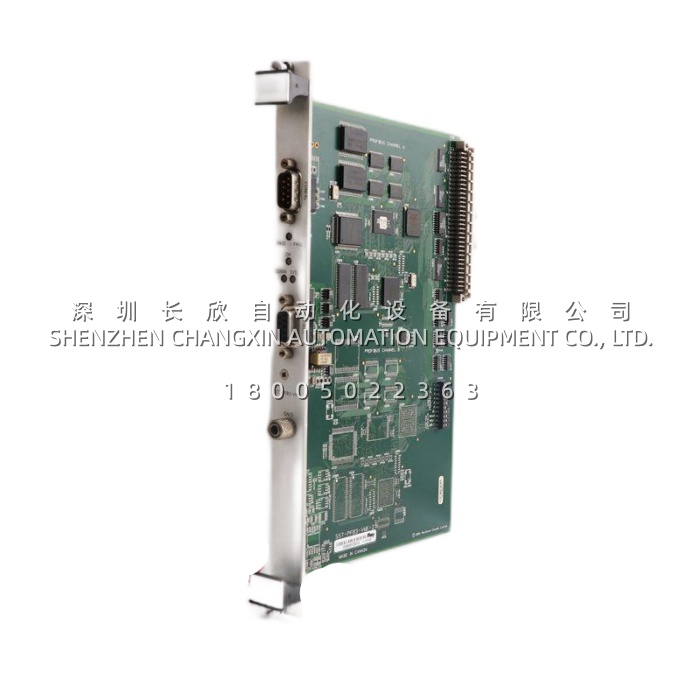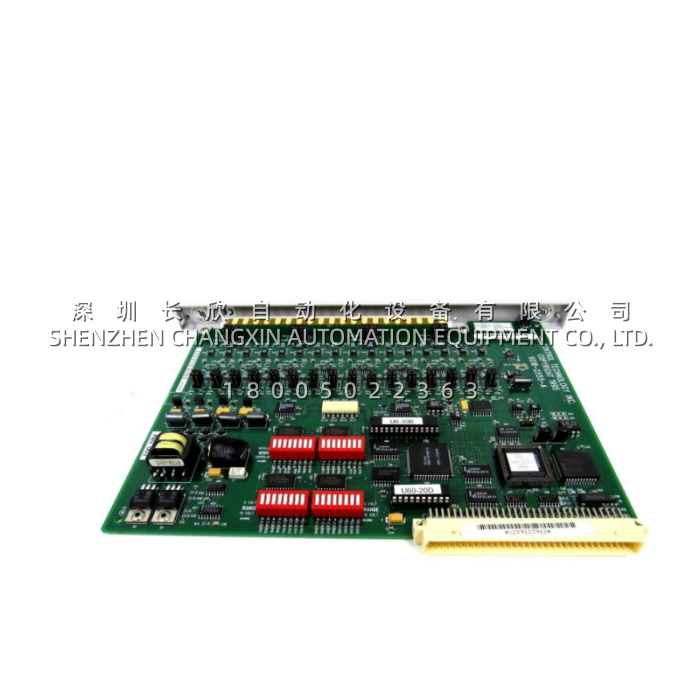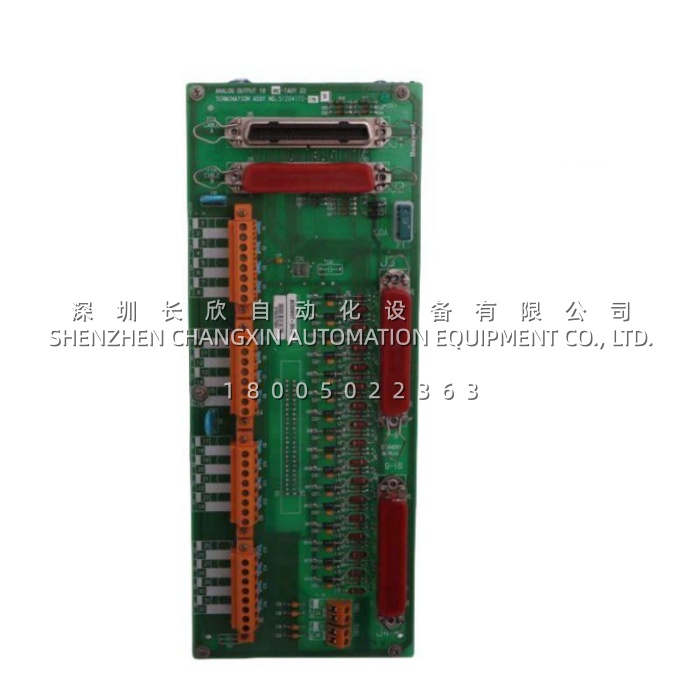
Allen-Bradley 1785-L60B Series C 64K Memory PLC-5 CPU缩略图

Allen-Bradley 1785-L60B Series C 64K Memory PLC-5 CPU

Allen-Bradley 1785-L60B Series C 64K Memory PLC-5 CPU插图

Description:The 1785-L60B/C​ (Series C) is an Enhanced PLC-5/60E​ programmable controller manufactured by Allen‑Bradley (Rockwell Automation). It represents the high-end of the classic PLC‑5 family, featuring a 64K-word user memory​ and support for up to 3072 I/O points. This processor is designed for large, complex automation tasks and is a key component in legacy control systems still prevalent in heavy industry. The “Series C” designation indicates a later firmware revision with enhanced stability and feature support compared to earlier Series A/B modules.Application Scenarios:In a legacy automotive assembly plant, the 1785-L60B/C​ serves as the main line controller. It reads inputs from thousands of sensors via 1771 I/O racks, executes complex sequencing logic for robotic welders and conveyors, and communicates production data to a central SCADA system over its Data Highway Plus (DH+)​ network. Its high I/O capacity and deterministic scan time are critical for coordinating large-scale, high-speed manufacturing processes.


Parameter:

Main Parameters Value/Description
Product Model 1785-L60B/C​ (Series C, PLC-5/60E)
Manufacturer Allen‑Bradley (Rockwell Automation)
Processor Family PLC-5 Enhanced (PLC-5/60E)
User Memory 64K words (expandable via 1785-ME series modules)
Max I/O Capacity 3072 points (any mix of discrete/analog)
Communication Ports Channel 0:​ RS-232/422 (DF1/ASCII)
Channel 1A:​ Data Highway Plus (DH+)
Channel 1B:10 Mbps Ethernet​ (IEEE 802.3)
Channel 2:​ Remote I/O Scanner
Programming Language Ladder Logic (PLC-5 instruction set)
Programming Software RSLogix 5
Backup Memory Battery-backed RAM (1770-XYC) & EEPROM option
I/O Compatibility 1771-A* series chassis (local/remote)
Operating Temperature 0 to 60 °C


Technical Principles and Innovative Values:The 1785-L60B/C​ is built around a proprietary 16/32-bit microprocessor architecture optimized for industrial control.

  • Innovation Point 1: Integrated Multi-Network Connectivity:​ Unlike earlier models, the Series C “E” (Enhanced) variant features a built-in 10 Mbps Ethernet port​ (Channel 1B). This allows the processor to communicate natively with Ethernet-enabled HMIs and other controllers, bridging the gap between legacy DH+ networks and modern TCP/IP infrastructure.
  • Innovation Point 2: Enhanced I/O Scanning:​ The processor utilizes a high-speed I/O scanner that supports block transfers for analog modules and specialty I/O. This allows it to efficiently manage large configurations of up to 24 I/O racks with deterministic scan times, crucial for process control applications.
  • Innovation Point 3: Advanced Instruction Set:​ The PLC-5/60E supports an expanded instruction set including floating-point math, PID with auto-tune, and advanced data handling (e.g., COP, FAL). This enables it to handle complex calculations and process control loops that were typically reserved for minicomputers or DCS systems in its era.
Rockwell 1785-L40E PLC-5 Chassis-Based Processor缩略图

Rockwell 1785-L40E PLC-5 Chassis-Based Processor

Rockwell 1785-L40E PLC-5 Chassis-Based Processor插图


Description

The Allen-Bradley 1785-L40E​ (often denoted 1785-L40E/A​ for Series A) is a PLC-5/40E EtherNet/IP programmable controller​ designed for medium to large-scale industrial automation. As part of the classic PLC-5 family, it combines a 48K word battery-backed RAM​ processor with native 10/100 Mbps Ethernet​ and dual DH+/Remote I/O​ ports. This module is installed in a 1771 I/O chassis​ and serves as the central control unit for discrete and analog I/O systems, supporting up to 4096 I/O points​ (2048 inputs + 2048 outputs) across local and remote racks.

Application Scenarios

In a water treatment plant, the 1785-L40E​ acts as the main process controller for a filtration and pumping station. The processor’s EtherNet/IP port​ communicates with a SCADA system for real-time monitoring, while its DH+ port​ connects to legacy PanelView terminals on the plant floor. The Remote I/O scanner​ function manages distributed 1771 analog modules​ (e.g., 1771-IFE) for flow and pressure monitoring, and 1771 digital modules​ for pump control. The system uses PID instructions​ to maintain precise chemical dosing rates based on analog feedback.

Parameter

Parameter Specification
Manufacturer Rockwell Automation (Allen-Bradley)
Model 1785-L40E​ / 1785-L40E/A​ (Series A)
Product Type PLC-5/40E EtherNet/IP Programmable Controller
User Memory 48K Words​ (Battery-Backed Static RAM)
Memory Backup Optional EEPROM (1785-ME16, ME32, ME64, M100)
Max Discrete I/O 2048​ (any mix) or 2048 In + 2048 Out​ (Complementary)
Max Analog I/O 2048
I/O Chassis Capacity Up to 61 chassis​ (1 local + 60 remote)
Communication Ports 2x DH+/Remote I/O​ (Adapter/Scanner), 1x RS-232/422/423 Serial, 1x Ethernet​ (10/100 Mbps, TCP/IP)
Backplane Current 3.3 A @ 5V DC
Power Dissipation 17.3 W
Battery 1770-XYC​ (Lithium, pre-installed)
Operating Temperature 0°C to 60°C (32°F to 140°F)
Compatible Chassis 1771-A1B, A2B, A3B, A3B1, A4B
Programming Software RSLogix 5, AI-5, PLC-5 Programming Software


Technical Principles and Innovative Values

The 1785-L40E​ represents a significant evolution in the PLC-5 series by integrating EtherNet/IP connectivity​ directly into the processor module, a feature previously requiring a separate 1785-ENET​ interface card.

  • Innovation Point 1: Integrated EtherNet/IP Stack.​ Unlike earlier PLC-5 models that relied on external communication modules, the 1785-L40E​ incorporates a native TCP/IP protocol stack​ and 10/100 Mbps Ethernet port. This allows the controller to communicate directly with modern HMIs, SCADA systems, and other Ethernet-enabled devices without additional hardware, simplifying network architecture and reducing latency for peer-to-peer messaging.
  • Innovation Point 2: Multi-Network Gateway Capability.​ The processor functions as a network bridge​ between legacy and modern systems. Its dual DH+/Remote I/O​ ports can operate simultaneously with the Ethernet port, enabling seamless integration of older Data Highway Plus (DH+)​ networks (e.g., connecting to SLC 5/04 controllers or PanelView 550s) while providing a migration path to Ethernet-based control.
  • Innovation Point 3: Deterministic I/O Scanning.​ The 1785-L40E​ utilizes a hardware-based I/O scanner​ for Remote I/O (RIO) networks. It supports block transfer (BT)​ operations for intelligent I/O modules (e.g., analog, high-speed counter) and offers configurable scan times as low as 0.5 ms​ for extended-local I/O, ensuring deterministic control of high-speed processes independent of the program scan time.
Allen‑Bradley PanelMate 1785K‑PMPP‑1700: 8.4‑inch Industrial HMI Terminal缩略图

Allen‑Bradley PanelMate 1785K‑PMPP‑1700: 8.4‑inch Industrial HMI Terminal

Allen‑Bradley PanelMate 1785K‑PMPP‑1700: 8.4‑inch Industrial HMI Terminal插图

Description:The 1785K‑PMPP‑1700​ is an 8.4‑inch color TFT operator interface​ from the PanelMate Power Pro 1700 series, originally part of the Allen‑Bradley (now Eaton) PanelMate family. Designed for mid‑range industrial applications, it features a VGA (640×480) resistive touchscreen complemented by 24 physical function keys, providing flexible input options for machine control. Powered by 24V DC and housed in a NEMA 4X/IP65 rated enclosure, it serves as a robust HMI for monitoring and controlling PLCs, drives, and process systems in harsh environments. Note:​ This product is considered a discontinued/legacy model​ by the manufacturer.Application Scenarios:In a chemical batching plant, a 1785K‑PMPP‑1700​ is mounted on the control panel of a mixing station. Operators use its touchscreen to view real‑time tank levels and temperatures, while the physical function keys provide quick, tactile access to start/stop commands and recipe selection. Its sealed front bezel withstands occasional washdowns, and its dual serial ports allow it to communicate simultaneously with a legacy Allen‑Bradley PLC‑5 via DH+ and a Modbus RTU‑based flow meter.


Parameter:

Main Parameters Value/Description
Product Model 1785K‑PMPP‑1700
Manufacturer Eaton (formerly Allen‑Bradley / Cutler‑Hammer PanelMate line)
Product Series PanelMate Power Pro 1700
Display Type 8.4‑inch Color TFT LCD
Display Resolution VGA (640 x 480 pixels)
Touch Technology 5‑wire Resistive Touchscreen
Physical Keys 24 Programmable Function Keys (3×8 matrix)
Enclosure Rating NEMA 4X / IP65 (Dust‑tight, water‑jet resistant, corrosion‑resistant)
Input Voltage 24V DC (typical)
Communication Ports 2 x Serial (Configurable as RS‑232/RS‑422/RS‑485)
Supported Protocols DF1, DH+, Modbus RTU, Data Highway (DH‑485)
Processor Embedded RISC
Memory Flash Memory for application storage
Operating Temp 0°C to 50°C (32°F to 122°F)
Mounting Panel Mount (requires cutout)
Lifecycle Status Discontinued​ (Recommended replacement: Eaton PanelMate ePro series)


Technical Principles and Innovative Values:

  • Innovation Point 1: Hybrid Input Design for High‑Speed Operation.​ Unlike pure‑touch HMIs that can be slow for frequent actions, the 1785K‑PMPP‑1700​ combines a resistive touchscreen with 24 physical, programmable function keys. This hybrid approach allows operators to execute critical “E‑Stop” or “Mode Select” commands via muscle memory on the hard keys, while retaining the flexibility of a graphical touch interface for data entry and navigation. The keys are software‑mappable, reducing the need for external pushbuttons.
  • Innovation Point 2: Multi‑Protocol Serial Connectivity for Legacy Integration.​ A key strength is its flexible dual‑serial port architecture. Each port can be independently configured for RS‑232, RS‑422, or RS‑485, supporting a wide range of legacy PLC protocols like DF1, DH+, and Modbus RTU​ simultaneously. This made it an ideal “bridge” device for modernizing control panels without replacing existing PLC hardware, a common challenge in industrial retrofits.
  • Innovation Point 3: Industrial‑Hardened Sealed Enclosure.​ The NEMA 4X (IP65) rated front bezel is constructed from materials resistant to corrosion, chemicals, and high‑pressure washdowns. This level of protection is critical for food & beverage, pharmaceutical, and chemical applications where the HMI is exposed to harsh cleaning agents or conductive dust, ensuring long‑term reliability where commercial touchscreens would fail.
Allen‑Bradley 1785‑CHBM PLC‑5 ControlNet Hot Backup Memory Cartridge缩略图

Allen‑Bradley 1785‑CHBM PLC‑5 ControlNet Hot Backup Memory Cartridge

Allen‑Bradley 1785‑CHBM PLC‑5 ControlNet Hot Backup Memory Cartridge插图


Description:

The 1785‑CHBM​ is a Hot Backup Memory Cartridge​ for Allen‑Bradley’s PLC‑5 ControlNet series processors. It provides 100K words of battery‑backed SRAM​ and enables a redundant (hot backup) system​ when used in pairs with compatible PLC‑5 controllers (e.g., 1785‑L40C15, L80C15). This module ensures program and data synchronization between primary and secondary CPUs, allowing for fault‑tolerant operation in critical industrial processes.

Application Scenarios:

In a chemical plant’s batch reactor control system, two PLC‑5/40C processors are equipped with 1785‑CHBM​ modules. The primary controller handles the active process, while the secondary runs in standby with synchronized data. If the primary CPU fails or is taken offline for maintenance, the 1785‑CHBM​ system triggers an automatic switchover (typically within 50 ms). This seamless transition prevents a reactor shutdown, avoiding costly production losses and ensuring continuous monitoring of critical safety interlocks.

Parameter:

Main Parameters Value / Description
Product Model 1785‑CHBM
Manufacturer Allen‑Bradley (Rockwell Automation)
Product Type Hot Backup Memory Cartridge / Redundancy Module
Compatible Processors PLC‑5 ControlNet Series (1785‑L20C15, L40C15, L80C15, L46C15)
Memory Capacity 100K words (Battery‑Backed Static RAM)
Memory Protection Write‑protect via physical jumper on module
Battery Type Integrated Lithium (Lithium Thionyl Chloride, non‑rechargeable)
Battery Life ~5 years @ 25°C (typical, varies with temperature)
Backup Function Enables processor‑to‑processor hot backup (requires two modules)
Sync Interface DB‑9 style connector for inter‑module sync cable
Sync Cable Length Typically ≤ 15 meters (shielded twisted pair)
Power Source Powered via PLC‑5 processor’s memory expansion port
Status Indicators LEDs for Power, Battery Status, Fault, Sync Status
Operating Temperature 0 °C to 60 °C (32 °F to 140 °F)
Certifications UL, cULus, CE, C‑Tick, CSA (Industrial Controls)
Weight Approx. 70–80 grams


Technical Principles and Innovative Values:

  • Innovation Point 1: Deterministic ControlNet Redundancy.​ The 1785‑CHBM​ extends the PLC‑5’s architecture to support ControlNet‑based hot backup. It maintains a mirrored image of the primary processor’s program and data tables in the secondary unit. This allows a standby PLC‑5 to take over scanning and controlling remote I/O (via ControlNet) within milliseconds if the primary fails, ensuring no single point of failure in the controller layer for high‑availability systems.
  • Innovation Point 2: Integrated Battery‑Backed SRAM Architecture.​ Unlike EEPROM modules used for program storage, the 1785‑CHBM​ utilizes 100K words of Static RAM​ with an integrated lithium battery. This provides fast, unlimited write cycles for real‑time data synchronization between the redundant pair. The battery ensures data retention during power outages, and the physical write‑protect jumper prevents accidental corruption during maintenance.
  • Innovation Point 3: Synchronized State Machine.​ The module implements a synchronization protocol​ over a dedicated serial link (sync cable). It continuously compares the state of the primary and secondary processors, ensuring that timers, counters, and process data are identical. If a divergence is detected (e.g., due to a memory fault), the system can flag a fault and initiate a controlled switchover, maintaining process integrity.
1785-CHBM​ Hot Backup Cartridge for PLC-5 Enhanced & ControlNet Processors缩略图

1785-CHBM​ Hot Backup Cartridge for PLC-5 Enhanced & ControlNet Processors

1785-CHBM​ Hot Backup Cartridge for PLC-5 Enhanced & ControlNet Processors插图

Description:The Allen-Bradley 1785-CHBM​ (also known as 1785-CHBM/A) is a Hot Backup Memory Cartridge​ designed for the PLC-5​ series of programmable controllers. It is a critical component for building redundant (hot backup) systems, providing 100K words of non-volatile memory to mirror the program and data from a primary processor to a standby processor. When used in conjunction with the 1785-BCM​ (Backup Communication Module), it enables seamless failover in mission-critical industrial applications, ensuring continuous operation in the event of a primary controller failure.Application Scenarios:In a chemical processing plant, a critical reactor control system cannot tolerate any downtime. A PLC-5 redundant system​ is deployed using two 1785-L40B​ processors. Each processor is equipped with a 1785-CHBM​ memory cartridge and connected via a 1785-BCM​ module. The primary processor continuously updates the 1785-CHBM​ in the standby unit. During a scheduled maintenance test, the primary processor is powered down. The 1785-CHBM​ allows the standby processor to take over control within milliseconds, maintaining the reactor temperature and pressure without interruption, preventing a costly batch loss and potential safety incident.


Parameter:

Parameter Specification
Product Model 1785-CHBM​ / 1785-CHBM/A​ (Hardware Revision)
Manufacturer Allen-Bradley (Rockwell Automation)
Product Category Hot Backup Memory Cartridge / Redundancy Module
Compatible Systems PLC-5 Enhanced & ControlNet Processors
Memory Capacity 100K Words (Non-Volatile User Memory)
Memory Technology EEPROM (Electrically Erasable Programmable Read-Only Memory)
Write Protection Configurable via Physical Jumper (Remove to Protect)
Key Processors 1785-L20B/C, L40B/C, L60B/C, L80B/C, L20E, L40E, L60E, L80E
Redundancy Partner Must be used with 1785-BCM​ (Backup Communication Module)
Operating Temperature 0°C to 60°C (32°F to 140°F)
Storage Temperature -40°C to 85°C (-40°F to 185°F)
Relative Humidity 5% to 95% (Non-Condensing)
Vibration/Shock Rated for 30G Operating Shock, Industrial Environment
Certifications cULus, CE, CSA, C-TICK (Industrial Emissions)


Technical Principles and Innovative Values:

  • Innovation Point 1: Real-Time State Mirroring:​ The 1785-CHBM​ is not a simple storage card; it is an active component in a PLC-5 hot backup system. It works with the 1785-BCM​ to continuously synchronize the entire user program and data table (including timers, counters, and registers) from the primary processor to the backup processor. This ensures that at the moment of failover, the backup controller has the exact same “state” as the primary, allowing for bumpless transfer of control.
  • Innovation Point 2: Non-Volatile Data Security:​ The cartridge utilizes EEPROM technology​ to retain the program and data even during a complete power loss. This is crucial for processes that require data historization or must resume from the exact point of interruption. The physical write-protect jumper provides an additional layer of safety, preventing accidental overwrites of the critical control logic during maintenance operations.
Allen-Bradley 1784-U2DN/A USB to DeviceNet Adapter Cable缩略图

Allen-Bradley 1784-U2DN/A USB to DeviceNet Adapter Cable

Allen-Bradley 1784-U2DN/A USB to DeviceNet Adapter Cable插图

Description:

The Allen-Bradley 1784-U2DN/A​ is a USB-to-DeviceNet communication adapter​ that serves as the primary configuration and diagnostic tool for DeviceNet fieldbus networks. It features an integrated USB cable and a 5-pin Phoenix connector, allowing engineers to connect a modern laptop directly to a DeviceNet network for scanning nodes, commissioning devices, and troubleshooting communication faults using RSNetWorx software. It is the standard replacement for older PCMCIA and PCI-based interface cards in legacy PLC-5 and ControlLogix systems.

Application Scenarios:

A food and beverage plant experienced intermittent faults on a packaging line DeviceNet network controlling photoelectric sensors and valve manifolds. The maintenance team used the 1784-U2DN/A​ adapter to connect a laptop to a diagnostic port on the network trunk. By scanning the network with RSNetWorx, they quickly identified a faulty node with a duplicate MAC ID that was causing the master to fault. They reconfigured the node on the spot without needing to power down the entire line, restoring operation in minutes instead of hours.

Parameter:

Main Parameters Value/Description
Product Model 1784-U2DN/A​ (Series A)
Manufacturer Rockwell Automation (Allen-Bradley)
Product Type USB to DeviceNet Protocol Converter / Adapter Cable
PC Interface USB 2.0 (Type A, integrated 2 ft / 0.61 m cable)
DeviceNet Interface 5-pin Phoenix-style removable connector (V+, V-, CAN_H, CAN_L, Shield)
Supported Baud Rates 125 kbps, 250 kbps, 500 kbps (Auto-detect or manual switch)
Power Supply USB Bus Powered (5V DC) + DeviceNet Network Power (24V DC)
LED Indicators USB Status, Module Status (MS), Network Status (NS)
Configuration Rotary DIP switches for Node Address (0-63), Link Speed switch
Software Required RSLinx Classic (v2.51+), RSNetWorx for DeviceNet
Operating Temperature 0 °C to 50 °C (32 °F to 122 °F)
Enclosure Rating IP30 (Indoor/Office Environment)
Lifecycle Status Active / Mature​ (Widely used for maintenance)


Technical Principles and Innovative Values:

The 1784-U2DN/A​ is the modern standard for DeviceNet network management, replacing obsolete ISA and PCMCIA cards.

  • Innovation Point 1: USB Bus-Powered Portability.​ Unlike older interface cards that required internal PC slots (which modern laptops lack), the 1784-U2DN/A​ draws power directly from the USB port. This makes it a truly portable tool that can be carried in a technician’s toolkit and used with any standard Windows laptop, eliminating the need for dedicated, bulky programming computers.
  • Innovation Point 2: Integrated Protocol Stack.​ The adapter contains a full DeviceNet master protocol stack and CAN controller. It acts as a Class 1 Master on the network, allowing it to perform full network scans, upload EDS files from devices, and commission nodes without requiring a PLC to be online. This makes it indispensable for pre-commissioning checks and post-failure diagnostics.
  • Innovation Point 3: Hardware-Level Diagnostics.​ The unit features three status LEDs (USB, Module, Network) that provide immediate visual feedback. The Network Status LED specifically indicates critical faults like “Duplicate MAC ID” (solid red) or “Bus Off” conditions, allowing technicians to diagnose common network issues before even opening the software.
Allen-Bradley 1784-PKTX Data Highway Plus PCI Interface Card缩略图

Allen-Bradley 1784-PKTX Data Highway Plus PCI Interface Card

Allen-Bradley 1784-PKTX Data Highway Plus PCI Interface Card插图

Description:The Allen-Bradley 1784-PKTX​ is a PCI-bus network interface card (NIC)​ that enables a standard industrial or office PC to connect directly to legacy Allen-Bradley Data Highway Plus (DH+), Remote I/O (RIO), and DH-485​ networks. It serves as a critical bridge for programming, monitoring, and data acquisition with older controllers like the PLC-5​ and SLC 500​ series, translating PCI bus commands into industrial protocol traffic. Note: This product was officially discontinued by Rockwell Automation on March 31, 2022, and is now primarily sourced through the secondary/refurbished market for legacy system maintenance.Application Scenarios:In a steel mill’s aging melt shop, the central Windows XP-based HMI server​ running FactoryTalk View needed to poll data from six PLC-5/60​ controllers scattered across the facility. The existing 1784-PKTX​ card installed in the server’s PCI slot provided a single, reliable DH+ connection (configured for 57.6 kbps) that daisy-chained all the PLCs. This allowed operators to monitor furnace temperatures and conveyor statuses in real-time without requiring a costly and disruptive migration to Ethernet/IP.


Parameter:

Main Parameters Value/Description
Product Model 1784-PKTX
Manufacturer Allen-Bradley (Rockwell Automation)
Product Category PCI Network Interface Card (NIC)
Host Bus Interface PCI 2.3 (5V, 32-bit) – Not PCI Express (PCIe)
Supported Protocols Data Highway Plus (DH+), Remote I/O (RIO), DH-485
Communication Ports 1A:​ 3-pin Phoenix (DH+/RIO)
1C:​ 6-pin Phoenix (DH-485)
DH+ Baud Rates 57.6 kbps, 115.2 kbps, 230.4 kbps
Max DH+ Distance 10,000 ft (3048 m) @ 57.6 kbps
Power Consumption ~5V @ 350-500 mA (via PCI slot)
Operating Temperature 0 to 60 °C
Compatibility PLC-5, SLC 5/04, MicroLogix (via DH-485)


Technical Principles and Innovative Values:The 1784-PKTX​ functions as a specialized modem, offloading the complex token-passing protocol of DH+ from the PC’s CPU to its onboard processor.

  • Innovation Point 1: Multi-Protocol Flexibility on a Single Channel:​ Unlike fixed-function cards, the 1784-PKTX​ can be reconfigured in RSLinx Classic​ to operate as a DH+​ adapter, a Remote I/O Scanner, or a DH-485​ interface. This “three-in-one” design drastically reduced the variety of spare parts maintenance teams needed to stock for different legacy networks.
  • Innovation Point 2: PCI Plug-and-Play Architecture:​ As a successor to the older ISA-bus 1784-KTX, the PKTX leveraged the PCI standard’s Plug-and-Play (PnP) capabilities. It automatically configures its IRQ and base memory address, eliminating the manual jumper settings and hardware conflicts that plagued earlier industrial PC cards.
  • Innovation Point 3: Deterministic RIO Scanning:​ When configured for Remote I/O, the card operates at the hardware level to poll remote I/O racks with high determinism. This allows a PC-based control system (e.g., using SoftLogix) to function as a master scanner, ensuring timely I/O updates independent of the Windows operating system’s non-real-time latency.
Allen-Bradley 1784-PKTX B/A PCI Network Interface Card for DH+ and DH-485缩略图

Allen-Bradley 1784-PKTX B/A PCI Network Interface Card for DH+ and DH-485

Allen-Bradley 1784-PKTX B/A PCI Network Interface Card for DH+ and DH-485插图

Description:The Allen-Bradley 1784-PKTX B/A​ is a PCI-based network interface card (NIC) designed to provide a critical communication bridge between a standard industrial PC and Allen-Bradley’s legacy Data Highway Plus (DH+), Remote I/O, and DH-485 networks. As a core component for maintaining and servicing aging PLC-5 and SLC 500 systems, this card allows engineers to perform programming, monitoring, and diagnostic tasks directly from a Windows-based workstation, extending the operational life of mission-critical legacy control systems.Application Scenarios:In a steel processing plant in Taiyuan, the core rolling mill control relies on a decades-old PLC-5/40 system running on a DH+ network. The plant’s single engineering workstation, equipped with a 1784-PKTX B/A​ card, is the only tool capable of going online with the processor to troubleshoot a critical logic fault causing motor overloads. The technician uses the card to connect via RSLinx Classic, upload the latest program backup, and force I/O points to isolate a faulty limit switch—all without disrupting the live production run. This card acts as the indispensable “key” to access the plant’s foundational control infrastructure.


Parameter:

Parameter Value / Specification
Product Model 1784-PKTX B/A​ (Series B or A)
Manufacturer Rockwell Automation (Allen-Bradley)
Product Category PCI Network Interface Card (NIC)
Host Bus Interface PCI 2.3 (32-bit, 5V, 33MHz)
Communication Channels 2 (Channel 1A: DH+/RIO; Channel 1C: DH-485)
Supported Protocols Data Highway Plus (DH+), Remote I/O (RIO), DH-485
DH+ Data Rates 57.6 kbps, 115.2 kbps, 230.4 kbps
DH+ Cable Length Up to 10,000 ft (3,048 m) @ 57.6 kbps
DH-485 Data Rates 1.2 to 19.2 kbps (Up to 4,000 ft)
Connectors 3-pin Phoenix (Ch 1A), 6-pin Phoenix (Ch 1C)
Power Consumption +5V DC @ ~350 mA (via PCI slot)
Operating Temperature 0°C to 60°C (32°F to 140°F)
Status Indication 1 LED per channel (Diagnostics/Activity)


Technical Principles and Innovative Values:The 1784-PKTX B/A​ is engineered to solve the specific challenge of PC integration with proprietary industrial networks that predate modern Ethernet.

  • Innovation Point 1: Multi-Protocol Legacy Gateway.​ Unlike generic serial adapters, this card provides a dedicated hardware-level interface for Allen-Bradley’s token-passing DH+ network (a non-standard RS-422/485 variant). It handles the complex timing and framing of the DH+ protocol, offloading this task from the host PC’s CPU and providing a stable, high-level driver interface for Rockwell software like RSLogix 5 and RSLogix 500. This ensures reliable communication where software-based emulation often fails.
  • Innovation Point 2: Plug-and-Play PCI Integration.​ As a successor to the older ISA-bus KTX cards, the 1784-PKTX​ leverages the PCI bus standard for automatic resource allocation (IRQ, base address). This eliminates the need for manual jumper settings, reducing installation complexity and potential conflicts in multi-card engineering stations. The card draws power directly from the PCI slot, requiring no external power supply.
  • Innovation Point 3: Industrial-Grade Reliability.​ Designed for the control room environment, the card features a conformal-coated PCB for protection against humidity and dust. Its wide operating temperature range (0-60°C) and robust electrical isolation make it suitable for 24/7 operation in harsh industrial settings, far exceeding the reliability of consumer-grade network adapters.
Rockwell Automation 1784-PKTS​ PC-Based RIO Interface缩略图

Rockwell Automation 1784-PKTS​ PC-Based RIO Interface

Rockwell Automation 1784-PKTS​ PC-Based RIO Interface插图

Description:The 1784-PKTS​ (and 1784-PKTS/A) is a legacy PCI-bus industrial communication interface card​ from Allen-Bradley (Rockwell Automation). It is specifically designed to allow a standard industrial PC to function as a Remote I/O (RIO) Scanner​ on an Allen-Bradley Universal Remote I/O network. Unlike the more common 1784-PKTX, the PKTS variant is optimized for scanner applications, enabling the PC to directly read from and write to remote I/O blocks (like 1771 I/O racks) as if they were local to the computer, facilitating PC-based control and high-speed data acquisition.Application Scenarios:In a legacy steel mill, a critical quenching process is controlled by an industrial PC running a custom HMI/SCADA application. The PC is equipped with a 1784-PKTS/A​ card, which scans a remote 1771-ASB adapter module located 500 meters away in a high-temperature zone. The 1771 rack houses analog input modules reading thermocouples and digital output modules controlling water valves. The 1784-PKTS​ card allows the PC to execute the control logic directly, polling the I/O racks in real-time over the robust twinaxial RIO network, providing deterministic control without the need for a separate PLC-5 processor.


Parameter:

Main Parameters Value/Description
Product Model 1784-PKTS​ / 1784-PKTS/A​ (Revision A)
Manufacturer Rockwell Automation (Allen-Bradley)
Product Category PCI Industrial Communication Interface Card
Primary Function Remote I/O (RIO) Scanner (PC as Master)
Host Interface PCI Bus (Rev 2.3, 32-bit, 5V), Plug and Play
Communication Protocols Allen-Bradley Remote I/O (RIO), Data Highway Plus (DH+), DH-485
Physical Ports 1x 3-pin Phoenix (Channel 1A) for DH+/RIO; 1x 6-pin Phoenix (Channel 1C) for DH-485
Data Rates RIO/DH+: 57.6K, 115.2K, 230.4K bps; DH-485: 1200-19.2K bps
Network Distance Up to 10,000 ft (3,048 m) @ 57.6K bps (with Belden 9463 cable)
Configuration Software RSLinx Classic, 6001-RIO Toolkit (for custom driver development)
Operating System Legacy Windows (95, NT, 2000, XP)


Technical Principles and Innovative Values:

  • Innovation Point 1: PC as a Programmable Controller.​ The 1784-PKTS‘s core innovation is its RIO Scanner firmware. It allows a standard industrial PC to emulate the scanning function traditionally performed by a PLC-5 or SLC processor. This enables “soft PLC” architectures where the control logic resides in the PC (e.g., using Rockwell’s 6001-RIO Toolkit or third-party SCADA), reducing hardware costs and simplifying integration with upper-level MES/ERP systems by having control and data logging on the same platform.
  • Innovation Point 2: Multi-Protocol PCI Integration.​ The card combines support for three critical legacy A-B networks (RIO, DH+, DH-485) into a single, standardized PCI form factor. Its Plug and Play​ design eliminated the complex IRQ and base address jumper settings required by older ISA cards (like the 1784-KTS), significantly reducing installation time and configuration errors in maintenance and upgrade scenarios.
  • Innovation Point 3: Deterministic Data Acquisition.​ For data-intensive applications, the 1784-PKTS​ provides a direct, high-speed path between the I/O rack and the PC’s memory via the PCI bus. This bypasses the slower, message-based communication of DH+, allowing for real-time monitoring and control of I/O states with predictable scan times, which is critical for process control and high-speed machine diagnostics.


Allen‑Bradley 1784‑PCMK/A​ PCMCIA Communication Card for DH+ & DH485 Networks缩略图

Allen‑Bradley 1784‑PCMK/A​ PCMCIA Communication Card for DH+ & DH485 Networks

Allen‑Bradley 1784‑PCMK/A​ PCMCIA Communication Card for DH+ & DH485 Networks插图

Description:The Allen‑Bradley 1784‑PCMK/A​ is a Series A PCMCIA Type II communication card that enables a notebook computer to interface with Allen‑Bradley’s legacy industrial networks, including Data Highway Plus (DH+), DH‑485, and Remote I/O. This portable adapter allows engineers to program, monitor, and troubleshoot legacy PLCs (such as PLC‑5, SLC 5/04) directly from a laptop, serving as a critical maintenance tool for aging control systems that lack modern Ethernet connectivity.Application Scenarios:A municipal water treatment plant relied on a 20‑year‑old PLC‑5‑based control system with a DH+ network. The plant’s engineering team needed to perform annual logic backups and troubleshoot a faulty pump control sequence. Using a legacy laptop running Windows 2000/XP and the 1784‑PCMK/A​ card connected via a 1784‑PCM5/A​ cable, the team established a direct DH+ connection. This allowed them to go online with the PLC‑5 processors using RSLogix 5, monitor the real‑time data tables, and correct the logic without disrupting the entire treatment process, extending the life of the critical infrastructure.


Parameter:

Parameter Specification
Product Model 1784‑PCMK/A​ (Series A)
Manufacturer Allen‑Bradley (Rockwell Automation)
Product Category PCMCIA Industrial Communication Card
Form Factor PCMCIA Type II (68‑pin)
Bus Type 8‑bit PCMCIA (CardBus incompatible)
Supported Protocols Data Highway Plus (DH+), DH‑485, Remote I/O
DH+ Data Rate 57.6 kbps (typical for Series A)
Power Supply 5V DC @ ~160 mA (from PCMCIA slot)
Cable Requirement Requires Series A cable (e.g., 1784‑PCM4/A, PCM5/A, PCM6/A)
Compatible Controllers PLC‑2, PLC‑3, PLC‑5, SLC 5/04 (via DH+ port)
Software Compatibility RSLogix 5, RSLogix 500, RSLinx Classic
OS Compatibility Legacy Windows (95, 98, NT, 2000, XP)
Operating Temperature 0 to 60 °C


Technical Principles and Innovative Values:

  • Innovation Point 1: Portable Legacy Network Access.​ The 1784‑PCMK/A​ transformed the laptop into a mobile DH+ network node. Unlike fixed programming terminals, this PCMCIA card allowed engineers to carry a single tool to multiple sites or machines, significantly reducing diagnostic time for geographically dispersed legacy equipment.
  • Innovation Point 2: Multi‑Protocol Support on a Single Card.​ The card integrated the physical layer and protocol stacks for three key Allen‑Bradley networks (DH+, DH‑485, RIO) into one compact device. This versatility meant a technician could service a wide range of controllers—from large PLC‑5s on DH+ to smaller SLCs on DH‑485—without changing hardware.
  • Innovation Point 3: Electrical Isolation for Noisy Environments.​ Designed for the industrial floor, the card incorporated signal isolation and noise‑immune differential signaling (RS‑485 based for DH+). This ensured reliable communication in electrically harsh environments where standard serial ports would fail, a critical feature for maintaining data integrity during programming and online edits.
Back to Top

Search For Products

Product has been added to your cart