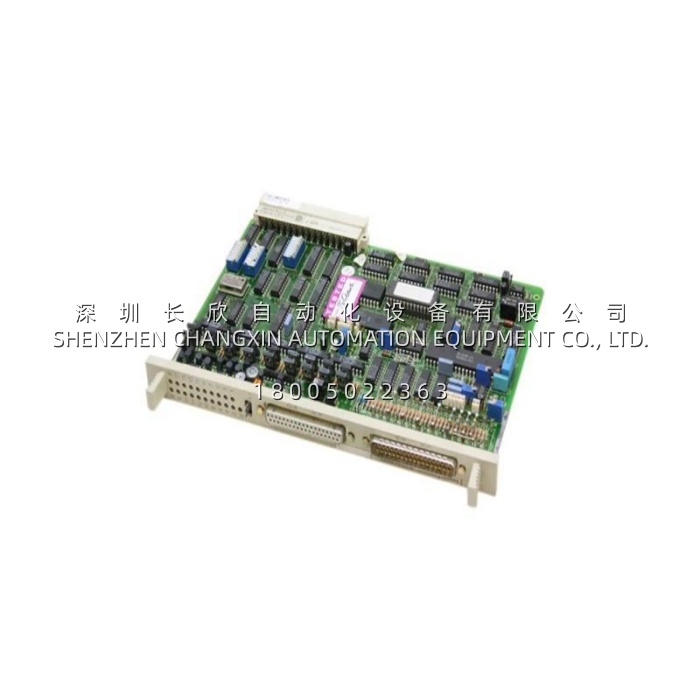
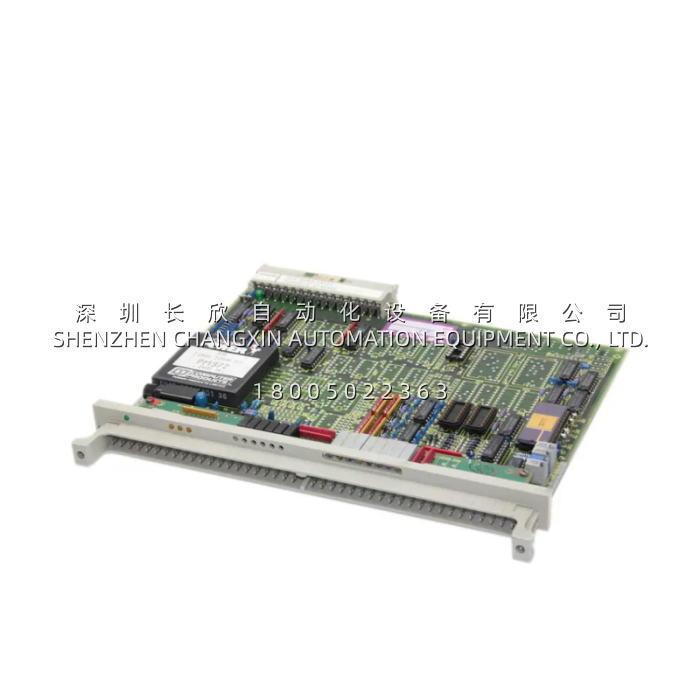
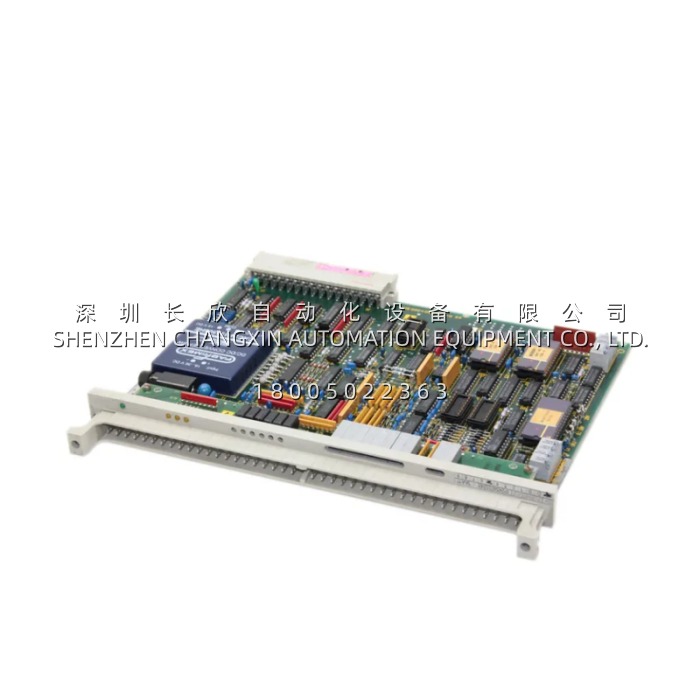
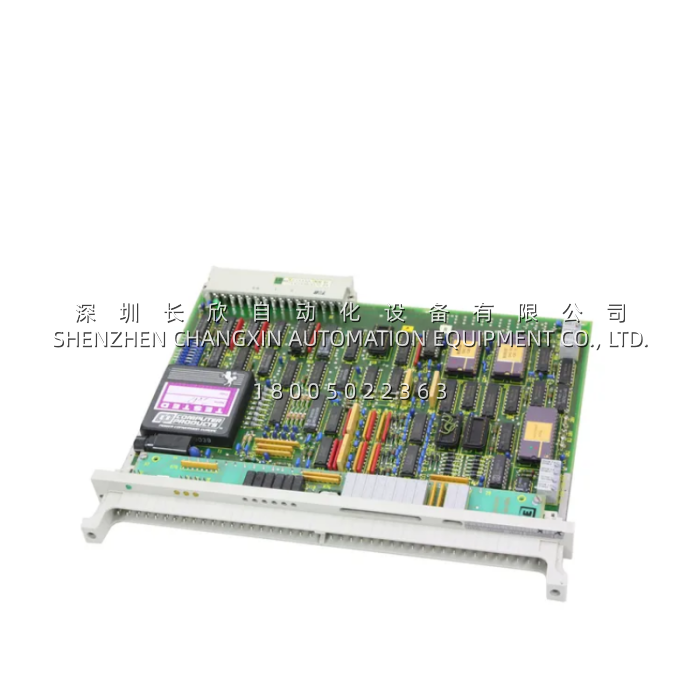
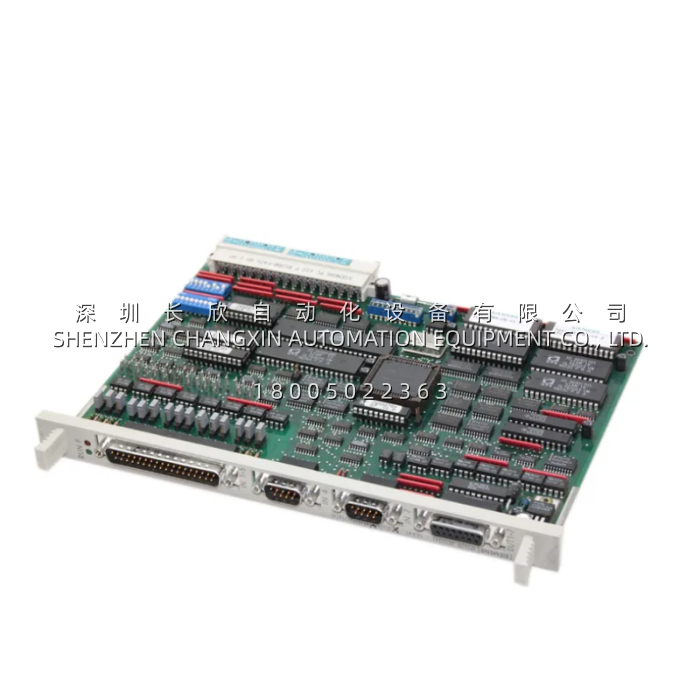
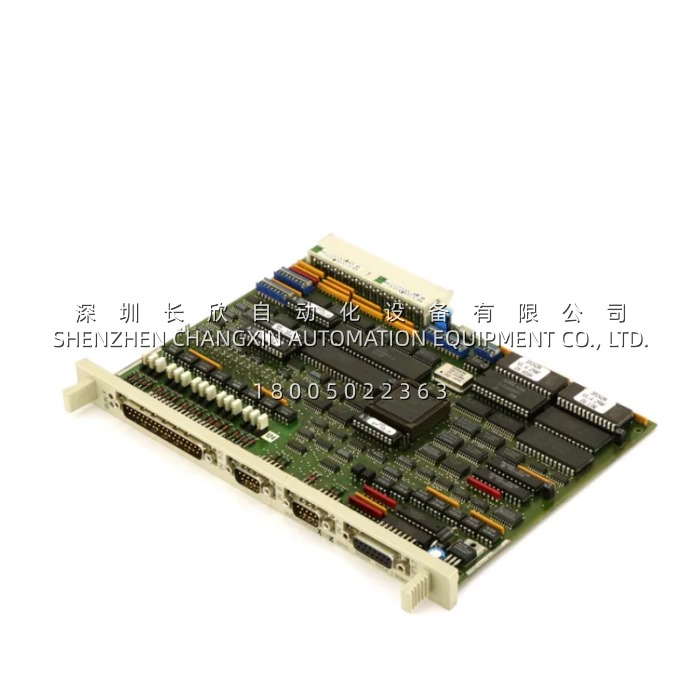
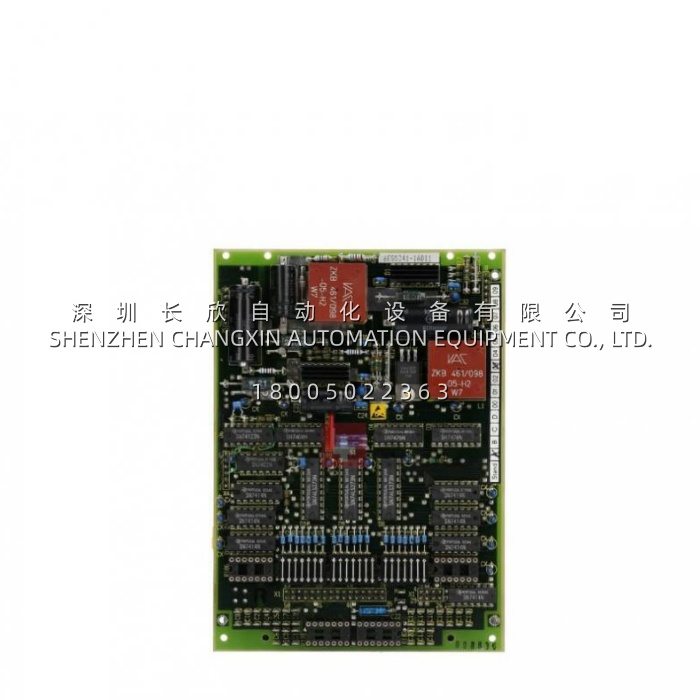
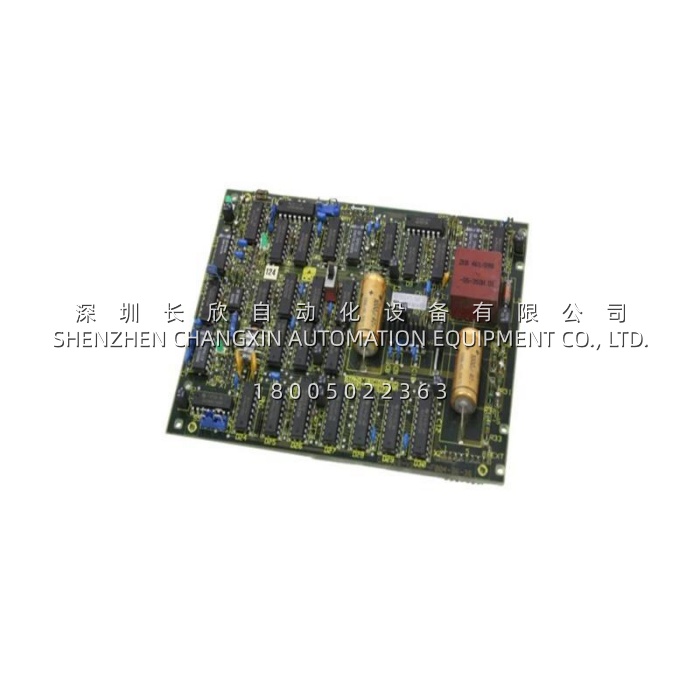
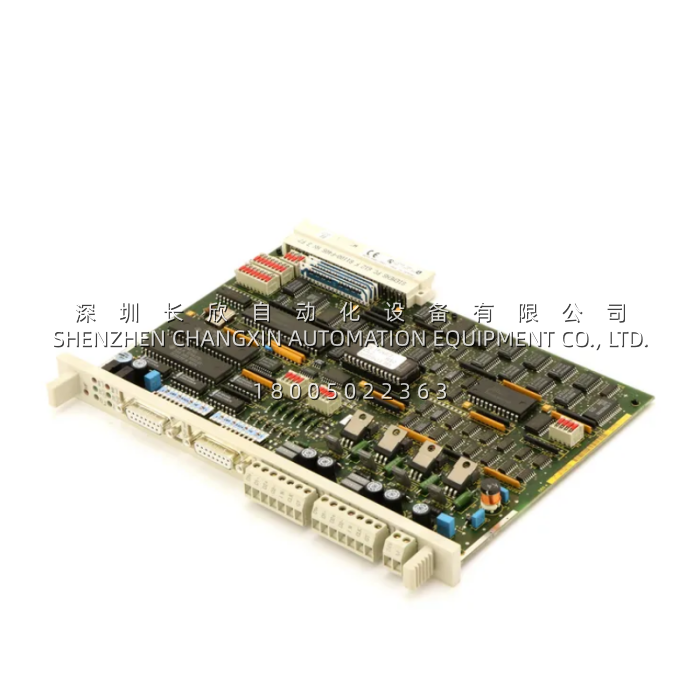
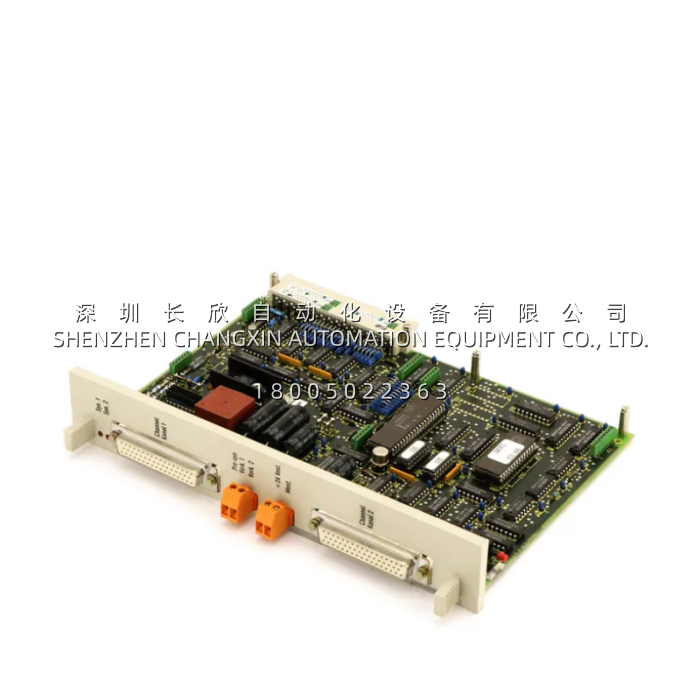
The Intelligent Choice: ABB SPAU 130 C-AA for Voltage Management


The Schneider Electric 140CPU67260 is a high-performance, multi-mode Unity hot standby (HSBY) processor within the Modicon Quantum programmable logic controller (PLC) and distributed control system (DCS) platform . Designed as the brain of complex and large-scale industrial automation systems, it features a powerful 266 MHz processor, substantial memory, and built-in support for hardware redundancy . Its “multi-mode” capability allows it to efficiently handle real-time control, data processing, and communication tasks simultaneously, making it suitable for demanding applications in sectors like power generation, oil & gas, and manufacturing where system availability and processing power are paramount .
In a sprawling automotive manufacturing plant, a body-in-white welding line involves hundreds of robots, welding controllers, and safety devices that must operate in perfect synchrony. A controller failure could halt the entire production line, costing tens of thousands of dollars per minute in downtime. The Schneider 140CPU67260 is deployed as the central controller in a redundant configuration. The primary CPU executes the complex coordination logic for all stations, while the standby CPU mirrors its state in real-time. If the primary unit fails due to a hardware fault, the system automatically switches to the standby 140CPU67260 within milliseconds, preventing a line stoppage . Furthermore, its multi-mode architecture allows it to not only control the robots (real-time mode) but also collect weld quality data (data processing mode) and communicate production statistics to the plant’s Manufacturing Execution System (MES) via Ethernet (communication mode) concurrently . This addresses the critical pain points of production continuity, data integration, and complex, synchronized control in high-speed manufacturing.
Parameter
Based on technical specifications from product documentation and distributor information .
The 140CPU67260 builds upon the robust Quantum platform, emphasizing parallel processing capability and integrated multi-network connectivity.
Innovation Point 1: Multi-Mode Processing Architecture for Concurrent Task Execution. Unlike traditional PLCs that primarily focus on scan-based control, the 140CPU67260 employs a multi-mode processing architecture . It can partition its resources to simultaneously handle real-time deterministic control loops, background data processing and logging, and asynchronous communication protocols without one task significantly impacting the performance of others . This is crucial for modern systems that require not just control but also data analytics and vertical integration with IT systems.
Innovation Point 2: Unified Multi-Protocol Communication Backbone. The processor serves as a native communication hub. Beyond its integrated ports, it supports a wide array of optional communication modules (Ethernet, Modbus Plus, Profibus DP, etc.) . This allows a single 140CPU67260 to directly communicate with devices on different fieldbuses (e.g., Profibus DP drives, Modbus RTU instruments, Ethernet/IP scanners) without requiring external gateways. This simplifies network architecture, reduces latency, and lowers hardware costs and complexity .
Innovation Point 3: Enhanced Memory Management and Application Portability. With support for two PCMCIA memory cards, the 140CPU67260 offers flexible memory expansion . This allows engineers to store large application programs, extensive symbol databases, and even production recipes or historical data directly on the controller. A key feature is the ability to store the complete application with symbols on the PCMCIA card, enabling easy backup, transfer, and restoration of entire projects, which greatly simplifies maintenance and system cloning .
Case Study: Integrated Water & Wastewater Treatment Plant Control System Modernization
A regional water authority operated a treatment plant with separate control systems for raw water intake, chemical treatment, filtration, and sludge processing, leading to operational silos and inefficient coordination. The goal was to integrate these into a unified, highly available control system capable of handling over 20.000 I/O points and multiple communication networks.
Implementation & Outcome: A new control architecture was built around a redundant pair of Schneider 140CPU67260 processors. One CPU pair managed the physical process control, leveraging its high I/O capacity and fast scan time. The multi-mode capability was utilized to run a separate, lower-priority task that performed advanced calculations for chemical dosing optimization and energy consumption analysis. The built-in and optional communication ports allowed direct connection to existing Profibus DP motor control centers, Modbus RTU flow meters, and a new Ethernet/IP network for operator stations. The PCMCIA cards were used to store not only the control program but also the complete HMI faceplates and symbol database, allowing for quick offline troubleshooting. The project resulted in a 15% reduction in chemical usage through optimized control, seamless integration of legacy devices, and a control system with 99.99% availability due to the hot standby configuration. The plant manager highlighted the system’s scalability and reduced engineering effort for future expansions.
The 140CPU67260 is the core of a comprehensive Modicon Quantum system:
Quantum I/O Modules (e.g., 140DDI35300. 140ADO02000): Digital and analog input/output modules for interfacing with field sensors and actuators.
Quantum Communication Modules (e.g., 140NOE77101 – Ethernet, 140CRA31200 – Remote I/O Adapter): Modules to extend network connectivity and manage remote I/O drops.
Quantum Power Supply Modules (e.g., 140CPS11420): Provide reliable 24V DC power to the chassis, available in redundant configurations.
Quantum Baseplates/Racks (e.g., 140XBP00600): The backplanes for mounting CPU and I/O modules.
Redundancy Synchronization Module & Cables: Required to establish the high-speed link between the primary and standby 140CPU67260 CPUs in a hot standby setup.
Schneider Electric Unity Pro/Control Expert Software: The integrated development environment for programming, configuring, and debugging the entire Quantum system, including the 140CPU67260 .
Installation: Install the 140CPU67260 module into a compatible Quantum baseplate (e.g., 140CRA31200 series) with system power OFF. Align the module with the guide rails and firmly press it into the backplane connector until it clicks into place. Connect the necessary communication cables (Ethernet for programming/sync, etc.) to the front ports. For a redundant system, install the second CPU in a separate rack or chassis and connect them using the specified synchronization cables and modules. Configure the redundancy parameters in the Unity Pro software.
Maintenance: Regularly monitor the CPU’s front-panel LCD and status LEDs for any fault indications. The memory backup battery should be checked periodically via software diagnostics and replaced proactively according to the manufacturer’s schedule (typically every 3-5 years) to prevent program loss during power outages. Utilize the hot-swap capability in redundant systems for planned maintenance or replacement without process interruption. Ensure that firmware and Unity Pro software versions are compatible.
Full-Cycle Support: We provide comprehensive support for the Schneider 140CPU67260. from initial system design and compatibility verification to supplying guaranteed genuine or certified refurbished modules. Our technical team can assist with redundancy configuration, complex network integration, troubleshooting, and planning migration paths to newer Schneider platforms like Modicon M580 when the time comes for technological refresh.


The ABB 800PP846A is a high-performance central processing unit (CPU) module within ABB’s AC 800PEC (Power Electronics Controller) platform—a real-time control system engineered for the most demanding power electronics applications, including HVDC (High-Voltage Direct Current), STATCOM, wind turbine converters, medium-voltage drives, and modular multilevel converters (MMC).
Combining dual PowerPC processors with a powerful Xilinx Virtex-5 FPGA, the 800PP846A delivers deterministic control at sub-microsecond cycle times, enabling precise switching of thousands of IGBTs while maintaining grid stability, fault ride-through, and harmonic compensation. It is a cornerstone of ABB’s flexible, scalable architecture for next-generation energy conversion systems.
At a North Sea offshore wind farm, 900 MW of turbines feed into an HVDC Light® transmission link using ABB’s MMC technology. Each converter station relies on dual-redundant ABB 800PP846A controllers to manage over 2.000 submodules per phase. During a severe grid fault on the mainland, the 800PP846A executed advanced fault current limiting algorithms within 800 nanoseconds, preventing DC voltage collapse and keeping all turbines online—avoiding an estimated €12 million in lost revenue. The system’s ability to reconfigure submodule balancing in real time—handled entirely by the FPGA—is credited with achieving 99.98% availability over five years of operation.
Innovation Point 1: Hardware-in-the-Loop (HIL) Ready Architecture – The 800PP846A’s FPGA can emulate power circuits or accept real plant feedback at nanosecond resolution, making it ideal for both deployment and pre-commissioning validation using OPAL-RT or dSPACE systems.
Innovation Point 2: Partitioned Control Strategy – High-level grid compliance (e.g., reactive power dispatch) runs on the PowerPC, while ultra-fast PWM generation, submodule capacitor balancing, and overcurrent protection execute in the FPGA—maximizing efficiency and safety.
Innovation Point 3: Native IEC 61850 & IEEE 1588 Support – Enables seamless integration into smart substations with time-synchronized event reporting (<1 µs accuracy), critical for wide-area monitoring and protection.
Innovation Point 4: Model-Based Design Workflow – Engineers develop control algorithms in MATLAB/Simulink, auto-generate C and HDL code, and deploy directly to the 800PP846A—cutting development time by up to 60%.
In a Brazilian aluminum smelter, ABB deployed 800PP846A-based STATCOM systems to stabilize voltage during potline startups, which previously caused 300+ MW load swings. The controller’s 10 kVAr/µs response rate eliminated flicker complaints from neighboring communities and prevented $4M/year in utility penalties for poor power quality.
Similarly, in a Japanese railway electrification project, the 800PP846A controls regenerative braking inverters that feed braking energy back into the 1.5 kV DC catenary. Its ability to switch between motoring and generating modes in <2 ms has reduced net energy consumption by 18% across the line.
ABB AC 800PEC Chassis: Host platform for 800PP846A and I/O modules.
ABB 800IO Series: High-speed analog/digital I/O modules (e.g., 800IO810 for ±10V input).
ABB PCM600: Engineering tool for configuration, commissioning, and diagnostics.
ABB Ability™ System 800xA: For SCADA integration—monitors 800PP846A health and performance.
Xilinx ISE Design Suite: Legacy FPGA development environment for custom logic.
MATLAB/Simulink + Embedded Coder: Primary algorithm development and auto-code generation path.
ABB HVDC Light® Converter Valves: Controlled by 800PP846A in offshore wind and interconnector projects.
ABB PCS6000: Static VAR compensator system—uses 800PP846A for dynamic reactive control.
Installation requires mounting the 800PP846A in an ABB-approved AC 800PEC rack with proper grounding, 24VDC power, and fiber-optic I/O connections. Configuration is performed via PCM600 or remote SSH, with firmware and application logic loaded over Ethernet.
Maintenance includes periodic firmware updates, FPGA bitstream verification, and redundancy switchover testing. The module features built-in self-tests (BIST), watchdog timers, and error-correcting code (ECC) memory—ensuring decades of reliable operation in harsh electrical environments.
We supply every ABB 800PP846A as factory-new or ABB-certified refurbished stock, fully tested for boot, network, FPGA configuration, and redundancy handover. Each unit includes a functional test report and is backed by a 24-month warranty. Our engineering team provides Simulink template libraries, IEC 61850 CID file support, and migration assistance from legacy PM500 or AC 800M platforms.

DescriptionThe GJR5252300R3101 (07AC91F) is a high-reliability, redundant-capable digital input module developed by ABB for the Freelance AC 900F distributed control system (DCS). Designed for mission-critical process automation in oil & gas, power generation, and chemical plants, this 16-channel isolated DI module delivers fail-safe signal acquisition with hot-swap support, LED diagnostics, and seamless integration into redundant controller architectures. The GJR5252300R3101 ensures continuous operation even during module replacement or single-channel faults—making it a cornerstone of SIL2-compliant safety instrumented functions (SIFs).
Built to IEC 61508 and IEC 61511 standards, this module combines industrial ruggedness with precision timing, enabling deterministic response to emergency shutdown (ESD) signals, valve feedback, and motor status in harsh electromagnetic environments.
At a North Sea offshore platform, an aging DCS struggled with intermittent false trips triggered by ground loops in non-isolated DI cards during storm-induced electrical surges. After upgrading critical ESD circuits to the GJR5252300R3101. channel-to-channel optical isolation eliminated cross-coupling, and redundant module pairing ensured zero downtime during maintenance. Over 18 months, unplanned shutdowns dropped from 4/year to zero, and TÜV auditors confirmed full compliance with SIL2 requirements for wellhead control. This transformation underscores how the GJR5252300R3101 isn’t just an I/O card—it’s a guardian of operational continuity and personnel safety in high-risk zones.
Innovation Point 1: True Redundant I/O Architecture – The GJR5252300R3101 operates in synchronized pairs within ABB’s redundant I/O stations, enabling real-time cross-comparison of inputs. If one module fails, the system seamlessly uses data from the healthy unit—ensuring uninterrupted control without logic reconfiguration.
Innovation Point 2: Configurable Noise Filtering per Application – Unlike fixed-response DI modules, the GJR5252300R3101 allows software-selectable input filters (0.1 ms for fast pulses, 10 ms for noisy environments), optimizing responsiveness vs. stability based on field conditions.
Innovation Point 3: Integrated Diagnostics & LED Status – Each channel features a front-panel LED (green = active), while module-level LEDs indicate power, redundancy sync, and fault status—enabling instant visual troubleshooting during night shifts or confined-space entries.
Innovation Point 4: Seamless Engineering Integration – Fully supported in ABB’s Freelance Engineering Studio, the GJR5252300R3101 auto-populates I/O tags, enables online parameter changes, and logs diagnostic events to the system historian—reducing engineering effort by up to 50%.
A European LNG terminal deployed the GJR5252300R3101 across 12 emergency depressurization (EDP) valve monitoring circuits. During a simulated fire scenario, all 192 DI points (12 modules × 16 channels) reported valve closure within 850 ms—well under the 1-second safety requirement. Post-test analysis showed zero missed transitions, even with 20% signal degradation from simulated cable damage. Plant engineers noted that hot-swap capability allowed them to replace a faulty module during normal operation, avoiding a $2M/day production loss. The GJR5252300R3101 thus proved its worth not only in safety but also in economic resilience.
GJR5252400R3101 (07AC92F): 16-channel digital output module—paired with the GJR5252300R3101 for complete I/O redundancy
AC 900F CPU (e.g., GJR5251100R1): Controller—processes inputs from the GJR5252300R3101 in redundant or simplex mode
I/O Baseplate (e.g., GJR5253000R1): Mounting carrier—required for installing the GJR5252300R3101 in AC 900F I/O stations
Freelance Engineering Studio: Configuration software—enables drag-and-drop assignment of GJR5252300R3101 channels to control logic
GJR5251600R1 (07AI91F): Analog input module—complements the GJR5252300R3101 for mixed-signal safety systems
ABB TB525 Terminal Block: Screw-terminal interface—provides secure field wiring for the GJR5252300R3101
Redundant Power Supply (e.g., GJR5250300R1): Ensures continuous operation of I/O station hosting the GJR5252300R3101
Installation of the GJR5252300R3101 requires mounting onto a compatible ABB I/O baseplate within a certified AC 900F I/O station, followed by connection to field devices via shielded, twisted-pair cables with single-point grounding. Polarity must be observed for 24 VDC signals, and common terminals (COM0/COM1) should be wired according to sensor type (NPN or PNP). The module is automatically recognized by the AC 900F controller upon power-up.
For maintenance, operators can monitor channel status via front-panel LEDs or remotely through Freelance Operations. In redundant configurations, failed modules can be replaced live—system redundancy masks the swap. All GJR5252300R3101 units undergo 100% functional testing, including isolation withstand (1500 VAC for 1 min) and thermal cycling. Our global support team provides pre-deployment compatibility checks, SIL validation documentation, and lifecycle management—including firmware alignment and obsolescence planning—to ensure your GJR5252300R3101 delivers decades of dependable service in the world’s most demanding process environments.