Schneider 140CPU67160 CPU Module | High-Availability PLC for Industrial Control缩略图

Schneider 140CPU67160 CPU Module | High-Availability PLC for Industrial Control

Schneider 140CPU67160 CPU Module | High-Availability PLC for Industrial Control插图
Description

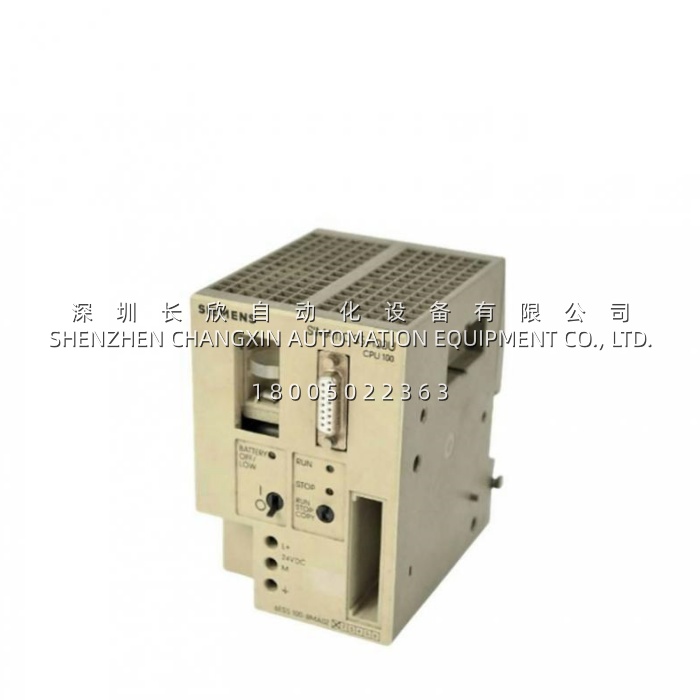
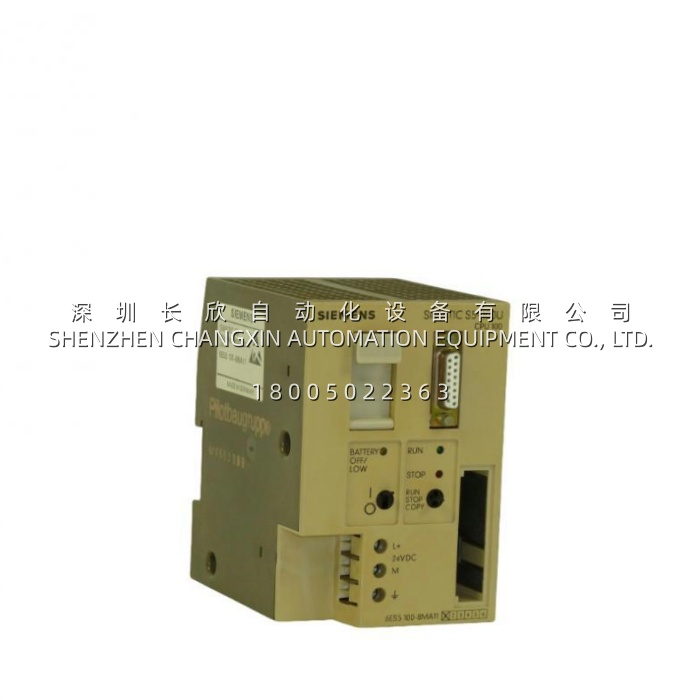
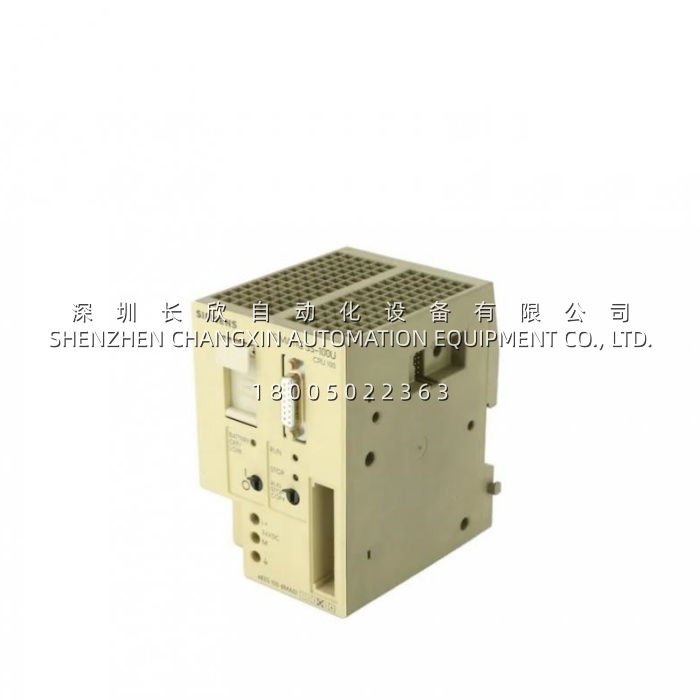
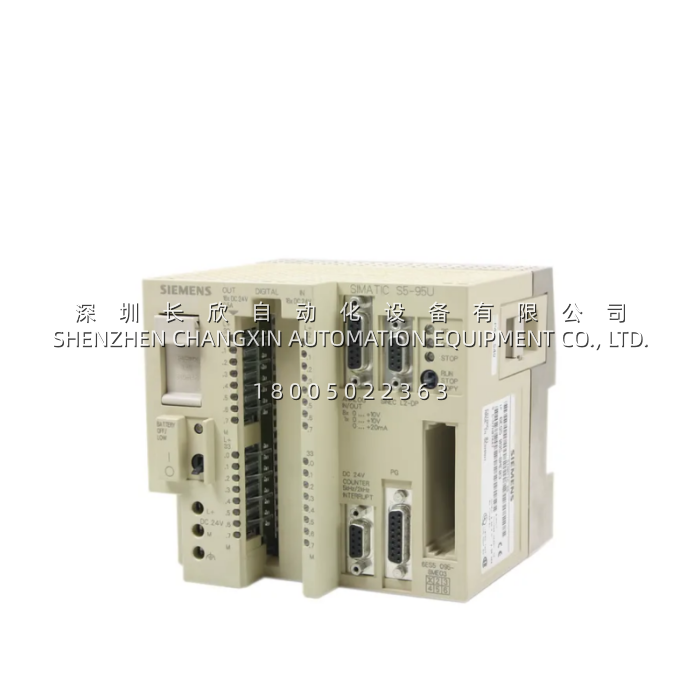
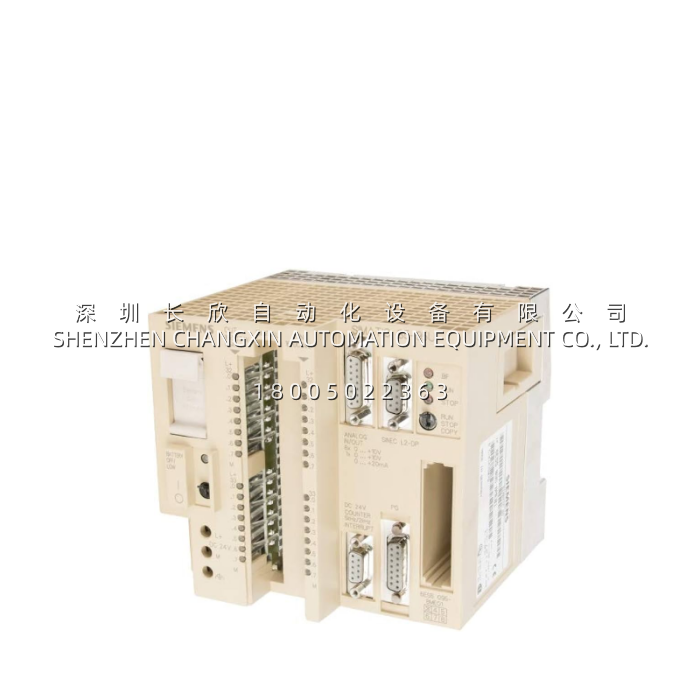
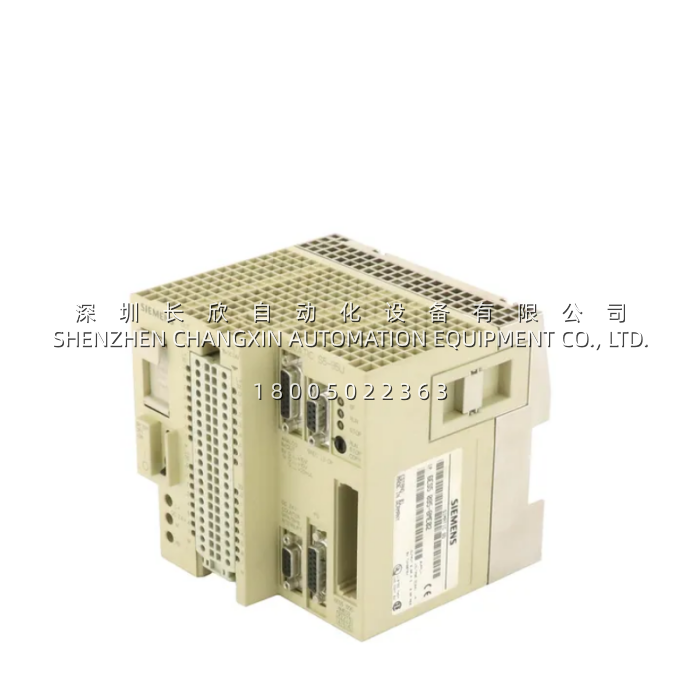
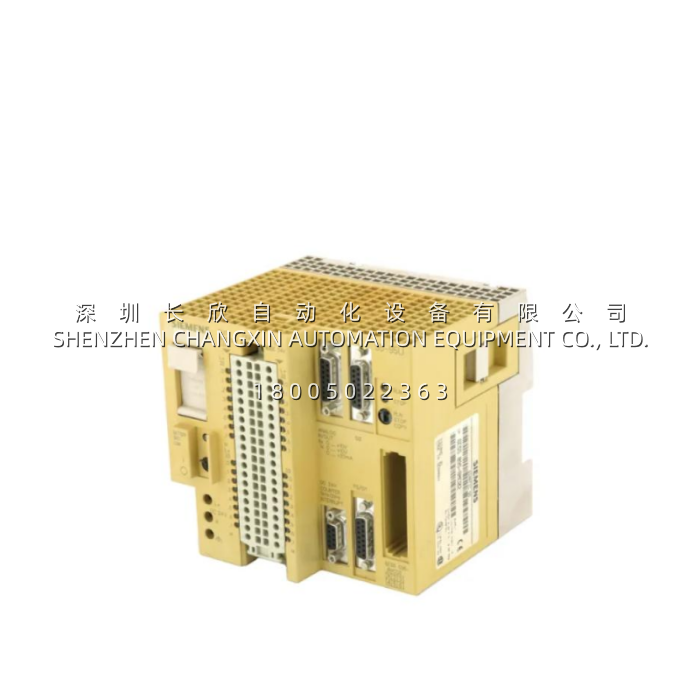
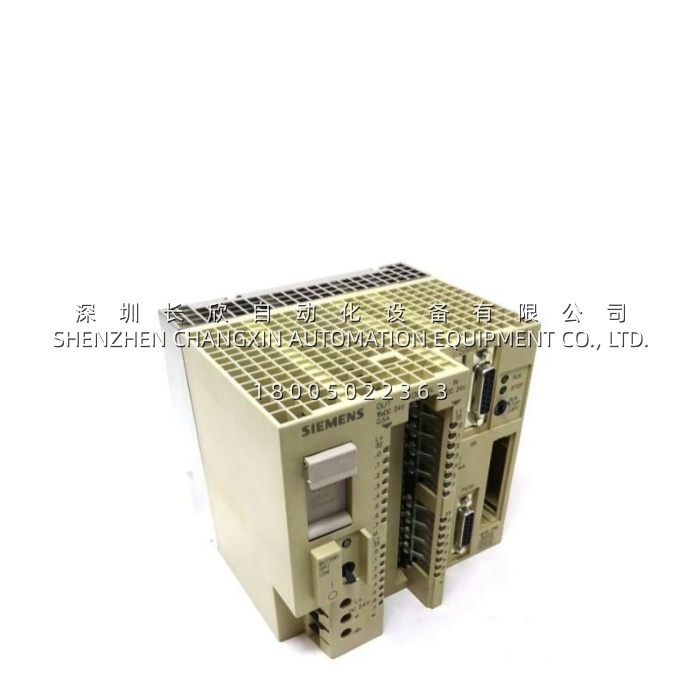
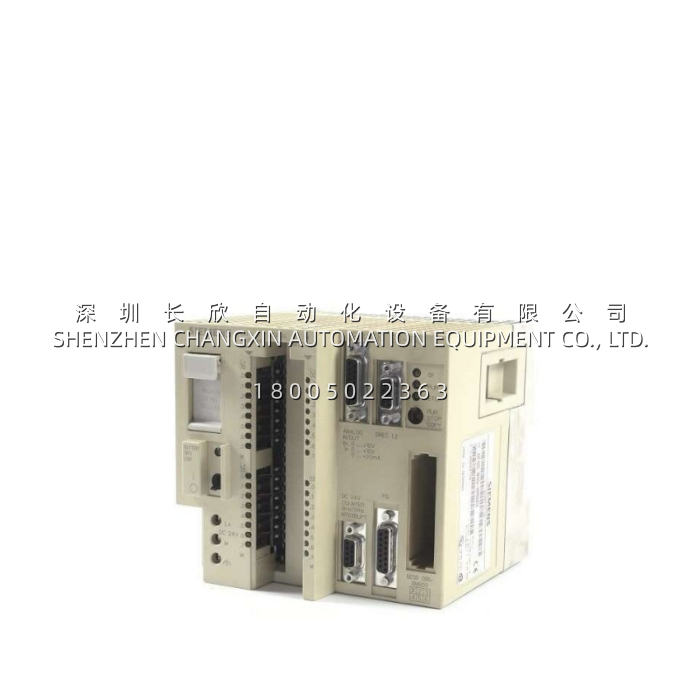
The Schneider Electric 140CPU67160​ is a hot standby (HSBY) CPU processor module​ belonging to the Modicon Quantum​ series of programmable logic controllers (PLCs) and distributed control systems (DCS). Designed as the central processing unit for demanding industrial automation applications, it features built-in support for hardware redundancy. When configured in a pair, one module acts as the primary controller while the other remains in hot standby, ready to take over within milliseconds in case of a failure, ensuring continuous operation for critical processes in industries such as power generation, oil & gas, and water treatment .

Application Scenarios

In a large-scale water treatment plant, the control system manages the precise dosing of chemicals, filtration cycles, and pump operations across multiple stages. A sudden failure of the main controller could lead to untreated water being released or a complete plant shutdown, causing significant environmental and operational risks. The Schneider 140CPU67160​ is deployed in a redundant configuration​ within the central control cabinet. The primary CPU executes all control logic, while the standby CPU continuously mirrors its memory and state via a dedicated Ethernet or fiber optic synchronization link. If the primary CPU detects an internal fault or loses power, the 140CPU67160​ redundancy system performs an automatic switchover to the standby unit in less than 500 milliseconds . This seamless transition ensures that all valves, pumps, and chemical feeders continue to operate according to their programmed setpoints, preventing process upsets and maintaining treatment quality. This directly addresses the core pain points of system downtime, data loss, and safety risks in 24/7 continuous processes.

Parameter

Based on technical specifications gathered from product documentation .

Technical Principles and Innovative Values

The 140CPU67160​ embodies Schneider Electric’s focus on reliability and system integrity for mission-critical automation.

Innovation Point 1: High-Speed, Deterministic Hot Standby Architecture.​ The module’s core innovation is its dedicated hardware and protocol for redundancy. Unlike software-based redundancy, the 140CPU67160​ uses a high-speed synchronization channel (Ethernet or fiber) to continuously mirror the primary CPU’s entire state, including program execution context and I/O image data. This allows for a sub-500ms failover​ that is transparent to the controlled process, ensuring no control commands are missed—a critical requirement for safety and batch integrity in processes like pharmaceutical manufacturing or turbine control .

Innovation Point 2: Unified, Multi-Protocol Communication Engine.​ The CPU integrates a powerful communication subsystem that natively supports and bridges multiple industrial protocols simultaneously. It can function as a Modbus TCP/IP client/server on its Ethernet port, a Modbus Plus manager on its MB+ port, and a standard Modbus master/slave on its serial port​ . This eliminates the need for additional gateway modules, simplifying network architecture and reducing latency when interfacing with diverse field devices, drives, and third-party systems within a single plant.

Innovation Point 3: Scalable, Modular Platform with Advanced Diagnostics.​ As part of the Quantum platform, the 140CPU67160​ offers exceptional scalability. It can manage a vast I/O count (over 30.000 discrete points) across local and remote racks . Furthermore, it features comprehensive self-diagnostics and status indication​ via its front-panel LCD and LEDs. It can monitor critical health parameters, report faults with specific codes, and even track battery status for its memory backup, enabling predictive maintenance​ and reducing mean time to repair (MTTR) .

Application Cases and Industry Value

Case Study: Natural Gas Compressor Station Control System Upgrade

A critical natural gas pipeline compressor station relied on an aging, non-redundant PLC system. Any controller failure would halt gas transmission, causing massive financial losses and potential supply disruptions. The station required a control system with guaranteed availability, capable of withstanding harsh environmental conditions and integrating with existing turbine and valve packages using different protocols.

Implementation & Outcome:​ Engineers designed a new control core around a redundant pair of Schneider 140CPU67160 CPUs. The CPUs were installed in a hardened cabinet with redundant power supplies. The native Ethernet port handled communication with the station’s SCADA system, the Modbus Plus network connected to legacy remote I/O racks, and the serial Modbus port interfaced with gas chromatographs. During a planned maintenance window, a simulated fault was induced on the primary CPU. The system successfully switched control to the standby 140CPU67160 in under 400 milliseconds, with zero interruption to the running compressors. The project resulted in a 99.99% calculated system availability​ and provided operators with a clear, diagnostic-driven view of controller health. The station manager cited the system’s proven ruggedness and seamless protocol integration​ as key factors in avoiding unplanned shutdowns and ensuring reliable gas delivery.

Related Product Combination Solutions

The 140CPU67160​ operates as the heart of a complete Quantum system:

Quantum I/O Modules (e.g., 140DDI35300):​ Digital input modules that provide field signal conditioning for devices connected to the CPU.

Quantum Communication Modules (e.g., 140NOE77101):​ Network interface modules to expand connectivity to additional Ethernet or other fieldbus networks.

Quantum Power Supply Modules (e.g., 140CPS11420):​ Provide 24V DC power to the rack and modules, also available in redundant configurations.

Quantum Baseplates/Racks (e.g., 140XBP00600):​ The backplanes into which the CPU, I/O, and communication modules are installed.

CRP 31200 Redundancy Module:​ Facilitates the hot-swap and redundancy switching for I/O modules in the same rack as the redundant CPUs .

Schneider Electric Unity Pro/Control Expert Software:​ The engineering workstation software used for programming, configuration, and online monitoring of the 140CPU67160​ and the entire Quantum system.

Installation, Maintenance, and Full-Cycle Support

Installation:​ The 140CPU67160​ module is designed for installation on a Quantum series baseplate. Ensure system power is OFF. Align the module with the guide rails on the baseplate and firmly press it into the backplane connector until it clicks into place and the ejector levers lock. Connect the required communication cables (Ethernet for programming/sync, etc.) to the front ports. For redundant setups, connect the synchronization cable between the primary and standby CPU modules as per the wiring diagram. Finally, apply power to the rack.

Maintenance:​ Regular maintenance involves monitoring the CPU’s status LEDs and LCD display​ for any fault indications. The memory backup battery​ (typically a lithium battery) should be checked periodically via software diagnostics and replaced proactively every few years to prevent program loss during power outages . Utilize the hot-swap capability for planned maintenance: you can remove and replace a CPU module in a redundant system without stopping the controlled process. Always ensure you have a compatible firmware version for your Control Expert software .

Full-Cycle Support:​ We provide end-to-end support for the Schneider 140CPU67160. from helping you verify compatibility with your existing Quantum system architecture to supplying guaranteed tested and functional modules. Our technical team can assist with redundancy configuration, firmware updates, troubleshooting complex faults, and planning migration paths to newer Schneider platforms like Modicon M580 when necessary.
Schneider 140CPU67160 CPU Module | High-Availability PLC for Industrial Control插图1

BENTLY NEVADA 3500/40M 140734-01 High-Density Proximity Probe Interface – DIN-Rail Mountable, -30°C to +65°C Operation缩略图

BENTLY NEVADA 3500/40M 140734-01 High-Density Proximity Probe Interface – DIN-Rail Mountable, -30°C to +65°C Operation

BENTLY NEVADA 3500/40M 140734-01 High-Density Proximity Probe Interface – DIN-Rail Mountable, -30°C to +65°C Operation插图

Description

The BENTLY NEVADA 3500/40M (Part Number: 140734-01) is a 4-channel Proximitor monitor module designed for the industry-standard 3500 machinery protection system. It conditions and monitors signals from up to four eddy-current proximity probes (e.g., Bently 3300 series), converting raw probe outputs into precise, calibrated displacement or vibration readings used for real-time machine health monitoring, alarm annunciation, and automatic shutdown.

As a core component of critical asset protection systems in power plants, refineries, and heavy industry, the 3500/40M 140734-01 delivers high reliability, configurable thresholds, and dual independent relay outputs per channel—ensuring compliance with API 670 standards for machinery protection.

Application Scenarios

At a natural gas compressor station in Texas, a centrifugal compressor experienced repeated bearing failures due to undetected shaft misalignment. The legacy single-channel monitors couldn’t capture directional vibration trends. After upgrading to the BENTLY NEVADA 3500/40M 140734-01. engineers deployed dual orthogonal proximity probes on each bearing housing—enabling X-Y orbit analysis via the four-channel module. Within weeks, they identified a thermal bow condition during startup and adjusted ramp rates accordingly. Over the next 18 months, unplanned outages dropped by 90%, and the 3500/40M’s independent trip relays prevented two potential catastrophic failures by triggering automatic shutdowns when vibration exceeded 125 µm peak-to-peak.

Technical Principles and Innovative Values

Innovation Point 1: True Independent Channel Architecture – Each of the four channels on the 3500/40M 140734-01 has its own signal conditioner, A/D converter, and relay drivers—eliminating cross-talk and ensuring failure isolation (critical for SIL2 applications).

Innovation Point 2: Dual Relay Per Channel with Configurable Hysteresis – Users can set separate Alert (warning) and Danger (trip) thresholds with adjustable hysteresis to prevent relay chatter during transient events—enhancing system stability.

Innovation Point 3: Buffered Outputs for Continuous Monitoring – The -2 to -18 VDC buffered outputs feed directly into data historians, SCADA, or Bently System 1 software—enabling trend analysis without loading the probe circuit.

Innovation Point 4: Seamless Integration with 3500 Ecosystem – Works natively with 3500/22 Transient Data Interface, 3500/25 Keyphasor, and 3500/53 Dual Display modules—creating a unified machinery protection and diagnostics platform.

Application Cases and Industry Value

In a European nuclear power plant, the BENTLY NEVADA 3500/40M 140734-01 monitors main coolant pump shaft displacement under strict regulatory oversight. Its dual relays are wired to separate safety PLCs, satisfying redundancy requirements for Class 1E systems. During a recent turbine trip, the module detected abnormal shaft motion within 10 ms and triggered a coordinated pump shutdown—preventing seal damage estimated to cost €2.3 million in replacement and downtime.

In a Chilean copper mine, the same module protects six SAG mill gearboxes. Harsh dust and vibration environments once caused frequent false trips, but the 3500/40M’s robust design and configurable filtering reduced nuisance alarms by 95%. Maintenance teams now use its buffered outputs for weekly orbit plots, extending gearbox life by over 30%.

Related Product Combination Solutions

Bently 3500/15: Power supply module—provides redundant power to 3500/40M.

Bently 3500/22: Transient Data Interface—captures waveform data from 3500/40M buffered outputs.

Bently 3500/25: Keyphasor Module—enables speed-based vibration analysis (e.g., 1X, 2X harmonics).

Bently 3500/32: Relay I/O Module—aggregates and votes on 3500/40M relay signals for system-level trips.

Bently 3500/53: Dual Display—shows real-time gap voltage and microns/mils for all four channels.

3300 XL 8mm Probes: Standard proximity sensors used with 3500/40M.

System 1 Software: Bently’s condition monitoring platform—ingests data from 3500/40M for analytics and reporting.

3500/42M: Alternative 4-channel module with 4–20 mA outputs—use if analog retransmission is required.

Installation, Maintenance, and Full-Cycle Support

The BENTLY NEVADA 3500/40M 140734-01 installs into any standard 3500 rack with proper power and communication backplane. Configuration is performed via the front-panel keypad (on display modules) or through Rack Configuration Software (RCS) over RS-232/Ethernet—setting probe range, alarm levels, relay logic, and engineering units (mils or µm).

Maintenance includes periodic verification of probe gap voltage, relay functionality test (via built-in test mode), and firmware updates. The module supports hot-swap in redundant racks—minimizing downtime during replacement.

We supply every 3500/40M 140734-01 as factory-new or Baker Hughes-certified refurbished stock, fully tested for input linearity, relay operation, and buffered output accuracy. Each unit includes a calibration certificate and is backed by a 24-month warranty. Our team provides configuration files, compatibility validation with your 3500 rack, and integration support with System 1 or third-party CMMS platforms.

NI SCXI-1104C – High-Precision 16-Channel Isolated Analog Input Module for Data Acquisition and Test Systems缩略图

NI SCXI-1104C – High-Precision 16-Channel Isolated Analog Input Module for Data Acquisition and Test Systems

NI SCXI-1104C – High-Precision 16-Channel Isolated Analog Input Module for Data Acquisition and Test Systems插图
Description

The NI SCXI-1104C is a 16-channel, high-accuracy analog input module developed by National Instruments (NI) for the SCXI (Signal Conditioning eXtensions for Instrumentation) platform. Designed for demanding test, measurement, and industrial data acquisition applications, it provides galvanic isolation, programmable signal conditioning, and precision voltage/current measurement in a rugged modular form factor. The NI SCXI-1104C seamlessly integrates with NI DAQ devices such as PXI, PCI, or USB systems via an SCXI chassis, enabling scalable, noise-immune acquisition of sensor signals in electrically harsh environments.

Engineered for laboratory-grade accuracy and industrial reliability, this module delivers 24-bit effective resolution and supports software-configurable input ranges—making it ideal for strain gauges, RTDs, thermocouples (with external CJC), and process-level 4–20 mA loops.

Application Scenarios

At a Tier-1 automotive R&D center in Michigan, engineers were struggling to capture micro-strain data from engine block prototypes during thermal cycling tests. Ground loops and EMI from nearby dyno inverters corrupted readings from conventional DAQ systems. After deploying the NI SCXI-1104C inside a grounded SCXI-1327 chassis with shielded cabling, channel-to-channel isolation eliminated cross-talk, and the 250 Vrms working isolation protected downstream PXI controllers during transient events. Measurement repeatability improved from ±1.2% to ±0.05%, enabling reliable fatigue-life modeling. This transformation highlights how the NI SCXI-1104C turns noisy real-world signals into trustworthy engineering data—where accuracy isn’t optional, it’s existential.

Technical Principles and Innovative Values

Innovation Point 1: Per-Channel Software Configurability – Unlike fixed-range modules, each of the 16 channels on the NI SCXI-1104C can be independently set to voltage or current mode with custom ranges—enabling mixed-sensor systems (e.g., pressure transducers + RTDs) without external signal conditioners.

Innovation Point 2: True Channel-to-Channel Isolation – The NI SCXI-1104C employs opto-isolators and isolated DC-DC converters per channel group, preventing ground loops in multi-sensor setups—a critical advantage over non-isolated or bus-isolated competitors.

Innovation Point 3: Seamless Integration with NI Ecosystem – Auto-detection in NI MAX and native support in LabVIEW, MATLAB, and Python (via NI-DAQmx) allow drag-and-drop configuration, real-time scaling, and built-in calibration—cutting development time by up to 70%.

Innovation Point 4: Industrial-Ruggedized Design – Despite its lab-grade performance, the NI SCXI-1104C meets IEC 61010 safety standards and withstands 30 g shock, making it suitable for mobile test rigs, factory validation cells, and aerospace ground support equipment.
NI SCXI-1104C – High-Precision 16-Channel Isolated Analog Input Module for Data Acquisition and Test Systems插图1

Emerson SYHNC100-NIB-2X-W-24-P-D-E23-A012 DeltaV DCS Power Supply Module缩略图

Emerson SYHNC100-NIB-2X-W-24-P-D-E23-A012 DeltaV DCS Power Supply Module

Emerson SYHNC100-NIB-2X-W-24-P-D-E23-A012 DeltaV DCS Power Supply Module插图
Description

The SYHNC100-NIB-2X-W-24-P-D-E23-A012​ is a power supply module​ manufactured by Emerson Process Management​ for its DeltaV Distributed Control System (DCS). This module is a critical infrastructure component responsible for converting incoming AC or DC power to the stable, isolated 24V DC​ power required by DeltaV controller, I/O, and communication modules within a chassis or cabinet. Its reliable operation is fundamental to the continuous and safe functioning of the entire automation system in process industries such as oil & gas, chemical, pharmaceutical, and power generation.

Application Scenarios

In a large chemical processing plant, a DeltaV system controls a complex, continuous reaction process involving precise temperature, pressure, and flow control loops. A single control cabinet houses multiple DeltaV controller modules and dozens of I/O cards that interface with field instruments. The sudden loss of power to this cabinet would cause all control loops to fail, potentially leading to a hazardous process deviation or shutdown. The SYHNC100-NIB-2X-W-24-P-D-E23-A012​ module is installed in this cabinet as the primary or redundant power source. It takes the plant’s 120V AC or 24V DC backup power, conditions it to remove noise and voltage spikes, and delivers clean, regulated 24V DC power to the backplane of the DeltaV chassis. This ensures that all critical control modules remain operational even during minor power fluctuations. Its built-in diagnostics can alert operators to potential power issues before they cause a failure, directly addressing the core pain points of system availability, data integrity, and operational safety.

Parameter

Based on typical specifications for Emerson DeltaV SYHNC100 series power modules; the suffix NIB-2X-W-24-P-D-E23-A012denotes specific configuration options.

Technical Principles and Innovative Values

The SYHNC100​ series power modules are engineered for mission-critical 24/7 operation, emphasizing reliability, diagnostics, and seamless integration.

Innovation Point 1: Advanced Power Conditioning and Protection for Signal Integrity.​ The module employs sophisticated switching power supply topology with multi-stage filtering. This ensures that the delivered 24V DC is exceptionally clean, with minimal ripple and noise. This is crucial because any electrical noise on the power bus can be coupled into sensitive analog measurement circuits on I/O cards, causing measurement errors and control instability. The module’s robust protection circuits guard against external transients and internal faults, protecting the valuable downstream electronics.

Innovation Point 2: Hot-Swap Capability and N+1 Redundancy for Zero-Downtime Maintenance.​ A key feature of the DeltaV design is support for hot-swappable power modules. The SYHNC100-NIB-2X-W-24-P-D-E23-A012​ can be inserted or removed from a live system without powering down the controllers or I/O. When configured in an N+1 redundant​ power supply system, if one module fails, the remaining modules instantly share the load, preventing any interruption to the control system. This enables scheduled maintenance or unscheduled replacement without process disruption.

Innovation Point 3: Intelligent System Integration and Health Monitoring.​ The module is not a “dumb” power supply. It integrates with the DeltaV system’s health monitoring framework. It can report parameters such as output voltage, current, temperature, and operational status (e.g., “Power Supply 1 OK,” “Power Supply 2 Fan Fault”) to the DeltaV diagnostics software. This allows plant personnel to monitor power system health proactively from the control room, moving from reactive to predictive maintenance​ and enhancing overall system reliability.

Application Cases and Industry Value

Case Study: Offshore Oil Platform Control System Power Resilience Upgrade

An aging offshore platform’s control system was experiencing intermittent faults traced back to unstable power from the platform’s generators. Voltage sags during large motor starts were causing DeltaV controller modules to reset, leading to unplanned process upsets and production losses. The platform needed a power solution that could withstand these harsh electrical conditions.

Implementation & Outcome:​ The platform’s engineering team upgraded the power distribution in key DeltaV control cabinets. They installed new SYHNC100-NIB-2X-W-24-P-D-E23-A012​ power modules in a 1:1 redundant configuration, with each module fed from a separate uninterruptible power supply (UPS) branch. The wide input voltage range of the SYHNC100​ modules allowed them to ride through the voltage sags without dropping out. The hot-swap capability allowed technicians to safely rotate and test modules during planned shutdowns. The result was the complete elimination of control system resets due to power quality issues. This directly contributed to increased production uptime and improved safety by preventing uncontrolled process deviations. The project demonstrated a clear return on investment through reduced downtime and maintenance costs.

Related Product Combination Solutions

The SYHNC100-NIB-2X-W-24-P-D-E23-A012​ works within the complete DeltaV ecosystem:

DeltaV Controller Modules (e.g., PM/CM Series):​ The primary controllers that execute control logic, powered by the SYHNC100.

DeltaV I/O Cards (e.g., Series 2 I/O):​ Analog and digital input/output modules that interface with field devices, all powered from the same 24V DC bus.

DeltaV Power System Chassis / Backplane:​ The physical enclosure and electrical bus that distributes power from the SYHNC100​ to all installed modules.

DeltaV System Power Supplies (Redundant Pair):​ A SYHNC100​ module is typically used in pairs for redundancy, connected via a redundancy bus cable (NIBinterface).

DeltaV CHARMs (Characterization Modules):​ For intrinsic safety (IS) applications, CHARMs are also powered by the system’s 24V DC.

Emerson Smart Power Management Software:​ Software tools that can monitor and log the health data from all SYHNC100​ power modules across the plant.

Installation, Maintenance, and Full-Cycle Support

Installation:​ Ensure the cabinet main power is OFF. Mount the SYHNC100-NIB-2X-W-24-P-D-E23-A012​ module into its designated slot in the DeltaV power chassis, aligning it with the guide rails. Firmly push it into the backplane connector until it is fully seated and the locking lever (if present) engages. Connect the AC or DC input power wires to the terminal block on the front of the module, following the wiring diagram for correct polarity and torque specifications. If configuring for redundancy, connect the redundancy communication cable between the modules. Finally, apply power and verify the module’s “OK” LED is illuminated.

Maintenance:​ Regularly check the status LEDs on all power modules during routine inspections. Monitor power supply health alarms in the DeltaV operator station. The primary maintenance activity is predictive replacement. Based on operational hours and environmental conditions, it is advisable to proactively replace power modules on a scheduled basis (e.g., every 5-7 years) before they reach their statistical end of life, leveraging the hot-swap capability to avoid downtime. Keep a tested spare module on hand for critical systems.

Full-Cycle Support:​ We provide comprehensive support for the SYHNC100-NIB-2X-W-24-P-D-E23-A012. from verifying compatibility with your specific DeltaV system revision to supplying guaranteed genuine or certified refurbished Emerson modules. Our technical team can assist with configuration for redundancy, troubleshooting power-related faults, and planning power system upgrades to ensure the highest availability for your process control system.
Emerson SYHNC100-NIB-2X-W-24-P-D-E23-A012 DeltaV DCS Power Supply Module插图1

Emerson SYHNC100-NIB-2X-W-24-P-D-E23-A012 DeltaV DCS Power Supply Module插图2

HONEYWELL 51305896-200 High-Performance I/O Interface Module – Redundant Communication for Experion® Safety & Process Systems缩略图

HONEYWELL 51305896-200 High-Performance I/O Interface Module – Redundant Communication for Experion® Safety & Process Systems

HONEYWELL 51305896-200 High-Performance I/O Interface Module – Redundant Communication for Experion® Safety & Process Systems插图Description

The HONEYWELL 51305896-200 is a critical I/O carrier/interface module within Honeywell’s Experion® Process Knowledge System (PKS), specifically designed for use with the C300 controller platform. It serves as the backbone for connecting up to eight I/O modules (such as analog input, digital output, or serial interface cards) in a single I/O chassis, enabling high-density, fault-tolerant process control in demanding industrial environments.

While not an I/O module itself, the HONEYWELL 51305896-200 provides power distribution, backplane communication, hot-swap support, and redundant network connectivity between the C300 controller and field devices—ensuring continuous, secure, and deterministic data flow in safety-critical and high-availability applications.

Application Scenarios

At a major LNG export terminal in Qatar, operators upgraded their legacy DCS to Honeywell Experion® R510 to meet new cybersecurity and uptime requirements. The project included deploying dozens of HONEYWELL 51305896-200 I/O carriers across compressor, flare, and custody transfer skids. During commissioning, engineers leveraged the module’s hot-swap capability to replace a faulty analog input card without shutting down the gas turbine control loop—avoiding a potential $500.000/hour production loss. Over two years of operation, the HONEYWELL 51305896-200’s dual FTE (Fault-Tolerant Ethernet) links have maintained 99.999% network availability, even during monsoon-season electrical storms that disrupted non-redundant systems elsewhere on site.

Technical Principles and Innovative Values

Innovation Point 1: True Fault-Tolerant Architecture – The HONEYWELL 51305896-200 uses dual independent Ethernet paths with sub-second switchover (<500 ms), ensuring uninterrupted communication even if a switch, cable, or port fails—critical for emergency shutdown (ESD) and fire & gas (F&G) systems.

Innovation Point 2: Seamless Hot-Swap with Auto-Recovery – When an I/O module is replaced, the HONEYWELL 51305896-200 automatically detects the new hardware, reloads configuration from the C300 controller, and resumes I/O scanning—no manual intervention or system reboot required.

Innovation Point 3: Integrated Cybersecurity at the Edge – As part of the Experion PKS ecosystem, the HONEYWELL 51305896-200 supports secure boot, MAC address filtering, and encrypted firmware updates—aligning with IEC 62443 Level 2 requirements for OT networks.

Innovation Point 4: Unified Engineering Experience – Configuration, diagnostics, and firmware management are handled entirely through Experion® Engineering Studio, eliminating the need for third-party tools or IP address management at the I/O level.

Application Cases and Industry Value

In a U.S. pharmaceutical plant producing sterile injectables, the HONEYWELL 51305896-200 supports temperature and pressure monitoring across 12 autoclaves under FDA 21 CFR Part 11 compliance. Its deterministic I/O scanning ensures that sterilization cycle deviations are logged within 200 ms—meeting audit requirements. During a recent FDA inspection, the plant received zero citations for data integrity, thanks in part to the traceability and reliability of the Honeywell I/O infrastructure anchored by the HONEYWELL 51305896-200.

Similarly, in a Norwegian offshore oil platform, the module enables redundant control of subsea Christmas trees via HART multiplexers connected to analog I/O cards hosted on the HONEYWELL 51305896-200. Even during helicopter EM interference events, the system maintains signal integrity—proving its resilience in extreme electromagnetic environments.

Related Product Combination Solutions

Honeywell C300 Controller: Primary logic engine—communicates with HONEYWELL 51305896-200 over FTE.

Honeywell 51195244-100: 16-channel analog input module—plugs into HONEYWELL 51305896-200 for 4–20mA signals.

Honeywell 51195255-200: 16-channel digital output module—used for valve and pump control.

Honeywell FTE Switch (e.g., 51304418-100): Managed Ethernet switch—forms the redundant FTE ring with HONEYWELL 51305896-200.

Experion® PKS R510/R520: Full DCS platform—includes engineering, historian, and alarm management integrated with this I/O layer.

Honeywell 51305897-100: Redundant power supply module—often paired for full chassis redundancy.

Smartline™ I/O Modules: Next-gen alternative—but HONEYWELL 51305896-200 remains essential for C300-based brownfield sites.

Installation, Maintenance, and Full-Cycle Support

Installation requires mounting the HONEYWELL 51305896-200 in a ventilated enclosure, connecting dual 24VDC power feeds, and linking both FTE ports to a redundant network ring. I/O modules snap into the carrier without screws, and backplane contacts are gold-plated for corrosion resistance.

Maintenance is minimal: quarterly visual inspection of LEDs, annual verification of FTE failover via Experion diagnostics, and firmware updates pushed remotely through the control network. The module features self-monitoring for over-temperature, power faults, and communication errors.

We supply every HONEYWELL 51305896-200 as factory-new or Honeywell-certified refurbished stock, fully tested for FTE communication, power redundancy, and I/O module recognition. Each unit includes a test report and is backed by a 24-month warranty. Our team provides compatibility checks, spare parts planning, and migration guidance for plants transitioning to Smartline or upgrading Experion PKS versions.

ABB NIMP01 Processor Card | Legacy DCS System Spare Part & Replacement缩略图

ABB NIMP01 Processor Card | Legacy DCS System Spare Part & Replacement

ABB NIMP01 Processor Card | Legacy DCS System Spare Part & Replacement插图
Description

The ABB NIMP01​ is a Digital Input Processor Module​ designed as part of ABB’s Bailey INFI 90​ distributed control system (DCS) or similar industrial automation platforms. This module functions as a specialized interface and processing unit that conditions, isolates, and processes digital (discrete) input signals from field devices such as limit switches, push buttons, pressure switches, and motor contactors. It translates these raw field signals into a format that the central DCS controller can understand and act upon, forming a critical link in the control loop for monitoring plant status and equipment conditions.

Application Scenarios

In a large thermal power plant, hundreds of pumps, fans, and valves need to be continuously monitored for their operational status (running/stopped, open/closed). Each of these devices has auxiliary contacts that provide a simple on/off signal. Instead of running hundreds of individual wires directly to the central control room, field signals are wired to local marshalling cabinets. Here, the ABB NIMP01​ modules are installed in remote I/O racks. Each NIMP01​ can process multiple digital input channels, providing electrical isolation, filtering out contact bounce or electrical noise, and converting the 24V DC or 120V AC field signals to a clean logic-level signal. The processed status information is then communicated digitally over the high-speed INFI-NET to the central operators in the control room. This setup allows an operator to instantly see that “Boiler Feed Pump A-1 is running” or “Main Steam Valve XV-101 is closed,” enabling rapid response to alarms and efficient plant management. The NIMP01​ directly addresses the pain points of wiring complexity, signal integrity, and reliable remote monitoring in large-scale industrial facilities.

Parameter

Based on typical specifications for ABB Bailey INFI 90 digital input modules; exact parameters for NIMP01 may vary.

Technical Principles and Innovative Values

The ABB NIMP01​ embodies the reliability and modularity principles of the INFI 90 system, which was designed for critical process industries.

Innovation Point 1: Intelligent Signal Conditioning and Diagnostics.​ Unlike simple relay interfaces, the NIMP01​ incorporates active electronics for signal conditioning. It provides configurable filtering​ to ignore transient spikes and contact bounce, ensuring that only valid state changes are reported to the controller. Furthermore, it can perform continuous diagnostics​ on the field wiring, potentially detecting open circuits or short circuits, and reporting these as module faults to the control system for predictive maintenance.

Innovation Point 2: High-Density, Modular Design for Scalability.​ The module’s design allows a high number of input channels​ in a single, compact form factor. This high density, combined with the INFI 90 system’s modular architecture, allows engineers to precisely scale I/O counts by adding NIMP01​ modules as needed. This reduces cabinet footprint, simplifies wiring, and lowers overall system cost compared to using individual relays or smaller I/O cards.

Innovation Point 3: Seamless Integration within a Distributed, Redundant Architecture.​ The NIMP01​ is not a standalone device; it’s a key component in a fault-tolerant system. It plugs into a local Process Control Unit (PCU)​ which can be configured with redundant processors and power supplies. The digital status data from the NIMP01​ is shared on the high-speed, deterministic INFI-NET​ loop, ensuring all controllers have a consistent view of the plant state. This architecture provides the high availability and data integrity required for continuous processes like power generation or chemical manufacturing.

Application Cases and Industry Value

Case Study: Petrochemical Plant Safety Shutdown System Modernization

A major petrochemical complex needed to upgrade its aging safety instrumented system (SIS) for a critical hydrocarbon cracking unit. The existing system used hardwired relays, making troubleshooting difficult and modification nearly impossible. The requirement was for a highly reliable, configurable system that could process hundreds of safety-critical digital inputs (e.g., high-pressure switches, flame detectors, emergency stop buttons).

Implementation & Outcome:​ The engineers selected an ABB INFI 90​ system with Triconex​ safety controllers for the logic solver. Dozens of ABB NIMP01​ modules were deployed in hardened, remote I/O enclosures near the field devices to minimize analog signal run lengths. Each NIMP01​ reliably acquired the status of safety switches and transmitted the data to the redundant safety controllers. The system’s success was demonstrated during a planned shutdown test: when a simulated high-pressure signal was triggered, the NIMP01​ modules detected the change within milliseconds, the safety logic executed, and the unit safely shut down. The project resulted in a 50% reduction in system troubleshooting time​ due to the detailed diagnostic information provided by the modules. The plant manager highlighted the NIMP01’s proven reliability in harsh environments and its role in maintaining the plant’s safety integrity level (SIL) rating as key project successes.

Related Product Combination Solutions

The NIMP01​ operates within a full ecosystem of ABB Bailey INFI 90 components:

INNPM22 Power Supply Module:​ Provides regulated power to the NIMP01​ and other modules in the PCU rack.

NIMP or NISL Series Communication Modules:​ Facilitate the connection between the NIMP01​ I/O modules and the INFI-NET control network.

NPRC or NCPF Series Process Control Modules:​ The main controllers that execute control logic based on inputs from modules like the NIMP01.

NODI01 Digital Output Module:​ The complementary output module used to command field actuators (valves, motors) based on control logic.

NAIO Series Analog I/O Modules:​ For processing continuous signals (4-20mA, thermocouples) alongside the digital NIMP01.

Bailey OIS Operator Interface Stations:​ The human-machine interface (HMI) where operators monitor the status of points scanned by the NIMP01.

Installation, Maintenance, and Full-Cycle Support

Installation:​ The ABB NIMP01​ module is designed for installation in a dedicated INFI 90 Module Mounting Unit (MMU)​ or rack. Ensure system power is off before handling. Align the module with the guide rails in the MMU and firmly press it into the backplane connector until it clicks into place. Secure it with the retaining screws or latches. Field wiring is terminated to the associated terminal base unit​ that mounts behind the MMU, not directly to the module itself. Carefully follow the wiring diagrams for channel assignments and power connections.

Maintenance:​ The primary maintenance is monitoring and replacement. The module’s status LEDs provide immediate health indication. Regularly review system diagnostics for any channel or module faults. Spare modules should be kept on hand for critical loops. When replacing a module, power down the individual rack if possible (hot-swap capability depends on the specific INFI 90 hardware revision). Extract the faulty module, insert the replacement, and restore power. The system typically recognizes the new module automatically, but configuration may need to be downloaded from the controller.
ABB NIMP01 Processor Card | Legacy DCS System Spare Part & Replacement插图1

ABB NIMP01 Processor Card | Legacy DCS System Spare Part & Replacement插图2

NI SBRIO-9607 High-Performance Single-Board RIO – Dual Gigabit Ethernet, USB Host, SD Card, and CAN Interfaces缩略图

NI SBRIO-9607 High-Performance Single-Board RIO – Dual Gigabit Ethernet, USB Host, SD Card, and CAN Interfaces

NI SBRIO-9607 High-Performance Single-Board RIO – Dual Gigabit Ethernet, USB Host, SD Card, and CAN Interfaces插图
Description

The NI SBRIO-9607 is a high-performance, single-board controller from National Instruments (now Emerson Test & Measurement) that integrates a real-time processor and a powerful Xilinx Kintex-7 FPGA onto a compact, rugged PCB—eliminating the need for a traditional CompactRIO chassis. Designed for embedded monitoring, machine control, hardware-in-the-loop (HIL) simulation, and industrial IoT applications, the NI SBRIO-9607 delivers deterministic performance, flexible I/O expansion, and standalone operation in space-limited or cost-sensitive deployments.

With built-in connectivity, onboard storage, and support for multiple programming environments, the NI SBRIO-9607 bridges the gap between traditional PLCs and high-end embedded systems.

Application Scenarios

At an automotive battery test lab in Germany, engineers needed a portable, high-speed system to emulate electric vehicle (EV) battery behavior during charger validation. Traditional rack-based HIL systems were too bulky and expensive for field deployment. They deployed the NI SBRIO-9607 with a custom analog mezzanine card to simulate cell voltages and thermal responses at 50 kHz update rates. The Kintex-7 FPGA handled real-time battery model calculations, while the dual Gigabit Ethernet ports streamed data to a cloud dashboard. The entire system fit inside a 19″ carry-on case—and ran for weeks unattended on 24VDC power. Thanks to the NI SBRIO-9607. the lab cut test setup time by 70% and now ships validation kits globally.

Technical Principles and Innovative Values

Innovation Point 1: True Standalone Operation Without Chassis – Unlike modular CompactRIO systems, the NI SBRIO-9607 integrates power regulation, processing, and FPGA on one board—reducing cost, size, and points of failure while enabling deployment in enclosures as small as 200×150×100 mm.

Innovation Point 2: Kintex-7 FPGA for High-Complexity Algorithms – The NI SBRIO-9607’s FPGA is 3–5× more powerful than older Virtex-5 or Spartan-6 variants, enabling real-time execution of advanced control laws, FFTs, or neural network inference at microsecond-level determinism.

Innovation Point 3: Multi-Language Development Flexibility – Program the real-time processor in LabVIEW, C/C++, or Python; develop FPGA logic in LabVIEW FPGA or VHDL—ideal for teams transitioning from legacy codebases or adopting AI at the edge.

Innovation Point 4: Deterministic I/O via Mezzanine Ecosystem – Though it lacks built-in analog I/O, the NI SBRIO-9607 supports over 60 C Series modules (e.g., NI 9205 for ±10V analog input) via its mezzanine connector, ensuring microsecond-accurate timing through direct FPGA routing—no backplane latency.

Application Cases and Industry Value

In a U.S. wind turbine manufacturer, the NI SBRIO-9607 serves as the core of a pitch-system emulator for factory acceptance testing. Mounted directly inside the nacelle simulator cabinet, it replicates blade angle feedback, hydraulic pressure, and fault conditions using custom FPGA logic—all synchronized to the main controller via CANopen. The system reduced test cycle time from 8 hours to 45 minutes and eliminated the need for external signal generators. Field service teams now use identical NI SBRIO-9607 units for on-site troubleshooting, thanks to their ruggedness and portability.

In a semiconductor wafer inspection tool, the NI SBRIO-9607 controls high-speed motion stages and processes camera triggers with sub-millisecond jitter. Its deterministic Linux RT kernel ensures stage movement never interferes with image capture—a critical requirement previously met only by costly proprietary controllers. The OEM estimates a 40% BOM reduction by switching to the NI SBRIO-9607 platform.

Related Product Combination Solutions

NI 9205: ±10V analog input module—plugs into NI SBRIO-9607 mezzanine for high-speed voltage measurement.

NI 9264: 16-bit analog output module—enables precision actuator control when paired with NI SBRIO-9607.

NI cRIO-9045: For comparison—modular chassis-based alternative when >4 I/O modules are needed.

NI 9870: RS-485/422 serial module—adds industrial comms to NI SBRIO-9607 for legacy device integration.

NI 9881: CANopen interface—extends NI SBRIO-9607 into motion and automotive networks.

NI LabVIEW Real-Time Module: Primary development environment—fully supports NI SBRIO-9607 project templates.

NI VeriStand: For HIL users—automatically deploys models to NI SBRIO-9607 FPGA and real-time targets.

NI 9149: Not required—but referenced as the chassis-based counterpart; NI SBRIO-9607 replaces it in compact designs.

Installation, Maintenance, and Full-Cycle Support

Installing the NI SBRIO-9607 requires mounting it in a ventilated enclosure (even though fanless, airflow aids thermal performance above 50°C), connecting 9–30VDC power, and attaching a mezzanine I/O module if needed. Configuration begins with imaging the eMMC or microSD card using NI’s System Configuration utility, followed by deployment of LabVIEW or C applications via Ethernet.

Maintenance involves periodic firmware updates (delivered through NI Package Manager) and SD card health checks in high-write-cycle applications. The NI SBRIO-9607 features watchdog timers, FPGA bitstream integrity checks, and automatic reboot on OS hang—ensuring years of unattended operation. Diagnostics are accessible via SSH, web dashboard, or programmable status LEDs.

We supply every NI SBRIO-9607 as factory-sealed new surplus or current stock, fully tested for boot, Ethernet, USB, and FPGA configuration. Each unit includes a certificate of conformance and is backed by a 24-month warranty. Our engineering team provides LabVIEW project templates, BSP (Board Support Package) guidance, and migration support from legacy PXI or cRIO systems.
NI SBRIO-9607 High-Performance Single-Board RIO – Dual Gigabit Ethernet, USB Host, SD Card, and CAN Interfaces插图1

NI SBRIO-9607 High-Performance Single-Board RIO – Dual Gigabit Ethernet, USB Host, SD Card, and CAN Interfaces插图2

TRICONEX 4352AN: 16-Channel High-Integrity Digital Output Module for TMR Safety Systems缩略图

TRICONEX 4352AN: 16-Channel High-Integrity Digital Output Module for TMR Safety Systems

Description

The TRICONEX 4352AN​ is a 16-channel, high-integrity digital output module from Triconex, a leading brand in safety instrumented systems (SIS) and triple modular redundant (TMR) automation solutions. Designed for use in mission-critical applications, this module provides reliable, fault-tolerant control of final elements such as solenoid valves, motor starters, and circuit breakers. It is engineered to meet the stringent requirements of Safety Integrity Level (SIL) 3 applications, ensuring that safety functions are executed without compromise.

Application Scenarios

In a large offshore oil and gas production platform, the emergency shutdown (ESD) system is the last line of defense against uncontrolled hydrocarbon release. A failure in the digital output module controlling the wellhead shut-off valves could have catastrophic consequences. The platform’s safety system relied on the TRICONEX 4352AN​ to drive these critical valves.

During a routine test, one channel of the module detected an internal fault and automatically de-energized the corresponding valve actuator, while the other two channels in the TMR configuration maintained control of the remaining valves. The system logged the fault, alerted operators, and initiated a safe shutdown sequence without any spurious trips. The ability of the 4352AN​ to detect and isolate faults in real time preserved both safety and operational continuity, demonstrating why Triconex modules are the gold standard in high-risk industries.

TRICONEX 4352AN: 16-Channel High-Integrity Digital Output Module for TMR Safety Systems插图 TRICONEX 4352AN: 16-Channel High-Integrity Digital Output Module for TMR Safety Systems插图1

Technical Principles and Innovative Values

Innovation Point 1: Triple Modular Redundancy (TMR) Architecture – The TRICONEX 4352AN​ is designed to operate in a TMR configuration, where three identical modules process the same output commands in parallel. A hardware voter determines the correct output state by a 2-out-of-3 majority logic, masking any single module failure and ensuring continuous, safe operation.

Innovation Point 2: Advanced Fault Detection & Diagnostics – Each output channel is continuously monitored for faults such as open circuits, short circuits, and contact welding. Diagnostic information is transmitted to the Triconex controller, enabling predictive maintenance and reducing the risk of undetected failures.

Innovation Point 3: Galvanic Isolation – The relay-based output design provides complete electrical isolation between the control logic and field wiring. This prevents high-energy transients or ground loops from propagating back into the safety system, enhancing reliability and protecting sensitive electronics.

Innovation Point 4: High-Integrity Signal Processing – The module uses pulse testing and dynamic self-checking techniques to verify the integrity of its internal circuitry and communication paths. This ensures that the output state is always consistent with the voted command, even in the presence of electromagnetic interference (EMI).

Application Cases and Industry Value

A major refinery in the Middle East upgraded its fire and gas (F&G) system to a Triconex TMR platform to comply with updated safety regulations. The TRICONEX 4352AN​ modules were deployed to control the actuation of deluge valves, firewater pumps, and emergency isolation dampers.

During a plant-wide F&G test, a spurious signal from a faulty field sensor was detected. The TMR system, including the 4352AN​ modules, correctly identified the anomaly and prevented an unnecessary activation of the deluge system, avoiding a $500.000 loss in production downtime. Simultaneously, the system’s diagnostics pinpointed the faulty sensor, allowing for its replacement during the next scheduled maintenance window. The refinery’s safety manager stated, “The Triconex system, and specifically the 4352AN modules, gave us the confidence that our safety functions are not only effective but also immune to false trips.”

Related Product Combination Solutions

To implement a complete TMR safety system with the TRICONEX 4352AN, these components are often used together:

TRICONEX 3721 Analog Input Module: For acquiring process variables (e.g., pressure, temperature) to determine trip conditions.

TRICONEX 3008 Main Processor: The TMR controller that executes safety logic and sends commands to the 4352AN​ modules.

TRICONEX 8312 Power Supply: Provides redundant, regulated 24 VDC power to the I/O modules and mainframe.

TRICONEX 3805E Digital Input Module: For monitoring status of field devices (e.g., limit switches, pushbuttons) in the safety loop.

TRICONEX MP3008 Rack: The chassis that houses the main processor, I/O modules, and power supplies in a TMR configuration.

Triconex TriStation Software: Engineering and configuration tool for programming, testing, and maintaining the TMR system.

Field Wiring Devices (Terminal Blocks, Isolators): Ensure proper signal conditioning and protection for field connections to the 4352AN​ outputs.

Installation, Maintenance, and Full-Cycle Support

Installation and Commissioning: The TRICONEX 4352AN​ is installed into a Triconex MP3008 chassis alongside other TMR modules. Proper seating and locking of the module are critical for reliable operation. Field wiring connects to screw terminals for each relay output, with careful attention to load ratings and polarity. Commissioning involves configuring the module’s parameters via TriStation software, performing channel tests, and validating fault detection logic.

Maintenance and Lifecycle Support: Routine maintenance includes inspecting relay contacts for wear (especially in high-cycle applications), verifying terminal tightness, and reviewing diagnostic logs for intermittent faults. Triconex modules support hot-swapping in many configurations, allowing replacement without shutting down the system.

We provide full lifecycle support for the TRICONEX 4352AN, including sourcing genuine modules with traceable certification, technical assistance with system integration, and obsolescence management. Our team ensures your safety-critical systems remain compliant, reliable, and ready to respond when it matters most.

ALSTOM AL132 AL132A STO0982E01 Digital Input Module – 16-Channel, 24 VDC, for Alspa DCS & T100/T200 Systems缩略图

ALSTOM AL132 AL132A STO0982E01 Digital Input Module – 16-Channel, 24 VDC, for Alspa DCS & T100/T200 Systems

ALSTOM AL132 AL132A STO0982E01 Digital Input Module – 16-Channel, 24 VDC, for Alspa DCS & T100/T200 Systems插图
Description

The ALSTOM AL132 AL132A STO0982E01 is a 16-channel digital input (DI) module developed by Alstom (now part of GE Power and later spun into various entities including Andritz and independent service providers) for use in the Alspa series of distributed control systems (DCS), particularly the T100. T200. and Series 6000 platforms. It converts field-level dry contacts or 24 VDC signals into logic-level data for turbine control, boiler safety interlocks, and auxiliary system monitoring.

Designed for high-reliability power generation environments, the ALSTOM AL132 AL132A STO0982E01 delivers robust electrical isolation, real-time diagnostics, and seamless integration into legacy Alspa architectures—ensuring decades-old plants continue operating safely and efficiently.

Application Scenarios

At a 900 MW combined-cycle power station in France, aging turbine emergency shutdown (ESD) signals were intermittently missed due to degraded input cards in the Alspa T200 system. After replacing faulty modules with the ALSTOM AL132 AL132A STO0982E01. all 16 channels reliably captured trip commands from pressure switches and vibration sensors—even during grid faults with severe ground noise. “This module restored our confidence in the safety system,” said the control engineer. In mission-critical applications like generator protection or boiler flame failure detection, the ALSTOM AL132 AL132A STO0982E01 isn’t just hardware—it’s a guardian of operational integrity.

Technical Principles and Innovative Values

Innovation Point 1: Group-Based Isolation for Cost-Effective Noise Immunity

Rather than isolating all 16 channels individually (which increases cost), the ALSTOM AL132 AL132A STO0982E01 uses four isolated banks of four inputs each. This balances EMI resilience with affordability—ideal for large-scale installations where hundreds of DI points are needed.

Innovation Point 2: Field-Proven in Extreme Electromagnetic Environments

Tested in substations and near large generators, the ALSTOM AL132 AL132A STO0982E01 withstands fast transients (IEC 61000-4-4 Level 4) and surges without false triggering—a critical trait for safety-related inputs.

Innovation Point 3: Plug-and-Play Compatibility Across Alspa Generations

The ALSTOM AL132 AL132A STO0982E01 maintains pin-compatible form, fit, and function with earlier AL132 variants, allowing direct replacement without rewiring or software changes—essential for minimizing outage windows during upgrades.

Innovation Point 4: Diagnostic Transparency via Front-Panel LEDs

Each channel features a dedicated LED, enabling technicians to verify signal presence without multimeters or system logs. Combined with system-level health reporting in Alspa engineering tools, this supports rapid troubleshooting during outages.

Application Cases and Industry Value

In a hydroelectric facility in Canada, the ALSTOM AL132 AL132A STO0982E01 was deployed to monitor guide vane position limit switches on six turbine units. Operating in a damp, high-vibration environment, the module maintained 100% signal integrity over five years—preventing false “open” indications that previously triggered unnecessary shutdowns. Maintenance costs dropped by 35% due to reduced diagnostic time.

Similarly, a district heating plant in Sweden used the ALSTOM AL132 AL132A STO0982E01 to interface burner flame detectors into its Alspa C370 safety PLC. During a winter peak load event, a flame failure was detected within 3 ms, initiating a safe purge sequence before gas accumulated. “That response time saved us from a potential explosion,” noted the plant safety officer.

Related Product Combination Solutions

ALSTOM AL133: 16-channel digital output (DO) module—complements ALSTOM AL132 AL132A STO0982E01 for full discrete I/O

ALSTOM AL232: Analog input module—used alongside ALSTOM AL132 AL132A STO0982E01 for hybrid process monitoring

Alspa C470 Controller: Main processor—communicates with ALSTOM AL132 AL132A STO0982E01 via proprietary backplane bus

ALSTOM T200 I/O Chassis: Modular rack system—hosts up to 8 I/O modules including ALSTOM AL132 AL132A STO0982E01

GE Mark VIe: Modern successor platform—where ALSTOM AL132 AL132A STO0982E01 data may be migrated during DCS modernization

Phoenix Contact MINI MCR-SL-R-UI-45: Signal conditioner—can be used upstream of ALSTOM AL132 AL132A STO0982E01 for noisy 48 VDC fields

ABB TK811V015: AC 800M baseplate—sometimes used in hybrid retrofits where Alspa I/O is interfaced via gateways

Installation, Maintenance, and Full-Cycle Support

Installation of the ALSTOM AL132 AL132A STO0982E01 requires insertion into a powered-off Alspa I/O chassis until the mechanical latch engages. Field wiring should use shielded cable, with shields grounded at the cabinet entry point. Ensure input devices (e.g., limit switches, relay contacts) meet the 18–30 VDC ON threshold to avoid marginal sensing. No configuration jumpers are needed—the module is auto-detected by the Alspa controller upon boot.

Maintenance is exceptionally low-effort. Quarterly visual inspections of channel LEDs can identify stuck or intermittent signals. If a bank fails, the entire module is replaced as a unit—no internal repairs are recommended. Despite Alstom’s exit from the DCS market, the ALSTOM AL132 AL132A STO0982E01 remains in global demand, with authorized service centers offering refurbished, tested, and warrantied units. Our team provides full lifecycle support, including cross-reference validation, functional testing reports, and rapid delivery for emergency spares.
ALSTOM AL132 AL132A STO0982E01 Digital Input Module – 16-Channel, 24 VDC, for Alspa DCS & T100/T200 Systems插图1

EMERSON KJ2221X1-BA1: 高性能冗余模拟量输出模块 for DeltaV DCS Systems缩略图

EMERSON KJ2221X1-BA1: 高性能冗余模拟量输出模块 for DeltaV DCS Systems

EMERSON KJ2221X1-BA1: 高性能冗余模拟量输出模块 for DeltaV DCS Systems插图
Description

The EMERSON KJ2221X1-BA1​ (also referenced as KJ2201X1-BA1​ in some sources) is a high-performance, redundant analog output module designed specifically for Emerson’s DeltaV Distributed Control System (DCS). Engineered for critical process control applications, this module provides two independent analog output channels with high precision and reliability, making it suitable for controlling final control elements such as control valves, variable frequency drives, and other actuators in demanding industrial environments .

Application Scenarios

In a large-scale chemical processing plant, precise control of reactor temperature is crucial for product quality and safety. The plant’s existing analog output cards were experiencing occasional drift and lacked redundancy, risking process upsets during maintenance or failures.

The engineering team upgraded to EMERSON KJ2221X1-BA1​ modules for all critical control valve loops. The module’s redundant design meant that if one channel experienced an issue, the backup channel could seamlessly take over without interrupting the control signal to the valve. This redundancy proved invaluable during a scheduled maintenance window when technicians needed to replace a faulty positioner while keeping the process running. The KJ2221X1-BA1​ maintained stable 4-20 mA output to the valve’s I/P converter, ensuring consistent reactor pressure control throughout the maintenance activity, preventing potential product quality deviations.

Parameter

Based on available technical specifications, the EMERSON KJ2221X1-BA1​ offers robust performance characteristics suitable for industrial automation .

Note: Some sources describe this module as a controller module with different specifications (110-240V AC, RS232/USB interfaces). The above parameters are based on the most consistent technical descriptions from industrial automation sources .

Technical Principles and Innovative Values

Innovation Point 1: Redundant Channel Design – The EMERSON KJ2221X1-BA1​ features two completely independent analog output channels. This redundancy ensures continuous operation even if one channel fails, providing exceptional availability for safety-critical applications where process interruption is unacceptable .

Innovation Point 2: High Precision & Fast Response – With ±0.1% full-scale accuracy and 1 ms response time, the module delivers precise control signals to final elements. This combination of accuracy and speed enables tighter process control, reducing variability and improving product quality in applications like chemical dosing or temperature regulation .

Innovation Point 3: HART Communication Integration – The module supports HART protocol, allowing for remote configuration, calibration, and diagnostics of connected field devices. This capability reduces maintenance time and costs by enabling technicians to troubleshoot and configure devices without physical access to hazardous or hard-to-reach locations .

Innovation Point 4: Wide Environmental Tolerance – Operating across a temperature range of -40°C to +85°C and 5-95% humidity (non-condensing), the KJ2221X1-BA1​ is built to withstand the challenging conditions found in industrial plants, from freezing outdoor installations to hot control rooms .

Application Cases and Industry Value

A pharmaceutical manufacturing facility implemented EMERSON KJ2221X1-BA1​ modules in their bioreactor control systems. These bioreactors require precise control of nutrient feed rates, pH adjustment chemicals, and temperature to maintain optimal conditions for cell culture growth.

Previously, analog output failures had caused several batch losses when control valves failed to respond correctly. After installing the KJ2221X1-BA1​ modules, the facility experienced zero control-related batch failures over 18 months. During one incident, a primary output channel developed a fault, but the redundant channel immediately took over without any disruption to the bioreactor control. The quality control manager reported, “The redundancy and reliability of these modules have given us confidence in our batch processes. We’ve seen a measurable improvement in batch consistency and yield.”

Related Product Combination Solutions

To build a complete DeltaV control solution around the EMERSON KJ2221X1-BA1. consider these complementary components:

EMERSON DeltaV Controllers (e.g., EMERSON DeltaV S-series): The central processing units that execute control strategies and communicate with KJ2221X1-BA1​ modules.

EMERSON DeltaV Analog Input Modules (e.g., VE4012S2B1): For acquiring process measurements from field sensors to complete the control loop.

EMERSON DeltaV Digital I/O Modules: For discrete signal handling alongside analog control.

EMERSON DeltaV CHARMs I/O System: For intrinsically safe applications in hazardous areas.

EMERSON DeltaV Operate Stations: Operator interfaces for monitoring and controlling processes using data from KJ2221X1-BA1-controlled devices.

EMERSON DeltaV Engineering Stations: Configuration and programming tools for the entire DeltaV system, including KJ2221X1-BA1​ modules.

Control Valves with HART-enabled Positioners: Field devices that can be configured and diagnosed through the KJ2221X1-BA1’s HART communication capability.

EMERSON AMS Device Manager: Asset management software that works with HART-enabled devices connected to KJ2221X1-BA1​ modules for predictive maintenance.

Installation, Maintenance, and Full-Cycle Support

Installation and Commissioning: The EMERSON KJ2221X1-BA1​ module installs into a DeltaV I/O subsystem chassis. Proper installation involves securing the module in its slot, connecting field wiring to the appropriate terminals, and configuring the module parameters through DeltaV engineering software. Commissioning includes verifying output signals with a calibrated multimeter, testing redundancy switching, and validating HART communication with connected field devices.

Maintenance and Lifecycle Support: Routine maintenance involves periodic verification of output accuracy and checking module status indicators. The HART diagnostic capabilities allow for remote monitoring of module health and connected field devices. If a module requires replacement, DeltaV systems typically support hot-swapping, allowing replacement without system shutdown. We provide comprehensive support for EMERSON KJ2221X1-BA1​ modules, including sourcing genuine parts, technical assistance with integration, and guidance on maintenance best practices to ensure long-term reliability of your control systems.
EMERSON KJ2221X1-BA1: 高性能冗余模拟量输出模块 for DeltaV DCS Systems插图1

Back to Top

Search For Products

Product has been added to your cart