GE VMIVME-7750 Pentium III VMEbus Single-Board Computer – 6U SBC by VMIC / GE Fanuc缩略图

GE VMIVME-7750 Pentium III VMEbus Single-Board Computer – 6U SBC by VMIC / GE Fanuc
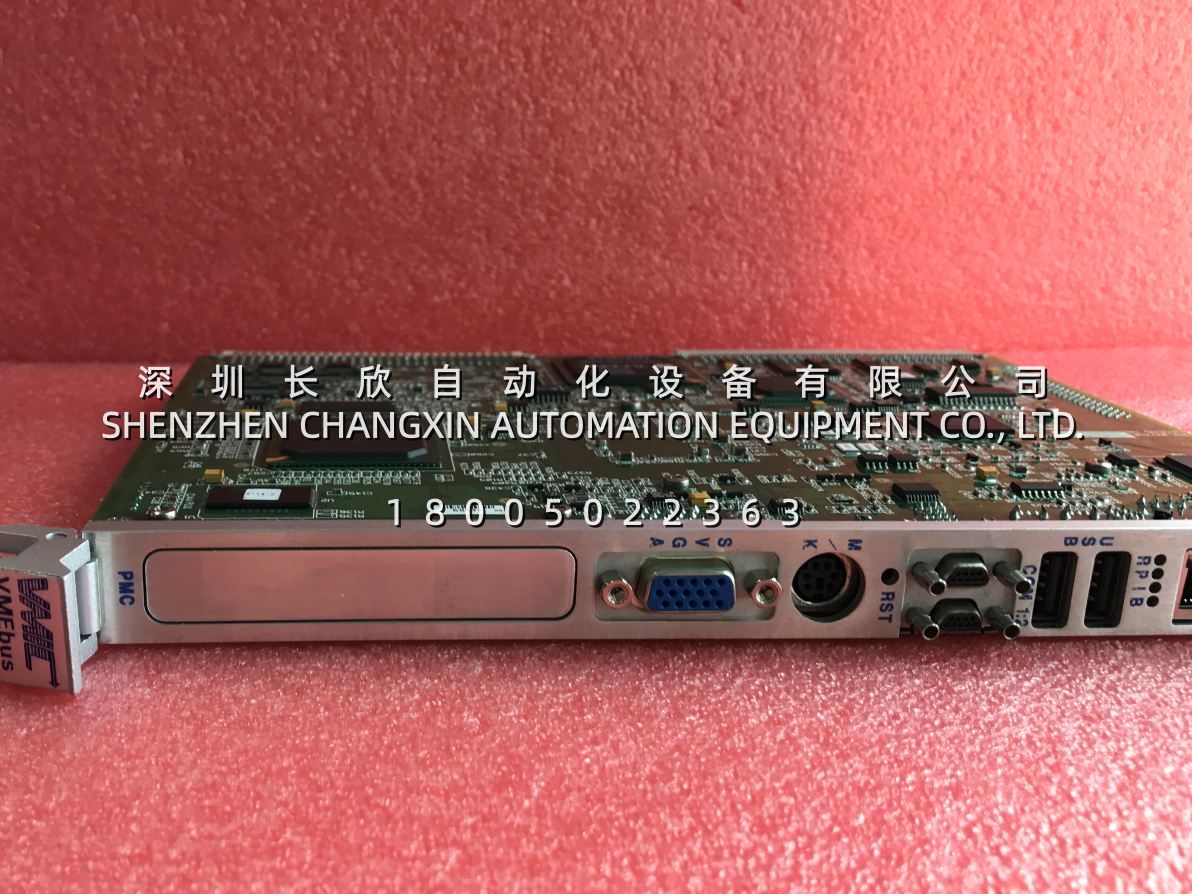
GE VMIVME-7750 Pentium III VMEbus Single-Board Computer – 6U SBC by VMIC / GE Fanuc插图


Description

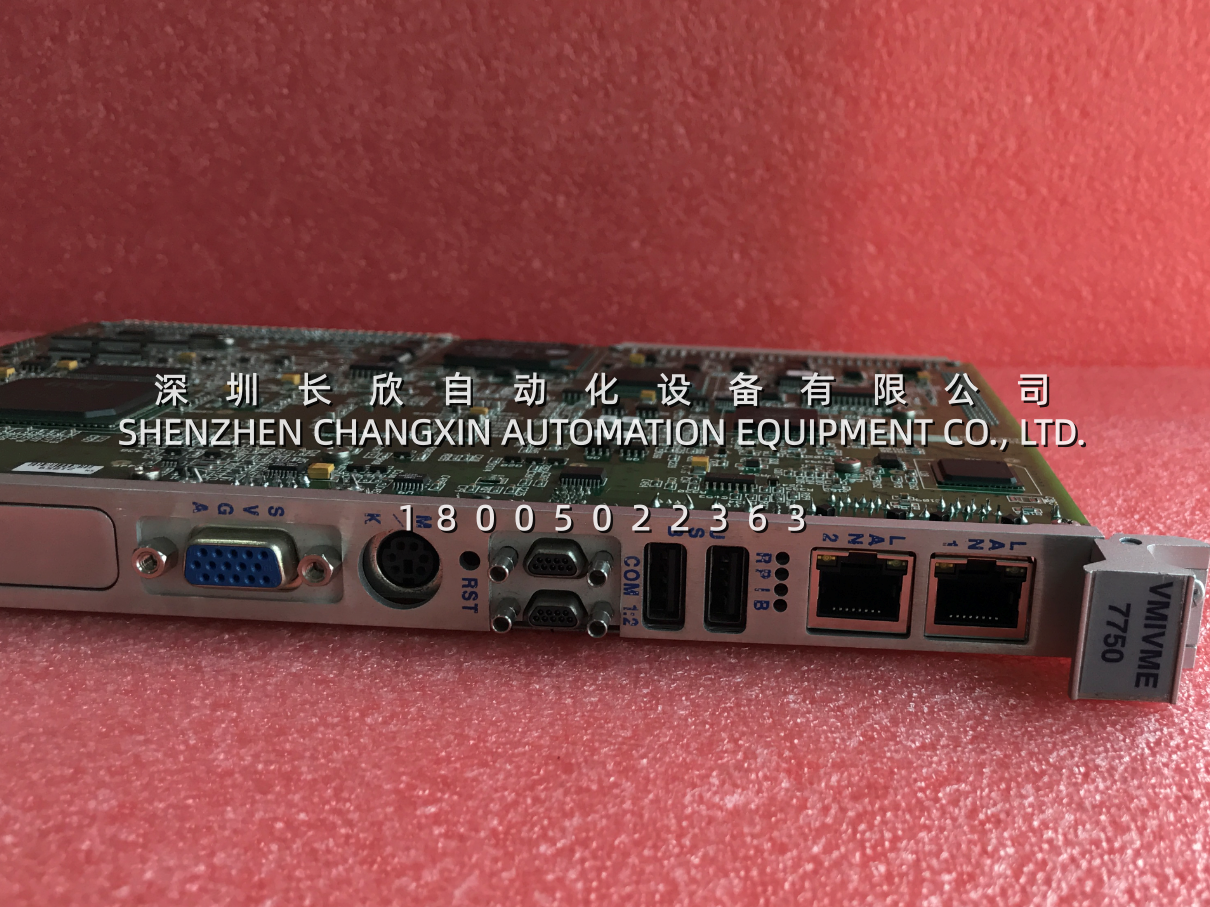
The GE VMIVME-7750 is a Pentium III processor-based VMEbus single-board computer (SBC) originally engineered by VMIC and later carried under the GE Fanuc / GE Intelligent Platforms embedded-computing portfolio, packaged as a standard 6U single-slot Eurocard for VME64 and VME64x backplanes. It brings desktop-class x86 computing — Intel Pentium III up to 1.26 GHz, Intel 815E chipset, 133 MHz front-side bus, and 512 KB advanced transfer cache — into the deterministic, long-lifecycle VME worldartisantg.com+1.

Because CPU, memory, graphics, dual Ethernet, dual serial, USB, IDE/CompactFlash storage, and a PMC mezzanine site all live on one board, the VMIVME-7750 replaces what would otherwise be a stack of separate controller cards, making it a favourite processor for automated test equipment, aerospace ground benches, process-control VME racks, and legacy defence systems that cannot justify a full platform migrationcxabb.com+1.


Application Scenarios

Consider a defence test agency operating a radar-signature measurement bench built on a 21-slot 6U VME crate: the rack carries waveform-capture I/O, synthetic-instrument modules, and custom signal-conditioning boards that have been in service for nearly two decades, and every module speaks VME. The test sequencer that once ran on an older PowerPC VME CPU has been sunset by its OEM, and rewriting the acquisition chain for a new architecture would cost more than replacing the processor itself. This is the classic problem the GE VMIVME-7750 was built to solve: drop it into the slot-1 position of the existing crate, configure its Universe II-B PCI-to-VME bridge as system controller, boot the existing VxWorks or Linux application from CompactFlash, and the original VME I/O fleet comes alive again on a modern x86 platform. Integration teams no longer need to re-qualify the I/O layer, and the bench keeps its deterministic VME access through the four 32-bit mailboxes and the programmable interrupt handler that map VME IRQs directly into PCI INTA# or SERR# on the VMIVME-7750cxabb.com+1.


Parameter

Main Parameters Value / Description
Product Model VMIVME-7750 (350-007750-xxx variants)
Manufacturer VMIC → GE Fanuc / GE Intelligent Platforms
Product Category 6U VMEbus Single-Board Computer (SBC)
Processor Intel Pentium III FC-PGA/PGA2, up to 1.26 GHz
Chipset / Front-Side Bus Intel 815E, 133 MHz FSB
Cache 256 KB L2 Advanced Transfer Cache (512 KB on the 1.26 GHz part)
System Memory One 144-pin SDRAM SODIMM, up to 512 MB PC133, dual-ported to VME
Non-Volatile Memory 32 KB NVRAM, plus up to 1 GB IDE CompactFlash
Graphics Intel 815E AGP SVGA controller, 4 MB display cache, up to 1600 × 1200 × 256
Ethernet Dual 10/100 Mbit controllers (Intel 82559 + ICH2 internal), RJ45 × 2
Serial / USB Two 16550-compatible RS-232 ports (115 Kbaud), dual front-panel USB
PMC Expansion One IEEE P1386 5 V PCI mezzanine site, front-panel I/O, optional P2 routing
VMEbus Interface Tundra Universe II-B PCI-to-VME bridge, A32/A24/D32/D16/D08, MBLT64, BLT32
System Controller Role Slot-1 controller with RRS / SGL / PRI arbitration, SYSCLK and IACK driver
Watchdog / Timers Software-selectable watchdog (reset, NMI or SYSFAIL), two 16-bit + two 32-bit timers
Operating System Support VxWorks, QNX, LynxOS, Linux, Windows Embedded
Cooling / Form Factor Passive cooling, single-slot 6U Eurocard
Front-Panel I/O 2 × RJ45 Ethernet, 2 × micro-DB-9 serial, dual USB, PS/2 keyboard/mouse, SVGA

GE VMIVME-7750 Pentium III VMEbus Single-Board Computer – 6U SBC by VMIC / GE Fanuc插图1

8720R1 ELVISU-0010 705211777-58: The SZM Control Module Built for Legacy ELVISU Series Continuity缩略图

8720R1 ELVISU-0010 705211777-58: The SZM Control Module Built for Legacy ELVISU Series Continuity

8720R1 ELVISU-0010 705211777-58: The SZM Control Module Built for Legacy ELVISU Series Continuity插图


Application Scenarios

Consider a packaging line that has run on an SZM ELVISU control system for over a decade. One morning, a critical control module faults and the line stops. The OEM no longer stocks the original revision, and a full controls upgrade would cost six figures and weeks of downtime. The maintenance team needs a drop-in replacement—same slot width, same connector pinout, same I/O addressing. The 8720R1 ELVISU-0010 705211777-58 is engineered for exactly this scenario. It slides into the existing backplane, accepts the original terminal block connections, and the control program recognizes it without modification. The line restarts the same shift, and the facility avoids a forced migration to a new platform before it is ready.


Parameter

Main Parameters Value / Description
Product Model 8720R1 ELVISU-0010 705211777-58
Manufacturer SZM
Product Category PLC Control / I/O Processing Module (ELVISU Series)
Form Factor Direct slot replacement for ELVISU Series racks
Connector Compatibility Pin-compatible with original ELVISU terminal block / edge connector
I/O Addressing Same as original module—no program modification required
Communication ELVISU Series internal bus / fieldbus compatible
Power Requirement Compatible with existing ELVISU Series backplane power
Stock Status In stock; ships within 1–3 business days
Warranty 12-month warranty against functional defects
Verification Powered-on functional testing and I/O channel continuity checks before dispatch

Note on conflicting specifications: Third-party listings for this model vary widely in reported technical details (processor speed, memory, power consumption, dimensions, even manufacturer attribution). These discrepancies are typical of aftermarket automation parts listings that scrape or misattribute data. The most operationally relevant specification is not raw performance—it is form, fit, and function compatibility with the ELVISU Series rack. Buyers should prioritize verified pinout compatibility and warranty coverage over chasing inconsistent datasheet figures from unverified sources.


Technical Principles and Innovative Values

  • Drop-In Replacement Engineering: The core value of the 8720R1 ELVISU-0010 705211777-58 lies in its physical and electrical compatibility with the existing ELVISU Series architecture. The module maintains the same slot width, depth, and connector pinout as the units it replaces. This means maintenance teams do not need to re-engineer cabinet layouts, re-terminate field wiring, or rewrite control logic. The replacement is a hardware swap, not a system migration.
  • Preserving Legacy Investment: Many ELVISU-controlled production lines remain fully functional and profitable. The problem is not that the system cannot do its job—it is that replacement parts are scarce. The 8720R1 ELVISU-0010 705211777-58 extends the operational lifespan of these installations by providing a stocked, tested replacement option. This delays or eliminates the need for a forced controls upgrade, allowing capital expenditure to follow business needs rather than component failure timelines.
  • Verified Before Dispatch: Suppliers of this module perform structured pre-shipment verification: visual inspection, powered-on functional testing within an ELVISU Series test rack, I/O channel continuity checks, and communication interface validation. Units that fail any step are not sold. A test record can be requested for procurement teams that require formal quality documentation.
Allen-Bradley 1756-OB8 ControlLogix DC Output Module — 8 Point, 24V DC, Sourcing缩略图

Allen-Bradley 1756-OB8 ControlLogix DC Output Module — 8 Point, 24V DC, Sourcing

Allen-Bradley 1756-OB8 ControlLogix DC Output Module — 8 Point, 24V DC, Sourcing插图


Application Scenarios

A bottling plant’s depalletiser was plagued by intermittent solenoid failures that were difficult to diagnose. The outputs were distributed across a mix of modules, and when a solenoid shorted, the maintenance team could not tell from the control room whether the problem was the output card, the wiring, or the valve. During a planned rebuild, the electricians consolidated the 24V DC solenoid bank onto a 1756-OB8​ in the main 1756 chassis. Each of the eight channels now drives a dedicated solenoid circuit, and the module’s per-point diagnostics made a failed or shorted load visible at the point level. Troubleshooting that once took an electrician an hour now takes a few seconds at the HMI.That is the real value of the module. A DC output card is not glamorous, but it is the boundary between the control system and the physical machine. When a valve, contactor coil, indicator, or interlock stops responding, the 1756-OB8​ is the component that has to be checked first — and the one that has to be replaced fastest when it is the cause.

Parameters

Main Parameters Value / Description
Product Model 1756-OB8​ (this unit: Series A)
Manufacturer Allen-Bradley / Rockwell Automation (USA)
Product Family ControlLogix 1756 I/O
Module Type Digital DC output module (sinking DC output)
Outputs 8 points, 24V DC, 2 A per point nominal
Total Module Current 16 A maximum
Off-State Leakage 0.5 mA max.
Output Voltage Range 20.4–26.4V DC (nominal 24V DC)
Outputs per Common One group of 8
Wire-off Detection No
Thermal Dissipation 6.35 W max.
Backplane Current (5V) 0.125 A
Backplane Current (24V) 0.002 A
Slot Width 1 slot
Module Location 1756 local chassis or 1756 remote chassis
Removable Terminal Block Series A/B/C: RTB ordered separately (e.g. 1756-TBCH or 1756-TBS6H)
Operating Temperature 0 to 60 °C (32 to 140 °F)
Storage Temperature -40 to 85 °C (-40 to 185 °F)
Relative Humidity 5 to 95%, non-condensing
Vibration 5 g at 10–500 Hz, 2 g operational
Shock 30 g operational, 50 g non-operational
Certifications cULus, CE, C-Tick, ex, GOST_R, NTRL, RCM, KCC, 1c

Note: the 1756-OB8 has one common for all eight outputs, so the group shares a return path. It does not have wire-off detection. The 2 A per-point rating assumes the total module load stays within 16 A; size the field wiring and protection accordingly.

Technical Principles and Innovative Values

Innovation Point 1 — Eight Independently Switched 24V DC Outputs in One Slot.​ The 1756-OB8​ gives the control program eight discrete on/off channels, each rated at 2 A, through a single chassis slot. For solenoid valves, contactor coils, stack lights, and alarm horns, that density is a clean fit — one module per machine function without burning rack space.Innovation Point 2 — Full Backplane Integration.​ Output state, module health, and fault information travel over the 1756 backplane rather than through hardwired feedback contacts. The controller sees the module as a native I/O device, so diagnostics appear in the program and on the HMI without additional wiring or a separate monitoring device.Innovation Point 3 — Sinking Output Configuration.​ The module switches the low side of the load, which suits the 24V DC sinking wiring convention commonly used in machinery and process installations. Pairing it correctly with the field-device sourcing convention avoids the familiar mistake of ordering a sourcing output for a sinking application, or vice versa.Innovation Point 4 — 16 A Module Capacity with a Single Common.​ The 8-channel, 2 A per-point design yields a 16 A total module rating. The single common for all eight outputs simplifies the return wiring but also means the group return and protection must be calculated against the full 16 A, not per channel in isolation.Innovation Point 5 — Built for the Cabinet Environment.​ With a 0–60 °C operating range, 5–95% non-condensing humidity tolerance, 5 g vibration rating, and 30 g operational shock rating, the 1756-OB8​ is specified for the vibration, shock, and temperature conditions found in machine cabinets on production floors.Innovation Point 6 — Series-A Hardware Requires a Separate Terminal Block.​ The Series A 1756-OB8​ does not ship with an integrated terminal block. A removable terminal block (RTB) — such as the 1756-TBCH or 1756-TBS6H — must be ordered separately. This matters most during replacement: the existing RTB can be transferred to the new module, preserving wiring, but only if the series and terminal-block type match.

Allen-Bradley 1756-N2 ControlLogix Empty Slot Filler: The Passive Protector That Keeps Your Chassis Breathing缩略图

Allen-Bradley 1756-N2 ControlLogix Empty Slot Filler: The Passive Protector That Keeps Your Chassis Breathing

Allen-Bradley 1756-N2 ControlLogix Empty Slot Filler: The Passive Protector That Keeps Your Chassis Breathing插图


Application Scenarios

Picture a ControlLogix cabinet in a food-processing plant, where the washdown environment sends fine airborne particles drifting through the enclosure. A slot reserved for future expansion sits empty, its backplane connector pins exposed to the ambient air. Over months, a film of conductive dust accumulates on those pins, and when the plant finally installs the planned I/O module, intermittent backplane communication faults appear—forcing a troubleshooting session that consumes an entire maintenance shift. The 1756-N2 eliminates this scenario entirely: its passive cover snaps into the empty slot, sealing the connector from contaminants and preventing the slow degradation that turns a simple expansion into an unexpected repair . For plants with module inhibition configurations—where a slot is reserved for a specific module type but the hardware is not yet installed—the 1756-N2 provides physical protection while preserving the logical slot assignment, so hardware reconfiguration is never required when the real module finally arrives .


Parameter

Main Parameters Value / Description
Product Model 1756-N2
Manufacturer Allen-Bradley (Rockwell Automation)
Product Category Empty Slot Filler / Slot Cover
Lifecycle Status Active
Compatibility Standard ControlLogix chassis
Package Contents Two (2) slot filler modules per 1756-N2 package
Module Type Passive (no electronic circuitry)
Backplane Current Draw None
Width Single slot
Installation Removable and insertable under power
Operating Temperature 0°C to 60°C
Weight (approx.) 0.25 lbs (0.11 kg)
UPC 612598167975


Technical Principles and Innovative Values

  • Innovation Point 1: Passive Protection with Zero Overhead. The 1756-N2 contains no electronics, draws no backplane current, and requires no configuration in Logix Designer . This means it can be installed or removed while the chassis is powered, without affecting any running control logic or communication tasks. For maintenance teams accustomed to powering down racks for even minor hardware changes, the 1756-N2 offers a rare convenience: protection can be added to an empty slot during a routine walkthrough, with no process interruption.
  • Innovation Point 2: Contaminant Barrier for Harsh Environments. Empty backplane slots are passive vulnerabilities. In plants with airborne dust, oil mist, or corrosive vapors, the exposed connector pins on an unoccupied slot become a collection point for conductive or corrosive films. The 1756-N2 covers the slot opening, blocking the ingress path that would otherwise deposit contaminants directly onto backplane contacts . This protection is especially valuable in facilities that reserve multiple slots for future expansion but operate in environments where “future” might be years away.
  • Innovation Point 3: Preservation of Slot Configuration Integrity. ControlLogix systems often use module inhibition to reserve a slot for a specific module type—whether for a planned upgrade or because a module is temporarily unavailable. With the slot logically configured but physically empty, the 1756-N2 provides the physical counterpart to that logical reservation, maintaining the installation’s completeness and protecting the reserved backplane location until the designated module is ready .
  • Innovation Point 4: Two-Pack Packaging for Practical Sparing. The 1756-N2 ships as a two-piece package, acknowledging that a chassis with one empty slot rarely has only one . Plants performing a chassis audit or preparing for a phased installation can cover multiple vacant slots with a single order, avoiding the administrative overhead of ordering individual covers for each slot.
Allen-Bradley 1756-L55M23 Logix5555 Processor – Verified Legacy Controller for System Repair缩略图

Allen-Bradley 1756-L55M23 Logix5555 Processor – Verified Legacy Controller for System Repair

Allen-Bradley 1756-L55M23 Logix5555 Processor – Verified Legacy Controller for System Repair插图


Application Scenarios

A food and beverage packaging facility experienced an unexpected processor fault on a ControlLogix system that had operated continuously for more than a decade. The line controlled multiple conveyor zones, filling valves, reject mechanisms, check weighers, and production data exchange with the plant MES. Because the application included extensive I/O configuration, produced-consumer tags, and validated safety interlocks, a full migration to a newer platform would have required program conversion, HMI changes, and additional production validation.The maintenance team installed a verified replacement 1756-L55M23​ into the original chassis position. After confirming the controller revision, nonvolatile image, and I/O configuration, they restored the approved project and returned the line to production with the original control logic and device addressing intact. The 1756-L55M23​ allowed the plant to avoid a disruptive platform migration while restoring system availability and preserving the validated automation program.

Parameter

Main Parameters Value/Description
Product Model 1756-L55M23
Manufacturer Allen-Bradley / Rockwell Automation
Product Category ControlLogix Logix5555 Processor / PAC
User / Logic Memory 1.5 MB RAM
Integrated Nonvolatile Memory 1.5 MB
I/O Memory 208 KB
Maximum Digital I/O 128,000 points
Maximum Analog I/O 4,000 inputs / 2,000 outputs
Onboard Communication One RS-232 port supporting DF1, DH-485, and ASCII
Programming Software RSLogix 5000; legacy Studio 5000 compatibility depends on revision
Programming Languages Ladder Logic, Structured Text, Function Block Diagram, Sequential Function Chart
Chassis Compatibility 1756-A4, A7, A10, A13, and A17 chassis
Slot Requirement One slot; normally installed in the leftmost controller position
Backplane Current 1.23 A at 5.1 V DC
Additional Supply Current 14 mA at 24 V DC
Power Dissipation 5.6 W
Heat Dissipation 19.1 BTU/hr
Enclosure Rating Open style, IP20
Operating Temperature 0 °C to +60 °C
Isolation Voltage 30 V continuous; RS-232 port tested at 707 V DC for 60 seconds
Replacement Battery 1756-BA1 lithium battery
Serial Programming Cable 1756-CP3 or 1747-CP3
Conducted RF Immunity IEC 61000-4-6: 10 V rms, 150 kHz to 80 MHz


Technical Principles and Innovative Values

Innovation Point 1 – Integrated Memory Architecture​The 1756-L55M23​ combines controller logic and integrated nonvolatile memory in one module. Compared with early 1756-L55​ processors that required a separate memory board, this configuration reduces handling steps and simplifies controller service.Innovation Point 2 – Dual-Processor Control Architecture​The controller separates application execution from backplane management. While the main processor executes user logic, a dedicated backplane processor handles chassis communication, helping maintain system responsiveness even when the I/O tree expands.Innovation Point 3 – Logix Tag-Based Application Model​The 1756-L55M23​ supports the Logix5000 tag architecture, which organizes data using named variables rather than fixed register tables. This enables clearer program structure, reusable routines, and more maintainable legacy applications.Innovation Point 4 – Flexible Multitasking​The processor supports continuous, periodic, and event tasks. This allows time-critical control logic, sequenced operations, and background calculations to be scheduled according to process priorities rather than executed in a single undifferentiated scan.Innovation Point 5 – Redundancy Compatibility​When paired with a matched 1756-L55M23, redundant ControlNet bridges, and a 1757-SRM​ redundancy module, the controller supports redundant ControlLogix configurations. This architecture improves availability in continuous-process and critical-infrastructure applications.Innovation Point 6 – Network Expansion Through Communication Modules​Although the 1756-L55M23​ does not include onboard Ethernet, it supports EtherNet/IP, ControlNet, and DeviceNet through 1756 communication modules. This modular approach lets the system use only the networks required by the application.

Allen-Bradley 1756-L85E ControlLogix 5580 Processor – 40 MB Memory Controller缩略图

Allen-Bradley 1756-L85E ControlLogix 5580 Processor – 40 MB Memory Controller

Allen-Bradley 1756-L85E ControlLogix 5580 Processor – 40 MB Memory Controller插图


Product Overview

The Allen-Bradley 1756-L85E is the flagship processor of the ControlLogix 5580 controller family manufactured by Rockwell Automation, engineered to serve as the central processing unit for large-scale, high-throughput industrial automation systems. Incorporating 40 MB of user memory, an embedded 1 gigabit EtherNet/IP port, and a front-access USB 2.0 programming interface, the 1756-L85E delivers the largest program capacity and highest EtherNet/IP node support available in the standard ControlLogix 5580 lineup, making it the natural choice for enterprise-wide supervisory control and multi-line coordination.

Positioned at the top of the 5580 generation, the 1756-L85E provides approximately 45% more capacity than the preceding ControlLogix 5570 series and supports up to 300 EtherNet/IP devices, 256 axes of integrated motion, 128,000 discrete I/O points, and 4,000 analog I/O points. Internally, the controller manages up to 32 simultaneous tasks with 1,000 programs per task, enabling engineers to segment complex applications into logically isolated, priority-driven execution contexts. A 4-character alpha/numeric display on the front panel provides immediate status and fault-code visibility, while a Secure Digital (SD) card slot paired with the bundled 1784-SD2 memory card delivers nonvolatile backup of the user program and tag data — and the internal Energy Storage Module (ESM) eliminates the field-replaceable battery required by earlier controller generations.

Programming is performed with Studio 5000 Logix Designer software (version 28.011 or higher), connected through the embedded gigabit EtherNet/IP port or the front USB port. As the largest standard member of the 1756 ControlLogix chassis ecosystem, the 1756-L85E shares a common backplane, I/O platform, and engineering environment with the rest of the Rockwell Logix portfolio, allowing plants standardized on Allen-Bradley hardware to adopt the controller without altering existing chassis, I/O wiring, or network topology — a key reason the 1756-L85E continues to be specified for new builds and migrations alike across manufacturing, oil and gas, water treatment, power generation, and logistics operations worldwide.


Technical Specifications

Parameter Name Parameter Value
Product Model 1756-L85E
Manufacturer Allen-Bradley (Rockwell Automation)
Product Type ControlLogix 5580 Controller (Logix5580 Processor)
User Memory 40 MB
Nonvolatile Memory 2 GB SD card (1784-SD2) included; SD card slot on front panel
EtherNet/IP Port 1 embedded 1 Gb port (10/100/1000 Mbps auto-negotiation)
EtherNet/IP Device Support Up to 300 devices
Motion Axes Up to 256 integrated motion axes
Discrete I/O Capacity 128,000 points maximum
Analog I/O Capacity 4,000 points maximum
Tasks / Programs 32 tasks; 1,000 programs per task
Backplane Current Draw 1.20 A at 5.1 V DC; 5 mA at 1.2 V DC
Power Dissipation 6.2 W maximum; 21.2 BTU/hr
Programming Port 1 × USB 2.0 Type-B (front); embedded EtherNet/IP for remote programming
Programming Software Studio 5000 Logix Designer (version 28.011 or higher)
Programming Languages Ladder, Structured Text, Function Block, Sequential Function Chart
Front Display 4-character alpha/numeric status display
Backup Power Internal Energy Storage Module (ESM) — no field battery required
Operating Temperature 0 °C to +60 °C (32 °F to 140 °F)
Relative Humidity 5% to 95% non-condensing
Vibration / Shock 2 g at 10–500 Hz; 30 g operating shock
Hazardous Location Rating UL Class I, Division 2, Groups A, B, C, D
Dimensions (H × W × D) 5.08 × 23.368 × 17.78 cm (2.0 × 9.2 × 7.0 in)
Weight 0.56 kg (1.23 lb)
Mounting 1756 ControlLogix chassis, single slot, open-style enclosure
Allen-Bradley 1756-L83E ControlLogix 5580 Processor with 10 MB User Memory缩略图

Allen-Bradley 1756-L83E ControlLogix 5580 Processor with 10 MB User Memory

Allen-Bradley 1756-L83E ControlLogix 5580 Processor with 10 MB User Memory插图


Product Overview

The Allen-Bradley 1756-L83E is a ControlLogix 5580 series processor module from Rockwell Automation, positioned in the middle of the Logix5580 controller lineup with 10 MB of user memory. As a member of the 5580 platform, the Allen-Bradley 1756-L83E delivers substantially higher capacity and performance than the preceding 5570 generation, supporting up to 250 EtherNet/IP devices directly and accommodating integrated motion applications with up to 256 axes over EtherNet/IP . The processor occupies a single slot in any 1756 chassis and communicates with I/O and communication modules across the ControlLogix backplane.

The Allen-Bradley 1756-L83E features an embedded 1 gigabit Ethernet port for high-speed programming, I/O communication, and motion control, alongside a USB 2.0 full-speed port dedicated to local programming and configuration tasks . A four-character alphanumeric display on the front faceplate provides immediate visibility into module status and diagnostic information, reducing reliance on programming terminal connections during commissioning and troubleshooting. Nonvolatile memory is provided through an SD card slot, allowing user programs and tag data to be stored persistently and restored after module replacement .

The Allen-Bradley 1756-L83E supports the full suite of Studio 5000 Logix Designer programming languages, including ladder diagram, structured text, function block diagram, and sequential function chart . With support for 32 controller tasks and up to 1000 programs per task, the processor accommodates complex control strategies that require both continuous and event-driven execution. Its 10 MB memory allocation positions the Allen-Bradley 1756-L83E for applications that exceed the capacity of entry-level 5580 processors but do not require the 20 MB or 40 MB capacities of the L84E and L85E models.


Technical Specifications

Parameter Name Parameter Value
Product Model 1756-L83E
Manufacturer Allen-Bradley (Rockwell Automation)
Product Type ControlLogix 5580 Processor
User Memory 10 MB
EtherNet/IP Devices Supported 250
Integrated Motion Axes 256 (EtherNet/IP)
Communication Ports 1 × USB 2.0 Full Speed (Type B); 1 × 1 Gb Ethernet
Controller Tasks 32 tasks; 1000 programs/task
Nonvolatile Memory SD Card
Backplane Power (5.1V) 1.20 A
Backplane Power (1.2V) 5 mA
Power Dissipation (100% load) 6.2 W
Operating Temperature 0°C to +60°C (Series C chassis); 0°C to +50°C (Series B chassis)


Main Features and Advantages

High-capacity memory for demanding applications: The Allen-Bradley 1756-L83E provides 10 MB of user memory, placing it above the entry-level L81E (3 MB) and L82E (5 MB) models while remaining below the L84E and L85E for applications with more modest program size requirements . This capacity supports complex control routines, extensive tag databases, and data logging functions without the premature memory constraints of lower-tier processors.

Embedded gigabit Ethernet for high-speed communication: The Allen-Bradley 1756-L83E includes a native 1 Gb Ethernet port, enabling fast program downloads, high-frequency I/O updates, and responsive HMI communication . The port supports up to 250 EtherNet/IP devices directly, reducing the need for additional communication modules in mid-sized network architectures.

Integrated motion control without dedicated hardware: With support for up to 256 motion axes over EtherNet/IP, the Allen-Bradley 1756-L83E handles complex multi-axis motion applications through the same network infrastructure used for I/O and supervisory communication . This integration simplifies system architecture and reduces the component count associated with separate motion control platforms.

SD card nonvolatile storage for program retention: The Allen-Bradley 1756-L83E stores user programs and tag data on a removable SD card, ensuring that configuration and logic persist through power cycles and module replacement . This approach eliminates battery dependency for memory retention and simplifies spare-parts management, as a failed processor can be replaced and reprogrammed from the stored card.

Diagnostic display and status indicators: The four-character alphanumeric display on the Allen-Bradley 1756-L83E provides immediate visibility into module state, fault codes, and network status . Combined with LED indicators, this interface accelerates commissioning and reduces troubleshooting time without requiring a connected programming terminal.

Allen-Bradley 1756-L73S GuardLogix Safety Controller – Integrated Safety & Motion Control缩略图

Allen-Bradley 1756-L73S GuardLogix Safety Controller – Integrated Safety & Motion Control

Allen-Bradley 1756-L73S GuardLogix Safety Controller – Integrated Safety & Motion Control插图


Technical Specifications

Parameter Value
Product Model​ 1756-L73S​
Manufacturer​ Allen-Bradley (Rockwell Automation)
Product Type​ GuardLogix Safety Controller / Processor
Standard Memory​ 8 MB
Safety Memory​ 4 MB
Safety Rating​ SIL 2 / SIL 3 (IEC 62061), PL e (ISO 13849-1)
Backplane Current (5.1 VDC)​ 1.2 A
Backplane Current (24 VDC)​ 5 mA
I/O Modules Supported​ Up to 128,000 I/O points (depending on chassis/config)
Communication Ports​ 2 x Ethernet/IP, 1 x USB
Integrated Motion​ Yes (Servo & Kinematics)
Operating Temperature​ 0°C to +60°C
Certifications​ TÜV, CE, UL, cUL, ATEX (depending on system)


Main Features and Advantages

Integrated Safety and Standard Control

The Allen-Bradley 1756-L73S​ unifies standard and safety control into a single processor. This eliminates the need for separate safety PLCs, reducing system complexity, programming overhead, and hardware footprint—all while maintaining certified safety integrity.

High Memory Capacity and Performance

With 8 MB of standard memory and 4 MB dedicated to safety logic, the Allen-Bradley 1756-L73S​ supports large, complex programs including advanced motion control, process automation, and extensive I/O handling. Its fast scan times and high-speed processing ensure deterministic control even in demanding applications.

Seamless Integration with Studio 5000

The Allen-Bradley 1756-L73S​ is programmed using Studio 5000 Logix Designer, offering a familiar environment for both safety and standard development. Safety tasks are separated and locked with signature tracking, ensuring that safety logic remains protected from accidental modification.

Flexible Communication and Motion Support

Equipped with dual Ethernet/IP ports and a USB port, the Allen-Bradley 1756-L73S​ supports high-speed communication, device-level ring (DLR) topologies, and motion coordination across multiple axes. Integrated motion makes it ideal for robotic cells, packaging lines, and material handling systems.

Certified Functional Safety

Designed to meet SIL 2 / SIL 3 and Performance Level e requirements, the Allen-Bradley 1756-L73S​ is certified by TÜV for use in safety-critical applications. It supports safety input, output, and feedback devices, enabling full machine safety architectures from a single controller.

Application Field

The Allen-Bradley 1756-L73S​ is deployed in a wide range of industries where safety and productivity must coexist. In automotive manufacturing, it controls robotic welding cells, press lines, and assembly stations, ensuring safe interaction between humans and machinery while maintaining high-speed production. Its integrated safety features allow for zone-based control and safe reduced-speed operation during maintenance or manual intervention.In packaging and material handling, the Allen-Bradley 1756-L73S​ manages conveyor systems, pick-and-place robots, and palletizers, coordinating motion while monitoring safety gates, light curtains, and emergency stops. Its ability to handle complex motion profiles and safety logic in one controller reduces commissioning time and simplifies troubleshooting.The processor is also used in process industries for safety shutdown systems and critical control loops where standard and safety functions must operate in tandem. By using the Allen-Bradley 1756-L73S, engineers can design scalable, compliant safety systems that protect personnel and equipment without sacrificing operational efficiency.

Allen-Bradley 1756-L72S GuardLogix 5572S Safety Processor Product Description缩略图

Allen-Bradley 1756-L72S GuardLogix 5572S Safety Processor Product Description

Allen-Bradley 1756-L72S GuardLogix 5572S Safety Processor Product Description插图


Technical Specifications

Parameter Name Parameter Value
Product Model 1756-L72S
Manufacturer Allen-Bradley (Rockwell Automation)
Product Type GuardLogix Integrated Safety Controller
Series GuardLogix 5570 / Logix 5572S
Standard User Memory 4 MB
Safety Memory 2 MB
Non-Volatile Storage Secure Digital (SD) card
Local Programming Port 1 × USB
Energy Storage Module 1756-ESMCAP
Power Dissipation (Full Load) 2.5 W
Software Environment Studio 5000 Logix Designer v21+; RSLogix 5000 v20+
Safety Partner Required 1756-L7SP (must be immediately to the right, firmware-matched)
Safety Rating SIL CL 3 (IEC 61508/62061); PL e Cat 4 (ISO 13849-1)
Safety Protocol CIP Safety
Lifecycle Status Active Mature
Standard Warranty 1 year
Country of Origin Multiple countries based on manufacturing location


Main Features and Advantages

Integrated Safety Architecture on a Single Platform: The core design philosophy of the 1756-L72S is the convergence of standard control and safety control within a single controller. Traditional approaches require separate safety PLC and standard PLC hardware, with data exchange between them implemented via hardwiring or gateways, increasing wiring complexity and potential failure points. The 1756-L72S isolates safety tasks from standard tasks through the safety partner processor, with safety programs executing in a dedicated safety task that shares the backplane and data with standard logic while maintaining logical separation. This architecture reduces hardware count and cabinet space while simplifying data association between safety and standard functions.

SIL 3 Certification and CIP Safety Integration: The GuardLogix 5570 system, of which the 1756-L72S is a part, is certified for SIL CL 3 safety applications. The CIP Safety protocol enables safety devices (such as Guard I/O modules and safety drives) to communicate with the controller over EtherNet/IP, with safety data and standard data traversing the same physical network while integrity is ensured through the black channel principle. This means safety signal transmission no longer depends on dedicated safety buses or hardwiring, and safety I/O can be distributed near equipment, reducing long-distance safety cable installation costs.

Memory Configuration and Program Capacity: The combination of 4 MB standard memory and 2 MB safety memory positions the 1756-L72S in the middle of the GuardLogix 5570 range. Compared to the 1756-L71S (2 MB / 1 MB), the 1756-L72S provides more ample space for medium-scale safety programs. Compared to the 1756-L73S (8 MB / 4 MB), it suits applications where safety logic is relatively concentrated and large-scale distributed safety I/O is not required. For medium-sized machines or process units containing dozens of safety I/O points, multiple safety drives, and several safety zones, this memory configuration is typically sufficient to cover programs, tags, and configuration data.

Safety Programming Within Studio 5000: Safety program development for the 1756-L72S is performed in Studio 5000 Logix Designer, using the same project file as standard logic. Safety tasks, safety programs, and safety tags are identified by specific colors and locking mechanisms, and the signature mechanism of safety tasks ensures the program has not been modified without authorization during download and runtime. Safety task execution periods are independent of standard tasks and can be set separately based on safety response time requirements, preventing scan fluctuations in standard logic from affecting the determinism of safety interlocks.

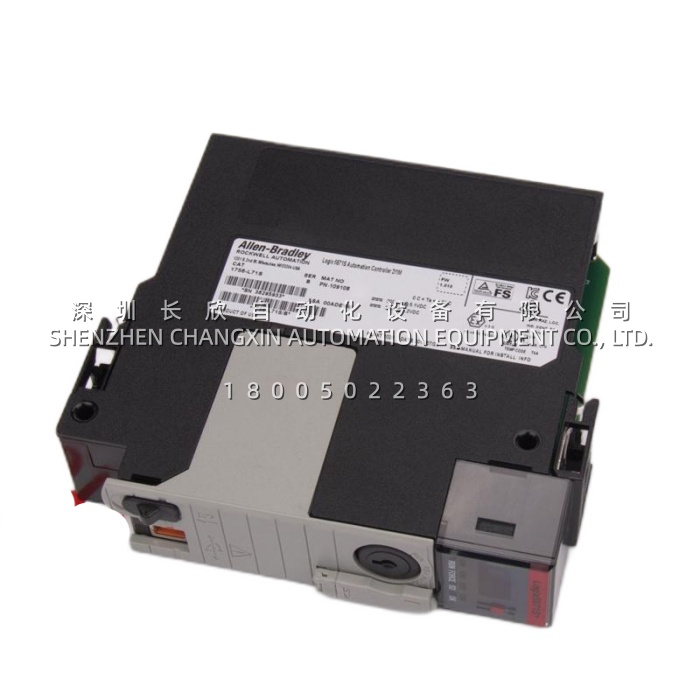
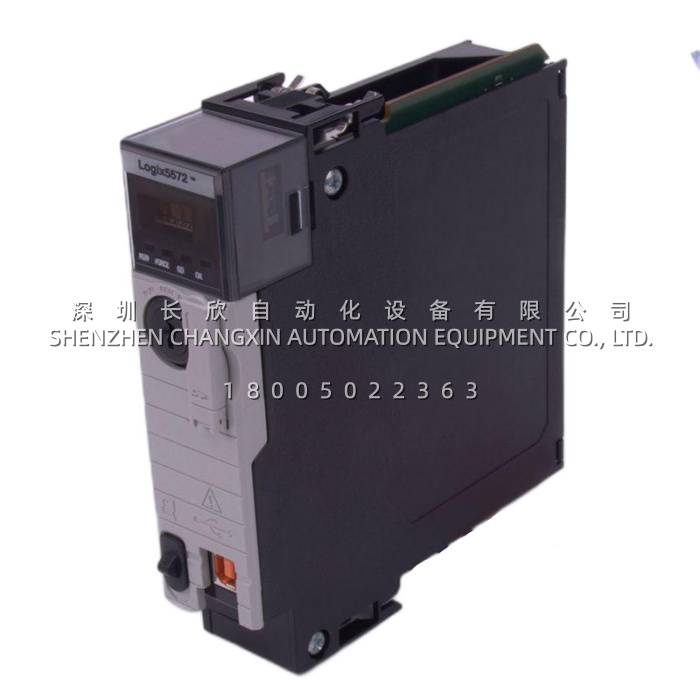
Allen-Bradley 1756-L72 ControlLogix 4 MB Controller – Capacitor-Based Energy Storage, No Battery Required缩略图

Allen-Bradley 1756-L72 ControlLogix 4 MB Controller – Capacitor-Based Energy Storage, No Battery Required

Allen-Bradley 1756-L72 ControlLogix 4 MB Controller – Capacitor-Based Energy Storage, No Battery Required插图


Product Overview

The Allen-Bradley 1756-L72​ is a high-performance Programmable Automation Controller (PAC) within Rockwell Automation’s renowned ControlLogix 5570 platform, also known as the Logix5572. As a fourth-generation ControlLogix controller, it represents a significant architectural advancement over legacy L6x processors, delivering enhanced processing power, expanded memory capacity, and a modernized design that eliminates the need for lithium batteries. The Allen-Bradley 1756-L72​ is engineered to serve as the “brain” of industrial automation systems, executing complex control logic, coordinating motion, managing process data, and communicating across multiple industrial networks simultaneously.At the heart of the Allen-Bradley 1756-L72​ is 4 MB of user memory for logic and data, paired with 0.98 MB of dedicated I/O memory. This memory configuration positions the controller in the mid-tier of the L7x family — doubling the capacity of the entry-level 1756-L71 while providing ample headroom for complex ladder logic, function block diagrams, structured text programs, and extensive tag-based data structures. The controller supports up to 32 independent tasks (one continuous plus 31 periodic or event-driven tasks), with each task capable of containing up to 1,000 programs in newer firmware revisions. This multi-tasking architecture enables precise control of time-critical processes alongside lower-priority background operations within a single controller.The Allen-Bradley 1756-L72​ is distinguished by its battery-free design philosophy. Unlike legacy controllers that relied on lithium batteries for volatile memory retention, the L72 utilizes a capacitor-based Energy Storage Module (ESM) — specifically the 1756-ESMCAP — which provides sufficient stored energy during a power interruption to safely transfer memory contents to the onboard Secure Digital (SD) card. A 1 GB SD card (1784-SD1) ships pre-installed with every controller, providing non-volatile storage for program backup, fault logging, and firmware images. The card can be upgraded to a 2 GB 1784-SD2 for applications requiring expanded data logging or larger program images. Programming and configuration are handled via the front-panel USB 2.0 full-speed port, supporting direct connection from a programming workstation without requiring serial port configuration or external communication modules.

Technical Specifications

Parameter Name Parameter Value
Product Model 1756-L72
Manufacturer Allen-Bradley / Rockwell Automation
Product Type Programmable Automation Controller (PAC)
Controller Series ControlLogix 5570 (Logix5572)
User Memory 4 MB
I/O Memory 0.98 MB
Non-Volatile Storage 1 GB SD card (1784-SD1), expandable to 2 GB (1784-SD2)
Controller Tasks 32 (1 continuous + 31 periodic/event)
Programs per Task 1,000 (firmware v24+)
Total CIP Connections 500 (maximum)
Digital I/O Capacity 128,000 points (maximum)
Analog I/O Capacity 4,000 points (maximum)
Communication Ports 1 × USB 2.0 Type-B (programming/configuration)
Network Options EtherNet/IP, ControlNet, DeviceNet, DH+, Remote I/O (via modules)
Energy Storage Module 1756-ESMCAP (capacitor-based, no battery required)
Backplane Current (5.1V DC) 800 mA
Backplane Current (1.2V DC) 5 mA
Power Dissipation 2.5 W (maximum)
Thermal Dissipation 8.5 BTU/hr
Motion Control Up to 100 axes per motion group
Supported Languages Ladder Diagram, Structured Text, Function Block, SFC (IEC 61131-3)
Programming Software Studio 5000 Logix Designer / RSLogix 5000 (v20–v36+)
Controller Redundancy Full support (with 1756-RM2 or 1756-RM3 modules)
Chassis Compatibility 1756-A4, A7, A10, A13, A17 (and K-suffix variants)
Slot Width 1 ControlLogix slot
Weight 0.25 kg (0.55 lb)
Operating Temperature 0 °C to +60 °C (32 °F to 140 °F)
Storage Temperature -40 °C to +85 °C (-40 °F to 185 °F)
Relative Humidity 5% to 95% (non-condensing)
Certifications c-UL-us, CE, RCM, ATEX, IECEx, UKEx
Isolation Voltage 30V continuous (basic insulation per IEC/UL 61010-1)
Lifecycle Status Active Mature


Main Features and Advantages

The Allen-Bradley 1756-L72​ delivers a compelling blend of processing power, memory capacity, and architectural flexibility that makes it a cornerstone of modern industrial automation. Its 4 MB user memory provides the ideal balance for mid-scale to large automation projects — offering sufficient capacity for complex control algorithms, extensive tag databases, historical data collection, and future program expansion without the cost premium associated with higher-tier controllers in the L7x family. This makes the 1756-L72 particularly well-suited for applications that have outgrown 2 MB controllers but do not require the full 8 MB or 16 MB capacity of the L73 or L75 models.Battery-free operation is a transformative advantage of the Allen-Bradley 1756-L72. The traditional lithium battery backup approach used in legacy PLCs introduced ongoing maintenance burdens — batteries required periodic replacement, had finite shelf lives, and posed environmental disposal challenges. The L72’s capacitor-based Energy Storage Module (ESM) eliminates these concerns entirely. During a power interruption, the ESM provides enough energy to transfer volatile memory contents to the SD card, ensuring that programs, data, and configuration settings are preserved without any battery-related maintenance. For hazardous locations or applications where stored energy capacitors are restricted, the 1756-ESMNSE variant provides a no-stored-energy option, while the 1756-ESMNRM offers a non-removable security-enhanced version.Multi-tasking capability sets the Allen-Bradley 1756-L72​ apart from simpler controllers. With support for 32 independent tasks, engineers can assign specific priority levels and execution rates to different control functions. Critical safety interlocks and high-speed motion control loops can run as high-priority periodic tasks with deterministic scan times, while less time-sensitive operations such as recipe management, data logging, and HMI communications run at lower priorities. This ensures that mission-critical control functions always receive processing attention when needed, regardless of background activity.Communication flexibility is built into the core of the Allen-Bradley 1756-L72. While the controller itself features a single USB 2.0 programming port, it supports a vast ecosystem of communication modules that enable connectivity to EtherNet/IP, ControlNet, DeviceNet, Data Highway Plus, Remote I/O, SERCOS, and SynchLink networks. With support for up to 500 CIP connections, the controller can simultaneously communicate with HMIs, SCADA systems, enterprise-level MES/ERP platforms, remote I/O racks, and peer controllers using Producer/Consumer messaging. The integrated motion control capability supports up to 100 motion axes per motion group via CIP Motion over EtherNet/IP, enabling precise coordination of Kinetix servo drives for applications ranging from packaging machinery to automotive assembly lines.

Back to Top

Search For Products

Product has been added to your cart