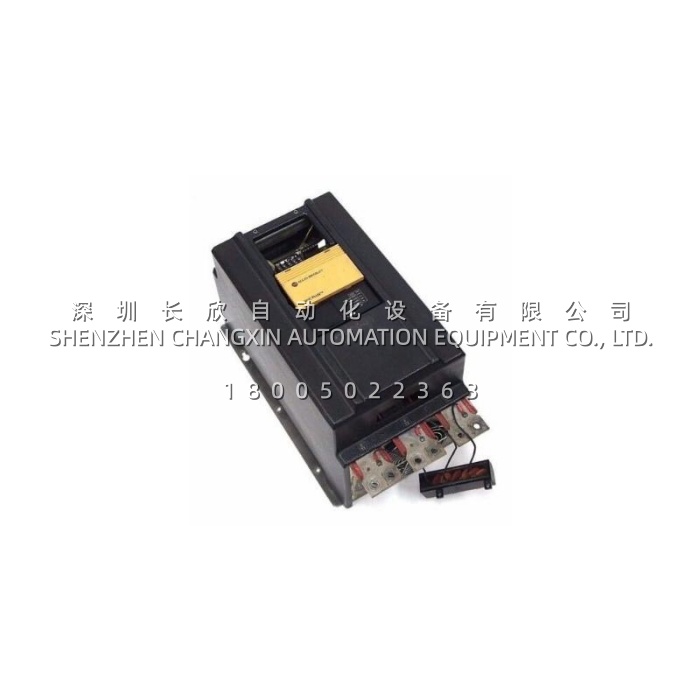
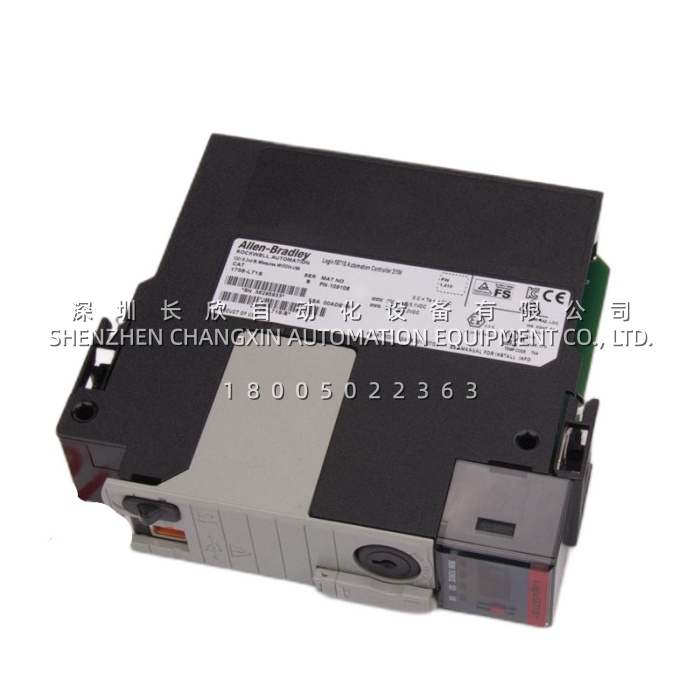
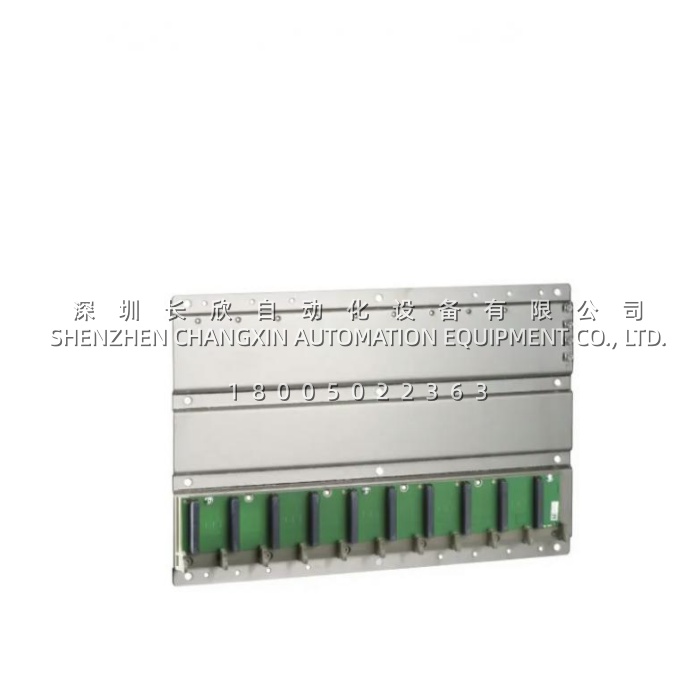
ABB 3ADT315100R1001 SDCS-POW-4-COAT Power Supply Board for DCS800 Drives缩略图

ABB 3ADT315100R1001 SDCS-POW-4-COAT Power Supply Board for DCS800 Drives

ABB 3ADT315100R1001 SDCS-POW-4-COAT Power Supply Board for DCS800 Drives插图


Description

The ABB 3ADT315100R1001, known as the SDCS-POW-4-COAT (or simply SDCS-POW-4), is a dedicated power supply board engineered for ABB’s DCS800 series DC drive systems. It generates all auxiliary voltages required by the drive controller, including the SDCS-CON-4 control board, I/O interfaces, communication cards, and connected encoder options . The “COAT” suffix denotes a conformal coating that provides robust protection against moisture, salt spray, and corrosive gases, making this module the preferred choice for installations in chemical plants, offshore platforms, and high-humidity environments .


Application Scenarios

In a large metallurgical plant located in a coastal region, the DCS800 drive controlling a roughing mill began experiencing intermittent “control power supply fault” alarms during the rainy season. The maintenance team traced the issue to the uncoated original power board, where salt-laden humidity had caused microscopic creepage on the PCB. After replacing the degraded unit with a new ABB 3ADT315100R1001 SDCS-POW-4-COAT, the drive’s control voltage stabilized completely. The plant has since operated through three typhoon seasons without a single power-related control failure—a testament to the COAT coating’s effectiveness in extending the module’s service life in harsh industrial settings.

The ABB 3ADT315100R1001 is also widely deployed in paper mills, mining conveyors, and wastewater treatment facilities, where the reliable generation of 5V, ±15V, and 24V DC rails is essential for stable gate firing signals and precise motor torque control. Its automatic 115V/230V AC input adaptation simplifies global deployment, while the 1500V DC isolation between input and output ensures that power-side transients do not compromise the sensitive control logic .


Technical Parameters

Parameter Value / Description
Product Model ABB 3ADT315100R1001 (SDCS-POW-4-COAT / SDCS-POW-4)
Manufacturer ABB
Product Category Drive Control Power Supply Board (SMPS)
Input Voltage 115 V AC or 230 V AC ±10%, 45–65 Hz (auto-detecting)
Typical Output Rails 5V DC, ±15V DC, 24V DC (multiple isolated outputs)
Encoder Supply Jumper-selectable: 5V, 12V, 15V, or 24V DC
Isolation Voltage 1500 V DC (input-output and between selected channels)
Topology Push-pull / flyback hybrid switching mode
Input Filtering 0–100 ms adjustable digital filtering for noise rejection
Protection Overcurrent, overvoltage, undervoltage lockout, thermal derating
Operating Temperature 0°C to +50°C (standard); COAT variant extends to -40°C to +100°C
Dimensions (Approx.) 230 × 110 × 34 mm
Weight Approx. 0.35 – 0.4 kg
Mounting Plug-in board with electronic tray support (D5–D7 drive modules)
Certifications CE, UL/cUL, RoHS


Technical Principles and Innovative Values

Innovation Point 1: Automatic Input Voltage Adaptation
The ABB 3ADT315100R1001 automatically detects and adjusts to either 115V AC or 230V AC auxiliary supply without manual switch selection. This feature eliminates configuration errors during installation and reduces spare parts inventory, as a single module covers both voltage standards globally .

Innovation Point 2: COAT Conformal Coating for Extreme Environments
The suffix “COAT” indicates a polyurethane-based conformal coating applied to the PCB. This layer, compliant with IEC 60721-3-3 Class 3C3, provides 1000-hour salt spray resistance and protection against H₂S corrosion (≤50ppm) and fungal growth . The coating allows the ABB 3ADT315100R1001 to operate reliably in environments where uncoated boards would fail from electrochemical migration, extending the module’s MTBF significantly compared to the non-coated version.

Innovation Point 3: Multi-Rail Output and Programmable Encoder Supply
Beyond the standard 5V, ±15V, and 24V rails for logic and I/O, the ABB 3ADT315100R1001 provides a dedicated encoder supply that can be jumpered to 5V, 12V, 15V, or 24V using internal jumpers . This eliminates the need for external power supplies for position feedback devices, reducing cabinet complexity and cost.

Innovation Point 4: Integrated Main Breaker Control Relay
The module includes a built-in relay contact (connector X96, controlled by digital output 8) for directly managing the main circuit breaker, saving the cost of an additional relay in the cabinet. This integration simplifies the drive’s power distribution architecture and is configurable via firmware parameters .

Innovation Point 5: Electrically and Mechanically Backward Compatible
The ABB 3ADT315100R1001 is pin-to-pin compatible with the non-coated SDCS-POW-4 boards, allowing direct replacement in DCS800, DCS500, and DCS400 systems without hardware modifications .

ABB 3ADT309600R0002 SDCS-CON-2A Control Board – Blank Hardware for DCS800 DC & ACS800 Drives缩略图

ABB 3ADT309600R0002 SDCS-CON-2A Control Board – Blank Hardware for DCS800 DC & ACS800 Drives

ABB 3ADT309600R0002 SDCS-CON-2A Control Board – Blank Hardware for DCS800 DC & ACS800 Drives插图


Product Overview

The ABB 3ADT309600R0002​ is the SDCS-CON-2A control board — the “compute brain” of ABB’s SDCS (Direct Current Control System) drive architecture, most commonly deployed as the main control PCB inside ABB DCS800 DC drives, and also compatible with selected ABB ACS800 AC drives​ and ABB exciter/field-supply systems that share the SDCS rack mechanicals and backplane. The suffix “Without Software” in the product designation is not a defect — it is the defining commercial and engineering decision: the ABB 3ADT309600R0002​ ships as a bare/hardware-only PCBA containing the industrial-grade microprocessor, RAM, Flash memory chips, communication controllers, and power-management circuitry, but no operating system, no firmware, and no application-parameter set are pre-loaded. This makes the 3ADT309600R0002​ fundamentally different from the “firmware-sensitive matched spares” we covered earlier in this ABB series (P3LG, SAY130, PSTX motherboard, Relion 1MRK002133) — those demanded “match the host revision or DOA”; the ABB 3ADT309600R0002​ flips that: one blank hardware SKU serves DCS800, ACS800, and exciter hosts, and you flash the exact firmware + parameter archive from your drive’s project backup during commissioning. No version-mismatch risk, no “wrong stepping” DOA, no need to stock three different R-suffix boards for three drive types.Physically the ABB 3ADT309600R0002​ (SDCS-CON-2A) measures approximately 248 × 83 × 25 mm and weighs 0.41 kg, rack-insert style that slides into the DCS800/ACS800 drive chassis and locks onto the backplane for 24 V DC power (≤15 W drawn from the drive’s auxiliary backplane, same rail that feeds the SDCS-IOB and SDCS-PIN sibling boards) and data exchange with the power-interface and I/O extension cards. Communication side carries CAN (250/500/1000 kbps), RS-485 (Modbus RTU), optional Ethernet/Modbus TCP on select builds, and PROFIBUS DP via adapter/firmware — the three protocols that let the DCS800 talk up to ABB 800xA, Siemens PCS7, Emerson DeltaV, or Rockwell Logix without an external gateway. On-board DI/DO/AI/AO handle the drive-local signals (start/stop, enable, fault reset, field-current feedback, armature-voltage sense, tach/encoder input, relay-alarm outputs). LEDs for Power, Fault, and Communication sit on the faceplate. Origin is Thailand (ABB Group) for current production; the ABB 3ADT309600R0002​ is the direct hardware replacement for the earlier 3ADT309600R0001 (SDCS-CON-2A R0001), sharing the same envelope, pinout, and backplane, so a “R0001 died, R0002 is the catalog substitution” is a clean slot-swap — provided you have the drive’s firmware image and parameter archive ready to load.For maintenance teams running DCS800 DC mains in steel rolling, mine winders, paper-machine DC sections, and ore-grinder drives — places where DC torque control still beats VFD for low-speed high-torque — the ABB 3ADT309600R0002​ is the spare that ends the “which R-suffix fits my DCS800-0050 vs DCS800-4000” debate. One SKU, flash what the drive needs.


Technical Specifications

Parameter Value
Product Model 3ADT309600R0002
Alternative / Marketing Name SDCS-CON-2A
Manufacturer ABB
Product Type Drive Control Board (Without Software / Blank Hardware)
System Compatibility ABB DCS800 DC Drives, ABB ACS800 AC Drives (select builds), ABB Exciter/Field Systems (SDCS architecture)
Processor Industrial-grade high-speed microprocessor (architecture firmware-dependent)
Memory RAM + Flash present on PCB (capacity defined by loaded firmware)
Supply Voltage 24 V DC via backplane (≤15 W typical)
Communication CAN (250/500/1000 kbps), RS-485 (Modbus RTU), PROFIBUS DP (via firmware/adapter), optional Ethernet/Modbus TCP
On-board I/O DI / DO / AI / AO (drive-local signals: start/stop, enable, field-current, armature-voltage, tach, alarm relays)
Replacement For 3ADT309600R0001 (SDCS-CON-2A R0001) — direct slot-compatible
Mounting Drive rack insert / guide rail, backplane connection
Operating Temperature -25°C to +70°C
Dimensions (H × W × D) ~248 × 83 × 25 mm
Weight ~0.41 kg
Status Indicators LEDs: Power / Fault / Communication
Protection Class IP20 (within drive chassis)
Certifications CE, UL, IEC (per batch)
Country of Origin Thailand (ABB Group; current production)


Main Features and Advantages

Blank-hardware design eliminates firmware-mismatch DOA:​ The single biggest differentiator of the ABB 3ADT309600R0002​ versus every other ABB PCBA we have covered in this series is the “Without Software” intent. P3LG, SAY130, PSTX motherboard, Relion 1MRK002133, 2UBA interface — all of those carried Flash and demanded host-revision matching or the swap failed. The ABB 3ADT309600R0002​ carries the silicon (microprocessor, RAM, Flash chips) but leaves them empty — you load the DCS800- or ACS800-specific firmware and the project parameter archive via ABB’s drive commissioning PC tool (DriveWindow / DCS800 commissioning SW) after installation. The upside: one spare SKU covers DCS800 frame sizes from -0050 up to -4000, covers ACS800-adjacent SDCS racks, covers exciter builds — no “oops, ordered R0002 but my drive needs the PROFIBUS build not the CAN build” because the build is what you flash onto it. For plants with a mixed DCS800/ACS800/exciter fleet, the 3ADT309600R0002​ is the consolidation spare.DCS800/ACS800/Exciter multi-host compatibility:​ The SDCS rack architecture (CON + IOB + PIN boards) is the mechanical/backplane constant; the ABB 3ADT309600R0002​ is the CON (control) slot occupant. DCS800 DC drive uses it for armature-current loop, speed loop, field-exciter loop, and thyristor firing-angle calculation. ACS800 in SDCS-configured builds (older ACS800 cabinets used SDCS-CON-2 variants before the drive-control migrated fully to AMxC/DSU architectures) uses the same board for the AC-vector algorithm and the power-section handshake. ABB exciter/static-field systems reuse the SDCS rack for the field-current regulator. One 3ADT309600R0002​ PCB, three host families — the “Without Software” label is what enables that.Direct slot-replacement for R0001 (3ADT309600R0001):​ The ABB 3ADT309600R0002​ is the catalog successor to the R0001. Same 248×83×25 mm envelope, same guide-rail tabs, same backplane header pinout, same LED positions. A DCS800 cabinet that was commissioned with R0001 and now shows “Control Board Fault” or a dead microprocessor can take a 3ADT309600R0002​ with no mechanical or cabling change — the only added step vs a pre-flashed spare is “load the firmware + parameter archive.” For plants that have been running DCS800 since the mid-2000s, the R0001→R0002 substitution is the standard lifecycle move, and the ABB 3ADT309600R0002​ is the currently-available hardware.Multi-protocol comms without gateway boxes:​ CAN (250/500/1000 kbps), RS-485 Modbus RTU, PROFIBUS DP, and on some builds Ethernet/Modbus TCP are all reachable from the ABB 3ADT309600R0002​ depending on which firmware image you flash. That means a DCS800 in a Siemens PCS7 plant can run PROFIBUS DP up to the PLC; the same 3ADT309600R0002​ hardware in an ABB 800xA plant can run Modbus TCP; in a Rockwell plant, CAN/Modbus RTU. The board doesn’t care — the firmware image you load decides. That flexibility is why “Without Software” is a feature, not a gap.Backplane 24 V DC, ≤15 W, DI/DO/AI/AO on-board:​ The ABB 3ADT309600R0002​ pulls from the DCS800/ACS800 auxiliary backplane (same 24 V DC that feeds SDCS-IOB and SDCS-PIN), draws ≤15 W, and carries the drive-local I/O: start/stop pushbutton dry contacts, enable, field-current analog, armature-voltage analog, tach/encoder, relay-alarm (Run/Fault/Trip). No separate PSU, no separate I/O rack for the drive-local signals — the 3ADT309600R0002​ is the aggregator.LED diagnostics at the faceplate + -25°C to +70°C:​ Power, Fault, Com LEDs let a drive-room technician tell “24 V backplane dead,” “firmware not loaded (Com dark, Power on),” or “CAN/Profibus link lost” without DriveWindow. The -25°C cold-start covers unconditioned drive rooms (mine winder electrical galleries, Arctic ore plants, paper-mill basements), and the +70°C top-end covers a DCS800 cabinet next to a reheating furnace MCC.

ABB 3ADT220166R0002 SDCS-CON-H01 DCS880/DCT880 Electronic Control Unit缩略图

ABB 3ADT220166R0002 SDCS-CON-H01 DCS880/DCT880 Electronic Control Unit

ABB 3ADT220166R0002 SDCS-CON-H01 DCS880/DCT880 Electronic Control Unit插图


Description

The ABB 3ADT220166R0002, also designated as SDCS-CON-H01, is the high-performance Electronic Control Unit (ECU) specifically engineered for ABB’s DCS880 DC drive and DCT880 thyristor power controller series . This board serves as the master control “brain” of the drive system, executing the complex dual-closed-loop speed and current control algorithms that govern DC motor performance.

Designed as a field-replaceable unit (FRU), the ABB 3ADT220166R0002 integrates a powerful 32-bit DSP processor, extensive configurable I/O (16 DI / 16 DO / 4 AI / 4 AO), and embedded Ethernet/Modbus communication, eliminating the need for external control modules . Its ability to handle encoder feedback (HTL/TTL) and its robust industrial design (-20°C to +60°C) make it the definitive control solution for mission-critical applications ranging from steel rolling mills to mine hoists .


Application Scenarios

Imagine a steel hot rolling mill where a DCS880 drive controlling a heavy-duty roughing stand suddenly trips with a “control board fault” alarm. The massive DC motor coasts to a stop, and the entire production line halts. The mill loses thousands of dollars per minute in production. Without a backup, the line could be down for days waiting for a replacement.

If the maintenance team had stocked the ABB 3ADT220166R0002 as a critical spare, the response would be swift. The technician isolates the control power, unplugs the ribbon cables from the failed unit (X14, XC12, XS13), removes the defective board, and installs the new one. After reconnecting the cables and I/O plugs, they power up and, using Drive Composer pro, download a saved parameter backup to the new 3ADT220166R0002 . Within under an hour, the drive is back online and the mill resumes operation, a process that otherwise might have taken days. This ability to quickly replace a targeted component—rather than the entire drive—is the core value of the 3ADT220166R0002 as a strategic spare part.


Parameter

Main Parameters Value/Description
Product Model 3ADT220166R0002 (SDCS-CON-H01)
Manufacturer ABB
Product Category Electronic Control Unit (ECU) / Main Control Board
Primary Compatibility ABB DCS880 DC Drives & DCT880 Thyristor Power Controllers
Control Architecture Speed control, Torque control, Current control, Field weakening
Processor 32-bit industrial DSP / dedicated control processor
Control Loops Dual closed-loop (Speed + Current)
Digital Inputs (DI) 16 channels, optically isolated, 24 V DC
Digital Outputs (DO) 16 channels, transistor output, optically isolated
Analog Inputs (AI) 4 channels, configurable (±10V, 0-20mA, 4-20mA)
Analog Outputs (AO) 4 channels, configurable (±10V, 0-20mA, 4-20mA)
Encoder Interface Supports HTL/TTL encoders (ABZ three-phase) for closed-loop feedback
Communication Embedded Ethernet (Modbus TCP), RS-485 (Modbus RTU); optional Profibus/Profinet adapters
Supply Voltage 24 V DC (internal, from drive chassis)
Power Consumption Maximum ~4.8 W
Operating Temperature -20°C to +60°C
Storage Temperature -40°C to +85°C
Mounting Plug-in installation into drive controller slot (hot-swap capable with proper procedure)
Interchangeability Interchangeable with 3ADT220166R0012 (SDCS-CON-H01L), consider firmware version
Certifications CE, UL, RoHS, IEC 61131-3
Weight (Approx.) ~0.5 kg


Technical Principles and Innovative Values

Innovation Point 1: Dedicated Dual-Closed-Loop Control Architecture

The ABB 3ADT220166R0002 is not a general-purpose PLC card; it is a purpose-built motion control engine . It executes the speed and current dual-closed-loop algorithms entirely in hardware/firmware, ensuring deterministic, microsecond-level response times that are critical for high-performance DC motor applications such as torque control in winders or precise speed regulation in rolling mills . This specialized design provides superior dynamic performance compared to generic control systems.

Innovation Point 2: Extensive On-Board I/O and High-Speed Encoder Integration

The board integrates a rich set of 16 DI, 16 DO, 4 AI, and 4 AO directly on the main control board, minimizing the need for additional I/O modules in the drive cabinet . Furthermore, the built-in HTL/TTL encoder interface supports high-speed feedback for precise motor control, a feature often requiring an expensive add-on card in other systems .

Innovation Point 3: Firmware Version Awareness and Interchangeability

The ABB 3ADT220166R0002 is interchangeable with the newer 3ADT220166R0012 (SDCS-CON-H01L) . However, a critical innovation is the firmware dependency: the older 3ADT220166R0002 is compatible with all DCS880 firmware versions, whereas the newer variant only works with version 3.00.0.0 and higher . This allows plant engineers to make strategic stocking decisions based on their installed firmware base, ensuring seamless backups.

Innovation Point 4: Diagnostics and Serviceability as a Field-Replaceable Unit

The ABB 3ADT220166R0002 is designed from the ground up for rapid field replacement. On-board diagnostic LEDs provide immediate visual feedback on the module’s operational status . Its physical design and standardized connectors allow for quick “unplug and replace” service, which is a key differentiator from integrated control systems that require complete drive removal for repair, significantly minimizing Mean Time To Repair (MTTR) .


Application Cases and Industry Value

Case Study: Drive Recovery in a Steel Mill

As described in the application scenario, a steel hot rolling mill experienced a critical failure of the main control board on their DCS880 drive. The old control board failed, and the drive triggered a fault, bringing the production line to a halt. Because the plant had pre-stocked the ABB 3ADT220166R0002 as a standard spare, the maintenance engineer was able to replace the board in under 90 minutes. The replacement process involved isolating the control power, unplugging the ribbon cables (X14, XC12, XS13) from the electronic tray, and swapping the unit . After installing the new board, the engineer downloaded the saved parameter backup using Drive Composer pro and returned the drive to service . This rapid response prevented a multi-day shutdown, avoiding significant production losses and reinforcing the board’s value as a mission-critical spare part.

ABB 3ADT220090R0006 SDCS-PIN-51 Measurement Card – DCS800 D5–D7 Interface Board for Armature Voltage & Current Sensing缩略图

ABB 3ADT220090R0006 SDCS-PIN-51 Measurement Card – DCS800 D5–D7 Interface Board for Armature Voltage & Current Sensing

ABB 3ADT220090R0006 SDCS-PIN-51 Measurement Card – DCS800 D5–D7 Interface Board for Armature Voltage & Current Sensing插图


Product Overview

The ABB 3ADT220090R0006, commercially referenced as SDCS-PIN-51​ (with the “-COAT” suffix denoting IPC-CC-830B conformal coating), is a measurement and interface circuit board developed for ABB’s DCS800 DC drive family—specifically the D5, D6, and D7 converter sizes covering the 900 A to 5,200 A envelope—and also appearing in DCS500/DCS600-to-DCS800 modernization (rebuild kit) projects. It is important to distinguish the SDCS-PIN-51​ from its close siblings: the PIN-48 and PIN-46 are the pulse-transformer driver boards that sit closer to the thyristor gates, whereas the ABB 3ADT220090R0006​ sits one step upstream as the measurement + pulse-sorting interface between the drive’s control brain (SDCS-CON-4) and the power stack. In the DCS800 electronic housing architecture, the CON-4 generates the firing pulses, then hands them to the SDCS-PIN-51; the PIN-51 simultaneously measures armature current (via CT secondary + diode bridge + burden resistors scaled to 1.5 V @ rated current, peaking to 3 V) and AC/DC armature voltage (via a high-ohmic resistor chain where W1–W26 jumpers / shorting wires are cut at the factory to match the converter’s nameplate voltage, typically 500–1000 V class), and then sorts/distributes the firing pulses out to the PIN-48/PIN-46 pulse-transformer boards through connectors X113–X513 keyed to D5/D6/D7 bridge layouts.Physically the ABB 3ADT220090R0006​ measures ~230 × 135 × 35 mm and weighs ~0.48 kg, mounting on the power module frame top between the main electronics bay and the pulse-transformer boards, preferably kept as close to the power stack as practical because the voltage-coding resistor chain and the CT secondary wiring land directly on high-potential points. The board is rated for up to 600 V AC mains / 600 V DC armature in the standard build (special 690 V+ variants exist via external dividers or the PIN-51-H spin). A PTC temperature-sensor input supervises heatsink temperature, and the board integrates RCD snubber absorption plus a Bussmann KTK-R-6A/600 V fuse for thyristor overvoltage protection. One SDCS-PIN-51​ is required per drive regardless of 2-quadrant or 4-quadrant build. For plants running DCS800 D5–D7 mill mains, mine-winder drives, large-extruder DC supplies, or executing a DCS500→DCS800-R rebuild, the ABB 3ADT220090R0006​ is the targeted measurement spare that keeps the CON-4’s view of armature voltage, armature current, and stack temperature honest without refactoring the electronic housing.


Technical Specifications

Parameter Name Parameter Value
Product Model 3ADT220090R0006
Manufacturer ABB
Product Type Measurement & Interface Board (SDCS-PIN-51)
Alternative / Sibling Codes SDCS-PIN-51-COAT (conformal coated); related legacy: SDCS-PIN-41 (DCS500)
Platform Fit ABB DCS800 D5 / D6 / D7 converter sizes (900–5200 A); DCS500/DCS600 rebuild-kit compatible
Armature Voltage Rating ≤ 600 V DC (standard); scalable to 1000 V via on-board resistor chain (W1–W26 jumper cuts)
Mains Voltage Rating ≤ 600 V AC (standard)
Current Measurement CT secondary → diode bridge → burden resistors R1–R21, scaled to 1.5 V @ In (peak 3 V); zero-current detect via firmware
Pulse Sorting Connectors X113–X513 to PIN-48 / PIN-46 pulse-transformer boards (D5/D6/D7 bridge allocation)
Temperature Input PTC thermistor interface (heatsink supervision)
Protection Elements RCD snubber network; Bussmann KTK-R-6A/600 V fuse (thyristor overvoltage)
Hardware Coding W1–W26 voltage-coding jumpers + R1–R21 current-coding resistors (factory-cut per converter type code)
Coating (COAT suffix) IPC-CC-830B conformal coat (moisture, salt mist, dust, chemical resistant)
Dimensions (W × H × D) ~230 × 135 × 35 mm
Weight ~0.48 kg
Origin ABB Estonia / Finland
Mounting Power-module frame top, between main electronics & pulse-transformer board


Main Features and Advantages

Measurement encoding that the CON-4 relies on: The ABB 3ADT220090R0006​ carries two precision scaling chains that the SDCS-CON-4 controller reads as its primary armature feedback. Voltage side: a high-ohmic resistor string (W1–W26) where ABB factory-cuts the shorting wires according to the converter’s type code, adapting the divider ratio for 500 V, 690 V, or 1000 V class machines—this is the “voltage coding” that lets one PCB artwork serve D5 through D7 without resistor substitution by the field tech. Current side: CT secondary lands on a diode bridge, then burden resistors R1–R21 scale the rectified current to 1.5 V at rated armature current (the CON-4 expects this as its current feedback null; peak allowance extends to 3 V for transient overload). Zero-current detection is firmware-handled on the CON-4 side, so the SDCS-PIN-51​ itself doesn’t need a hardware comparator—just a clean rectified signal. When these scaling resistors drift (overheat discoloration on R1–R21 is the classic tell), the drive begins logging “armature current mismatch” or “speed loop unstable” because the CON-4 is regulating on a lying signal.Pulse sorting as the upstream traffic cop: The CON-4 fires all six pulses (or twelve, on a dual-bridge 4Q) from one connector, and the ABB 3ADT220090R0006​ is the board that fans them out to X113–X513 destined for the PIN-48/PIN-46 pulse-transformer boards mounted nearer the thyristor gates. This matters because D5, D6, and D7 have different bridge-module geometries and different pulse-transformer board counts; the PIN-51’s X-connector keying ensures the right pulse reaches the right gate-drive board without cross-wiring in the harness. In a rebuild-kit (DCS500→DCS800-R) scenario, the SDCS-PIN-51​ is the single board that adapts “old power stack, new CON-4” because it speaks both the legacy CT/voltage landing and the modern CON-4 pulse format.RCD snubber + 6 A fuse as the thyristor bodyguard: The SDCS-PIN-51​ isn’t just a sensor—its RCD network (resistor-capacitor-diode) clamps the inductive kick that appears across the armature when the bridge commutates, and the KTK-R-6A/600 V Bussmann fuse on board opens if a thyristor shoots-through and the snubber can’t hold. This is why, after a thyristor failure, ABB recommends not only swapping the blown SCR and the nearby PIN-48 but also inspecting (or preemptively replacing) the ABB 3ADT220090R0006—carbon tracking from the SCR flash can creep onto the PIN-51’s high-voltage resistor zone and cause a secondary short if not caught.PTC temperature path: The PTC input on the SDCS-PIN-51​ links to the heatsink PTC string on the power stack. Overtemp propagates to the CON-4 which then trips the drive—simple but essential on D5–D7 frames where a lost cooling fan or a clogged filter can let the heatsink drift 20–30 °C before anyone at the MCC notices. The PIN-51 is the sensor interface; losing it to a broken PTC lead or a cracked solder on the PTC header means the drive runs blind on thermal.COAT conformal as the harsh-site insurance: The “-COAT” suffix on 3ADT220090R0006​ means the entire PCB carries a transparent conformal film compliant with IPC-CC-830B—the same spec used on marine and offshore electronics. In metallurgy, mining, cement, and paper-machine basements where the DCS800 D5–D7 typically lives, the cabinet ambient carries conductive dust, lime mist, or humidity spikes; the COAT layer keeps the high-ohmic voltage-divider string and the CT burden resistors from developing leakage paths that would quietly shift the scaling. For plants specifying D5–D7 drives in non-climate-controlled cubicles, asking for the COAT suffix specifically (rather than the bare PIN-51) is usually a 5% price uplift for a 3× reliability gain on the measurement chain.PIN-51 vs. PIN-48 vs. PIN-41 quick discrimination: The ABB 3ADT220090R0006​ (PIN-51) is the DCS800 measurement + pulse-sorting interface. The PIN-48/PIN-46 are the pulse-transformer drivers that actually push current into the thyristor gates—they sit downstream of the PIN-51’s X113–X513. The older PIN-41 was the DCS500-era equivalent; the PIN-51 updates component grades and diagnostic headroom. Mixing them is a hard mistake—PIN-41 on a DCS800 CON-4 will physically plug but the pulse timing and scaling constants won’t match; PIN-48 without a PIN-51 upstream means the CON-4’s firing pulses have nowhere to sort. The trio (CON-4 + PIN-51 + PIN-48) is the intended electronic-housing set for D5–D7.

ABB 3ADT220072R0012 SDCS-CON-2B Control Board for DCS800 Drives缩略图

ABB 3ADT220072R0012 SDCS-CON-2B Control Board for DCS800 Drives

ABB 3ADT220072R0012 SDCS-CON-2B Control Board for DCS800 Drives插图


Application Scenarios

Imagine a steel rolling mill where the main DCS800 drive controlling the roughing stand suddenly triggers a “CTRL BOARD FAIL” alarm and locks out. The entire production line grinds to a halt, costing thousands per minute in lost output. The maintenance team has a pre-verified spare ABB 3ADT220072R0012 on the shelf. After a quick power-down, removal of the faulty board (carefully noting DIP switch positions and cable orientation), and insertion of the replacement, the drive is re-commissioned and the rolling mill resumes operation within the hour. For plant engineers, the ABB 3ADT220072R0012 is not just a spare part—it’s the difference between a quick board-level repair and days of downtime waiting for a complete new drive.


Parameters

Main Parameters Value/Description
Product Model ABB 3ADT220072R0012 (also: SDCS-CON-2B, SDCS-CON-21, SDCS-CON2-21.COAT)
Manufacturer ABB
Product Category Drive Control Board / Logic Interface Board
Primary Host System ABB DCS800 Series DC Drives; also DCS500 / ACS800 / ACS880
Power Supply 24 V DC (typical; some AC variants 90-250V AC exist)
Communication Interfaces RS485 (Modbus), Fiber Optic (DDCS/MDCS), internal backplane bus
Memory Approx. 4 MB on-board (firmware and parameter storage)
Operating Temperature –25°C to +70°C (typical)
Storage Temperature –40°C to +85°C
Dimensions (approx.) 110 × 75 × 22 mm (plug-in card)
Weight Approx. 0.2 – 0.65 kg (varies by coating/version)
Protection IP20 (cabinet installation), optional coated version (CON2-21.COAT)


Technical Principles and Innovative Values

The ABB 3ADT220072R0012 is engineered to handle the rigorous demands of heavy-duty drive control, with several distinguishing features.

Innovation Point 1: Distributed Control Architecture. Unlike generic PLC cards, the ABB 3ADT220072R0012 offloads critical real-time control tasks from the main CPU. It manages the speed/torque closed-loop algorithms and the firing logic for the power thyristors independently. This ensures deterministic, microsecond-level response essential for rolling mill and hoist applications.

Innovation Point 2: Dual-Media Communication Backbone. The board supports both traditional RS485 (Modbus RTU) and fiber optic DDCS/MDCS communication. The fiber interface provides galvanic isolation and immunity to electromagnetic interference—critical in high-power drive cabinets where switching noise is extreme.

Innovation Point 3: Parameter Retention & Clone Capability. All commissioning parameters and tuning constants are stored in non-volatile memory on the ABB 3ADT220072R0012. When replacing a failed board, the configuration can be uploaded from the old unit (if partially functional) or downloaded from a backup file. This eliminates the need for lengthy re-commissioning and ensures the replacement behaves identically to the original.

Innovation Point 4: Conformal Coating for Harsh Environments. The “-COAT” variant (SDCS-CON2-21.COAT) features a protective conformal coating, offering enhanced resistance to humidity, dust, and airborne contaminants. This makes the ABB 3ADT220072R0012 suitable for cement plants, mining, and marine applications where standard boards would fail prematurely.

ABB PPC907BE101 (3BHE024577R0101) AC 800M High-Performance CPU – 800 MHz PowerPC, 512 MB RAM, 1 GB Flash, PM864/866 Replacement缩略图

ABB PPC907BE101 (3BHE024577R0101) AC 800M High-Performance CPU – 800 MHz PowerPC, 512 MB RAM, 1 GB Flash, PM864/866 Replacement

ABB PPC907BE101 (3BHE024577R0101) AC 800M High-Performance CPU – 800 MHz PowerPC, 512 MB RAM, 1 GB Flash, PM864/866 Replacement插图


Product Overview

The ABB PPC907BE101​ (order No. 3BHE024577R0101) is the high-performance central processing unit (CPU) in ABB’s AC 800M controller family, positioned as the direct evolutionary replacement for the PM864 and PM866 processors and as a peer to the PM891 in the AC 800M / 800xA / Freelance 800F ecosystem. Where the earlier PM864/PM866 topped out on memory and Ethernet throughput for plants trying to run Model Predictive Control (MPC) layers, large recipe sets, and months of on-controller trend data, the PPC907BE101​ arrives with a dual-core PowerPC-class embedded processor at 800 MHz, 512 MB RAM, and 1 GB Flash — enough headroom that the control-task scheduler isn’t the bottleneck anymore. The module seats in a standard AC 800M rack (the same 19″/DIN hybrid rack that carries the CI communication interface units, the SB redundant PSUs, and the S800 remote-I/O links), draws DC from the rack backplane, and talks to the world through 2× 10/100/1000 Mbps Ethernet (control net + service/engineering) plus 2× serial (RS-232/485) — the same physical I/O complement as the PM866 it replaces, but with GigE instead of 10/100 and substantially more RAM/Flash.What makes the ABB PPC907BE101​ land on MRO spare lists is the PM864→PM866→PPC907BE101 migration path that most AC 800M plants are now mid-way through. The PPC907BE101​ is register- and footprint-compatible with the PM866 slot — same mechanical, same backplane connector, same CI854A/CI873 companion modules — so upgrading a rack from PM866 to PPC907BE101​ is a slide-out-slide-in with a Control Builder M download, no rewiring, no I/O reshuffle. For plants standardized on 800xA (refinery crude-unit DCS, pulp-machine DCS, power-gen balance-of-plant) or on Freelance 800F (skid fleets, packaged-boiler UCPs, water plants), the ABB PPC907BE101​ is the “future-safe” CPU SKU — it supports >50 000 I/O points per controller, 1 ms minimum scan when the task is configured tight, and 1:1 hot-standby via redundant backplane + sync fiber/cable so the standby CPU mirrors the primary’s data table and cuts over on a fault without a process bump. The BE101 suffix is the revision code — ABB uses BE, BF, BG etc. to track firmware/component stepping on the PPC907 base, and while BE101 is backward-compatible to PM866 BOMs, mixing BE101 and a newer BE10x in the same redundant pair is not recommended (sync protocol expects matched firmware across primaries).One honest ambiguity to flag before we go deeper: some distributor listings also attach “PPC907BE101” to ABB ACS6000 MV-drive gate-driver boards or AMC34/ACS2000/DCS800 drive-control PCBs under the same 3BHE024577R0101 order number — those are different BOM loads of the same PCB artwork (drive version = fiber up/down to GDU, ±15 V backplane, <12 W, no Ethernet) vs. the DCS version (Ethernet, RAM/Flash, 24 V backplane, 15 W class). Since you tagged this “pcb dcs module,” this listing leads with the AC 800M CPU identity; if your host is a drive cubicle not a DCS rack, stop here and re-confirm the BOM — the drive-version PPC907BE101 and the DCS-version PPC907BE101 share the order number but not the function, and swapping one for the other will not end well.


Technical Specifications

Parameter Name Parameter Value
Product Model PPC907BE101
Order Number 3BHE024577R0101 (user input “3_e024577r0101” normalizes to 3BHE)
Manufacturer ABB
Product Type AC 800M High-Performance CPU / Processor Module (DCS)
Processor Dual-core PowerPC-class embedded, 800 MHz
RAM 512 MB
Flash (Program Storage) 1 GB (some docs cite 256 MB on early builds — confirm per unit label / BOM)
I/O Scan Cycle Configurable, minimum 1 ms
Max I/O Capacity > 50 000 I/O points per controller (distributed)
Communication Interfaces 2 × 10/100/1000 Mbps Ethernet (control + service/engineering); 2 × Serial (RS-232 / RS-485)
Supported Protocols Modbus TCP, Profibus DP (via CI module), Ethernet/IP, others per CI selection; IEC 61850 via 800xA
Redundancy 1:1 hot-standby supported (primary + standby CPU, sync over fiber or sync cable, redundant backplane PSU recommended)
Programming / Engineering ABB Control Builder M, System 800xA environment
Compliance IEC 61131-3, IEC 61508 (SIL 2 ready), IEC 62443, IEC 61000-6-2/4
Power Supply AC 800M rack backplane DC (typical 24 V DC per rack PSU; some AC800M base rack configs use 5 V / ±12 V — confirm your rack manual)
Typical Power Dissipation ~15 W (some sources cite 4.5–5 W idle, ~15 W load — verify per BOM)
Operating Temperature 0 °C to +60 °C (some docs –25 to +70 for extended; confirm per unit label)
Storage Temperature –40 °C to +85 °C
Humidity 5–95% RH, non-condensing
Protection IP20 (rack interior, control cabinet)
Mounting AC 800M standard rack slot (guided insertion, retaining screws)
Certifications CE, UL, cUL
Dimensions (approx.) AC 800M CPU form factor (~220 × 150 mm class typical for PPC/PM-class; confirm per mechanical drawing)
Weight (approx.) 0.30–0.38 kg (typical for AC800M CPU-class PWA)


Main Features and Advantages

800 MHz dual-core + 512 MB / 1 GB = headroom for MPC and big recipes.​ The ABB PPC907BE101​ exists because PM864/PM866 started hitting ceiling on plants that wanted MPC on the controller (not on a side-car OPC server), or wanted 6 months of 1-second trends stored locally, or wanted 200+ AO loops with PID+ratio+cascade on one controller. The 800 MHz dual-core PowerPC and the 1 GB Flash mean the PPC907BE101​ can hold multiple配方 (recipes), months of compressed trend, and a Modelon/MATLAB-generated MPC kernel without the task scan jittering. For a refinery crude-unit DCS or a pulp-machine wet-end DCS where the controller already carries 3000+ I/O and 40+ PID blocks, the PM866 was breathing hard; the PPC907BE101​ takes the shoulder off.GigE instead of 10/100.​ The two Ethernet ports on the ABB PPC907BE101​ are 10/100/1000, which matters when the controller talks to: (a) a remote S800 I/O rack over ModuleBus/Profinet at high packet rate, (b) the 800xA Connectivity Server moving 10 000 events/min, (c) an Engineering WS doing a full download of a 50k-I/O application. On PM866, a big download could stretch minutes; on PPC907BE101​ the pipe is 10× wider. For plants doing frequent online modifications (pharma batch recipe churn, refinery turnaround re-commissioning), that throughput shows up on the Gantt.Drop-in for PM866 — same slot, same CI, same S800.​ The ABB PPC907BE101​ keeps the PM866 mechanical envelope, backplane pinout, and serial/ETH faceplate layout, so the migration path from PM866 → PPC907BE101 is: slide old PM866 out, slide PPC907BE101​ in, boot, Control Builder M download, done. No CI854A/CI873/CI873 change, no S800 MTU re-looming, no I/O module swap. For MRO planners this means the “PM866 spare” SKU on the storeroom list can migrate to “PPC907BE101” over 12 months without obsoleting the CI/S800/SB racks around it. The BE101 suffix is the dispatch detail — ABB may step to BE102/BExx over time, and while BE101 → BE102 is usually firmware-forward-compatible, mixing BE101 primary + BE102 standby in a redundant pair is not recommended (sync expects matched firmware major.minor). Photograph the removed CPU label, match the BE1xx suffix, order.1:1 hot-standby with sync fiber.​ In AC 800M redundant configs, two PPC907BE101​ CPUs sit in the same rack (or adjacent racks via extended sync), each on its own SB801/SB802 redundant PSU, linked by a sync fiber or sync cable that mirrors the primary’s data table to the standby at scan boundary. On a primary fault (CPU, backplane, PSU side A), the standby takes over without a process bump — the plant doesn’t see the DCS node blink. The ABB PPC907BE101​ supports this natively; no extra license, no extra hardware beyond the second CPU + sync cable + redundant SB PSU. For power-gen balance-of-plant, refinery alkylation, pharma reactor — anywhere an SIL2 / high-availability node is specified — the PPC907BE101 redundant pair is the standard.SIL 2 ready, IEC 62443.​ The ABB PPC907BE101​ is not a SIL-3 full-loop solution by itself (that needs S800 SIL-rated I/O + certified application), but the CPU itself is IEC 61508 SIL 2 capable and the rack/ethernet stack is IEC 62443 aligned, which matters for plants under NERC-CIP, IEC 62443 audits, or pharma 21 CFR 11 adjacent validation. The BE101 revision also tightened EMI/ESD tolerance over earlier PPC/PM builds — not something the operator sees, but the reliability log sees it at year 7.Honest limitations & dual-identity warning.​ The ABB PPC907BE101​ is AC 800M only — it will not drop into an AC 800F (Freelance, that’s PM8xx/AC 700F/AC 800F — different rack), will not drop into an ACS6000 drive rack (that’s the other PPC907BE101 BOM load with fibers and ±15 V), and will not run 800xA if the FW license key doesn’t match (Control Builder M license ties to CPU serial). If your BOM says “PPC907BE101” but the host is a drive cubicle not a DCS rack, re-verify — the order number 3BHE024577R0101 alone doesn’t disambiguate drive-load vs DCS-load without the BOM context. Also: BE101 vs PM866 — the BE101 is the successor, not necessarily firmware-identical; a PM866 application downloads to BE101 fine, but a BE101-created application with features that didn’t exist on PM866 FW may not download backward to a PM866 if you’re mixing. Keep primaries and standbys on same suffix.

ABB 3-010751R0101 10 kHz IGCT Module – MW-Level Motor Drive Component缩略图

ABB 3-010751R0101 10 kHz IGCT Module – MW-Level Motor Drive Component

ABB 3-010751R0101 10 kHz IGCT Module – MW-Level Motor Drive Component插图


Description

The ABB 3-010751R0101 is a high-power IGCT (Integrated Gate-Commutated Thyristor) power semiconductor module, often referenced interchangeably with the full industrial code 3BHE010751R0101 . This component serves as the core switching and commutation device in medium and high-voltage variable frequency drives, serving as the “heart” of MW-class motor control systems .

Designed as a press-pack device, the ABB 3-010751R0101 delivers exceptional current handling capability with rated currents around 3000A and voltage ratings from 3kV to 12kV, enabling power levels up to 18MW . Its performance bridges the gap between older GTO technology and high-power IGBTs, offering lower conduction losses, high fault current withstand capability, and a robust hermetic package design optimized for demanding industrial environments .


Application Scenarios

In a steel mill’s hot rolling line, a 5MW main drive motor suddenly halts production. The plant’s maintenance engineer opens the ACS6000变频柜 and identifies a failed power module in the inverter section. By replacing it with a verified ABB 3-010751R0101, the production line is restored within a single shift. The mill avoids the typical two-week lead time for a complete drive overhaul, saving hundreds of thousands in downtime costs.

The core pain point addressed by the ABB 3-010751R0101 is the catastrophic failure of the power stage in mission-critical, continuous-process applications. For plants operating ABB ACS6000 series drives on applications like mine hoists, crushers, or rolling mill main stands, having a verified spare IGCT module is essential to ensure Mean Time To Repair (MTTR) stays within hours rather than weeks.


Parameters

Main Parameters Value/Description
Product Model 3-010751R0101 (interchangeable with 3BHE010751R0101)
Manufacturer ABB (Semiconductors / Power Grids division)
Product Category IGCT Power Semiconductor Module (Integrated Gate-Commutated Thyristor)
Maximum Current Rating Approx. 3000 A (Controllable turn-off current)
Voltage Class 3 kV – 12 kV (with 690V AC typical for drive inputs)
Switching Frequency Up to 10 kHz
Turn-Off Time ≤ 5 μs (typical μs-class switching)
Operating Temperature –40°C to +70°C (Extended industrial range)
Insulation Class H-Class (Superior heat resistance)
Cooling Method Air or Water-cooled (Depends on drive cabinet design)
Packaging Technology Press-pack / Hermetic press-pack device
Protection Rating IP20–IP23 (Cabinet installation)

Parameter annotations: The 3000A current rating refers to the controllable turn-off current, not a simple DC rating. The μs turn-off time is critical for generating high-quality output waveforms and enabling the fast switching required for motor control. H-Class insulation allows the module to withstand high junction temperatures without compromising performance or safety.


Technical Principles and Innovative Values

Innovation Point 1: Press-Pack Housing with Optimized Gate Design
The ABB 3-010751R0101 is a press-pack device where the silicon wafer is pressed between heatsinks under high pressure for electrical and thermal connection . The latest platform innovations include a peripheral gate ring design that reduces gate-circuit impedance by more than a factor of three . This lowers switching losses and enables higher controllable currents.

Innovation Point 2: High Controllable Current – Record 3600A in Class
The RC-IGCT platform achieves a repetitive turn-off current of 3600A, a record value in its class . During single-pulse operation, the device can control currents exceeding 6000A at junction temperatures of 135°C . This capability allows the ABB 3-010751R0101 to handle severe overloads and fault currents without failure—a critical advantage over IGBTs.

Innovation Point 3: Superior Fault Withstand and Safe Failure Mode
Unlike IGBT modules that can fail short-circuit and damage surrounding equipment, IGCT press-pack devices can potentially handle large fault currents without rupturing . This inherent robustness provides safe failure mode characteristics, protecting the entire power stack from catastrophic cascade failures.

Innovation Point 4: Low Conduction Losses – 10–15% Lower Than IGBT
IGCT technology offers significantly lower ON-state voltage than IGBTs. Depending on the inverter mode, total losses using IGCTs can be 10–15% lower . This translates directly to higher system efficiency, reduced cooling requirements, and lower operating costs for MW-level applications.

ABB 2UBA008929R0101 D101 Profibus-DP Board – Natural Gas, Refinery Gas, Ethylene GC Spare缩略图

ABB 2UBA008929R0101 D101 Profibus-DP Board – Natural Gas, Refinery Gas, Ethylene GC Spare

ABB 2UBA008929R0101 D101 Profibus-DP Board – Natural Gas, Refinery Gas, Ethylene GC Spare插图


Technical Specifications

Parameter Name Parameter Value
Product Model 2UBA008929R0101 (D101)
Manufacturer ABB (Process Analytics)
Product Type Communication Module
Series Platform ABB GC C960 Gas Chromatograph
Supply Voltage 24 V DC (internal chassis rail)
Communication Protocols Profibus-DP (up to 12 Mbps), Modbus RTU, CANopen (build-dependent)
Physical Interface RS-485 (DB9 connector typical)
Data Transfer Rate Up to 12 Mbps (Profibus-DP mode)
Operating Temperature -25 °C to +60 °C
Storage Temperature -40 °C to +85 °C
Humidity 5% to 95% RH, non-condensing
Mounting GC C960 Internal Chassis Slot
Ingress Protection IP20 (Cabinet Interior)
Dimensions (W×H×D) Approx. 148 × 76 × 28 mm
Weight Approx. 0.15 kg
Compatible Controller ABB GC C960 C102 CPU Module


Main Features and Advantages

High-Speed Profibus-DP Integration: The ABB 2UBA008929R0101​ is engineered for high-speed data exchange, supporting Profibus-DP rates up to 12 Mbps. In fast-cycle applications like ethylene cracking or gas turbine fuel-gas metering, the module ensures that completed analysis records are transferred to the DCS within a single scan cycle. This eliminates data latency, allowing closed-loop control systems to react instantly to changes in gas composition, such as fluctuations in heating value (BTU) or the presence of corrosive elements like H₂S.Multi-Protocol Flexibility: Beyond its primary Profibus-DP capability, the ABB 2UBA008929R0101​ supports Modbus RTU and CANopen on select firmware builds. This versatility allows the GC C960 analyzer to integrate seamlessly into diverse automation landscapes, from ABB’s own 800xA and Symphony Plus systems to third-party DCS platforms like Honeywell Experion, Emerson DeltaV, and Siemens SIMATIC PCS 7. This eliminates the need for external protocol gateways, reducing both cost and potential points of failure.Space-Efficient Slot Design: Unlike bulky DIN-rail gateways, the ABB 2UBA008929R0101​ features a low-profile, slot-mounted design (148 × 76 × 28 mm). It fits neatly into the dedicated communication slot within the GC C960 chassis, preserving valuable space for other critical electronics like the C102 CPU and valve driver cards. This compact form factor is essential in the often-crowded environments of analyzer shelters and sampling system enclosures.Seamless Hot-Standby Transition: In the event of a communication failure, the ABB 2UBA008929R0101​ allows the GC C960’s C102 controller to continue running analyses and caching results internally. Once the module is replaced and communication is restored, the DCS can retrieve buffered data, minimizing data gaps. This feature ensures that even during a “DCS Lost Comms” event, the analyzer continues its critical work, safeguarding process continuity.Robust Industrial Diagnostics: The module provides comprehensive diagnostic feedback accessible via the GC C960’s local interface or the DCS. It monitors telegram retry counts, bus error rates, and station status. This data is invaluable for predictive maintenance, helping technicians differentiate between a faulty ABB 2UBA008929R0101, a loose terminator resistor, or a damaged RS-485 cable, thereby reducing mean time to repair (MTTR).


Application Field

The ABB 2UBA008929R0101​ is deployed exclusively within ABB GC C960 gas chromatographs, which are foundational instruments in the oil, gas, and power generation sectors. In Natural Gas​ processing and transmission, the D101​ module enables the real-time reporting of hydrocarbon dew point and calorific value (BTU) for custody transfer, ensuring fiscal accuracy and regulatory compliance. For Refinery Gas​ applications, particularly on fuel-gas headers and flare-gas recovery systems, the ABB 2UBA008929R0101​ transmits compositional data that optimizes boiler and furnace efficiency while ensuring safe combustion limits are maintained.Within Ethylene Crackers, the module plays a pivotal role in fractionation control. It relays critical component breakdowns (C1 through C6+) from frontend and demethanizer GCs to the DCS, allowing operators to fine-tune separation columns for maximum yield. In Power Generation, the ABB 2UBA008929R0101​ is vital for hydrogen-cooled generators, where it reports H₂ purity and CO₂/air ingress levels to the turbine control system, preventing costly generator failures. Furthermore, in environmental compliance applications, this module facilitates the reporting of total hydrocarbon content and specific volatile organic compounds (VOCs) to regulatory agencies via the plant’s SCADA system. For any facility relying on the GC C960 for process control, the ABB 2UBA008929R0101​ is the indispensable link that turns raw analytical data into actionable intelligence.

ABB UFC721AE101: UFC700-Series Digital Function Card for ABB DCS & Process-Control Cabinets缩略图

ABB UFC721AE101: UFC700-Series Digital Function Card for ABB DCS & Process-Control Cabinets

ABB UFC721AE101: UFC700-Series Digital Function Card for ABB DCS & Process-Control Cabinets插图


Product Overview

The ABB UFC721AE101​ (catalog reference 3-002916R0101) is a Digital Quantity Control Board — i.e., a digital I/O function card — within ABB’s UFC700 series (“Universal Function Card” family), deployed as a channel-level digital acquisition and drive node inside ABB DCS/PLC rack infrastructures including Advant OCS, AC800M/Freelance 800xA ecosystems, and legacy Master/Procontrol migration cabinets. The “UFC” prefix designates a modular function-card format where 700-series cards deliver dedicated I/O or control functions (digital, analog, pulse, etc.) that seat into a UFC carrier/backplane inside the control cabinet, communicating with the domain CPU over the rack’s internal bus. The ABB UFC721AE101​ specifically addresses the “digital quantity” basket — acquiring dry-contact or 24 V DC active signals from the field (DI) and/or driving 24 V DC loads (DO) such as alarm relays, SSRs, valve solenoids, run lamps, and interlock coils — making it the workhorse binary-I/O node for process DCS cabinets that need a compact, bus-connected digital block rather than a full S800/S900 I/O rack.The “721” in the mnemonic denotes the digital-quantity variant within the UFC700 lineup, while “AE101” is the hardware-configuration/revision tag (A = generation, E = variant, 101 = config index). The board runs from the rack’s nominal 24 V DC backplane supply, delivers per-channel photocoupler isolation (channel-to-backplane and, on multi-group layouts, channel-group isolation) to reject EMI from VFD trays and switchgear bays, and responds in the <10 ms class typical of process binary I/O. Status LEDs per channel (input active / output active / fault) give field techs immediate visual on contact state without opening a laptop. The ABB UFC721AE101​ is conformal-coated for process-cabinet humidity and thermal cycling, and mounts either onto a UFC carrier PCB inside the rack or onto DIN rail with a carrier bracket, depending on the cabinet builder’s implementation of the UFC700 architecture.For plants running Advant OCS, AC800M/Freelance, or Procontrol-migration cabinets that still carry UFC carriers, the ABB UFC721AE101​ is a small-footprint, high-relevance spare — inexpensive on the MRO shelf, expensive to be without when a binary channel drifts on a reactor-jacket alarm or a pump-run feedback. At the 15–20 year cabinet refurb mark, UFC700-series function cards are common proactive swaps alongside the domain CPU, the PSU, and the communication interface, refreshing the binary-I/O chain without a full DCS replacement.


Technical Specifications

Parameter Name Parameter Value
Product Model ABB UFC721AE101
Catalog Reference 3-002916R0101
Manufacturer ABB Ltd.
Product Type Digital Quantity Control Board (UFC700 Series Function Card)
Function Digital Input / Digital Output (DI/DO, “Digital Quantity”), version-dependent channel split
Channel Count 16 / 32 (typical UFC721 class; confirm per BOM — common splits: 16 DI + 16 DO, or 32 DI, or 32 DO)
Supply Voltage 24 V DC (from UFC carrier / rack backplane)
Input Type Dry-contact or 24 V DC active (sinking/sourcing, per config)
Output Type 24 V DC semiconductor or relay-driver (per-channel rating version-dependent, typically 0.5–2 A)
Isolation Photocoupler, channel-to-backplane, channel-group (UFC700 standard)
Response Time < 10 ms (typical channel level)
Status Indication Per-channel LED (Input / Output / Fault, typical UFC700)
Communication UFC carrier backplane → rack bus → domain CPU (Advant/AC800M/Freelance)
Mounting UFC carrier PCB (rack internal) or DIN-rail carrier bracket (cabinet dependent)
Operating Temperature 0 °C to +55 °C (process DCS cabinet)
Storage Temperature -40 °C to +70 °C
Humidity 5 % – 95 % RH, non-condensing
Protection Class IP20 (cabinet internal)
Dimensions (approx., UFC700 class) ≈ 120 × 80 mm (module only, carrier adds)
Weight (approx.) ≈ 0.15–0.20 kg


Main Features and Advantages

UFC700-series digital density in a compact function card.​ The ABB UFC721AE101​ hits the basket for DCS cabinets that need “a block of binary points” without committing a full S800/S900 I/O rack. Sixteen to thirty-two digital channels on a ~0.15 kg PCB that seats into a UFC carrier means Advant/AC800M/Freelance rack designers can tuck DI (breaker 52a/52b, pump-run, valve-limit, ESTOP chain, float switch) and DO (alarm relay, SSR drive, run lamp, interlock coil) onto one small card. For retrofit jobs where the domain CPU’s native BI/BO is exhausted, the ABB UFC721AE101​ is the natural UFC-carrier extension.Photocoupler isolation for process-cabinet EMI.​ Binary signals in DCS rooms live next to VFD cable trays, motor control centers, CT/VT secondaries, and station-battery switching. The ABB UFC721AE101​ applies opto-isolation between channel groups and the backplane/system side, so a contactor coil kickback or a breaker-close surge on one channel group doesn’t walk across into the logic or other groups. For plants where “ghost DI flips” during motor starts are a chronic SCADA-noise complaint, the UFC700 isolation helps.Sub-10 ms response for interlock-grade binary.​ Although digital acquisition doesn’t need protection-tripping speed, <10 ms channel response still matters for pump-run feedback chains, ES chain handshakes, and interlock latches. The ABB UFC721AE101​ keeps up with AC800M/Freelance scan rates and with 800xA task classes when mapped over the UFC carrier bus.Per-channel LED diagnostics.​ Each point carries its own LED (input lit / output active / fault). Sounds trivial until a midnight call: “reactor-jacket alarm showing but the pump isn’t actually running” — the LEDs let a tech split “bad field contact” vs. “bad DO driver” vs. “ABB UFC721AE101​ channel dead” at the cabinet door in under a minute.AE101 revision awareness.​ The “AE101” config tag matters — UFC700 digital variants differ on channel split (DI-only vs. DO-only vs. mixed), per-channel current rating, and sink/source wiring. A ABB UFC721AE101​ (AE101) is not necessarily a drop-in for a UFC721ADxxx or AE201 without checking the BOM — the “-AE101” suffix pins the exact wiring diagram and TB pinout. Suppliers who know UFC700 will cross-check the AE101 tag before shipping; those who don’t will sell you a board that bolts in but the TB doesn’t match.Proactive-refresh economics.​ At 15–20 years, UFC700-series function cards age via opto-LED drift, relay-driver transistor erosion on DO channels, and conformal-coat microcracking in humid DCS rooms. The ABB UFC721AE101​ is cheap relative to a domain CPU or a PSU, and refreshing it during a cabinet refurb (alongside the CPU backup battery, the PSU, and the COM card) buys another decade without a full DCS capital project. For plants where a binary-channel loss on a reactor-jacket or pump-run feedback cascades into a batch hold, the spare cost is rounding-error money.

ABB BSM90C-375UAX 3.3 kW AC Brushless Servo Motor – 22 Nm Torque缩略图

ABB BSM90C-375UAX 3.3 kW AC Brushless Servo Motor – 22 Nm Torque

ABB BSM90C-375UAX 3.3 kW AC Brushless Servo Motor – 22 Nm Torque插图


Description

The ABB BSM90C-375UAX is a 3.3 kW AC brushless permanent magnet synchronous servo motor from ABB’s high-performance BSM series, manufactured under the Baldor-Reliance brand. Designed for demanding industrial motion control applications, this 90 mm frame motor delivers a continuous torque of 22 Nm with peak torque capacity reaching 60 Nm, making it an ideal solution for applications requiring high torque density in a compact footprint. The motor features a resolver-based feedback system (suffix “UAX”), providing robust, noise-immune position feedback that performs reliably in high-vibration and high-temperature environments. With an IP65-rated front housing and Class F insulation, the ABB BSM90C-375UAX is purpose-built to withstand harsh industrial conditions while delivering the precision and reliability expected from ABB motion control products.


Application Scenarios

In a high-speed horizontal flow-wrapper (HFFS) application at a snack-food plant, the OEM selected the ABB BSM90C-375UAX for both the main cutoff knife and infeed lug axes. The motor’s low rotor inertia and high torque density delivered the required acceleration (0 to 3000 rpm in under 50 ms) and tight speed regulation under varying web tension. The integrated high-resolution encoder provided ±1 pulse positional accuracy for registration with printed film eye-marking, enabling the wrapper to achieve 180 packs/min with less than 0.3 mm cut-length variance. When a worn belt caused overheating on one axis two years later, the motor’s built-in PTC thermistor tripped the drive before winding damage occurred—a testament to the ABB BSM90C-375UAX’s robust thermal protection and reliability in real-world production environments.


Parameters

Main Parameters Value/Description
Product Model ABB BSM90C-375UAX
Manufacturer ABB (Baldor-Reliance)
Product Category AC Brushless Servo Motor / Permanent Magnet Synchronous Motor
Rated Power 3.3 kW (continuous)
Rated Torque 22 Nm (continuous)
Peak Torque 60 Nm (short-term overload)
Rated Speed 3000 rpm
Rated Voltage AC 230 V (±10%), 3-phase
Feedback Type Resolver-based (UAX suffix); high-resolution encoder variants available
Protection Rating IP65 (front with shaft seal)
Insulation Class Class F (155°C)
Mounting Type 90 mm square flange (IEC 90 / NEMA 56C equivalent)
Cooling Method Natural convection / Surface-cooled (IC 410)
Operating Temperature -25°C to +60°C
Thermal Protection PTC thermistor / Klixon bi-metal


Technical Principles and Innovative Values

Innovation Point 1: High Torque Density in a Compact 90 mm Frame
The ABB BSM90C-375UAX leverages advanced permanent magnet rotor technology to deliver 22 Nm continuous torque from a compact 90 mm square flange package. This high torque density allows system integrators to achieve powerful motion control performance in space-constrained machinery, reducing overall machine footprint without sacrificing capability.

Innovation Point 2: Resolver-Based Robust Feedback (UAX Suffix)
The “UAX” winding code on the ABB BSM90C-375UAX is commonly associated with resolver-based feedback, making it the preferred choice for harsh or high-vibration environments where optical encoders may be susceptible to failure. This rugged feedback solution ensures reliable position and speed data even in demanding industrial conditions.

Innovation Point 3: Comprehensive Thermal Protection
The ABB BSM90C-375UAX incorporates integrated PTC thermistor or Klixon thermal sensors that provide direct winding temperature feedback to the servo drive. This enables true thermal protection rather than indirect I²t estimation, preventing costly motor damage from overheating in high-duty-cycle applications.

Innovation Point 4: IP65 Sealed Construction for Harsh Environments
With IP65-rated front housing and shaft seal, the ABB BSM90C-375UAX withstands coolant mist, dust, and occasional washdown conditions commonly encountered in food processing, packaging, and machining environments. This robust construction extends motor life and reduces maintenance requirements in demanding industrial settings.

Innovation Point 5: Interchangeability with BSM C and N Series
The ABB BSM90C-375UAX is designed with mechanical and electrical interchangeability with other BSM C and N series motors, providing flexibility for machine design and simplifying spare parts management for facilities with diverse ABB servo motor installations.


Back to Top

Search For Products

Product has been added to your cart