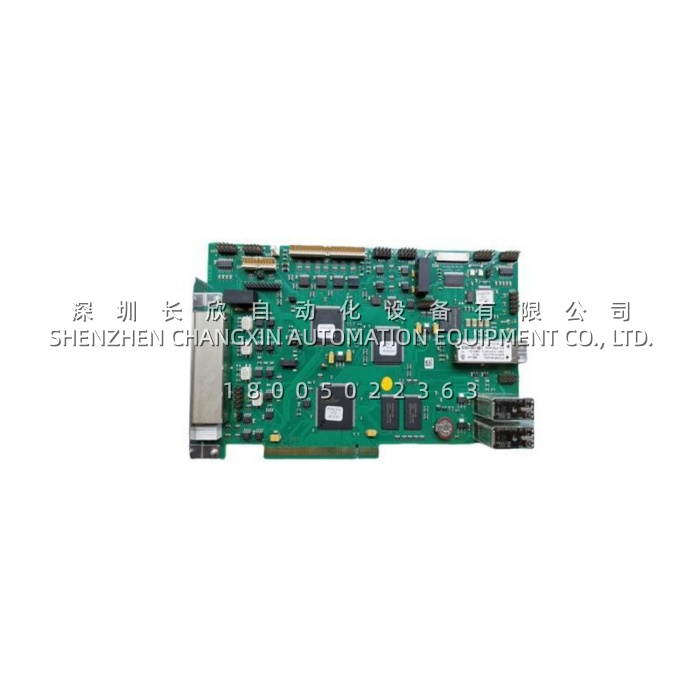
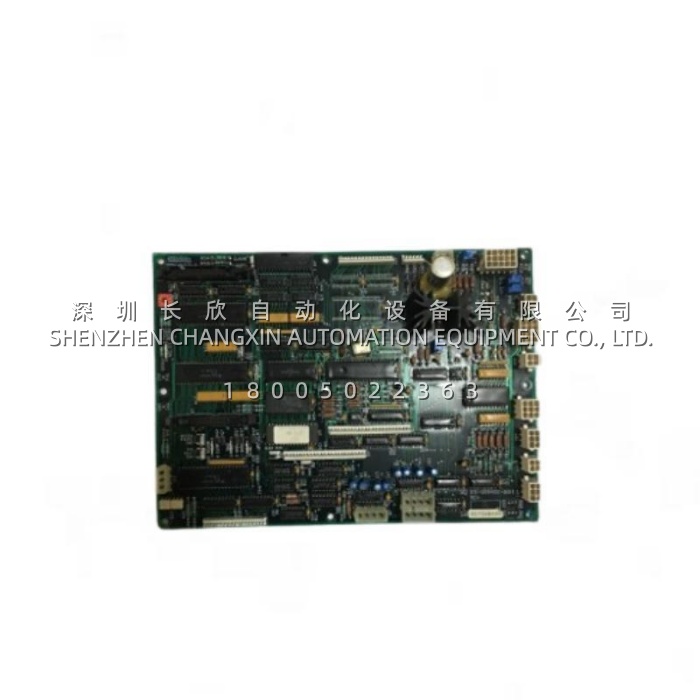
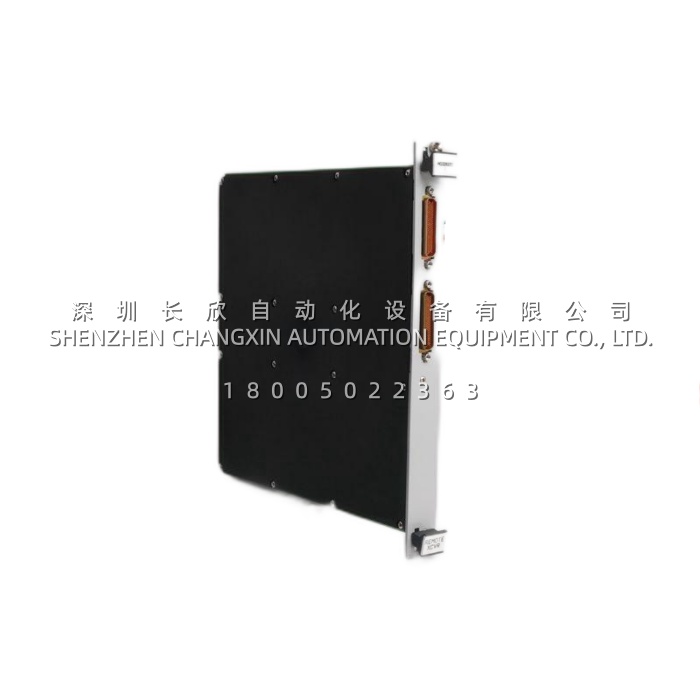
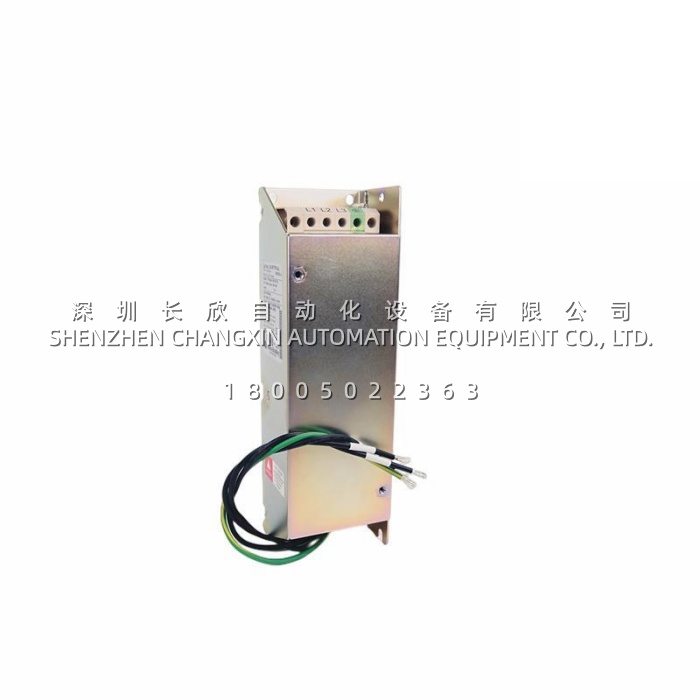
ABB 1TGE120026R0103 MView 10.4″ Touch Screen HMI for MNS iS Switchgear缩略图

ABB 1TGE120026R0103 MView 10.4″ Touch Screen HMI for MNS iS Switchgear

ABB 1TGE120026R0103 MView 10.4″ Touch Screen HMI for MNS iS Switchgear插图


Application Scenarios

In a large semiconductor fabrication plant, a motor overload alarm on a critical exhaust fan triggered in the middle of the night. Instead of hunting for a programming laptop or scrambling to connect to the PLC network, the on-duty technician walked to the MCC lineup, opened the MNS cabinet door, and tapped the ABB 1TGE120026R0103 display. Within seconds, they identified the specific motor, viewed the fault code, acknowledged the alarm, and reset the starter—restoring airflow with minimal production impact. This scenario illustrates how the ABB 1TGE120026R0103 addresses the persistent pain points of poor local visibility, delayed fault response, and reliance on scarce engineering resources for basic diagnostics .

The ABB 1TGE120026R0103 is equally valuable in water treatment facilities, oil refineries, chemical plants, and power generation stations, where it provides a single point of interaction for monitoring motor currents, thermal images, operating hours, and fault logs for up to 60 M10x controllers on a single RS485 segment . The resistive touch screen works reliably even when operators wear industrial gloves or when the panel surface is exposed to minor oil or dust contamination—a practical advantage over consumer-grade capacitive screens in harsh plant environments .


Technical Parameters

Parameter Value / Description
Product Model ABB 1TGE120026R0103 (MView HMI)
Manufacturer ABB
Product Category Industrial Touch Screen Panel / HMI
Display Size 10.4 inches (TFT color LCD)
Resolution 800 × 600 (SVGA)
Touch Technology Resistive (glove-operable, tolerant to oil/dirt)
Brightness 400 cd/m² (LED backlight)
Power Supply 24V DC (18–32V DC wide-range input)
Power Consumption Approx. 12W
Communication Interfaces RS232 / RS485 (adaptive), Ethernet (RJ45), USB Host, CF Card Slot
Supported Protocols Modbus RTU, ABB proprietary protocols (MNS iS, UNITROL, ACS drives)
Front Panel Protection IP65 (dustproof, water-resistant)
Operating Temperature -20°C to +60°C
Storage Temperature -40°C to +85°C
Mounting Door cutout, flush-mounted
Weight Approx. 0.6 kg
Certifications CE, cULus, CCC, EAC


Technical Principles and Innovative Values

Innovation Point 1: Native MNS iS Protocol Integration
The ABB 1TGE120026R0103 communicates natively with M10x motor controllers using the MNS iS proprietary protocol over RS485 . Unlike generic HMI panels that require extensive Modbus mapping and variable configuration, the MView auto-discovers connected devices on the bus, enabling plug-and-play deployment. Out of the box, the ABB 1TGE120026R0103 displays motor currents, thermal capacities, fault statuses, and operational hours without a single line of custom programming .

Innovation Point 2: Ruggedized Resistive Touch for Industrial Reliability
While many consumer and commercial panels use capacitive touch technology that fails with gloves or contamination, the ABB 1TGE120026R0103 employs industrial-grade resistive sensing . This technology responds to pressure, not electrical conductivity, making it impervious to the greasy fingertips, dust, or heavy gloves typical in MCC rooms. The panel is rated for over 10 million touches, ensuring long-term durability in high-use environments.

Innovation Point 3: Centralized Monitoring for Up to 60 Devices
A single ABB 1TGE120026R0103 can monitor up to 60 M101/M102 motor controllers on a single RS485 trunk . This eliminates the need for multiple display units in large MCC lineups, significantly reducing hardware costs and panel space requirements. Operators can scroll through the device list, view real-time parameters, and issue local start/stop or reset commands from one convenient location.

Innovation Point 4: No-Software Commissioning and Maintenance
The ABB 1TGE120026R0103 includes onboard menus for language selection, contrast adjustment, and controller parameter editing . Technicians can modify rated currents, trip classes, and alarm thresholds directly from the door-mounted panel—without a laptop, specialized software, or a network connection to the PLC. This drastically reduces Mean Time To Repair (MTTR) and lowers the skill barrier for routine maintenance.

ABB 1TGE102009R1001 Interface Module: RS-485 + Ethernet, 247 Modbus Slaves, IP20, LED Diagnostics缩略图

ABB 1TGE102009R1001 Interface Module: RS-485 + Ethernet, 247 Modbus Slaves, IP20, LED Diagnostics

ABB 1TGE102009R1001 Interface Module: RS-485 + Ethernet, 247 Modbus Slaves, IP20, LED Diagnostics插图 ABB 1TGE102009R1001 Interface Module: RS-485 + Ethernet, 247 Modbus Slaves, IP20, LED Diagnostics插图1


Product Overview

The ABB 1TGE102009R1001​ is an interface (communication gateway) module purpose-built for ABB’s MNS iS series of intelligent low-voltage switchgear — the “translator” that sits between the MNS drawer-internal mLINK​ private bus (hung with ABB Ekip electronic trip units on Emax 2 / Tmax / Formula breakers, contactor status modules, and motor controllers) and the upstream industrial network, where it speaks Profibus DP​ and Modbus RTU / TCP​ (build-dependent) to the plant PLC, BMS, or SCADA. In plain terms: the 1TGE102009R1001​ lets a data-center LV lineup, a hospital main-distribution switchboard, or a petrochemical MCC room’s MNS iS cabinets dump breaker-alarm, trip-current, contactor-state, and energy data to the control room without a pile of auxiliary wiring and separate protocol gateways.Physically the ABB 1TGE102009R1001​ appears in two form-factor flavors under the same catalog number: a compact PCB/module build (~35 × 90 × 65 mm, ~0.2–0.5 kg) that plugs onto the MNS drawer’s rear rail, and a fuller MNS-drawer assembly version (~139 × 68 × 139 mm, up to ~1.0 kg) that includes the housing and front-facing ports. Both share the same 24 V DC control supply (drawn from the MNS control busbar or an external 24 V DC PSU in the switchboard), the same -25°C to +70°C operating envelope, and the same IP20 (cabinet-interior) rating. Power draw varies by build: ≤ 5 W for the basic RS-485/Modbus builds, up to ≤ 12–15 W for the Ethernet/Profibus-full-feature builds. Communication-side, the ABB 1TGE102009R1001​ handles up to 247 Modbus slaves (RTU addressing) or 126 Profibus DP slaves, baud up to 115.2 kbps on RS-485, and 100 Mbps on the Ethernet-enabled variants. LED status indicators on the faceplate show power, MLink-bus activity, and Profibus/Modbus link health — stand at the switchboard instrument-compartment door and you know whether the gateway is talking before you open a laptop.For maintenance and facility engineers running MNS iS lineups — data-center LVPD, hospital main-distro, airport terminal boards, continuous-process MCC rooms — the ABB 1TGE102009R1001​ is the hot-swappable spare: the MNS rear-rail design lets you extract and re-insert the module without de-energizing the MNS bus segment (the upstream SCADA sees a station-drop alarm, the replacement 1TGE102009R1001​ auto-reconnects, no reloading of parameters needed). That “no-power-cut swap” is the single biggest selling point in 24/7/365 facilities, and it’s why the ABB 1TGE102009R1001​ gets specified in hospitals, semiconductor fabs, and Tier-IV data centers where “breaker-comms down for 20 minutes” is still a write-up.


Technical Specifications

Parameter Value
Product Model 1TGE102009R1001
Manufacturer ABB
Product Type Interface Module / mLINK Communication Gateway (MNS iS)
Host System ABB MNS / MNS iS intelligent LV switchgear
Supply Voltage 24 V DC (MNS control busbar or external PSU)
Power Consumption ≤ 5 W (basic RS-485) to ≤ 12–15 W (Ethernet/Profibus build)
Downlink Bus ABB mLINK (private, to Ekip trip units, contactors, motor controllers)
Uplink Interfaces RS-485 (Modbus RTU/ASCII), Profibus DP; Ethernet (100 Mbps, Modbus TCP on enabled builds)
Protocols Modbus RTU, Modbus ASCII, Modbus TCP (build-dep.), Profibus DP (requires GSD)
Max Slave Address 247 (Modbus) / 126 (Profibus)
Baud Rate (RS-485) 1,200 – 115,200 bps
Operating Temperature -25°C to +70°C
Storage Temperature -40°C to +85°C
Humidity 5%–95% RH, non-condensing
Mounting MNS drawer rear rail (plug-in); also DIN/panel on standalone builds
Dimensions (compact) ~35 × 90 × 65 mm (W×H×D, module only)
Dimensions (drawer assy) ~139 × 68 × 139 mm (W×H×D, housed)
Weight ~0.2–0.5 kg (module) / up to ~1.0 kg (assy)
Protection Class IP20 (within switchboard)
Hot-Pluggable Yes (MNS bus-segment live swap)
Certifications CE (per batch; MNS iS system-level compliance)


Main Features and Advantages

mLINK ↔ Profibus/Modbus gateway in one MNS-native module:​ The core value of the ABB 1TGE102009R1001​ is that it eliminates the “protocol-gateway sprawl” that plagues intelligent LV switchgear retrofits. Without it, you’d need an MLink-to-Profibus gateway box, a separate Modbus bridge, possibly a 24 V PSU for each, and a terminal strip to land them — all external to the MNS drawer. The 1TGE102009R1001​ slides onto the MNS rear rail, pulls 24 V DC from the same MNS control busbar that feeds the Ekip trip units, and presents every breaker’s trip-alarm, overcurrent record, contactor state, and energy register as Profibus DP slave data or Modbus registers to the PLC/SCADA. One module, one spare SKU, zero extra panel space.Deep Ekip ecosystem integration, zero extra wiring:​ ABB’s Ekip electronic trip platforms (Emax 2, Tmax, Formula, LineGuard, MNS Motor Manager) speak mLINK natively. The ABB 1TGE102009R1001​ polls them over the drawer-internal MLink without a single additional wire — current magnitude, trip class, alarm bitmap, energy (kWh/kVARh), and device health all land on the upstream bus automatically. For a data-center LVPD with 40+ Emax 2 frames per lineup, that’s 40 fewer terminal-block runs and 40 fewer points of failure compared to a hardwired-alarm retrofit.Hot-swappable on live MNS bus — the 24/7 facility feature:​ The MNS rear-rail mechanical design lets the 1TGE102009R1001​ be extracted and re-inserted while the MNS control-bus segment remains energized. The upstream SCADA logs a station-drop alarm; the replacement module auto-reconnects (mLINK discovery + Profibus/Modbus re-poll) within seconds; no reloading of parameters, no reboot of the MNS bus controller. For data centers, hospitals, airport terminals, semiconductor fabs — anywhere “can’t trip the bus” is a policy — this is the feature that justifies stocking the ABB 1TGE102009R1001​ as a hot-spare, not a “order-when-failed” item.Multi-protocol coverage for old-plant and new-plant:​ The 1TGE102009R1001​ covers both legacy-plant (Profibus DP to Siemens PCS7 / ABB 800xA / Rockwell Logix over Profibus) and modern-plant (Modbus TCP to BMS, MQTT-bridge-ready architectures) in one SKU. Some builds add Ethernet 100 Mbps alongside RS-485; the module label stays 1TGE102009R1001, the firmware/build differentiates. That makes the spare-shelf conversation simple: “keep one R1001 per MNS iS lineup” — the protocol build can be checked from the label photo before dispatch.Industrial EMC for switchboard-real-estate:​ MNS iS cabinets sit next to VFDs, soft-starters, and utility-transformers in many plants — the EMI envelope is not gentle. The ABB 1TGE102009R1001​ is built to industrial EMC levels (switchboard-grade, not office-IT), so the MLink-poll and the Profibus/Modbus uplink stay clean even when the adjacent VFD kicks a 4 kHz carrier. The -25°C cold-start rating also covers unconditioned electrical rooms (data-center chiller plants, Arctic utility buildings) where the switchboard sees winter shutdowns.LED diagnostics at the instrument-compartment door:​ Power, mLINK activity, and uplink-comm (Profibus/Modbus) LEDs on the 1TGE102009R1001​ faceplate let a facilities electrician tell “24 V DC dead,” “mLINK bus broken (loose Ekip Com cable?),” or “Profibus GSD mismatch” without a laptop inside the live switchboard. In a hospital where the LV room is card-key access and the PLC guy is three buildings over, that saves the second walk — and possibly the second work-order.Form-factor flexibility:​ The same ABB 1TGE102009R1001​ catalog number covers both the bare plug-on module (compact, ~35 mm depth, for MNS rear-rail only) and the housed drawer-assembly (139 mm footprint, front-accessible ports). For retrofit into an existing MNS iS drawer that already has the rear-rail footprint, the compact module is the swap; for a new MNS iS drawer build or a replacement where the housing also aged, the assembly version goes in. Both carry the same R1001 label — confirm the “module-only vs assembly” when ordering.

ABB 1TGE102009R1001 Interface Module: RS-485 + Ethernet, 247 Modbus Slaves, IP20, LED Diagnostics插图2

ABB 1SVR011714R1100 CC-E I/I Analog Signal Converter缩略图

ABB 1SVR011714R1100 CC-E I/I Analog Signal Converter

ABB 1SVR011714R1100 CC-E I/I Analog Signal Converter插图 ABB 1SVR011714R1100 CC-E I/I Analog Signal Converter插图1


Description

The ABB 1SVR011714R1100 is a single-function standard analog signal converter from ABB’s CC-E series, designed to provide precise current-to-current signal conditioning with full three-way electrical isolation . This compact DIN-rail mount module accepts a 0–20 mA input signal and delivers an identical 0–20 mA output, ensuring clean, isolated transmission of analog process signals in industrial automation environments .

Engineered for integration into PLC, DCS, and instrumentation systems, the ABB 1SVR011714R1100 addresses the critical pain point of ground loop interference and signal degradation in long-field wiring applications. Its 3-way isolation architecture separates input, output, and power supply circuits, eliminating potential differences that corrupt analog measurements and ensuring reliable data acquisition from sensors and transmitters. With a fast response time of just 0.2 ms and a compact 22.5 mm width, this module delivers high-performance signal conditioning without consuming valuable cabinet space .


Application Scenarios

Imagine a large chemical processing plant where a pH transmitter located 150 meters from the control room has been producing erratic readings, causing unnecessary control loop oscillations and product quality excursions. The maintenance team has verified the transmitter’s calibration and checked the wiring—yet the PLC input still shows fluctuating values due to induced noise from nearby VFD cables and ground potential differences between the field instrumentation and the control cabinet.

By installing the ABB 1SVR011714R1100 in the control cabinet, just before the PLC analog input card, the field signal passes through the module’s 3-way isolation barrier. The green LED indicator confirms the 24 V DC supply is present, and the clean 0–20 mA output now faithfully represents the actual pH value without the superimposed noise . Within hours, the control loop stabilizes, and product quality returns to specification. The plant’s instrumentation engineer notes that the 1SVR011714R1100 “solved in one shift what weeks of troubleshooting couldn’t,” underscoring how targeted signal conditioning protects critical control logic from electrical interference in large industrial installations.


Parameter

Main Parameters Value/Description
Product Model 1SVR011714R1100
Manufacturer ABB (CC-E Series)
Product Category Analog Signal Converter / Transducer
Signal Conversion Type Current-to-Current (I/I)
Input Signal 0 – 20 mA
Output Signal 0 – 20 mA
Supply Voltage 24 V DC
Electrical Isolation 3-way isolation (input/output/power)
Response Time ≤ 0.2 ms
Mounting 35 mm DIN rail (EN 60715)
Housing Width 22.5 mm
Depth 107 mm
Height 75 mm
Operating Temperature 0 °C to +60 °C
Protection Rating IP20 (terminals)
Status Indication Green LED for supply voltage present
Terminal Capacity (Flexible) 0.2 – 2.5 mm² (24–14 AWG)
Terminal Capacity (Rigid) 0.2 – 4 mm² (24–12 AWG)
Certifications cUL, UL, CE, RoHS
Weight ~0.1 kg (~0.22 lbs)


Technical Principles and Innovative Values

Innovation Point 1: Three-Way Galvanic Isolation for Signal Integrity

The core innovation of the ABB 1SVR011714R1100 is its full three-way isolation architecture, which electrically separates the input circuit, output circuit, and power supply. This eliminates ground loops and common-mode voltages that frequently corrupt analog signals in industrial installations where field instrumentation and control equipment operate on different electrical references. The isolation ensures that the signal reaching the PLC or DCS is an accurate representation of the field value, independent of potential differences that would otherwise introduce errors .

Innovation Point 2: Ultra-Fast 0.2 ms Response Time

With a response time of 0.2 ms, the ABB 1SVR011714R1100 is capable of faithfully reproducing rapidly changing process variables without introducing significant phase lag . This performance is critical in fast-loop control applications such as flow regulation, pressure control, and motion systems where signal delay degrades control stability. Many competing signal conditioners offer response times measured in tens of milliseconds, making the 1SVR011714R1100 a superior choice for dynamic applications.

Innovation Point 3: Compact 22.5 mm DIN-Rail Package

The ABB 1SVR011714R1100 packs full isolation and conditioning functionality into a 22.5 mm wide housing, enabling dense panel layouts . This space-efficient design allows control engineers to install multiple conversion channels in a small cabinet footprint without sacrificing electrical performance or isolation integrity. The module’s slim profile also simplifies retrofitting into existing panels where space is at a premium.

Innovation Point 4: Visual Health Monitoring via Green LED

The integrated green LED provides immediate visual confirmation that the 24 V DC supply voltage is present and the module is operational . This simple diagnostic feature allows technicians to quickly verify the module’s status during routine walkthroughs or troubleshooting, eliminating the need to connect a multimeter to confirm supply presence—a small but practical detail that accelerates field service and reduces mean time to repair.

ABB 1SFB573002D1000 Soft Starter – 60 A In-Line PST-Class Motor Soft Starter, 400–690 V AC, 100–250 V AC Control缩略图

ABB 1SFB573002D1000 Soft Starter – 60 A In-Line PST-Class Motor Soft Starter, 400–690 V AC, 100–250 V AC Control

ABB 1SFB573002D1000 Soft Starter – 60 A In-Line PST-Class Motor Soft Starter, 400–690 V AC, 100–250 V AC Control插图


Product Overview

The ABB 1SFB573002D1000​ is a 60 A in-line soft starter belonging to ABB’s PST / 1SFB 573 family—the mid-range, panel-mount soft-starter line positioned between the compact PSR (basic ramp) and the heavy-duty PSTB (bypass-integrated, higher current) tiers. While ABB’s larger soft starters (PSTB 470/570/720) carry internal bypass contactors and live in dedicated cubicles, the ABB 1SFB573002D1000​ is built as a “self-contained in-line” unit: three thyristor pairs in antiparallel, a heatsink stack with natural convection (no fan), and a front fascia that carries either a rotary-potentiometer interface or a keypad LCD depending on the sub-variant, all within a 160 × 260 × 196 mm / ~5 kg envelope that bolts directly to the panel DIN section or the cubicle subplate.Rated for 400–690 V AC operational voltage and a 100–250 V AC control supply (wide-range, tolerant of control-transformer variance), the ABB 1SFB573002D1000​ targets the 60 A motor class—typically 30–45 kW at 400 V, scaling upward at 690 V—where direct-on-line (DOL) starting would hammer the mechanical train (pump couplings, fan impellers, conveyor gearboxes) and where a full VFD is economically or functionally over-specified (constant-speed duty, no regen, no tight speed-hold requirement). The starter’s job is textbook soft-starter logic: ramp the thyristor firing angle from an adjustable initial voltage (30–70% of line) up to full over a configurable 0.5–60 s window, limit starting current to 2–8× rated via the internal current-limit algorithm, then—on units fitted with bypass signalling—release to a downstream contactor or invite the plant to land its own bypass contractor on the starter’s “run” relay output.Because the ABB 1SFB573002D1000​ is a model-specific PST-family spare rather than a configurable universal starter, the thyristor pairing, heatsink geometry, control-board firmware and auxiliary I/O map (2 DI at 24 V DC, relay outputs for “run / fault / bypass-request”) are pre-aligned to the 60 A / 400–690 V envelope. For maintenance teams this means a like-for-like swap restores the motor-starting profile exactly as the original electrical drawing specifies—no re-ramping on a VFD, no re-marshalling the bypass contactor coil, no change to the panel cutout. For panels where the ABB 1SFB573002D1000​ serves as the single-sourced starter on a critical pump or compressor, keeping one spare on the shelf is typically far cheaper than engineering a VFD retrofit around a discontinued PST cutout.

Technical Specifications

Parameter Name Parameter Value
Product Model 1SFB573002D1000
Manufacturer ABB
Product Type Soft Starter (In-Line, PST / 1SFB 573 Family)
Rated Operational Current (In-line) 60 A
Rated Operational Voltage 400–690 V AC
Control Supply Voltage (Us) 100–250 V AC (wide-range)
Initial Voltage at Start 30–70% (adjustable)
Start / Stop Ramp Time 0.5–60 s (adjustable)
Current Limit 2–8× In (adjustable)
Built-in Aux I/O 2 DI, 24 V DC; relay outputs (Run / Fault / Bypass-request)
Efficiency (typical) ~89%
Cooling Natural convection (no forced fan)
Protection Class IP20 (panel / cubicle interior)
Net Dimensions (W × H × D) 160 × 260 × 196 mm
Net Weight ~5 kg
Operating Temp (typical) -10 … +40 °C (derating above +40 °C per PST class)
Diagnostics LED status / LCD keypad (variant-dependent), overload / phase-unbalance / temp / short-circuit protection
Mounting Panel / cubicle subplate, rear screw-fix + DIN-adapter optional


Main Features and Advantages

Thyristor in-line with no internal bypass clutter: The ABB 1SFB573002D1000​ runs the motor current through its own antiparallel thyristor pairs for the entire start ramp, then—depending on panel design—either the plant lands a separate bypass contactor downstream (cheapest path) or the starter signals “run” via its relay output and the bypass pulls in externally. This in-line architecture keeps the starter compact (5 kg, 160 mm width) and avoids the cost/space of an integrated bypass contactor that the PSTB class carries. For panels where a separate ABB AF contactor is already specified as bypass, the ABB 1SFB573002D1000​ is the right fit—no duplicated contactor, no wasted DIN rail.Current-limit that actually protects the coupling: The adjustable 2–8× In current ceiling is the feature that sells the starter to mechanical teams. A 60 A motor DOL-starting can pull 6–8× In for several seconds, which hammers pump couplings, fan impeller keys, and conveyor gearbox teeth—especially on high-inertia loads where the acceleration phase lingers. The ABB 1SFB573002D1000​ clamps that ceiling via thyristor firing-angle control, and because the ramp (0.5–60 s) and initial voltage (30–70%) are independently adjustable, the starter can be tuned for “soft mechanical” (low initial V, long ramp) vs. “quick restart” (higher initial V, short ramp) on the same panel depending on duty. Pump applications particularly benefit—setting the ramp to match the pipe-fill rate avoids the “water-hammer” surge that DOL creates when the check valve slams at full speed.Natural convection = no fan = no fan failure mode: At 60 A the ABB 1SFB573002D1000‘s heatsink stack is sized so that ambient airflow inside a reasonably ventilated cubicle is enough—no forced fan, no fan bearing, no “starter tripped on fan fail” alarm during a July heatwave. The ~89% efficiency figure reflects that there’s no fan drag and thyristor conduction loss is the dominant term. For dusty environments (cement, grain, mining) this is a meaningful reliability edge over fan-cooled competitors—the ABB 1SFB573002D1000​ doesn’t suck dust into its own cooling path.Diagnostics that talk back: Depending on the sub-variant (keypad-LCD vs. potentiometer-only fascia), the ABB 1SFB573002D1000​ offers LED status for “run / fault / overtemperature” at minimum, scaling up to LCD parameter readout and fault-code history when the keypad version is specified. The built-in protection set covers overload (I²t curve), phase unbalance / phase-loss, short-circuit on the load side, and internal heatsink overtemperature—four fault classes that between them catch the vast majority of “why did the pump not start” tickets. The 2 DI (24 V DC) typically land “remote start” and “enable” from the plant DCS; the relay outputs (Run / Fault / Bypass-request) propagate back to the DCS so the control room knows the starter state without a VFD protocol layer.Communication scalability: While the base ABB 1SFB573002D1000​ speaks via hardwire DI/relay, ABB’s PST family supports FieldBusPlug piggybacks (Modbus RTU, Profibus DP) on the control-board header—useful when the panel is being modernised and the plant wants starter-state visibility on the SCADA without running six extra cores for Run/Fault/Bypass. For a 60 A starter this is an optional layer; the hardwire baseline is usually enough, but it’s there when the retrofit calls for it.


Application Field

The ABB 1SFB573002D1000​ (60 A, 400–690 V) is deployed wherever a 30–45 kW-class motor (at 400 V; scaling upward at 690 V) needs smooth starting but does not justify a full VFD. The classic catchment splits across three duty types:

  • Pumps​ (centrifugal, boiler feed, cooling-water circulation, irrigation lift): the adjustable ramp + 30–70% initial voltage lets the panel engineer match the start profile to the pipe-fill rate, avoiding water-hammer on long penstocks or on the check-valve slam. The ABB 1SFB573002D1000​ here typically sits upstream of a bypass contactor (ABB AF 63 or AF 96) that pulls in once the ramp completes, so the thyristors conduct only during the 5–30 s start window and the pump runs on clean contactor mains the rest of the shift.
  • Fans and centrifugal compressors​ (HVAC plant fans, cooling-tower fans, mill ventilation, screw-compressor unload starts): high-inertia loads where DOL would jerk the impeller and the belt drive; the ABB 1SFB573002D1000​ stretches the ramp to 30–60 s so the inertia builds smoothly. Current-limit at 3–4× In is typical on fan duty.
  • Conveyors, mixers, agitators, crusher-feed belts: constant-torque loads where the start current spike is the problem, not the speed regulation. The ABB 1SFB573002D1000​ clamps the spike, the motor runs at line frequency thereafter, and the plant avoids VFD cost on a machine that never needs variable speed.

Industries: water/wastewater lift stations, HVAC central plants, food & beverage process lines (CIP pump skids, mixer drives), light mining (dewatering pumps, conveyor feeders), agriculture (irrigation pumps, grain elevator augers). In almost every case the选型 logic is the same: motor is 60 A class, duty is constant-speed, DOL is too violent, VFD is too expensive—ABB 1SFB573002D1000​ sits exactly in that gap.

ABB 1SFB536068D1013-A 400V/63A Soft Starter Power Section Component缩略图

ABB 1SFB536068D1013-A 400V/63A Soft Starter Power Section Component

ABB 1SFB536068D1013-A 400V/63A Soft Starter Power Section Component插图


Description

The ABB 1SFB536068D1013-A is a high-pressure drive plate—also referred to as a thyristor stack clamping plate or pressure disc—designed for use inside ABB PST and PSTB series soft starters, as well as certain ACS800/ACS850 drive power stacks . This mechanical component applies uniform clamping force to the SCR (thyristor) stack, ensuring optimal electrical contact and thermal transfer between the thyristor modules, mica insulators, and heat sinks . As a direct upgrade to the non-suffix version, the ABB 1SFB536068D1013-A features optimized high-voltage isolation creepage distances and improved terminal retention for enhanced long-term reliability in demanding industrial environments .


Application Scenarios

Picture a mining concentrator where a 2.2 MW ball-mill main motor is started via an ABB PSTB3000 soft starter. After 14 years of cyclic heating and cooling, the original pressure plate shows signs of fatigue warping and uneven clamping force—leading to localized hot spots on the thyristor heatsinks and occasional “Thyristor Overtemp” trips during ramp-up . Replacing the entire soft starter would mean a crane-out and days of downtime. Instead, during a scheduled mill maintenance window, the drive technician isolates the unit, opens the power-section door, removes the fatigued plate, and installs the ABB 1SFB536068D1013-A matching the original thickness, hole pattern, and material specification . Clamping torque is reapplied per the ABB manual, heatsink delta-T returns to design limits, and the soft starter completes its next start cycle without overtemperature—all in under an hour with no busbar disturbance. For plant engineers managing aging PST/PSTB soft starters, the ABB 1SFB536068D1013-A directly addresses the hidden wear-and-tear issue of aged mechanical clamping elements, allowing plants to refresh only the worn component and preserve certified drive assets.


Parameters

Main Parameters Value/Description
Product Model ABB 1SFB536068D1013-A (compatible with 1SFB536068D1013)
Manufacturer ABB
Product Category High-Pressure Drive Plate / Pressure Disc — Soft Starter Power Stack Clamping Plate
Associated Equipment ABB PST / PSTB Series Soft Starters (PSTB370-1050 kW range), ACS800/ACS850 drive power stacks (select frames)
Function Applies uniform clamping force to SCR stack; ensures thermal contact with heat sink and uniform electrical pressure on power terminals
Rated Voltage 400 V AC (three-phase)
Current Rating 63 A
Motor Power Compatibility Up to 550 kW (depending on soft starter configuration)
Material Hardened spring steel or aluminum alloy per ABB drawing; zinc-passivated or black-oxide finish
Protection Rating IP54 (dust and splash protection when installed in enclosure)
Operating Temperature -20°C to +50°C
Surface Flatness ≤ 0.05 mm total indicated runout (TIR) — critical for even pressure distribution
Mounting Torque Per ABB Soft Starter Manual (typically 25–45 N·m on clamping studs)


Technical Principles and Innovative Values

The ABB 1SFB536068D1013-A is a precision mechanical component whose engineering delivers outsized impact on soft starter reliability and longevity through several key design innovations.

Innovation Point 1: Controlled Spring-Steel Deflection for Uniform Clamping. The ABB 1SFB536068D1013-A is engineered with a specific thickness and modulus of elasticity so that, when tightened to the prescribed torque, it applies a calibrated and evenly distributed clamping force across the entire thyristor stack . This prevents localized over-pressure (which can crack SCR pellets) or under-pressure (which raises contact resistance and causes overheating)—both common failure modes in improperly serviced soft starters. This uniform pressure distribution is critical for maintaining the low thermal resistance path between the SCR junction and the heatsink during high-current motor ramp-up.

Innovation Point 2: Precision Flatness and Surface Finish. Machined to ≤0.05 mm flatness TIR and a low-roughness surface finish, the ABB 1SFB536068D1013-A eliminates microscopic air gaps between the SCR, mica insulator, and heat sink . This maximizes the thermal conduction path and minimizes junction-temperature rise during high-current motor ramp-up—particularly critical for soft starters that see frequent start cycles in applications such as pumps, conveyors, and compressors.

Innovation Point 3: Improved Isolation and Durability vs. Earlier Revision. Compared to the non-suffix version, the ABB 1SFB536068D1013-A incorporates optimized high-voltage isolation creepage distances and enhanced terminal retention . These improvements reduce the risk of electrical tracking in dusty environments and ensure the clamping plate maintains its mechanical integrity through thousands of thermal cycles, extending the service life of the entire power section.

Innovation Point 4: Direct Form-Fit to ABB PST/ACS Power Sections. The drilled hole pattern, chamfers, and edge profile match the original ABB power-stack design exactly—no drilling, filing, or makeshift shimming is required . Technicians can perform a straight remove-and-replace during a planned outage, reusing the original clamping studs and nuts (inspected for thread condition), keeping mean time to repair under one hour.

ABB 1SFB536068D1013 Low Voltage I/O Module – 8DI + 8DO, 24 V DC, Modbus RTU RS-485, DIN-Rail, –25 °C to +70 °C缩略图

ABB 1SFB536068D1013 Low Voltage I/O Module – 8DI + 8DO, 24 V DC, Modbus RTU RS-485, DIN-Rail, –25 °C to +70 °C

ABB 1SFB536068D1013 Low Voltage I/O Module – 8DI + 8DO, 24 V DC, Modbus RTU RS-485, DIN-Rail, –25 °C to +70 °C插图


Product Overview

The ABB 1SFB536068D1013​ is an 8-channel digital input / 8-channel digital output low-voltage I/O module in ABB’s 1SFB Low Voltage Products lineup, delivering 24 V DC mixed DI/DO over a self-contained Modbus RTU (RS-485) interface — no dedicated communication interface unit (CI801/CI840) and no S800 rack required. Its primary positioning is the “small DCS retrofit” problem: a plant running AC800M or 800xA wants eight more DI and eight more DO at a satellite panel 30 metres from the main rack, but specifying a full S800 slice + TU + CI module + Profibus/ModuleBus cabling is overspent for sixteen points. The ABB 1SFB536068D1013​ solves that by sitting on a 35 mm DIN rail, pulling 24 V DC from the local panel PSU (often the 1KHL178012R0016A TRM01​ covered earlier in this catalog), and landing on the DCS’s serial port as a Modbus RTU slave — the AC800M’s serial interface module (or any PLC/SCADA with Modbus RTU master) reads/writes the 16 coils/discretes directly.Beyond the DCS-extension role, the 1SFB536068D1013​ carries a second identity that matters for MRO: it is specified as the driver / I/O board inside ABB PST and PSTB series soft starters — specifically units like the PST105-600-70 and PSTB105 (105 A class), where the module handles the 24 V DC control-logic side: reading the panel START/STOP/RESET pushbuttons and overload-aux contacts (the 8 DI), and driving the internal relays, bypass contactor coil, warning horn, and fault LED (the 8 DO at 0.5 A per transistor output, short-circuit protected). In that context the ABB 1SFB536068D1013​ may mount internally on standoffs inside the PST/PSTB cubicle rather than on DIN rail — the same P/N serves both roles, and the BOM decides which.Physically the 1SFB536068D1013​ is a compact block — sources differ on exact envelope (≈120 × 106 × 44 mm / ~0.25 kg per most LV-distributor docs, though a few ABB-drive-family listings show 100 × 100 × 70 mm / ~0.5 kg, likely a different mounting variant) — IP20, –25 °C to +70 °C operating (wider cold-start than the S800/AO810V2 0–55 class, which matters for unheated MCC rooms and outdoor soft-starter kiosks), IEC 61131-2 compliant, CE/UL/CSA. The 1SFB536068D1013​ is not hot-swap, not analog-capable, not HART/profibus/ModuleBus — it is a focused 8+8 24 V DC Modbus-RTU node, and that focus is why it undercuts an S800+CI build by a factor of three on small-point-count jobs.


Technical Specifications

Parameter Name Parameter Value
Product Model 1SFB536068D1013
Manufacturer ABB (Low Voltage Products & Systems division)
Product Type Low Voltage Digital I/O Module (8 DI + 8 DO, mixed)
Alternate Use PST / PSTB Soft Starter driver / control-logic board (per BOM)
Supply Voltage 24 V DC (±10%)
Digital Inputs 8 ch, 24 V DC, sink/source configurable per wiring, IEC 61131-2 Type 1, optical isolation
Digital Outputs 8 ch, 24 V DC transistor, short-circuit protected
Output Current Typ. 0.5 A / point (grouped supply, verify per unit label)
Input Delay ~8 ms (typical, engineering-adjustable per config)
Communication Modbus RTU over RS-485 (physical layer)
Baud Rates 9600 / 19200 / 38400 / 57600 / 115200 bps (dip-switch or software)
Isolation (Ch→Backplane) ≥ 500 V AC (typical industrial grade)
Indicators LED per channel + module run/fault (typical 1SFB LV I/O front face)
Mounting 35 mm DIN rail (I/O panel use); internal standoff mount (PST/PSTB soft-starter cubicle use) — per BOM
Operating Temperature –25 °C to +70 °C
Storage Temperature –40 °C to +85 °C
Humidity 5–95% RH, non-condensing
Protection IP20 (cabinet/interior)
Certifications CE, UL, CSA, IEC 61131-2 compliant
Dimensions (approx.) 120 × 106 × 44 mm (DIN version, per多数 LV docs); some PST-internal variants listed 100 × 100 × 70 mm — verify against unit label
Weight (approx.) 0.25 kg (DIN version); some sources 0.5 kg for alternate mount — verify per BOM


Main Features and Advantages

Standalone Modbus RTU — no CI/communication module tax.​ The ABB 1SFB536068D1013​ speaks Modbus RTU natively over RS-485, which means it lands on an AC800M serial port, a Freelance AC 800F’s Modbus master config, or a third-party PLC without an ABB-specific interface unit. Compare: 16 points in S800 would be AO810V2/DI810/DO810 slices + TU830 + CI840 + Profibus/ModuleBus cabling — easily 3× the cost of one 1SFB536068D1013​ on a DIN clip with two wires for 24 V and two for A/B. For small satellite panels (pump Skid #7, filter-backwash station, MCC local annunciator), the ROI case is obvious, and that’s exactly the use-case ABB priced this for.Dual identity: DCS-extender AND PST/PSTB driver.​ Few spares in this catalog so far wear two hats. The ABB 1SFB536068D1013​ is the 8DI/8DO block on a PST105 or PSTB105 soft-starter’s control-logic side — reading the panel pushbuttons, EOL/OL aux, external-trip contacts (DI), and driving the internal relay, bypass contactor coil, fault LED, alarm horn (DO). For MRO planners on plants that run ABB PST soft-starters on conveyor belts, crusher auxiliaries, pump mains, and compressor loads, the 1SFB536068D1013​ belongs on the shelf alongside PST SCR/thyristor spares — but it’s also the same SKU that serves the DCS-retrofit panel three aisles over. One P/N, two storeroom “customers.”–25 °C cold-start and +70 °C hot.​ The S800/AO810V2 class rates 0–55 °C; the 1SFB536068D1013​ pushes to –25 / +70, which matters for unheated MCC rooms in northern plants, outdoor soft-starter kiosks (PST/PSTB often live next to the motor, not in the control room), and roof-mounted AHU panels. The wider envelope is a deliberate LV-division tuning — soft-starters see harsher envelopes than DCS racks do.8 ms input delay, 0.5 A DO, short-circuit protected.​ The DI side is opto-isolated, 24 V DC, sink/source jumperable per the wiring — standard IEC 61131-2 Type 1, so panel pushbuttons, selector switches, MCC dry contacts all land directly. The DO side is transistor (not relay), 0.5 A per point, grouped supply, short-circuit protected — enough for a panel relay coil, a bypass contactor coil, a small alarm horn, a fault beacon. 8 ms input delay is fine for pushbutton/EOL logic; if you need sub-ms, this isn’t your module (that’s S800 DI810 territory). The ABB 1SFB536068D1013​ is honest about its lane.LED per channel + run/fault.​ Front-face LEDs let a tech confirm “did the DI see the pushbutton? did the DO fire?” without a laptop or a clamp meter. In a PST soft-starter cubicle where the “start” pushbutton seems dead, the 1SFB536068D1013​ DI LED tells you in three seconds whether the fault is the button (LED off when pressed = wiring/button) or the module (LED on but DO doesn’t fire = DO stage or load). That diagnostic path is why the module beats a generic 24 V brick in soft-starter cabinets.Honest limitations.​ The ABB 1SFB536068D1013​ is 8DI+8DO only — no analog, no HART, no profibus/ModuleBus/hot-swap. If your retrofit needs 4–20 mA or 16 DI, step to S800 (AO810V2/AI810/DI810 from earlier in this catalog). If your PST soft-starter BOM calls a different 1SFB number for the driver (PSTB 105 vs PST 105 vs larger 142 A / 175 A / 250 A frames use different driver P/Ns), stop and cross the PST nameplate — the 1SFB536068D1013 aligns with the 105 A class per available docs; bigger PST frames may need a different 1SFB P/N.

ABB 1SFB536068D1011 PST/PSTB Soft Starter Motherboard Control Board缩略图

ABB 1SFB536068D1011 PST/PSTB Soft Starter Motherboard Control Board

ABB 1SFB536068D1011 PST/PSTB Soft Starter Motherboard Control Board插图


Description

The ABB 1SFB536068D1011 is the core control motherboard (also referred to as a drive board or CPU board) for the ABB PST and PSTB series soft starters. This board is a high-performance, microprocessor-based controller that functions as the “brain” of the soft starter, managing the entire motor starting and stopping process.

Designed for demanding industrial applications, the ABB 1SFB536068D1011 executes advanced control algorithms to precisely regulate the firing angle of the main thyristors (SCRs). This allows for smooth, stepless voltage control, effectively limiting inrush current and minimizing mechanical stress on the motor and driven load. It also integrates comprehensive motor protection logic, real-time parameter monitoring, and fault detection to ensure reliable operation in harsh industrial environments.


Application Scenarios

A maintenance technician at a cement plant is called out because a PST105 soft starter has stopped responding; the motor won’t start, and the panel shows a control fault. Before considering a costly full-starter replacement, they identify the problem: the main control board has failed. By swapping the faulty unit with a verified replacement ABB 1SFB536068D1011 and restoring power, the technician has the production line running again within the hour, avoiding days of costly downtime.

This scenario illustrates the core value of the ABB 1SFB536068D1011: it provides a direct, form-fit replacement path for critical ABB soft starters. For industrial sites running PST and PSTB series soft starters on applications like pumps, fans, conveyors, crushers, and mixers, this board is an essential spare. It solves the pain point of a failed control system by enabling a fast “swap-and-go” repair, restoring motor control and protecting valuable equipment without the need for complex reprogramming or full system replacement.


Parameters

Main Parameters Value/Description
Product Model 1SFB536068D1011
Manufacturer ABB
Product Category Soft Starter Motherboard / Control Board / Drive Board
Core Function SCR firing angle control, voltage ramp control, motor protection logic
Compatibility ABB PST / PSTB Series (specifically 105A models like PST105-600-70)
Rated Motor Current Max 105 A
Typical Motor Power 45–75 kW (depending on voltage)
Control Power Supply 100–250 V AC (some sources indicate 24V DC for specific variants)
Main Circuit Voltage 200–690 V AC (three-phase)
Communication Support FieldBusPlug interface (Modbus RTU, Profibus DP, DeviceNet options)
Operating Temperature -20°C to +60°C
Storage Temperature -40°C to +85°C
Dimensions (approx.) 210 × 152 × 35 mm
Weight (approx.) 0.30 – 0.34 kg
ABB 1SBP260056R1001 ICMK-CS31 Remote Unit – CS31 Bus Slave for AC31 PLC Distributed I/O Stations缩略图

ABB 1SBP260056R1001 ICMK-CS31 Remote Unit – CS31 Bus Slave for AC31 PLC Distributed I/O Stations

ABB 1SBP260056R1001 ICMK-CS31 Remote Unit – CS31 Bus Slave for AC31 PLC Distributed I/O Stations插图 ABB 1SBP260056R1001 ICMK-CS31 Remote Unit – CS31 Bus Slave for AC31 PLC Distributed I/O Stations插图1


Product Overview

The ABB 1SFB527068D7094​ is a circuit board (PCB) within ABB’s 1SFB spare-parts catalog, which clusters hardware spares for ABB’s DC drive family (DCS800, successor to DCS500/DCS600) and the UNITROL® excitation-system family used on synchronous generators. While ABB’s AC drive spares predominantly carry 3BHB/3BSE prefixes, the 1SFB series is the dedicated spare lane for DC-drive power sections, excitation cubicles, and associated regulator/gate-drive/interface PCBs — and the ABB 1SFB527068D7094​ sits in that lane as an internal infrastructure board that supports either a DCS800 drive compartment or a UNITROL excitation rack, depending on the plant’s BOM call-up.In a DCS800 DC drive cabinet (20 kW → 5.5 MW armature, 400–690 V class), boards in the 1SFB 527xxx range typically appear as regulator, firing, field-interface, or armature-feedback PCBs that sit on the drive’s internal backplane, receiving 24 V DC from the drive’s control supply and exchanging signals with the drive’s main controller (often an SDCS-CON-xx or equivalent). In a UNITROL excitation cubicle (UNITROL 6000, UNITROL 1020/1030/1040), the same 1SFB catalog numbering covers regulator PCBs, measuring boards, and power-stage interface boards that manage thyristor firing for the generator field. The ABB 1SFB527068D7094​ is therefore best described as a drive/excitation infrastructure PCB — its exact function (regulator vs. firing vs. interface) should be confirmed against the host cabinet’s BOM, but across both DCS800 and UNITROL deployments the board shares the same industrial DNA: conformal-coated PCB, 24 V DC logic, backplane or bracket mounting, and a footprint in the 130–180 mm range typical of 1SFB drive/excitation PCBs.For plants running paper-machine DC sections, steel-mill main drives, mine winder DC drives, hydro-generator excitation, or gas-turbine generator AVR cubicles, the ABB 1SFB527068D7094​ is a low-visibility but high-consequence spare — these cabinets rarely fail, but when a PCB in the regulator/firing/feedback chain drifts or dies, the drive or exciter can trip to “control fault” and the process line or the generator loses its DC armature or field control. At 15–25 years of service, 1SFB boards are common proactive-refresh items during DCS800 or UNITROL cubicle refurbishments.

Technical Specifications

Parameter Name Parameter Value
Product Model ABB 1SFB527068D7094
Manufacturer ABB Ltd.
Product Type Circuit Board (PCB) – Drive / Excitation Infrastructure Spare (1SFB Catalog)
Host Ecosystems ABB DCS800 DC Drive family; ABB UNITROL Excitation Systems (6000 / 1020 / 1030 / 1040, BOM-dependent)
Primary Function Regulator / firing / field-interface / feedback (confirm against host BOM)
Supply Voltage 24 V DC (from drive/excitation cubicle control supply)
Power Consumption < 10–15 W (typical for 1SFB drive/excitation PCB class)
Signal I/O Analog (±10 V / 0–20 mA) and digital I/O per function; thyristor gate-drive or armature-field feedback paths (version-dependent)
Communication Internal backplane to drive/excitation main controller (SDCS-CON-xx or UNITROL processor)
Mounting Internal backplane or bracket (drive cubicle / excitation rack)
Operating Temperature 0 °C to +55 °C (drive cabinet) / -20 °C to +60 °C (excitation cubicle, version-dependent)
Storage Temperature -40 °C to +70 °C
Humidity 5 % – 95 % RH, non-condensing
Protection Class IP20 (cabinet internal)
Dimensions (est., 1SFB 527-class) ≈ 150 × 100 mm (reference; confirm per BOM)
Weight (est.) ≈ 0.20–0.28 kg
Construction Industrial-grade PCB, conformal coated

(Note: Exact electrical values, connector pinout, and functional assignment should be cross-checked against the specific DCS800 or UNITROL BOM that calls up 1SFB527068D7094, as 1SFB 527xxx covers multiple board flavors across drive vs. excitation hosts.)

Main Features and Advantages

1SFB catalog pedigree for drive/excitation duty.​ The ABB 1SFB527068D7094​ is built to ABB’s drive-room and excitation-cubicle standards, not to generic PLC-I/O standards. That means thicker copper weights on power-signal traces, improved creepage spacing around high-potential sense points, and conformal coating formulated for the EMI, thermal-cycling, and vibration profile of a DC-drive cabinet or a generator AVR cubicle. For a DCS800 feeding a 3 MW paper-machine section or a UNITROL regulating a 50 MVA hydro generator, the ABB 1SFB527068D7094​ lives in an environment where “generic industrial PCB” would not survive 10 years — this one is built for it.Function-class flexibility across two host families.​ One of the useful traits of the 1SFB 527xxx group is that the same catalog number series spans DCS800 and UNITROL hosts. A plant that runs both — e.g., a paper mill with DCS800 DC section drives and a hydro-turbine generator with UNITROL 6000 AVR — can sometimes pool ABB 1SFB527068D7094​ across both MRO stores, provided the BOM call-up and HW revision match. This cross-family relevance is unusual in ABB spares (most are platform-locked) and makes the 1SFB 527 class attractive for mixed-fleet plants.Backplane integration, minimal loose wiring.​ Whether the ABB 1SFB527068D7094​ lands in a DCS800 drive or a UNITROL rack, it seats onto the host’s internal backplane or bracket — the 24 V DC, the signal paths to the main controller, and the gate-drive or feedback lines all land on the backplane connector, not on field terminals. For maintenance techs, replacement is “unlatch — withdraw — seat new — re-latch,” with no re-termination of analog sense or gate-drive wiring (those terminate on the backplane or on a separate TB layer). That’s a meaningful availability advantage during an unplanned drive or exciter trip.Revision-aware sparing.​ Like most ABB drive/excitation PCBs, the ABB 1SFB527068D7094​ carries a suffix/revision (the “D7094” tail is the ABB drawing/variant tag) that must match the existing cubicle’s BOM. Mixing revisions on a DCS800 backplane or a UNITROL rack can cause firmware-handshake rejections or subtle calibration drift on field-current or armature-feedback loops. A technically competent supplier will cross-check the D7094 tag against your cubicle BOM before shipping — a step worth insisting on.Proactive-refresh economics.​ At the 15–20 year mark, DCS800 and UNITROL cubicles typically get a “while-we’re-in-there” PCB refresh: controller, communication card, PSU, and the 1SFB 527-class boards. The ABB 1SFB527068D7094​ is inexpensive relative to a drive or exciter replacement, and refreshing it buys another decade of availability without a capital project. For plants where a DC-drive trip cascades into a paper-machine broke event or a UNITROL trip cascades into a generator-derating event, the spare cost is rounding-error money against the downtime cost.

ABB 1SFB527068D7005 Control Circuit Board for ACS800/ACS880 Drives缩略图

ABB 1SFB527068D7005 Control Circuit Board for ACS800/ACS880 Drives

ABB 1SFB527068D7005 Control Circuit Board for ACS800/ACS880 Drives插图


Description

The ABB 1SFB527068D7005 is a versatile industrial control circuit board manufactured by ABB. It is a component that finds application across multiple ABB product platforms, serving primarily as a control board for motor protection circuit breakers in the Tmax XT series, as a digital I/O module within the AC 500 PLC system (specifically the DO524 variant), and as a logic processing board for ACS800/ACS880 variable frequency drives. This board integrates protection algorithms and signal processing functions, enabling reliable motor protection, high-density digital output control, or internal drive communication depending on the host system in which it is installed.


Application Scenarios

In a petrochemical plant, a critical 132 kW crude oil pump was protected by an aging thermal-magnetic circuit breaker that caused nuisance trips during voltage dips and lacked remote monitoring capabilities. After upgrading to an ABB Tmax XT breaker equipped with the ABB 1SFB527068D7005 as the electronic trip unit (ETU), the plant gained precise overload protection, real-time current monitoring, and remote reset functionality via RS-485 communication. In another scenario at a packaging line, an OEM needed to control 32 solenoid valves in a compact space. By using the ABB 1SFB527068D7005 as a DO524 output module on an AC 500 PLC, the system achieved high-density, channel-protected control with LED status indication, simplifying diagnostics and reducing cabinet footprint. In a third case, a field engineer troubleshooting an ACS880 drive that had lost its communication link replaced the internal control board with the ABB 1SFB527068D7005, restoring full functionality without replacing the entire drive unit.


Parameters

Main Parameters Value/Description
Product Model ABB 1SFB527068D7005
Manufacturer ABB
Product Category Control Circuit Board / Digital I/O Module / Motor Protection Breaker Control Unit
Compatible Systems ABB Tmax XT (XT1–XT6), AC 500 PLC (DO524 variant), ACS800/880 VFD
Input Voltage 24 V DC (nominal)
Operating Temperature -25°C to +60°C
Storage Temperature -40°C to +85°C
Protection Features Short-circuit protection, overcurrent protection, thermal shutdown
Protection Rating IP20 (board level)
Communication Protocols Modbus RTU, PROFINET, PROFIBUS DP, CAN (variant dependent)
Mounting Type Backplane plug-in / DIN rail (variant dependent)
Weight


ABB 1SFB527068D7084 Contactor Control Board – AF1250/AF1350 Coil Driver, 100–250V AC/DC in, 24V DC 10A Out缩略图

ABB 1SFB527068D7084 Contactor Control Board – AF1250/AF1350 Coil Driver, 100–250V AC/DC in, 24V DC 10A Out

ABB 1SFB527068D7084 Contactor Control Board – AF1250/AF1350 Coil Driver, 100–250V AC/DC in, 24V DC 10A Out插图


Technical Specifications

Parameter Name Parameter Value
Product Model 1SFB527068D7084
Manufacturer ABB (Low-Voltage Control Products)
Product Type Contactor Control Circuit Board / Coil-Driver PSU
Series Platform ABB AF Series large contactor accessory (AF1250, AF1350)
Input Voltage AC 100–250 V (50/60 Hz) / DC 100–250 V, wide-range
Output Voltage DC 24 V ±1%
Output Current / Power 10 A max (≈240 W)
Conversion Efficiency ≥ 90%
Protection Functions Overvoltage (OVP), Overcurrent (OCP), Short-circuit (SCP), Overtemperature (OTP)
Communication / Monitor RS-485 reserved on some FW builds (configuration-dependent)
Operating Temperature -20 °C to +50 °C
Storage Temperature -40 °C to +70 °C
Humidity 5%–95% RH, non-condensing
Mounting 35 mm DIN rail / panel mount (cabinet interior)
Ingress Protection IP20
Dimensions (L×W×H) Approx. 170 × 105 × 32 mm
Weight Approx. 120 g
Typical Load AF1250 / AF1350 contactor coil + aux 24 V (PLC/DCS status, beacon, etc.)
Compliance CE, RoHS (batch-dependent)


Main Features and Advantages

Wide-input swallows site-voltage variance: The ABB 1SFB527068D7084​ takes anything from 100 V AC (Japanese/US light-industrial) to 250 V AC (European site) and the same span on DC (110 V DC / 220 V DC station battery). That means one spare SKU covers both sides of a multinational fleet — a US plant running 120 V AC/DC MCC and a EU plant running 230 V AC can both stock the 1SFB527068D7084​ without splitting BOMs. For plants that run both 110 V DC and 220 V DC station batteries across different yards (common in refineries and power-plant aux), the same board works on both — no jumper, no selector switch, the front-end auto-ranges.≥90% efficiency in a hot MCC bucket: An AF1350 contactor coil can draw 8–10 A on the 24 V side during pick/hold; a linear dropper would dissipate 80+ W as heat into a crowded MCC vertical. The ABB 1SFB527068D7084​ as a switching supply keeps that to ~24 W at full load, which helps the MCC-room summer ambient stay manageable and reduces the thermal cycling that kills neighboring relays. For MCC lines with three AF1250/AF1350 starters stacked vertically, the cumulative heat difference between a switcher and a linear dropper can be 150 W per bucket — measurable on the HVAC load of the motor room.Quad hardware protection baked in: The 1SFB527068D7084​ doesn’t rely on an upstream MCB alone — the board itself OCP-latches on a coil short, OVP-clamps on a line surge (lightning on the 230 V feed, VCB switching transient coupled through), SCP crowbars on a terminal screwdriver slip, and OTP derates/shuts if the MCC bucket ambient climbs past design. That containment means a failed contactor coil (common failure mode: winding short, coil draws 15 A on the 24 V side) blows the board’s OCP latch but doesn’t trip the MCC vertical’s main CB or propagate onto the DCS 24 V auxiliary rail that may share the same site PSU. The ABB 1SFB527068D7084​ isolates the fault to the one starter bucket.DIN footprint continuity: At 170 × 105 × 32 mm and ~120 g, the ABB 1SFB527068D7084​ clips onto a 35 mm DIN top-hat beside the AF1350 contactor body, the overload relay, and the terminal block row — the standard AF starter-bucket layout. Removable terminal blocks mean a swap doesn’t require re-terminating 6+ wires (L/N in, 24 V+/0 V out, aux sense). For panel builders this keeps the starter-bucket BOM clean: AF1350 + 1SFB527068D7084​ + overload + terminals = one vertical. For MRO, it means the “contactor chatters / won’t pick / coil driver overheats” ticket is a 10-minute DIN-swap instead of a rewire.AF1250/AF1350 specificity: This board is not universal across the whole AF range — the small/medium AF (AF09–AF370) have built-in wide-range coil electronics and don’t need an external 1SFB527068D7084. It’s the 1250 A / 1350 A frames where ABB externalized the coil-driver PSU, likely for thermal reasons (the coil current + driver dissipation on a 1350 A contactor is too much to bury inside the contactor housing). So if you’re buying the ABB 1SFB527068D7084, confirm you’re on AF1250 or AF1350 — putting it on a smaller AF is harmless (it’ll power it) but wasteful; putting a small-AF built-in-coil onto a 1350 without the 1SFB527068D7084​ won’t work because the 1350 expects the external DC.

Application Field

The ABB 1SFB527068D7084​ deploys almost exclusively in MCC buckets and switchgear panels that carry AF1250​ or AF1350​ large contactors. The canonical installs:

  • Motor Control Centers (MCCs)​ — large induction-motor starters for crushers, mills, compressors, pumps, and fans where the FLA lands in the 600–1200 A range and the starter uses an AF1250 or AF1350. The ABB 1SFB527068D7084​ lives on the DIN beside the contactor, fed from the bucket’s 230 V AC control-transformer secondary or the plant’s 110/220 V DC station battery, and sends clean 24 V DC to the AF coil plus the bucket’s 24 V aux (PLC input from auxiliary contact, beacon, test switch).
  • Capacitor-bank switching​ — AF1350 is a common spec for HV/MV capacitor-step switching (the contactor handles the step-current inrush). The 1SFB527068D7084​ gives the coil a clean 24 V even when the capacitor-bank control panel’s 230 V AC sags under inrush of a parallel step.
  • Transformer / gen-set bypass line-ups​ — AF1250/AF1350 as the main-coupler contactor in LV switchgear (≤690 V). The ABB 1SFB527068D7084​ here is often fed from the gear’s 230 V AC control mains and also backs up the “breaker-open / contactor-open” beacon chain.
  • UPS / static-bypass panels​ — where the bypass contactor is AF1350 class and the UPS’s 230 V control section feeds the 1SFB527068D7084​ to drive the coil independently of the UPS inverter’s 24 V rail.

Failure modes that drive ABB 1SFB527068D7084​ replacement: AF contactor “chatters” on pick (coil voltage sagging under load — board’s output caps drifting), contactor won’t pick at all (board dead, input fuse blown, or OVP latch from a surge), or the MCC bucket’s 24 V aux (DCS status, beacon) goes dark while the 230 V feed measures fine (board’s 24 V reg section failed). Because the 1SFB527068D7084​ sits in a warm MCC bucket and the electrolytics age on a ~12–15 year curve, proactive spare stock — one ABB 1SFB527068D7084​ per AF1250/AF1350 bucket type, plus 1–2 float per MCC line-up — is standard MRO. The board is also a retrofit buy: plants that originally installed AF1250/AF1350 with a different coil-driver PSU (older ABB code or third-party) and want ABB-native form-fit move to the 1SFB527068D7084​ for the warranty/lifecycle match.One boundary worth stating: the 1SFB527068D7084​ is only the coil-driver / 24 V aux PSU. It does not carry overload protection (that’s the separate thermal/motor-protect relay on the AF1350), does not carry the control-logic (that’s the PLC/DCS), and does not carry the contactor main-pole switching (that’s the AF1250/AF1350 mechanically). The board is the “give the coil clean 24 V” layer — nothing more, nothing less. Mixing this up with “AF contactor coil” or “AF overload relay” is the common misorder.

Related Products

  • ABB AF1250 / AF1350​ – 3-pole large contactors (1250 A / 1350 A) that the 1SFB527068D7084​ is specified to drive; the board is essentially the external coil-driver for these frames.
  • ABB AF Series (AF09–AF370)​ – Smaller AF contactors with built-in wide-range coil electronics; these do not require the 1SFB527068D7084​ — useful contrast when auditing a mixed-AF MCC.
  • ABB 1SFB527068D7083 / D7085​ – Sibling revisions of the same 1SFB527068 base (if they exist in dealer listings); verify the D7084 suffix before substituting — D7083/D7085 may differ on input span or FW monitor port.
  • ABB EF / TF / MF overload relays​ – Thermal/motor-protect relays that mount beside the AF1350 on the same DIN; often serviced in the same MCC ticket as the ABB 1SFB527068D7084.
  • ABB S200 / S800 MCBs​ – The control-circuit protection upstream of the 1SFB527068D7084​ (230 V AC control transformer → S200 MCB → board input); commonly replaced in the same PM window.
  • ABB 1SAY130130R0100 / 1MRK000173-CCR00 / 1MRK002239-BB / 1KHL015107R0001​ – Other ABB spares from this series (connection cable, protection binary I/O, Relion PSU, Symphony Plus DCS); all can co-exist in a multi-vintage ABB plant where the 1SFB527068D7084​ handles LV contactor coil duty while those others handle DCS, protection, and drives.


Installation and Maintenance

Pre-installation preparation: The ABB 1SFB527068D7084​ mounts on 35 mm DIN inside an MCC bucket or LV switchgear panel, so prep starts at the bucket’s 230 V AC control-transformer secondary (or 110/220 V DC station battery) and the 24 V DC load side (AF contactor coil + aux). LOTO the MCC bucket’s control-fuse / disconnect, verify 0 V at the board’s input terminals and also at the 24 V output (the AF coil can hold charge on the 24 V side for a few seconds after disconnect). Photograph the terminal-block wiring before extraction — the ABB 1SFB527068D7084​ uses removable terminals on most builds, so you can unplug the block, swap the board, and re-plug, but label every wire: L/N (or 110/220 V DC +/-), 24 V+, 0 V, aux-sense return. If the old board failed as “contactor chatters / won’t pick,” meter the AF1350 coil resistance before powering up the replacement 1SFB527068D7084​ — a shorted coil (winding fault) will immediately OCP-latch a fresh board and fool you into thinking the new board is bad. Also check the upstream S200 MCB rating: the ABB 1SFB527068D7084​ at 10 A output plus losses pulls ~2.5–3 A on the 230 V input side; a 2 A MCB will nuisance-trip on pick inrush.Maintenance recommendations: The ABB 1SFB527068D7084​ is largely solid-state, but MCC annual PM should include a visual on the electrolytics (bulge/vent = end-of-life, common at 10–12 years in hot MCC rooms), a check on the DIN clip latch (vibration from contactor close — AF1350 pick is a heavy thunk — can work the clip loose over years), and a voltage-check on the 24 V output under load (should hold 24 V ±1% with the AF coil picked; sag to 22–23 V means output caps drifting, pre-failure sign). If the bucket has an RS-485 monitor port wired (FW-dependent), the DCS/SCADA can trend the board’s health — use it. For MRO stores, key the ABB 1SFB527068D7084​ to “AF1250 bucket / AF1350 bucket” rather than just “1SFB527068” — the D7084 suffix is the one that matches the AF1250/AF1350 coil-driver spec; other D708x suffixes in the same 1SFB527068 base may be for different contactor frames or different input spans. Keep ESD discipline handling — the board’s secondary side talks to the AF coil driver ICs, not hyper-sensitive logic, but a zap on the 24 V reg section can still kill a channel.

Back to Top

Search For Products

Product has been added to your cart